
Insights from the Printing Industry

Toner SDS Audits: Preventing Print Failures Before They Reach Your Customer
Toner SDS data reveals print quality and safety risks before purchase. This B2B guide shows distributors how to audit Sections 9, 10, and 11 for compatibility signals and supplier qualification.

Why B2B Buyers Judge Toner Quality Before Opening the Box: A Pre-Purchase Risk Guide
B2B distributors and service companies can judge toner quality before opening the box by decoding packaging, lot codes, batch QC reports, and supplier documentation to avoid costly print failures and compatibility issues.

How Toner Cartridge Chips Affect Recognition, Yield Signals, and Returns: A B2B Distributor’s Field Guide to Chip-Level Control
A field-level look at how toner cartridge chips affect printer recognition, yield reporting, and return loops. Learn what B2B distributors and service teams should test, monitor, and demand from suppliers to protect margins and.

Firmware, Chips, and Supply Chains: The New Toner Procurement Playbook
Toner cartridges are no longer a commodity. Firmware updates, chip authentication, and supply chain disruptions now create hidden compatibility and continuity risks. This guide shows B2B buyers how to evaluate suppliers, reduce.
Beyond Price: A Toner Supplier Checklist That Protects Distributor Margins
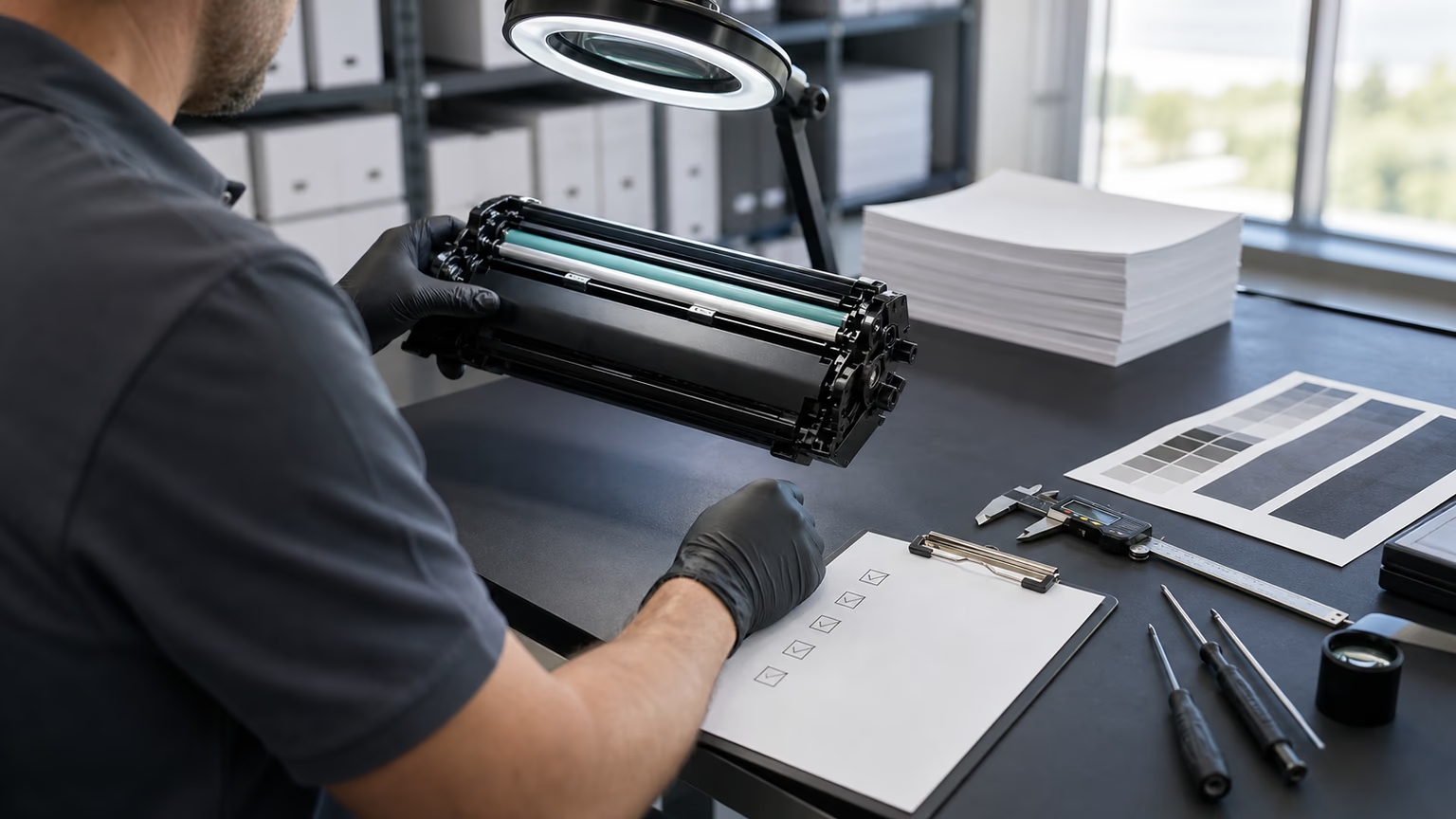
Discover a risk-based supplier audit framework that helps toner distributors avoid hidden quality failures, protect service margins, and make procurement decisions based on total value rather than unit price alone.
Doctor Blade Wear and Toner Leakage: The Hidden Reliability Metric for B2B Toner Buyers
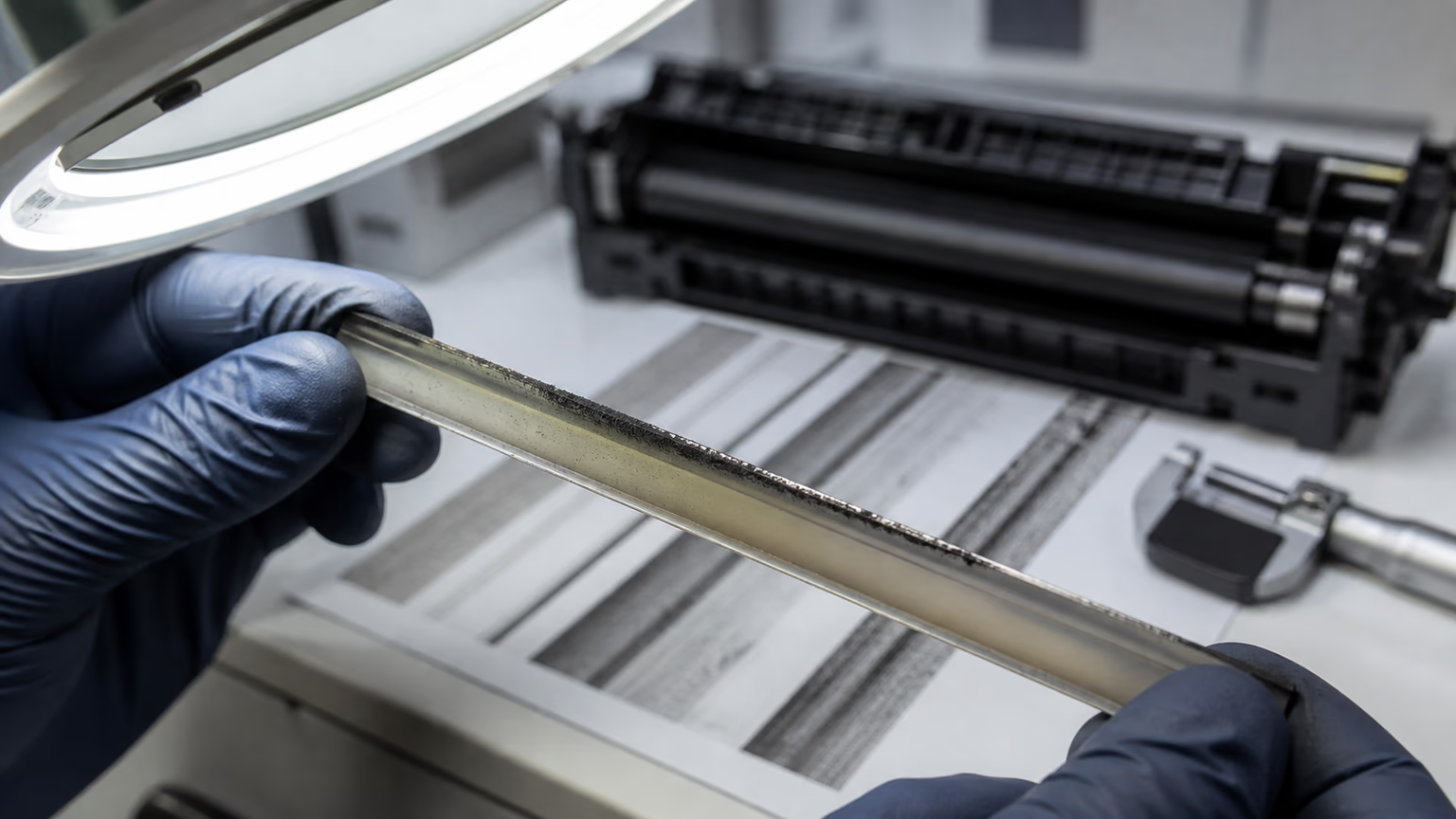
For B2B distributors and printer service providers, doctor blade wear is a hidden cause of toner leakage that drives returns and field failures. This guide explains the design factors, evaluation methods, and supplier checks that.

Avoid Dead Stock: Map Regional Toner SKUs Before Importing Compatible Cartridges
Importing compatible toner without regional SKU mapping is a costly gamble. Learn how to build a printer fleet heatmap, validate supplier cross-references, and pilot test before scaling to avoid dead stock, chip rejections, and.

A Practical Toner Savings Plan for Multi-Office Companies: From Fragmented Buying to Fleet Control
A step-by-step guide for B2B distributors and service companies to reduce multi-office toner spend by shifting from unit price hunting to cost per page, standardization, and supplier stability.

Compatible Toner Printer Warranties: Separating Fact from Fear for B2B Procurement
B2B buyers often hesitate to use compatible toner due to warranty myths. This guide explains OEM warranty facts, firmware and quality risk management, and supplier evaluation for mixed printer fleets.
The Hidden RoHS and REACH Compliance Trap in Printer Consumables: A B2B Sourcing Guide
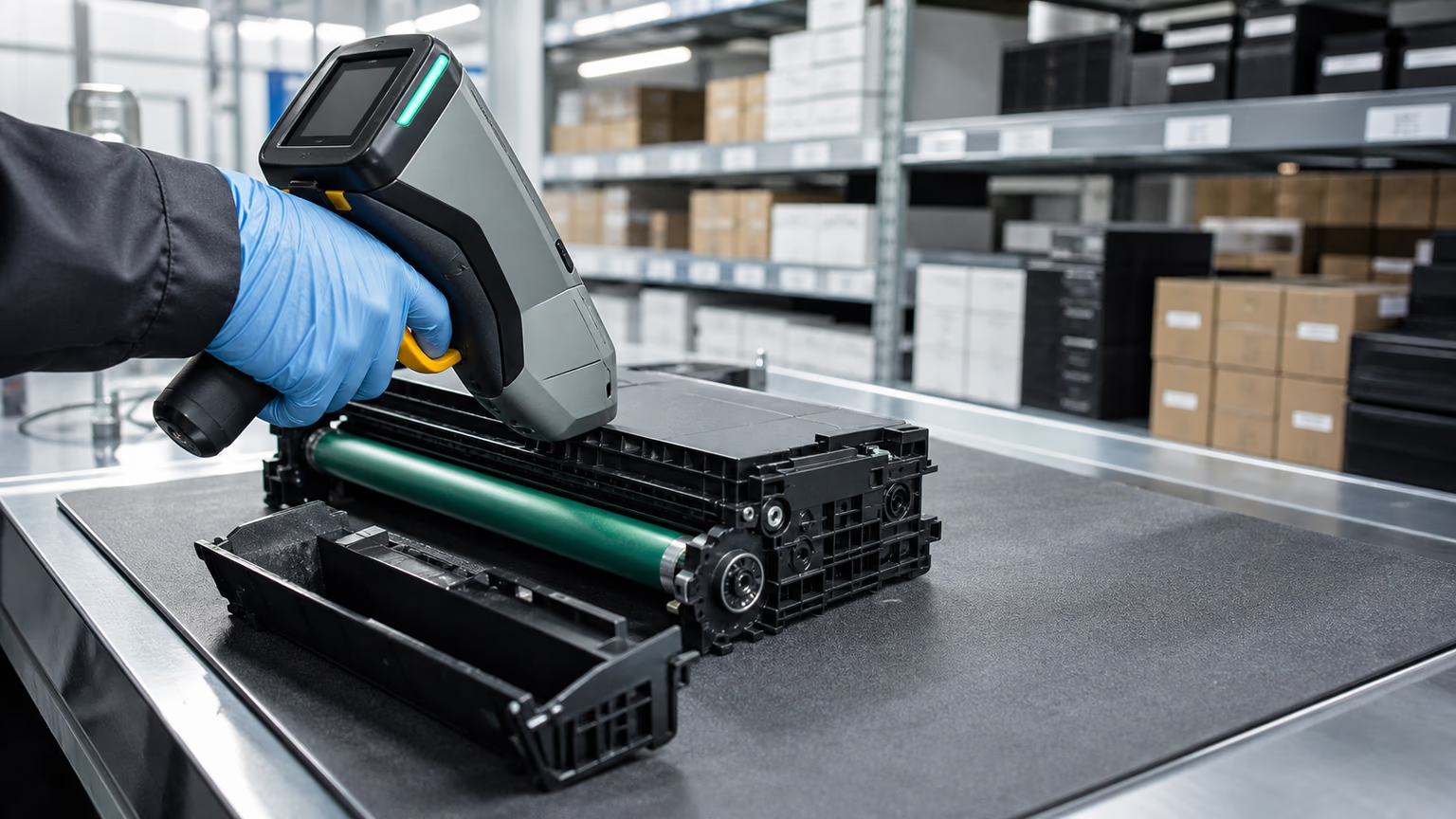
Many B2B buyers treat RoHS and REACH as a paperwork formality, but non-compliance in toner cartridges can trigger customs seizures, printer damage, and lost contracts. This guide explains what to verify before sourcing.

Why Toner Cartridge Availability Differs by Region—and How to Plan for It
A practical B2B guide to understanding how regional supply chains create fragmented toner SKU availability, lead times, and quality risks. Learn the checks procurement teams need to evaluate regional toner suppliers and avoid.

Plan Toner Inventory Before Printer Firmware Changes: A Distributor's Playbook
A practical framework for toner cartridge distributors to audit printer fleets, segment SKUs by firmware risk, validate chip compatibility, and build a pre-update inventory buffer that protects uptime and cash flow.
The True Cost of Toner: Calculating Savings Beyond Cartridge Price
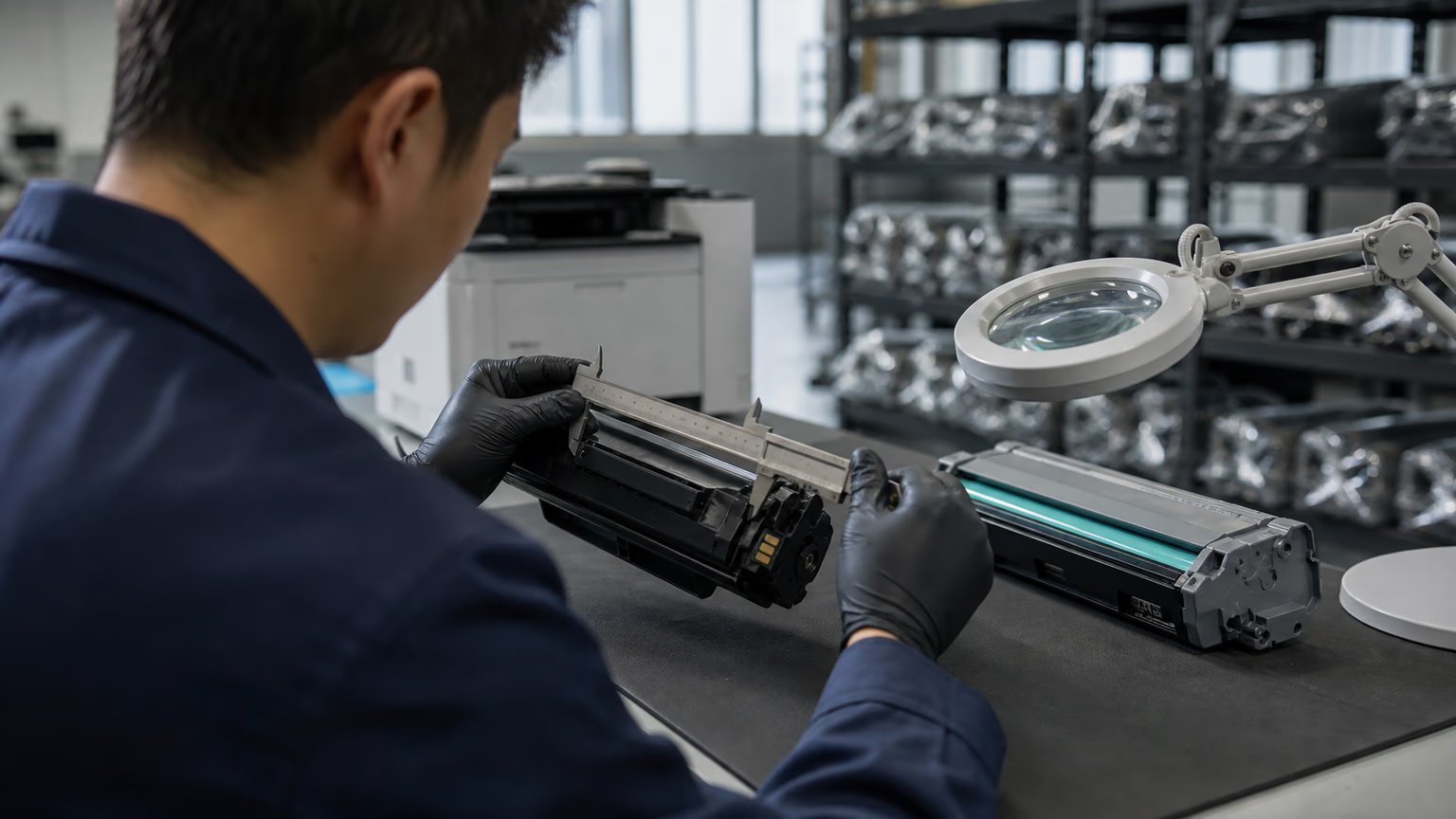
Most B2B buyers compare cartridge price, but true savings demand a TCO approach. This guide shows how to calculate real toner costs beyond the sticker price.
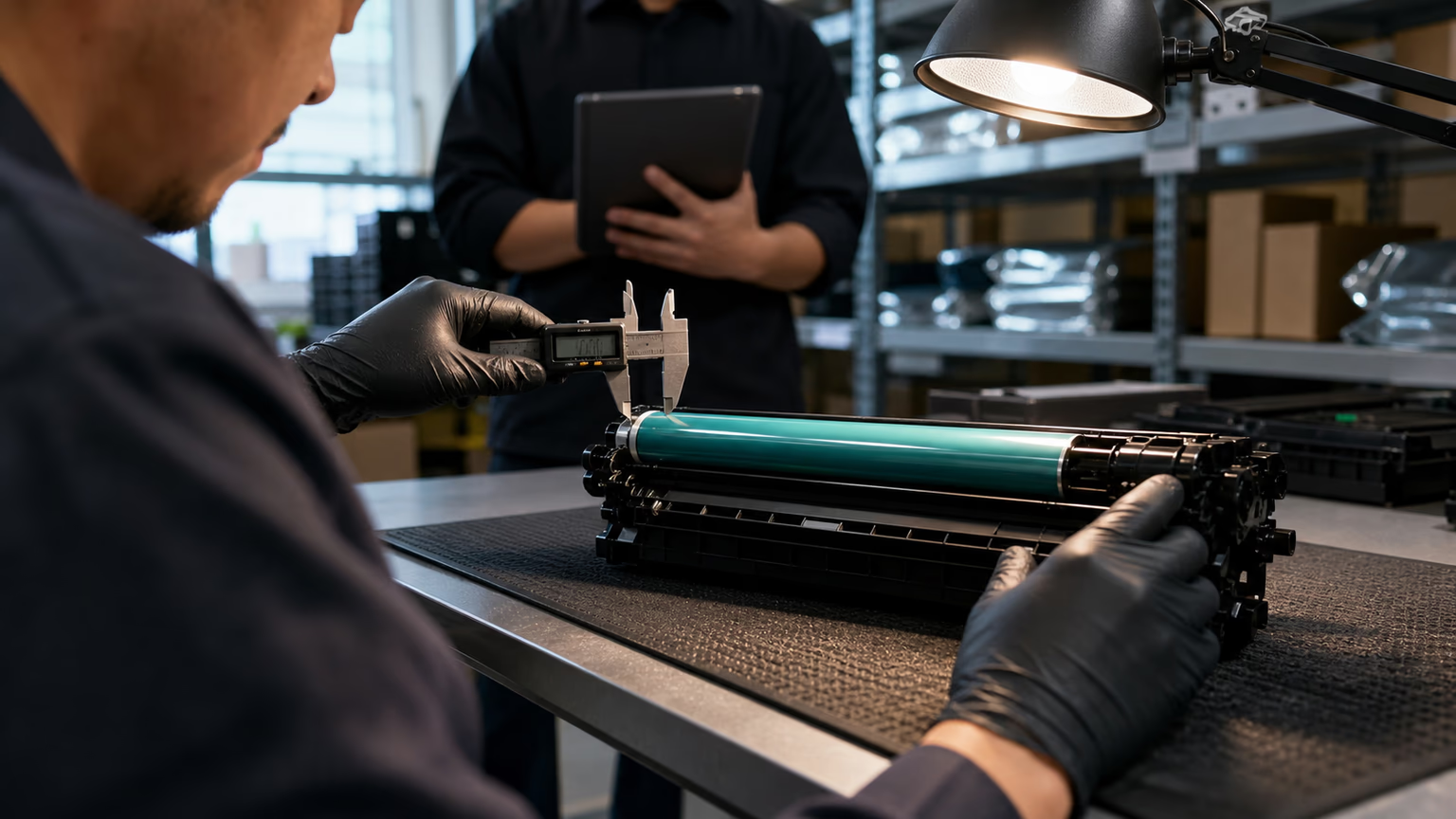
Protect Dealer Reputation with Better Cartridge QC: A Distributor's Guide
A distributor-focused QC playbook covering incoming inspection, chip compatibility, batch consistency, and supplier scorecards to prevent field failures and protect long-term contracts.

The Hidden Economics of Printer OEM Pricing: Why Compatible Toner Keeps Winning Space
Printer OEMs rely on razor-and-blades pricing, chip exclusivity, and firmware lockouts to keep toner costs high. This article explains the structural cost gap and offers B2B buyers a practical framework for sourcing compatible.
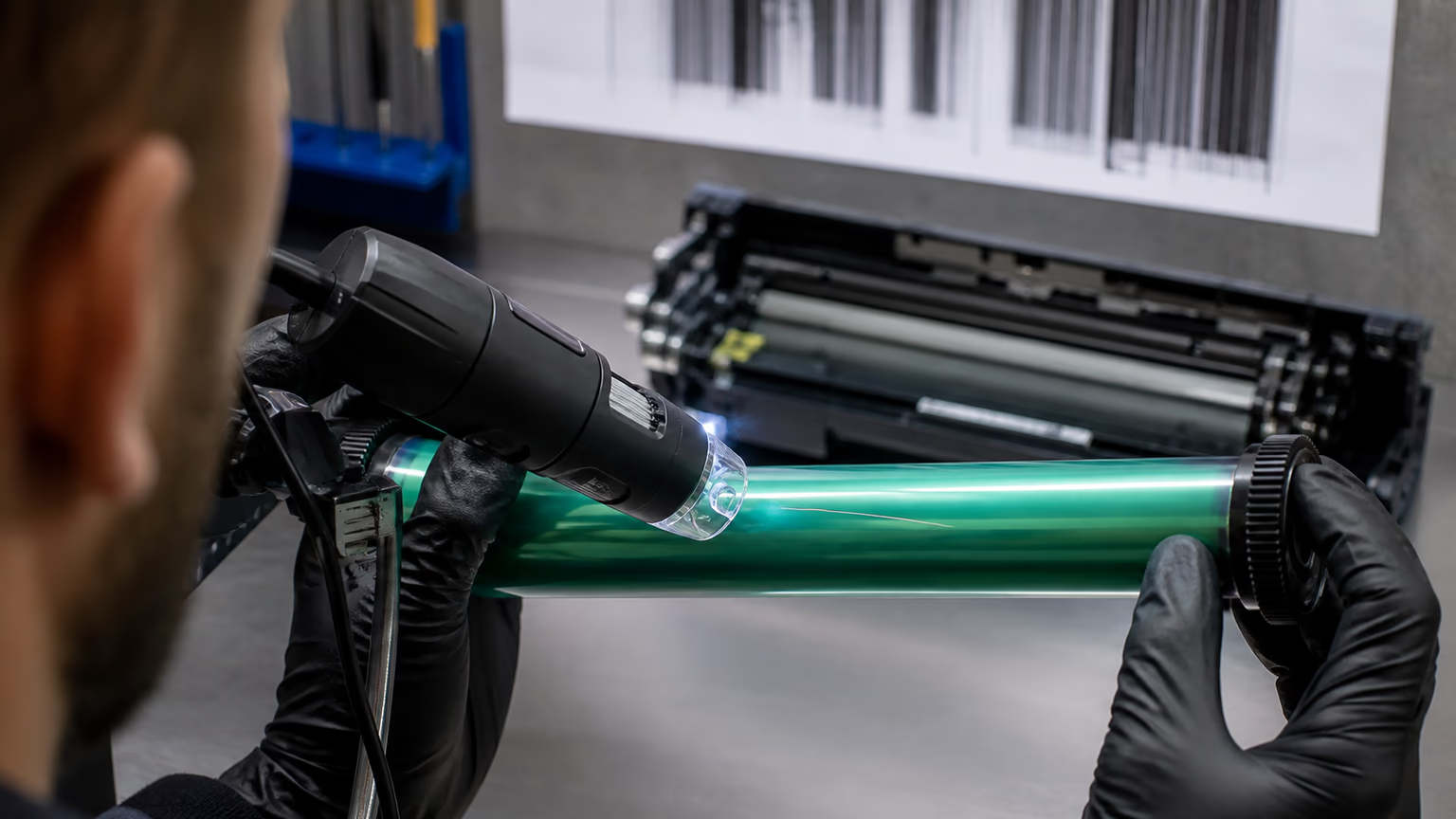
OPC Drum Damage After Toner Replacement: A Field Diagnostic Framework for B2B Distributors
A practical field guide for printer service companies and toner distributors. It explains how incompatible replacement toner damages OPC drums and gives diagnostic, procurement, and handling steps to cut repeat failures.

Stop Emergency Toner Orders: Better Forecasting for Printer Service Providers
This guide shows distributors, MPS operators, and service providers how to map mixed fleets, set reorder points, evaluate suppliers, and turn forecasting into a competitive advantage.

Beyond Cheap: How to Source Premium Compatible Toner for Private Label
Compatible toner can look and perform at a premium level. This guide covers the technical factors, supplier due diligence, and quality control measures that help B2B buyers avoid the cheap toner trap.
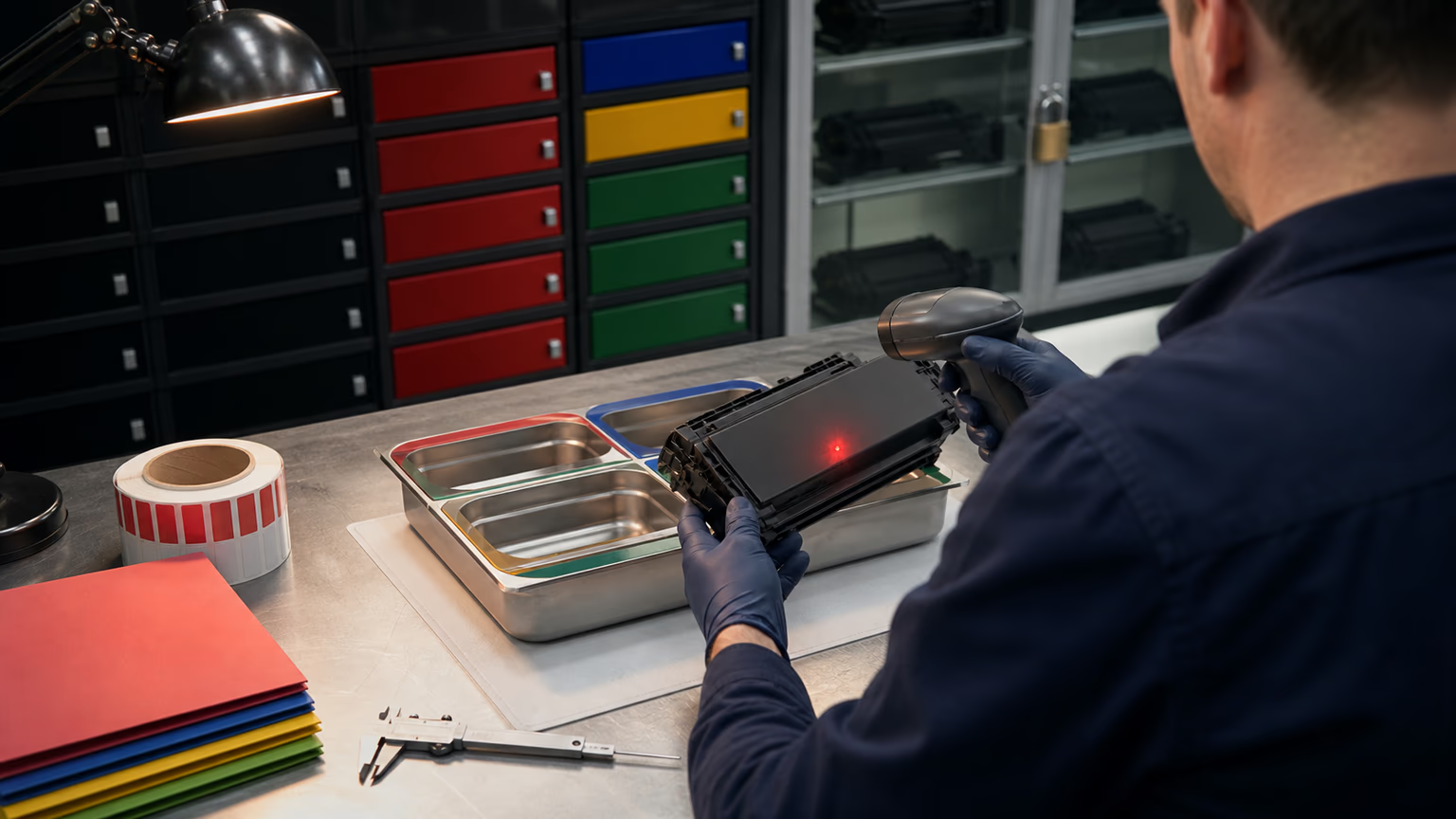
The Toner Procurement Tracker That Survives Audits: A Practical Guide for B2B Distributors
This guide explains the essential data fields, supplier documentation, and workflow controls that turn toner purchasing into a defensible, audit-ready process for fleets of all sizes.

How to Reduce Toner Returns Before They Destroy Your Margin: A Procurement Playbook
Toner returns silently erode distributor margin through freight, labor, and lost trust. This guide covers root cause analysis, supplier qualification, incoming QC, firmware compatibility, and return data feedback loops.

Factory-Backed Toner Programs: How to Verify True Factory Support in Fast-Growing Markets
Factory-backed toner claims often hide broker-sourced supply. Genuine programs require direct manufacturer control, regional SKU planning, and documented quality processes. This guide for B2B distributors and service companies.
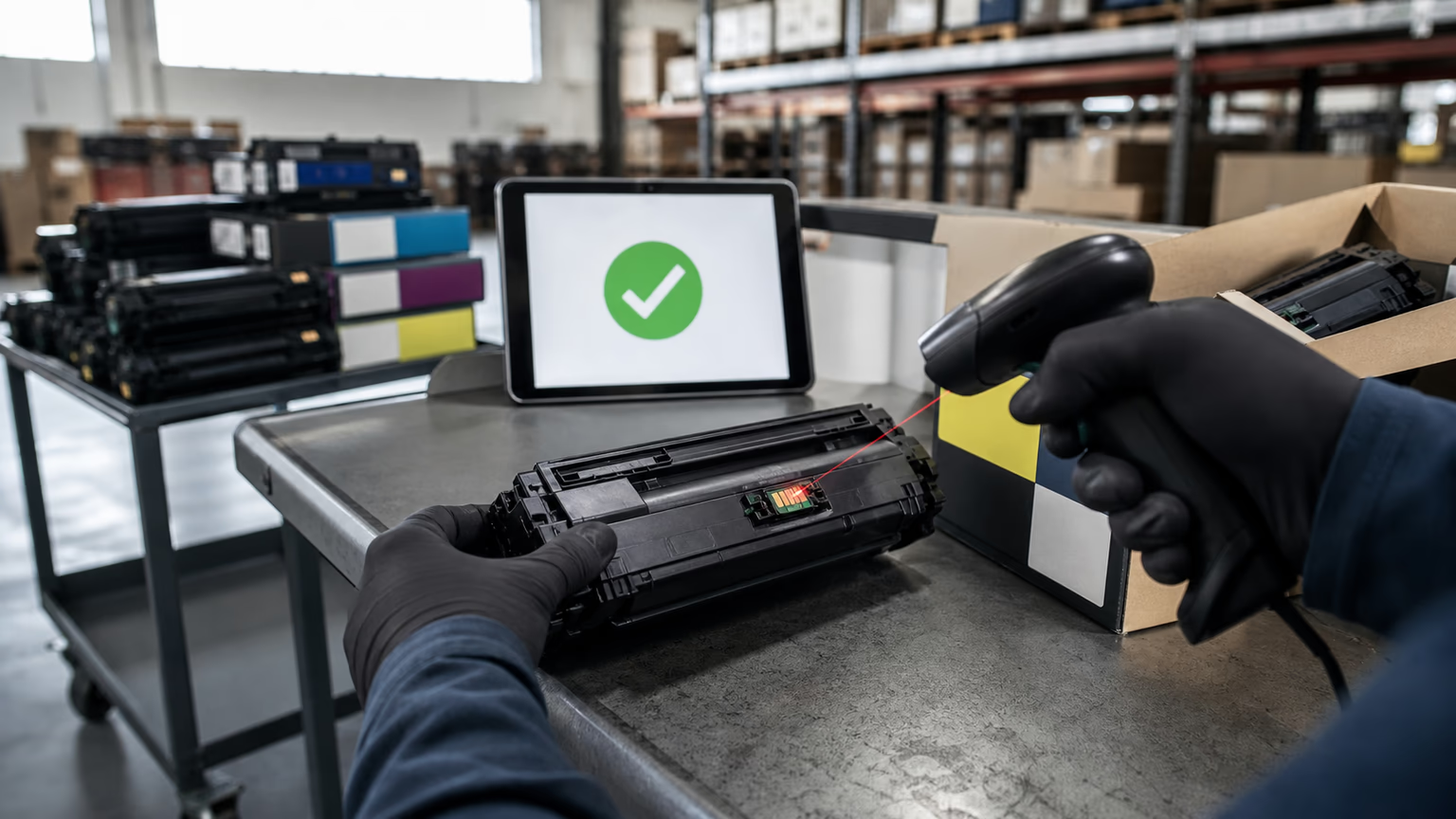
Regional Packaging and Chip Codes: The Hidden Return Driver in Toner Distribution
B2B toner distributors often discover regional mismatches only after customer installation. This guide shows how to qualify chip codes and packaging before shipment, audit existing stock, and build a supplier scorecard that.

Sustainable Toner Procurement: A Corporate Buyer's Guide to Lowering Risk and Waste
Corporate toner buying often ignores hidden costs from quality failures, compatibility issues, and unverified sustainability claims. This practical guide shows how to evaluate suppliers for total value and lower risk.

Adapting Toner Sourcing to the New Office Printing Reality
A practical guide for B2B toner distributors and service companies explains how office printing trends redefine cartridge demand, from volume shifts to multi-brand compatibility needs, with a framework to balance cost, quality.

From Commodity Risk to Brand Asset: A Distributor's Framework for Private Label Toner
A procurement-led guide for B2B toner distributors who want to escape price competition and build customer trust through verifiable quality, compatibility testing, and transparent supplier partnerships.

From SKU Sprawl to Fleet Control: A Toner Standardization Playbook for Multi-Brand Office Printers
Managing hundreds of office printers creates toner SKU sprawl and service margin erosion. Learn how to consolidate around shared cartridge platforms, evaluate compatible toner quality, and build a sustainable standardization.

Integrating Compatible Toner into Managed Print Services Without Service Risk
A practical framework for MPS operators and distributors to integrate compatible toner cartridges into service contracts based on total cost of ownership, compatibility testing, and supplier reliability.

Toner Scatter Around Text: How Particle Size, Charge, and Paper Dust Decide Batch Quality
A practical guide for distributors and service providers to detect and prevent toner scatter around text by evaluating particle size, charge control, and paper dust before bulk purchases.

Cutting Waste, Not Corners: Strategic Packaging for Toner Cartridges
Packaging is not just a box. It is a hidden cost center for toner distributors. This guide shows how smarter packaging reduces waste, damage, returns, and disposal fees while protecting cartridge integrity.

Toner Import Risk: The Supplier Documentation Checklist Every B2B Buyer Needs
A practical procurement guide for B2B toner buyers. See how to demand the right documentation set, verify test reports, and build a supplier scorecard that prevents customs delays and quality failures.

Factory-Direct Private Label Toner: The Distributor's Playbook for Protecting Margin and Keeping Mixed Fleets Running
A practical guide for regional toner distributors evaluating factory-direct private label sourcing. Covers quality risks, chip stability, factory audits, inventory planning, and building a defensible brand.

Stop Guessing: Use a Photo Library to Master Toner Quality Control
A practical playbook for B2B distributors and service companies to turn subjective print quality complaints into an objective, searchable photo library that supports root cause analysis and faster service resolution.

Smart Chip Testing Before Mass Shipment: A Distributor's Factory Checklist
A practical factory checklist for smart chip validation in toner cartridges. Covers physical inspection, data integrity, functional recognition, firmware compatibility, environmental stress, and batch traceability.
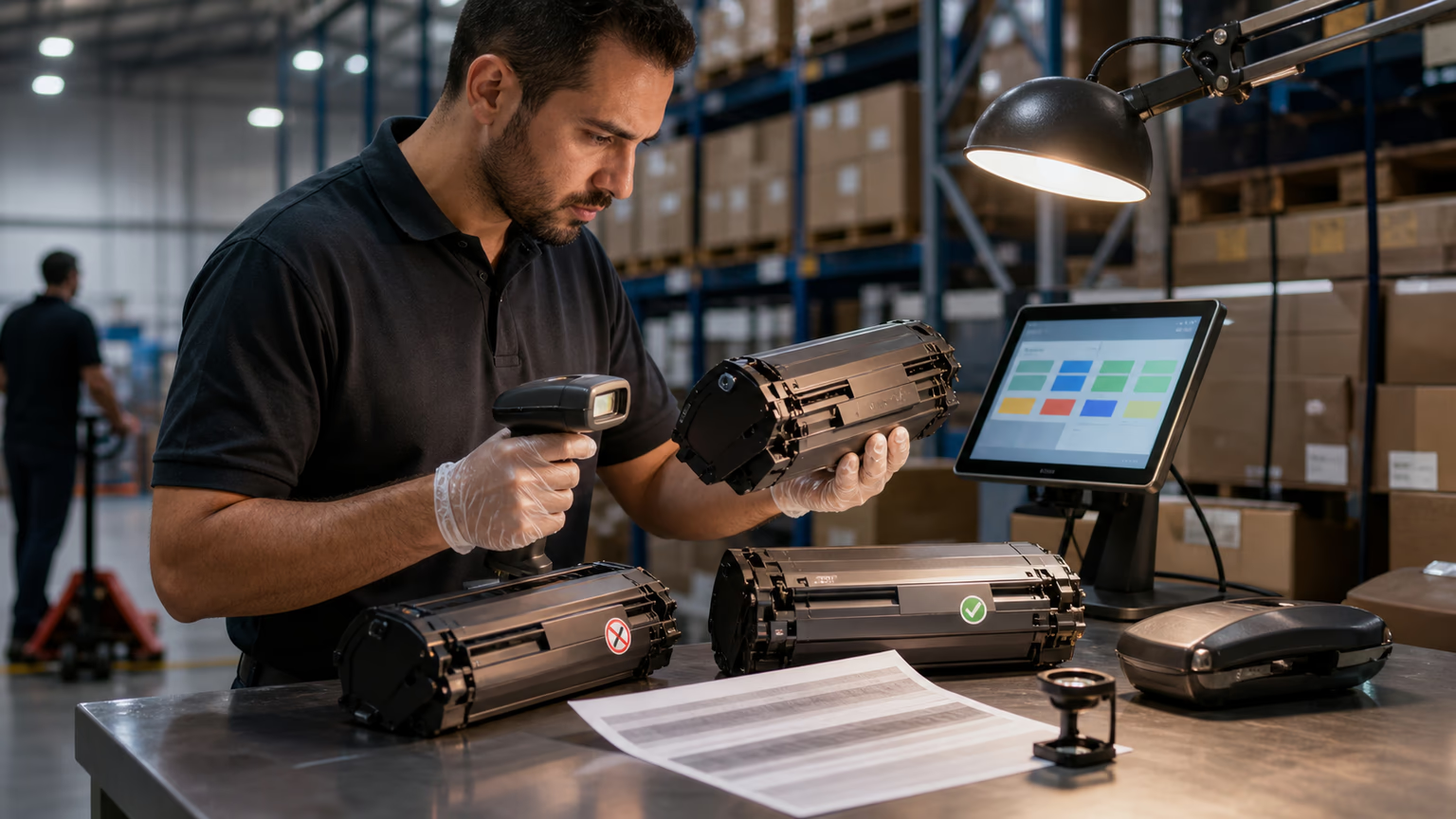
The Real Cost of Cheap Toner: Why Batch Traceability Is a Distributor's Best Defense
For B2B toner distributors, chasing the lowest unit price often creates returns, service calls, and lost contracts. Batch traceability shifts supplier selection from transaction to quality assurance.

The Hidden Cost of Humid Warehouses: How Storage Conditions Cause Background Fog in Toner
Background fog traces back to humid warehouse storage, not toner defects. Moisture compromises toner charge and flow, producing gray prints and returns. Auditing humidity controls and packaging protects supply chains.

Toner Return Analysis: The Distributor's Framework for Preventing Repeat Failures
A practical guide to turning returned toner cartridges into structured data that reveals batch defects, firmware conflicts, and supplier quality drift across mixed printer fleets.

Why Fleet Toner Procurement Needs Lab Data, Not Sales Promises
Sales promises hide variability that drives service calls and hidden costs. A lab-backed procurement process gives distributors and service companies a defensible basis for supplier selection and contract management.

Compatible Toner Demand Remains Strong Despite Printer Fleet Changes: Managing Risk in Mixed Fleets
Printer fleets are consolidating, but compatible toner demand remains strong because mixed and legacy devices still need cost-effective consumables. This article explains the hidden risks and how to evaluate suppliers for reliable.
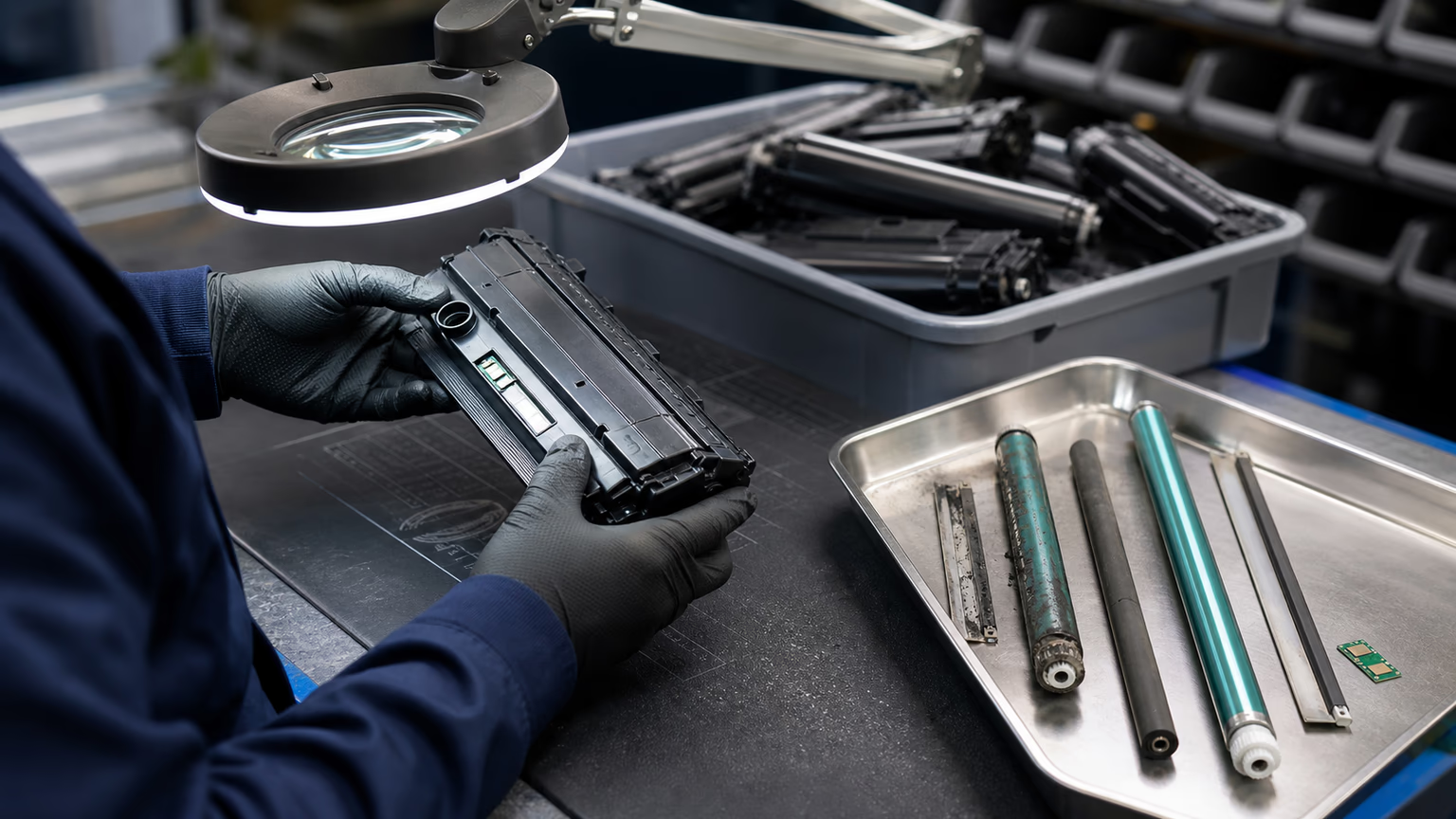
Remanufactured Toner Circular Economy: A Risk-Based Procurement Framework for Distributors
Remanufactured toner can reduce waste and supply costs, but only if quality control is rigorous. This guide covers risk assessment, supplier vetting, and pilot testing for B2B printer fleet operators.
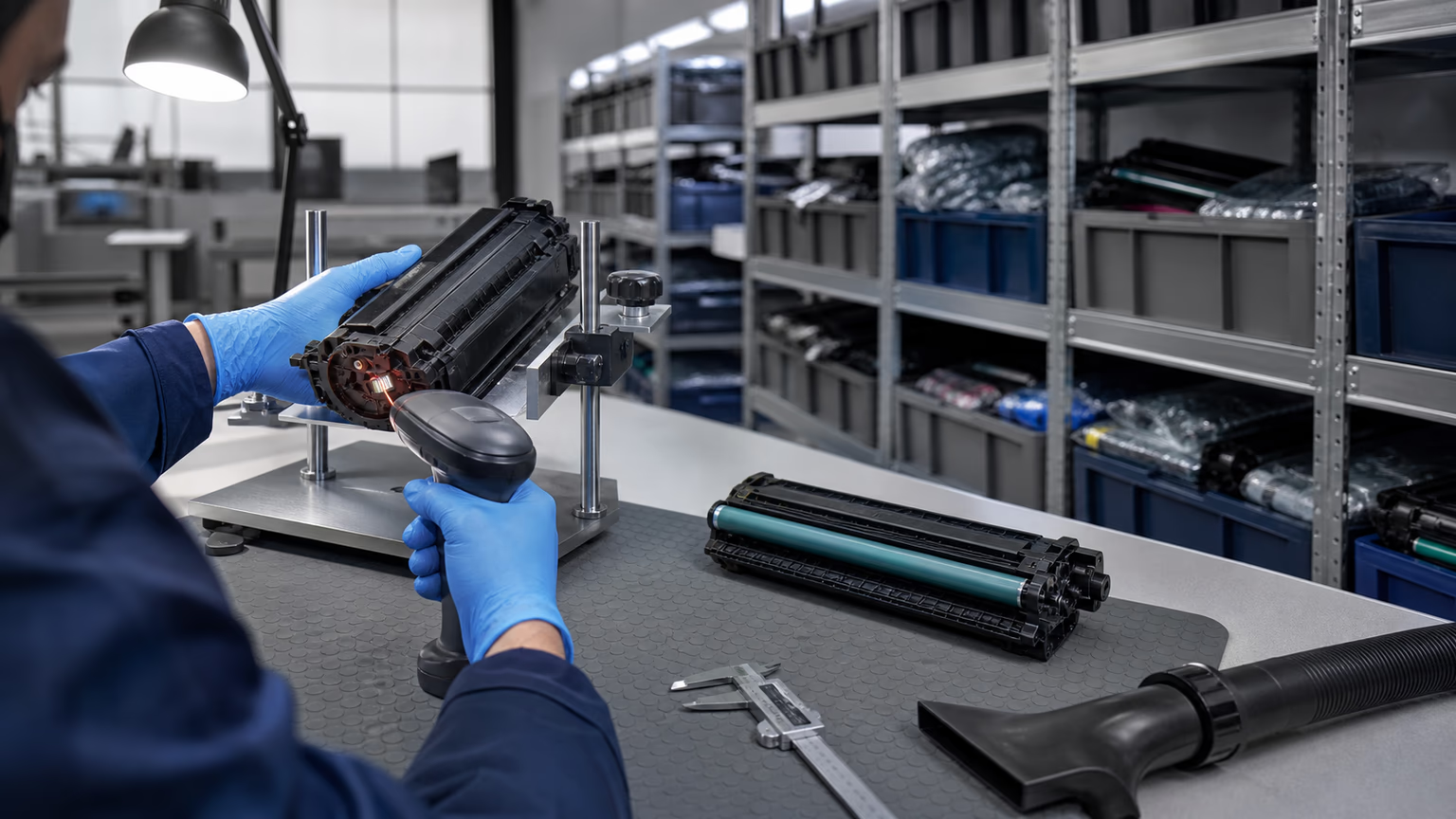
A Stronger Toner Supply Program for Growing Dealers
A practical guide for distributors and printer service companies on moving from ad-hoc toner purchasing to a structured mixed-fleet program that strengthens inventory control, protects margins, and reduces toner-related field.

Packaging as Trust: How Better Packaging Increases Toner Brand Confidence
Packaging is the first physical promise a private label toner brand makes. This guide shows how protective design, clear labeling, and tamper-evident features reduce returns and build long-term confidence.
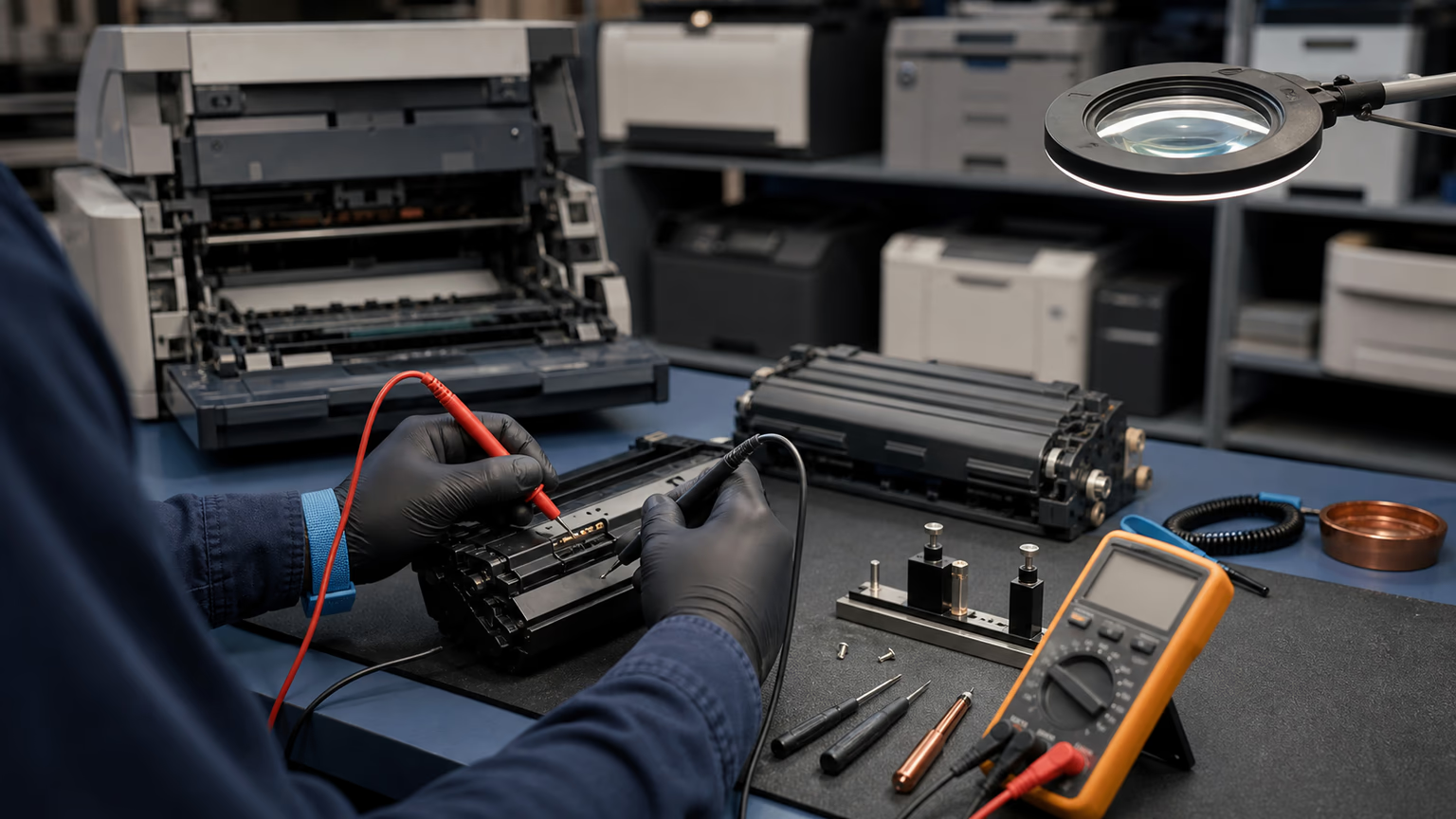
From OEM to Compatible Toner: How Fleet Managers Can Manage Quality, Service, and TCO
Switching a mixed printer fleet from OEM to compatible toner requires a staged evaluation, pilot testing, and supplier controls that protect uptime and service accountability.
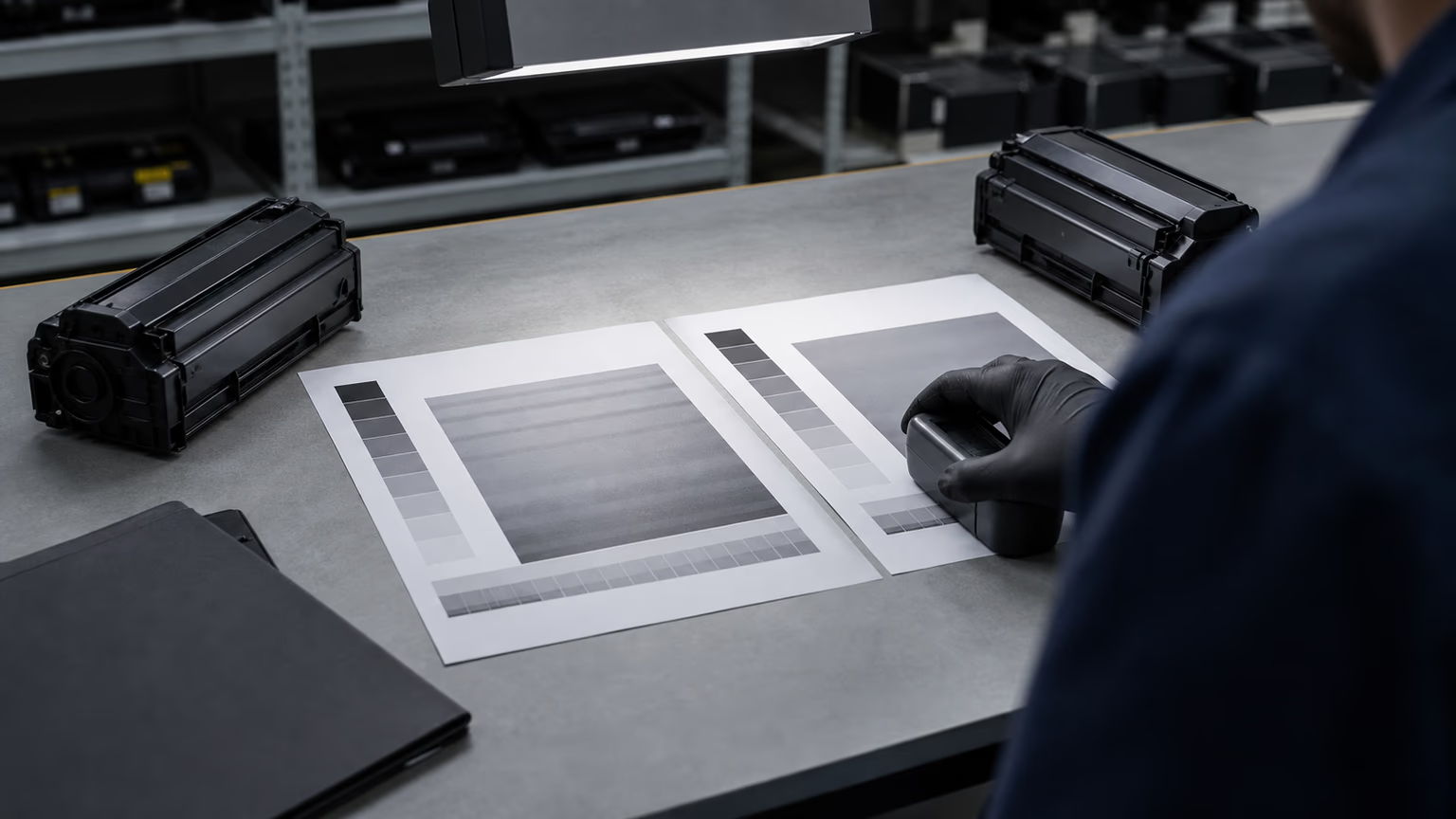
Wholesale Toner for Dealers Who Need Stable Batches: A Distributor's Qualification Framework
Batch-to-batch variation in wholesale toner creates hidden service costs, returns, and customer complaints. This guide shows distributors how to test, qualify, and lock in stable toner supply for mixed printer fleets.
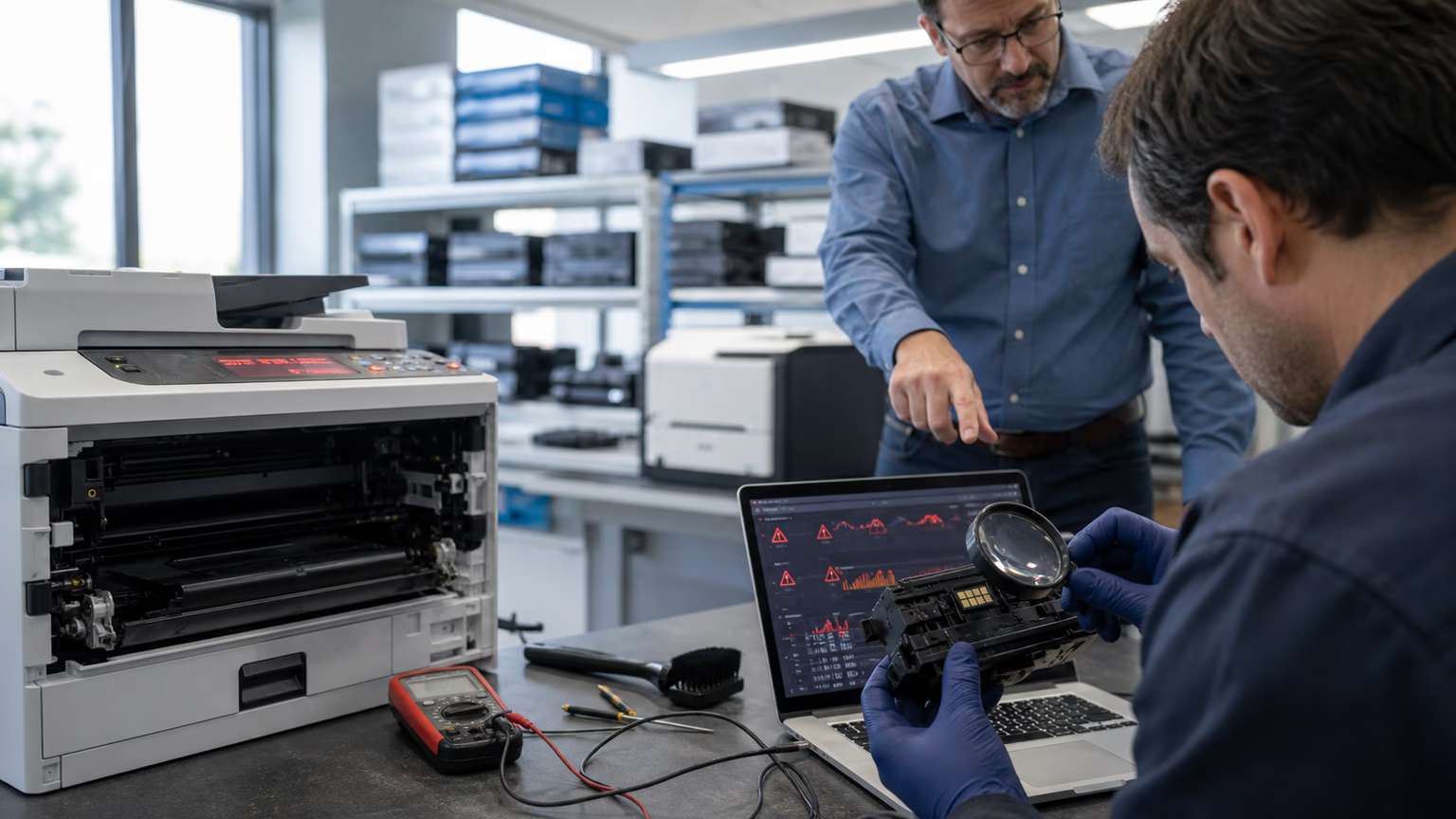
The Cartridge Is Not Always Guilty: Decoding Printer Error Messages in B2B Toner Supply
B2B distributors and printer service teams lose margin on false cartridge returns every day. This forensic explainer shows how chip firmware handshakes, OEM updates, and diagnostic missteps create error messages that blame a full.

Gloss Difference Between OEM and Compatible Toner: A B2B Guide to Print Finish Quality
For B2B buyers, gloss difference is more than a cosmetic issue. It signals toner formulation quality, fusing reliability, and potential service escalations. This guide explains how to measure, compare, and manage gloss consistency.

Avoid Stockouts and Overstock: MOQ, Lead Time, and Forecasting Strategies for Toner Distributors
Learn how to negotiate flexible MOQs, measure real lead times, and build demand forecasts for mixed printer fleets without overcommitting cash or risking service failures.

Beyond Price: Building a Risk-Managed Compatible Toner Procurement Strategy
A fragmented global compatible toner market demands more than price comparison. This article breaks down the quality, compatibility, and supplier variables that determine total cost of ownership for mixed fleet operations.

Recycling Toner Cartridges: Turning a Waste Problem into a B2B Supply Chain Advantage
Businesses often treat used toner cartridges as waste, but a structured recycling program can cut costs, ensure compliance, and protect print quality. Learn how to evaluate recycling partners and integrate recycling into your.
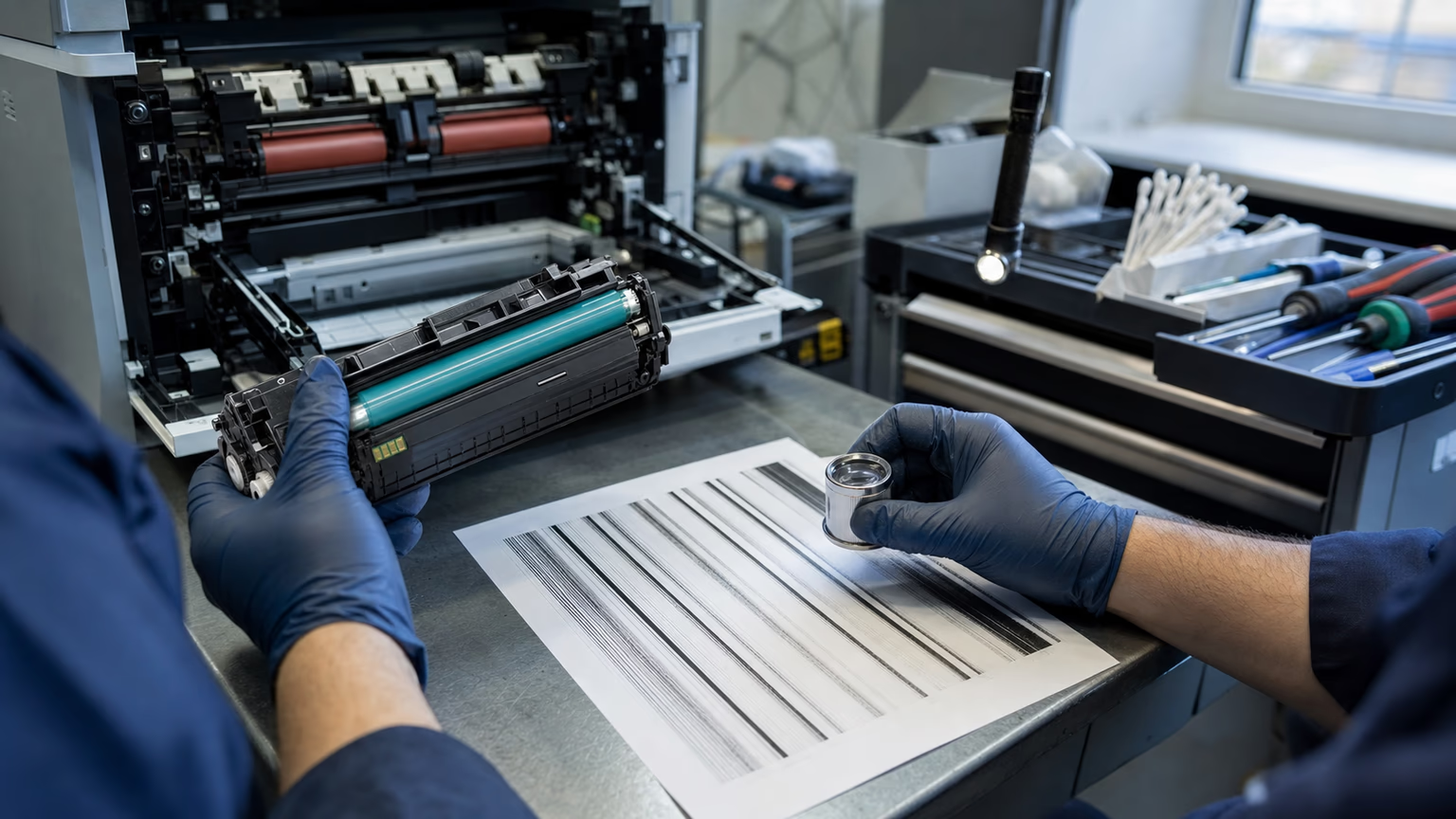
Stop Swapping Cartridges: How to Separate Cartridge Defects from Printer Maintenance Problems
Printer service teams often replace cartridges when the real fault lies in printer maintenance. This diagnostic guide provides a systematic triage to identify root causes, reduce waste, and improve first-time fix rates.
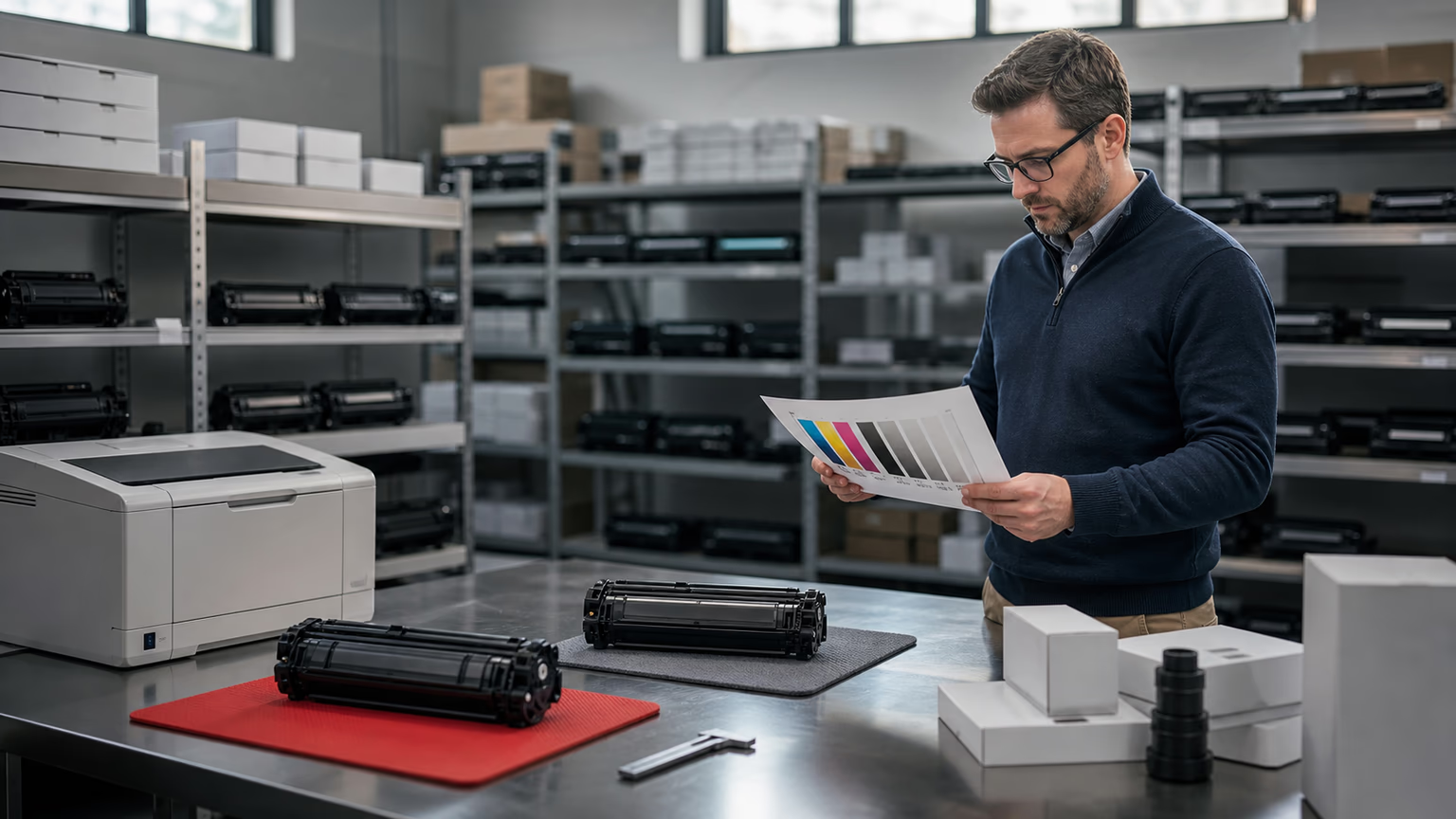
Private Label Toner for E-Commerce Sellers: The Control Framework That Protects Margin
Private label toner offers margin upside, but uncontrolled sourcing and quality variables can turn it into a high-return, high-complaint product line. This practical guide covers the control framework B2B e-commerce sellers need.

Sustainable Toner Savings for B2B Fleets: A Procurement Framework That Protects User Experience
A practical framework for B2B procurement teams to lower toner spend without causing user frustration. Learn to evaluate compatible toner by true cost per page, quality, and compatibility before rollout.
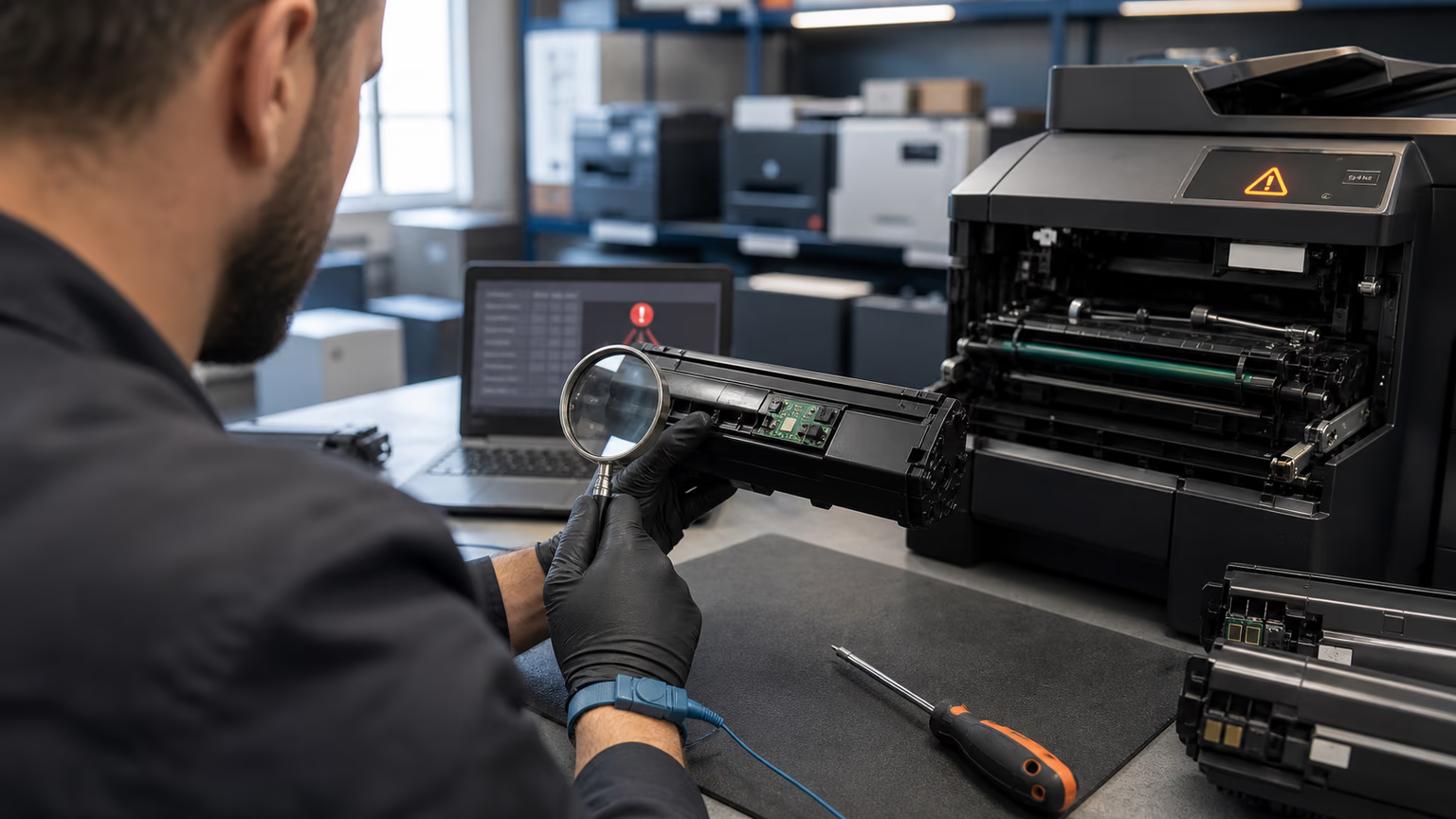
Firmware-Proof Procurement: A B2B Guide to Reducing Fleet Disruption Risk
Firmware updates can turn a cost-saving toner purchase into a service crisis. This guide explains how to build a firmware-proof procurement process and protect mixed printer fleets from unplanned downtime.

Low-Temperature Fusing Toner: Where the Savings End and the Problems Begin
Low-temperature fusing toner offers energy savings and media flexibility, but hidden risks like poor adhesion and fuser wear can erase the gains. Learn how to qualify before fleet deployment.

Resilience Over Price: A Distributor’s Blueprint for Toner Supply Chain Stability
Uncover the risks of price-driven toner buying and explore a resilience-focused approach: supplier diversification, quality integration, and proactive risk management for stable B2B supply.
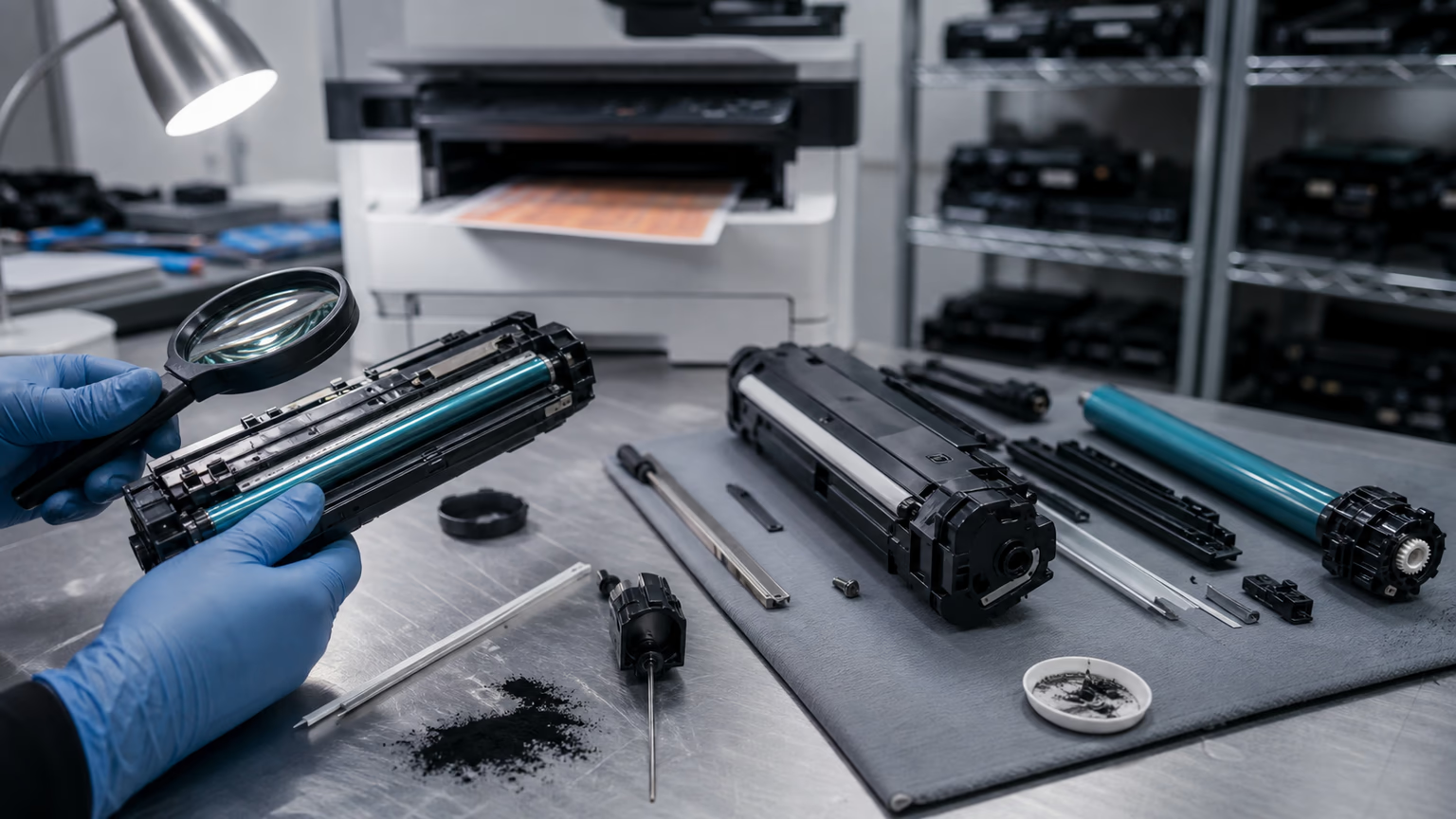
Beyond the Green Label: The Truth About Compatible Toner Cartridges and the Environment
B2B distributors face pressure to go green. This article provides a framework to assess whether compatible toner cartridges reduce environmental harm without sacrificing print quality.

Cartridge Memory Chips: What They Track, What They Don’t, and Why It Matters for B2B Buyers
Cartridge memory chips are often misunderstood, leading to overpayment and high return rates. This article clarifies what chips monitor, dispels myths, and provides a practical procurement checklist to assess chip supplier quality.

Your First 50 Toner SKUs: The Procurement Logic That Wins B2B Distribution
New toner brands fail when they guess their first 50 SKUs. This guide helps B2B distributors select cartridges covering top office printers, avoiding compatibility risks and building fleet trust from shipment one.

Strategic Playbook for Toner Distributors to Counter OEM Pricing Pressure and Protect Margins
Toner distributors face shrinking OEM margins and fear of compatible quality issues. This guide reframes the decision around total cost of ownership, supplier audits, and pilot testing to recover margin and reduce service calls.

Enterprise Fleet Compatible Toner: The Verification Playbook for Distributors
A verification framework for enterprise compatible toner: fleet mapping, sample testing, supply consistency, firmware readiness, service support. For B2B distributors and MPS providers eliminating risk.

When Compatible Toner Is Not the Right Choice for a Print Fleet
Many distributors and service companies treat compatible toner as a blanket cost-saver, but in critical fleets, it can lead to print defects, downtime, and eroded margins. This guide helps you evaluate when OEM toner is the.
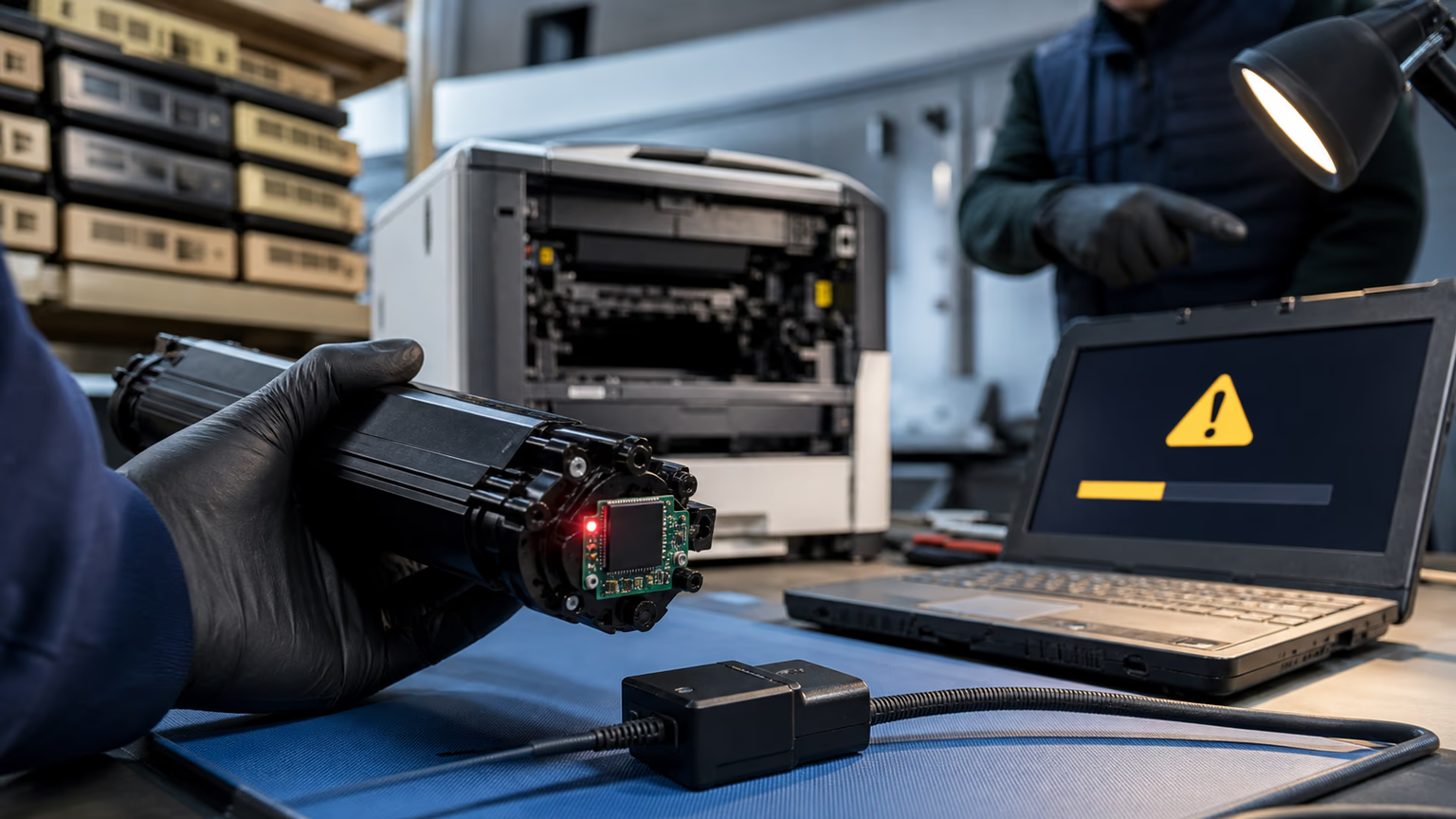
Firmware Lock-In: The Hidden Threat to Compatible Toner Supply Chains
A practical guide for distributors and MPS operators facing toner compatibility risks from OEM firmware changes. Covers chip authentication, yield manipulation, supplier evaluation, and fleet mitigation.

Why Toner Causes Paper Curl: The B2B Procurement Guide to Fuser Heat, Paper Moisture, and Resin Behavior
Paper curl reveals incompatible toner chemistry. This guide explains fuser heat, resin, and moisture, with a checklist for B2B buyers to demand consistent, curl-resistant toner cartridges.

Printer Model Standardization: Why It Reduces Toner Procurement Risk
Fragmented printer fleets make toner procurement unpredictable. Standardization slashes inventory complexity and turns supply into a competitive advantage for distributors.

Stop Losing Margins: Why Regional SKUs Matter in Global Toner Procurement
Global toner procurement overlooks region-specific cartridge variations, causing compatibility failures and eroded margins. This guide covers risks of ignoring regional SKUs and offers a resilient supply chain framework.
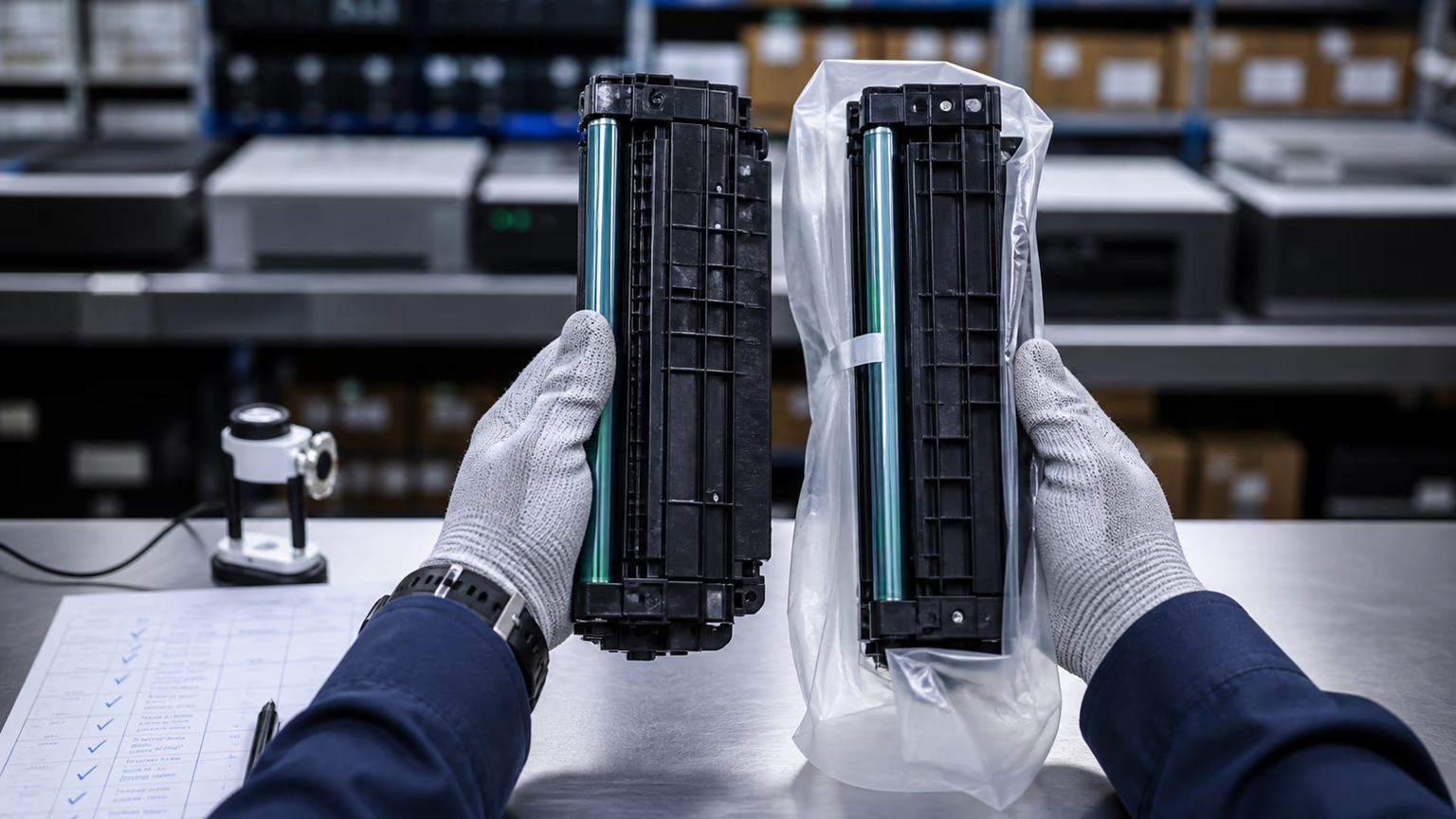
The Remanufactured vs New-Build Dilemma: A Strategic Sourcing Roadmap for B2B Buyers
A comprehensive guide for B2B distributors and service providers weighing the pros and cons of remanufactured versus new-build toner cartridges. Learn to assess total cost of ownership, mitigate operational risks, and qualify.

The 30-Point Toner Supplier Audit: A Procurement Team's Blueprint for Risk-Free Supply
Discover how procurement teams can move from subjective supplier selection to a rigorous 30-point audit. Covering quality, firmware readiness, logistics, and contractual safeguards, this checklist transforms toner procurement into.

Cut Toner Costs, Not Corners: A Procurement Strategy for Distributors
Many distributors chase the lowest cartridge price only to face print quality failures and service calls. This guide shows how strategic supplier evaluation cuts toner spend without chaos.

Why Printer Fleets Still Need Smarter Toner Procurement: A Distributor's Playbook
Many B2B toner buyers lose margin through ad-hoc purchasing. This article reveals the hidden costs of fragmented procurement and offers a framework to unify supply, boost quality, and turn toner into a competitive edge.

Beyond Price: Why Toner Chip Stability Defines Your Service Promise (and Profits)
The chip shortage is not a logistics hiccup—it’s a structural threat to toner supply chains. This guide equips procurement professionals with a decision-making framework to evaluate suppliers, test chip resilience, and safeguard.

The Smarter Way to Buy Compatible Toner in Bulk: A Strategic Procurement Guide
Stop treating compatible toner as a commodity. Discover how bulk buyers can reduce hidden costs, ensure consistent print quality, and build a resilient supply chain.

Beyond Price: How Bulk Toner Lead Times Make or Break B2B Margins
For B2B toner distributors and MPS operators, unpredictable production lead times cause stockouts, emergency purchases, and SLA breaches. This guide reveals how to audit suppliers and stabilize your supply chain.

Uneven Color Density Across the Page: The Hidden Profit Drain in Toner Distribution
Uneven color density signals deeper toner flow and developer roller problems that erode distributor margins. This guide equips B2B buyers with diagnostic protocols and supplier evaluation criteria to turn quality control into a.
2026 Printer Consumables: A Distributor’s Playbook for Profit and Reliability
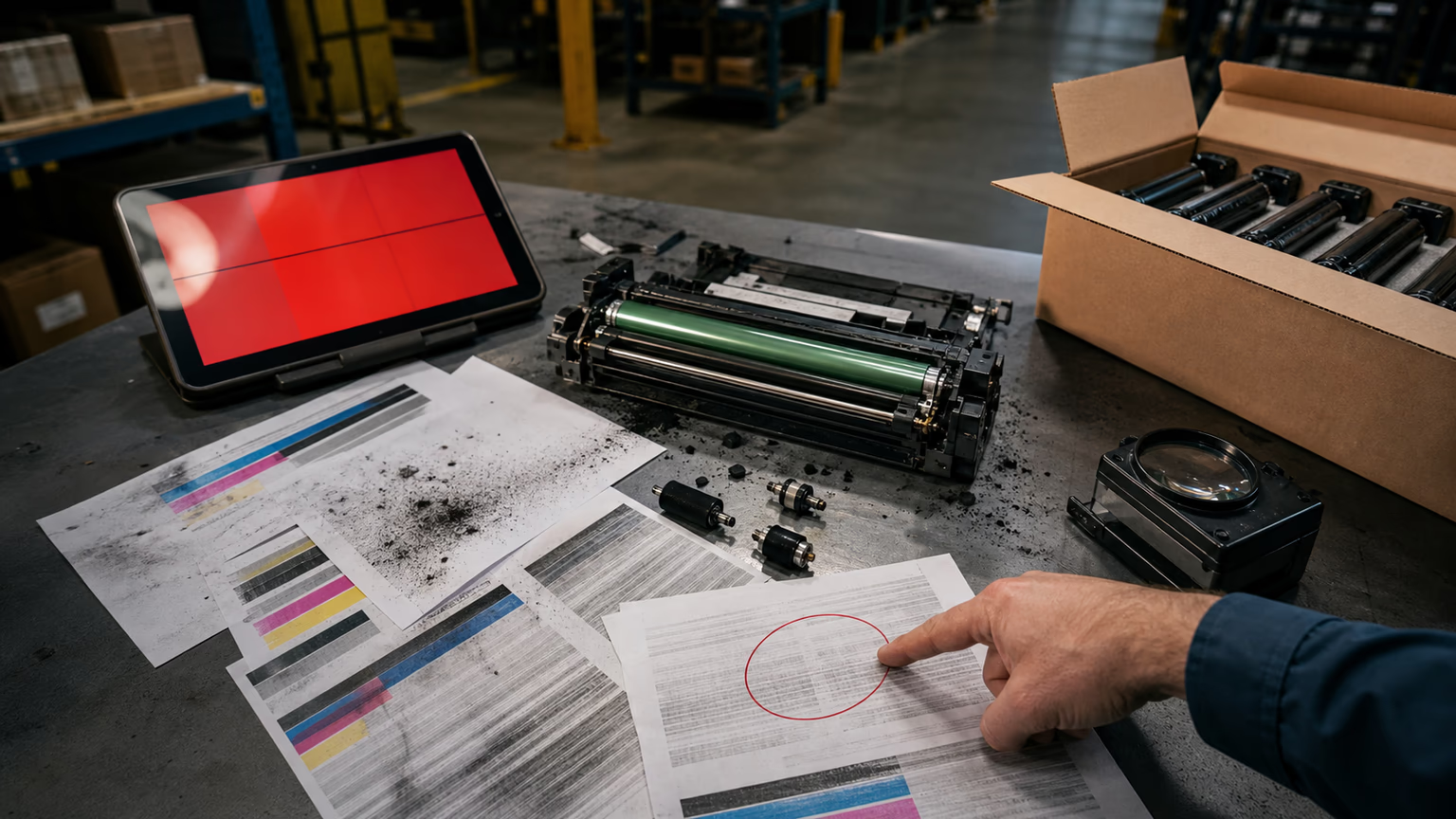
In 2026, printer consumables distribution faces new threats. Discover how to manage firmware risks, quality failures, and supplier evaluation to protect service margins and build a resilient supply chain.

Humidity-Controlled Warehousing for Toner: Real Rules That Matter
Toner is hygroscopic; humidity mismanagement causes clumping, defects, and returns. This guide gives distributors actionable rules for humidity-controlled warehousing, from thresholds to auditing suppliers.

White Label vs Private Label Toner: A Procurement Leader’s Risk Assessment
This article helps B2B distributors and MPS providers de-risk the white label vs private label toner decision by examining quality control, supply chain resilience, and service cost implications beyond upfront price.

How Fleet Analytics Helps Predict Toner Failures Before Complaints
Fleet analytics turns usage data into predictive alerts, enabling toner replacement before complaints arise. This guide covers data needs, procurement shifts, and supplier evaluation for distributors.

Beyond the Factory Tour: A Technical Audit Checklist for Compatible Toner Suppliers
A superficial factory audit can’t protect your business from batch failures, firmware incompatibility, and supply chain disruptions. This technical guide provides a rigorous, on-site inspection methodology that goes beyond.

Regional Toner SKUs: Why the Same Cartridge Code Fails Across Borders
A single wrong regional toner SKU can stall an entire fleet, trigger 'non-genuine' warnings, and erode client trust. This article unpacks the hidden logic behind regional cartridge codes, the real costs of ignoring them, and the.

Better Margins for Toner Dealers Without Sacrificing Reliability: A Strategic Guide
Toner distributors must balance cost and reliability. This guide reveals how to increase margins by building a data-driven alternative toner supply chain, avoiding service failures and customer churn.

Color Shift in CMYK Toner Sets: How to Audit and Control Delta E Across Your Supply Chain
Color shifts in toner cartridges cause customer complaints and costly returns. Discover how B2B buyers can audit factory Delta E control, verify batch consistency, and prevent hidden quality failures.
The Hidden Cost of Hybrid Work: Unpredictable Toner Demand and How to Master It
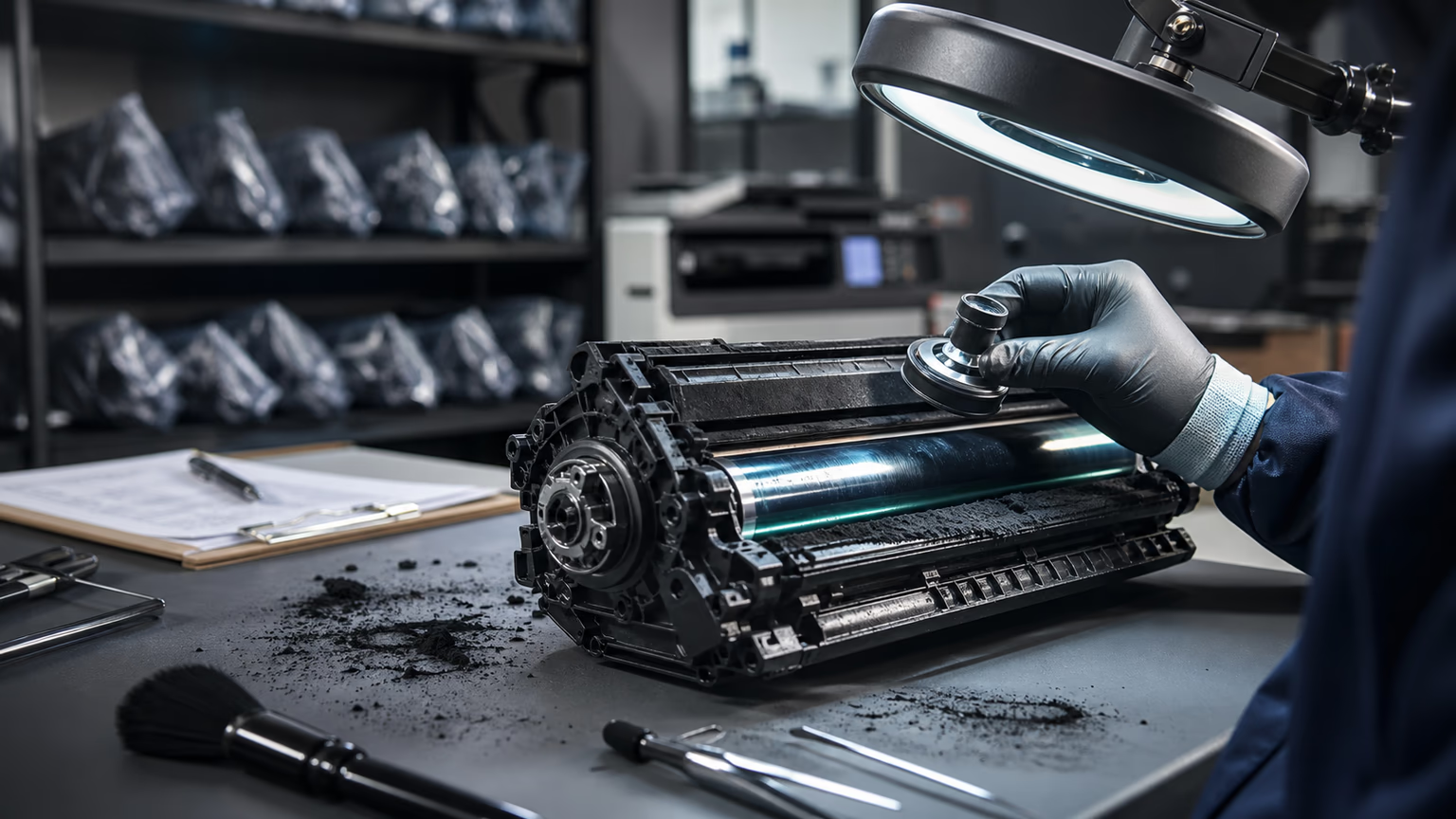
Hybrid work has shattered traditional toner supply models. This guide examines the operational, quality, and financial risks for distributors and service providers and offers data-driven approaches to inventory, procurement, and.

The B2B Distributor's Playbook to Eliminate Toner Shortages During Rush Seasons
When toner runs out at the worst moment, it can freeze operations, shatter client trust, and erase profits. This guide delivers a B2B procurement framework to keep your supply chain resilient and your customers printing.

The Distributor’s Blueprint for Building a Premium Compatible Toner Brand
For B2B distributors and service companies, the real opportunity is not selling cheaper toner but creating a premium brand that eliminates end-user complaints, protects margins, and makes toner supply a strategic advantage. This.
The Hidden ROI of Packaging: How Smart Design Cuts Toner Damage and Returns for Distributors
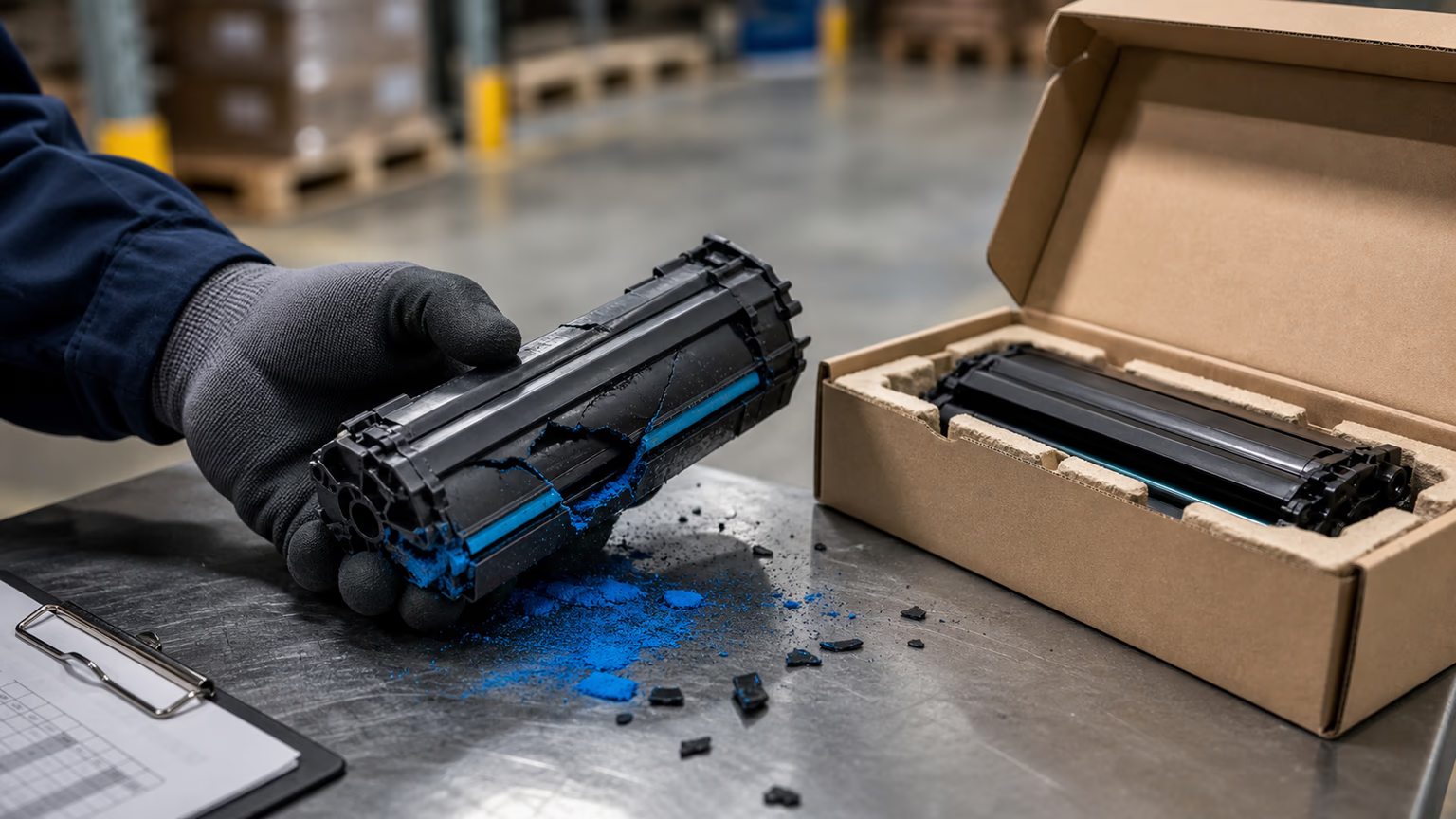
Toner cartridge damage from poor packaging erodes distributor margins. This guide shows how smart packaging design prevents returns, cuts hidden costs, and turns packaging into a competitive advantage.
When Compatible Cartridges Go Unrecognized: A Strategic Response for Distributors and Service Providers
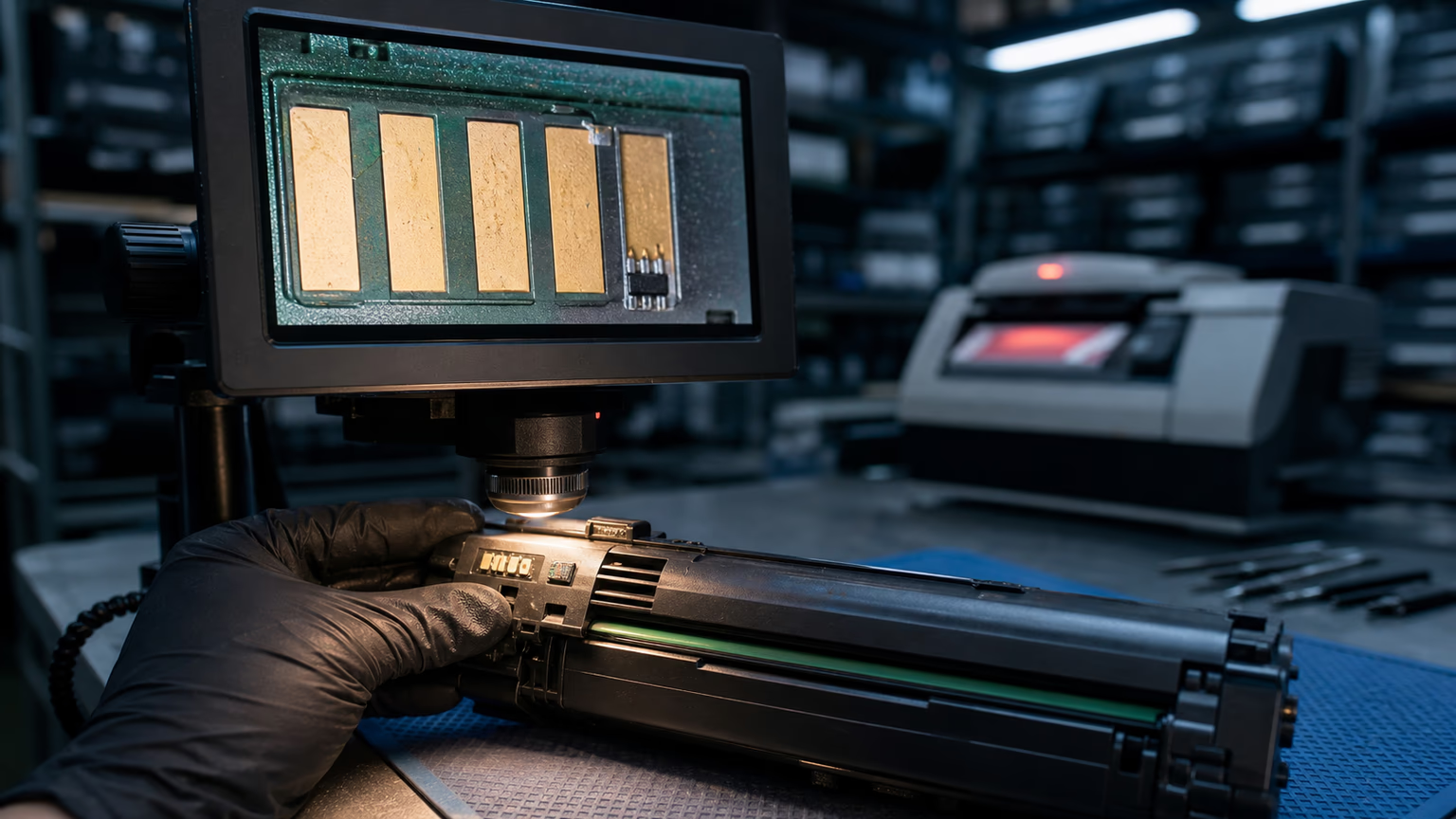
When a compatible toner cartridge is not recognized, it triggers operational and reputational risks for B2B distributors. Learn the root causes and how to prevent failures through strategic supplier selection and testing.

Why Cheap Toner Becomes Expensive After the First Complaint
A single toner complaint can wipe out margins across many units. For B2B distributors, the lowest price hides operational risk. Learn how cheap toner becomes the most expensive choice after the first failure.

De-risking Office Print: The Strategic Shift to Compatible Toner
Office print procurement is shifting. As OEM contracts tighten and sustainability pressures rise, compatible toner offers a strategic path to lower costs—but only if buyers master quality, compatibility, and risks.

Service Engineer Feedback Loops: The Missing Part of Toner Supplier Selection
Procurement routinely ignores the frontline intelligence that service engineers accumulate daily. This article reveals how to turn engineer feedback into a supplier-evaluation tool that boosts fleet reliability, reduces total cost.
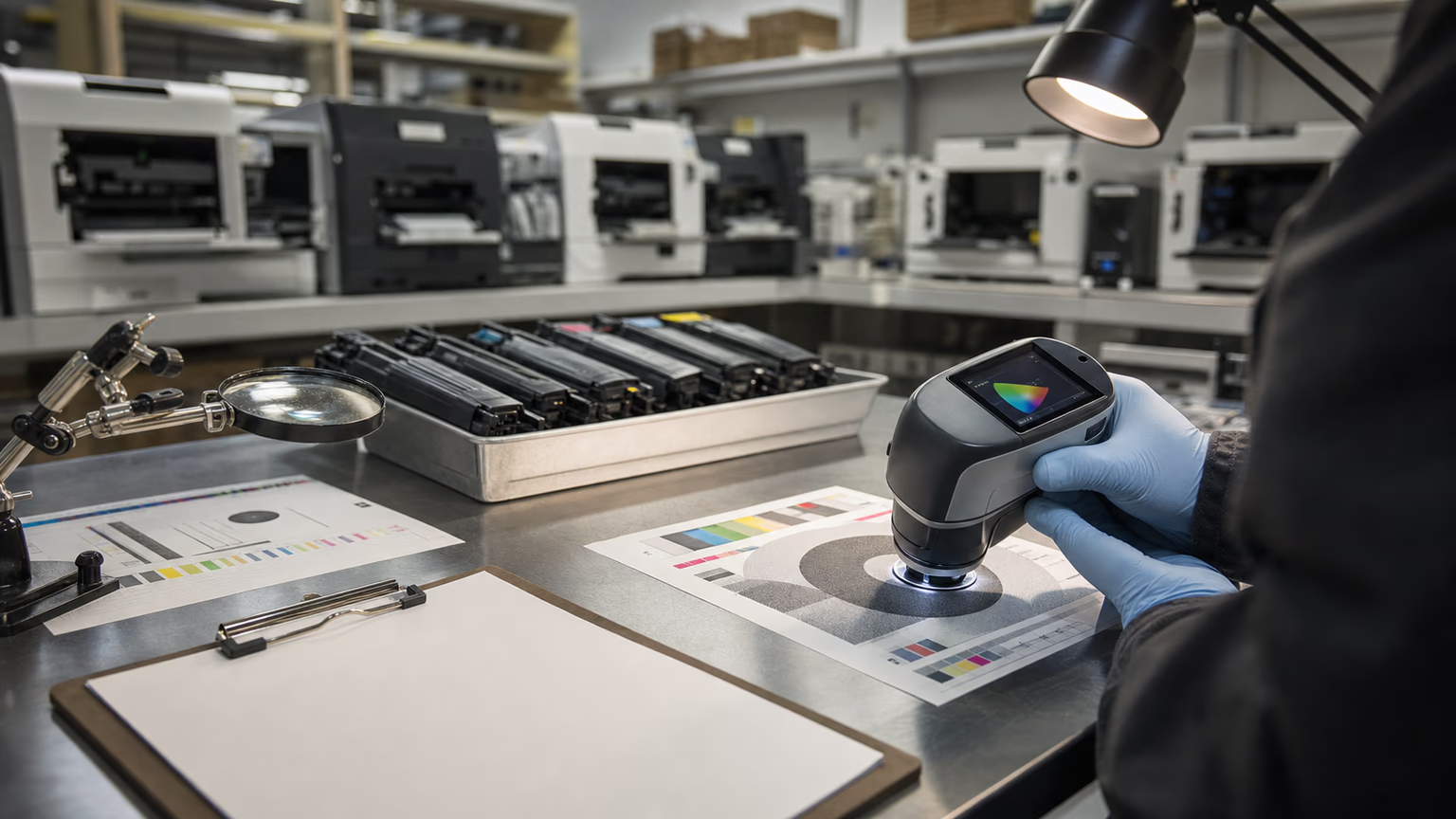
How to Run a Pilot Test Before Switching from OEM to Compatible Toner: A Strategic B2B Framework
A pilot test is the missing step before switching to compatible toner. This guide shows distributors and MPS operators how to validate quality and yield, minimizing procurement risk with a structured methodology.

Poor Black Density: Toner Formulation or Cartridge Mechanical Failure? A Diagnostic Framework for B2B Professionals
Poor black density often triggers costly returns for laser printers. This guide helps B2B distributors quickly determine if the cause is toner formulation or cartridge mechanics, reducing returns and improving sourcing.

Recycled vs New-Build Toner Cartridges: The B2B Trade-Off Between Sustainability and Consistency
For distributors and service companies, the real question is not which cartridge is greener in theory, but which option delivers stable output, fewer complaints, and lower operational risk.
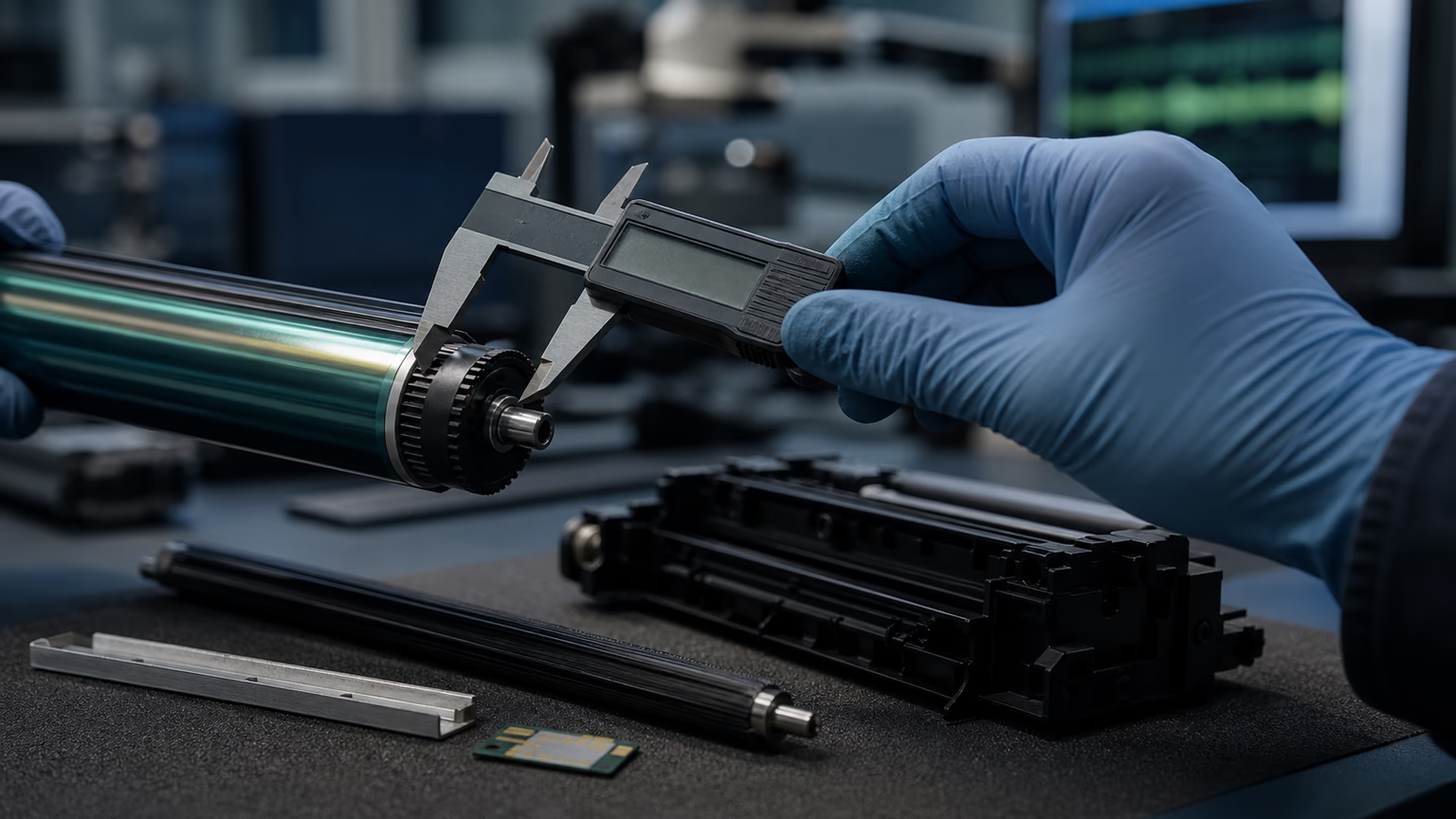
The Future of Compatible Toner in Office Printing: A Strategic Shift for B2B Distributors
Office print complexity is transforming compatible toner into a strategic asset for B2B distributors. Mitigating quality, service, and compatibility risks through a future-proof supplier partnership is now essential for long-term.

The Toner Cartridge Your Service Team Will Not Hate
The right toner is not the cheapest box on the shelf. It is the cartridge that installs cleanly, prints predictably, and keeps service teams out of avoidable escalations.
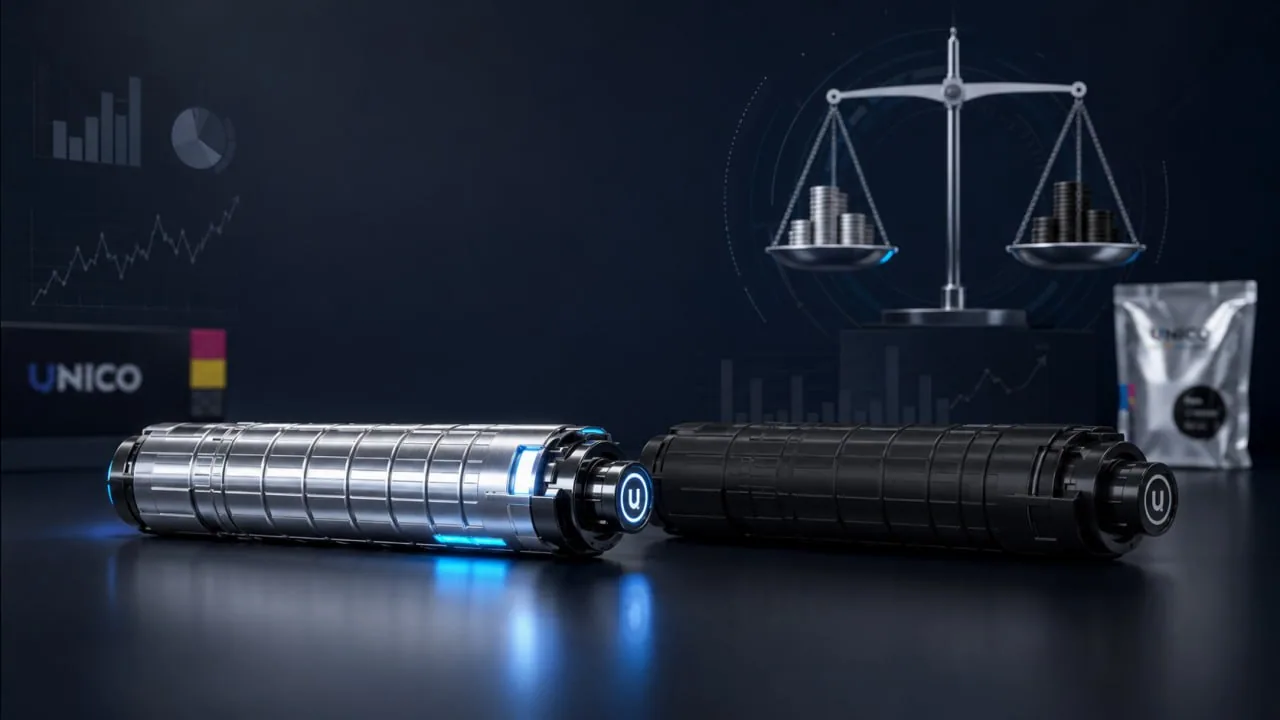
Toner Cartridge Suppliers: How Importers Choose a Reliable Partner for B2B Supply
Choosing toner cartridge suppliers is not only about price. Importers need stable quality, clear compatibility, batch consistency, packaging support, and long-term B2B supply discipline.

Premium Toner Cartridges vs Affordable Printer Toner Cartridges in HP, Canon, Xerox, Ricoh, Kyocera Fleets
The choice between premium toner cartridges and affordable printer toner cartridges affects cost, stability, and fleet performance across HP, Canon, Xerox, Ricoh, and Kyocera environments.
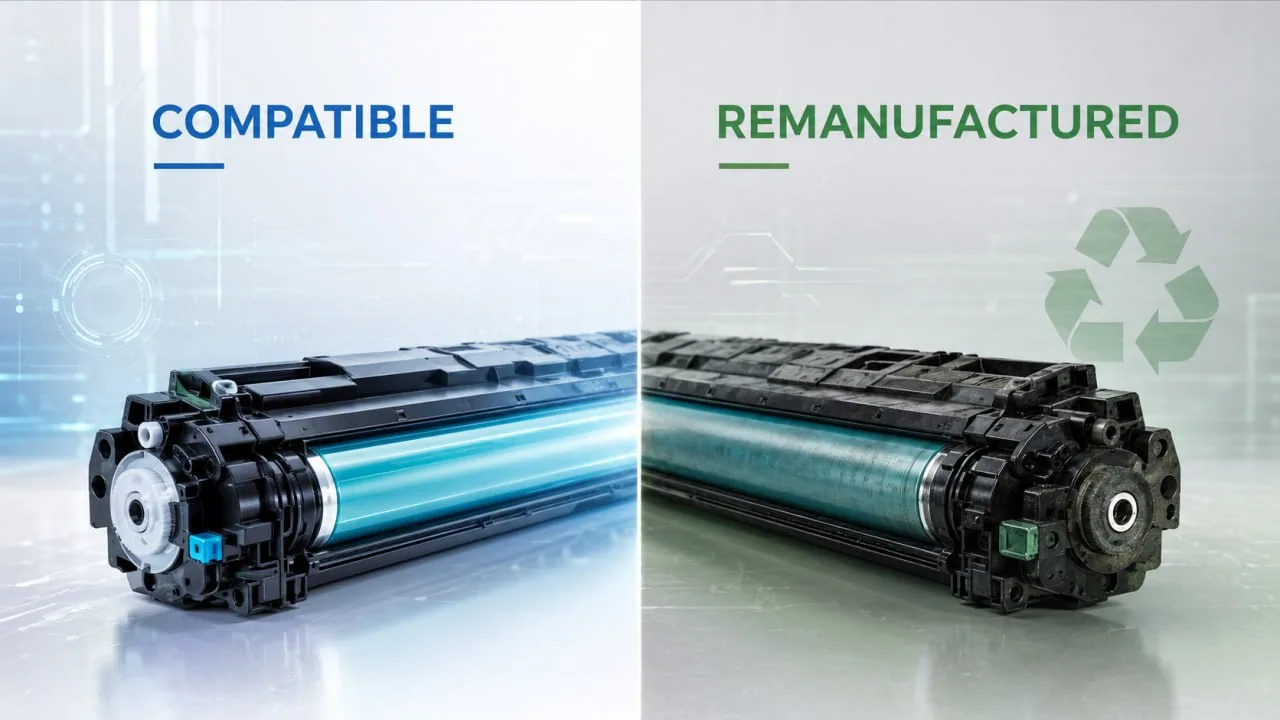
Compatible Toner Cartridges vs Remanufactured Toner Cartridges in HP, Canon, Xerox, Ricoh, Kyocera Fleets
In B2B fleets using HP, Canon, Xerox, Ricoh, Kyocera and Brother printers, the choice between compatible and remanufactured toner cartridges affects cost, quality, stability, and long-term maintenance.

Wholesale Toner and Bulk Orders for HP, Canon, Xerox, Ricoh, Kyocera, Brother, Samsung Printers
Wholesale toner for major printer brands is not only about price. HP, Canon, Xerox, Ricoh, Kyocera, Brother, Samsung, and Lexmark require stable supply, compatibility control, and margin protection.

Toner Cartridge Manufacturer vs Vendors: What B2B Buyers Should Check
Understanding the difference between toner cartridge manufacturers and vendors is critical for importers. It affects price, quality control, MOQ, stability, and long-term supply strategy.
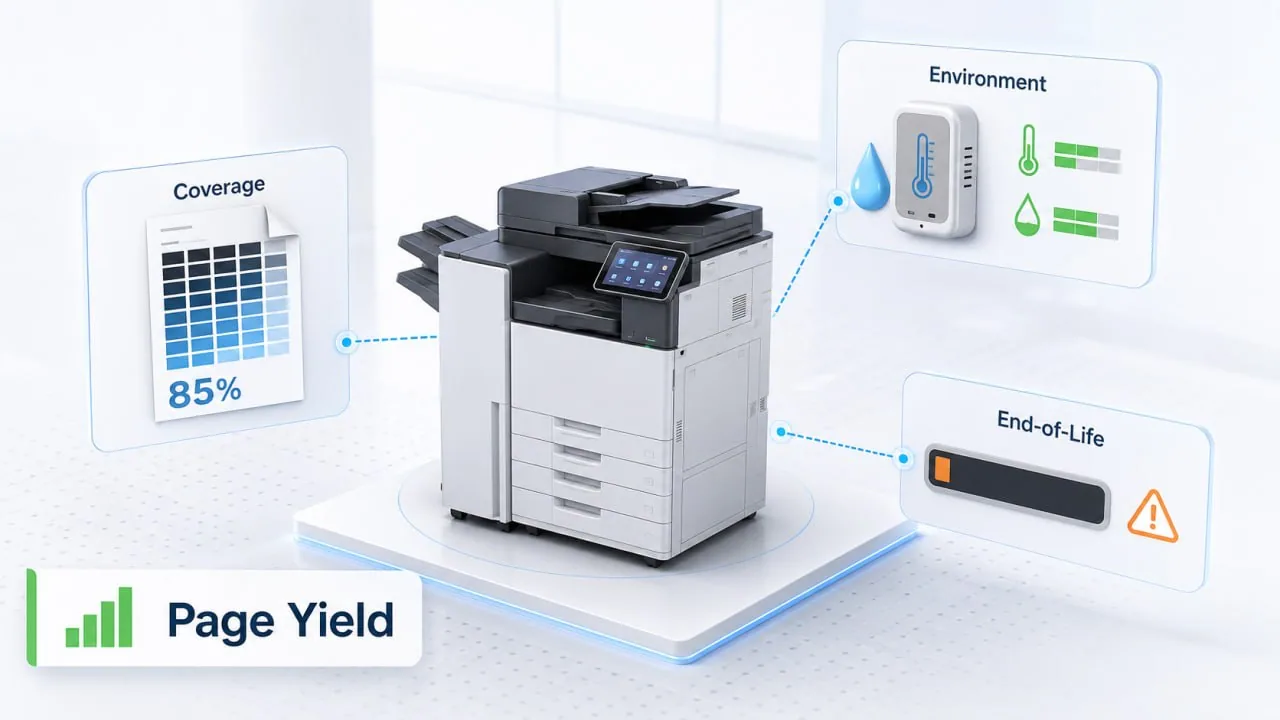
Low Page Yield in B2B Fleets: Coverage, Environment, and True End-of-Life Conditions
Low page yield in B2B fleets is not always caused by low toner volume. Coverage, environment, transfer efficiency, machine condition, and usage patterns often determine real yield performance.
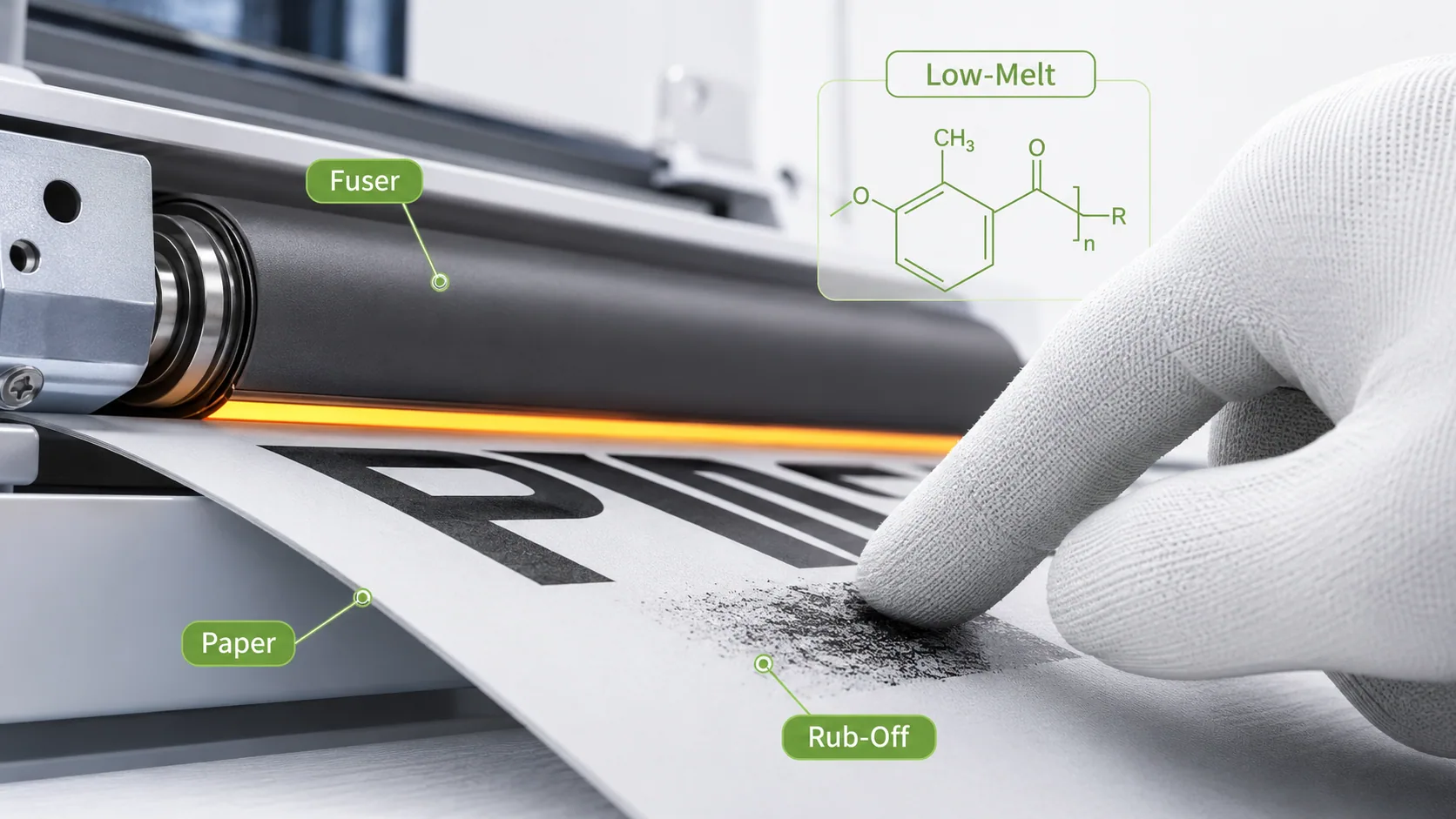
Why Toner Rubs Off the Page: Paper, Fuser, and Low-Melt Formula Checks
When toner rubs off the page, the image has not fused correctly. The cause may be paper, fuser temperature, low-melt formula mismatch, machine speed, or cartridge quality.
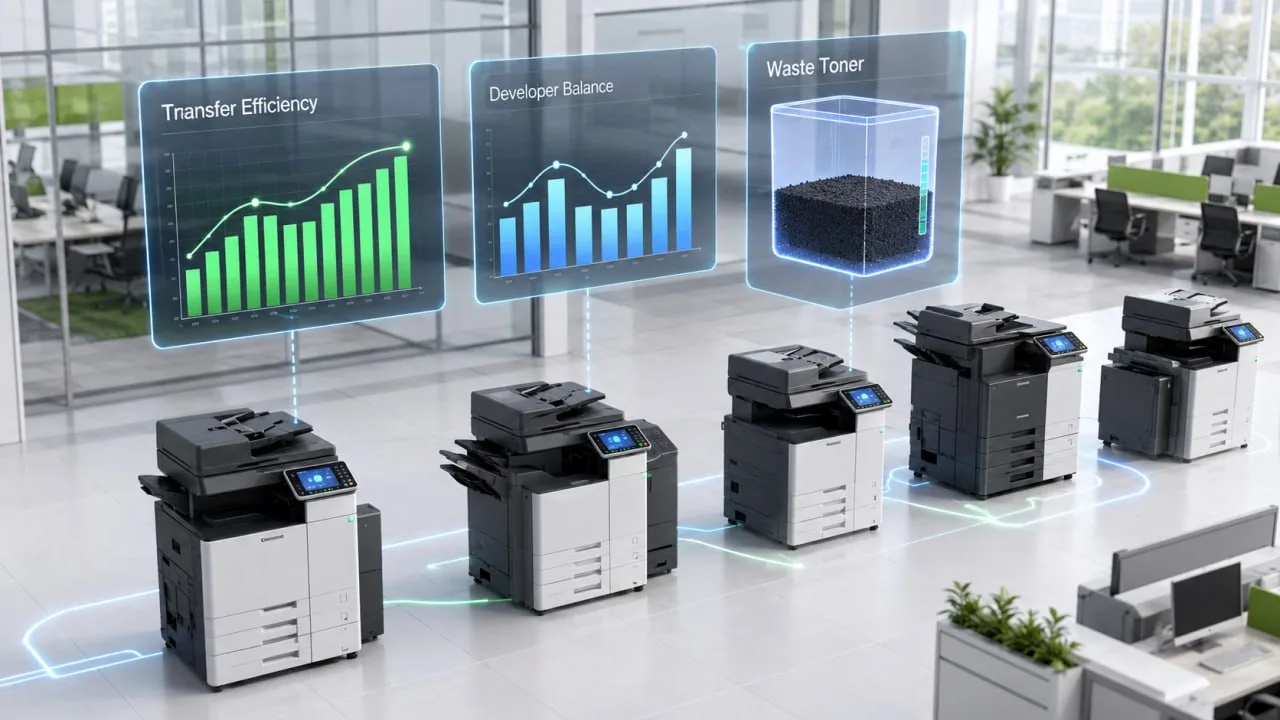
High Waste Toner in Copier Fleets: Transfer Efficiency and Developer Balance
High waste toner in copier fleets is usually a sign of poor transfer efficiency, developer imbalance, or system wear. It affects cost, maintenance cycles, and overall print stability in B2B environments.

Toner Smearing After Fusing: Resin, Wax, and Fuser Temperature Compatibility
Toner smearing after fusing usually indicates a mismatch between toner formulation and fuser temperature. Resin, wax content, pressure, and paper type all affect final print stability.
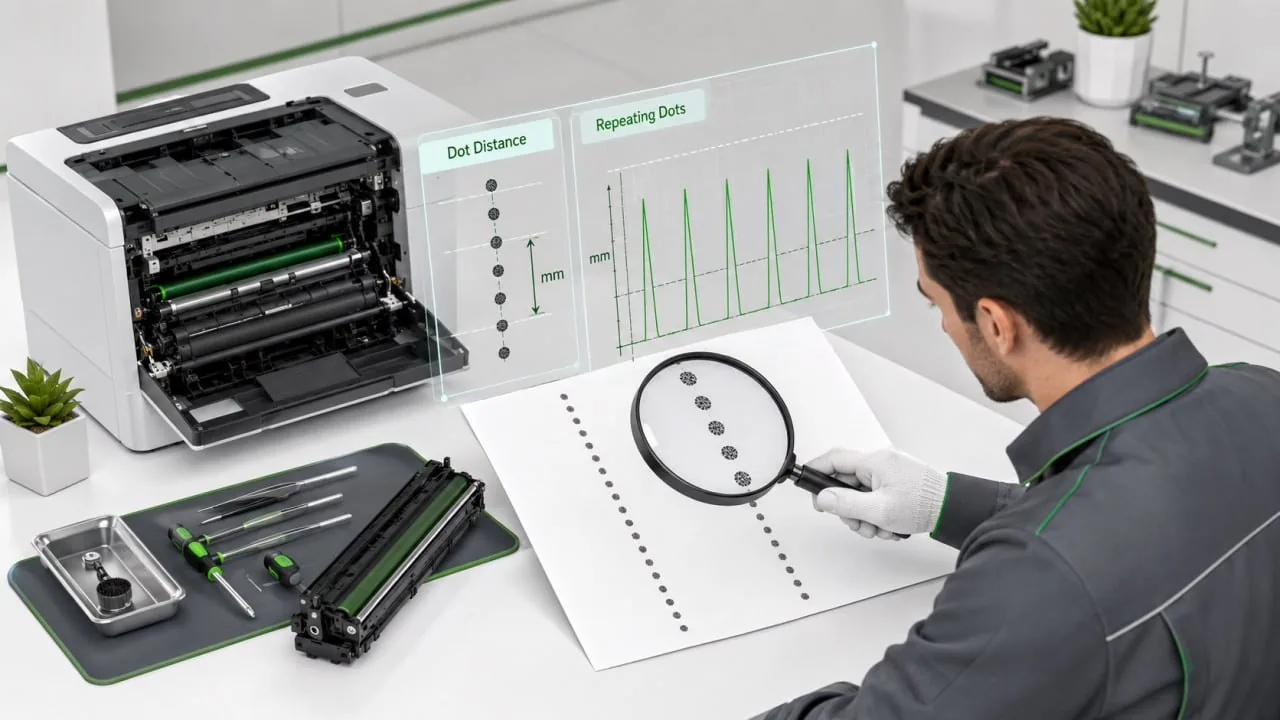
Repeating Dots on Printed Pages: A Defect Distance Chart for Service Engineers
Repeating dots on printed pages usually follow a mechanical pattern. Measuring the distance between marks helps service engineers identify whether the source is the toner cartridge, drum, transfer system, or fuser.

How to Build a Profitable Compatible Toner Line With Factory Support
A profitable compatible toner line is not built by choosing the cheapest cartridges. It requires the right SKU range, factory support, quality consistency, packaging discipline, margin planning, and customer-focused after-sales support.

From Sample to Shelf: How to Launch a Toner Brand in 90 Days
Launching a toner brand does not require building your own factory. With the right private label manufacturer, buyers can move from sample testing to packaging, production, and first shipment in about 90 days.
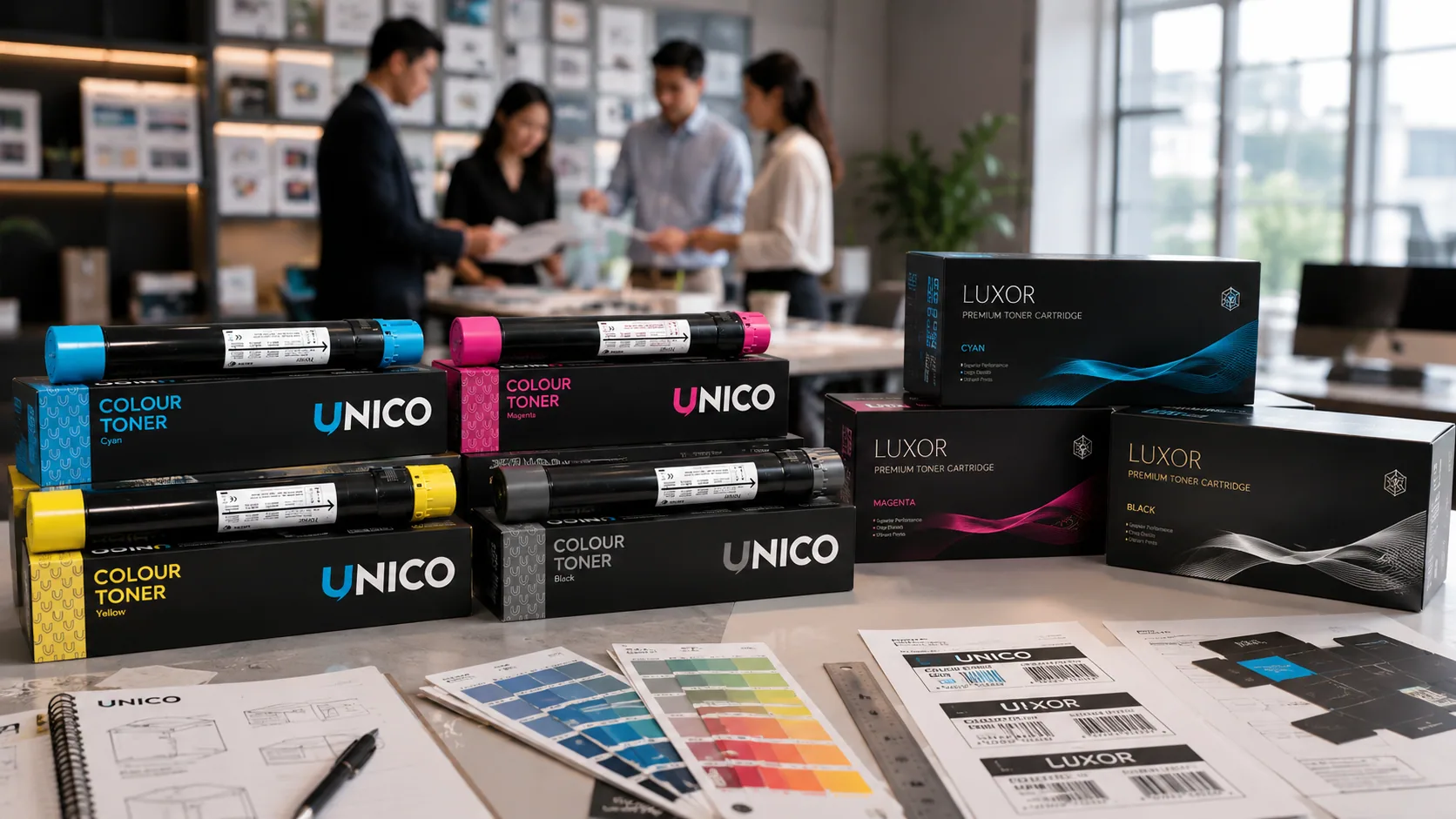
Private Label Toner That Looks Premium and Performs Consistently
Private label toner succeeds when it looks professional and performs consistently. Strong packaging may win attention, but stable print quality, batch control, and factory support create repeat orders.

Private Label Toner Manufacturing Without Building Your Own Factory
Private label toner manufacturing gives distributors, resellers, and B2B suppliers a practical way to build their own toner brand without investing in production lines, cartridge tooling, quality labs, or factory management.
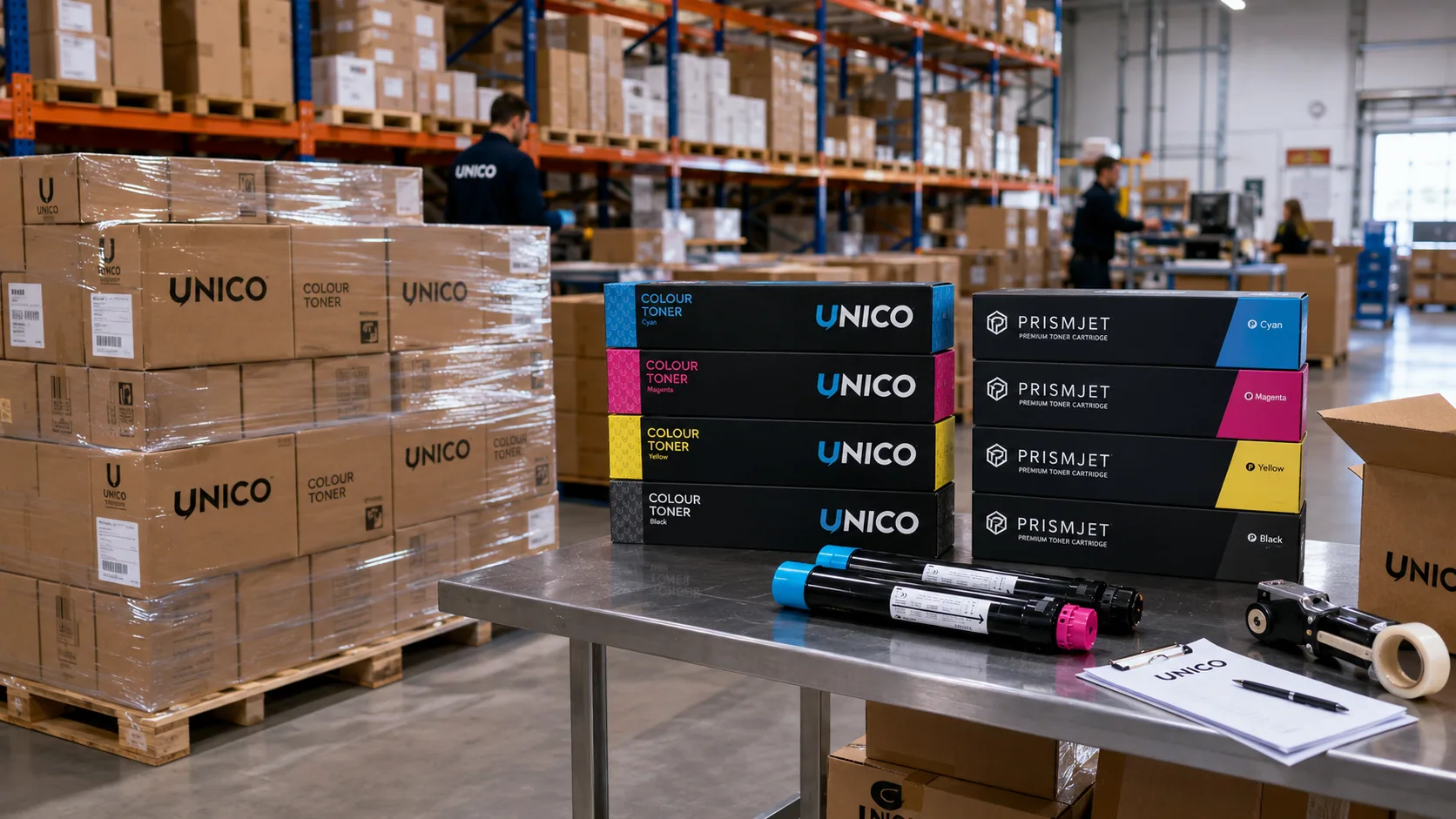
Create Your Own Toner Cartridge Brand With OEM-Level Presentation
Creating your own toner cartridge brand is not only about printing a logo on a box. To compete professionally, your brand needs OEM-level presentation, stable product quality, clear compatibility data, strong packaging, and factory support.

Ghosting After Installing a New Toner Cartridge: A Factory-Level Root Cause Analysis
Ghosting after installing a new toner cartridge is often blamed on the cartridge, but the real cause may involve toner charge behavior, drum condition, PCR contamination, fuser temperature, transfer failure, or printer maintenance.

Why Compatible Toner Creates Gray Background: Charge, Humidity, and PCR Contamination
Gray background is one of the most common print defects after switching to compatible toner. The real causes are usually not “bad toner” alone, but charge control, humidity, PCR contamination, transfer behavior, and cartridge component stability.

Black Streaks on Laser Prints: How to Identify Drum, Blade, or Toner Defects
Black streaks on laser prints can come from drum damage, wiper blade failure, toner leakage, PCR contamination, developer roller defects, waste toner problems, or poor cartridge assembly. This guide explains how to identify the root cause.

Toner Leaking From the Cartridge: Seals, Hopper, Doctor Blade, and Transport Failure Modes
Toner leaking from a cartridge is not just a messy complaint. It can point to seal failure, poor hopper control, doctor blade defects, waste toner problems, transport damage, or weak factory process control.

Light Print With Compatible Toner: Seven Causes Beyond Low Fill Weight
Light print with compatible toner is often blamed on low toner fill weight, but the real cause may involve toner charge, poor transfer, developer roller issues, toner flow, drum wear, humidity, or fuser performance.
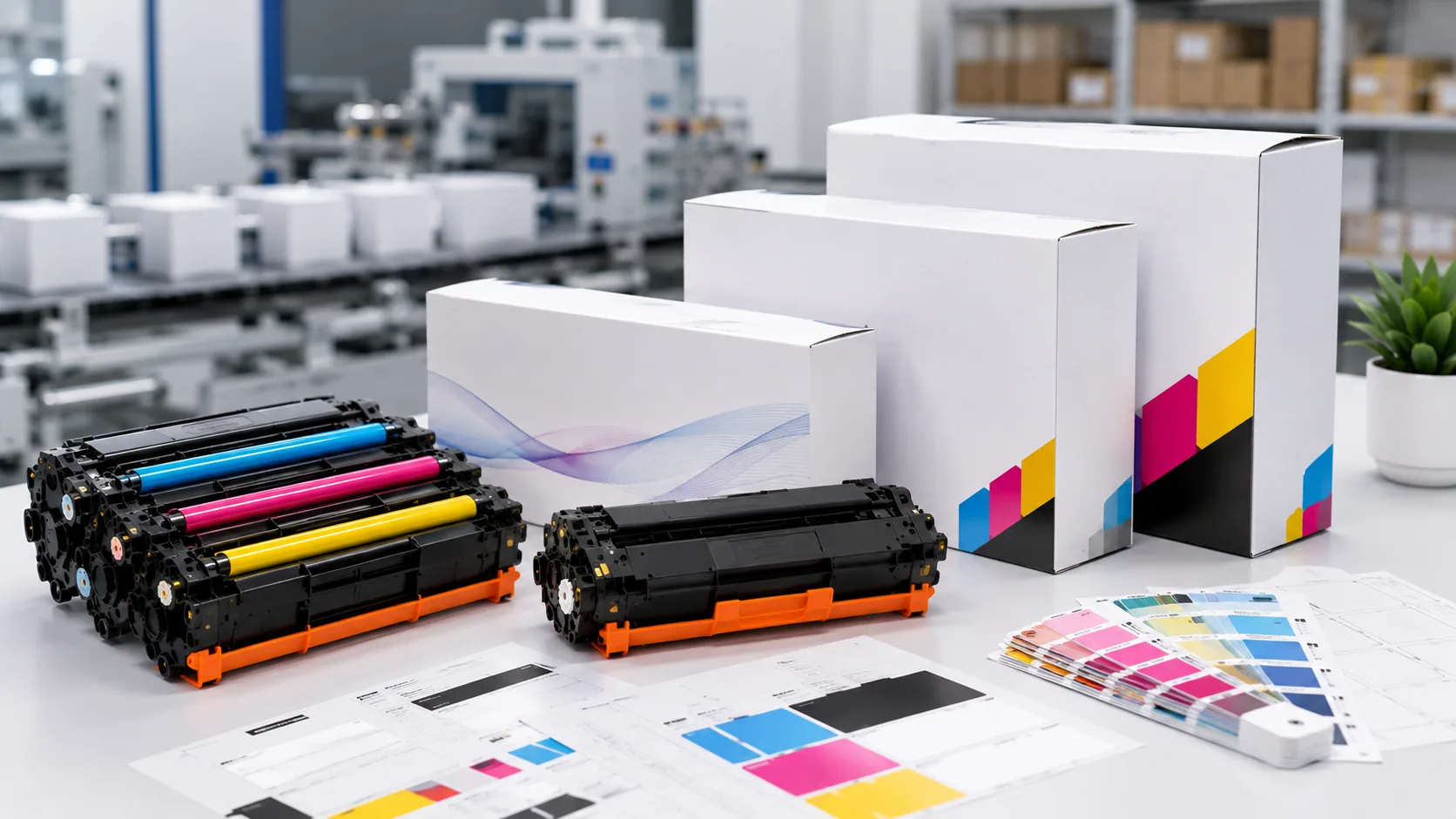
Private Label Toner Manufacturing: A Technical Guide for Distributors
Private label toner allows distributors to build their own brand. This guide covers technical requirements, quality control, MOQ, logistics, and how to evaluate a manufacturing partner for white label cartridges.
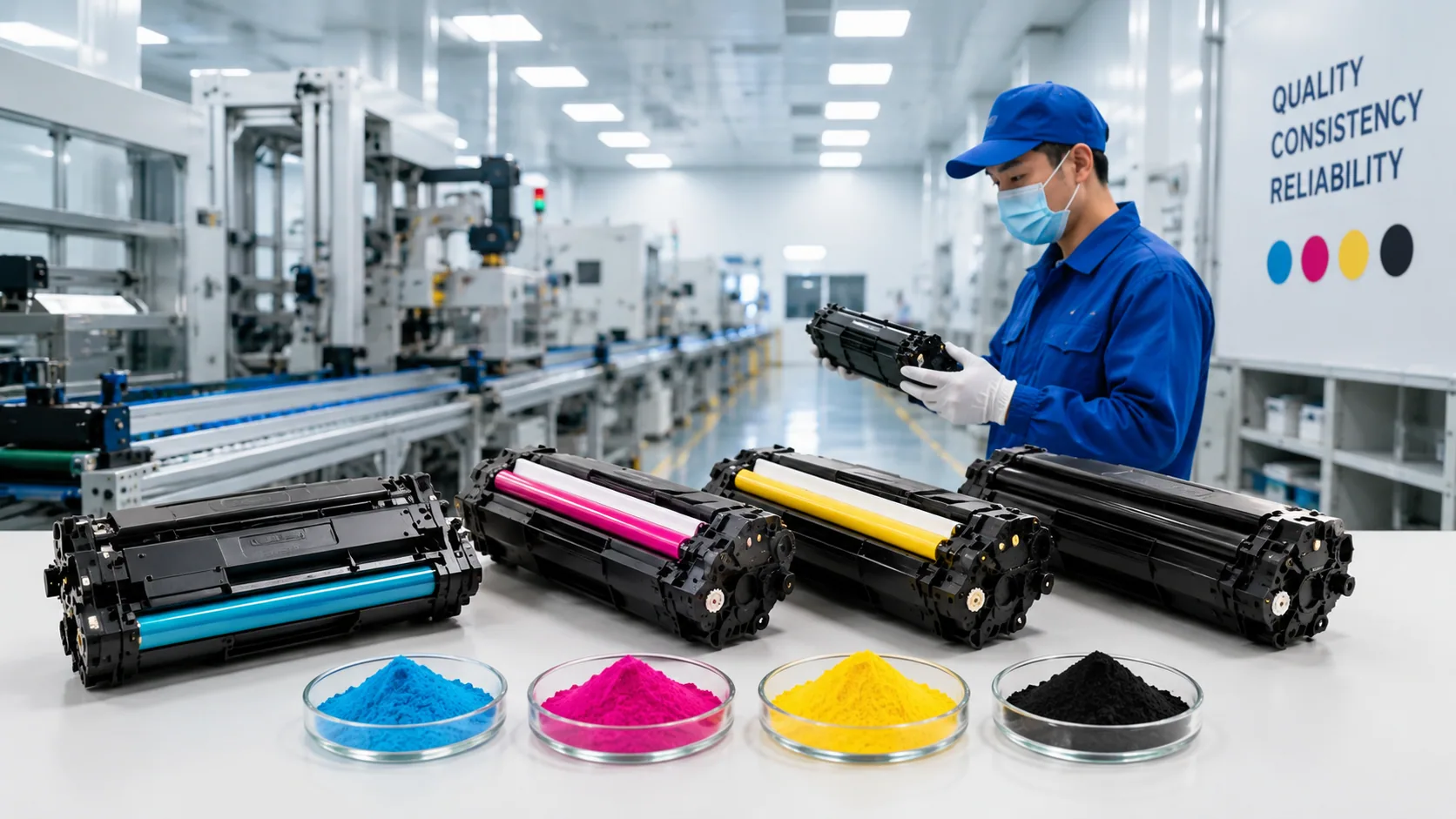
How to Choose a Compatible Toner Manufacturer for B2B Supply
A practical B2B guide to selecting a compatible toner manufacturer based on quality control, batch consistency, supply reliability, packaging, and support.

How to Select a Wholesale Toner Supplier: Key Criteria for B2B Buyers
Selecting a wholesale toner supplier requires more than price comparison. This guide covers batch consistency, chip compatibility, MOQ, packaging, and logistics for distributors and procurement managers.