Why a Pilot Test Is the Missing Step in Compatible Toner Adoption
Procurement and service teams across the B2B print industry face a persistent dilemma: the promise of substantial cost savings from compatible toner cartridges is often overshadowed by fear of quality degradation, printer damage, and operational disruptions.
This fear isn't unfounded—many have experienced inconsistent print output, chip errors, or even cartridge leaks after a hasty switch.
Yet, the common approach of relying on supplier samples or spec sheets alone is precisely what leads to these failures.
A structured pilot test transforms this gamble into a measured, data-driven procurement decision.
It provides the only evidence-based way to validate supplier claims, uncover hidden issues before they impact the entire fleet, and build internal consensus among skeptical stakeholders.
The cost of a controlled pilot—requiring a handful of cartridges and minimal technician time—is negligible compared to the cost of a fleet-wide switch gone wrong, which can trigger service call spikes, customer dissatisfaction, and expensive remediation.
When procurement teams frame the pilot as a strategic risk-mitigation tool rather than an optional trial, they shift the conversation from subjective fear to objective evaluation.
At its core, a pilot test serves to answer two critical questions that no specification sheet can: Will this compatible toner perform consistently in our specific environment, and what is the true total cost of ownership?
Supplier benchmarks are often derived from ideal lab conditions, not the variable usage patterns, paper types, and printer states found in real offices.
By running a small-scale, controlled test, organizations can isolate variables, measure outcomes precisely, and avoid the widespread disruption of a premature, all-in migration.
Service managers who have been burned by past compatible toner experiments are far more likely to support a transition when they see that the process is systematic and that their feedback is instrumental in the evaluation criteria.
Ultimately, the pilot test becomes a tool to convert resistant teams into champions of the switch, because they helped define and meet the quality thresholds.
Scoping the Pilot: What to Test and How to Measure
Defining the scope of a pilot test is as critical as the test itself.
Without clear success criteria, the results become ambiguous and open to confirmation bias.
Start by establishing exactly what must be proven: for example, that the compatible toner achieves at least 95% of the OEM page yield under normal usage, that print quality remains within acceptable tolerance (no streaking, consistent density), and that service call rates do not increase by more than a predetermined threshold during the test period.
These criteria should be agreed upon by procurement, service managers, and key stakeholders before the first cartridge is loaded.
The test duration must be long enough to expose intermittent issues—testing only half a cartridge cycle may miss problems that emerge as the toner depletes or as the printer mechanics interact with the cartridge over time.
A minimum of two to three full cartridge cycles per printer is recommended to capture variation and any degradation in later prints.
Metric selection is paramount.
The primary metric is actual page yield—not the manufacturer's claim but the measured number of pages printed until the cartridge signals empty or print quality becomes unacceptable.
Track pages per cartridge using the printer's page counter, noting the type of documents (text vs. heavy coverage) because coverage percentage dramatically affects yield.
Secondary metrics include optical density (measured with a densitometer or calibrated scanner), background contamination, solid-area uniformity, and character legibility.
Operational metrics must also be tracked: number of service calls related to the cartridges, technician time spent troubleshooting, and any cartridge failures (leaking, chipping, jamming).
User satisfaction surveys can capture subjective perception, but they should complement, not replace, objective measurements.
Without this multi-faceted data collection, the pilot becomes an anecdotal exercise rather than a reliable benchmark for procurement decisions.
Selecting the Right Test Fleet: Models, Environments, and Users
A common pitfall is testing compatible toner only on a single printer model or in a controlled environment that doesn't reflect real-world diversity.
The goal is to build a test fleet that represents the variety of devices, usage patterns, and environmental conditions across your organization or your clients' sites.
Select printers from different manufacturers—especially those that are dominant in your fleet—and include both older units with higher page counts and newer, more sensitive models.
This diversity uncovers compatibility nuances that a homogeneous sample would miss.
Avoid printers that handle mission-critical, high-visibility output during the pilot phase; instead, choose typical office printers where occasional print quality variances can be contained without business impact.
Environmental factors matter more than many buyers realize.
Printers in humid warehouses, dusty offices, or temperature-fluctuating print rooms may expose toner fusing or cartridge sealing issues that climate-controlled labs never see.
Similarly, include a mix of high-volume and low-volume printers to test whether the cartridge performance degrades with intermittent use or long idle periods.
End-user profiles should also vary: if possible, include a department that prints heavy graphics and one that primarily prints text documents.
The more the pilot environment mirrors the fleet's reality, the more generalizable and trustworthy the results will be.
This staged approach also limits risk: should a cartridge fail, the impact is contained to a segment you've already deemed non-critical.
Executing the Pilot: Installation, Monitoring, and Data Collection
Execution discipline separates a successful pilot from a messy one.
Before installation, document the baseline: record the model, firmware version, page count, and current OEM toner levels for each test printer.
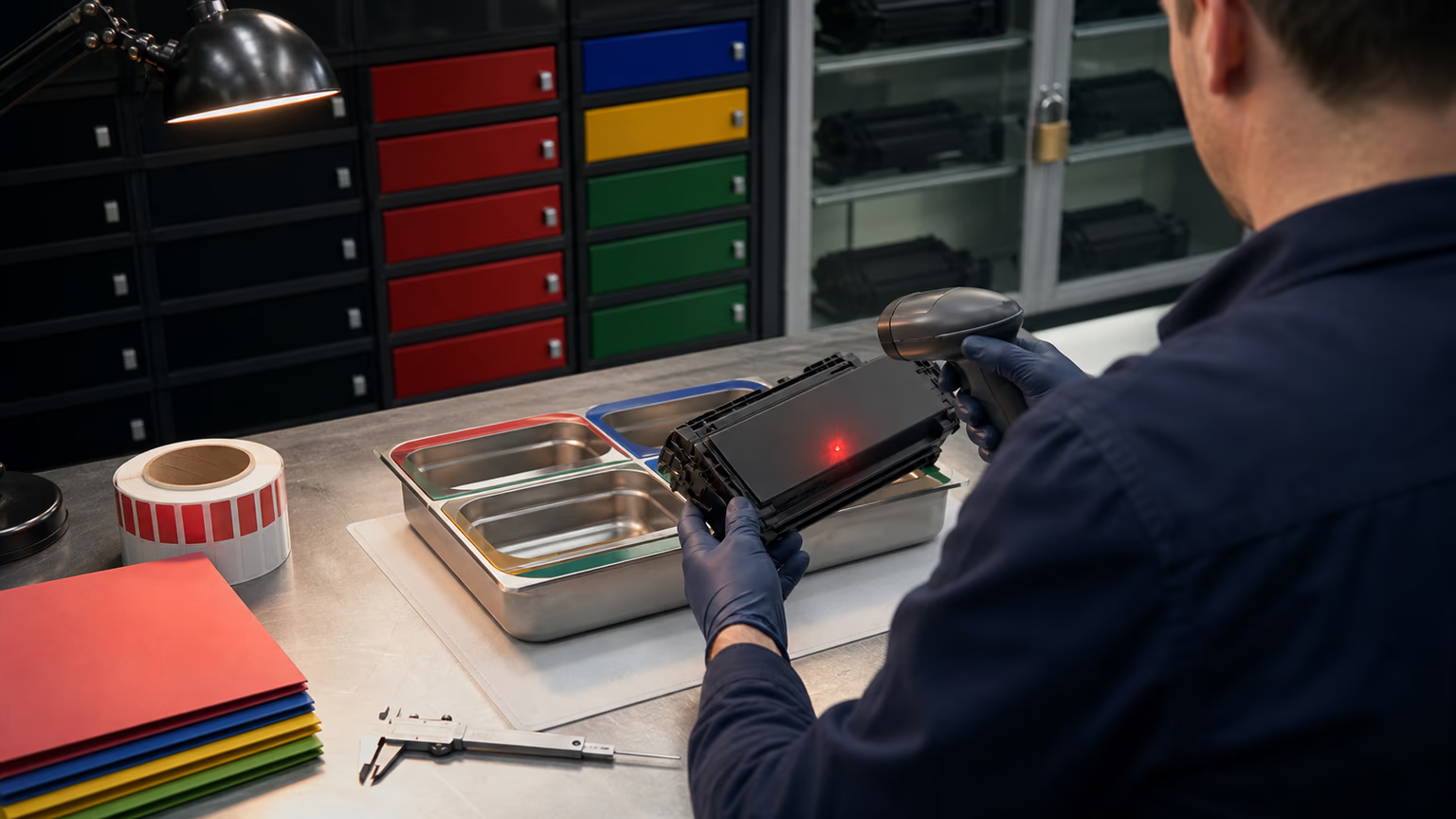
Create a standardized installation checklist that includes inspecting the cartridge for physical damage, verifying chip contacts, and confirming that the printer recognizes the cartridge without error.
Any incompatibility must be logged immediately.
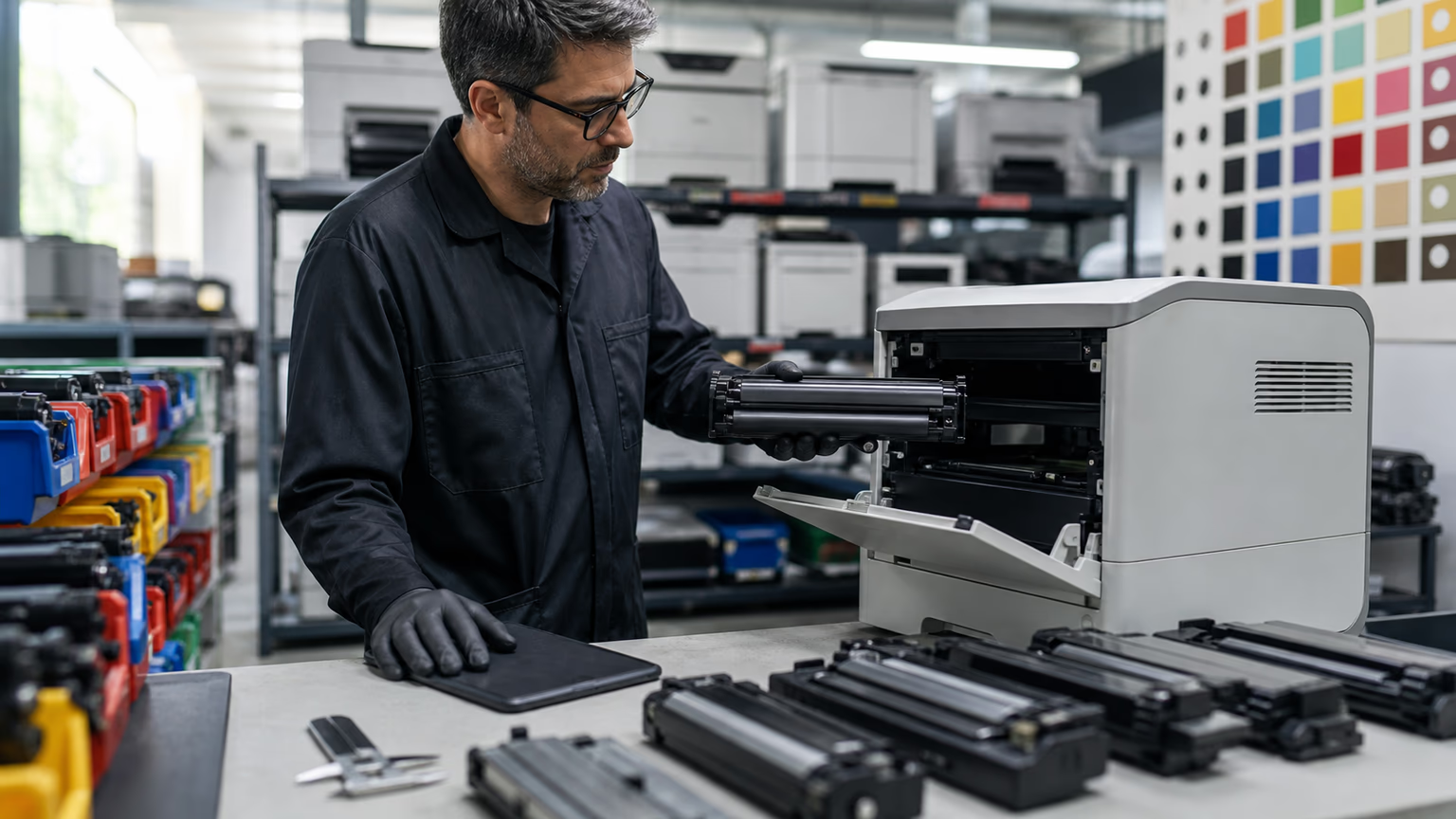
Service technicians should install the cartridges according to a documented procedure, not simply hand them to end users, to ensure consistency.
Once installed, print a standardized test page (such as ISO/IEC 19752 or an internally developed equivalent) and archive it as the time-zero reference.
Ongoing monitoring requires a simple but rigorous logging system.
A shared digital log or even a paper form near the printer should capture the date, page counter reading, any print quality observations (subjective: 'faded text', 'streaks on left margin'), and any service interventions.
Technicians should periodically re-print the standardized test page and compare it to the baseline.
Photographic evidence of anomalies is invaluable for later analysis and supplier discussions.
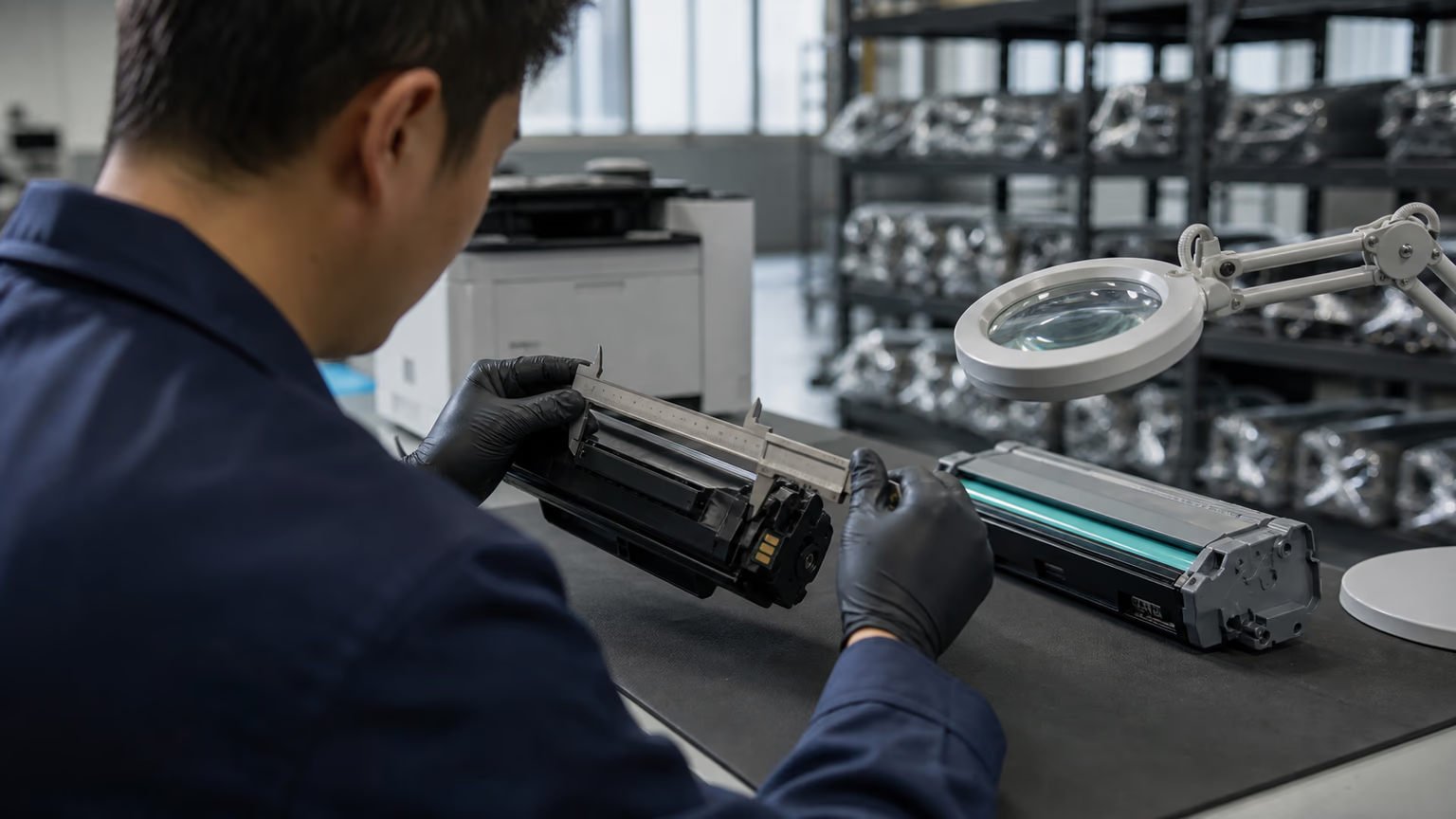
If possible, collect the used cartridges after exhaustion for physical inspection—look for toner leakage, seal failures, or uneven wear.
This forensic approach not only provides a rich data set for evaluating the current pilot but also creates a template for future supplier evaluations.
Without meticulous data collection, the pilot's conclusions will be vulnerable to anecdote and bias, undermining the very objectivity it was meant to bring.
Evaluating Results: Print Quality Analysis Beyond the Naked Eye
Subjective impressions of print quality are notoriously unreliable.
What one user considers acceptable, another may deem unacceptable.
To build a solid case for or against a switch, objective print quality analysis is essential.
The use of standardized test pages allows for side-by-side comparison between OEM and compatible output.
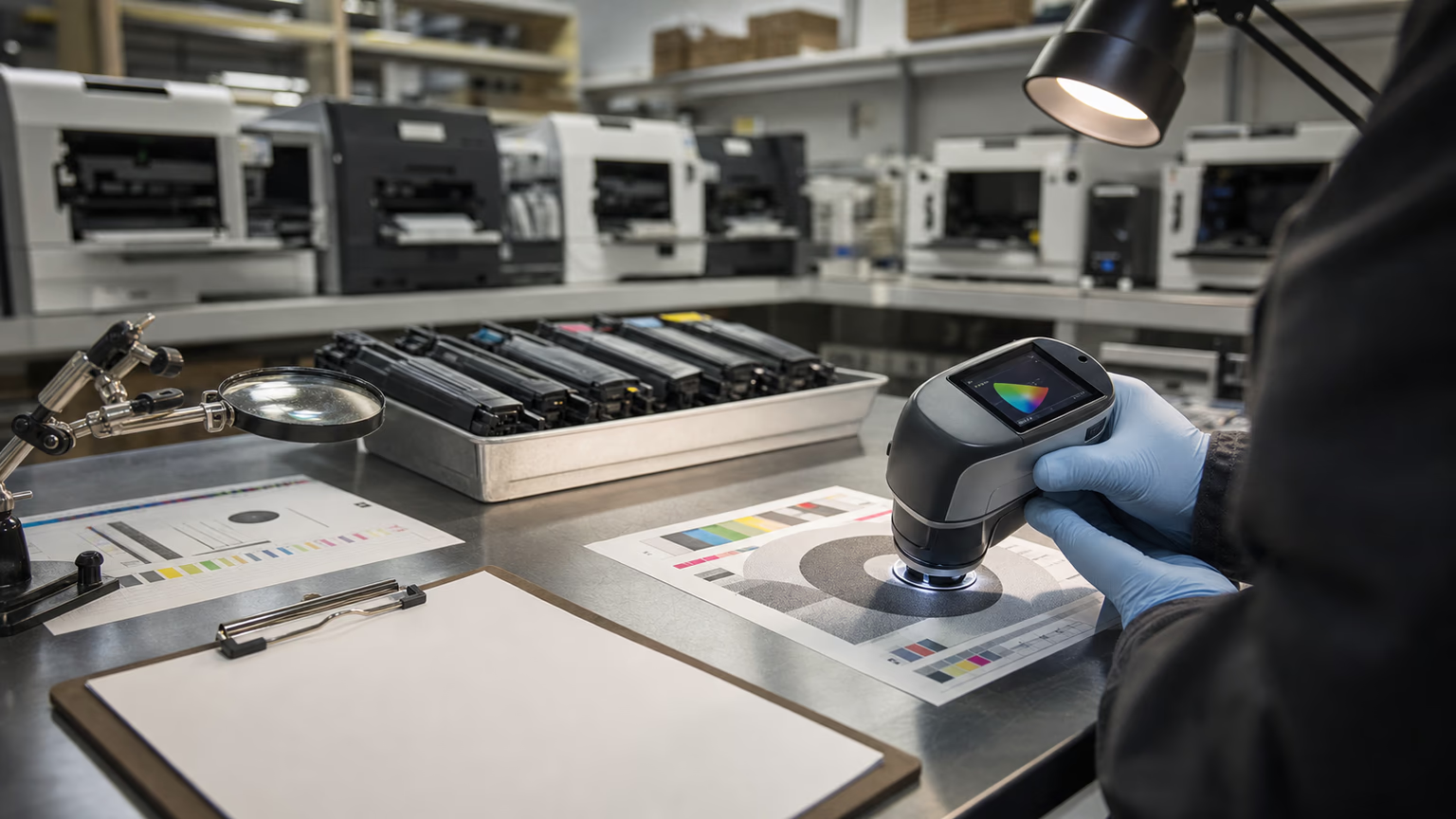
Test pages should include solid black and gray blocks (to assess density and uniformity), fine lines and resolution targets (to check for jagged edges or breakup), and halftone patterns (to detect banding).
A simple visual comparison using a loupe or magnifying glass can reveal fill-in of small text, background scatter, or poor edge definition, but quantitative measurements add rigor.
A densitometer—whether a handheld device or a scanner-based software tool—provides numeric density values that can be tracked across the cartridge life.
Measure the same location on consecutive test prints to see if density drifts as the cartridge empties.
Background contamination can be quantified by measuring the density of unprinted areas.
If a baseline OEM cartridge test was performed under the same conditions, the compatible toner's values should fall within a pre-agreed tolerance, such as within ±0.05 optical density units.
This data, plotted over time, reveals whether the compatible cartridge maintains consistency.
Print quality issues like streaking or ghosting often appear at specific coverage levels, so including high-coverage test pages in the evaluation protocol is critical.
By presenting side-by-side evidence with numerical backing, procurement can shift the conversation from feeling to fact, making the decision defensible and repeatable.
TCO Math: Calculating True Savings vs. Hidden Costs
The purchase price per cartridge is the most visible cost, but it tells only a fraction of the story.
A true total cost of ownership (TCO) comparison must factor in actual yield, service impact, and waste.
The basic formula is: (Cost of cartridge / Actual average yield) + (Cost per service call × Service calls attributed to cartridge) + (Cost of wasted prints × Number of wasted prints).
Even small differences in yield can dramatically alter the cost per page.
If a compatible cartridge costs 30% less but delivers 40% fewer pages, the effective cost per page may be higher than OEM—a reality that only a pilot can uncover.
Additionally, if the compatible toner causes an extra service call per printer per year, that cost must be amortized over the printed pages and added to the per-page figure.
Hidden costs lurk in increased wear on printer components.
Toner that doesn't fuse properly can contaminate the fuser or drum, leading to premature replacements.
Spilled toner inside the printer can cause jams or sensor errors.
These downstream costs are harder to attribute but become visible in a well-monitored pilot if service records are scrutinized.
Waste metrics are equally telling: if a cartridge fails entirely or produces a high rate of unacceptably poor prints, the cost of that wasted paper and toner must be accounted for.
After collecting pilot data, build a simple TCO model that compares the OEM baseline to the compatible pilot results, and then project the annual fleet-wide savings with a sensitivity analysis.
What if yield varies by ±10%?
What if service calls increase by one per month?
This modeling transforms the pilot from a pass/fail test into a strategic financial tool that quantifies risk and reward, enabling procurement to negotiate with suppliers from a position of data-backed confidence.
Making the Decision: Transition Plan and Supplier Commitment
Once the pilot data is in, the decision to switch—or not—should be clear-cut if go/no-go criteria were defined from the start.
The pilot results either meet the quality, yield, and service impact thresholds or they don't.
There should be no 'almost good enough' if the thresholds were set based on operational requirements.
If the pilot succeeds, the transition to a broader rollout must be phased, not instantaneous.
Start with printers that are identical or very similar to those in the pilot, in the same environments, and gradually expand to more models and locations.
This phased approach allows for continuous monitoring and immediate corrective action if new issues emerge.
Pair the rollout with a service team feedback loop: techs should be encouraged to report any anomalies and have a fast channel to escalate persistent problems.
Supplier commitment is equally vital.
Use the pilot data to negotiate performance guarantees.
For instance, you might agree on a maximum acceptable service call rate attributable to toner, or a minimum yield warranty.
The pilot data serves as a benchmark, so if batch consistency slips later, you have leverage to demand investigation or replacement.
Build a continuous quality monitoring process—perhaps a smaller-scale, ongoing audit using the same test pages and metrics on a rotating subset of printers.
This ensures that the initial quality of the pilot batch is sustained across future shipments.
Transitioning from OEM to compatible is not a one-time event; it is a supply chain change that requires sustained vigilance.
A well-run pilot, documented and analyzed, gives procurement the confidence to move forward while maintaining the operational integrity that service teams and end-users demand.
Common Pilot Pitfalls and How to Avoid Them
Many well-intentioned pilots fail to deliver reliable conclusions because of avoidable mistakes. The following are the most frequent errors and their safeguards:
- Testing only a single printer model or cartridge batch. Variability across models and batches is the norm. Ensure your pilot includes multiple models and, if possible, multiple shipments to catch batch inconsistency.
- Ignoring firmware updates. Printer manufacturers occasionally release firmware that blocks aftermarket chips. Before installing compatible cartridges, check and document the firmware version. Monitor for updates during the pilot and be prepared to test affected printers promptly.
- Excluding service technicians from planning. Technicians hold front-line knowledge about printer behavior. Their input on what to measure, how to log issues, and what constitutes a real problem is invaluable. Engage them early to secure buy-in and more accurate data.
- Stopping the pilot too early. Some issues, such as gradual density fade or long-term wear on the drum, may only manifest after several cartridge cycles. Commit to at least two to three full cycles per printer before drawing conclusions.
- Failing to establish a clear OEM baseline. Without a controlled baseline, you cannot attribute changes to the compatible toner. Run OEM cartridges through the same printers, under the same measurement protocol, immediately before the compatible pilot to generate comparative data.
- Overlooking user training and expectations. If end-users are not informed that a pilot is underway, they may complain about every minor print variation, or worse, they may not report real issues because they assume it's the printer. Brief users on the purpose of the pilot and ask them to report any perceived quality changes without bias.
- Not isolating variables. If during the pilot you simultaneously change paper type, printer settings, or maintenance cycles, you won't know whether a problem came from the toner or another variable. Change only the toner, and keep everything else constant.
Avoiding these pitfalls ensures that the pilot generates clear, actionable data that both procurement and operations can trust. A flawed pilot is worse than no pilot because it creates a false sense of security or an unfounded rejection of viable alternatives.
FAQ
How many printers should be included in a compatible toner pilot to get reliable results?
The number depends on fleet diversity, but a minimum of 10–15 printers is recommended to account for device variation. If your fleet includes multiple brands and models, select at least 2–3 printers per representative model. Avoid testing on a single high-volume machine; the goal is statistical relevance, not a single data point.
What is the minimum duration for a pilot test to reveal cartridge yield and quality issues?
A pilot should run for at least two full cartridge cycles on each test printer, which typically translates to 4–6 weeks for medium-duty printers. This duration allows early-life failures to surface and reveals whether performance degrades as the cartridge nears empty. Stopping after one cycle risks missing intermittent problems or yield shortfalls that appear only at the end of life.
How can we objectively compare print quality between OEM and compatible without expensive equipment?
A densitometer is ideal, but even without one, you can use standardized test pages with resolution targets, solid blocks, and grayscale steps.
What should we do if a firmware update blocks our compatible toner during the pilot?
First, isolate the affected printers and revert to an OEM cartridge to maintain operations.
Can a pilot test save us from a bad supplier if initial samples looked perfect?
Absolutely.
Conclusion
Switching from OEM to compatible toner is not a decision to be made on faith or price alone.
It is an operational change that can significantly impact print quality, service workload, and customer satisfaction.
A rigorously designed pilot test shifts the basis of that decision from subjective fear to objective evidence.
It empowers procurement teams to negotiate with real data, secures buy-in from service technicians, and protects the organization from the costly repercussions of a premature switch.
The upfront investment in time and discipline pays for itself by preventing fleet-wide failures and ensuring that the chosen supplier meets the performance your business demands.
For distributors, MPS operators, and fleet managers, the pilot test is not an optional step—it is the foundation of a sustainable, cost-effective toner strategy.
By adopting the framework outlined here, you can turn the compatible toner evaluation into a strategic advantage that delivers both savings and peace of mind.