The Hidden Cost of Ad-Hoc Toner Buying for Growing Dealers
Many growing dealers treat printer toner as a reactive purchase: when a customer calls with an empty cartridge, you order whatever is quickest and cheapest.
As the customer base expands, this ad-hoc approach creates inventory blind spots, emergency freight charges, and a service burden that quietly erodes margin.
The true cost is not the unit price on the box; it is the unplanned technician trip for a streaky printout or a cartridge that fails after a firmware update.
Transactional buying also prevents you from building volume leverage with suppliers.
Without a structured toner supply program, you cannot forecast demand accurately, negotiate consistent pricing, or hold the right regional SKUs.
Growing dealers often find that their inventory is simultaneously overstocked with slow-moving brand-specific cartridges and short on the high-velocity items their service contracts depend on.
Operational risk compounds quickly.
A single incorrect toner cartridge in a client machine can trigger a service call, a damaged reputation, and an emergency replacement order.
Those incidents consume profit that could have been used to hire another technician or expand a territory.
The first step toward a stronger program is recognizing that toner is not a commodity afterthought; it is a critical component of service delivery.
Mapping the Mixed-Fleet Reality: Why One Brand Fits No One
Distributors and printer service companies rarely support a homogeneous printer environment.
A typical managed fleet includes devices from multiple OEM manufacturers, each with different toner cartridge models, chip versions, and regional SKU variations.
If your default is to source only original cartridges for one brand or compatible cartridges from a single low-cost supplier, you will inevitably face compatibility gaps.
The reality of mixed fleets demands a supply partner with validated cross-reference data at the model level.
Compatible toner for mixed printer fleets can be reliable, but only when the supplier understands how a cartridge for one device generation may not work in an updated model with different firmware or chip requirements.
Without that data, your field technicians become the compatibility testers, and your customers become the quality control department.
Regional SKU availability adds another layer. A device sold in one market may use a different cartridge configuration than a similar model in another market. Your toner supplier should provide a documented compatibility matrix that is updated when OEM firmware changes occur. That document is not a nice-to-have; it is the operational foundation for avoiding wrong-cartridge service calls.
Procurement Logic: From Unit Price to Total Cost of Ownership
Most dealer procurement conversations start with the price per cartridge. But a low per-unit price can hide high total cost when you account for yield, failure rate, freight, inventory carrying cost, and the labor of handling returns. A structured toner supply program forces you to compare landed cost and true cost per page, not box price.
Transparent yield data based on recognized page standards enables that comparison.
Ask suppliers for documented page yields per cartridge for the printer models you service.
If a compatible cartridge costs less but delivers far fewer pages than an OEM alternative, the cost per page may be higher after you add the labor for more frequent replacements.
That math changes the procurement conversation from cheapest box to most efficient program.
Volume pricing tiers should align with your actual growth trajectory, not with an unrealistic annual commitment. A supplier that ties discounts to a huge upfront purchase may leave you with excess inventory. A better program offers graduated pricing based on quarterly run rates, region-specific SKU forecasting, and a clear path to scale without penalizing flexibility.
Compatibility and Quality: The Operational Line Between Profit and Service Calls
The biggest fear for any dealer considering compatible toner is that it will cause more service calls than it saves.
That fear is well-founded if you buy from a supplier that cannot document batch-to-batch consistency or firmware compatibility.
Print quality defects such as streaks, fading, or leakage are not just cosmetic; each occurrence triggers a technician dispatch, a customer complaint, and possibly a reprint.
Those costs erase the margin from dozens of cartridges.
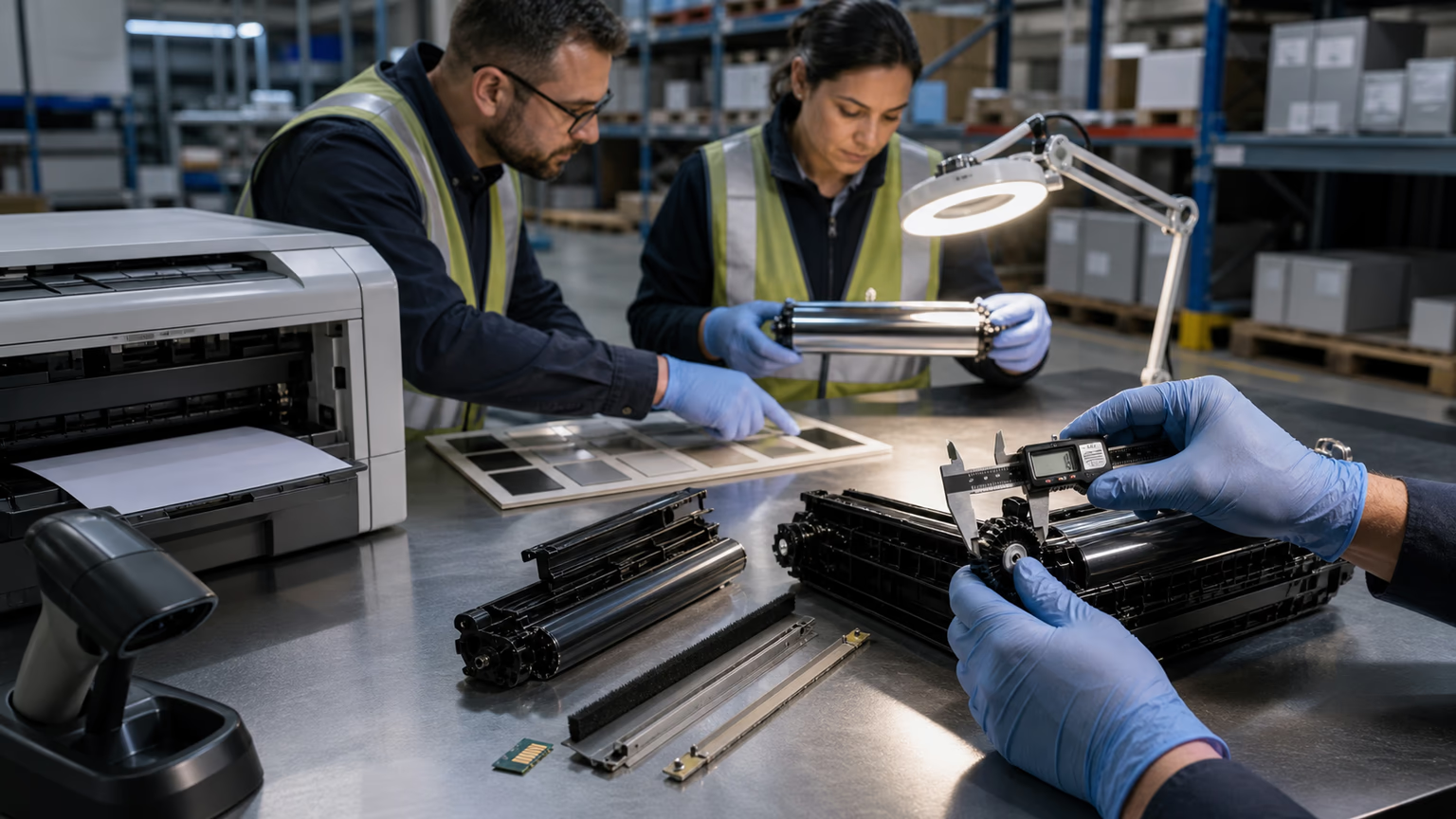
To protect your operation, look for a supplier that tests toner by brand and model family, not with a single generic approval.
They should provide a chip version tracking document that shows which cartridge firmware is compatible with the latest machine updates.
OEM alternative toner cartridges for distributors can be a sound choice when the supplier can show that they monitor firmware modifications and adjust their product accordingly.
Batch variation is the silent killer.
A compatible cartridge that works perfectly in one shipment may fail in the next if the supplier changes particle size or chemical formulation without notice.
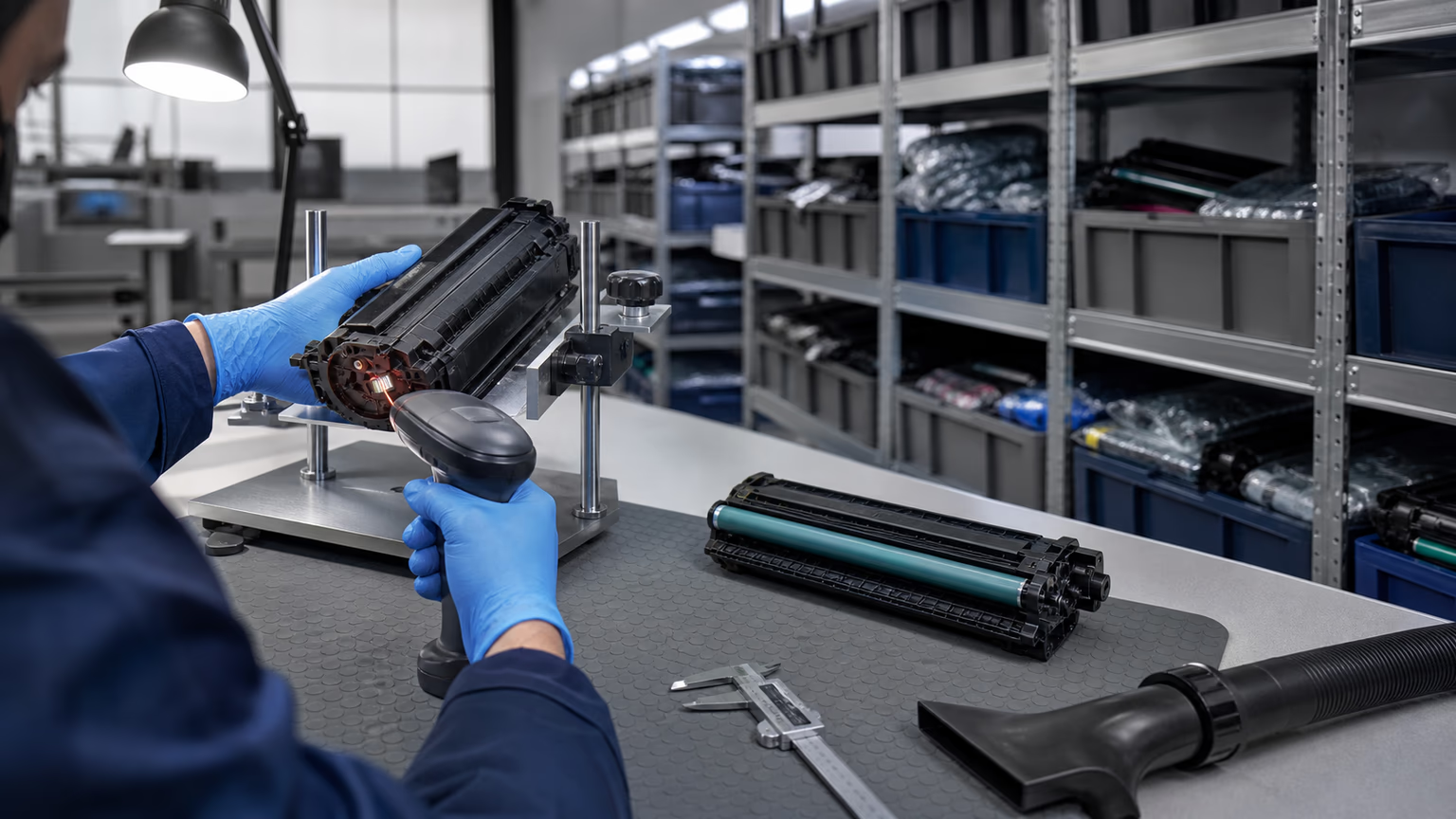
A rigorous supplier isolates production lots and retains samples for failure analysis.
You should be able to request a documented quality assurance process for each SKU family.
If the supplier hesitates, that is a risk signal.
Building a Regional Supply Chain That Keeps You in Stock
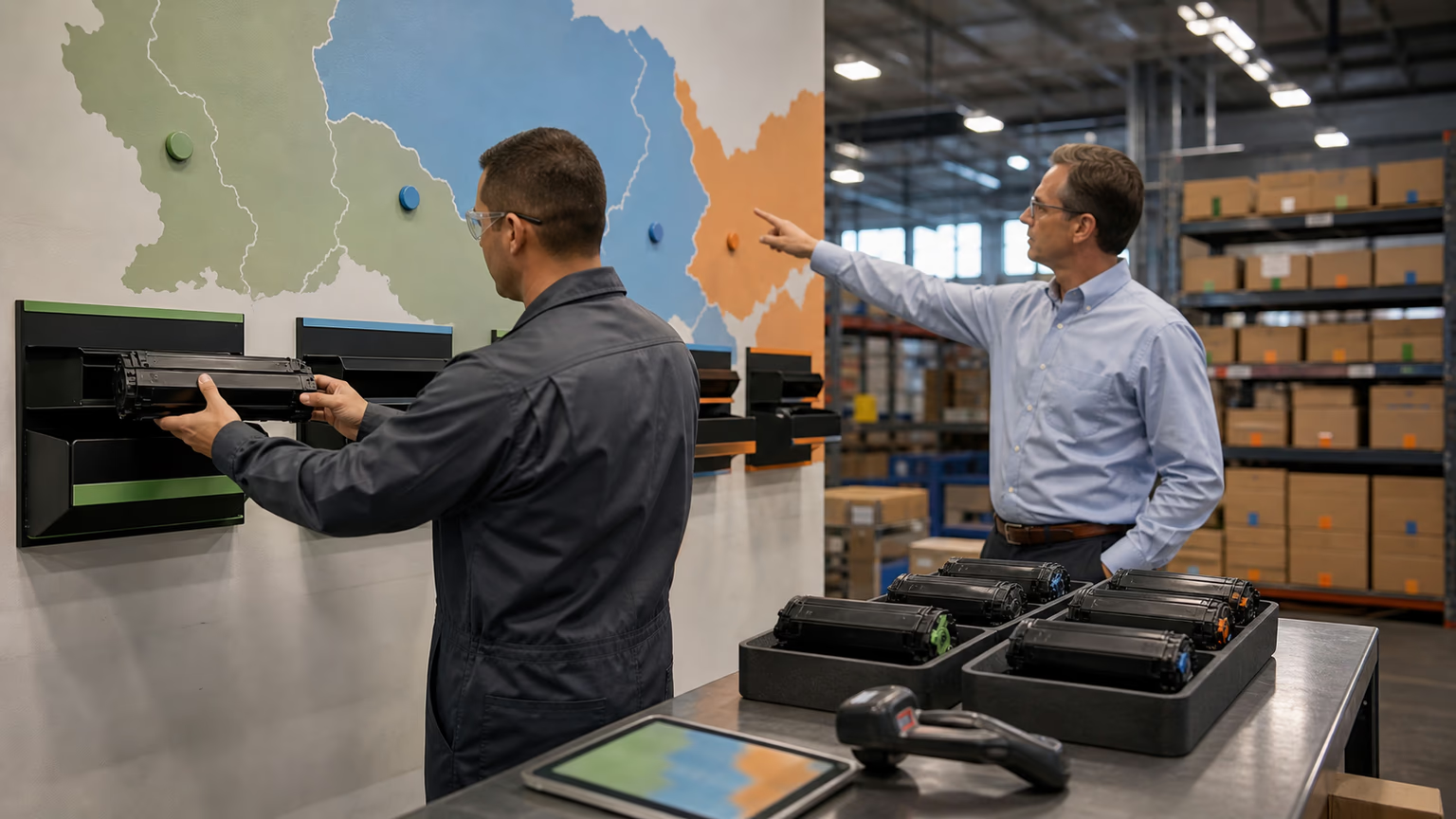
Stockouts are expensive not just in lost revenue but in damaged service-level agreements. If your supplier has only one warehouse location, an emergency order for a regional cartridge variant may take days, causing client downtime and technician rescheduling. A stronger toner supply program depends on regional distribution that places inventory closer to your customers.
Multiple warehouse locations also reduce freight cost for split shipments and allow for buffer stock on high-velocity SKUs without overcommitting capital. Demand forecasting guidance from the supplier helps you set reorder points based on actual run rates rather than guesses. The goal is to avoid the cycle of overstocking slow movers while rushing overnight shipments for fast movers.
Ask potential suppliers how they map regional SKUs to your service area. Do they understand which cartridge models are prevalent in your territory? Can they provide a regional availability matrix showing which items ship from which facility? These operational details matter more than a glossy catalog when a client machine is down.
Evaluating Suppliers: A Practical Scorecard for Toner Programs
Before you commit to a toner supply program, build a scorecard that goes beyond marketing claims. The following checklist forces the conversation into measurable commitments:
- Quality documentation per brand and model family, including yield test data and failure rate history
- Compatibility matrix that is updated with OEM firmware changes and regional model variants
- Returns and DOA policy with clear timelines and shipping cost responsibility
- Technical support escalation path for toner-related print defects, including failure analysis reports
- Volume pricing tiers that align with your growth stage and do not force excessive upfront inventory
- Regional distribution network and emergency fulfillment process for high-priority SKUs
A supplier that cannot provide transparent answers on these points is likely to hide behind generic reassurances. The scorecard also helps you compare multiple suppliers objectively, reducing the influence of relationship-based buying or the lowest initial quote. Remember that a stronger toner supply program is not a single purchase; it is a recurring operational partnership.
Pay special attention to the technical support question.
When a compatible cartridge fails in the field, who does your technician call?
Does the supplier offer a documented failure analysis process, or do you simply return the cartridge and hope for a credit?
A supplier with a real technical support team will help you distinguish between cartridge defects, printer firmware issues, and environmental factors such as humidity or improper storage.
That insight prevents repeat failures and protects your service margins.
Pilot Testing: How to Validate a Toner Program Before Scaling
The decision to switch toner suppliers is not one you should make across your entire installed base at once. A controlled pilot across a small set of high-volume SKUs gives you real-world data on failure rate, print quality, yield, and user complaints before you commit. Start with two or three printer brands that generate the most service volume in your fleet.
Track quantitative metrics during a 30 to 60 day pilot: number of cartridges used, pages printed per cartridge, service calls attributed to toner, and any print quality complaints from end users.
Compare those numbers against your current baseline, including total landed cost including freight and returns.
If the pilot shows a meaningful reduction in service calls and an acceptable cost per page, you have a case for scaling.
If not, you have lost little.
Define go/no-go criteria before you start. For example, you might decide that compatible cartridges must have a failure rate below a certain threshold and a cost per page no higher than your current baseline. Without predefined criteria, the pilot becomes subjective and the supplier may argue for leniency. Document everything and share the results with your service team, not just procurement.
From Transaction to Program: Operationalizing Toner Supply for Growth
Once you have a supplier and a validated cartridge line, the real work begins: integrating the toner program into your daily operations.
Set reorder points for each SKU based on actual monthly run rates, not historical averages that may be distorted by emergency orders.
A simple inventory management rule, such as reorder when stock reaches a two-week supply, can prevent both stockouts and overstock.
Your service dispatch system should include the supplier SKU mapping so that technicians know which cartridge to take for each device on the ticket. That may require purchasing a cross-reference file from the supplier and loading it into your PSA or field service platform. The goal is to eliminate the guesswork in the van and at the customer site.
Establish a monthly review of toner-related metrics: failure rate by SKU, cost per page by customer segment, and inventory turns.
Use that data to adjust reorder levels, negotiate volume tiers, or swap out low-performing cartridges.
The strongest toner supply programs are not set-and-forget; they evolve with your fleet and your customer base.
By treating toner as a managed category rather than a commodity purchase, you turn a recurring cost into a predictable, defensible part of your service offering.
FAQ
What is the difference between OEM, compatible, and remanufactured toner cartridges?
OEM cartridges are made by the printer manufacturer and carry the highest price but also the strongest consistency.
How do I calculate true cost per page for toner across different printer brands?
True cost per page equals the total landed cost of the cartridge divided by its realistic page yield.
What should I look for in a compatible toner supplier to avoid print quality issues?
Look for a supplier that tests every production lot by printer model family and can provide yield and defect data on request.
How can I manage toner inventory for a mixed fleet of printers without overstocking?
Start with a fleet profile that lists each printer brand, model, monthly volume, and current toner usage.
What is a reasonable pilot testing process for a new toner supply program?
A reasonable pilot selects two or three high-volume printer models across different brands, runs the new cartridges for 30 to 60 days, and tracks pages printed, failure rate, print quality complaints, and total landed cost.
Conclusion
A stronger toner supply program is not about buying the cheapest cartridge; it is about building an operational system that protects uptime, controls service costs, and supports mixed printer fleets with reliable regional inventory.
Growing dealers who treat toner as a managed category rather than a reactive purchase can reduce technician churn, improve customer retention, and turn a commodity spend into a strategic advantage.
The path is clear: map your fleet, demand documented quality and compatibility data, pilot the program, and integrate it into daily service workflows.
That discipline pays off in fewer service calls and a more predictable cost per page across every account you serve.