The Cost Pressure and Risk Equation: Why Fleet Managers Look Beyond OEM
Fleet managers responsible for a mixed estate of laser printers constantly face pressure to reduce operational printing costs.
OEM toner pricing for office printer toner has a direct impact on maintenance budgets, and procurement teams are increasingly asking whether compatible toner cartridges can deliver meaningful savings without creating new problems.
The initial appeal is straightforward: a lower unit cost for each cartridge.
But a fleet manager’s switching oem compatible toner decision is never just a simple product swap.
It is a procurement project that touches hardware reliability, service workflows, end-user satisfaction, and long-term supply continuity.
In a heterogeneous environment, the challenge is compounded.
A single fleet may include devices from several printer manufacturers, each with different cartridge designs, chip protocols, and firmware update cycles.
What works in one printer model may not work in another, and a hasty rollout of compatible printer cartridges can create downtime that erases the savings.
The real question is not whether compatible toner is cheaper at the point of purchase, but whether the total cost of ownership across the fleet improves after accounting for failures, service calls, and labor.
Procurement pressure is real, but so is operational risk. The smart approach treats the switch as a controlled business decision rather than a price-driven reaction. That means evaluating compatible toner for mixed printer fleets on the same level of rigor as any other critical supply category.
Understanding the Mixed-Fleet Compatibility Challenge
Compatibility is the most common concern when moving away from OEM supplies.
Unlike a fleet made up of a single printer model, a mixed estate requires a supplier who understands that not all compatible toner cartridges perform equally across brands and generations.
The cartridge must communicate correctly with the printer through its chip, and the printer firmware must accept the cartridge as legitimate.
Even minor firmware revisions from the printer manufacturer can change this interaction.
Some compatible cartridges are engineered for a narrow set of models, while others claim broad coverage but may have gaps in chip recognition.
A fleet manager should not assume that one part number works for all devices of a given brand.
Model-specific variations, regional production batches, and firmware versions all influence whether a compatible toner cartridge for office printers will be recognized on the first install or trigger an error message that requires a service call.
The risk increases with firmware updates.
Printer manufacturers routinely release firmware that may inadvertently or intentionally block third-party cartridges.
A supplier that tests against current firmware versions and provides clear guidance on update management is far more valuable than one that simply ships a cartridge at the lowest price.
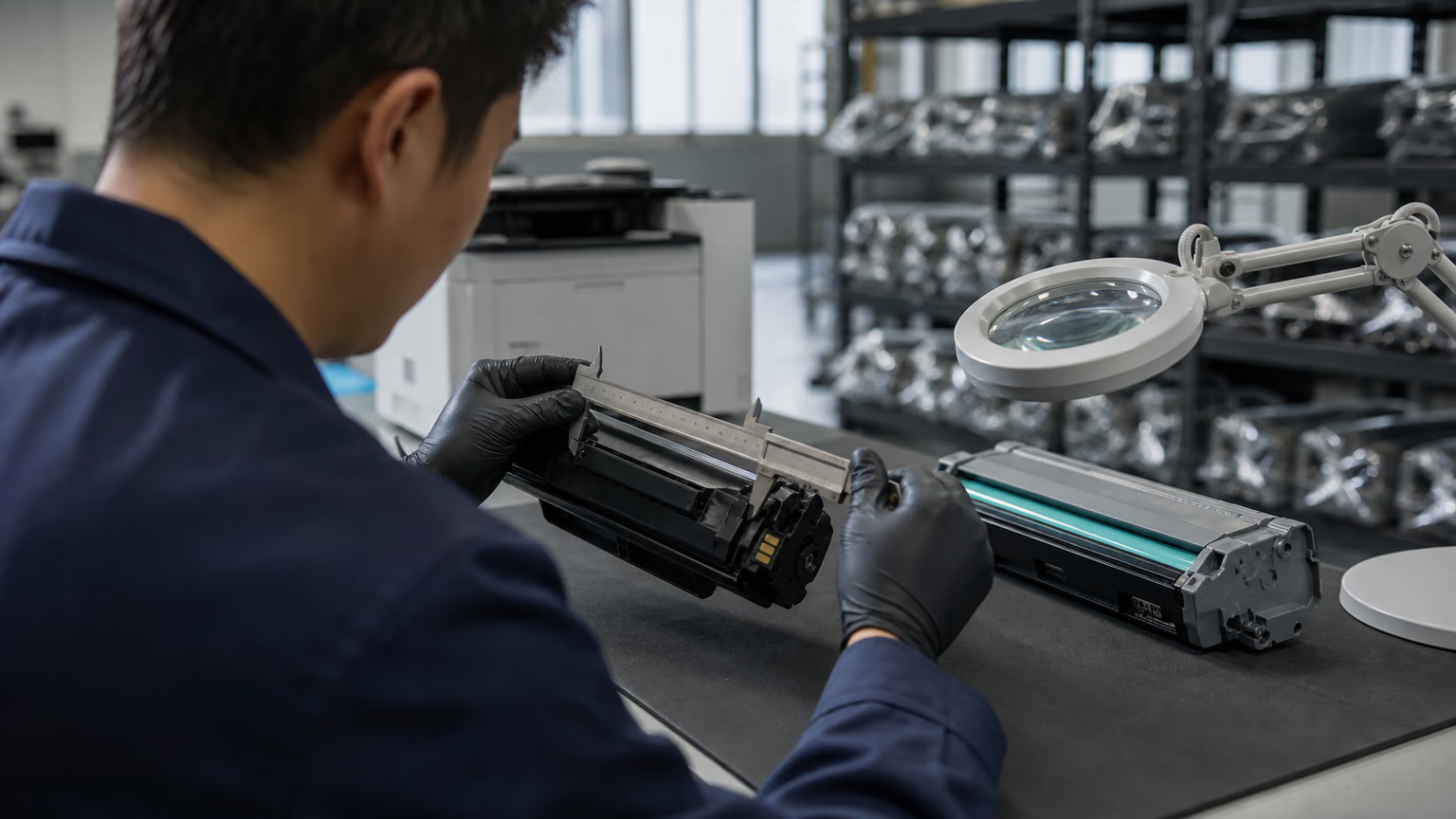
Before committing, verify that the supplier has documented compatibility testing for the exact models in your fleet, including any older devices still in service.
Quality and Performance: What Actually Changes When You Switch
Print quality is not a binary condition; it exists on a spectrum.
A compatible toner formulation can affect density, fusing, and color consistency.
For standard office documents, minor differences may be acceptable.
For customer-facing materials, branded documents, or graphics, inconsistent color or streaking can become a visible problem.
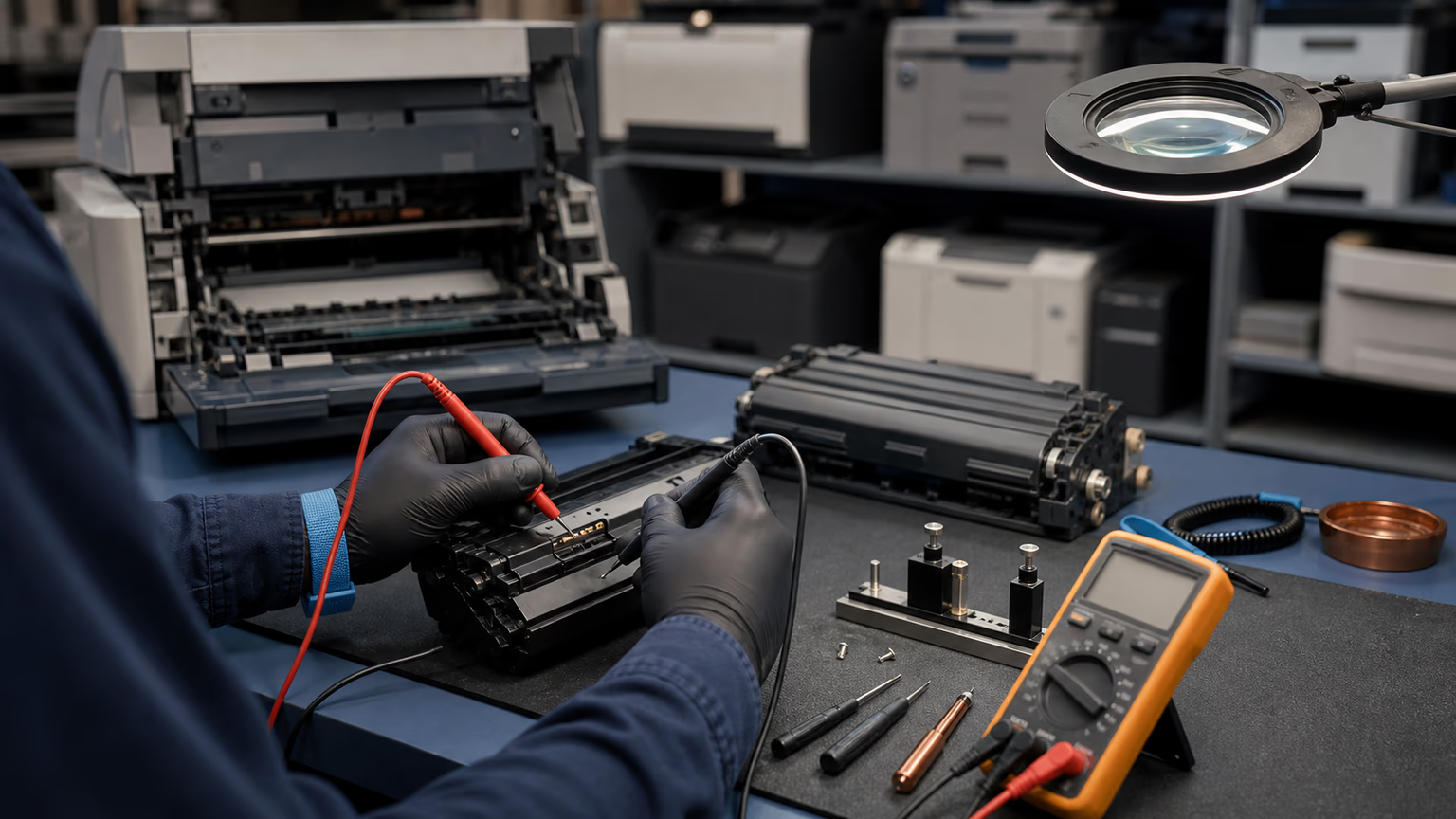
Laser printer toner must be formulated to work with the printer’s fuser temperature and drum unit, and a poorly matched toner can cause premature wear on imaging components.
Page yield is another area where label claims and real-world performance often diverge.
A cartridge that costs less but yields significantly fewer pages may actually increase cost per page.
Independent verification through a controlled pilot is the only way to confirm whether a compatible toner cartridge delivers the promised output.
For fleets that include color-capable devices, the evaluation becomes even more critical.
Color accuracy, consistency across print runs, and the ability to reproduce company branding without color shifts are part of the quality equation.
Worn or damaged cartridges can also leak, contaminating the printer interior and leading to more serious mechanical failures.
A supplier that cannot demonstrate consistent batch-to-batch toner formulation is a direct risk to both print quality and hardware longevity.
Service and Warranty Implications: Who Supports What
Most OEM service contracts and warranties do not automatically become void the moment a compatible cartridge is installed, but the practical landscape is rarely simple.
If a printer fails while a third-party cartridge is inside, the service provider may point to the cartridge as the cause, leading to a dispute over responsibility.
Some service agreements explicitly exclude coverage for damage attributed to non-OEM supplies.
This creates a gray area that a fleet manager must clarify before any switch.
The first step is to review the terms of existing OEM service contracts and discuss the planned change with the service provider.
A responsible service partner will distinguish between cartridge-related defects and genuine printer hardware faults, but this understanding should be documented.
The compatible toner supplier also has a role: they must stand behind their product with a clear replacement policy and technical support when a cartridge triggers errors or damages a printer.
Without a defined responsibility split, the fleet manager ends up as the mediator between the service provider, the printer manufacturer, and the toner supplier.
Building a Supplier Evaluation Framework Beyond Price
Price is easy to compare, but the cheapest compatible toner cartridge often carries hidden costs. A structured supplier evaluation should look at five areas that determine long-term reliability and service accountability.
- Batch-to-batch consistency: Documented quality control and testing protocols ensure that the toner formulation and cartridge build remain stable over time.
- Fleet-wide compatibility evidence: The supplier should provide proof of testing on the exact printer models in your fleet, including current firmware versions.
- Transparent yield data: Independent or field-verified page yield figures, not just marketing claims, allow accurate cost per page calculations.
- Responsive support and RMA process: A clear replacement policy, fast technical assistance, and a defined process for defective cartridges reduce downtime risk.
- Supply capacity and financial stability: The supplier must be able to meet recurring order volumes without stockouts or erratic batch changes.
This is how to choose compatible toner supplier that can support a mixed fleet over the long term.
OEM alternative toner cartridges for distributors are plentiful, but few can demonstrate the documentation and testing discipline required for enterprise-scale deployments.
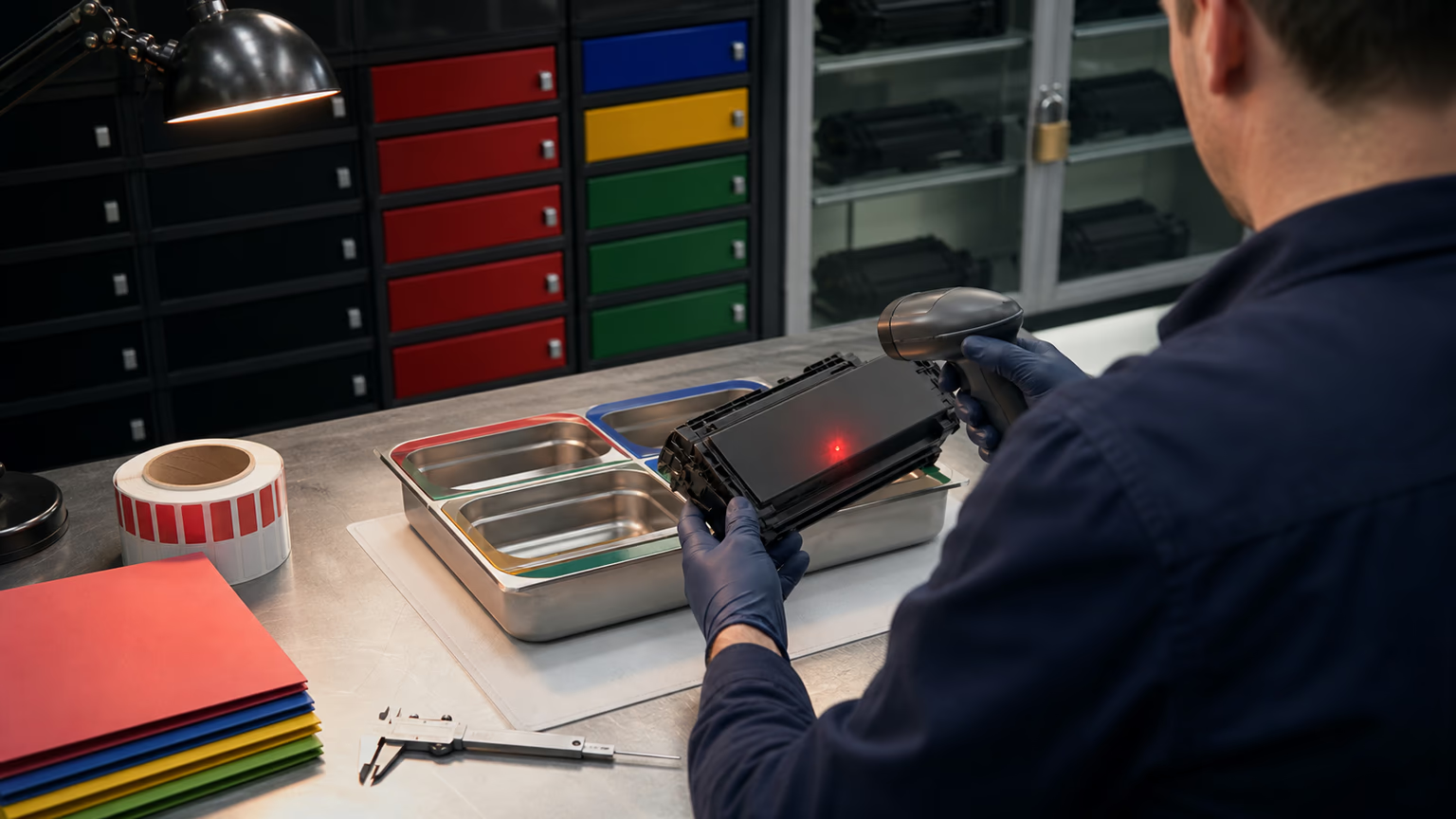
Ask for sample cartridges, reference accounts, and a written quality statement before committing to a pilot.
A supplier that hesitates on any of these points is unlikely to perform better under real-world stress.
Running a Controlled Pilot: A Step-by-Step Procurement Approach
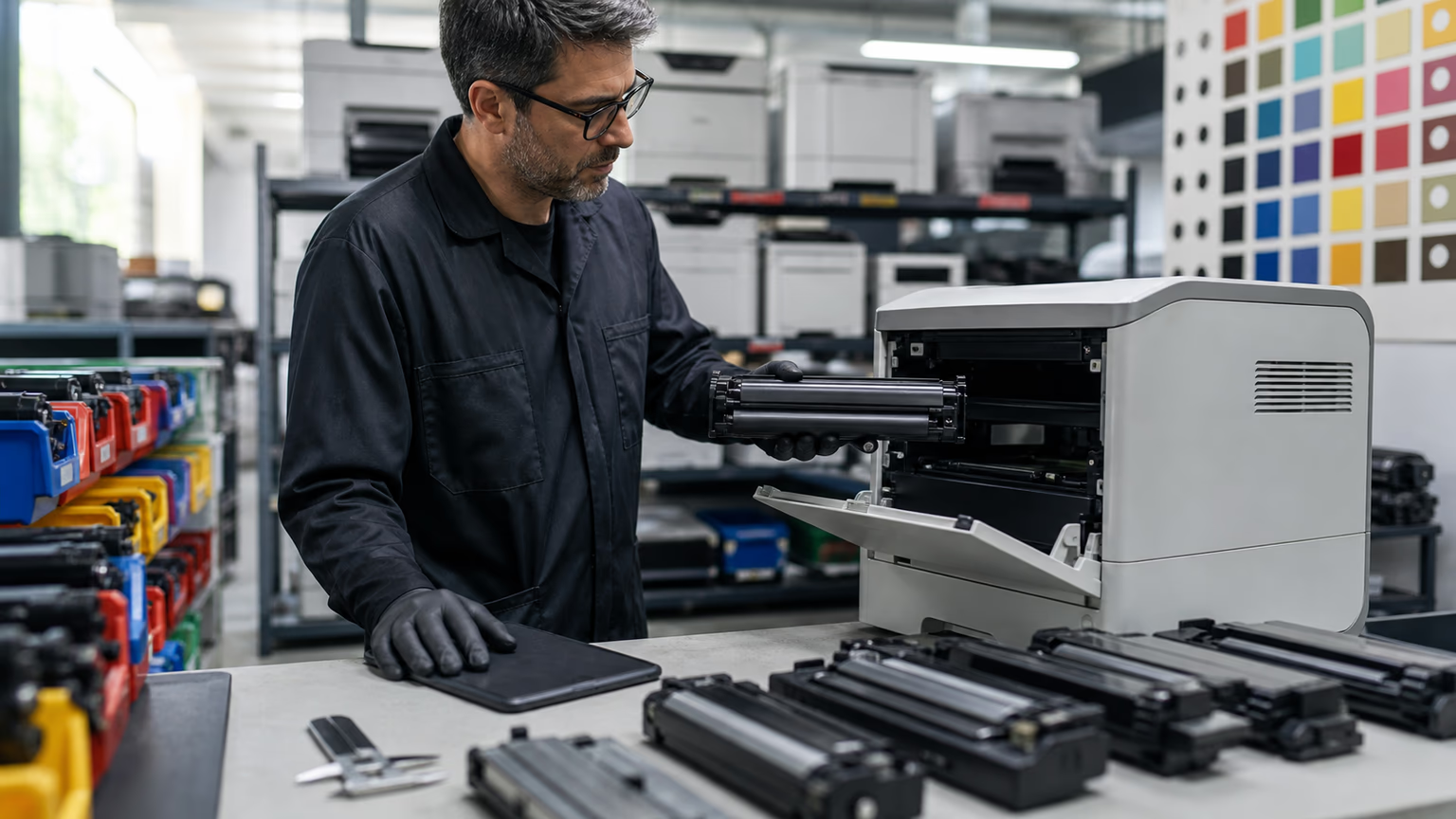
A full fleet rollout without evidence is the fastest way to create service chaos. Instead, run a controlled pilot on a representative subset of printers. Choose models that are critical to daily operations, have the highest print volumes, or have a history of firmware updates. The pilot should last at least 60 to 90 days to capture a full cycle of toner usage and any emerging issues.
Before placing the first compatible cartridge, document the baseline: current cost per page using OEM toner, average monthly service calls per printer, and any known print quality complaints.
Then define measurable success criteria.
These could include a maximum allowable failure rate, a minimum page yield threshold, and zero increase in service calls attributable to the cartridge.
During the pilot, track every cartridge installation, failure, leak, or end-user complaint.
Record actual page yields by dividing the number of printed pages by the number of cartridges consumed.
At the end of the pilot, compare the data against the OEM baseline.
Calculating True Total Cost of Ownership (TCO)
The sticker price of a cartridge is only one component of the real cost.
True TCO for printer toner includes the cost per page based on actual measured yield, plus the labor and downtime associated with cartridge-related failures.
A compatible toner cartridge that costs less but fails more often may require more service calls, more technician time, and more end-user disruption than the OEM alternative.
To calculate a fair comparison, use historical OEM usage data to estimate the number of cartridges consumed per printer per year.
Then apply the measured yield from the pilot to determine the number of compatible cartridges required for the same output.
Multiply by the unit cost and add the estimated labor cost for handling extra replacements or service calls.
If the compatible option still shows a meaningful savings after these adjustments, the switch is likely justified.
Long-term price stability also matters.
A supplier that quotes a low initial price but raises rates after three months destroys the TCO case.
Negotiate a supply agreement with defined pricing terms for a minimum period, and include penalties or review mechanisms if quality drops.
Managing Long-Term Supply and Quality Consistency
The risk does not end after the pilot succeeds.
Over time, suppliers may change manufacturing sources, alter toner formulations, or reduce quality control to cut costs.
Without ongoing oversight, a reliable compatible toner program can gradually degrade into a source of recurring problems.
Establish service level agreements (SLAs) for delivery, replacement, and technical support.
Include periodic quality audits of incoming batches, either through internal testing or third-party verification.
Monitor field failure rates and end-user complaints on a monthly basis, and compare them to the pilot baseline.
Finally, avoid over-dependence on a single supplier.
Qualify at least one backup compatible toner source for critical cartridge SKUs, even if you do not split volume immediately.
This reduces the risk of a supply disruption and gives you leverage in ongoing negotiations.
A resilient procurement strategy treats compatible toner suppliers as partners accountable for consistent performance, not just vendors of cheap printer toner cartridges.
FAQ
Is switching to compatible toner safe for my printer hardware?
It can be safe if you select a supplier with documented quality testing and run a controlled pilot. The main risk comes from poorly manufactured cartridges or improper toner formulation. Verify that the supplier tests for leakage, fusing temperature, and drum wear. A proven compatible toner cartridge should not damage the printer when used within normal operating conditions.
Will using compatible toner void my printer warranty?
In many regions, using third-party supplies does not automatically void the printer warranty, but the responsibility for any damage caused by the cartridge may shift. Review your service contract and clarify the division of responsibility with both your service provider and the toner supplier before switching. Document the agreement so that support obligations are clear.
How do I know if a compatible toner supplier is reliable?
Evaluate the supplier on batch-to-batch consistency, compatibility testing evidence, transparent page yield data, responsive support, and replacement policies. Request sample cartridges, check references from other B2B distributors, and run a pilot. A reliable supplier will be willing to provide documentation and stand behind their product under a defined RMA process.
Can compatible toner work across different printer brands in my fleet?
Yes, but not every supplier has the same coverage. The supplier must demonstrate model-specific compatibility testing for each printer brand and model in your fleet, including current firmware versions. Some brands are more challenging than others, so require proof before a full rollout.
What should I include in a pilot test for compatible toner before full rollout?
Select representative printer models, define measurable success criteria such as page yield, failure rate, and service call frequency. Track installations and end-user complaints over 60 to 90 days. Compare actual cost per page and downtime against the OEM baseline. Only scale after the data shows that the compatible option meets your operational thresholds.
Conclusion
Switching a mixed printer fleet from OEM to compatible toner is a decision that requires procurement discipline, not just a lower price.
By treating the transition as a structured project with clear evaluation criteria, a controlled pilot, and ongoing supplier oversight, fleet managers can capture meaningful savings while protecting uptime, print quality, and service accountability.
The most successful programs combine rigorous supplier selection with transparent TCO measurement and long-term quality controls.
When the framework is in place, compatible toner cartridges for office printers can become a reliable part of the supply strategy rather than a source of operational risk.