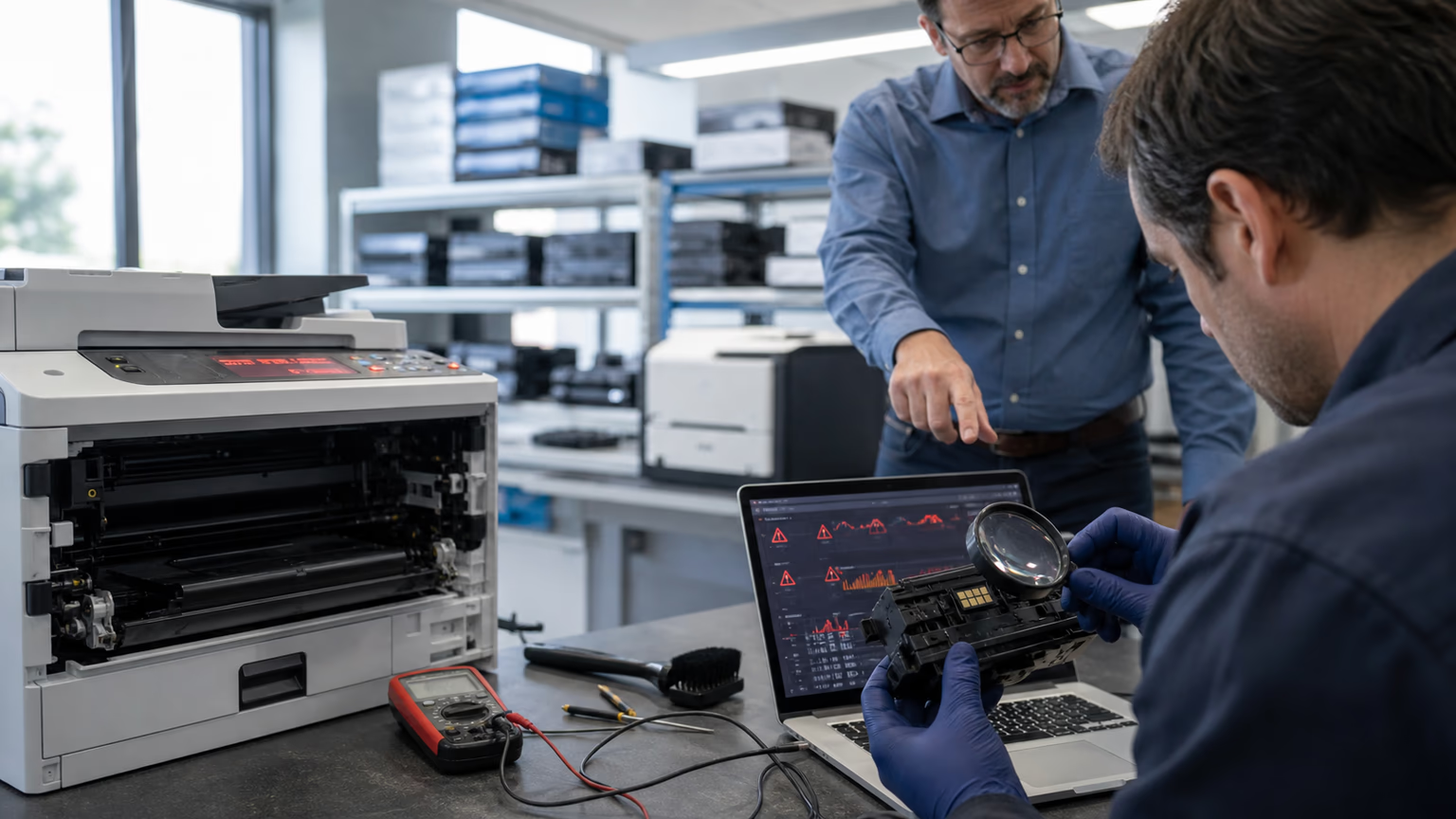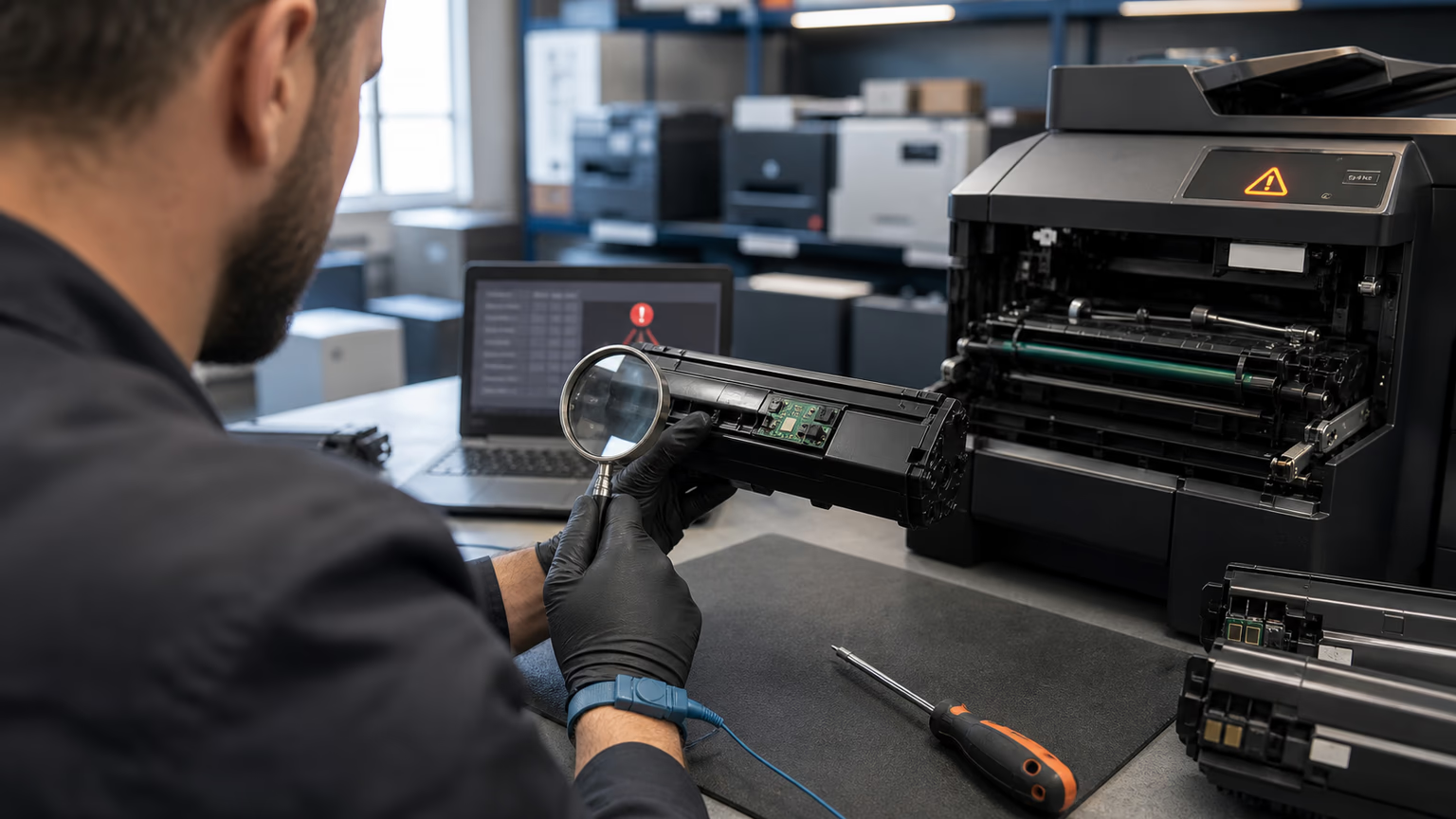
For a toner distributor, a returned cartridge is never just a cartridge.
It is a failed delivery, a service interruption, a customer relationship under pressure, and a margin leak that often goes unmeasured.
Among the many reasons compatible printer cartridges come back, regional packaging and chip code mismatches are some of the most silent.
The physical cartridge may look correct, fit the printer, and even print test pages.
Yet when the printer reads the chip and compares it with the expected regional firmware profile, the result can be a non-genuine warning, an installation block, or a page yield that falls far short of the customer's expectation.
These failures happen after installation, not before, which means the distributor has already spent money on logistics and support by the time the return request arrives.
This guide addresses the practical reality for B2B toner cartridge distributors, importers, and service providers.
It does not repeat the vague warning that regions matter.
Instead, it breaks down exactly how regional packaging and chip codes affect distributor returns, and it gives you a pre-shipment and inbound inspection framework.
The goal is to turn regional compatibility from a reactive problem into a controllable procurement and quality checkpoint.
When you treat regional data as a functional specification rather than a cosmetic label, you stop buying hidden return risk and start protecting the service contracts that depend on predictable toner performance.
The Anatomy of a Regional Toner Cartridge
A regional toner cartridge is not simply the same product with a different box language.
The packaging variation signals deeper differences that matter to the printer engine.
The chip on the cartridge carries a region code that the printer firmware uses during authentication.
Packaging labels show the destination market and often include legal or recycling information specific to that region.
If a cartridge packaged for one region is installed in a printer configured for another, the printer may still accept it physically, but the chip data is out of alignment.
That misalignment can trigger warnings, reduce page yield, or disable certain cost-per-page tracking features.
Page yield is another regional variable that distributors often overlook.
The same cartridge model may be sold in different regions with different fill weights or toner formulations, even if the external plastic shell is identical.
A customer who expects a full yield based on local specifications may receive a cartridge that delivers noticeably fewer pages.
That shortfall feels like a quality defect, but it is often a regional variant mismatch.
Language-specific setup prompts and error messages also follow the chip region.
An end user who sees a cartridge message in the wrong language may immediately suspect counterfeit product, leading to a support call or return request even if the cartridge works technically.
How Chip Codes Interact with Printer Firmware and Regional Locks
Printer chips are not passive barcodes.
They hold authentication data that the printer's firmware checks during power-on and toner installation.
A chip encoded for a specific region includes parameters that the local printer expects.
When the chip code does not match the printer's regional profile, the printer may refuse to recognize the cartridge, display a non-genuine cartridge warning, or accept it but flag the supply status as unknown.
Compatible printer cartridges that rely on aftermarket chips are especially sensitive to this, because the chip may be a clone of one regional variant and not accurately mapped to another.
Firmware updates add another layer of risk.
Printers receive periodic firmware updates that can change the authentication rules or regional lock behavior.
A chip that worked yesterday may fail after the customer's IT team runs an update.
That failure may look like a quality problem, but it is actually a compatibility drift.
Distributors who track printer firmware versions across their customer fleet can anticipate these failures.
Those who do not end up chasing intermittent chip errors and replacing cartridges that are not defective in a traditional sense.
The Distributor Return Chain: From Customer Complaint to Inventory Write-Off
A regional mismatch rarely shows up as a neat return.
It usually starts with an end user seeing a non-genuine cartridge warning or noticing that a cartridge is producing far fewer pages than expected.
The user calls the service desk, suspects the distributor sold counterfeit or low-quality stock, and demands immediate replacement.
The distributor dispatches a technician or ships a replacement, often without knowing the root cause.
The returned cartridge goes back to the warehouse, where someone opens the box, checks the chip, and finally sees that the packaging region or chip code does not match the printer's required region.
At that point, the financial damage has already accumulated.
The distributor has paid for the original shipment, the support time, the replacement cartridge, and the reverse logistics of the return.
If the wrong-region stock cannot be resold in its current market, it may sit in quarantine, be discounted, or be written off entirely.
Cross-border returns add customs delays and freight costs that erase any margin the original sale might have had.
This return chain is why regional mismatches are often called silent margin killers: the visible defect is small, but the operational cost behind it is large and recurring.
Procurement Blind Spots: What Suppliers Do Not Tell You About Regional Variants
Many distributors source toner from multiple channels to keep pricing competitive.
Gray market stock, parallel imports, and surplus batches can all carry hidden regional mismatches.
A supplier may offer an attractive price on a batch of cartridges without disclosing that the stock was originally packaged for a different region.
The cartridges may share the same physical SKU as local stock, so a basic warehouse check does not reveal the difference.
Only when the chip is read on a target printer does the regional mismatch become clear.
Documentation is the real divide between reliable and risky suppliers.
Some suppliers cannot tell you which chip code variant they are shipping, which region each batch was intended for, or how the page yield compares to the local market specification.
Others provide this data only after you ask, and some never share firmware compatibility test results.
If you buy on price alone, you are likely accepting regional risk without quantifying it.
That does not mean cheap printer toner cartridges are always bad; it means cheap stock that lacks regional documentation is expensive in ways that do not show up on the purchase order.
A Distributor-Grade Qualification Checklist for Regional Toner Stock
The most effective way to reduce regional returns is to move the verification point earlier in the supply chain.
Before you accept a shipment, you should be able to confirm that the packaging region, chip code, and page yield profile match the destination market you serve.
This is not about building a laboratory; it is about standardizing a few checks that take minutes and can prevent days of return handling.
The following checklist is designed for inbound inspection and pre-purchase qualification:
- Request a chip code list and regional variant mapping for every SKU before placing the order.
- Verify that packaging labels and languages match the destination market for the shipment.
- Test a sample cartridge on a target printer model with the current firmware version installed.
- Ask the supplier to document batch-level region data and page yield differences for the offered stock.
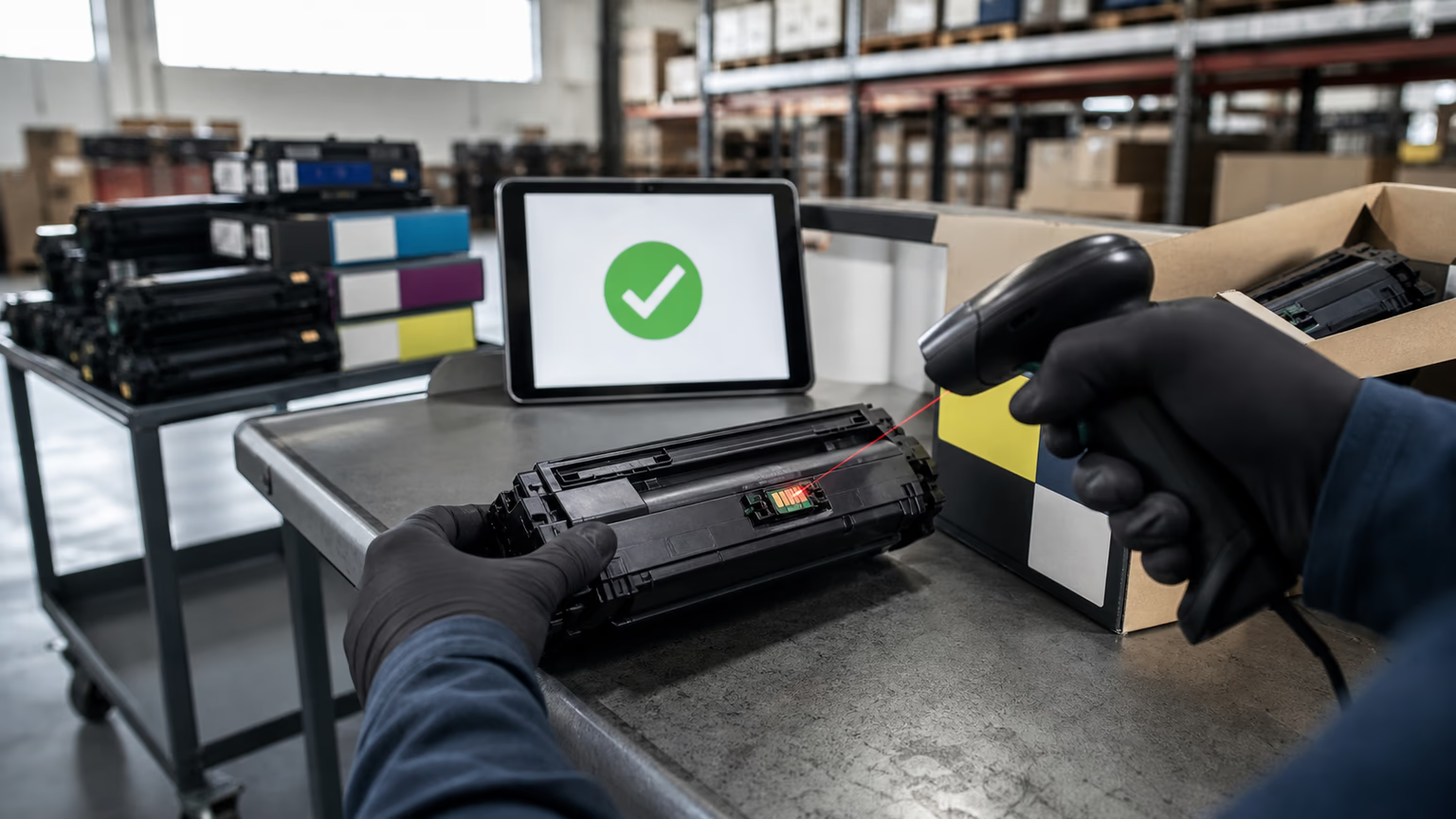
- Scan chip codes during inbound receiving using a barcode scanner or mobile app.
- Maintain a firmware update log for customer printers to identify when a chip may become blocked.
- Quarantine any cartridge with mismatched packaging or chip data before it enters sellable inventory.
These steps are not one-time actions. They belong in your receiving and supplier onboarding process. A distributor that runs these checks consistently will quickly see which vendors cause regional returns and which batches are safe to ship. Over time, the checklist reduces the guesswork and makes regional compatibility a measurable part of your quality system instead of an afterthought.
How to Audit Existing Inventory and Returns Data by Region and Chip Code
Even if you have not been tracking regional variants, you can start now with the data you already have.
Pull your returns history and categorize each returned cartridge by the chip code prefix or packaging region, if available.
Cross-reference those returns with customer printer models and any known firmware update events.
You may find that a specific chip code batch accounts for a disproportionate share of non-genuine warnings or page yield complaints.
That pattern tells you which stock is risky before you send it to another customer.
Segregating wrong-region stock is the immediate operational fix.
Create a quarantine area for cartridges that have packaging or chip mismatches.
Label them clearly so they cannot be accidentally picked for a new order.
Then work with your supplier to either return, re-chip, or re-package the stock for a market where it will function correctly.
This audit is not about assigning blame; it is about preventing the same mismatch from causing another return.
A monthly review of returns by region and chip code turns a reactive cost center into a proactive inventory control.
Building a Supplier Scorecard for Regional Packaging and Chip Code Compliance
A single clean shipment is not enough to trust a supplier with your margin.
You need a repeatable way to compare suppliers on regional transparency and return performance.
A supplier scorecard can include factors such as how quickly they provide chip code lists, whether they disclose firmware update risks, how well they label regional packaging, and what their actual return rate is for regional mismatch reasons.
You do not need to publish the scorecard; you use it internally to make sourcing decisions and to hold suppliers accountable.
Start with a simple scoring system from one to five for each supplier on criteria like documentation quality, batch traceability, proactive communication about firmware changes, and return handling responsiveness.
Track the score over multiple shipments.
A supplier that scores low on regional data may still be suitable for low-risk SKUs, but you should avoid putting them in a customer account where a non-genuine warning could cost you a service contract.
The scorecard makes regional compatibility a visible, negotiable part of the relationship rather than a hidden surprise.
FAQ
How do I know if a toner cartridge is region-locked?
You may not see a label that says region-locked.
What is the difference between regional packaging and regional chip codes?
Regional packaging refers to the outer box, labels, language, and legal markings that indicate the intended market.
Can a firmware update make a previously compatible chip fail?
Yes.
How can I check chip codes before ordering from a supplier?
Ask the supplier to provide a chip code list and regional variant mapping for each SKU before you commit to a purchase.
What should I do with existing inventory that has mismatched regional packaging?
Move that stock into a quarantine area immediately so it cannot be picked for new orders.
Conclusion
Regional packaging and chip codes are not an obscure technical detail; they are a direct line to distributor returns, service interruptions, and margin erosion.
By moving regional verification from the customer installation point to your inbound inspection and supplier qualification process, you gain control over a risk that usually stays invisible until it is expensive.
The tools are not complicated: request chip code documentation, test samples on current firmware, scan incoming stock, audit returns by region, and score your suppliers on transparency.
When these steps become routine, wrong-region toner stops being a recurring surprise and becomes a preventable exception.
That is the difference between a distributor who absorbs compatibility losses and one who protects the uptime and trust that B2B customers actually pay for.