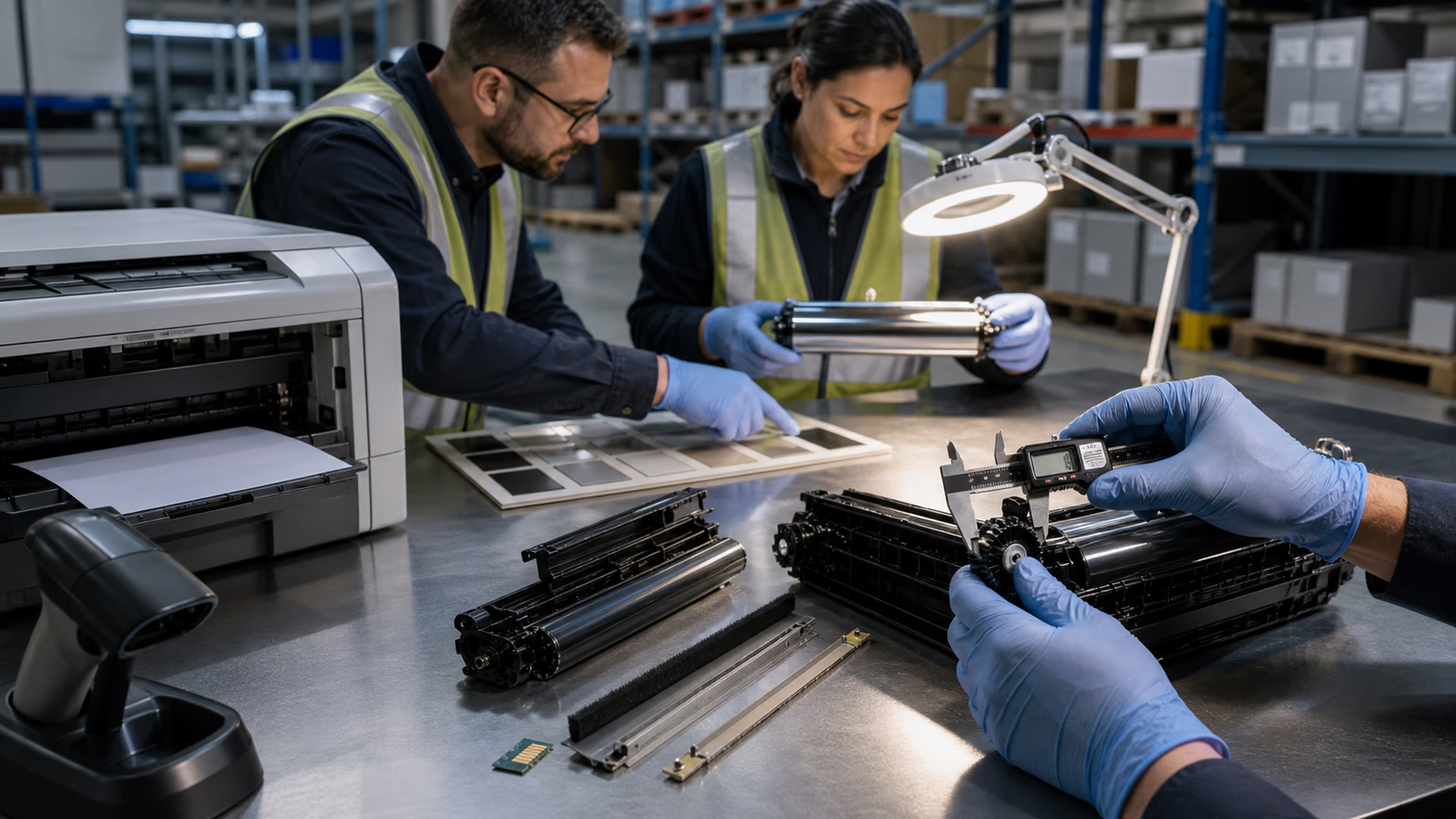

Introduction: The Hidden Geography of Toner Availability
If you manage a fleet of printers across multiple regions, you have likely encountered a puzzling situation.
Two offices use the same printer model, yet one region consistently has toner cartridges in stock while the other waits weeks for a shipment.
The global supply of that cartridge may be stable, but the regional supply chain determines what actually reaches your loading dock.
Regional warehousing, import regulations, and distributor networks filter toner availability in ways that global demand forecasts cannot explain.
B2B buyers often treat toner as a global commodity.
In reality, toner cartridges are deeply regional products.
A cartridge approved for sale in one market may have a different SKU, chip version, or packaging in another.
These variations are not arbitrary; they reflect local supply chain design, service network coverage, and regulatory requirements.
When procurement teams ignore these regional factors, they expose their operations to stockouts, quality drift, and service penalties that erode margins.
This guide explains how regional supply chains affect toner availability and provides a practical framework for B2B distributors, MPS operators, and printer service companies to audit regional suppliers.
You will learn to evaluate regional warehousing, lead times, SKU coverage, and compatibility risks before committing to a toner source.
A regional-aware procurement strategy prevents downtime, protects service-level agreements, and keeps your fleet running without surprises.
Why Regional Supply Chains Decide Which Toner SKUs Reach Your Market
Printer manufacturers design their distribution networks around regional hubs.
These hubs allocate inventory based on local demand forecasts, historical sales data, and service coverage.
A high-volume region may receive preferential stock allocation, while a lower-volume region waits for backorders.
This allocation logic means that a toner cartridge may be abundant in one country but scarce in a neighboring market even if the total global supply is healthy.
For B2B buyers, relying on a single regional hub increases exposure to local demand spikes and allocation decisions.
Import and export regulations add another layer of fragmentation.
Toner cartridges often contain chemical components that require special handling, labeling, or environmental compliance.
A compatible toner importer must navigate country-specific documentation, tariffs, and inspection processes.
These compliance steps introduce lead time variability that is invisible on a global SKU list.
A distributor that has cleared customs in one region may face delays in another, even for the same physical cartridge.
Buyers who source from multiple regions must account for these regulatory chokepoints in their replenishment plans.
Compatible toner suppliers face even greater regional constraints.
Unlike OEMs with global logistics networks, compatible cartridge importers typically operate through local partners or small regional warehouses.
Their ability to stock a given SKU depends on the volume they can absorb and the speed of their regional distribution.
A compatible toner cartridge that is readily available in one market may be completely absent in another because the importer has not registered that SKU or because local demand does not justify holding inventory.
This fragmentation forces B2B buyers to maintain separate supplier relationships per region, increasing complexity and procurement overhead.
How Regional SKU Strategies Affect OEM vs Compatible Toner Supply
OEM toner supply chains are organized around regional pricing and SKU tiering.
A printer manufacturer may introduce region-specific SKUs for the same cartridge to manage pricing, warranty tracking, and channel control.
These SKUs often differ only by a suffix or regional code, but they prevent cross-region arbitrage.
For B2B buyers, this means that a cartridge purchased in one region may not be covered by a service agreement in another, or the chip may not be recognized by the printer firmware in a different regional market.
Understanding these OEM regional SKU strategies is essential before any cross-border sourcing decision.
Compatible toner supply chains operate differently.
Regional remanufacturers and importers often produce or import cartridges that mimic the most popular OEM SKUs in their area.
They may not cover the full range of regional OEM SKUs, leaving gaps for less common printer models.
Additionally, compatible cartridge chips are designed to work with specific regional firmware versions.
If a printer receives a firmware update that blocks a particular chip version, the compatible cartridge may stop working until the remanufacturer releases an updated chip.
This interaction between regional firmware and chip compatibility is a major source of risk for B2B buyers who standardize on compatible toner across multiple regions.
The trade-off is clear.
OEM toner offers broader regional SKU coverage and greater consistency but comes with higher landed costs and less pricing flexibility.
Compatible toner can reduce per-cartridge cost but requires rigorous regional compatibility testing and a supplier with deep local warehouse coverage.
Neither option is universally better; the right choice depends on your fleet composition, regional service requirements, and tolerance for compatibility risk.
The Procurement View: Evaluating Regional Suppliers and Lead Times
When you evaluate a regional toner supplier, unit price is only one piece of the puzzle.
A supplier with a low per-cartridge price but no regional warehouse near your customer sites will force you to hold extra safety stock or pay for expedited shipping.
Procurement teams must assess the supplier's regional infrastructure and operational transparency.
Request data on fill rates, average lead times, and stockout frequency for the specific SKUs your fleet consumes.
A supplier that cannot provide this data is likely flying blind, and you will inherit that blindness.
The following criteria should form the core of your regional supplier scorecard:
- Regional warehousing locations and inventory visibility for the SKUs your fleet needs.
- SKU coverage for the printer models in your fleet, including regional chip and firmware versions.
- Documented lead times and fill rates by region over the last 12 months.
- Quality control processes, batch traceability, and country of origin for remanufactured cartridges.
- Compatibility testing procedures for regional firmware and chip variants.
- Financial stability and alternative supply routes in case of regional disruption.
- Compliance with import/export regulations and environmental standards for each region served.
After scoring suppliers on these criteria, negotiate service-level agreements that include stockout compensation and return policies for compatibility failures.
A supplier that is confident in its regional network will accept such terms.
If a supplier resists transparency or refuses to commit to fill rates, treat that as a red flag.
The goal is not to find the cheapest cartridge but to build a supply relationship that keeps your service operations predictable.
Quality and Compatibility Risks in Regional Toner Supply
Regional remanufacturing introduces a hidden quality variable.
A remanufacturing facility in one region may use different toner powder, replacement drums, or chip components than a facility in another.
Even if both facilities source from the same core supplier, batch-to-batch consistency can vary.
A cartridge that produces perfect prints in a humid coastal city may suffer from background fogging in a dry inland region because the toner formulation was not adjusted for local environmental conditions.
B2B buyers who ship cartridges across regions must test samples in the actual deployment environment, not just in a lab.
Counterfeit cartridges are another regional risk.
Unauthorized channels thrive in markets with weak enforcement or high price sensitivity.
A counterfeit cartridge may look identical to a genuine compatible product but contain low-grade toner that damages printer components over time.
In the absence of regional quality certification and traceability, it is difficult to verify the origin of a cartridge.
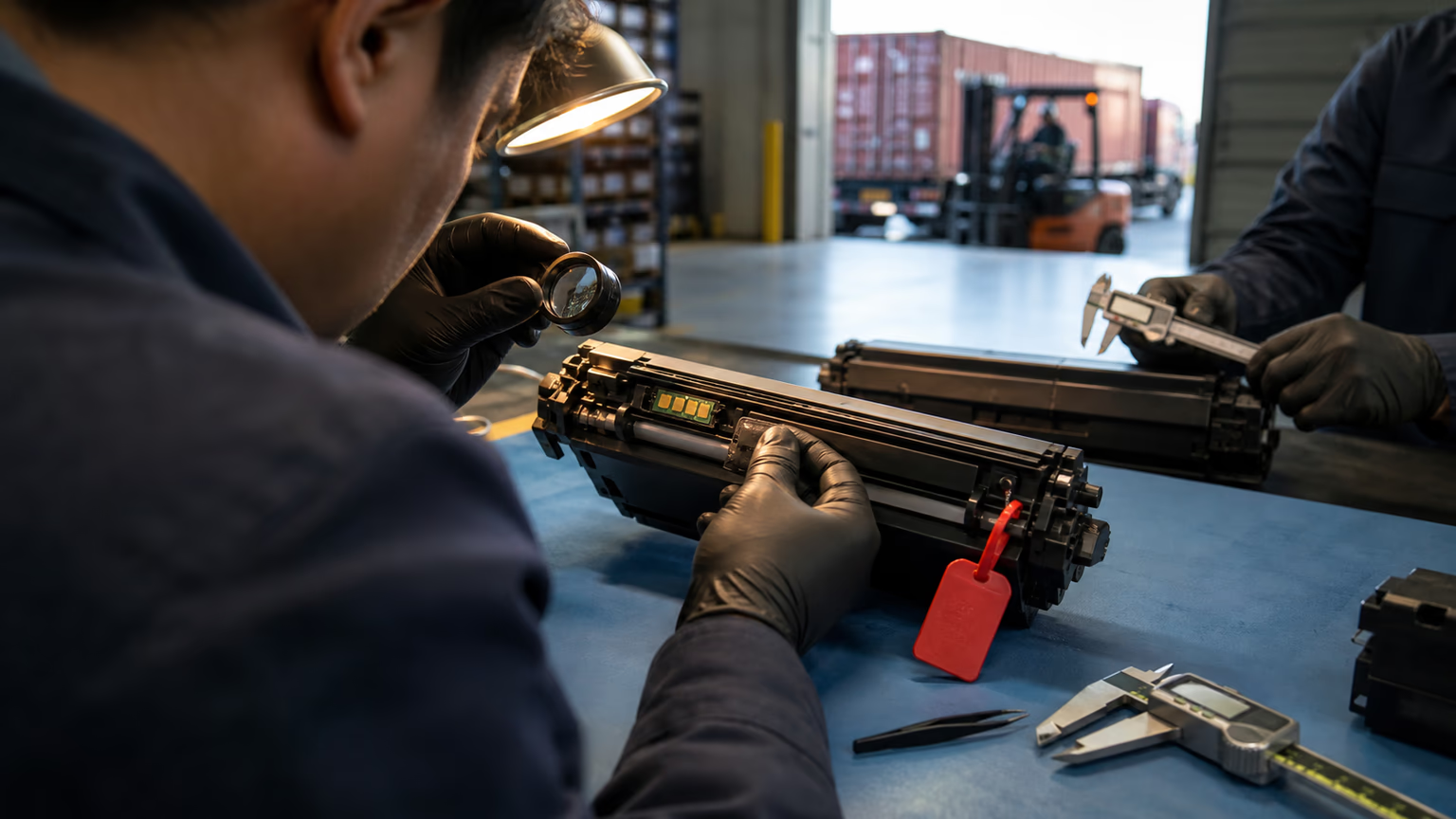
Procurement teams should require batch traceability documentation and inspect the chip version and packaging before accepting a shipment.
A supplier that cannot provide this level of transparency is likely sourcing from uncontrolled regional gray markets.
Firmware and chip compatibility remains the most frequent compatibility failure.
Printer manufacturers regularly push firmware updates that can block non-OEM chips.
These updates are often rolled out region by region, meaning that a compatible cartridge that works in one office may fail in another after a regional firmware update.
Before bulk purchasing compatible cartridges, pull the current firmware version from your printers and ask the supplier to test their cartridges on that exact version.
Document the test results and include a return policy that covers chip incompatibility discovered after installation.
Service and Uptime Risks When Regional Supply Fails
Every minute a printer is down because of a missing toner cartridge costs service revenue and customer goodwill.
MPS contracts typically include uptime service-level agreements that require a certain percentage of printers to be operational at all times.
A regional toner stockout directly threatens those SLAs.
If your service organization cannot quickly source a replacement cartridge, you may face financial penalties or lose the contract altogether.
The risk is amplified when a single regional distributor controls the supply for a specific SKU and experiences a delivery failure.
Inconsistent compatible toner quality creates a slower but equally damaging risk.
Print quality complaints from customers often surface days or weeks after cartridge installation.
Service technicians may spend hours troubleshooting printer hardware when the real cause is a bad batch of toner.
These hidden costs eat into service margins and damage client relationships.
A regional supplier with weak quality control can undermine an entire service operation, even if the cartridges are cheap.
To protect service uptime, B2B buyers should maintain a regional safety stock buffer for high-velocity toner SKUs and establish emergency shipment protocols with a secondary supplier.
The cost of holding a few extra cartridges is small compared to the cost of a missed SLA or a lost service contract.
Regional supply chain awareness must be embedded in your service delivery model, not treated as an afterthought.
Practical Checks Before Committing to a Regional Toner Source
Before you sign a supply agreement with a regional toner distributor, conduct a thorough audit.
Start by mapping every printer model in your fleet and confirming the exact regional SKU code for each toner cartridge.
Do not assume that the cartridge part number from one region is identical in another.
Regional firmware variations may require different chips, and ordering the wrong SKU leads to returns, downtime, and frustration.
Request distributor data on regional fill rates and average lead times for the last 12 months. Ask for this data broken down by SKU and by region, not just an aggregate number. A supplier that cannot produce this level of detail may not have the operational discipline to manage your account. Compare the data against your own experience with stockouts and emergency orders.
Inspect a sample of cartridges for batch traceability, chip version, and country of origin. Ask the distributor to explain their quality control process and how they handle batch inconsistencies. If the supplier is selling remanufactured cartridges, request documentation on the remanufacturing facility and the components used. A reputable supplier will provide this information willingly.
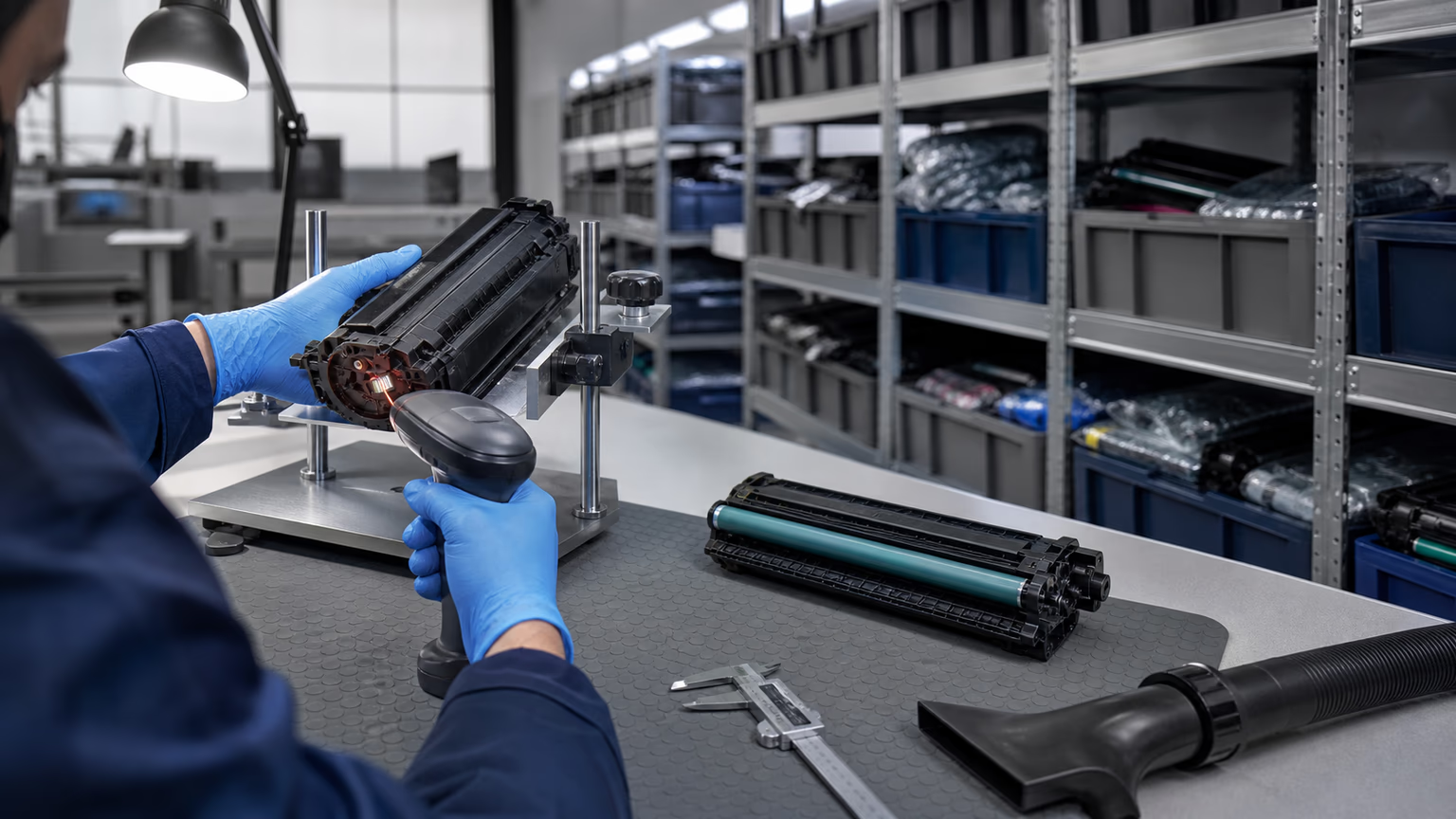
Test compatible cartridges on your exact printer models with the current firmware before committing to a bulk purchase.
This test should run for at least a few hundred pages to detect early print quality issues.
Do not rely solely on the supplier's compatibility claims; verify in your own environment.
Also compare landed cost across at least two regional sources, including price, tariffs, logistics, and any hidden fees.
Finally, review contract terms for stockout compensation and return policies for compatibility failures. Negotiate a clear process for returning faulty cartridges and receiving credit. A supplier that refuses to include these terms is signaling that they do not stand behind their regional stock commitment. Walking away from such a supplier is often the best regional risk mitigation.
Conclusion
Regional supply chains are not a logistics detail.
They determine which toner cartridges reach your fleet, when they arrive, and whether they perform as expected.
A B2B buyer who evaluates suppliers solely on unit price ignores the operational risks that regional fragmentation creates.
By auditing regional warehousing, fill rates, SKU coverage, and compatibility testing, you can build a toner supply strategy that protects service uptime and customer satisfaction.
The most resilient procurement teams treat regional supply chain awareness as a continuous process, not a one-time audit.
Review your regional suppliers at least twice a year, monitor firmware updates for your printer fleet, and maintain relationships with at least two regional sources for critical SKUs.
These practices reduce stockout exposure and give you leverage when negotiating with distributors.
In a market where toner availability can shift suddenly due to regulatory changes or local demand spikes, regional insight is your best defense against costly surprises.
FAQ
Why is the same toner cartridge model sometimes unavailable in certain regions even when global supply is stable?
Global supply is allocated through regional hubs that prioritize local demand forecasts, service coverage, and historical sales. A region with lower volume or fewer service contracts may receive limited stock even if the global warehouse is full. Import regulations, local distributor capacity, and SKU registration requirements further restrict what reaches a specific market.
How do regional import regulations and tariffs affect toner cartridge pricing and lead times?
Toner cartridges often require special documentation for chemical composition, environmental compliance, and safety labeling.
What are the main differences between OEM and compatible toner supply chains at the regional level?
OEM supply chains use regional hubs with broad SKU coverage, but they enforce regional pricing and SKU tiering that can limit cross-border sourcing.
Which quality issues are more common with regionally remanufactured compatible toner cartridges?
Batch-to-batch inconsistency is the most common problem because regional remanufacturers may use different toner powder, replacement drums, or chip components.
How can I verify that a compatible toner cartridge will work with my regional printer firmware and chip version?
Pull the current firmware version from your printers and ask the supplier to test their cartridges on that exact version. Run a print test of at least a few hundred pages to detect early compatibility issues. Request documentation of the chip version used in the cartridges and confirm that the supplier offers a return policy for chip incompatibility discovered after installation.