In many emerging regions, office and logistics fleets are expanding quickly, creating urgent demand for laser printer toner and compatible supplies.
Distributors and printer service companies often hear the same phrase from suppliers: factory-backed toner programs.
The term sounds reassuring, but it is frequently used without any audited manufacturing relationship.
Many offers come from trading companies or brokers that have no direct control over toner formulation, component sourcing, or batch consistency.
For a B2B buyer, this gap between claim and reality can lead to stockouts, quality failures, and lost client trust.
The problem is especially critical in fast-growing markets because the installed base of printers is changing faster than regional supply chains can adapt.
Procurement teams need reliable office printer toner, but they face price volatility and unpredictable lead times.
Without verified factory support, a supplier may simply repackage generic cartridges from unknown sources.
The result is a supply chain that looks stable on paper but breaks down during demand spikes or firmware updates.
What Factory-Backed Should Actually Mean
A genuine factory-backed toner program means that the supplier either owns the manufacturing facility or has a direct, auditable partnership with the plant that fills and assembles the cartridges.
This is not the same as buying from a broker who claims to have a factory connection.
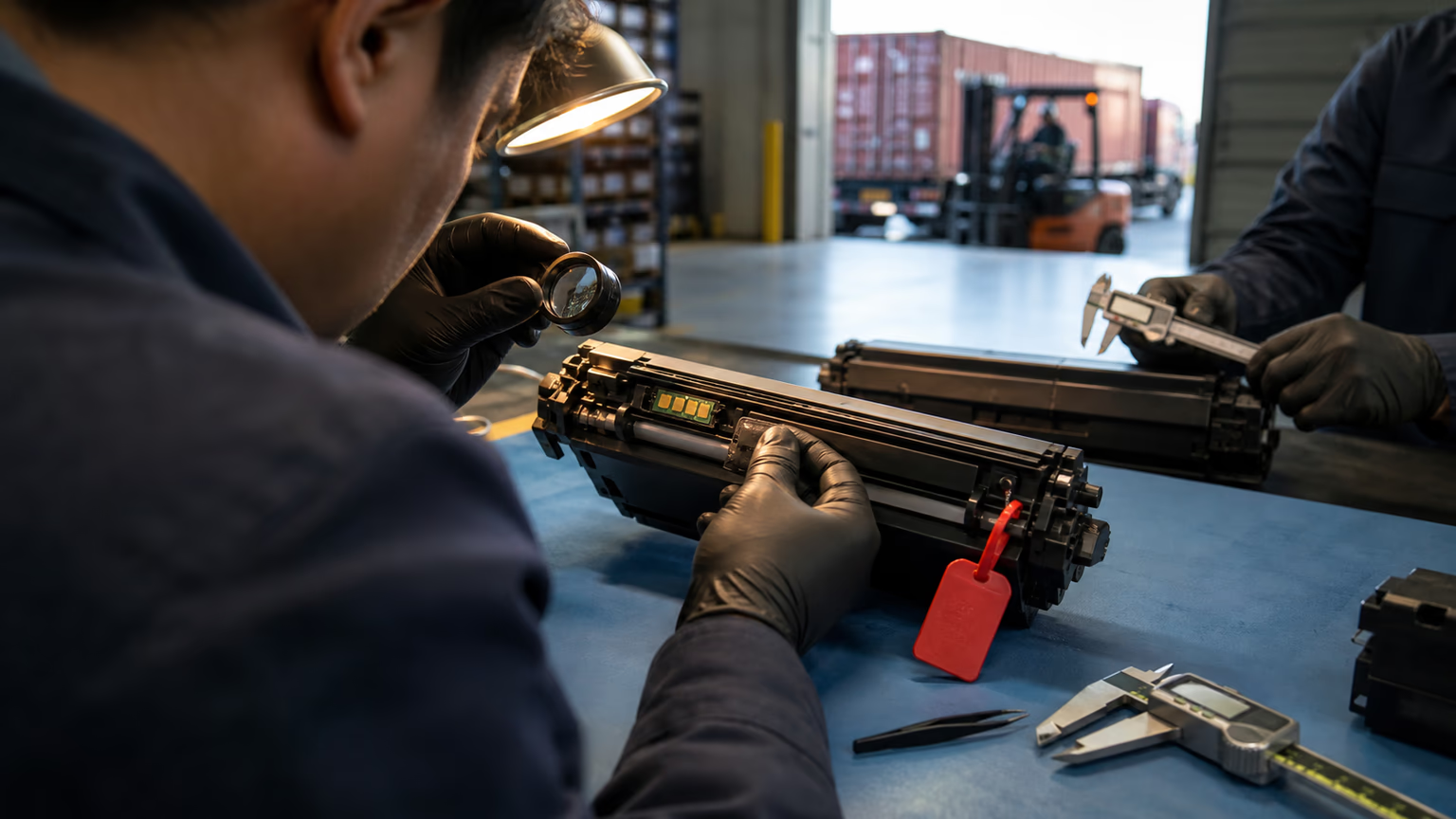
True factory backing should include access to production process documentation, toner formulation data, and quality control records.
The supplier should be able to show where the toner cartridge factory is located and how components are sourced.
For a distributor, the distinction matters because it affects every downstream promise.
If the manufacturer is not directly involved, the supplier cannot guarantee consistent page yield, print density, or compatibility with regional printer models.
Factory-backed should also mean that the program includes regional SKU planning.
A cartridge that works well in one market may not match the chip requirements or labeling rules of another.
Without this level of control, the program is little more than a price list.
Supply Chain Pressures in High-Growth Printer Fleets
When printer fleets grow rapidly across offices, retail locations, and logistics hubs, toner demand does not rise smoothly.
It comes in waves tied to equipment rollouts, seasonal projects, and replacement cycles.
Distributors that rely on spot purchases from multiple intermediaries soon find that lead times stretch and stockouts become common.
In a fast-growing market, a two-week delay in toner cartridges for distributors can mean hundreds of client devices sitting idle.
To handle this volatility, a factory-backed program must include buffer stock options and a clear view of regional demand.
The supplier should be able to hold safety stock for high-turnover SKUs and adjust production runs based on distributor forecasts.
This is not a luxury; it is the operational difference between a reactive supply chain and a resilient one.
Importers and MPS operators should ask how the manufacturer handles sudden increases in orders and whether local warehousing is part of the agreement.
Quality and Consistency: The Hidden Procurement Risk
The most visible failure of an unverified compatible toner is a print defect: streaks, background fog, or poor density.
But the deeper issue is batch-to-batch variance.
A sample cartridge may perform well, while the next production lot contains toner with a different particle size distribution or magnetic properties.
This inconsistency leads to higher service calls, premature drum wear, and an increase in cartridge returns.
Quality problems are not limited to print output.
Leaking toner or dust contamination can damage a printer's drum, fuser, or transfer belt.
For a service company, that means more technician time and higher parts costs.
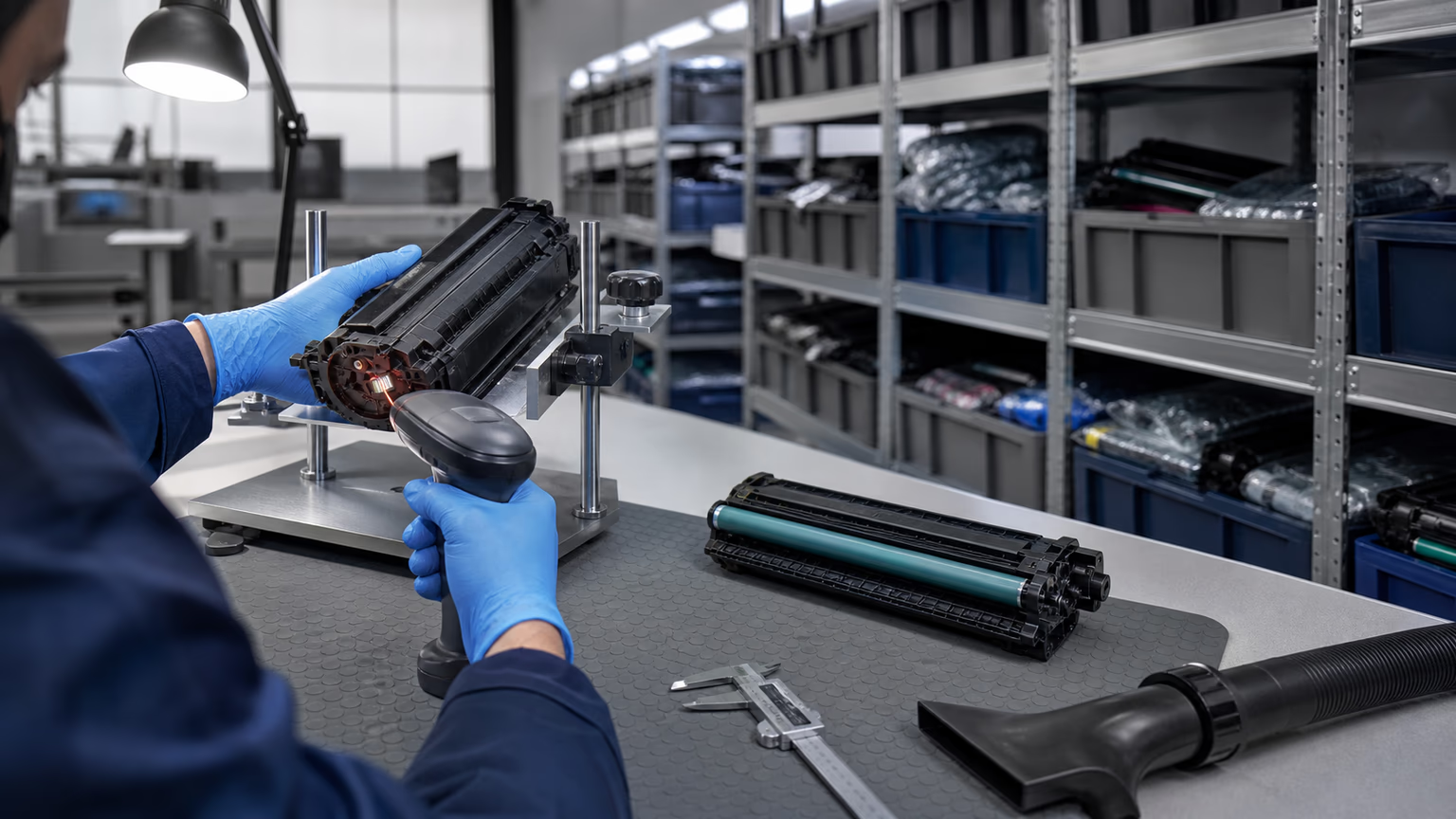
A genuine factory-backed program should provide batch consistency data and a documented quality control process.
It should also include a defect rate history and a clear replacement process for batches that fail.
These are procurement issues, not just technical details.
Compatibility Across Mixed Printer Fleets
Most B2B clients operate a mixed fleet: laser printers from several manufacturers, different models, and varying firmware versions.
A toner cartridge that works today may be rejected after a firmware update tomorrow.
Compatible toner for mixed printer fleets therefore requires active chip version management.
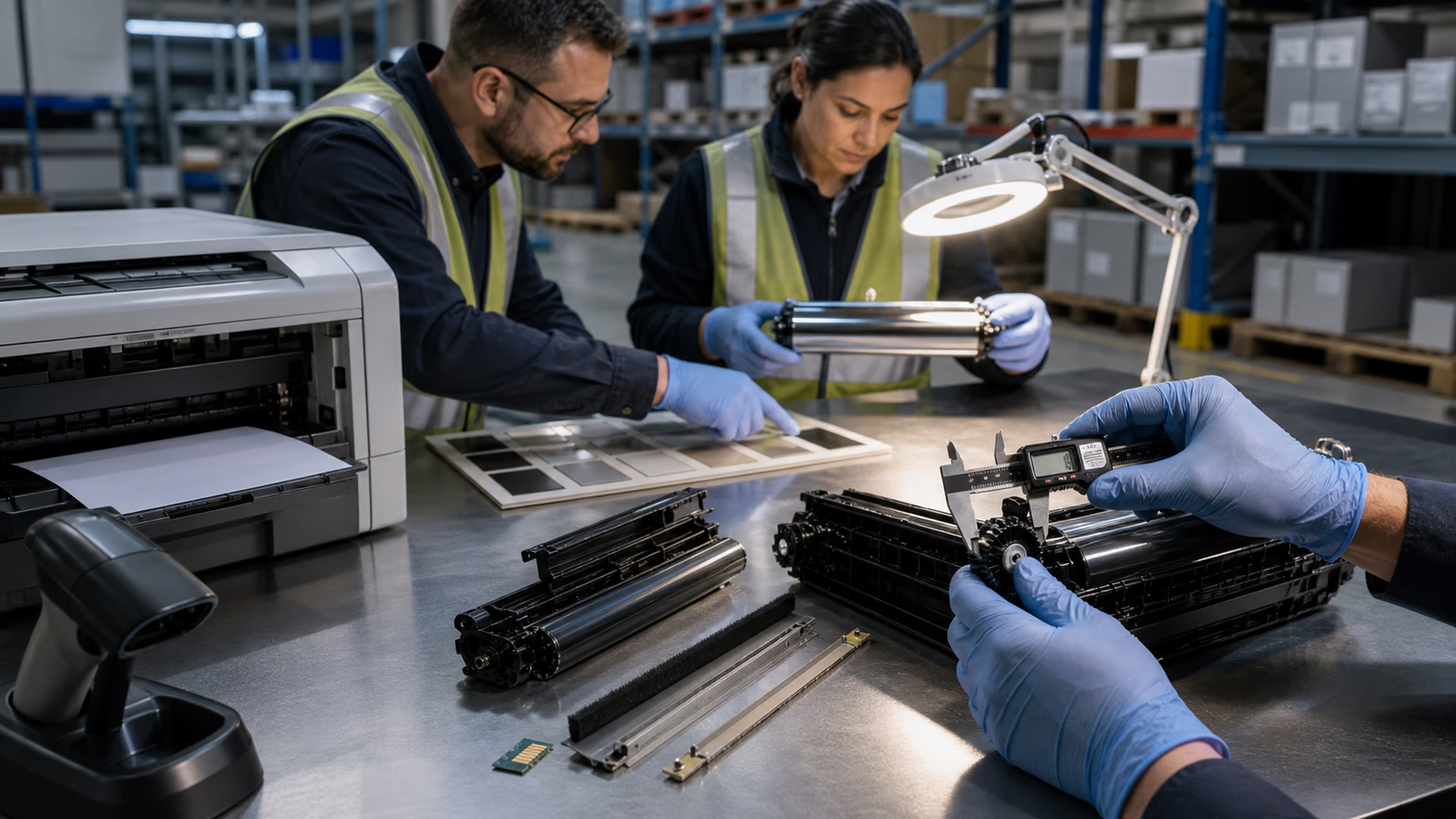
The supplier must test cartridges against current firmware for each supported printer model and provide updated chips when a manufacturer releases new code.
Regional printer model variations add another layer of risk.
A model sold in one country may have different regional coding, voltage specifications, or default settings than the same model sold elsewhere.
A factory-backed program should include a compatibility matrix that maps each SKU to the specific printer models and firmware versions it supports.
Distributors should request this matrix before placing a large order and should re-test samples on the top three regional models they support.
Service, Support, and Local Responsiveness
Total cost of ownership includes more than the price per cartridge.
When a client reports a print problem, the distributor needs an escalation path that resolves the issue quickly.
A supplier that offers no local-language documentation, no technical support hotline, and no clear defect replacement process is transferring service burden onto the distributor.
For printer service companies and MPS operators, that burden can erase margin.
A credible factory-backed toner program should include accessible technical support for troubleshooting, a documented replacement flow for defective batches, and proactive notifications if a batch issue is discovered.
Local warehouse presence or a regional partner can shorten response times.
Training materials and documentation in the buyer's language also reduce the learning curve for technicians.
These elements are not add-ons; they are part of what factory-backed should mean from a service perspective.
A Procurement Framework for Evaluating Factory-Backed Programs
Before signing a supply agreement, distributors should treat factory-backed claims as hypotheses to be tested. The following practical steps can separate genuine factory programs from broker-sourced offers.
- Request factory audit reports and production process documentation that show direct manufacturing control.
- Order batch samples and test them on the top three regional printer models with current firmware.
- Verify chip version compatibility and ask how the supplier handles firmware updates.
- Clarify buffer stock options, lead times, and minimum order quantities for high-turnover SKUs.
- Ask for defect rate history and the replacement process timeline for quality failures.
- Confirm regional certifications and labeling requirements for your target market.
- Pilot the program with a small set of high-turnover SKUs before full rollout.
These checks are not bureaucratic hurdles. They protect against the operational and reputational costs of a supply failure. A supplier that resists providing audit documentation or sample testing is likely hiding something about its factory relationship.
Building a Resilient Toner Supply Strategy
Even after selecting a factory-backed program, distributors should not rely on a single source.
Resilience comes from combining verified suppliers with internal monitoring.
Set quality KPIs such as return rate, first-call resolution, and page yield consistency.
Review supplier performance quarterly and maintain safety stock for high-turnover SKUs.
If a supplier fails to meet agreed defect thresholds, have an alternative factory-backed program ready.
The goal of a mature toner procurement strategy is not to find the lowest per-cartridge price.
It is to reduce total cost of ownership while protecting client uptime.
In fast-growing markets, this means choosing partners that offer real factory control, regional SKU planning, and responsive service.
The procurement framework above will help you avoid the illusion of factory backing and build a supply chain that can scale with your clients' printer fleets.
FAQ
What does a factory-backed toner program actually mean?
A genuine factory-backed toner program means the supplier owns or directly controls the manufacturing facility that produces the toner cartridges. This includes documented access to production processes, toner formulation, and quality control records. It is not simply a marketing label used by brokers or trading companies that buy from unknown sources.
How can I verify that a supplier is genuinely factory-backed and not just a broker?
Request factory audit reports and production process documentation. Ask for the physical location of the toner cartridge factory and the names of component suppliers. A legitimate partner will provide batch consistency data and allow sample testing against your regional printer models. Resistance to these requests is a red flag.
What are the most common quality failures in compatible toner cartridges?
Common failures include inconsistent page yield, print density variation, background fog, streaks, and leakage. Dust contamination can damage a printer's drum or fuser over time. Batch-to-batch toner formulation changes are a frequent cause, which is why factory control over formulation is critical.
How does a factory-backed program differ from a standard OEM alternative?
An OEM alternative typically refers to cartridges made by third parties but compatible with specific printer models. A factory-backed program adds the layer of verified manufacturing control: direct factory partnership, regional SKU adaptation, and documented quality processes. Standard OEM alternatives may come from multiple sources with inconsistent quality.
What documents should I request during supplier evaluation?
Request factory audit reports, production process documentation, batch consistency data, defect rate history, and a compatibility matrix for regional printer models. Also ask for the replacement process timeline and any regional certifications required for your market. These documents help validate the factory-backed claim before you commit.
Conclusion
In fast-growing markets, the difference between a genuine factory-backed toner program and a broker-sourced claim determines whether your supply chain can support client uptime.
Distributors and service companies that invest in supplier verification, sample testing, and regional SKU planning reduce their exposure to stockouts, quality failures, and costly service calls.
Use the procurement framework in this article to evaluate factory-backed claims systematically.
By choosing suppliers that offer true factory control, transparent quality data, and local responsiveness, you build a resilient toner supply that scales with your clients' printer fleets.