The Real Cost of Guessing: Why Fleet Verification Matters
In enterprise print environments, every unverified compatible toner cartridge introduces a chain of risk that can erode service margins and destroy customer trust.
A single poorly manufactured unit in a mixed fleet can trigger unplanned downtime, repeated service visits, and even permanent printer damage.
For distributors and managed print service (MPS) providers, the stakes go far beyond a one-time product cost.
The total cost of ownership (TCO) is shaped by returns, reprints, field technician dispatches, and lost contract renewals.
Without a systematic verification process, procurement teams gamble with their reputation every time they source from a new compatible toner supplier.
The commercial appeal of compatible toner is clear: lower unit prices and competitive positioning against OEM cartridge rates.
But procurement professionals know that false economy lurks in unverified supply.
If a cartridge leaks, fails to communicate with the printer chip, or delivers inconsistent print density, the apparent savings vanish.
In large fleets mixing multiple device brands and generations, the complexity grows exponentially.
Verification is not about mistrust; it is about engineering confidence into a supply chain that must perform across thousands of pages, under varying workloads, and through firmware updates that are entirely outside the distributor's control.
Mapping Your Fleet: The First Step to Smarter Sourcing
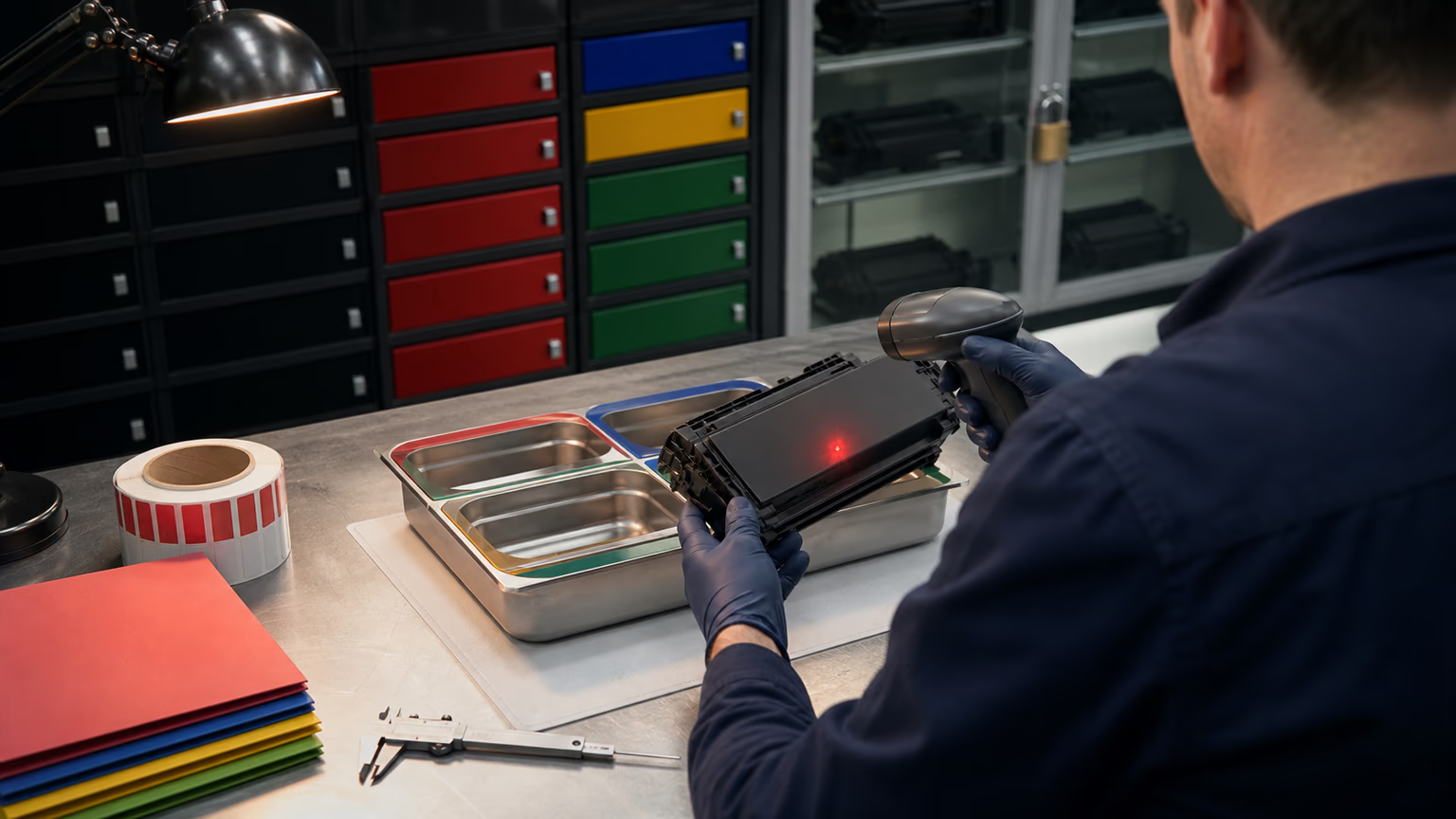
Before evaluating any compatible toner, you must have a precise, living inventory of every printer model, consumable part number, firmware version, and regional coding in your fleet.
This data forms the compatibility baseline without which supplier claims are meaningless.
A fleet that spans multiple manufacturers—and often devices from different decades—cannot be served by guesswork.
Each printer model may have subtle mechanical tolerances, chip encryption levels, and fusing temperature requirements.
Even within the same device family, firmware variations can mean the difference between seamless operation and a cartridge rejection.
This mapping exercise should also segment devices by page volume and criticality.
Identify which printers are in high-impact locations—executive floors, legal departments, customer-facing desks—where print quality failures cause immediate escalation.
Flag models known for chip sensitivity or frequent firmware updates.
Finally, group consumables by OEM part number and cross-reference with potential compatible alternatives.
This inventory becomes the central tool for supplier discussions, sample testing, and ongoing performance monitoring.
The Verification Checklist: Non-Negotiable Tests Before Ordering
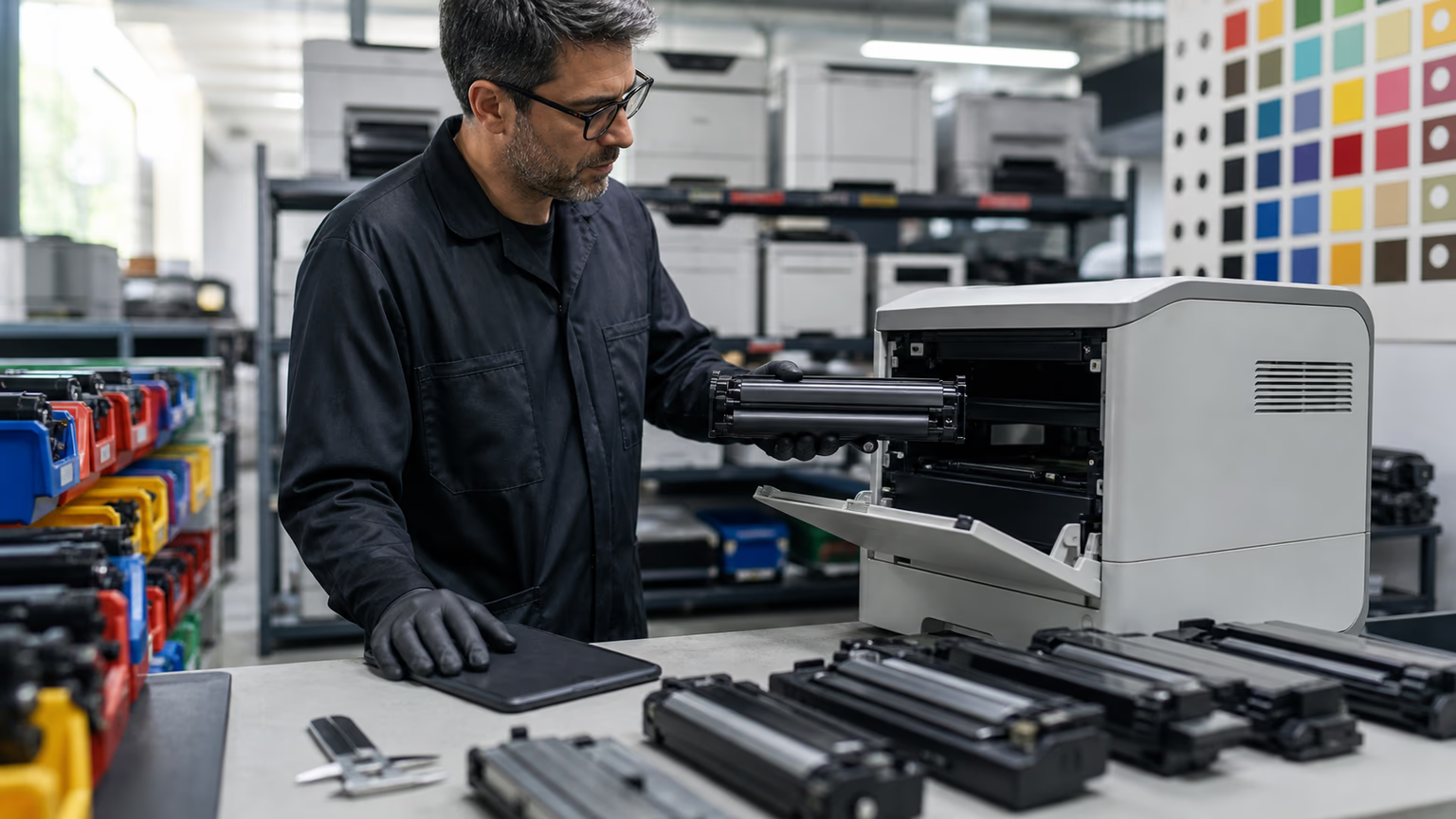
Once you have shortlisted a compatible toner supplier, demand a structured sample-testing protocol that goes beyond a quick printout. The following tests should be performed on at least three different printer models representative of your fleet, covering both high- and low-volume devices. Do not rely solely on the supplier's internal reports; conduct your own or use an independent lab.
- Print quality evaluation: Test solid fill density, background fog, ghosting, and fusing on standard office paper. Use test pages that include fine text, grayscale gradients, and halftone patterns. Compare results side by side with OEM output under controlled lighting.
- Yield validation: Run a real-world 10,000-page continuous print test at 5% and 20% coverage. Weigh cartridges before and after to calculate actual toner usage. Premature low-yield alerts are a red flag.
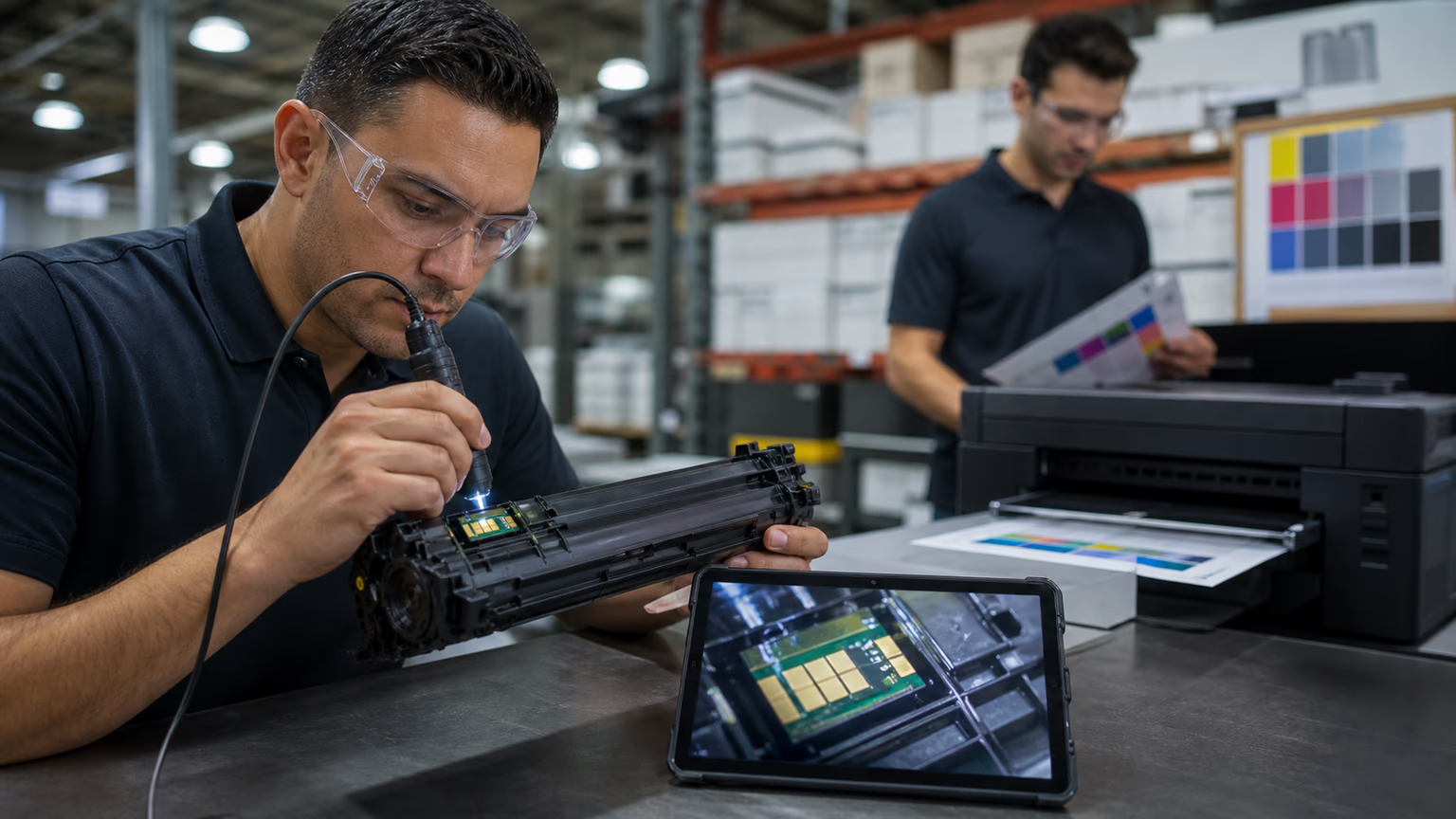
- Chip communication and firmware simulation: Test the cartridge on printers with the latest firmware. Then simulate a firmware update (if possible) or request the supplier's historical data on how quickly they release updated chips after OEM updates. Check that region coding matches your fleet's location.
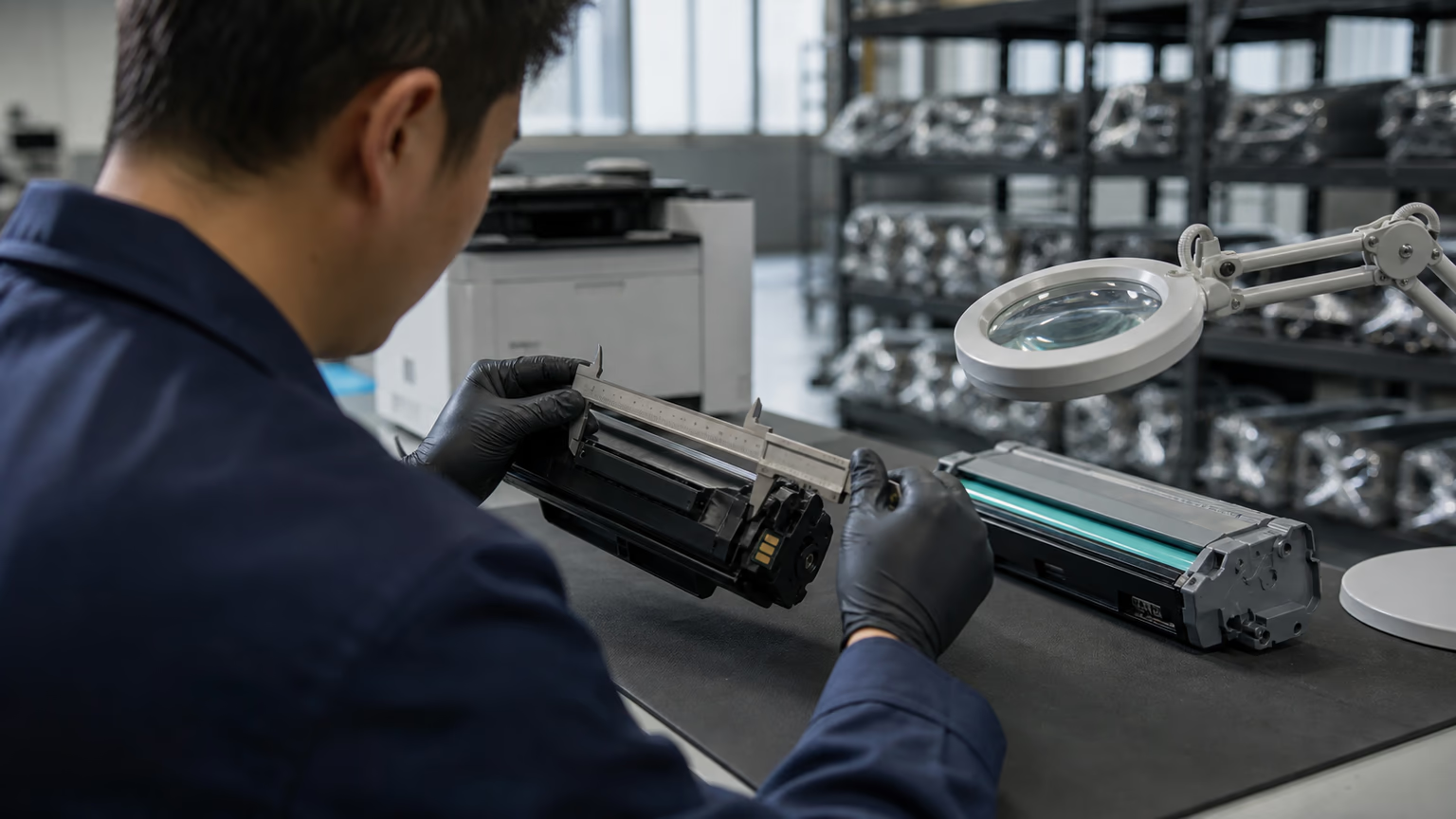
- Mechanical fit and waste toner: Inspect cartridge seating, locking mechanisms, and seals. Verify that waste toner containers or built-in waste chambers fill correctly without leakage. One misfit can scatter toner inside the printer, leading to costly repairs.
Beyond the Sample: Assessing Long-Term Supply Consistency
A positive initial sample test is only a snapshot.
True supply stability requires that every shipment, from the first to the thousandth, delivers identical performance.
Delve into the supplier's quality management system.
Ask for documentation of batch-to-batch variation limits, statistical process control data, and defect rate trends over time.
An ISO 9001 or equivalent process framework is a good starting point, but you need to see how it translates into toner powder consistency, cartridge assembly precision, and chip programming accuracy.
Equally important is the supplier's lifecycle commitment.
In enterprise fleets, devices may stay in service for five to ten years.
The compatible toner provider must guarantee availability for the entire intended life of the cartridge model, and give advance notice of any discontinuation—typically six months or more.
A sudden end-of-life announcement can force distributors into panic buying or premature OEM reversion, both of which destroy TCO calculations.
Firmware Fire Drills: Preparing for the Inevitable Updates
OEM manufacturers regularly update printer firmware, often with security or performance improvements that can inadvertently—or intentionally—block non-OEM cartridges.
For enterprise fleets, this is a recurring threat that must be part of your verification playbook.
Before committing to a supplier, understand their chip revision process.
How quickly can they analyze a new firmware lock and distribute updated chips?
What is their track record over the past two years?
A supplier with no answer is a liability.
Test your candidate cartridges on devices with the latest firmware, and if you have access to beta or upcoming releases, include those.
Also consider region lock complications: some OEM devices use regional chip coding that, if mismatched, renders the cartridge useless regardless of physical compatibility.
Your supplier must demonstrate a clear region-code mapping capability for your multinational or cross-border deployments.
Service and Support: The Hidden Lifeline of Compatible Supply
Even the best cartridge can fail, and when it does, the speed and effectiveness of the supplier's response define your operational resilience.
Evaluate the local presence: does the supplier have warehousing near your main markets?
Are technical support staff available in your language and time zone?
A distant supplier with slow email-only support can leave a critical printer offline for days, damaging your service-level agreements.
The return merchandise authorization (RMA) process must be transparent and swift.
Request data on average turnaround time, defect acceptance criteria, and whether replacements are cross-shipped.
Also assess training resources: does the supplier provide troubleshooting guides, chip reset instructions, or on-site training for your field technicians?
This support layer is often the difference between a minor hiccup and a terminated contract.
Building a Procurement Framework for Enterprise Fleets
Verification activities should not be ad hoc.
They must be embedded into a repeatable vendor qualification system.
Develop a weighted scorecard that covers: print quality consistency (30%), supply stability and life-cycle commitment (25%), firmware responsiveness (20%), and service infrastructure (25%).
Adjust weights according to your fleet's risk profile.
This scorecard then becomes the objective basis for supplier comparison and ongoing auditing.
Schedule periodic re-verification—at least annually or whenever a major OEM firmware release occurs.
Random batch testing from live stock also prevents drift.
Integrate these requirements into your request for proposal (RFP) documents and supplier contracts.
By codifying verification standards, you protect your margins and shift the burden of proof onto suppliers who must earn your trust continuously.
The Distributor Advantage: Turning Verified Supply into Revenue
A rigorously verified compatible toner program is more than a risk-control measure; it is a commercial differentiator.
Distributors and MPS providers can leverage their testing data as sales collateral, demonstrating to end customers that their compatible offering meets or exceeds OEM performance benchmarks.
This credibility shortens sales cycles and justifies premium pricing over unverified competitors.
Furthermore, a stable, verified supply chain enables long-term service contracts with guaranteed uptime and predictable cost. When your customers know that every cartridge has been pre-qualified against their specific fleet, they are far less likely to switch suppliers. Verification transforms compatible toner from a commodity into a strategic asset that builds loyalty and recurring revenue.
FAQ
What are the most common problems with compatible toner in enterprise fleets?
Common problems include chip recognition failures after firmware updates, inconsistent print quality across different printer models, premature low-yield alerts, toner leakage that damages internal components, and mechanical misfit causing paper jams or improper seating. These issues are amplified in mixed fleets due to varying device tolerances and firmware versions.
How can I test toner cartridge yield without special equipment?
You can perform a controlled print run using a high-page-count document, such as a 10,000-page continuous print job at standard office coverage (5%). Weigh the cartridge before and after with a precise digital scale to determine actual toner consumption. Monitor for low-toner warnings and print quality degradation. While not a lab-grade test, this method reveals gross yield discrepancies.
What firmware updates are known to block compatible toner chips?
OEM manufacturers periodically release firmware updates that enhance security or add features, some of which inadvertently disable non-OEM chips. There is no public static list, as updates vary by brand and region. However, major firmware revisions targeting supply authentication are commonly observed. A reliable compatible toner supplier should track these and provide updated chips swiftly.
Is it safe to mix OEM and compatible toner in the same printer model?
Generally, it is safe to use a compatible toner cartridge in a printer that has previously used OEM toner, as long as the compatible cartridge meets quality and compatibility standards.
Can compatible toner void my printer maintenance contract?
In most jurisdictions, using compatible consumables does not automatically void the printer warranty, thanks to consumer protection laws.
Conclusion
Verifying compatible toner for enterprise fleets is not optional—it is the foundation of a sustainable distribution or MPS business.
The complexity of mixed-brand, multi-generation printer environments demands a structured approach that goes beyond price comparisons.
By mapping your fleet, conducting rigorous sample tests, vetting long-term supply consistency, preparing for firmware shocks, and demanding robust local support, you transform compatible toner from a risk-laden gamble into a reliable, profitable solution.
In a market where margins are tight and customer expectations are high, a documented verification framework is your strongest asset.
It protects your service contracts, enhances your reputation, and ultimately turns procurement diligence into a competitive edge that wins long-term business.