The Circular Economy Is Now a Toner Procurement Issue
For B2B distributors and printer service companies, the circular economy is no longer a distant regulatory concept.
Office printing generates a steady stream of used toner cartridges, and customers across industries now expect suppliers to address that waste stream responsibly.
At the same time, procurement teams must maintain uptime, protect print quality, and control service costs.
The real question is not whether to consider remanufactured toner, but how to evaluate it as a serious alternative within a structured sourcing strategy.
Used printer cartridges are among the most common consumables in office environments.
When they are simply discarded, plastic housings, metal components, and residual toner add to landfill volume and create avoidable environmental burden.
Remanufacturing offers a path to reuse many of these parts.
However, a circular economy approach only works for a B2B fleet when the remanufactured cartridge performs as reliably as the original equipment manufacturer alternative.
That reliability depends on the remanufacturer's process, component replacement discipline, and quality control.
This guide provides a risk-based evaluation framework for B2B buyers, service providers, and managed print operators.
It separates genuine remanufacturing from low-cost refilling, outlines the operational and hidden costs of poor quality, and gives practical checks for supplier selection and pilot testing.
The goal is to help you make a procurement decision that reduces total cost of ownership while supporting circular economy commitments with data, not marketing language.
What Separates True Remanufacturing from Refilling and New Compatible Cartridges
Not every cartridge labeled as remanufactured goes through the same process.
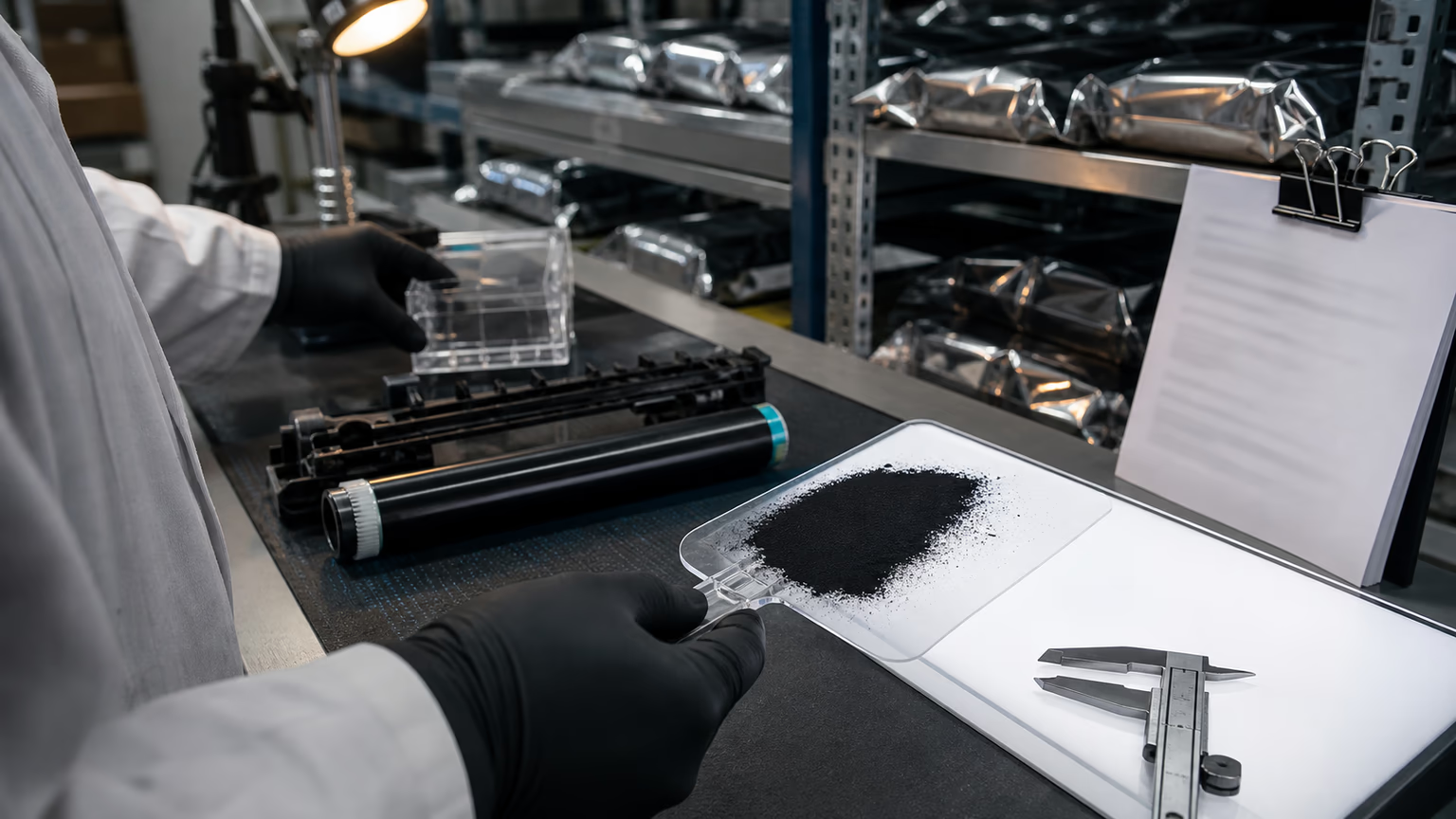
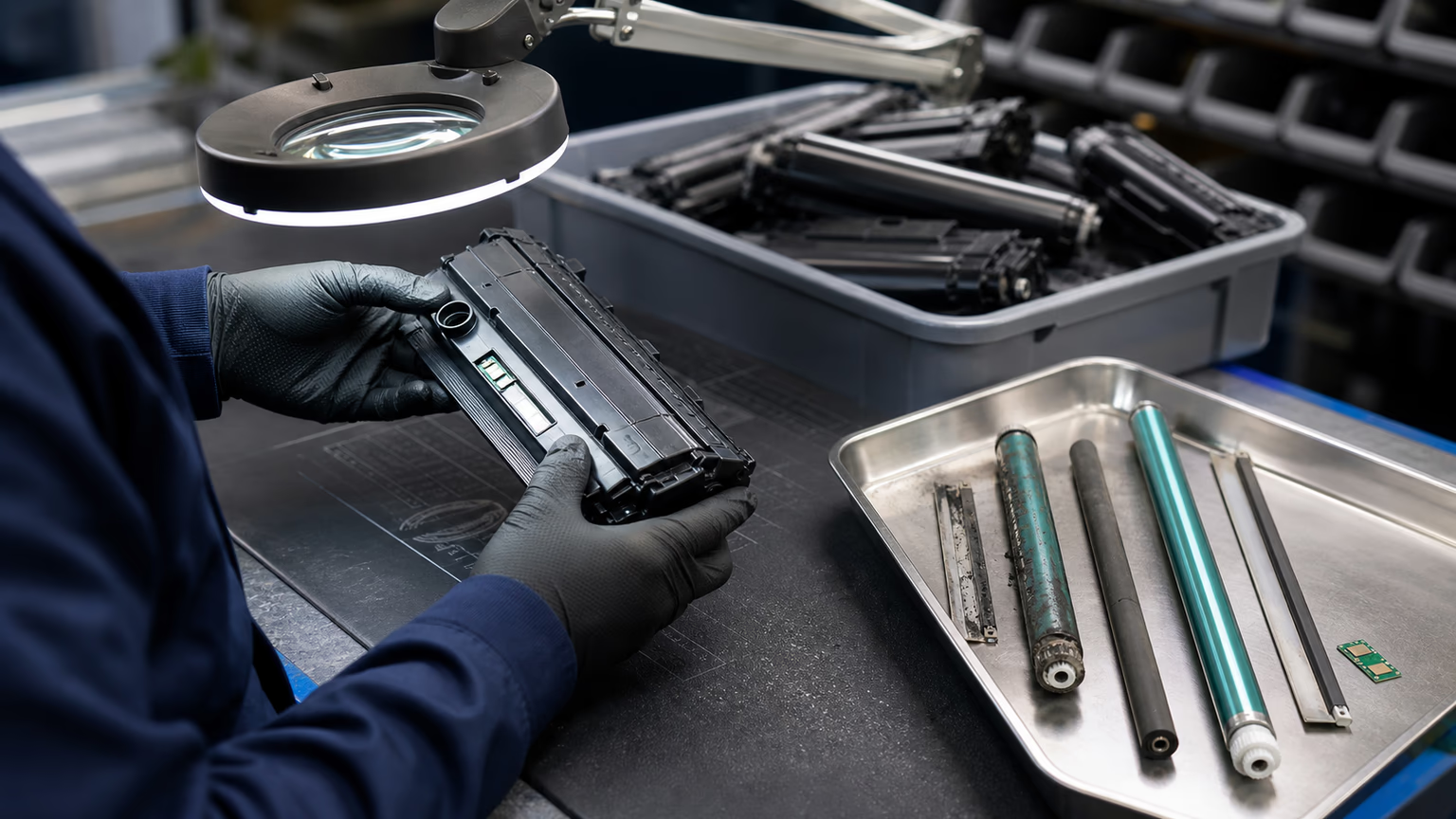
A genuine remanufactured toner cartridge is fully disassembled, cleaned, inspected, and rebuilt with new or restored critical components before it is refilled with toner and tested.
This is very different from a drilled and filled cartridge, where a hole is made in the shell and toner is simply poured in.
Drilled and filled cartridges often retain worn drums, damaged wiper blades, or degraded primary charge rollers, which leads to print defects and premature failure.
A true remanufacturing process addresses the entire cartridge, not just the toner inside.
The drum, wiper blade, primary charge roller, and chip should be evaluated and replaced if they do not meet the original specification.
The toner formulation itself must match the printer engine requirements for density, melting point, and particle size.
Without this level of care, remanufactured laser printer toner can produce background scatter, uneven density, or ghosting that undermines the perceived value of the product.
New compatible cartridges are another alternative.
They are built from new parts but are not produced by the printer manufacturer.
Compatible cartridges can be reliable if the manufacturer has high production standards, but they do not address the waste stream of used cartridges.
Remanufacturing is the only option that genuinely extends the life of an existing cartridge core.
For B2B buyers focused on circular economy goals, that distinction matters, but it only delivers value when the remanufactured product meets or exceeds the performance threshold of the fleet.
Operational Risks of Poor-Quality Remanufactured Toner
The most immediate risk of low-quality remanufactured toner is print quality failure.
End users quickly notice streaks, low print density, background scatter, or uneven output.
Each complaint triggers a service call, a replacement cartridge, and often a loss of confidence in the service provider.
In managed print services, repeated print quality issues can lead to contract penalties and customer churn.
Beyond visible print defects, poorly remanufactured cartridges can leak toner inside the printer.
Toner contamination can damage the drum, fuser, or developer unit over time, leading to expensive repairs and extended downtime.
A cartridge that fails after only a fraction of its expected page yield forces more frequent replacements and increases the effective cost per printed page.
The labor cost of technician call-outs and the administrative overhead of returns and credits also add up quickly.
Procurement teams that focus only on the lowest unit price often ignore these hidden costs.
A cartridge that costs less upfront but fails at a higher rate, reduces page yield, or causes printer damage is ultimately more expensive than a higher-quality remanufactured cartridge or even the OEM alternative.
That is why any serious evaluation of remanufactured toner must start with a clear understanding of failure modes and their operational consequences.
Compatibility and Electronics: Where Remanufactured Cartridges Often Fail
Modern laser printers rely on cartridge chips to communicate toner levels, page counts, and authentication.
A remanufactured cartridge may have a perfectly rebuilt mechanical body but fail because the chip is not properly programmed or reset.
This can lead to the printer not recognizing the cartridge, incorrectly reporting toner levels, or showing premature low-toner warnings.
Firmware updates from the printer manufacturer can also block previously working remanufactured chips, causing sudden incompatibility across a fleet.
Mechanical fit is another common issue.
If the cartridge housing is warped, worn, or not reassembled correctly, it can jam during printing or damage printer internals.
Regional variations in printer models add another layer of complexity.
A cartridge design that works for one region may not fit a printer sold in another market because of subtle differences in the drum gear, chip version, or casing dimensions.
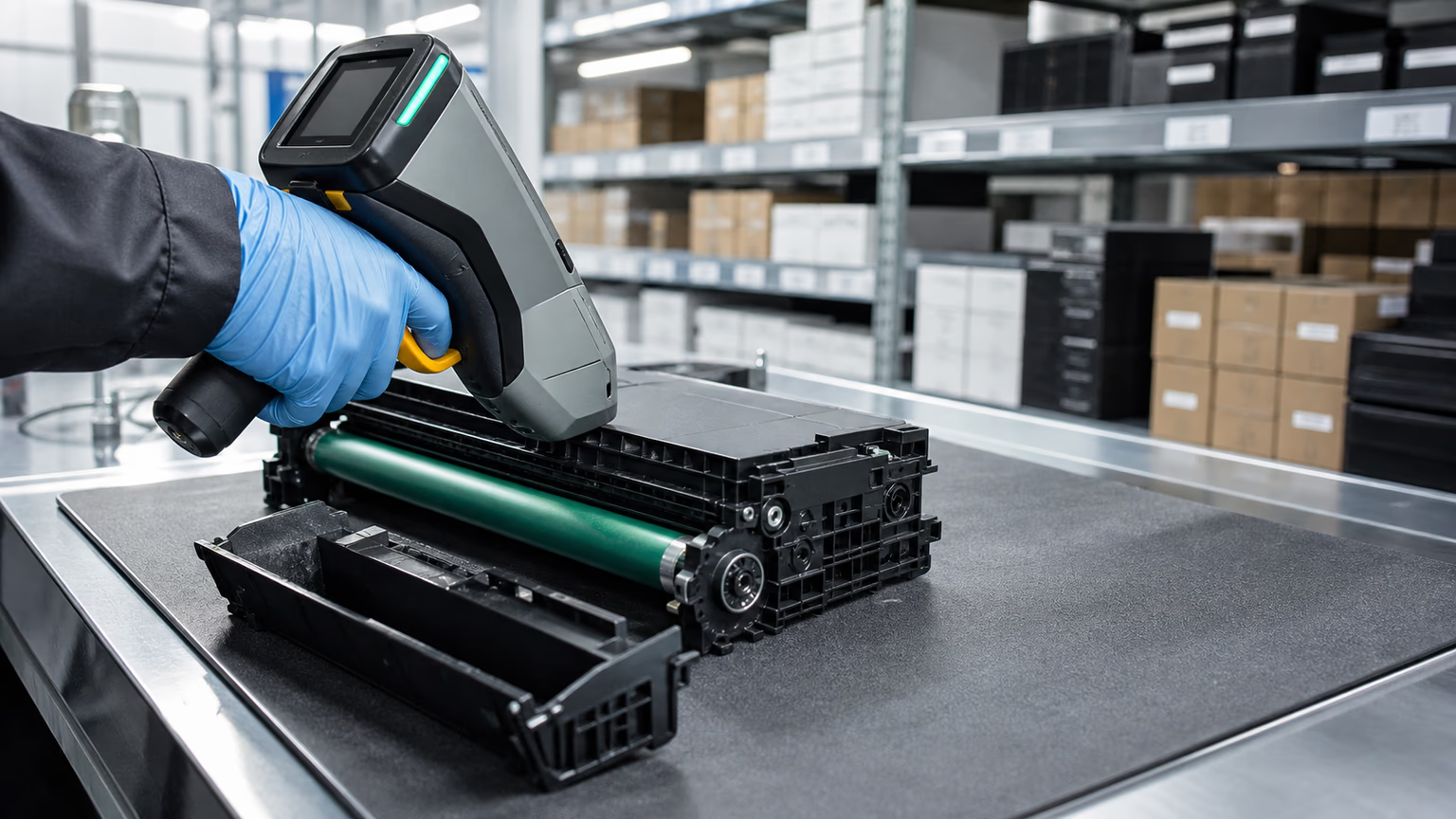
B2B buyers need to verify that the remanufacturer tests cartridges on the specific printer models in their fleet, including after any firmware updates.
Quality Verification: Technical Checks Before You Commit
Before adding a remanufactured toner supplier to your approved list, request technical documentation and sample cartridges for testing. A reliable remanufacturer should be willing to share batch-level quality reports that show defect rates, page yield data, and visual inspection results. These reports should be traceable to specific production batches, not generic marketing claims.
Ask about the component replacement policy.
A quality remanufacturer replaces the drum, wiper blade, primary charge roller, and chip with new parts or restores them to OEM-equivalent specifications.
If the process only cleans and reuses these components without clear criteria, the risk of inconsistent print quality rises.
The toner formulation should also be matched to the printer engine, not a one-size-fits-all powder.
Use a structured print test protocol during your evaluation.
Run cartridges on representative printer models and measure density, background, ghosting, and page yield against the OEM baseline.
Let cartridges sit overnight and test again for leakage or charge retention.
After a firmware update, repeat the test to ensure the chip remains recognized.
This level of rigor is necessary because a cartridge that works on day one can fail after a few hundred pages or after a software change.
Total Cost of Ownership: Price per Cartridge Is Not Your Real Cost
The procurement decision should never rest on the unit price of a printer toner cartridge alone.
The true cost includes the price of the cartridge, the failure rate, the cost of service interventions, the impact of downtime on your customers, and the administrative burden of processing returns.
A lower-priced remanufactured cartridge that requires twice as many replacements can easily erase any initial savings.
Calculate your cost per printed page using a controlled trial.
Track the number of pages printed per cartridge, the number of defective cartridges, and the labor time for replacements.
Compare that total cost per page against the OEM cost per page.
Only when the remanufactured option shows a stable or lower cost per page without an increase in service calls does it make sense from a total cost perspective.
Circular economy benefits should also be quantified, not assumed.
Ask the supplier for environmental impact data per cartridge, such as material saved from disposal or waste diverted.
A responsible remanufacturer should be able to provide verifiable data on how many cartridges were recovered and what percentage of components were reused.
If a supplier cannot provide any evidence beyond a recycling logo, treat that as a red flag.
Supplier Evaluation Criteria for B2B Distributors and Service Companies
Vetting a remanufactured toner supplier requires more than a quick price quote. You need documented evidence of a controlled remanufacturing process, from disassembly and cleaning to component replacement, testing, and packaging. The supplier should provide clear information on which components are replaced versus cleaned and reused, and why that decision is made.
Look for the following practical criteria when evaluating potential partners:
- Documented quality management system and adherence to recognized standards, with evidence you can verify.
- Batch-level quality reports that include defect rates, page yield, and visual inspection results.
- Replacement policy for critical components like the drum, wiper blade, primary charge roller, and chip.
- Electronics testing and chip reprogramming validation on current printer firmware.
- Return and warranty terms that are transparent and backed by historical defect rate data.
- Supply chain resilience, including dual sourcing for key components and stable raw material supply.
- Technical support availability and responsiveness for service partners and end users.
A supplier that hesitates to provide any of this information should be viewed with caution. The remanufactured toner market includes many low-cost refillers who are not transparent about their process. Your role as a B2B buyer is to demand evidence, not promises.
Running a Controlled Pilot Program in Your Printer Fleet
The safest way to introduce remanufactured toner into a B2B environment is through a structured pilot program. Start with a representative segment of your printer fleet, not the entire installed base. Choose models that are widely deployed and have a known OEM cost per page baseline. This allows you to compare performance under real operating conditions.
Define clear success metrics before the pilot begins. These should include defect rate, page yield, number of service calls, and cost per page. Run the remanufactured cartridges in parallel with the incumbent OEM or compatible cartridges on similar devices to avoid confounding variables. Collect feedback from end users and technicians on print quality and any issues encountered.
After a defined period, review the data against your success metrics.
If the remanufactured cartridges meet or exceed the baseline for quality and reliability while reducing cost per page, you can consider expanding the rollout.
If not, you have limited the risk to a small portion of your fleet.
The pilot should also include a review of the supplier's responsiveness to any defects, because that will tell you a lot about the partnership beyond the initial sample quality.
FAQ
Is remanufactured toner as reliable as OEM toner?
Reliability depends entirely on the remanufacturer's process and component replacement policy.
What are the main risks of using remanufactured toner in laser printers?
The primary risks include print quality defects such as streaks, low density, and background scatter, as well as premature cartridge failure and reduced page yield.
How does remanufactured toner contribute to circular economy goals?
Remanufacturing extends the life of used toner cartridges by recovering the plastic housing, metal components, and other parts for reuse.
What documentation should I request from a remanufactured toner supplier?
Request batch-level quality reports that include defect rates, page yield data, and visual inspection results.
Can remanufactured toner void the printer warranty?
In many regions, using remanufactured toner does not automatically void the printer warranty, but damage caused by a defective remanufactured cartridge may not be covered by the printer manufacturer.
Conclusion
Remanufactured toner can be a viable part of a circular economy strategy for B2B printer fleets, but only when procurement decisions are based on total cost of ownership and verified quality, not marketing claims. The risks of poor print quality, compatibility failures, and service disruptions are real, yet they can be controlled through rigorous supplier vetting and a structured pilot program.
Your evaluation should focus on the remanufacturer's process transparency, component replacement policy, batch quality data, and support capabilities. Start small, measure cost per page and defect rate, and compare against your OEM baseline. If the data supports it, expand gradually. If not, you have protected your fleet from a costly mistake.
Circular economy goals and operational reliability are not in conflict. The right remanufactured toner supplier will help you reduce waste and control costs without compromising the print quality your customers expect. Use the framework in this guide to make an evidence-based decision that serves both your sustainability commitments and your bottom line.