Introduction: The Hidden Compliance Risk in Printer Consumables
RoHS and REACH are not just EU acronyms buried in procurement fine print.
They directly affect the reliability of the printer toner and printer cartridges your customers install in laser printers and office devices every day.
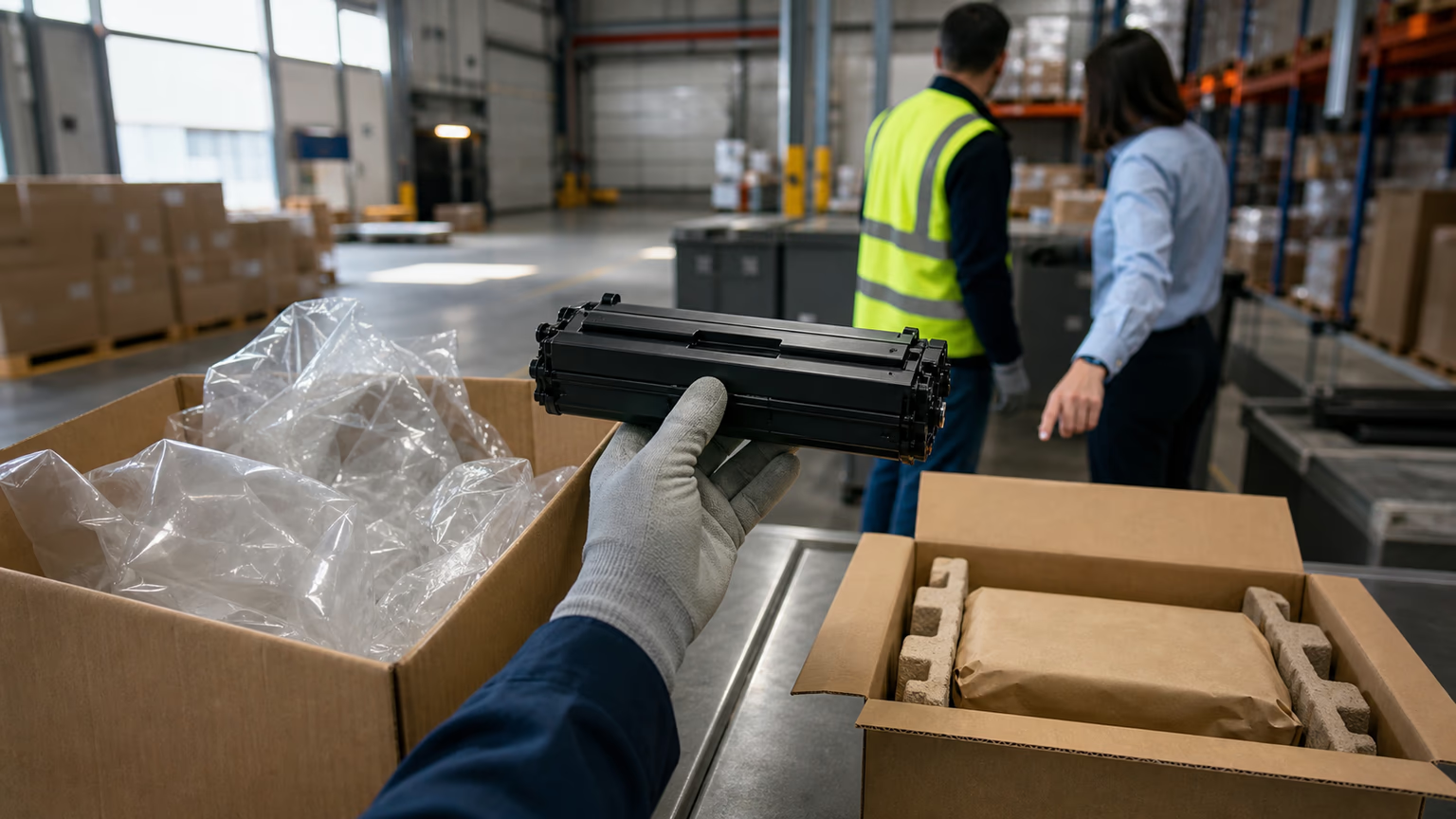
For B2B distributors, importers, and printer service companies, a shipment of compatible printer cartridges that fails to meet substance restrictions can trigger customs delays, legal exposure, and a cascade of printer failures that erode client trust.
Many buyers treat compliance as a check-the-box formality, especially when comparing low-cost alternatives to OEM devices.
But non-compliant cartridges often reveal themselves through subtle operational problems: premature toner leakage, poor adhesion on printed pages, or damaged drums that lead to repeated service calls.
The real cost of ignoring RoHS and REACH is not an abstract fine; it is the gradual loss of service contracts and the reputation you have built as a dependable supply partner.
This guide explains what RoHS and REACH cover in printer consumables, how non-compliance translates into equipment and business risk, and how procurement teams can verify supplier claims before placing the next order.
The goal is not to push more paperwork.
The goal is to turn compliance verification into a practical filter that reduces long-term total cost of ownership and protects your downstream customers.
What RoHS and REACH Mean for Printer Consumables
RoHS, or the Restriction of Hazardous Substances Directive, limits the use of specific dangerous materials in electrical and electronic equipment sold in the European Union.
For printer consumables, this includes the toner powder inside laser printer toner cartridges, the plastic housing, the metal contacts, and the electronic chips.
The restricted substances include lead, mercury, cadmium, hexavalent chromium, and certain brominated flame retardants, along with four phthalates that are often used as plasticizers.
REACH, the Registration, Evaluation, Authorisation and Restriction of Chemicals regulation, casts a wider net.
It identifies substances of very high concern (SVHC) that may pose serious risks to human health or the environment.
In printer cartridges, these substances can appear in dyes, surface coatings, or residual solvents used during remanufacturing.
A cartridge that meets RoHS limits can still contain an SVHC above the REACH threshold if the supplier has not managed its chemical inputs carefully.
For B2B buyers, the practical takeaway is that compliance is not a single certificate. It is a continuous process of material control and documentation. The following restricted substances are the most common points of failure in low-quality compatible printer cartridges:
- Lead in solder joints or connector pins on cartridge chips
- Mercury in certain switch components or older lamp assemblies
- Cadmium in plastic stabilizers or surface coatings
- Hexavalent chromium used as an anti-corrosion treatment on metal parts
- Phthalates such as DEHP, BBP, DBP, and DIBP added to flexible plastics
If any of these appear above legal limits, the entire cartridge is non-compliant, regardless of how well it prints. That is why supplier transparency about raw material origins matters as much as the final test report.
The Real Cost of Non-Compliance: Operational, Legal, and Financial
When a non-compliant cartridge reaches a customer site, the first sign is rarely a regulatory notice.
It is often a service ticket.
Toner formulated with unapproved substances may fuse poorly, causing smudging or uneven density that forces reprints.
In worst cases, the toner particles can abrade the printer drum or contaminate the fuser, leading to premature hardware failure.
For a printer service company, one defective batch can wipe out the margin from dozens of compliant sales.
Customs authorities in regulated markets can seize shipments that lack proper RoHS or REACH documentation.
Even if the goods are eventually released, the delay disrupts inventory planning and damages customer relationships.
If a downstream client discovers that your cartridges contain restricted substances, they may terminate the contract, impose penalties, or report the issue to industry regulators.
Legal liability does not disappear simply because you were unaware of the violation.
The financial exposure goes beyond direct fines.
Non-compliant stock often ends up as dead inventory that cannot be resold in many jurisdictions.
Disposal of cartridges containing restricted substances may require special waste handling, adding operational cost.
Over time, buyers who consistently choose low-cost suppliers without compliance checks face higher total cost of ownership due to returns, emergency orders, and reputational repair.
A better risk model treats compliance as an insurance policy. The upfront cost of verifying documentation and selecting a transparent supplier is far lower than the expense of a recall, a lost service contract, or a damaged printer fleet.
Quality and Compatibility: How Compliance Affects Performance
Compliance and print quality are not separate issues.
RoHS and REACH restrictions force manufacturers to reformulate toner and redesign components using safer materials.
A compliant toner formulation is typically tested for consistent particle size, stable fusing temperature, and reliable charge characteristics.
When a supplier skips compliance testing, the toner may still look black on paper but can cause hidden problems: poor adhesion on glossy media, excessive dusting inside the printer, or reduced page yield because more toner is needed to achieve acceptable coverage.
Compatibility with modern printer models is another area where non-compliance shows up.
Many OEM devices use electronic chips to authenticate cartridges and monitor toner levels.
These chips contain solder and other materials that fall under RoHS scope.
If a compatible cartridge uses a chip with non-compliant solder, the electrical resistance or communication timing may be off, causing the printer to reject the cartridge or display false error messages.
Even if the cartridge physically fits, the wrong material composition can trigger firmware warnings that require service intervention.
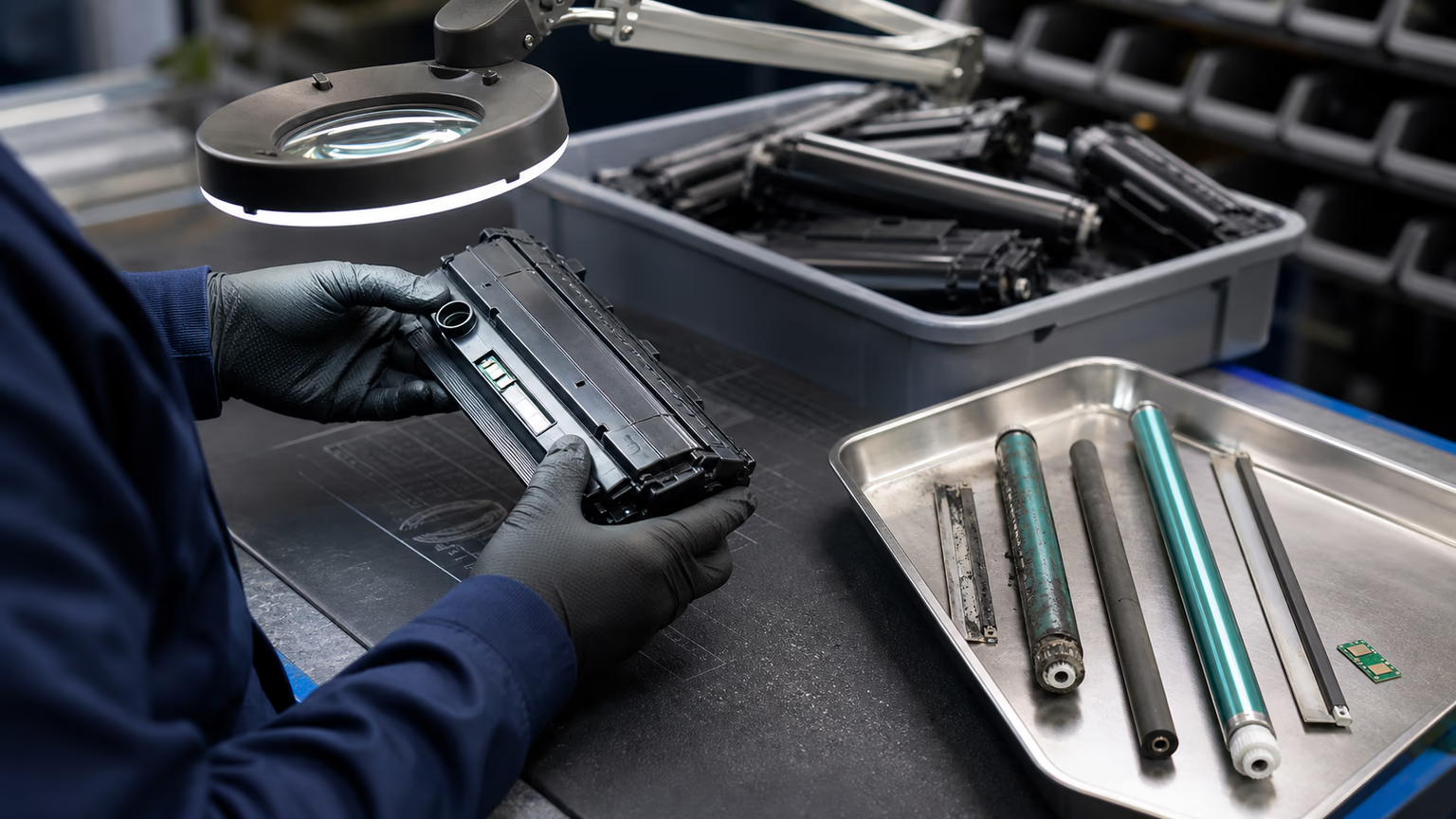
Mechanical parts such as drums, blades, and wiper bars also matter.
Non-compliant plastics may warp under heat from the fuser, leading to leaks or uneven pressure that shortens component life.
A compliant remanufactured cartridge, by contrast, is built around tested materials and often undergoes the same quality control checks as a new OEM unit.
For B2B buyers who support fleets of office printer toner devices, choosing compliant cartridges is a direct way to reduce mean time between failures and protect service-level agreements.
Supplier Evaluation: How to Verify RoHS and REACH Compliance
The most common mistake in procurement is accepting a compliance claim at face value.
A supplier may say their cartridges are RoHS and REACH compliant without being able to prove it.
Before committing to a new source for compatible printer cartridges, request documentation that goes beyond a single page declaration.
You need to see evidence that the supplier has tested the actual products you will receive, not a sample from a previous batch.
A reliable supplier will provide three layers of documentation.
First, a signed declaration of conformity that references the specific RoHS directive and REACH regulation.
Second, material safety data sheets for the toner powder and other consumable components.
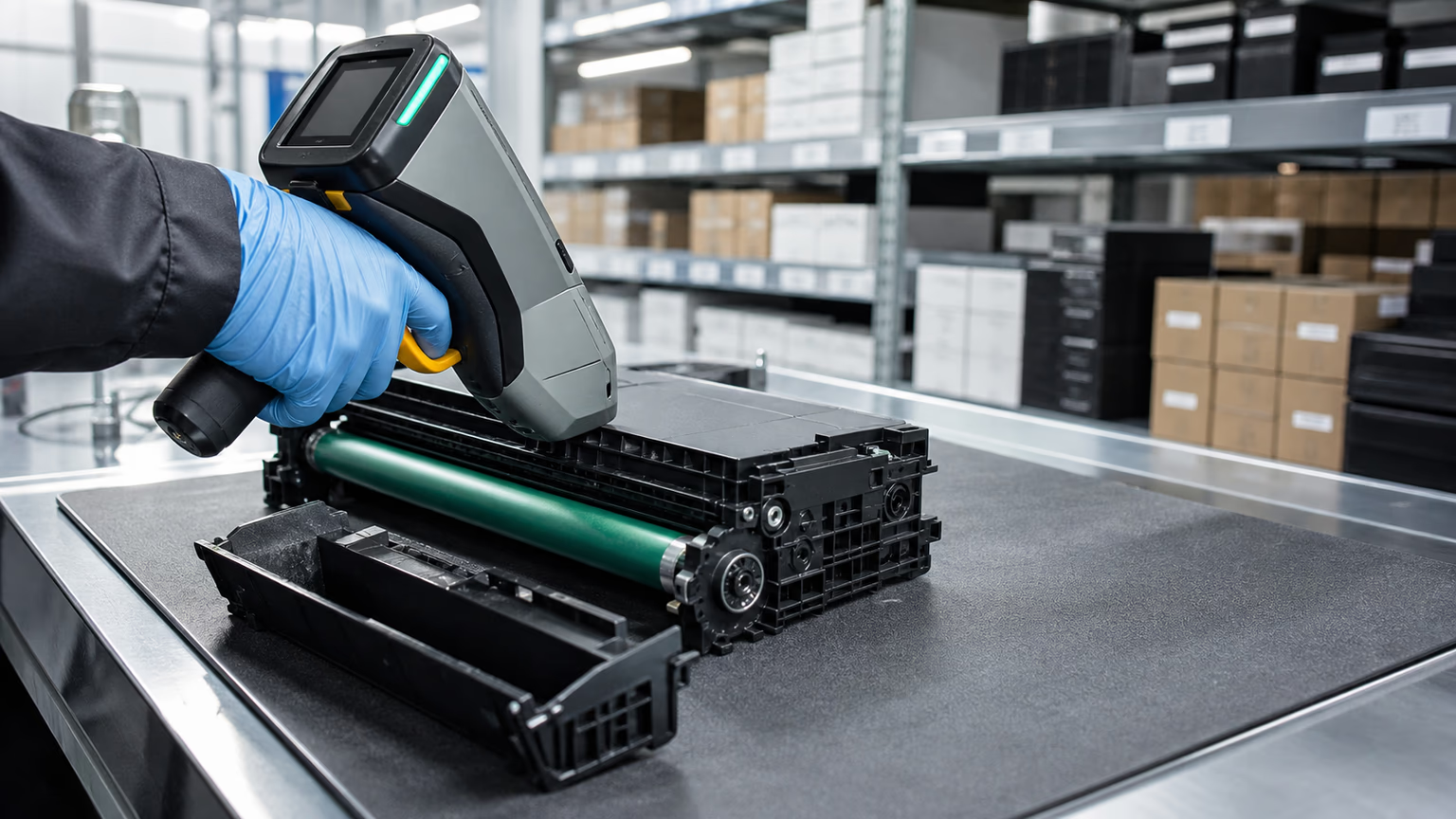
Third, third-party lab test reports from an accredited facility that show measured concentrations of lead, mercury, cadmium, and phthalates.
The lab report should include the exact product model or SKU, the date of testing, and the methods used.
Traceability is equally important.
Ask the supplier how they track raw materials from component manufacturers to the finished cartridge.
A supplier with a documented substance management system can quickly produce a bill of materials and identify the source of every plastic resin, metal alloy, and toner pigment.
If the supplier hesitates or says that information is confidential, treat that as a red flag.
Transparent suppliers understand that sharing compliance data is part of doing business in regulated B2B markets.
Building a Compliant Supply Chain: Criteria for Long-Term Partnerships
One-time compliance is not enough. Regulations evolve as new substances are added to the REACH candidate list and RoHS exemptions expire. A supplier that was compliant two years ago may be shipping products that are now non-compliant if they have not updated their formulations. That is why procurement teams should evaluate a supplier's compliance program, not just a static certificate.
Look for a partner that maintains a documented compliance management system, conducts regular re-testing of production batches, and proactively communicates about regulatory changes.
The best suppliers will share their internal audit summaries, such as the frequency of random sample testing and the criteria for quarantining a non-conforming batch.
They will also have a clear process for updating declarations when a new SVHC is identified or a threshold lowers.
Another sign of a mature supplier is their willingness to discuss compliance gaps openly.
No supply chain is perfect, but a partner who flags a potential issue before you discover it in the field is far more valuable than one who hides behind vague assurances.
In long-term contracts, include compliance clauses that require the supplier to notify you within a defined period if a product falls out of compliance and to cover the cost of replacement or recall.
Practical Checklist: Questions to Ask Before Your Next Order
Use this checklist in supplier meetings, audit calls, and tender evaluations. Each item is designed to uncover whether a supplier has genuine compliance depth or is just repeating marketing language.
- Request valid RoHS and REACH declarations for every product model, not a single blanket statement.
- Ask for third-party test results for lead, mercury, cadmium, hexavalent chromium, and phthalates from an accredited lab.
- Verify that the supplier can trace raw materials back to the original component manufacturer for critical parts.
- Inquire about the supplier's substance management system and how often they re-test production batches.
- Request a copy of the supplier's procedure for updating compliance when REACH adds a new SVHC or RoHS exemptions change.
- Ask whether the supplier has experienced any compliance incidents, customs holds, or recalls in the past three years and how they were resolved.
- Include a compliance warranty clause in your purchase order that specifies penalties for non-compliant shipments.
These questions are not intended to create friction. They are the same checks that mature B2B buyers use to separate strategic suppliers from opportunistic resellers. In a competitive market, the ability to answer them quickly and completely is often a sign of a supplier that will protect your business long after the invoice is paid.
FAQ
Are RoHS and REACH compliance mandatory for all printer consumables sold in the EU?
Yes. Printer cartridges, toner bottles, and drum units are classified as electrical and electronic equipment and fall within the scope of RoHS. REACH applies to all chemical substances used in these products, including SVHCs that may be present in toner or plastics. Selling non-compliant consumables in the EU is illegal and can lead to customs seizure and market withdrawal.
What are the most common restricted substances found in non-compliant toner cartridges?
Lead in solder joints and connector pins is the most frequent offender, followed by cadmium in plastic stabilizers and certain phthalates in flexible plastic components. Mercury and hexavalent chromium are less common in modern cartridges but may still appear in older remanufactured designs or specific metal coatings.
How can I tell if a compatible cartridge is RoHS and REACH compliant without lab testing?
You cannot confirm compliance by visual inspection alone. However, you can request the supplier's declaration of conformity, third-party test reports, and material safety data sheets. A reliable supplier will provide these documents without hesitation. If the supplier only offers a vague statement or refuses to share test data, that is a strong signal to avoid the product.
Do OEM toner cartridges automatically comply with RoHS and REACH?
OEM cartridges from major device manufacturers are generally designed to comply with applicable regulations, but a specific batch can become non-compliant if a component supplier changes materials without notice. As a buyer, you should still request up-to-date documentation for any cartridge you purchase, regardless of whether it is OEM or compatible.
Can non-compliant printer consumables damage my printers?
Yes.
Conclusion
RoHS and REACH compliance in printer consumables is not a bureaucratic hurdle.
It is a direct indicator of supplier quality, operational reliability, and long-term business safety.
B2B buyers who verify compliance before sourcing reduce the risk of customs delays, printer failures, and customer complaints.
They also position themselves as trustworthy partners in a market where downstream clients increasingly ask about environmental and health standards.
The practical path is straightforward: demand documentation, verify lab reports, ask about traceability, and choose suppliers who treat compliance as an ongoing process rather than a one-time promise. This approach does not require chemistry expertise. It requires discipline in supplier evaluation and a willingness to walk away from deals that look too good to be true.
When compliance becomes part of your procurement culture, the benefit compounds across every order. Fewer returns, more predictable service margins, and stronger customer trust are the rewards of asking the right questions before you buy.