Short answer: don't put toner cartridges in the trash if you can avoid it. Return them through a manufacturer take-back program, a store drop-off, your supplier or a recycling company. Keep each empty cartridge sealed in a plastic bag so residual toner stays inside, and clean up any spilled toner with a damp cloth or a toner vacuum, never with a household vacuum.
Can you throw toner cartridges in the trash?
In many places it is not illegal to put a single household toner cartridge in general waste, but it is the worst option. A cartridge is made of plastics, metal and electronic parts that can be reused or recycled, and it still contains some toner. In a garbage truck or landfill, that toner can escape as fine dust. Businesses face stricter rules in some regions, and many companies have internal sustainability targets that exclude landfill for supplies.
The better question is not whether you can throw it away, but which return route is easiest for you.
Safe disposal options: take-back, recycling, waste centers
| Option | How it works | Good for |
|---|---|---|
| Manufacturer take-back | Most printer brands run free return programs: you request a label or box and ship the empties back | Single offices and homes; brand-name cartridges |
| Store drop-off | Many office supply retailers accept empty cartridges at the store | Small quantities; quick and free in many areas |
| Recycling or remanufacturing company | A collector picks up cartridges in bulk and sends them for reuse or material recycling | Businesses with regular volumes; mixed brands |
| Your supplier | Some dealers and cartridge suppliers collect empties when they deliver new stock | Fleets on a supply contract |
| Local waste center | Municipal recycling centers often accept cartridges with electronics or special waste | When no other option is available |
Rules and services differ by country, state and city. Check what your local authority and suppliers offer.
Manufacturer programs
Most printer brands run free return programs in their main markets, for example HP Planet Partners, the Xerox Green World Alliance and the Konica Minolta Clean Planet program. For other brands, search the brand's website for “cartridge return” or “recycling program” for your country. These programs usually accept only the brand's own cartridges.
Retail drop-off
Many office supply stores accept empty ink and toner cartridges at the counter or in a collection box, often regardless of brand. Some offer store credit. Check current terms with your local store before you take a large batch.
Recycling and remanufacturing companies
For businesses, a collection service is usually the most practical. You receive boxes, fill them with empty cartridges of any brand, and book a pickup. Good recyclers sort cartridges for remanufacturing first and recycle the rest as materials. Ask for a collection certificate if you report waste figures. Our article on recycling toner cartridges in a B2B supply chain explains how these programs fit into procurement.
How to bag and ship used cartridges
A used cartridge can still release toner when it is knocked or turned upside down. Packing it properly protects the people who handle it after you.
How to bag and ship used cartridges
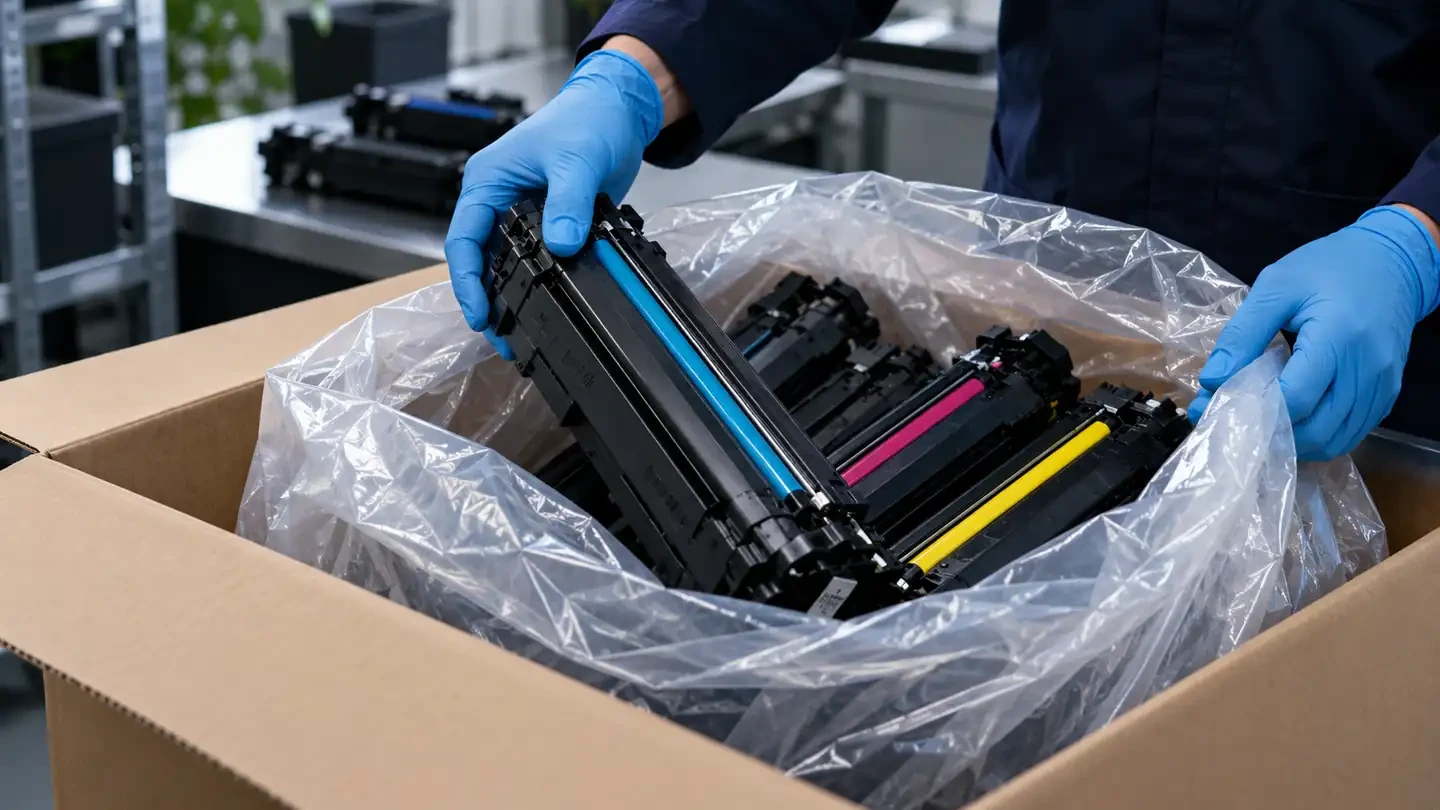
- Bag each cartridge. Put each empty cartridge in the plastic bag the new one came in, or in a sealable bag, to keep residual toner inside.
- Cover the openings. If the cartridge has a fill port or a damaged seal, tape it shut. Keep the drum shutter closed.
- Box them firmly. Use the original box or a sturdy carton with padding so cartridges cannot crack in transit.
- Label and track. Use the return label from the take-back program or recycler, and keep a record for your sustainability reporting.
Spilled toner: cleanup do's and don'ts
Toner spills happen when a cartridge is dropped, a waste container overflows or a refill goes wrong. Because toner is such a fine powder, the wrong cleanup method spreads it further.
Spilled toner: cleanup do's and don'ts
| Do | Don't |
|---|---|
| Switch the printer off and let it cool | Don't use a household vacuum: fine toner passes through the filter and dust can ignite |
| Wipe small spills with a damp, cool cloth | Don't use hot water on fabric or skin: heat sets toner |
| Use a toner-rated vacuum for larger spills | Don't sweep dry toner with a brush; it spreads into the air |
| Ventilate the room and wear gloves | Don't blow toner out of the printer with compressed air |
| Bag the cloths and toner for disposal | Don't wash large amounts of toner down the sink |
For toner on clothing, shake or brush the fabric gently outdoors, then wash it in cold water. Warm water and a hot dryer melt the toner into the fibers. For toner on skin, wash with cool water and soap.
If a printer keeps leaking toner, cleaning is only a temporary fix. Find the cause: a damaged cartridge, a full waste toner container or worn seals. Our article on toner leaking from the cartridge covers the usual failure points.
Is toner hazardous? What the SDS says
Every toner has a safety data sheet (SDS) that describes its composition, hazards and handling. For typical office toners, the key points are similar:
- Normal use is low risk. Toner sealed in a cartridge and used as intended is not considered dangerous.
- Avoid breathing dust. Like any fine powder, toner dust should not be inhaled. Ventilate the room during cleanup.
- Fine dust can burn. A cloud of fine powder near an ignition source can catch fire. That is why toner and cartridges should never be thrown into a fire and why household vacuums are not recommended.
- Disposal follows local rules. The SDS usually advises disposal in line with local regulations; in most places, toner is not classified as hazardous waste.
If you buy toner for resale or for a large fleet, keep the SDS for each product on file. Our guide to toner SDS audits explains what to look for in these documents.
What happens to recycled cartridges
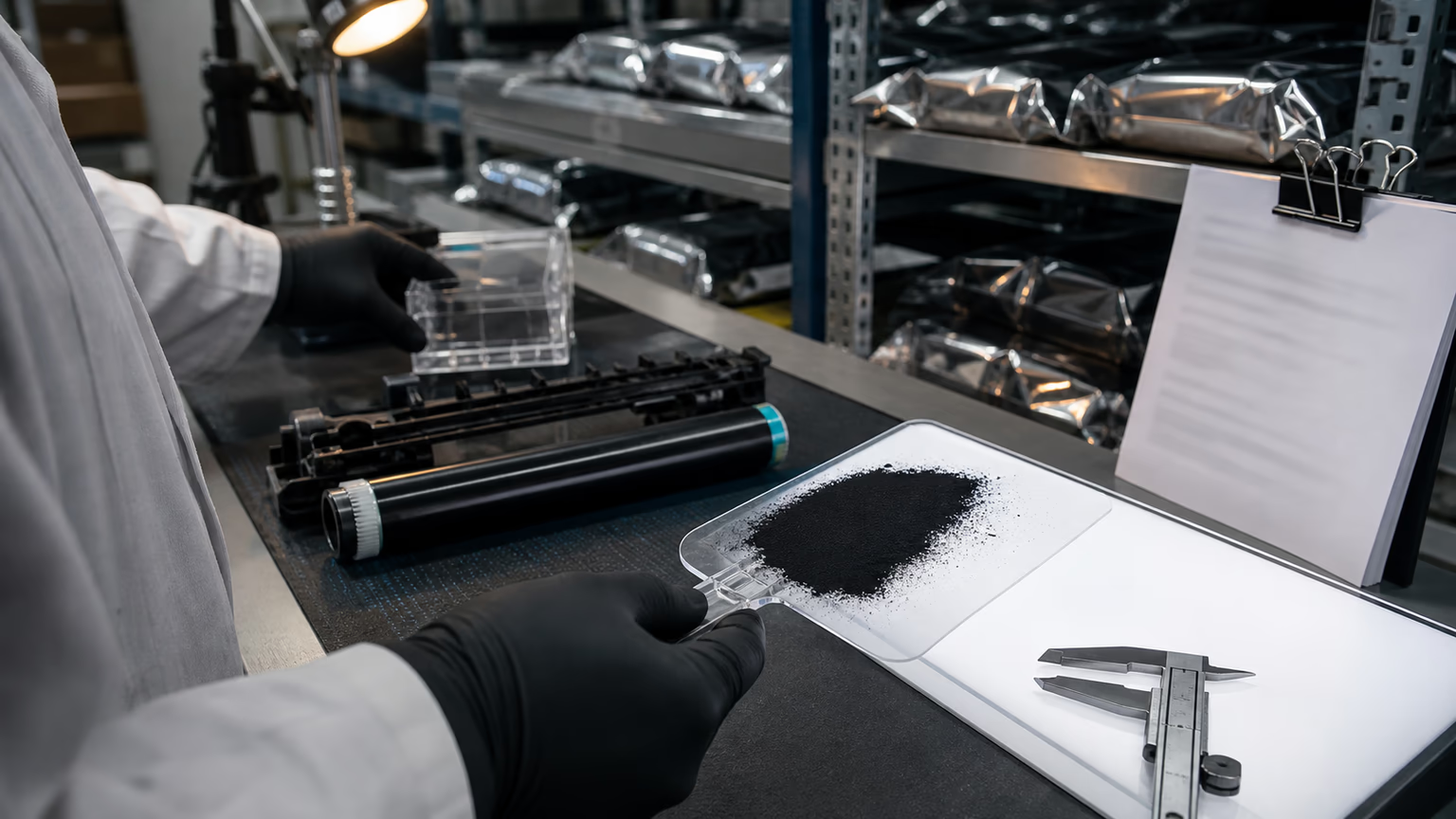
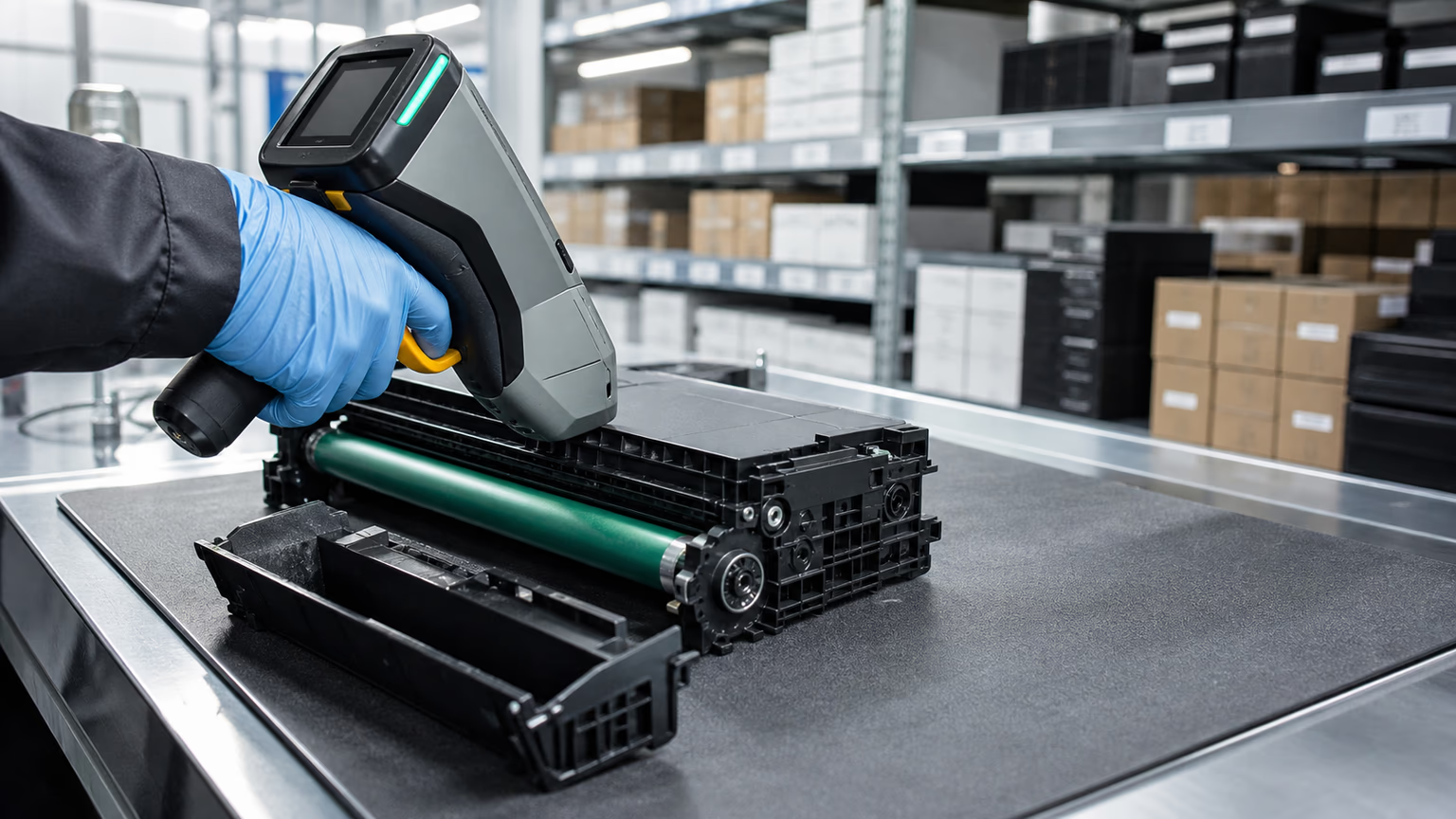
Returned cartridges are first sorted. Shells in good condition go to remanufacturers, who clean them, replace worn parts such as the drum and blades, refill them and test them before resale. Cartridges that cannot be reused are taken apart: plastics are shredded and reprocessed, metal parts go to metal recycling, and residual toner is separated and handled according to local rules, often by energy recovery in controlled facilities. That is why it helps to keep cartridges intact and bagged: a cracked shell is less likely to be reused.
Different brands and countries handle this differently, so the details of each program vary. The common rule is the same everywhere: return the cartridge empty, intact and sealed.
Bulk disposal for offices and fleets
Offices that replace many cartridges every month benefit from a simple routine:
- Keep a labeled collection box next to the supply cupboard.
- Bag every empty cartridge as soon as it comes out of the printer.
- Book collections on a schedule rather than letting boxes pile up.
- Track how many cartridges are collected and where they go; this supports sustainability reporting and helps you spot printers that use unusual amounts of toner.
Waste is also a buying decision. Higher-yield cartridges mean fewer empties, and reliable cartridges mean fewer failed units sent back. You can find compatible cartridges for Canon, Xerox, Ricoh, Kyocera, Konica Minolta, Sharp and Toshiba printers in the UNICO catalog, and read more about sustainable toner procurement.
FAQ
Is toner powder hazardous waste?
In most places, toner and used cartridges are not classified as hazardous waste, but rules depend on your country, region and the specific product. The safety data sheet (SDS) for each toner lists its classification and disposal advice. Businesses disposing of large quantities should check local regulations or use a licensed recycler.
How do I clean up spilled toner?
Switch off the printer and let it cool. Pick up small amounts with a damp, cool cloth, wiping in one direction. For larger spills, use a vacuum designed for toner. Do not use a household vacuum, a dry brush or compressed air. Wash toner off skin and clothes with cold water, then bag the cloths for disposal.
Can I vacuum toner?
Only with a vacuum designed for toner or fine conductive dust. Ordinary household vacuums let the fine particles pass through their filters, and the motor can ignite a cloud of fine dust. Toner vacuums use fine filters and are built to handle this kind of dust safely.
How do businesses dispose of toner in bulk?
Most businesses use a manufacturer take-back program, their toner supplier, or a recycling or remanufacturing company that collects cartridges in boxes or containers. Keeping a record of collections helps with sustainability and waste reporting.