
Why Toner Cartridge Recycling Is a B2B Issue, Not a Consumer Gesture
For many office managers, recycling toner cartridges still looks like a box in the corner of the break room.
But for distributors, managed print service providers, and procurement teams, empty cartridges are not a consumer-level green gesture.
They are a compliance obligation, a quality risk, and a direct line-item in the total cost of ownership for a printer fleet.
When hundreds or thousands of devices across multiple locations need consistent toner supply, how used cartridges are handled affects more than the environment.
It affects service uptime, data security, and the viability of the entire supply chain.
The pressure to recycle properly comes from several directions.
Regulatory frameworks in many regions classify toner cartridges as electronic waste or hazardous material, pulling them out of the general waste stream.
At the same time, corporate sustainability reporting now asks procurement teams to document how they dispose of printer consumables.
Investors and enterprise customers increasingly expect suppliers to prove responsible end-of-life management.
Recycling toner cartridges is no longer optional; it is a documented requirement embedded in requests for proposals and vendor onboarding checklists.
There is also a hidden financial dimension.
Improper disposal can trigger fines, cleanup costs, and even brand damage if a recycler is later found to be dumping cartridges illegally.
A distributor that quietly tosses used cartridges into a dumpster risks losing a major contract if that practice comes to light.
By contrast, a structured recycling program can turn a waste stream into a source of recovered components and lower procurement costs.
The smartest B2B buyers treat cartridge recycling as a supply chain decision, not a CSR afterthought.
Regulatory and Environmental Risks of Improper Toner Cartridge Disposal
The legal landscape for toner cartridges varies by region, but the direction is clear: more jurisdictions are restricting how businesses can dispose of printer consumables.
Many toner cartridges contain plastic, metal, and residual toner powder that do not belong in a landfill.
Local e-waste regulations may require a documented chain of custody from collection to final processing.
Producer responsibility directives in some markets place the burden on manufacturers, but businesses that generate the waste still carry practical obligations for sorting and handing off to authorized processors.
The environmental risks are not theoretical.
Residual toner powder can contaminate soil and water if cartridges are crushed and buried.
The plastic housing takes decades to degrade, and the metal components, including small springs and contacts, can leach harmful substances.
A single printer fleet that goes through thousands of toner cartridges per year creates a significant waste volume.
Without a proper recycling program, that volume ends up as unmanaged e-waste, exposing the business to fines and negative publicity.
Beyond legal penalties, there are operational risks.
Improper storage of used cartridges can lead to toner leakage inside the office or warehouse, creating a health hazard and damaging other goods.
When cartridges are mixed with general trash, they may be broken open by compacting equipment, releasing toner dust into the air.
A professional recycling program includes sealed collection containers and scheduled pickups to prevent these incidents.
The practical checklist below highlights the main risks to avoid:
- Used toner cartridges mixed with general waste can trigger landfill bans and fines.
- Toner powder leakage from broken cartridges contaminates floors, equipment, and inventory.
- Lack of documentation for disposal chain leaves the business exposed during sustainability audits.
- Unvetted recyclers may export cartridges to unregulated processing sites, creating reputational risk.
- Storing cartridges past capacity leads to overflow, workplace clutter, and potential fire hazards.
What Actually Happens During Toner Cartridge Recycling and Remanufacturing
To evaluate any recycling partner, businesses first need to understand the difference between three distinct processes: remanufacturing, refilling, and material recycling.
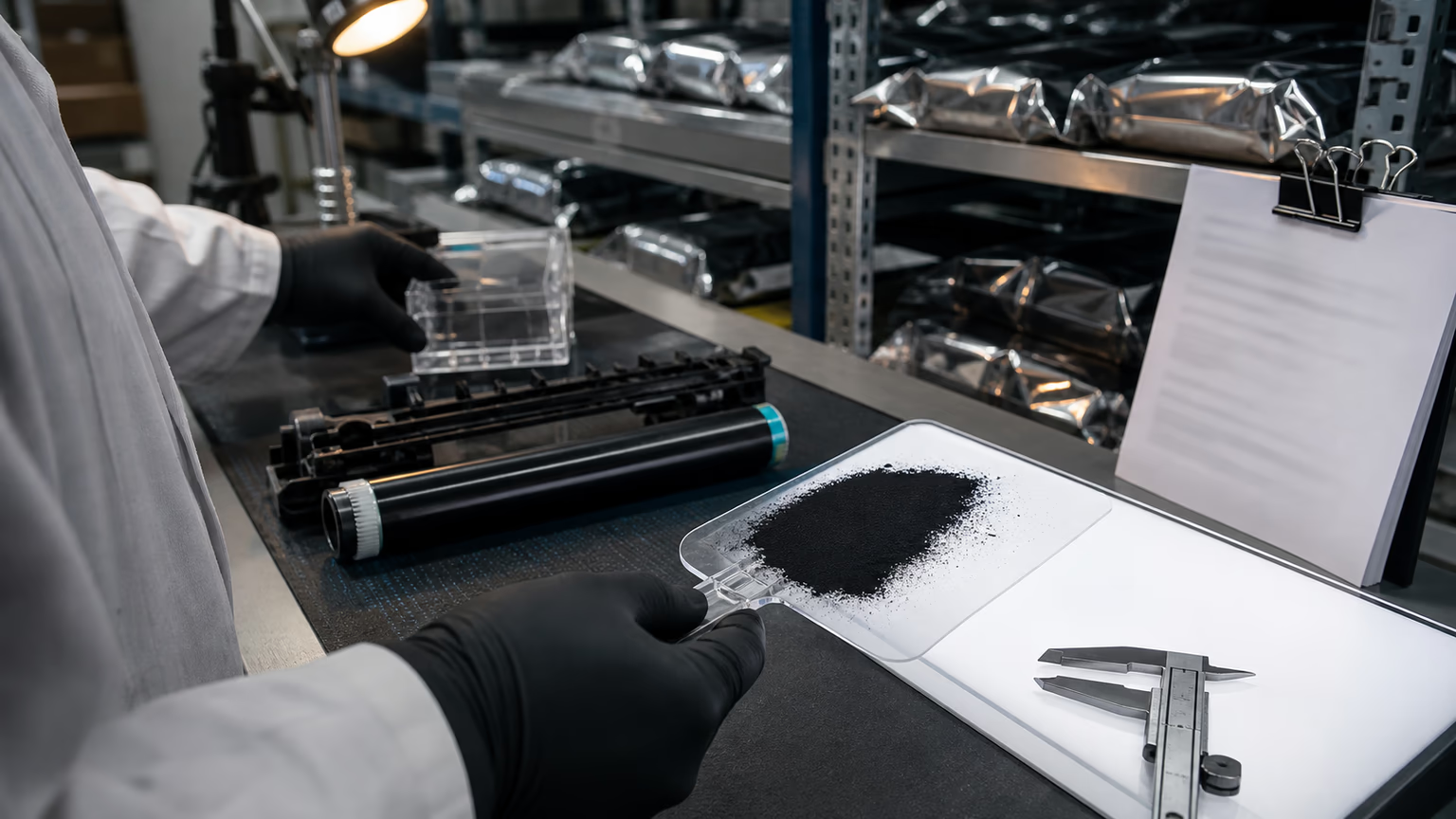
Remanufacturing involves dismantling a used cartridge, cleaning and inspecting every component, replacing worn parts such as the drum, wiper blade, and seals, refilling with new toner, and testing to meet or exceed OEM standards.
Refilling is simpler: a technician drills a hole, adds toner, and seals it.
That shortcut often leads to leaks and print defects.
Material recycling means shredding the plastic and metal for raw material recovery, which is the last resort when a cartridge cannot be remanufactured.
A reputable remanufacturer will have a multi-step process that begins with sorting incoming cartridges by brand, model, and condition.
Cartridges that are damaged or have reached the end of their life are separated for material recycling.
Those suitable for remanufacturing go through deep cleaning with specialized equipment, then component replacement.
The drum, which affects print quality directly, is replaced or resurfaced depending on its condition.
New toner is filled to the correct weight, and the cartridge is sealed.
The final step before packaging is testing.
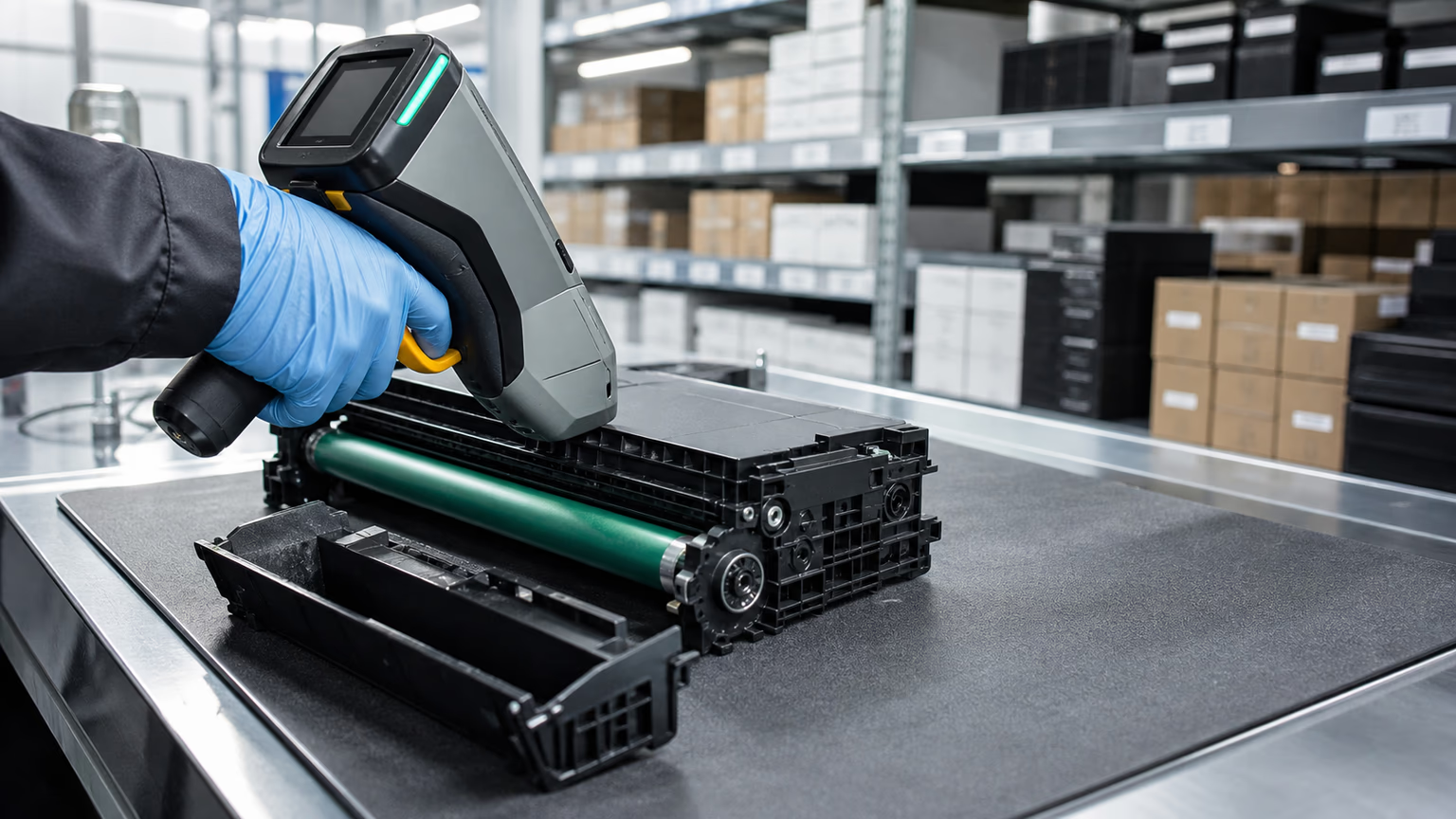
Every remanufactured cartridge should be tested in a real printer, not just visually inspected.
Print tests check for density, gray scale, background scatter, and defects like streaking or spots.
Some remanufacturers also run page-yield tests to ensure the cartridge meets the expected output.
Businesses should ask potential partners what testing protocols they use and whether they can provide batch-level quality data across shipments.
One of the most overlooked parts of cartridge recycling is the smart chip.
Modern toner cartridges contain a chip that communicates with the printer to track page count, toner levels, and sometimes device metadata.
A responsible remanufacturer will either replace the chip with a new compatible version or reprogram existing chips after wiping any stored data.
If the chip is not handled correctly, the printer may reject the cartridge or display incorrect toner levels.
For B2B fleets concerned about data security, verifying chip sanitization is non-negotiable.
Quality and Compatibility: How to Avoid Print Defects and Printer Damage
The fear that recycled cartridges will damage printers is the number one objection from B2B buyers, and it is not unfounded.
Poorly remanufactured cartridges can leak toner inside the printer, contaminate the fuser, and cause streaking or fading on every page.
Low-quality toner can also accelerate wear on the drum and fuser, shortening the life of expensive printer components.
However, these problems are not inherent to remanufactured cartridges.
They are the result of shortcuts in the remanufacturing process or the use of incompatible toner formulations.
Common quality failure modes include streaks or lines on printed pages, gray background haze, low page yield that forces frequent replacements, and toner leakage that triggers service calls.
These defects often appear because the remanufacturer did not replace the drum or wiper blade, used the wrong toner type, or failed to properly seal the cartridge.
A rigorous remanufacturer will have incoming inspection criteria, documented component replacement standards, and outgoing quality checks on every batch.
Compatibility issues go beyond print quality.
Many modern printers receive regular firmware updates from the manufacturer, and some updates are designed to block or hinder cartridges that use non-OEM chips.
This means a cartridge that works perfectly today may suddenly be rejected after a firmware update next month.
B2B buyers need to coordinate with their recycling partner to ensure that any remanufactured cartridges are tested against the latest firmware versions for the specific printer models in their fleet.
For multi-brand fleets, this testing becomes more complex because each printer brand may have different chip protocols and firmware update schedules.
Practical steps to manage quality and compatibility risk include:
- Request a sample batch of remanufactured cartridges and test them on a controlled subset of printers before full rollout.
- Ask the remanufacturer for written specifications on page yield, defect rate limits, and toner formulation.
- Verify that the partner tests cartridges against current firmware for the printer models you operate.
- Set up a clear process for returning defective cartridges and obtaining replacements without delays.
- Maintain a log of cartridge performance by brand and model to identify recurring issues.
Procurement Framework for Evaluating Recycling and Remanufacturing Partners
Choosing a toner recycling partner is not a transaction; it is a procurement decision with long-term operational and financial consequences.
A robust evaluation framework should begin with documented compliance.
Ask for the partner's environmental permits, waste handling licenses, and evidence of downstream processing.
Without a transparent view of where your cartridges go after pickup, you cannot verify that they are actually recycled and not exported for illegal dumping.
Third-party verification or on-site audits are increasingly common for larger B2B contracts.
Logistics capability is equally important.
A recycling partner that cannot schedule pickups on time will quickly become a burden.
For businesses with multiple locations, the partner must be able to coordinate collections across different sites, provide appropriate collection containers, and handle overflow during office moves or printer upgrades.
The partner should also have a documented process for emergency pickups when unexpected volumes arise.
Contractual safeguards protect both parties.
The contract should clearly define ownership transfer of the cartridges (when does the liability shift?), who pays for collection and transportation, and what reporting frequency is required.
Ask for specific language on data security for smart chips, including a certificate of sanitization for every batch collected.
The contract should also address performance metrics, such as cartridge defect rates and pickup response times, with remedies if those metrics are not met.
Total cost of ownership often reveals hidden costs that a low per-cartridge price may hide. Storage space, handling labor, compliance reporting, and administrative time all add to the true cost of a recycling program. A partner that provides transparent reporting can help you quantify these costs and identify savings elsewhere. Use the following checklist when evaluating suppliers:
- Valid environmental permits and documented downstream processor information.
- Recognized e-waste and environmental certifications (request current certificates and verify them).
- Track record with B2B clients of similar fleet size and complexity.
- Flexible pickup scheduling, including overflow and emergency collection.
- Transparent reporting on collection volumes, recycling rates, and disposal methods.
- Clear process for data destruction or sanitization of cartridge chips.
- Financial stability and business continuity plans to avoid service interruptions.
- Contract terms that define liability, ownership transfer, and termination notice.
Logistics and Service Integration: Keeping Fleets Running While Recycling
Integrating recycling into day-to-day printer fleet operations requires coordination between the recycling partner and your existing service providers.
If you use a managed print service (MPS) provider, the recycling schedule should align with the service SLA.
For example, when a technician replaces a cartridge during a service call, the used cartridge should be collected at the same time, not left for a separate pickup weeks later.
This reduces clutter and ensures the cartridge enters the recycling stream immediately.
Overflow is a common pain point.
During an office move, a floor of printers may be replaced, generating dozens of used cartridges in a single day.
A recycling program without overflow capacity will leave boxes of cartridges stacked in hallways or storage rooms, creating safety issues and potential toner leaks.
The recycling partner should be able to provide additional collection containers on short notice and schedule extra pickups when needed.
Replacement cartridge supply during the transition to remanufactured cartridges is another critical factor.
If you decide to switch from OEM to remanufactured cartridges, you cannot afford to wait for the recycling process to deliver replacements.
A well-designed program includes a buffer stock of cartridges that can be deployed immediately.
The recycling partner should be able to supply either new compatible cartridges or remanufactured units as needed, without disrupting print operations.
Multi-location coordination adds complexity.
Each site may have different volume patterns, storage capacity, and local regulations.
A centralized reporting dashboard from the recycling partner can give procurement teams a real-time view of collections, volumes, and compliance status across all locations.
This data is valuable for sustainability reporting and for identifying inefficiencies in the toner supply chain.
Total Cost of Ownership: Hidden Costs and Real Savings in Toner Recycling
The decision to recycle toner cartridges should not be based on the per-cartridge price alone.
Many businesses discover that a cheap recycling program becomes expensive when hidden costs are added.
Storing used cartridges takes up square footage that could be used for revenue-generating operations.
Handling them requires staff time for sorting, labeling, and moving boxes.
Compliance reporting adds administrative overhead.
A partner that charges a higher collection fee but provides better reporting and logistics may actually lower the total cost of ownership.
Remanufactured cartridges can deliver significant savings compared to brand-new OEM cartridges, but those savings must be measured against potential quality risks.
A cartridge that costs less but fails after half the page yield is not a bargain.
B2B buyers need to calculate the cost per printed page, including the cost of defective cartridges, service calls for printer damage, and lost productivity from downtime.
Over time, a well-managed remanufactured program can reduce per-page costs without sacrificing output quality.
There are also avoided costs from proper disposal.
Fines for non-compliance can be substantial, and the cost of cleaning up toner contamination from a broken cartridge can exceed the value of a whole pallet of cartridges.
By documenting the recycling chain, businesses protect themselves during environmental audits and avoid the reputational damage that comes from being associated with illegal dumping.
Finally, sustainability reporting itself has value.
Many enterprise customers now ask suppliers to provide data on their waste diversion and recycling activities.
A transparent toner recycling program generates the metrics needed to answer those requests, strengthening customer relationships and opening doors to new contracts.
This long-term benefit should be factored into the total cost calculation.
Building a Sustainable Toner Supply Chain: From Transactional Buying to Closed-Loop
The most advanced B2B organizations treat toner cartridges not as a disposable item but as a recoverable asset within a closed-loop system.
In a closed-loop supply chain, used cartridges are collected from customer sites, sent to a remanufacturing facility, and then returned as high-quality remanufactured cartridges to the same or other customers.
This approach reduces the need for virgin plastic and metal, lowers procurement costs, and provides a predictable supply of cartridges that meet the fleet's quality standards.
Data plays a central role in making the loop efficient.
By tracking cartridge usage at the device level, fleet managers can forecast when cartridges will need replacement and coordinate pickups accordingly.
The recycling partner should provide data on collection volumes, remanufacturing yields, and defect rates.
This data can be integrated into procurement dashboards to optimize inventory levels and reduce emergency orders.
Aligning recycling with procurement KPIs requires a shift in mindset. Instead of measuring success solely by the lowest purchase price, procurement teams should track total cost per printed page, cartridge defect rate, recycling rate, and compliance documentation accuracy. These metrics balance cost control with sustainability goals.
Looking ahead, the trend is toward smarter cartridges and more integrated circular economy practices. Cartridges with embedded chips may eventually communicate their own end-of-life status and trigger automatic pickup requests. Businesses that build a systematic recycling program now will be well positioned to adopt these innovations without disruption.
FAQ
Is recycling toner cartridges legally required for businesses?
In many regions, yes.
Can remanufactured toner cartridges damage office printers?
Remanufactured cartridges from a reputable supplier should not damage printers. Damage occurs when cartridges are poorly remanufactured, use incompatible toner, or have faulty chips. To minimize risk, test cartridges on a controlled subset of fleet printers before full rollout, and require written quality guarantees from the remanufacturer.
How do I verify that a recycling partner is legitimate and compliant?
Request documentation on downstream processors, environmental permits, and waste handling licenses. Ask for current certifications and verify them with the issuing body. A transparent partner will allow on-site audits or provide third-party verification reports. Also check references from other B2B clients with similar fleet sizes.
What is the difference between remanufactured and recycled toner cartridges?
Remanufacturing is a specific process that restores a used cartridge to like-new condition by disassembling, cleaning, replacing worn parts, refilling with new toner, and testing.
How can recycling toner cartridges reduce total printing costs for B2B fleets?
Recycling and remanufacturing can lower the cost per printed page compared to buying only OEM cartridges, provided quality is maintained. It also avoids disposal fees, reduces the risk of fines for non-compliance, and generates sustainability data that can strengthen customer relationships. The key is to evaluate total cost of ownership, not just the purchase price of cartridges.
Conclusion
Recycling toner cartridges is not a peripheral task for B2B organizations.
It sits at the intersection of compliance, quality, logistics, and total cost.
Distributors and service providers that treat empty cartridges as a supply chain asset rather than a waste problem gain a measurable advantage: lower per-page costs, stronger compliance posture, and the ability to answer customer sustainability demands with real data.
The path forward is systematic.
Evaluate recycling partners with the same rigor applied to any critical supplier, test remanufactured cartridges before full deployment, and integrate recycling into your service SLAs.
The result is a toner supply chain that is both responsible and resilient.