
Toner Leaking From the Cartridge: Seals, Hopper, Doctor Blade, and Transport Failure Modes
Toner leakage is one of the fastest ways to lose a customer’s trust. A buyer may tolerate a small color difference in packaging or a longer lead time, but when toner powder is found inside the box, on the cartridge body, inside the printer, or on the user’s hands, the reaction is immediate.
To the end user, leakage looks like a simple product failure: the cartridge is dirty, the printer is contaminated, and the supplier is blamed.
At factory level, however, toner leaking from the cartridge can have several different root causes. It may come from weak seals, poor hopper design, doctor blade problems, waste toner overflow, damaged foam, vibration during transport, poor cartridge assembly, incompatible toner flow, or even incorrect storage conditions.
For distributors, service companies, and B2B buyers, toner leakage is not just a cosmetic issue. It creates service costs, returns, cleaning work, customer complaints, and potential damage to the buyer’s own brand reputation.
A serious compatible toner manufacturer should not treat leakage as a random accident. It should be able to identify where the toner escaped, why it escaped, whether the problem affects one unit or a full batch, and how the factory process prevents it from recurring.
Why Toner Leakage Is a High-Risk Complaint
Toner leakage has a strong psychological effect on customers. A light print defect may be noticed after a test page. A faint background may be reported after several pages. But leakage is visible before the cartridge even proves whether it can print.
If the customer opens the box and sees loose toner powder, confidence drops immediately.
The customer may think:
- the cartridge was poorly manufactured;
- the product was damaged during transport;
- the supplier lacks quality control;
- the toner will damage the printer;
- the compatible cartridge is unsafe or unreliable.
In B2B supply, this is especially dangerous. A distributor may have already sold the cartridge to many customers. A service company may need to send technicians to clean printers. A private label seller may face brand damage. A corporate buyer may decide to stop using compatible toner altogether.
This is why leakage must be controlled before shipment, not explained after the complaint.
Where Toner Leakage Usually Appears
Before identifying the root cause, the factory should first determine where the toner is found.
Leakage may appear:
- inside the retail box;
- inside the protective bag;
- around the cartridge seal area;
- near the developer roller;
- around the doctor blade;
- near the waste toner section;
- at the hopper joint;
- around end caps;
- inside the printer;
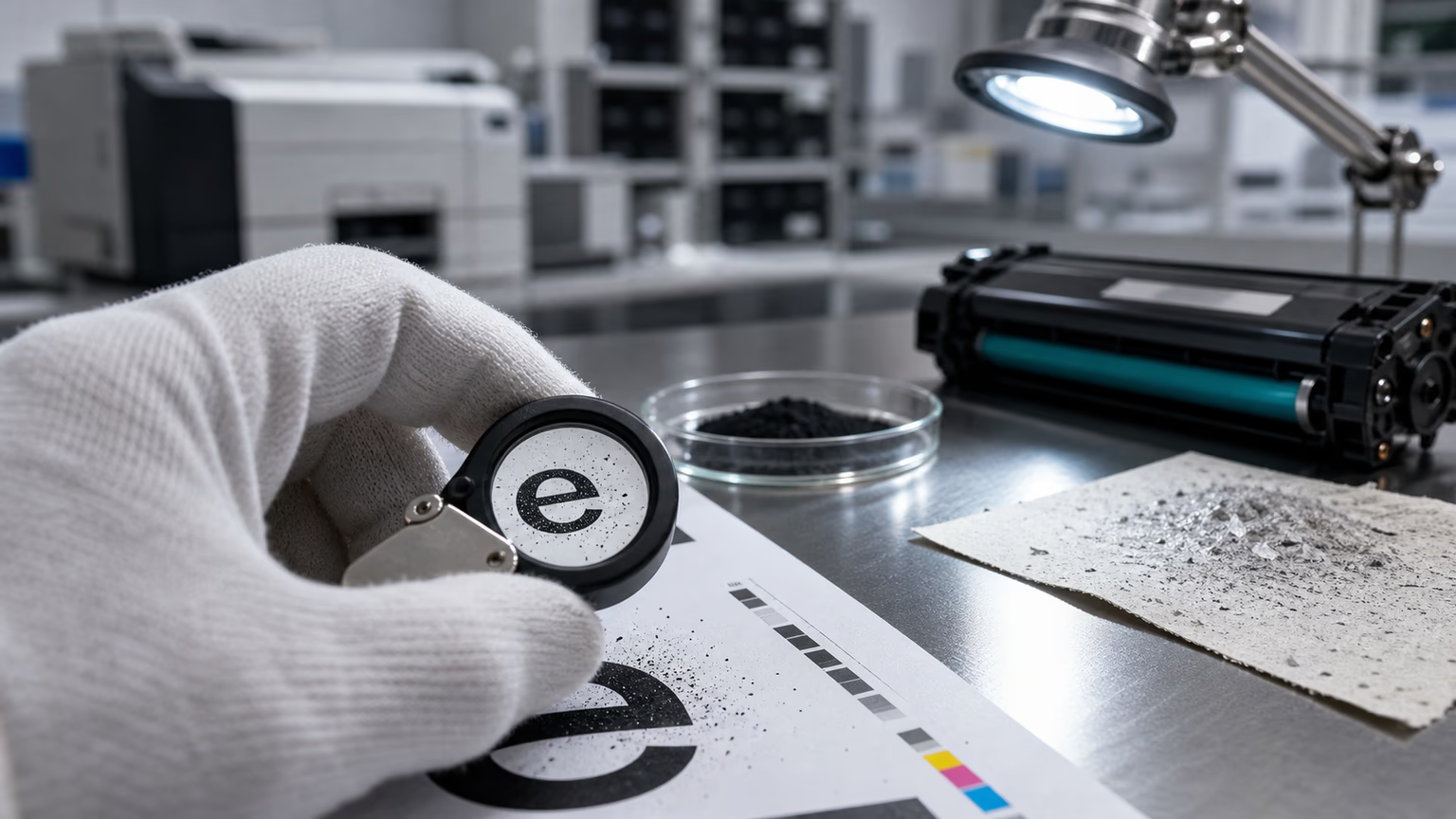
- on printed pages as spots, dirt, or streaks.
The location matters because it helps identify the failure mode. Toner found inside the bag before installation may suggest transport vibration, seal weakness, or hopper leakage. Toner found inside the printer after use may suggest waste toner overflow, blade failure, developer leakage, or internal cartridge contamination.
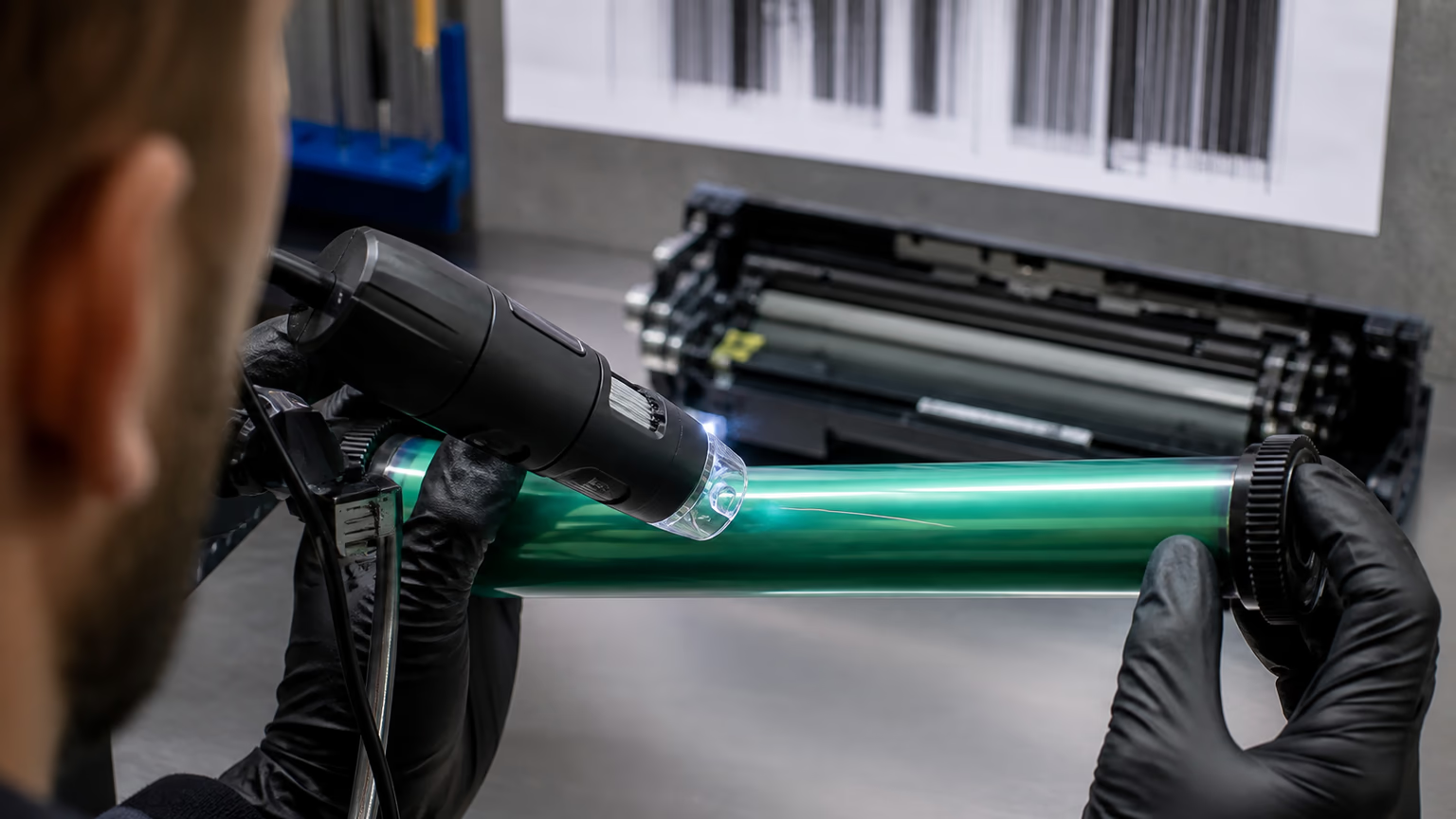
If leakage appears together with black streaks on laser prints, the cause may involve blade damage, drum contamination, or loose toner entering the imaging path.
If leakage appears together with dirty background, it may be related to toner flow, charge instability, or internal contamination that also contributes to compatible toner gray background.
Root Cause 1: Main Seal Failure
The main seal is one of the most obvious leakage points. In many cartridge systems, the seal prevents toner from moving into the development area before installation. If the seal is poorly welded, incorrectly installed, damaged, misaligned, or pulled unevenly, toner can escape.
Seal failure may happen because of:
- poor sealing material;
- weak adhesive or welding;
- incorrect seal dimensions;
- poor assembly pressure;
- seal deformation;
- sharp edges inside the cartridge;
- poor pull-tab design;
- transport vibration;
- operator error during assembly.
A weak seal may not fail during factory inspection, but it can fail during transport. That is why factories must test seals under conditions that simulate real logistics, not only static storage.
A proper seal test should include:
- visual inspection;
- pull-force check;
- vibration simulation;
- drop testing;
- heat and humidity exposure;
- inspection after shipping simulation.
For export orders, seal strength matters even more. A cartridge may travel thousands of kilometers before reaching the final customer. If the packaging and seal system are not strong enough, the buyer will receive the failure, not the factory.
Root Cause 2: Hopper Design and Toner Flow Control
The hopper holds the toner. If the hopper design, joint structure, internal ribs, foam, or sealing points are weak, toner may leak during storage, movement, or printing.
Hopper-related leakage can be caused by:
- poor plastic molding;
- loose joints;
- weak ultrasonic welding;
- poor end-cap fit;
- incorrect foam density;
- gaps around the hopper opening;
- poor toner feed path control;
- excessive toner flowability;
- toner settling during transport.
A hopper must allow toner to flow when needed, but not escape when it should be contained. That balance is harder than it sounds.
If toner flow is too restricted, the cartridge may create light print with compatible toner. If toner flow is too uncontrolled, leakage, background, or contamination can occur. This is why hopper design and toner formulation must be tested together.
A factory cannot simply fill powder into a plastic shell and assume the cartridge will behave correctly. Toner movement depends on particle behavior, hopper geometry, agitation, seal design, blade control, and transport stress.
Root Cause 3: Doctor Blade or Developer Area Leakage
The doctor blade controls the toner layer on the developer roller or magnetic roller. If the blade is poorly installed, damaged, contaminated, or incorrectly matched with the toner, toner may escape from the developer area.
Developer-area leakage may appear as loose toner near the roller, dirty cartridge edges, toner inside the printer, or print defects.
Common causes include:
- doctor blade pressure too low;
- blade edge damage;
- poor blade alignment;
- incorrect blade material;
- contamination under the blade;
- roller surface defects;
- excessive toner layer thickness;
- incorrect toner flow behavior;
- poor assembly tolerance.
If the doctor blade allows too much toner through, the cartridge may also show background or heavy density. If it restricts toner too much, the page may become light. That is why doctor blade control connects toner leakage with both compatible toner gray background and light print with compatible toner.
For buyers, this is important because leakage from the developer area may not be visible immediately in the box. It may appear only after installation and printing. A quick visual check before shipment may miss it unless the factory performs functional printing tests.
Root Cause 4: Waste Toner Overflow or Poor Waste Section Sealing
During printing, not all toner transfers to the page. Some residual toner is cleaned from the drum and collected as waste toner. If the waste section is poorly designed, too small, improperly sealed, or contaminated during assembly, toner can escape.
Waste toner leakage can happen because of:
- insufficient waste capacity;
- poor wiper blade cleaning;
- weak waste hopper sealing;
- damaged foam;
- poor end-cap fit;
- drum cleaning failure;
- excessive residual toner;
- reused components not properly cleaned;
- high-coverage printing beyond expected conditions.
Waste toner leakage often appears after some use rather than immediately. The cartridge may look clean at installation, then become dirty after hundreds or thousands of pages.
If waste toner is not properly controlled, it may contaminate the drum, PCR, rollers, or printer interior.
This can create secondary defects such as streaks, background, or ghosting.
That is why leakage complaints should not be treated separately from image-quality complaints like ghosting after installing a new toner cartridge or black streaks on laser prints.
A serious factory should evaluate waste toner behavior during page yield testing, not only at the beginning of cartridge life.
Root Cause 5: Wiper Blade Failure
The wiper blade removes residual toner from the drum. If it fails, toner may accumulate and escape into areas where it should not be.
Wiper blade failure may cause:
- internal leakage;
- streaks;
- dirty background;
- toner buildup;
- drum contamination;
- repeated marks;
- waste toner overflow.
Causes include:
- poor blade material;
- incorrect hardness;
- edge deformation;
- poor lubrication;
- bad assembly angle;
- drum surface mismatch;
- temperature-related stiffness;
- recycled blade use beyond life.
A wiper blade that looks acceptable during assembly may fail during operation. This is why long-run testing is important. A few clean pages do not prove the blade will control waste toner throughout cartridge life.
If a customer reports leakage together with vertical black lines, the wiper blade and drum should be inspected carefully. This overlaps with the diagnostic logic for black streaks on laser prints.
Root Cause 6: Toner Flowability Is Too High
Toner must flow well enough to feed consistently, but not so freely that it escapes through small gaps or weak seals. If toner flowability is too high, the cartridge may be more prone to leakage, especially during transport or vibration.
Excessive flowability can be caused by:
- formulation imbalance;
- too much flow additive;
- particle size distribution issues;
- low cohesion;
- poor matching with hopper design;
- high vibration exposure;
- overfilled hopper;
- weak seal design.
This is one of the reasons toner formulation must be matched to cartridge structure. A toner that works in one cartridge design may leak in another if the hopper, seal, blade, and feed system are different.
Factories sometimes focus on print density and flow, but they must also test containment. A powder that prints well but leaks during shipping is not commercially acceptable.
For international buyers, this is critical because transport vibration can expose weaknesses that do not appear in factory samples.
Root Cause 7: Overfilling the Cartridge
Some buyers assume more toner is always better. In reality, overfilling can create problems.
If the hopper is filled beyond the designed level, toner may not move correctly. It may increase pressure on seals, create feeding instability, or leak during transport. It may also affect agitation, toner flow, and internal air space.
Overfilling can cause:
- seal stress;
- toner packing;
- poor agitation;
- leakage during vibration;
- unstable early prints;
- excessive waste;
- background or density issues.
This is why responsible cartridge design must balance fill weight, page yield, toner properties, and hopper volume. A supplier that simply increases fill weight to satisfy a buyer may create new defects.
The better question is not “How much toner can we put inside?” but “How many stable, acceptable pages can this cartridge produce?”
Root Cause 8: Transport Vibration and Packaging Failure
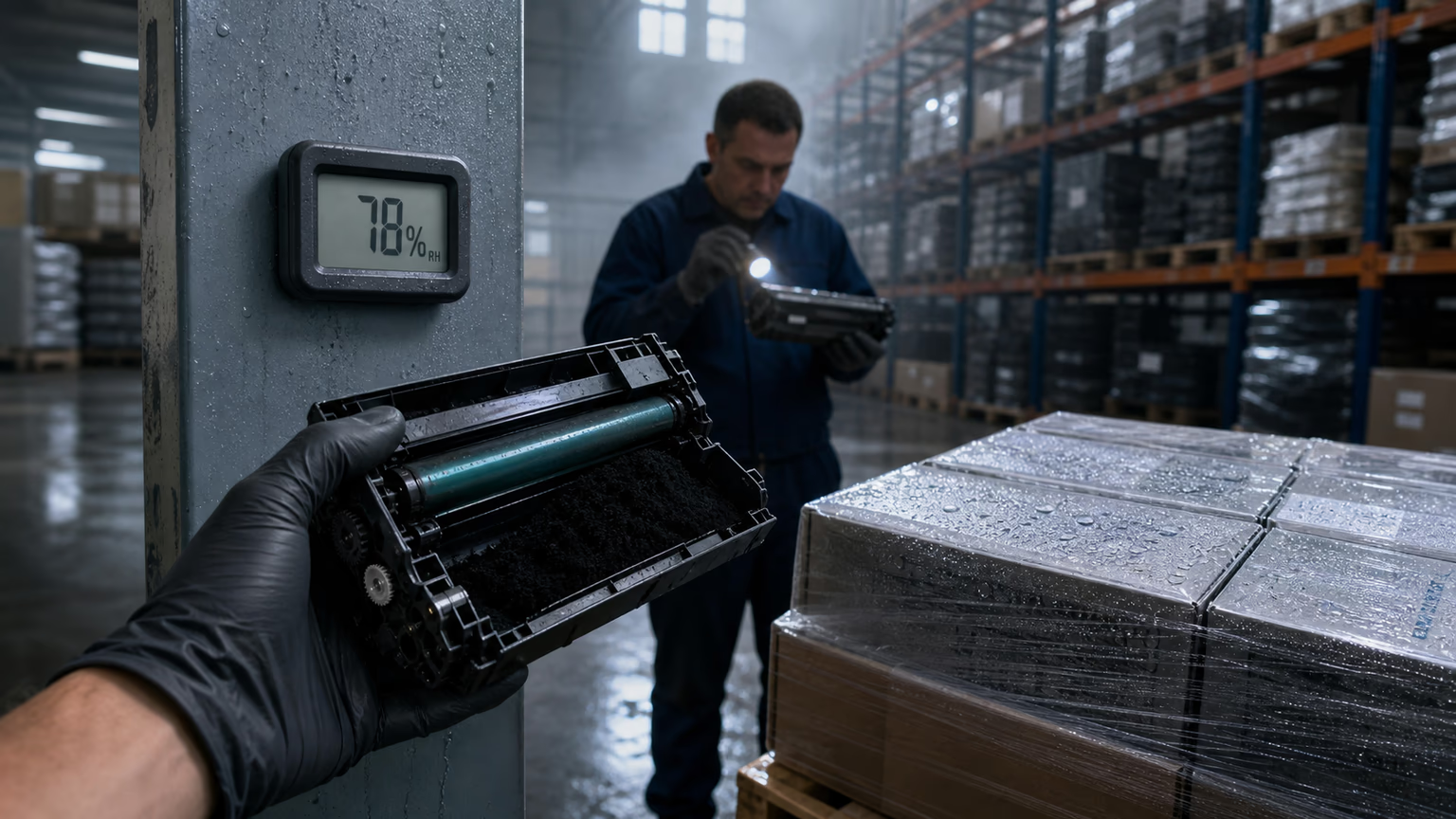
Many leakage complaints appear after international shipping. The cartridge may pass factory inspection but fail after transport vibration, drops, compression, humidity, and handling.
Transport-related leakage may come from:
- weak internal seals;
- poor bag protection;
- poor foam or cushioning;
- box compression;
- seal displacement;
- toner settling;
- cartridge deformation;
- rough loading;
- long sea freight.
This is why packaging is part of product quality. For export supply, a cartridge should be tested not only as a printing unit, but as a shipped product.
A serious factory should perform or simulate:
- vibration testing;
- drop testing;
- carton compression checks;
- temperature and humidity exposure;
- post-transport print testing;
- inspection for loose toner in bag or box.
If a supplier does not test transport performance, the buyer becomes the first real test environment.
Root Cause 9: Poor Remanufacturing or Cleaning Process
For remanufactured cartridges, leakage can come from poor cleaning and rebuilding. Old toner, damaged seals, worn blades, weak drums, and reused components can create contamination and leakage.
Risks include:
- old toner left inside the cartridge;
- incompatible new toner mixed with old residue;
- reused seals;
- worn foam;
- damaged hopper joints;
- old blades;
- cracked cartridge shells;
- poor inspection after assembly.
Remanufacturing can be effective when done properly, but it requires strict control. If the process is casual, leakage risk increases significantly.
For buyers, the key is transparency. They should know whether the product is new-built, remanufactured, or hybrid, and what controls are used in each case.
How a Factory Should Investigate Leakage Complaints
A factory-level investigation should begin with evidence. The supplier should ask for photos, batch number, cartridge model, shipping condition, installation status, page count, and sample prints if available.
The investigation should identify:
- where the toner was found;
- whether leakage occurred before or after installation;
- whether the seal was intact;
- whether the box or bag was damaged;
- whether the cartridge was overfilled;
- whether the waste section was full;
- whether the blade or roller area was contaminated;
- whether similar complaints appeared from the same batch.
A good factory should compare the complaint unit with retained samples from the same batch. Without retained samples, the investigation becomes much weaker.
The factory should also separate one-unit failure from batch-level risk. A single damaged cartridge may be caused by transport. Multiple similar complaints from the same batch may indicate a production or design issue.
What Buyers Should Ask Suppliers Before Bulk Orders
Before approving a toner cartridge supplier, B2B buyers should ask practical questions about leakage control:
- How do you test cartridge seals?
- Do you perform vibration or drop testing?
- How do you inspect hopper joints and end caps?
- How do you control doctor blade installation?
- How do you test waste toner capacity?
- Do you keep retained samples for each batch?
- How do you investigate leakage complaints?
- What packaging is used for export shipment?
- Are cartridges tested after transport simulation?
- How do you control overfilling risk?
The answers will quickly separate a manufacturer with process control from a supplier that only sells price.
Why Leakage Is More Expensive Than It Looks
A leaking cartridge may appear to be a small defect, but the real cost can be large.
For a distributor, it can mean returns and credit notes.For a service company, it can mean technician visits and cleaning time.For a corporate buyer, it can mean user complaints and printer downtime.For a private label brand, it can mean reputational damage.For a manufacturer, it can mean loss of future orders.
This is why the cheapest cartridge is not always the most economical. If leakage creates cleanup, returns, and lost trust, the real cost becomes much higher than the purchase price difference.
A responsible supplier should help reduce not only product cost, but also downstream risk.
How UNICO Approaches Leakage Prevention
At UNICO, toner leakage is treated as a design, assembly, material, and logistics issue. The goal is not simply to clean the cartridge before shipment, but to prevent toner from escaping during handling, storage, transport, and real customer use.
That means looking at:
- seal strength;
- hopper design;
- doctor blade control;
- waste toner containment;
- blade and drum interaction;
- toner flow behavior;
- packaging durability;
- batch traceability;
- complaint investigation.
For B2B buyers, this approach matters because leakage is rarely only one thing. It is often the visible result of several small weaknesses: one gap, one weak foam, one overfilled hopper, one poor blade, one long shipment, one humidity condition.
Strong manufacturing is about controlling these details before they reach the customer.
Relationship Between Leakage and Other Print Defects
Toner leakage often connects with other defects.
If loose toner contaminates the drum or PCR, the cartridge may develop compatible toner gray background.If toner remains on imaging components, it may contribute to ghosting after installing a new toner cartridge.If toner feed is unstable because of hopper or blade issues, the page may show light print with compatible toner.If the drum, blade, or waste section is contaminated, users may see black streaks on laser prints.
This is why leakage should never be dismissed as just a dirty box. It can be a sign of deeper cartridge control problems.
FAQ
Why is toner leaking from my cartridge?
Toner may leak from a cartridge because of seal failure, poor hopper sealing, doctor blade issues, waste toner overflow, wiper blade failure, overfilling, transport damage, or poor assembly. The location of the leaked toner helps identify the cause.
Final Thoughts
Toner leaking from the cartridge is not just a messy inconvenience. It is a signal that something in the product, assembly, packaging, transport, or waste control system may have failed.
For B2B buyers, leakage must be treated seriously because it affects trust before the customer even evaluates print quality.
The right supplier should not only replace leaking cartridges. It should understand why leakage occurred, whether the risk affects the batch, and how the process will be improved.
That is the difference between a supplier that reacts to complaints and a manufacturer that prevents them.
Related reading: ghosting after installing a new toner cartridge, compatible toner gray background, light print with compatible toner, black streaks on laser prints, ghosting after installing a new toner cartridge, light print with compatible toner.