
Most procurement teams walk into a toner factory with a checklist that feels thorough: ISO certificates on the wall, a quick tour of the production line, some pre-selected cartridges for testing, and a price comparison spreadsheet.
This approach is dangerously incomplete for compatible toner cartridges.
The real risks are not visible on a guided tour.
They hide in batch-to-batch consistency, subcomponent sourcing, firmware agility, and after-sales responsiveness—all of which only surface when cartridges hit the field at scale across mixed printer fleets.
A superficial audit misses the critical difference between production capability and supply continuity.
A factory can produce a perfect sample batch while lacking the process controls to replicate that quality month after month.
Field failure costs—returns, client churn, and even printer damage—can rapidly erase the paper savings from a lower unit price.
The only audit worth doing is one that combines on-site engineering inspection with a commercial vulnerability assessment, treating the supplier as a long-term risk partner, not a button on a sourcing platform.
Pre-Audit Preparation: Mapping Your Fleet and Defining Acceptable Variance
Before you ever set foot in a factory, you need a data-driven specification grounded in your real-world fleet.
Catalog every printer model, firmware version, and usage profile across your customer base and internal operations.
This mapping reveals exactly which compatible cartridges you need and, more importantly, the specific compatibility challenges you will face—from region-locked chips to high-duty-cycle demands.
Define critical-to-quality (CTQ) parameters that matter to your end users: print density, background fog, fusing reliability, page yield, and chip communication.
Translate these into an acceptable quality level (AQL) based on your customer contracts.
A distributor serving law firms may tolerate zero background, while a warehouse with barcode labels cares more about yield.
Simultaneously, build a total cost of ownership (TCO) model that accounts for not just unit price, but defect returns, freight, technical support time, and replenishment lead times.
With this preparation, your audit becomes a risk-adjusted procurement evaluation, not a price comparison.
On-Site Quality Deep Dive: What to Look for Beyond ISO Certificates
Certificates tell you the factory passed a test on a specific day.
On the production floor, you need to see how quality is engineered in real time.
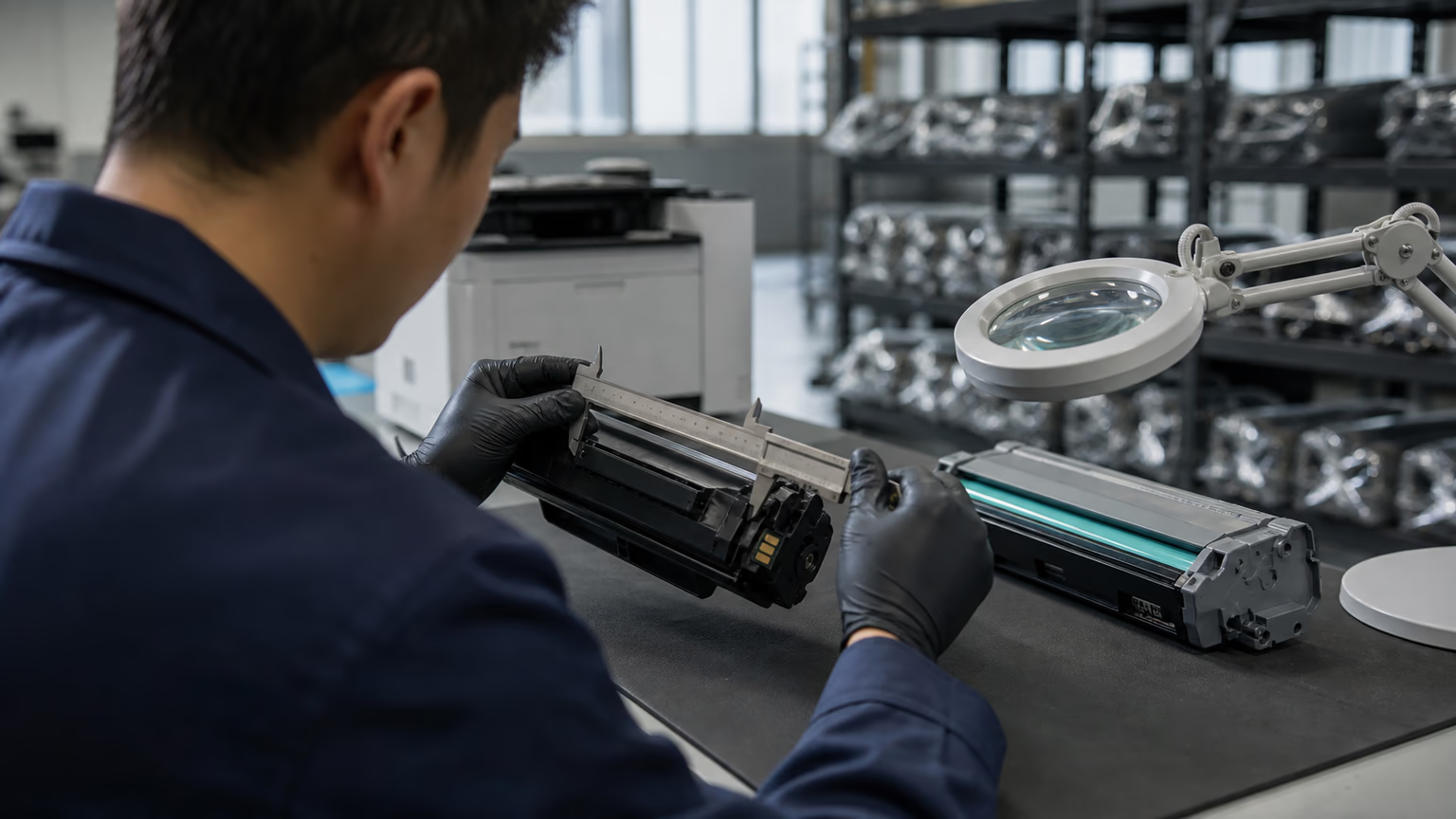
Start at incoming raw material inspection.
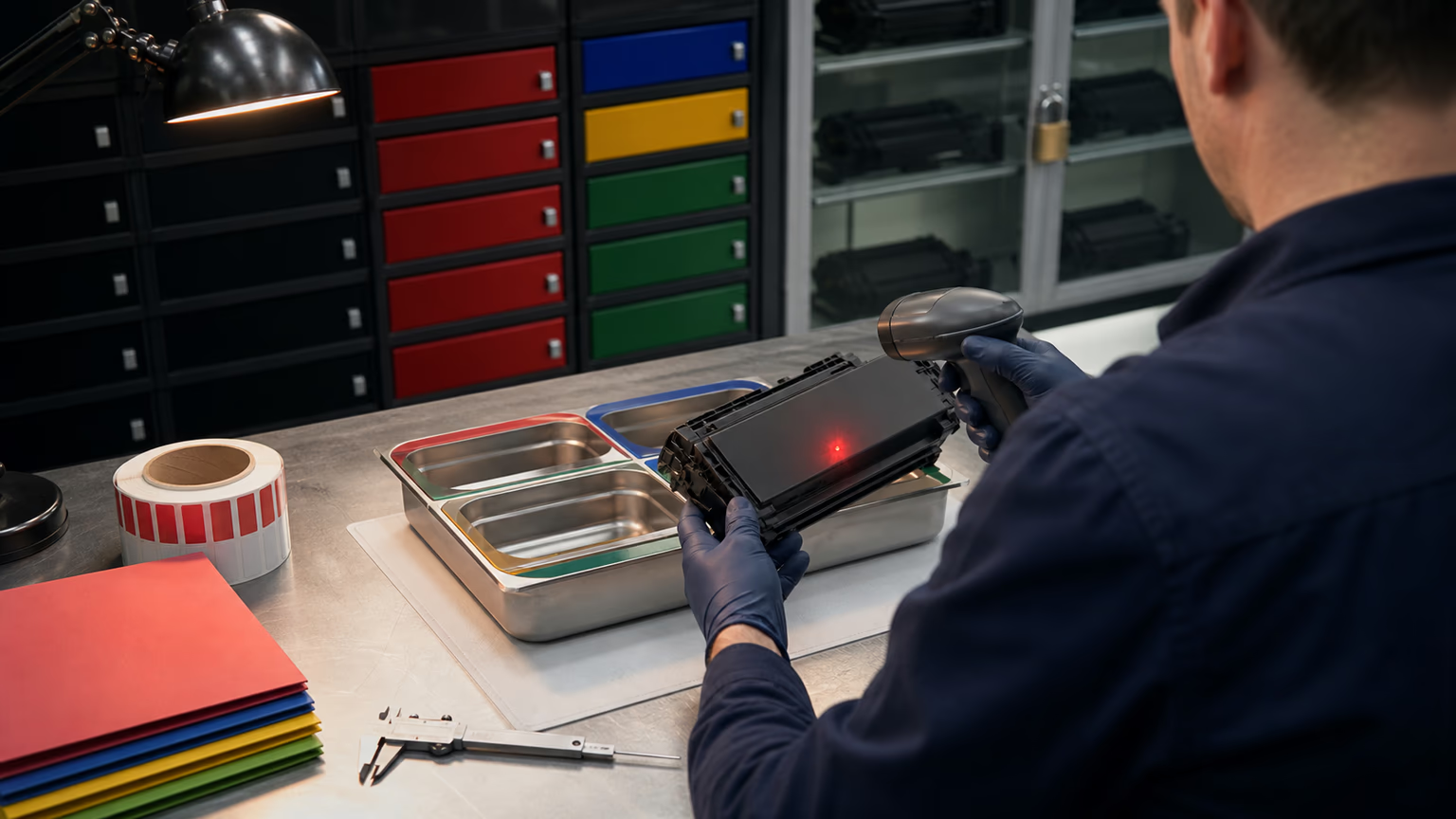
Demand to see the sampling protocol for toner resin, OPC drums, chips, and rollers.
A factory that doesn’t quarantine and test every batch of critical subcomponents is gambling with your product’s consistency.
Move to in-process controls.
Verify that the factory measures toner particle size distribution and charge stability at regular intervals during a production run.
Inspect the calibration logs for grinding and classifying equipment—these directly affect print quality.
Observe the cleanroom conditions: proper gowning, positive air pressure, and particle count monitoring.
At the end of the line, look for not just basic print tests, but environmental stress tests (temperature, humidity), and yield testing under real-world coverage patterns.
The sampling rigor—sample size, frequency, and randomness—is the single best predictor of field failure rates.
Compatibility Engineering: How the Factory Stays Ahead of OEM Updates
OEM firmware updates are a constant threat.
A compatible toner factory without a dedicated reverse-engineering and firmware monitoring team is a future liability.
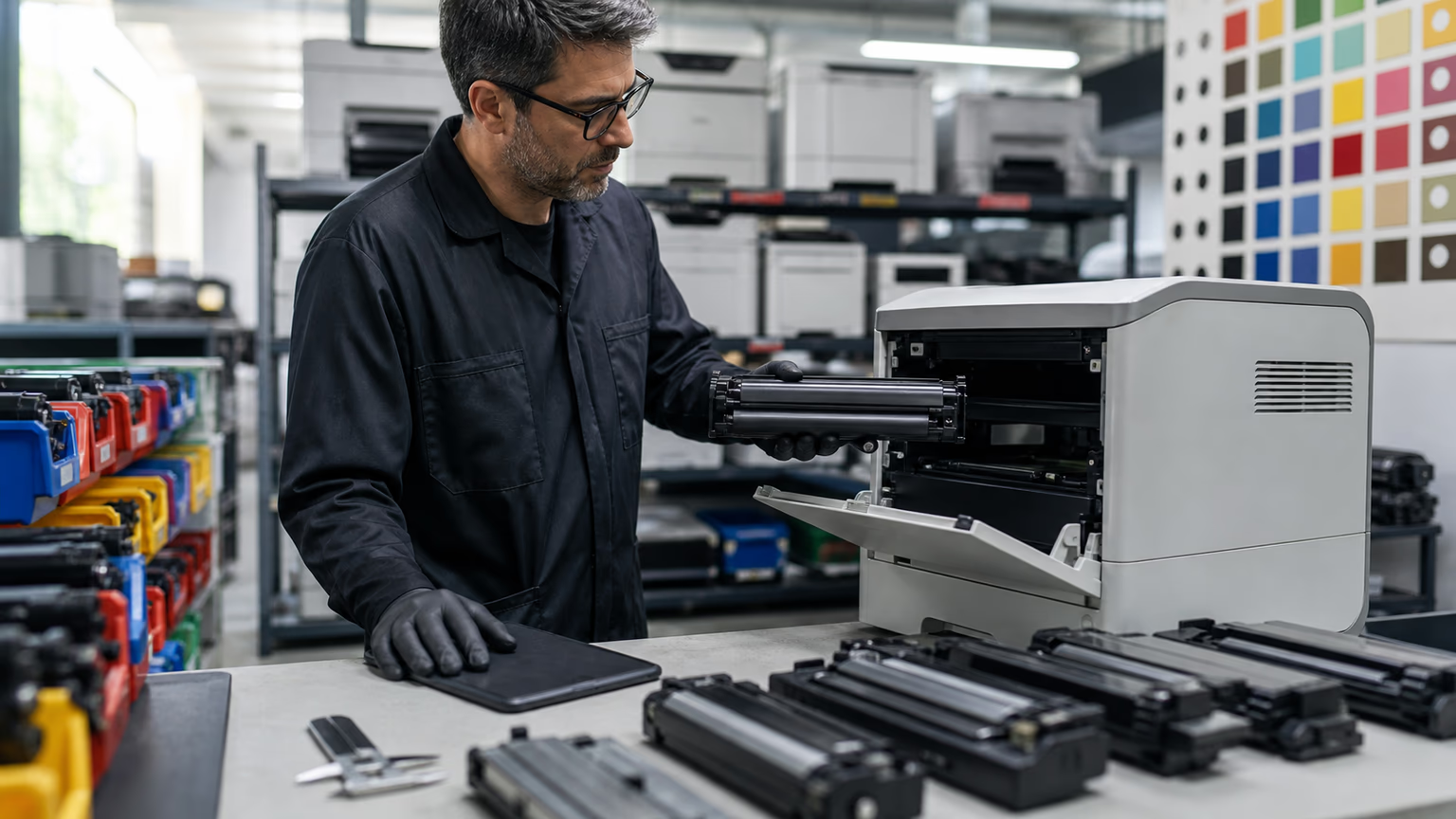
During your audit, ask to see the R&D pipeline: how quickly they tear down new printer models, analyze chip protocols, and validate against recent firmware versions.
An impressive factory will show you a log of firmware validations over the past 12 months, demonstrating proactive response.
Evaluate their testing matrix.
Do they test across multiple printer sub-models, firmware revisions, and regional variants?
Color applications demand even tighter color matching and fusing performance; request comparative prints against OEM output.
Chip emulation quality is critical: a poor chip causes non-genuine errors, missing features, or total rejection.
The goal is not a one-time compatibility check; it’s an ongoing engineering process that will keep your cartridges alive as fleets evolve.
Supply Chain Resilience: Raw Materials, Sub-Suppliers, and Capacity
Quality drift often starts not inside the factory, but upstream.
Demand transparency on supplier qualification for key components—OCPC drums, chips, toner resin.
A factory that dual-sources critical items or holds strategic buffer stocks of raw materials is far more resilient to global supply shocks.
Ask about safety stock levels for finished goods relative to your forecasted volumes; you want to see enough to cover demand surges or production hiccups.
Capacity headroom is vital.
If the factory is running at 95% utilization, any line breakdown will delay your orders.
Inquire about shift patterns, maintenance schedules, and scalability plans.
Logistics flexibility matters equally: multiple shipping routes, experience with customs in your region, and contingency plans for port disruptions.
A factory’s business continuity plan should include how they would meet your volumes if a key sub-supplier suddenly goes offline.
Without this, you are buying not just cartridges, but vulnerability.
The After-Sales Reality Check: Support, Returns, and Failure Analysis
Cartridges will fail in the field—it's a statistical certainty.
What happens next separates a true partner from a transactional supplier.
During your audit, review the warranty terms in detail: what is covered, for how long, and the claims process.
But don't stop at the document.
Interview the people who handle returns.
Ask for the last three defect reports and trace how they were resolved, including root cause analysis (RCA) reports.
Assess the factory's failure analysis capability.
Do they have an in-house lab to perform toner analysis, drum sectioning, or chip diagnostics on returned cartridges?
A factory that merely replaces defective units without investigating patterns is not improving.
Also, evaluate technical support: can they offer remote troubleshooting in your language?
What is the average turnaround time for a replacement shipment?
These service elements directly impact your customer retention and your margins.
Building a Joint Improvement Plan: From Transaction to Strategic Partnership
The most valuable audit output is not a pass/fail score, but a framework for continuous quality improvement.
Before signing, agree on a joint improvement plan that includes quarterly business reviews with shared quality KPIs: defect rate, yield consistency, firmware compatibility responsiveness.
Structure the supply contract to include consequences for drift—performance rebates, penalty clauses for recurring batch failures, and joint investment in new model development.
Define an escalation matrix and communication cadence so that issues are flagged before they become crises.
Crucially, negotiate exit and transition clauses that protect your business without locking you in.
This transforms the audit from a one-off event into a living partnership, ensuring the factory remains aligned with your business health for years, not just for the first shipment.
A factory willing to commit to such terms demonstrates the confidence and maturity you need in a strategic supplier.
FAQ
What are the most common hidden flaws in compatible toner cartridges that only appear after high-volume printing?
Flaws such as inconsistent toner particle size distribution, incorrect fusing temperature profiles, and chip degradation often remain invisible in low-page-count sample tests. Under sustained high-duty cycles, toner may clump, OPC drums wear unevenly, and chips can overheat, leading to print defects, device errors, or premature cartridge failure that erodes end-user trust.
How can I verify the quality consistency of toner cartridges without relying on the factory's provided samples?
Request random production samples drawn over a period of months, not hand-picked pre-production units. Test these in your own fleet environment under typical usage patterns and environmental conditions. Combine this with on-site audits of their statistical process control data—control charts for key parameters like density and yield—to verify that quality is maintained batch after batch.
What specific questions should I ask about the factory's R&D capabilities for new printer models?
Inquire about their reverse-engineering timeline: how long from a new printer model launch to a tested compatible cartridge? Ask to see their chip emulation testing framework and a log of recent firmware validations. Probe the size and expertise of their R&D team, their investment in lab equipment, and how they handle regional chip variations.
How do I ensure that firmware updates from OEMs won’t render my compatible cartridges useless?
Demand that the factory has a formal firmware monitoring process—ideally a dedicated team tracking OEM update releases and testing cartridges against new firmware within a defined SLA, typically 7-14 days. Your contract should specify their obligation to provide chip upgrades or replacements at no cost if a firmware update breaks compatibility during the cartridge's intended shelf life.
Can a factory have all the ISO certifications but still produce inconsistent quality?
What do I inspect beyond paperwork?
Conclusion
Auditing a compatible toner factory is not a checkbox exercise; it's a strategic procurement discipline that protects your business from the invisible risks that destroy margins and customer relationships.
By moving beyond superficial tours and sample boxes, and implementing a rigorous, technically grounded evaluation of quality engineering, compatibility processes, supply chain resilience, and after-sales accountability, you gain the insight needed to select a supplier that delivers consistent value.
The true test of a factory is not how good it looks during a single visit, but how it performs under the steady pressure of your real-world demands.
Use this framework to make informed, risk-aware decisions that sustain your business growth and reputation.