
Introduction: The Hidden Cost of Cutting Toner Spend
Office printer toner is one of the most visible recurring expenses in a B2B fleet. Procurement teams face constant pressure to reduce consumable spend, and compatible toner cartridges often appear to be the fastest route to savings. However, a narrow focus on cartridge unit price frequently leads to hidden costs that erode the savings and create friction for end users.
When a fleet switches to lower-cost toner without proper evaluation, symptoms such as streaky output, faded pages, and recurring non-genuine warnings start to surface.
Helpdesk tickets rise, reprints multiply, and service providers spend more time troubleshooting print quality than managing the fleet.
The procurement department saves a small amount per cartridge, but the organization loses far more in user productivity and support overhead.
This article provides a procurement-led framework for lowering toner spend without frustrating users. The approach treats toner selection as a service-level decision, not just a price comparison. It focuses on true cost per page, compatibility validation, supplier evaluation, and structured pilot testing to protect both budget and user experience.
Why Users Get Frustrated When Fleets Switch Toner
User frustration usually starts with visible print quality defects. Streaks, fading, backgrounding, and smearing are common when a compatible toner cartridge does not match the original equipment manufacturer specifications for the printer model. These defects force users to reprint documents, increasing paper waste and reducing confidence in the output.
Another major trigger is the recurring non-genuine toner warning on printer displays.
Firmware updates from printer manufacturers often add chip verification requirements.
If the compatible cartridge chip is not updated or is incompatible, the printer may refuse to recognize the cartridge, display a warning, or stop printing entirely.
This creates downtime and forces users to contact IT or the service provider.
Premature cartridge failure is also common with low-quality compatible toner. Leaking cartridges, poor contact springs, or substandard toner formulation can cause the cartridge to fail before the expected page count. Each failure interrupts work and adds a negative touchpoint between the user and the procurement decision.
- Streaked or faded print output that forces reprints and wastes paper.
- Recurring non-genuine toner messages that block printing until the cartridge is replaced.
- Leaking cartridges or toner dust inside the printer, leading to maintenance calls.
- Premature end-of-life behavior such as rapid drop in print density or ghosting.
Mapping the Mixed Fleet: Compatibility and SKU Complexity
Most B2B fleets are not homogeneous. A single organization may operate laser printers from multiple manufacturers and across many models. Each printer model may require a specific toner cartridge form factor, chip protocol, and yield specification. Sourcing compatible toner for a mixed fleet is therefore a SKU management challenge, not a one-size-fits-all solution.
Compatibility risks increase with firmware updates. Printer manufacturers regularly release firmware that can change the way the printer authenticates toner cartridges. A compatible cartridge that worked last month may trigger warnings after a firmware update. Procurement teams must verify that the supplier tracks firmware changes and provides updated chip versions for each compatible SKU.
Regional variants add another layer of complexity.
Toner cartridges may be region-coded, meaning a cartridge designed for one market will not function in a printer from another region.
For fleets with international operations or equipment sourced from different regions, exact model and regional matching becomes critical.
A structured database of printer models, firmware versions, and cartridge specifications is essential before attempting a fleet-wide compatible toner rollout.
Defining True Toner TCO Beyond Cartridge Price
The price of a toner cartridge is only one component of the total cost of ownership.
A more accurate measure is cost per page, which divides the cartridge cost by the actual number of pages printed.
If a compatible cartridge is cheaper but yields fewer pages than its OEM counterpart, the cost per page may be higher.
Yield claims from suppliers must be verified against real printing conditions, not just marketing data sheets.
Hidden costs also include failed cartridges, reprints, and service interventions. A cartridge that leaks or produces unreadable output forces users to reprint documents, consuming additional paper and toner. If a service technician is called, the labor cost can exceed the savings from the cartridge price difference. Procurement teams should track these costs during any pilot program.
Another hidden cost is user productivity loss.
When employees spend time troubleshooting print quality instead of their core work, the organization incurs indirect costs that are rarely captured in procurement budgets.
A true TCO model includes helpdesk ticket volume, average resolution time, and estimated value of lost employee time.
Only by comparing normalized cost per page, including rework and support overhead, can procurement make an informed decision between OEM and compatible toner.
Supplier Evaluation Framework for B2B Toner Procurement
Selecting a compatible toner supplier requires a structured evaluation that goes beyond price quotes. Suppliers must demonstrate consistent quality through batch testing and documented yield methodologies. Ask for transparent page yield data based on defined test conditions. Without this, procurement is taking on the supplier's marketing risk.
The supplier should also provide a clear compatibility guarantee across the specific printer models in your fleet. This guarantee should include support for firmware updates and a process for replacing defective cartridges without long lead times. A reliable supplier will have technical support that understands printer firmware and chip variations.
Key evaluation criteria for a B2B compatible toner supplier include:
- Documented yield testing that corresponds to realistic print coverage, not just lab conditions.
- Batch quality consistency with clear quality control procedures for each production run.
- Compatibility support across your specific printer models and firmware versions.
- Replacement process for defective cartridges that minimizes downtime for end users.
- Cost per page pricing that allows comparison against OEM total cost rather than cartridge price alone.
- Warranty coverage that includes printer damage if it is caused by the toner cartridge.
- Supply chain reliability with sufficient stock depth and distribution capability for mixed fleets.
Pilot Testing and Implementation Without Service Disruption
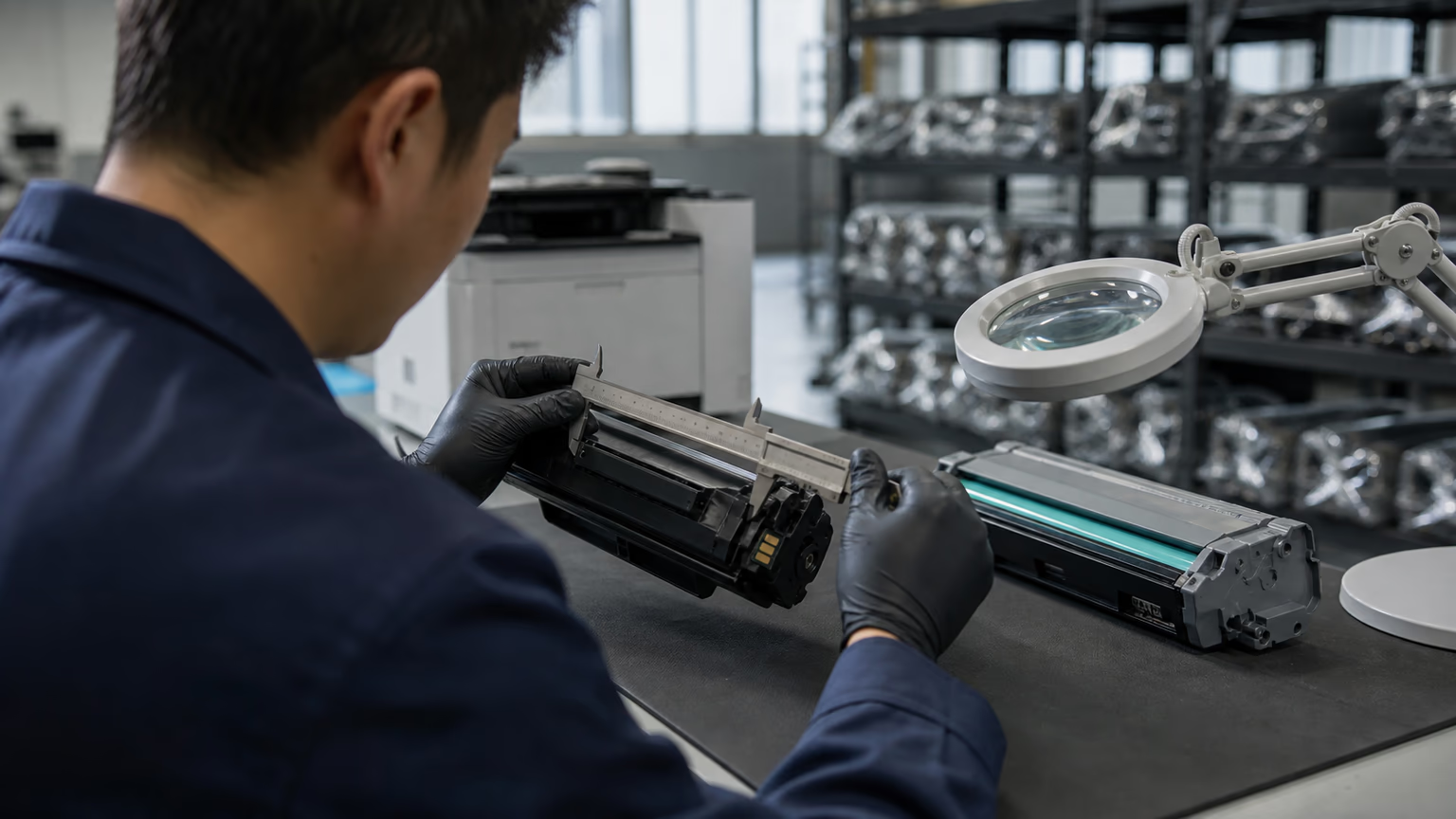
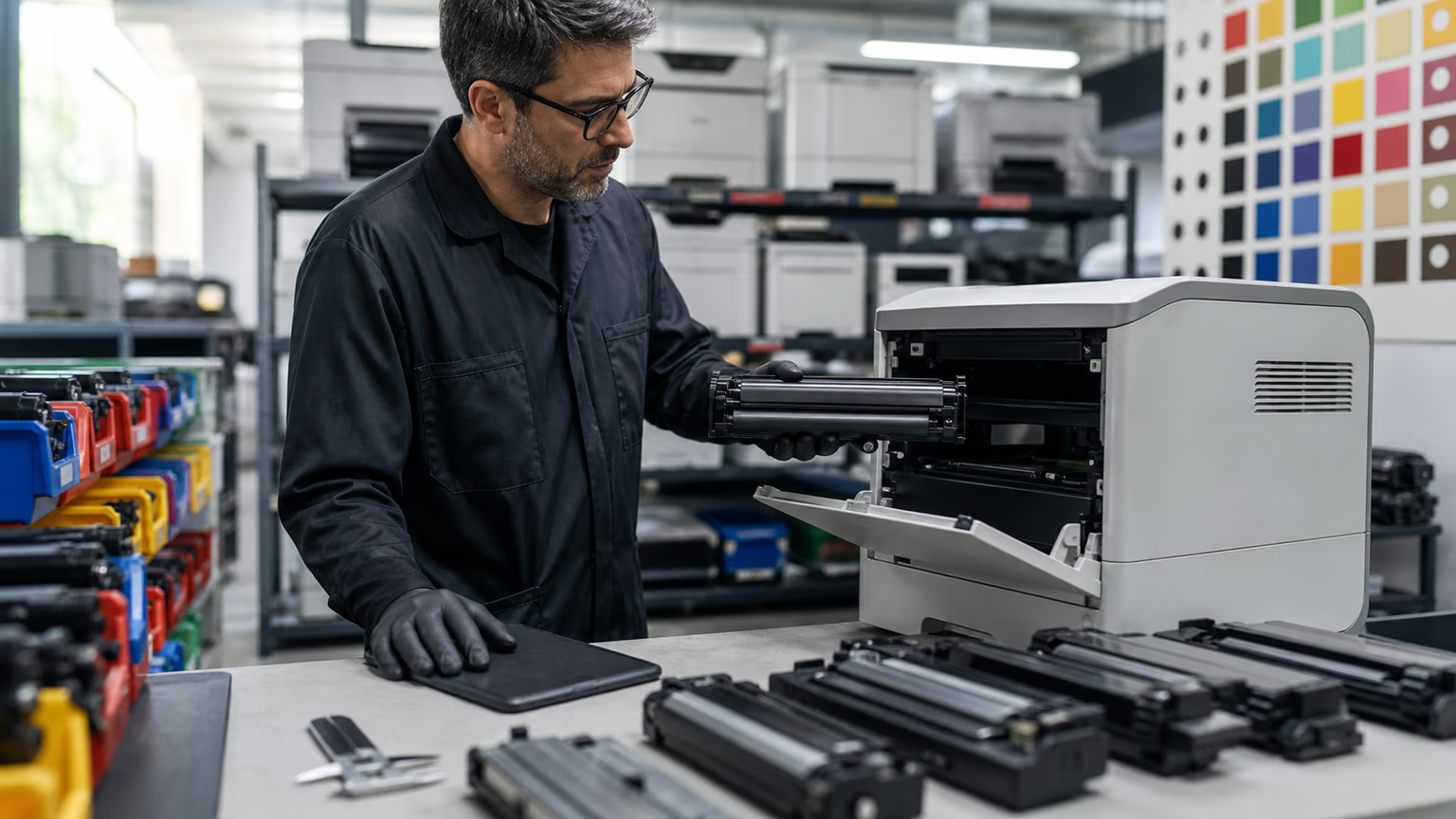
Before rolling out compatible toner across the entire fleet, run a controlled pilot on a representative subset of printers. This subset should include the highest-volume printers and those most likely to generate user complaints if print quality degrades. Start with 10 to 20 devices, but choose them to reflect the brands, models, and firmware versions present in the wider fleet.
During the pilot, establish a baseline for print quality and yield using the current OEM toner.
Document examples of acceptable output with test pages, and record helpdesk ticket volume and service call rates.
Then switch the pilot devices to the compatible toner and track the same metrics over a defined period.
Any increase in complaints or service calls should be investigated immediately to identify the root cause.
Test pages should include high-coverage print patterns, grayscale gradients, and small text to expose common defects like streaking, backgrounding, and poor fusing.
Users in the pilot area should be informed that they are part of a trial and given a simple way to report quality issues.
The service team should also be briefed to recognize compatible-related failures quickly and log them separately.
Scaling Compatible Toner Strategy Across the Fleet
Once the pilot demonstrates acceptable quality and cost savings, scaling requires a segmented approach.
Not all printers carry the same risk profile.
High-volume, low-sensitivity printers such as departmental workhorses are good candidates for compatible toner.
Critical printers in executive areas, legal departments, or customer-facing environments may justify retaining OEM toner to eliminate any risk of quality complaints.
A split fleet strategy can balance cost reduction and user satisfaction.
Use compatible toner for the majority of general office printing, where minor quality variations are less noticeable.
Keep OEM toner for devices that produce client-facing documents, legal contracts, or marketing materials where color accuracy and crisp text are non-negotiable.
This hybrid model reduces overall spend without triggering user frustration in sensitive areas.
Communication is essential during scaling. Inform users about the change and what to expect in terms of print quality. Set up a simple escalation path for quality issues so that users do not feel abandoned. Regularly review complaint data and adjust the strategy if certain printer models are not performing well with compatible cartridges. The goal is continuous improvement, not a one-time switch.
Managing Ongoing Quality and Supplier Performance
Cost savings from compatible toner are not guaranteed forever. Supplier quality can drift, and printer firmware updates can introduce new compatibility issues. Ongoing monitoring is necessary to ensure that the initial savings do not turn into long-term service problems. Track helpdesk ticket volume, service call rates, and reprint frequency on a monthly basis.
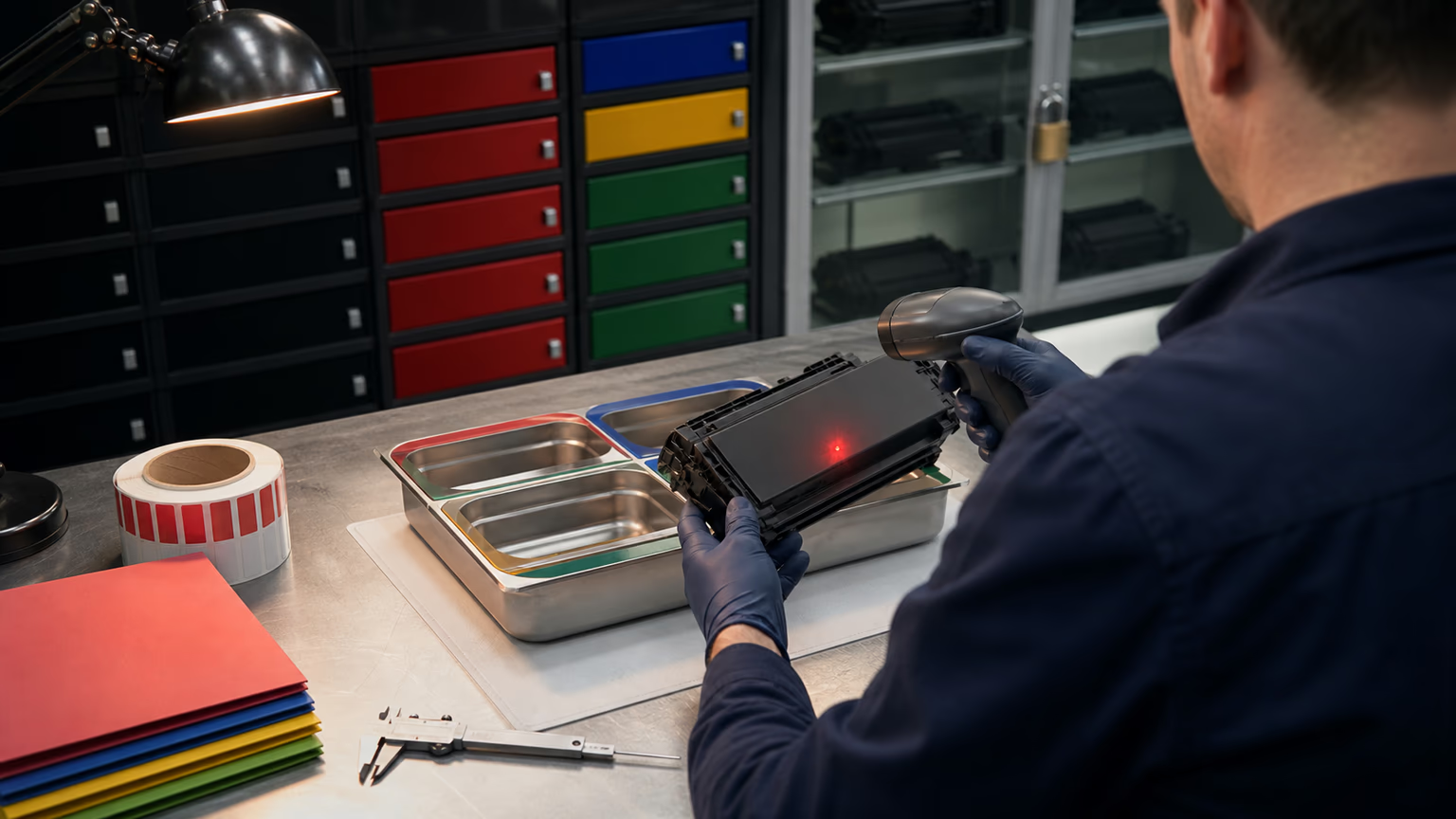
Periodic batch testing of toner cartridges from the supplier provides additional assurance. Randomly select cartridges from incoming shipments and test them on printers in a controlled environment. Compare yield and print quality against the original pilot baseline. If a batch underperforms, work with the supplier to identify the root cause and implement corrective actions.
Stay informed about printer firmware updates for your fleet models.
Whenever a manufacturer releases new firmware, verify whether the compatible toner supplier has tested its cartridges against that version.
If a firmware update is pushed to the fleet, test a small number of devices before updating the rest to avoid a sudden wave of non-genuine toner warnings.
Supplier performance reviews should include defect rates, replacement turnaround times, and proactive communication about compatibility changes.
FAQ
What is the safest way to lower toner spend in a mixed printer fleet?
The safest approach is to start with a structured pilot on a representative subset of printers, document baseline quality and costs, and then gradually scale compatible toner to low-risk devices. Keep OEM toner for critical or sensitive printing environments. Continuously monitor user complaints and service metrics to catch any degradation early.
How do I test compatible toner without frustrating users?
Select a small group of volunteer users or a department with high print volume but low sensitivity to minor quality variations. Provide clear instructions on how to report any print problems. Use detailed test pages to check for streaking, fading, and backgrounding. Run the pilot for at least two full toner cycles to observe yield consistency and long-term behavior.
Do compatible toner cartridges void printer warranties?
In many regions, the use of compatible toner does not automatically void the printer warranty under consumer protection laws.
How can I compare true cost per page between OEM and compatible toner?
Calculate the actual cost per page by dividing the cartridge cost by the number of pages printed until the cartridge is empty under normal usage.
What should I look for in a compatible toner supplier for B2B fleets?
Look for a supplier that provides documented yield testing, batch quality consistency, and a clear compatibility guarantee for your specific printer models. The supplier should have a responsive replacement process for defective cartridges, a warranty that includes printer damage if caused by their toner, and sufficient supply chain capacity to support mixed fleets across multiple locations.
Conclusion
Lowering toner spend without frustrating users is not about finding the cheapest cartridge on the market.
It requires a disciplined procurement approach that evaluates true cost per page, validates compatibility, and implements changes through controlled pilot testing.
By focusing on supplier quality and ongoing monitoring, B2B fleets can achieve sustainable savings while maintaining user satisfaction and service reliability.
The framework in this article treats toner as a service-level decision. When procurement, IT, and service providers collaborate on data-driven evaluation, compatible toner can become a viable cost-reduction strategy rather than a source of user complaints. Start with the pilot, measure what matters, and scale with confidence.