Low-temperature fusing toner is engineered to melt and bond to paper at a lower temperature than standard laser printer toner.
The appeal is obvious: lower energy consumption, reduced warm-up time, and the ability to print on heat-sensitive media without curling or damage.
For B2B distributors and printer service companies, these claims resonate with customers who are under pressure to cut operating costs or expand the range of printable materials.
However, the reality is more nuanced.
A toner that fuses too easily can create a different set of problems: poor adhesion, smearing, document offset, and accelerated fuser wear.
These defects may not appear immediately, but they surface in high-volume runs, on coated or recycled papers, or in printers whose fuser units are not calibrated for low-temperature operation.
The result is often a rise in service calls, reprints, and customer dissatisfaction—costs that can quickly erase any energy savings.
This guide takes a balanced view. It explains when low-temperature fusing toner delivers genuine value, when it creates operational risk, and how B2B buyers can qualify suppliers and test toner before committing a managed fleet. The goal is not to discourage innovation but to replace marketing claims with verifiable performance data and a clear decision framework.
When Low-Temperature Fusing Toner Helps: Valid Use Cases
There are specific scenarios where low-temperature fusing toner offers measurable advantages.
The most common is energy reduction in high-volume printing environments.
Printers with lower fusing temperatures consume less power during the fusing stage, which can add up across fleets that produce thousands of pages per day.
For MPS providers and procurement teams, this aligns with sustainability goals and can lower facility energy costs.
Another clear benefit is printing on heat-sensitive media. Standard toner often requires fuser temperatures that distort lightweight papers, labels, or synthetic stocks. Low-temperature toner reduces the risk of curling, shrinking, or melting these materials, enabling printers to handle a wider range of jobs without special settings or slower throughput.
Low-temperature toner can also reduce warm-up time for printers that are used intermittently.
In office environments where the device spends more time in sleep mode than printing, a quicker fuser readiness improves first-page-out time and overall perceived performance.
Additionally, when used in a printer whose fuser is explicitly designed for low-temperature operation, the reduced thermal stress may extend fuser life by lowering the rate of component fatigue.
However, this benefit depends entirely on compatibility—it is not automatic.
When Low-Temperature Fusing Toner Creates Problems: Failure Modes
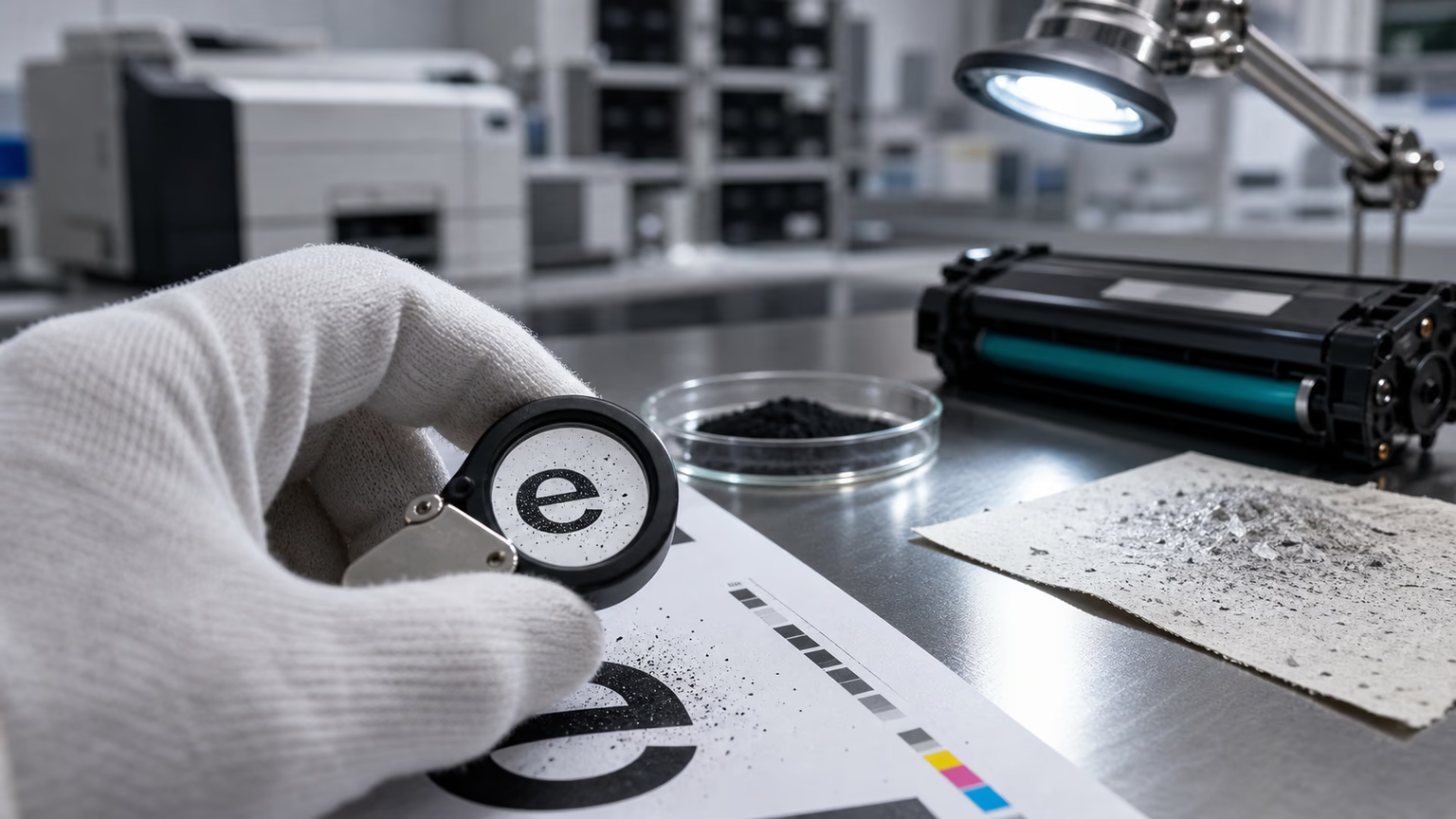
The most visible symptom of improper low-temperature fusing is poor toner adhesion. If the toner does not fully melt and penetrate the paper surface, printed characters and images can smear when rubbed or handled. In B2B environments, this shows up as end-user complaints about documents that rub off on fingers or clothing, especially on uncoated or high-porosity papers.
Document offset is another frequent issue. When toner remains slightly tacky after fusing, sheets stacked in the output tray can stick together or transfer toner to the back of the next page. This is particularly problematic in high-volume printing where pages are collated and bound immediately. Offset defects often require reprinting entire jobs, wasting both toner and paper.
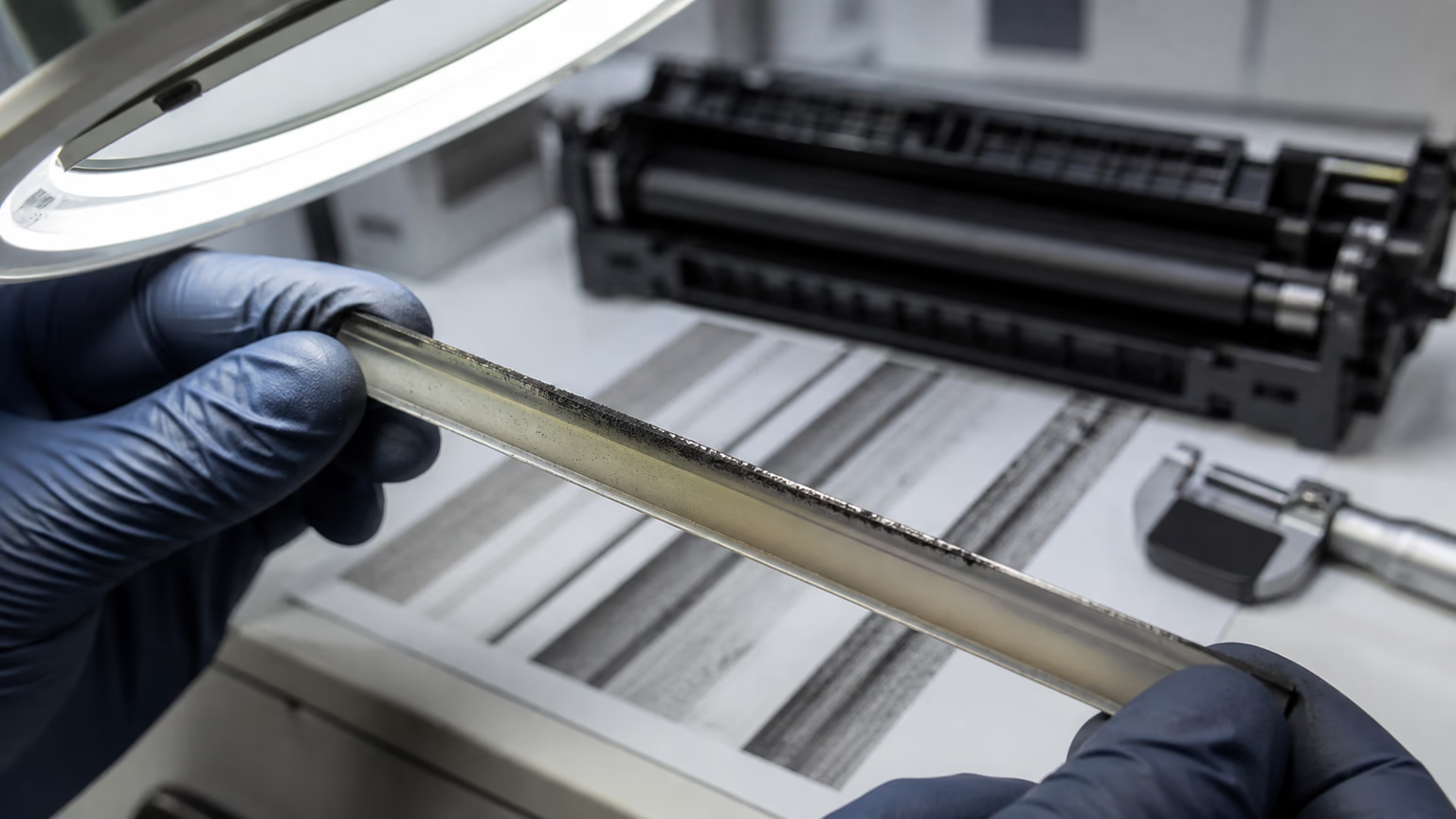
Low-temperature toner that does not fully fuse can also contaminate the fuser roller. Toner particles that fail to bond to the paper may adhere to the roller surface, building up over time. This buildup then transfers to subsequent pages as random marks or background shading, and it can degrade the fuser roller coating, leading to premature replacement.
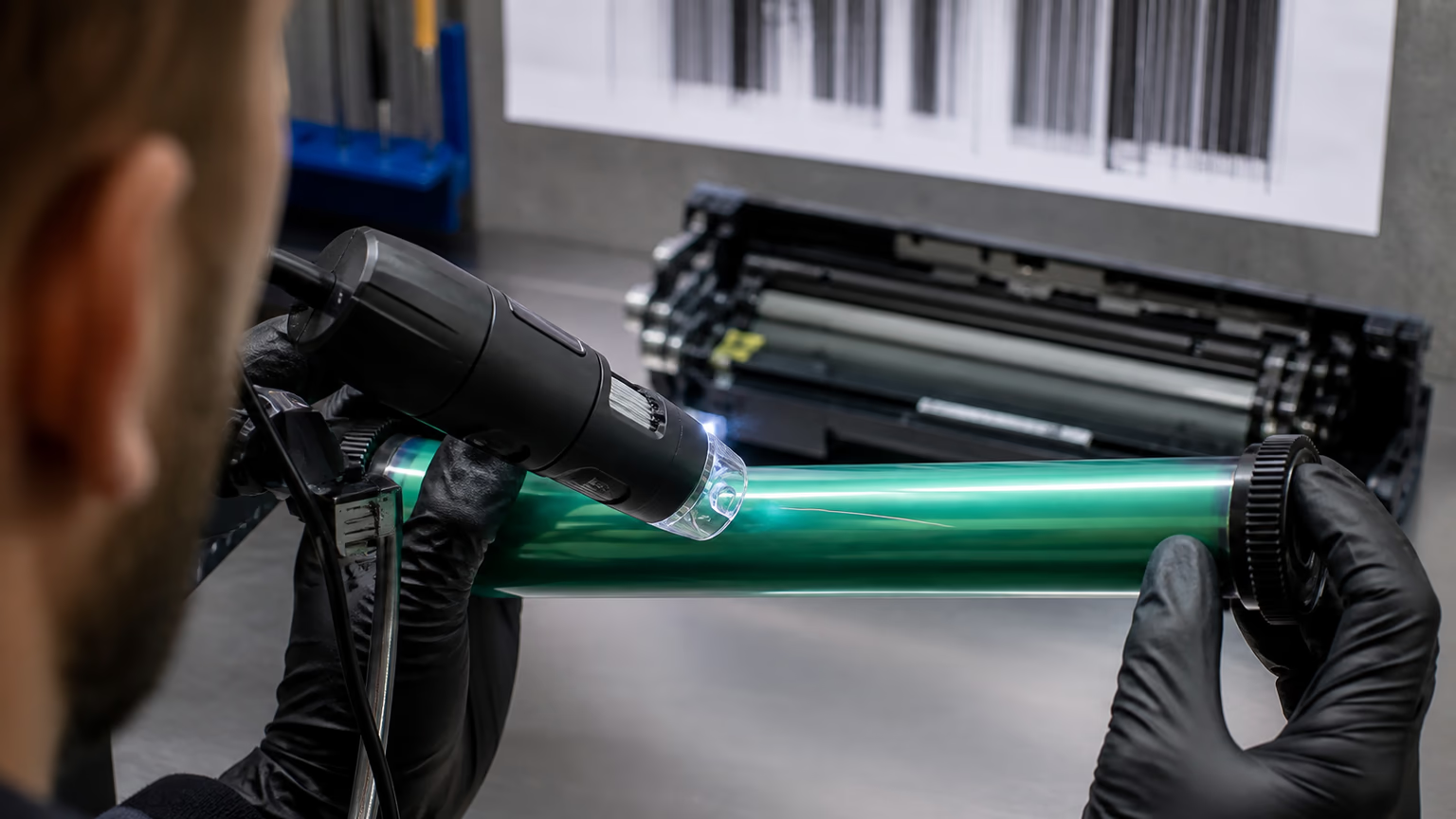
Finally, using low-temperature toner in a printer designed for standard toner can accelerate fuser wear. The fuser unit may cycle at temperatures outside its optimal range, causing uneven heating, roller deformation, or failure of the heating element. The service cost of replacing a fuser unit often exceeds any savings from the toner itself.
Technical Factors That Determine Success or Failure
Low-temperature fusing is not a one-size-fits-all solution.
The most critical variable is the printer's fuser design.
Some fusers are engineered with a specific temperature set point, roller material, and pressure profile.
If the toner's melting point is below that set point, the fuser cannot apply enough heat to fully melt the toner, resulting in poor adhesion.
Conversely, if the toner melts too easily, it may flow excessively and cause gloss variation or offset.
Print speed also matters. High-speed printers move paper through the fuser nip very quickly, reducing dwell time. Low-temperature toner may not have enough time to reach a stable melt viscosity under these conditions, leading to incomplete fusing. Conversely, slow printers may expose the toner to heat for too long, causing it to overmelt and smear.
Toner rheology—the science of how the toner flows under heat and pressure—is equally important. A toner's melting point alone is not sufficient; its viscosity, flow rate, and glass transition temperature all affect how it bonds to paper. Suppliers who cannot provide rheology data for their specific toner are essentially asking buyers to guess.
Paper type and environment are final considerations.
Coated papers have smooth surfaces that require higher fusing temperatures for good adhesion, while recycled papers may contain moisture that interferes with toner bonding.
Ambient temperature and humidity also affect fusing performance; low-temperature toner may fuse acceptably in a controlled office but fail in a warehouse with fluctuating conditions.
Procurement Logic: Evaluating Total Cost of Ownership
When buyers compare low-temperature toner against standard toner, the per-cartridge price often looks attractive—especially if suppliers market it as an energy-saving alternative.
But the true cost includes the hidden expenses of print defects, rework, and service intervention.
A single fuser replacement can easily offset months of energy savings, and recurring smearing or offsetting leads to customer churn that is far more expensive than any cartridge discount.
B2B distributors and MPS operators live or die by contract renewals.
If end users associate your toner with smudged documents or jams, they will switch suppliers regardless of price.
That is why low-temperature toner must be evaluated on the basis of total cost of ownership, not unit cost.
The calculation should include expected reprint rates, technician dispatch frequency, fuser maintenance intervals, and customer retention risk.
Suppliers who provide clear technical documentation—fusing temperature ranges, rheology data, compatibility lists, and batch testing results—reduce this risk.
They enable buyers to make informed decisions and to defend those decisions to their own customers.
A supplier that cannot or will not share this data is signaling that the toner is a commodity with unknown performance, which is unacceptable for a managed fleet.
Qualifying Suppliers and Toner Before Deployment
Qualification should begin long before a purchase order is issued.
The first step is to request the supplier's fusing temperature range and compare it against the printer manufacturer's fuser specifications.
This requires knowing the exact printer models in your fleet and their fuser set points.
If the printer manufacturer does not publish this information, it can often be obtained through technical documentation or from the device service manual.
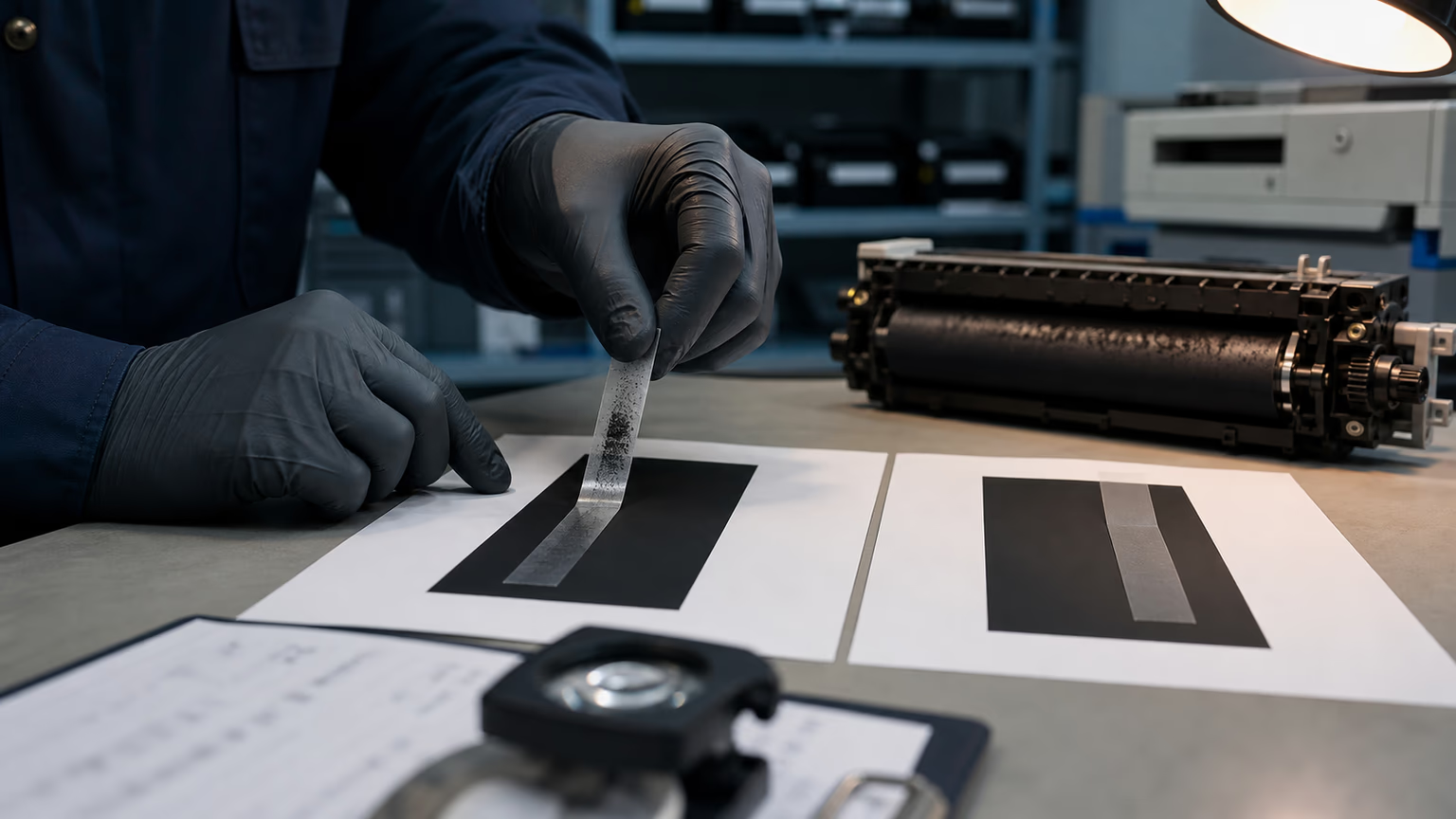
Next, run controlled print tests on a representative sample of the actual printer models in your fleet—not just one test unit. Print a standard test page with solid black areas, fine text, and halftones, and then perform a tape adhesion test. Apply a piece of standard office tape to a printed area, press firmly, and peel it off slowly. If toner lifts onto the tape, adhesion is insufficient.
Check for document offset by stacking freshly printed pages and applying light pressure. Any transfer of toner from one page to another indicates incomplete fusing. Also inspect the fuser roller after extended test runs for toner buildup or surface damage. Run the test on different media types commonly used by your customers, including recycled, coated, and lightweight stocks.
Finally, evaluate batch-to-batch consistency by requesting samples from two or three production lots.
Run the same tests and compare results.
If performance varies significantly, the supplier's manufacturing process is not stable enough for a B2B channel.
Establish clear acceptance criteria—such as no visible lift-off on tape, no offset after stacking for 24 hours, and no fuser contamination after 10,000 pages—before committing to full rollout.
Service Implications: Managing Field Issues
Even with careful qualification, low-temperature fusing defects can still appear in the field due to variations in paper stock, environmental conditions, or user handling.
Service providers need a clear troubleshooting process.
The first diagnostic step is to reproduce the defect under controlled conditions, then verify whether the culprit is the toner, the fuser unit, or the paper.
A quick way to isolate the toner is to print the same job with standard toner; if the defect disappears, the low-temperature toner is likely the cause.
When low-temperature toner proves unreliable on certain printers, the safest recommendation is to revert to standard toner for those devices.
Trying to adjust fuser temperature or pressure settings is risky and may void the manufacturer's warranty.
Preventive maintenance also plays a role: fuser rollers should be inspected more frequently when low-temperature toner is in use, and any toner buildup should be cleaned immediately to prevent transfer defects.
Communication with end users is equally important. Set expectations that low-temperature toner may not be suitable for all media or all environmental conditions. Provide guidance on paper selection and storage. By framing the toner as a specialized solution rather than a drop-in replacement, service providers can reduce the number of avoidable complaints and maintain customer trust.
Decision Guide: Should You Adopt Low-Temperature Fusing Toner?
Adopting low-temperature fusing toner should never be a default choice. It is appropriate only when specific conditions are met. Use the following checklist to evaluate readiness:
- You have identified the exact printer models in your fleet and confirmed that their fuser units are compatible with low-temperature toner.
- You have tested the toner on representative devices and media types using a standardized adhesion and offset protocol.
- The supplier provides documented fusing temperature range, rheology data, and batch consistency evidence.
- Your customers primarily print on uncoated, standard office paper or heat-sensitive media that benefit from lower fusing temperatures.
- You are prepared to increase fuser maintenance frequency and monitor print quality during a pilot phase.
Red flags that indicate low-temperature toner is unsuitable include: visible toner rub-off after the tape test, document offset in the output tray, fuser roller contamination after short runs, inconsistent results between production batches, or a supplier that cannot explain the toner's fusing properties. If any of these appear, do not proceed with full deployment.
A simple comparison between standard and low-temperature toner across key criteria—adhesion, durability, energy use, media flexibility, and service risk—usually shows that the two are not interchangeable. The right choice depends on your fleet profile, customer expectations, and tolerance for service calls. The most prudent approach is a limited pilot with clear exit criteria before scaling up.
FAQ
What is low-temperature fusing toner and how does it differ from standard toner?
Low-temperature fusing toner is a laser printer toner formulated to melt and adhere to paper at a lower fuser temperature than standard toner.
Which printers or applications are best suited for low-temperature fusing toner?
Low-temperature toner works best in printers whose fuser units are explicitly designed for lower operating temperatures, and in applications where energy savings or heat-sensitive media are priorities.
What are the most common print defects caused by low-temperature fusing toner?
The most frequent defects are poor toner adhesion, which causes smearing or rub-off when documents are handled, and document offset, where toner transfers between stacked pages.
Can low-temperature fusing toner damage fuser rollers or shorten fuser life?
Yes, if the toner is used in a printer whose fuser is not designed for it.
How can B2B buyers test whether a low-temperature fusing toner adheres properly to paper?
A simple tape adhesion test is the standard method.
Conclusion
Low-temperature fusing toner is not inherently good or bad; it is a tool with specific applications and specific risks.
For B2B distributors and printer service companies, the decision to stock or recommend this toner should be based on data, not marketing claims.
The energy savings and media flexibility are real, but they come with trade-offs in print durability and fuser maintenance that can damage customer relationships if ignored.
The most profitable approach is a disciplined qualification process.
Request technical documentation, run controlled tests on your actual fleet, and establish clear acceptance criteria before committing to volume purchases.
Treat low-temperature toner as a specialized solution rather than a commodity alternative.
By doing so, you protect your margins from hidden service costs and position your business as a quality-focused partner that customers can trust.
In the end, the winning formula is simple: verify before you buy, pilot before you roll out, and always measure total cost of ownership—not just the price per cartridge. That is how sustainable profitability is built in the B2B print industry.