The Hidden Cost of Toner Returns in Distribution
For B2B toner distributors and printer service companies, a returned cartridge is never a simple reversal of one sale.
The visible cost includes issuing a credit, absorbing freight, and allocating warehouse labor for inspection.
The real damage runs deeper: every return consumes time that could be spent on revenue-generating work, occupies rack space for sellable inventory, and forces re-testing of a unit that may not be resalable.
Thin wholesale margins on printer toner and laser printer toner mean a modest return rate can erase the profit from a significant share of sales.
Customers do not see the return as isolated.
When an office printer toner cartridge fails, the end user loses productivity, the service provider loses credibility, and the distributor loses future orders.
That trust erosion is often more expensive than the logistics cost.
Treating returns as a strategic margin leak rather than an operational nuisance gives you a competitive advantage: fewer problem units shipped, less firefighting, and higher retained revenue.
Root Causes of Toner Returns: Quality, Compatibility, or User Error?
Most toner returns fall into three categories: quality defects, compatibility failures, and user-related handling issues.
Without structured reason codes, your team cannot separate a bad batch from a firmware mismatch or an installation mistake.
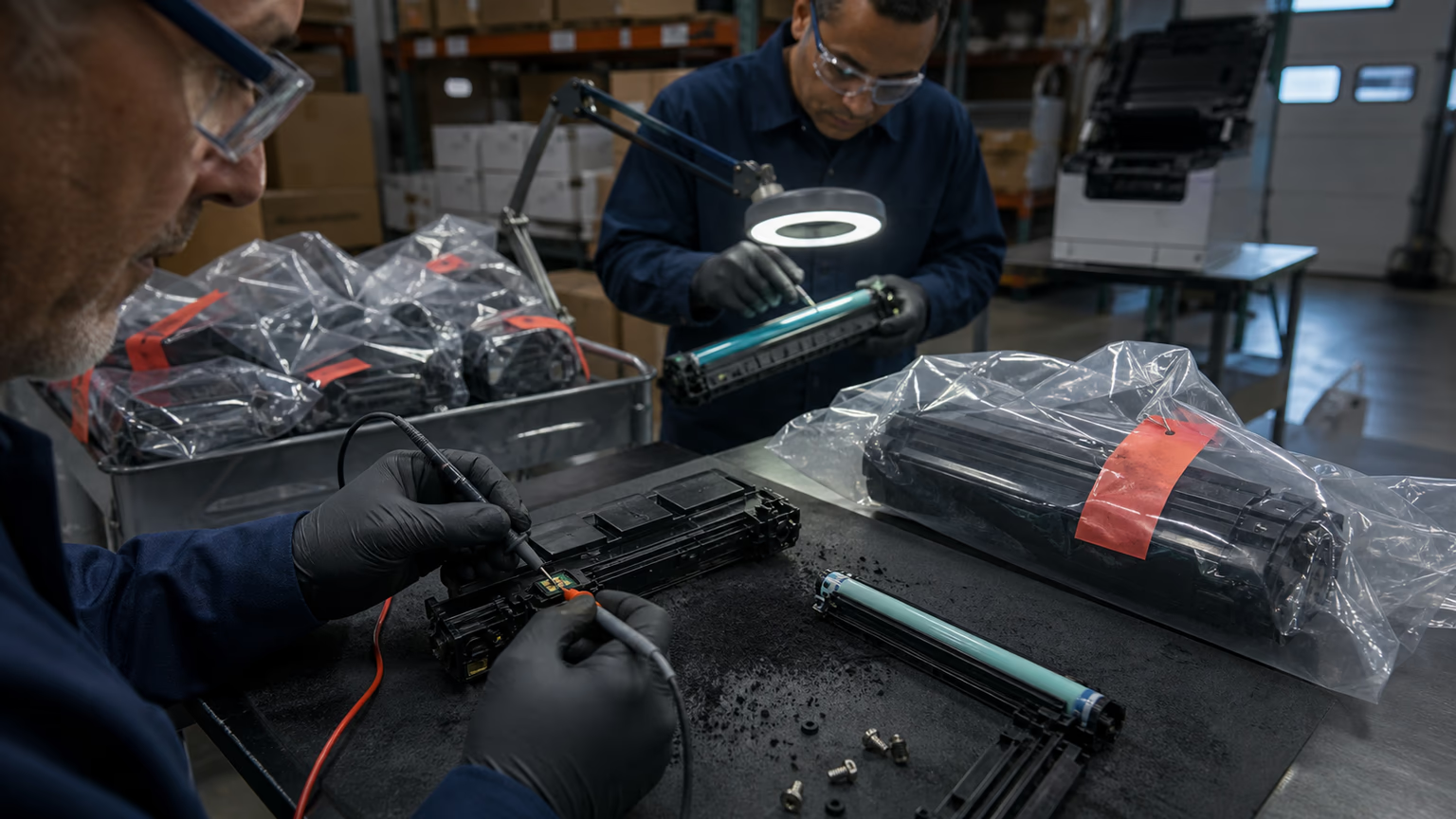
Quality defects in wholesale toner cartridges show up as streaking, backgrounding, premature low-yield warnings, leaking toner, or drum damage.
These problems trace back to toner formulation, component sourcing, or poor sealing.
Compatibility failures are increasingly common as printer manufacturers push firmware updates.
A compatible toner for mixed printer fleets that worked last month may suddenly trigger a non-recognition error after a device update.
User error includes improper storage, rough handling, or failure to remove protective seals. Collect a clear reason code for every return, along with printer model, firmware version, and cartridge batch number. This data is the first step toward identifying patterns and preventing future issues.
How Buyers Should Evaluate Toner Suppliers Before Signing a Contract
The cheapest wholesale toner cartridge supplier is rarely the cheapest when you account for total cost of returns. A disciplined supplier qualification looks beyond price per unit to quality control, compatibility expertise, and return policy rigor. Key criteria for B2B buyers include:
- Documented batch-level quality control and defect rate reporting. Ask for yield test data and defect rates per million units.
- Compatibility testing across specific printer models and current firmware versions. The supplier should know which chips work and which fail after updates.
- A clear return policy that includes root-cause analysis and corrective action reports. You should not have to fight for credits.
- Willingness to provide sample lots for in-house stress testing before large orders. A supplier that refuses samples is hiding something.
- Technical support capability for field diagnosis. When a customer calls, you need a supplier that can help you troubleshoot remotely.
- Transparent sourcing of components such as OPC drums, chips, and toner. A low-cost cartridge can hide a cheap drum that wears out early.
Before signing a contract, run sample cartridges in your own high-volume printers and on multiple fleet models. Pay attention to print quality after hundreds of pages, not just the first test page. This hands-on verification reveals defects that supplier documentation may not mention.
Incoming QC and Warehouse Checks That Stop Returns Before They Ship
Even with a reliable supplier, your warehouse can be the last line of defense.
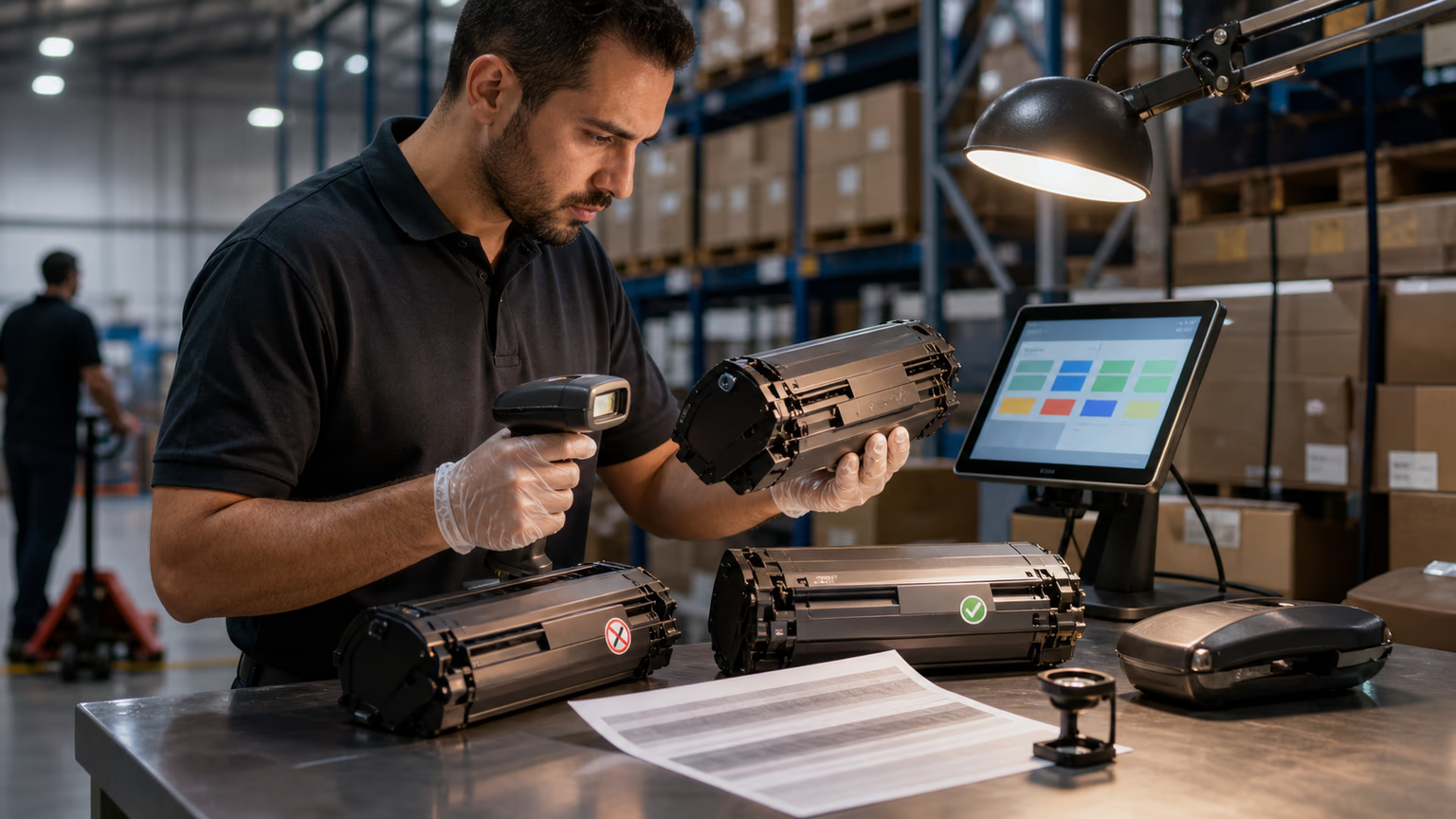
A structured incoming QC process catches defective or incorrect cartridges before they reach customers.
Start with a sampling protocol based on risk: high-volume SKUs get more frequent inspection, while problematic lots get full visual checks.
Inspect packaging and seals on incoming shipments.
Transit damage is a common cause of returns for laser printer toner cartridges.
Look for crushed boxes, broken seals, or loose components.
Verify chip versions against the latest firmware requirements for your customer fleet.
An outdated chip may work in your test printer but fail after an end user installs a recent update.
Maintain a checklist for warehouse staff that includes SKU verification, chip revision, and packaging integrity.
Weigh a sample of returned cartridges to detect premature toner depletion; if many returns show low weight, the yield claim may be inflated.
Compatibility and Firmware Risk Management for Mixed Printer Fleets
Mixed printer fleets are a fact of life for distributors and MPS providers.
A customer may have dozens of printer models from multiple manufacturers, each with its own toner cartridge platform.
Managing compatibility risk is essential to reducing no-fault returns.
Printer manufacturers regularly release firmware updates that can block previously working compatible chips.
A cartridge that performed fine last quarter may suddenly stop being recognized after the customer updates their device.
Build a compatibility matrix that maps each SKU to the specific printer models and firmware versions it has been tested against.
Update this matrix every time a new firmware version appears, and share it with your sales team.
When a firmware-related return occurs, document the exact printer model, firmware version, and chip revision.
Send this to your supplier and demand a chip update or revised compatibility list.
Suppliers that proactively monitor firmware changes are far more valuable than reactive ones.
Building a Return Data Feedback Loop to Improve Future Orders
Return data is useful only if collected consistently.
A standardized reason code system turns unstructured complaints into actionable intelligence.
Log every return with defect type, printer model, firmware version, cartridge batch number, and customer symptom.
Track returns by SKU and supplier.
If one SKU has a return rate far above the fleet average, investigate the supplier or cartridge design.
If a particular printer model appears often, the issue is likely compatibility.
Use this data in supplier reviews. Bring return rate trends and ask for corrective action plans. A good supplier will use the data to improve; a poor supplier will deflect blame. Shift volume away from SKUs with persistent problems. Adjust inventory strategy: keep more safety stock for higher-risk SKUs or discontinue them if the supplier cannot resolve the issue.
Negotiating Supplier Agreements That Protect Your Margin
A well-written supply contract is your strongest tool for shifting return risk away from your P&L.
Do not sign an agreement without clauses that hold the supplier accountable.
Set an agreed maximum return rate and define what happens when it is exceeded: chargeback terms or automatic credits.
Require root-cause analysis and corrective action reports for significant return events.
This forces the supplier to investigate instead of simply shipping a replacement.
Include a sample lot approval process before mass production.
You should have the right to reject a batch that fails your QC or stress testing.
The contract should state no hidden restocking fees and transparent credit processing.
Finally, require the supplier to commit to firmware monitoring and chip revisions.
This holds them responsible for compatibility failures caused by post-shipment firmware updates.
Service and Support: Turning Returns into Technical Resolutions
Not every return complaint requires a physical return.
Many no-fault returns can be resolved remotely with proper technical support.
Before authorizing a return, use a field diagnosis protocol: check installation, verify printer model and firmware version, confirm the correct SKU, and rule out environmental factors.
Leverage your supplier's technical support for difficult cases.
A good supplier can guide your technician to a solution without shipping a replacement, reducing return volume and keeping the customer's printer running faster.
Educate your customers on proper toner handling.
Instructions about storage temperature, removing seals, and installing cartridges prevent a share of user-related returns.
Provide a checklist with every shipment.
When a return is unavoidable, gather data: ask the customer for the exact symptom, photos, and retaining the cartridge.
This information feeds your return data loop and helps identify systemic issues.
FAQ
What is an acceptable toner return rate for distributors?
An acceptable rate depends on your product mix and fleet environment, but the goal should be to drive returns as close to zero as possible. A rate that seems low on paper can still destroy margin when you add freight, labor, and lost customer trust. Use your own historical data to set a baseline and require suppliers to meet that standard.
How can I tell if a toner return is due to cartridge quality or printer fault?
Collect structured data on every return: printer model, firmware version, cartridge batch number, and symptom. Test the suspect cartridge in a known-good printer and test a known-good cartridge in the suspect printer. This cross-testing quickly isolates whether the issue is the cartridge, the printer, or the interaction between them.
Do compatible toner cartridges have higher return rates than OEM?
Not inherently. The return rate depends on the manufacturer's quality control, component sourcing, and chip compatibility. A well-built compatible toner cartridge can match or exceed OEM reliability, while a poorly made OEM alternative can fail frequently. Evaluate each supplier on its own merits rather than assuming all compatible products are riskier.
How can I test toner cartridges before shipping to customers?
Run sample cartridges in your own high-volume printers for at least a few hundred pages, checking for streaking, background, and yield. Test the chip communication on multiple printer models and current firmware versions. Inspect packaging and seals for transit damage, and use a pre-dispatch checklist to verify SKU and chip revision.
What should a distributor include in a toner supply contract to reduce return risk?
Include an agreed maximum return rate with chargeback or credit thresholds, a requirement for root-cause analysis and corrective action reports, a sample lot approval process, no hidden restocking fees, and a supplier commitment to firmware monitoring and chip revisions. These clauses shift risk back to the supplier and protect your margin.
Conclusion
Reducing toner returns before they destroy your margin is not about a single heroic fix; it is about building a disciplined system across supplier qualification, incoming QC, compatibility management, return data analysis, contract negotiation, and field service. Each step reduces the probability that a defective or incompatible cartridge reaches a customer.
For B2B distributors and printer service companies, the payoff is significant: lower reverse logistics costs, fewer service interruptions, stronger customer relationships, and higher retained profit on every cartridge sold.
Start by auditing your current return data and supplier agreements.
Identify the root causes behind your most frequent returns, implement a reason code system, and negotiate stronger terms with suppliers who demonstrate quality and compatibility discipline.
The margin you protect may be the difference between a good quarter and a great one.