
Why OEM Pricing Pressure Is a Margin Trap, Not a Market Reality
Many B2B toner distributors operate under a persistent illusion: that their profitability is dictated by the price the printer manufacturer sets.
Every OEM price increase, every rebate threshold adjustment, and every new volume target feels like a tightening noose.
But the real trap is not the price itself; it is the assumption that there is no alternative.
Distributors who accept this as a market reality are leaving money on the table and slowly ceding control of their own margin structure.
OEM pricing strategies are designed to extract maximum value from the channel. Volume rebates create a dependency that discourages switching, while annual price hikes transfer margin risk to the distributor. The result is a shrinking net margin on every cartridge sold, even when top-line revenue appears stable. Over time, this quietly erodes the financial health of the distribution business.
Compatible toner, when sourced and qualified properly, is not a low-quality cheap clone. It is an engineered alternative that can restore margin and give you negotiating leverage. The first step is to stop seeing OEM pricing as an external force and start seeing it as a variable you can influence. A strategic distributor views compatible toner as a margin-protection tool, not a commodity gamble.
- OEM rebates lock distributors into volume commitments that erode flexibility.
- Annual price increases compress margins without improving distributor value.
- Compatible toner provides a credible alternative that changes the negotiation dynamic.
- Margin recovery is possible without sacrificing print quality or service levels.
Decoding the Real Cost of Toner: TCO Beyond the Cartridge Price
The sticker price of a toner cartridge is the least useful number for a distributor. What matters is total cost of ownership: the full cost of keeping a printer running and a customer satisfied over the life of the cartridge. That includes page yield, failure rate, service calls, returns, and the administrative burden of handling complaints.
OEM cartridges may have a higher unit price but predictable page yield and low failure rates. Compatible cartridges may have a lower unit price but higher variability if sourced from unqualified suppliers. The distributor's job is not to pick the cheapest cartridge; it is to pick the cartridge with the lowest total cost per page across the fleet, including all hidden costs.
A practical TCO calculation starts with actual page yield under real office conditions, not laboratory specifications.
Then add the cost of a service call per cartridge failure, the cost of a return shipping label, the cost of customer downtime, and the cost of your support team handling a complaint.
When all these are included, a small difference in unit price can be swamped by a single extra service call.
Distributors should build a simple spreadsheet that captures these variables for each printer model and toner source, using data from their own service history rather than vendor marketing sheets.
- Define total cost per page as cartridge price divided by verified page yield.
- Add estimated service cost per failure based on your historical service call rate.
- Include return processing and replacement logistics for defective cartridges.
- Compare OEM and compatible using the same real-world fleet data, not vendor claims.
Quality and Compatibility Risks in Compatible Toner — And How to Control Them
Compatibility and quality failures are the two biggest reasons distributors hesitate to switch to compatible toner. These fears are not irrational; they are based on real experiences with untested cartridges. But the risks are well understood and can be managed through proper technical evaluation and supplier qualification.
Toner quality depends on particle size distribution, charge control, and fusing temperature compatibility.
If the toner particles are too large or carry the wrong charge, you get backgrounding, poor fusing, or premature drum wear.
Inferior drum and wiper blade materials can reduce cartridge life and cause leaks.
A qualified supplier will have statistical process control data for every batch and will share it with you.
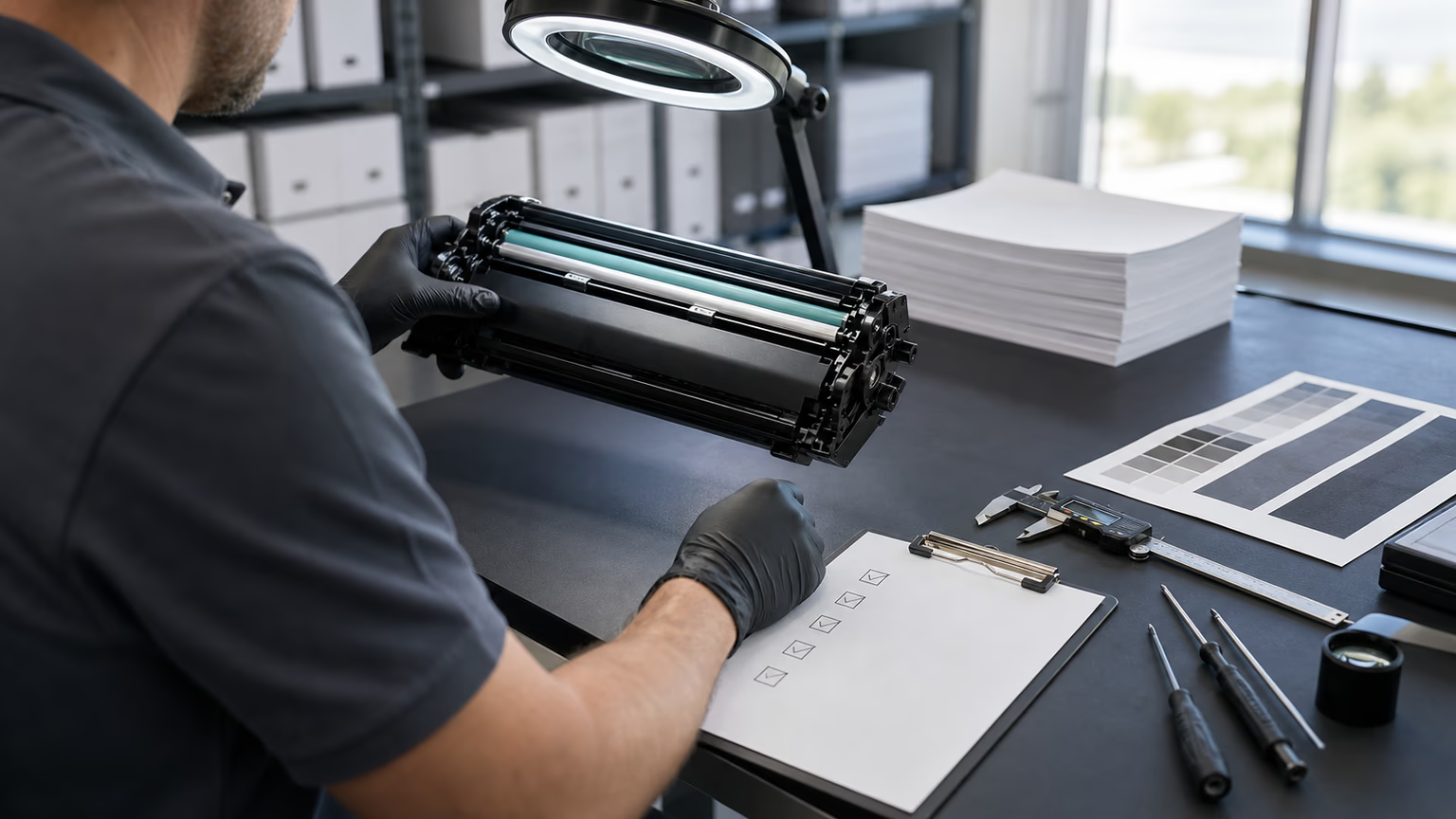
Look for evidence of incoming material inspections for drums, blades, and toner.
Also test toner fusing at different temperature settings; some compatible toners require a higher fusing temperature that can shorten fuser life.
Smart chip compatibility is the other major risk.
Printer manufacturers periodically release firmware updates that can block non-OEM chips.
A responsible compatible toner supplier monitors these updates and provides chip revisions quickly.
Before you commit to a supplier, test cartridges on your current firmware versions and ask how the supplier handles future firmware changes.
The supplier should have a documented response process, not a vague promise.
Also verify that the chip reports toner levels correctly, because false low-toner warnings are a common source of user frustration and unnecessary service calls.
- Request batch consistency data for toner particle size and charge.
- Verify chip compatibility with the printer models your customers actually use.
- Ask about the supplier's process for responding to firmware updates.
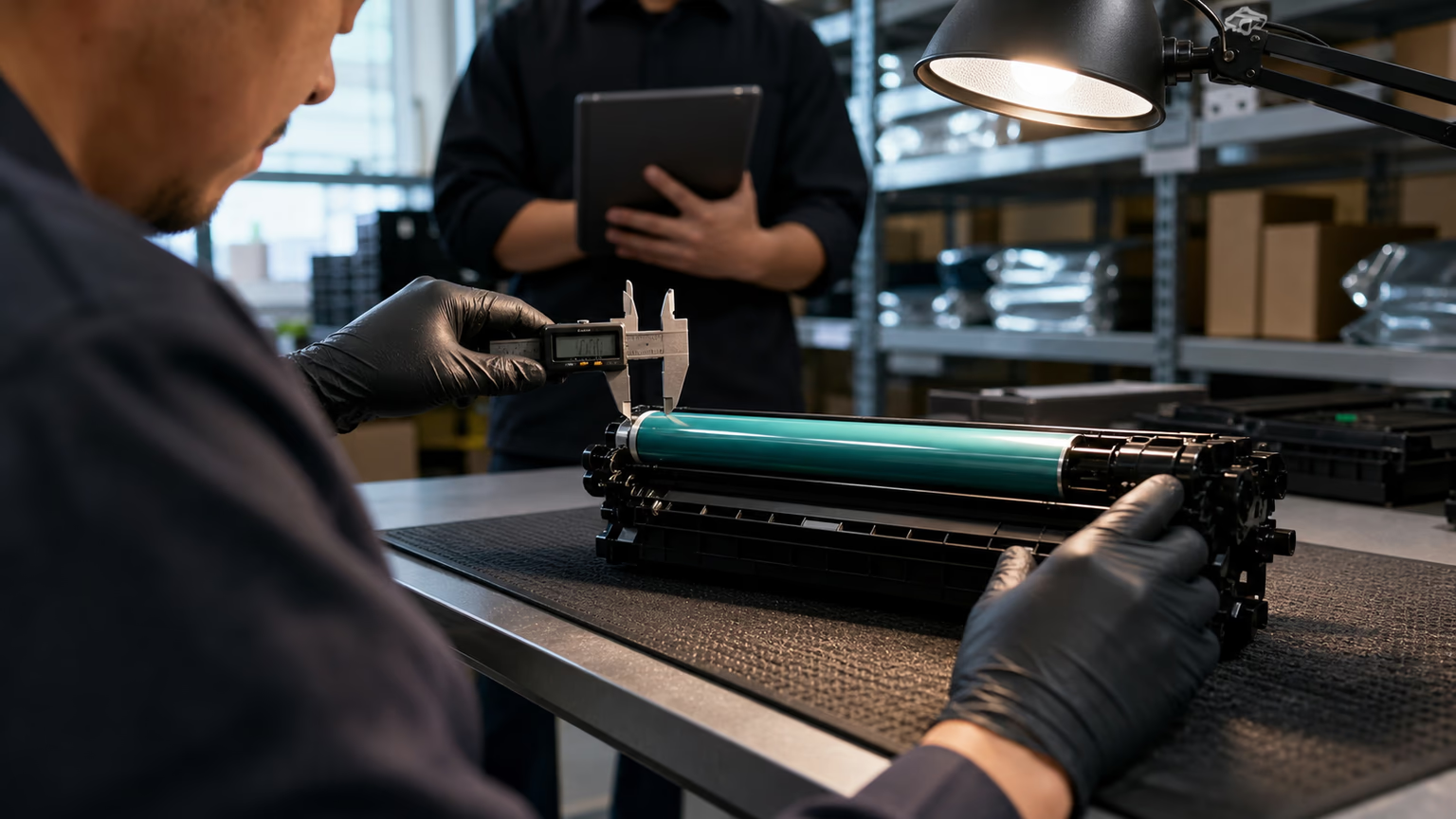
- Inspect cartridge construction: drum, wiper blade, seals, and fill level.
Building a Supplier Evaluation Framework That Protects Your Business
Selecting compatible toner suppliers is not a procurement transaction; it is a risk management decision. The supplier you choose becomes a partner in your service delivery. Their failures become your service calls, your customer complaints, and your reputation damage. That is why you need a rigorous evaluation framework that goes well beyond price per cartridge.
Start with documented quality management.
A supplier should be able to show batch traceability, incoming material inspections, and final product testing.
Ask for a sample of their quality control records, not just a certificate on the wall.
If they are unwilling to share production data, that is a red flag.
You are not buying a box; you are buying a controlled process.
A supplier that cannot trace raw materials back to their source is more likely to have inconsistent batches.
Warranty and liability coverage matter, but avoid vague promises.
Ask for a written response process: how quickly they ship replacements, who pays for return shipping, and what happens if a cartridge damages a printer.
A supplier that hesitates to cover printer damage from a verified cartridge defect is a supplier you cannot afford to use.
Also evaluate their technical support capability and willingness to collaborate on firmware issues.
The best suppliers treat distributor feedback as an opportunity, not a nuisance.
- Require batch traceability and statistical process control data.
- Ask for documented page yield testing under real office conditions.
- Review the warranty claims process and response times in writing.
- Verify chemical safety documentation for compliance in your target markets.
- Assess production capacity and lead time stability before committing.
How to Sell the Switch: Procurement Logic for Resellers and MPS Providers
Moving to compatible toner requires an internal sale and an external sale. Your procurement team may resist due to past quality issues, while end customers may question non-OEM cartridges. To win both battles, you need a data-driven story focused on total cost, service confidence, and supply chain resilience.
The most persuasive argument is a TCO comparison across your top printer models, showing cost per page and service call history.
For customers, frame the switch as a benefit: lower cost per page without compromising quality because you have already tested the cartridges.
Offer a pilot program for a subset of their fleet.
If they see consistent output and no increase in service issues, their hesitation will fade.
A structured pilot de-risks the transition for everyone and gives your sales team concrete data to answer objections.
- Present TCO data comparing OEM and compatible on identical printer fleets.
- Emphasize that you have performed compatibility and quality testing before offering the product.
- Offer a limited pilot with a small group of trusted customers.
- Track and share page yield, failure rate, and service call data from the pilot.
Managing Service and Uptime with Alternative Toner
Service teams often resist compatible toner because they fear an increase in call volume.
That fear can be managed with proper training, a feedback loop, and clear escalation paths.
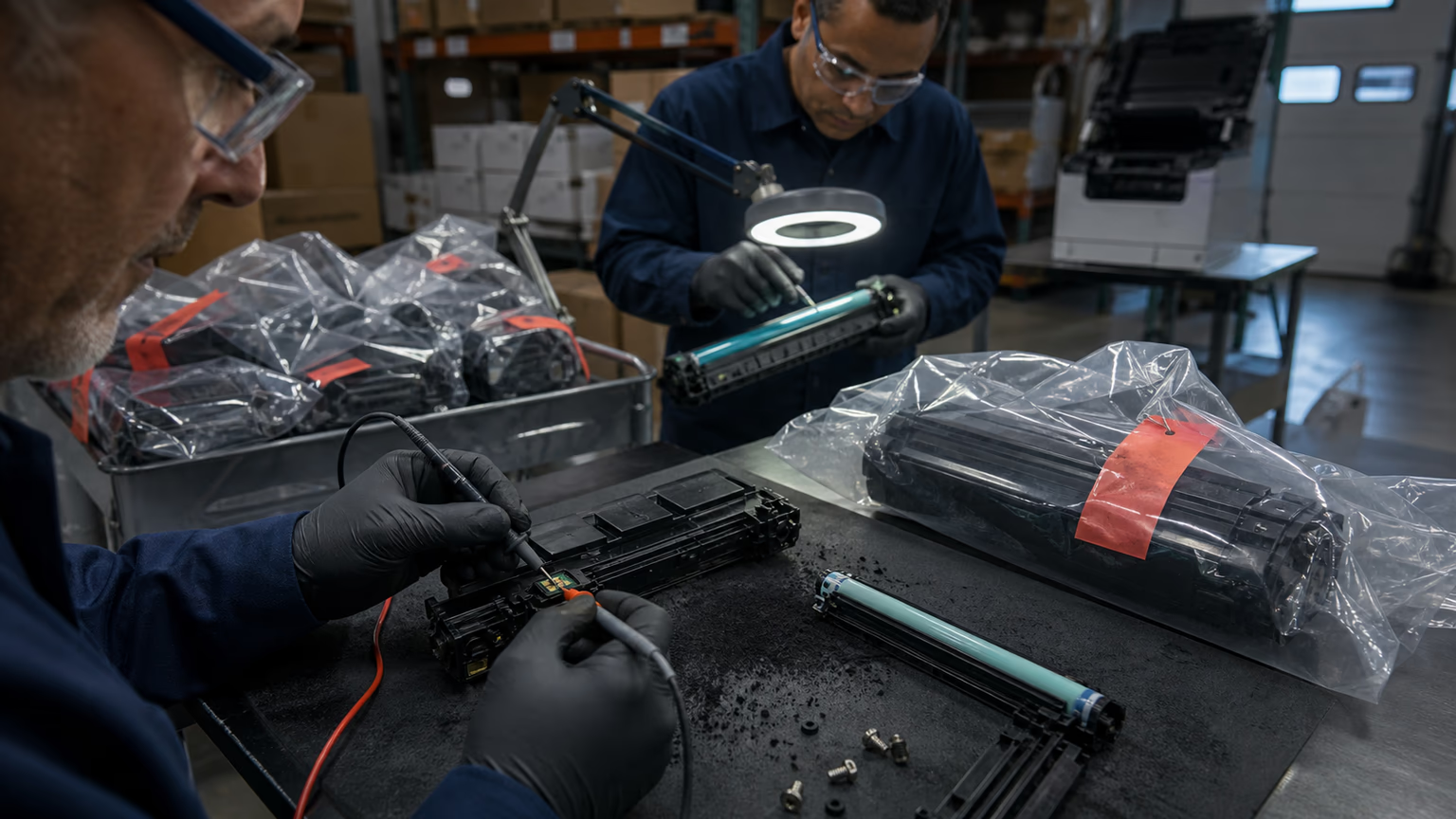
The first step is to train technicians on the common failure modes of alternative toner: print defects like backgrounding or ghosting, error messages from chip failures, and leaks.
Most of these issues are visible and can be diagnosed quickly.
Set up a simple tracking system for cartridge-related service calls.
Record the printer model, cartridge SKU, batch number, and symptom.
This data allows you to spot problem batches early and share that information with your supplier.
Without this feedback loop, you are flying blind and repeating the same mistakes.
Remote monitoring data from managed print software can also flag cartridges that report low toner too early or trigger repeated errors before a visible defect appears.
Establish a clear escalation path with your supplier before you need it. Know who to contact for a batch quality issue, how quickly they will respond, and what replacement process they follow. If your service team knows that a defective cartridge can be replaced quickly and without argument, they will be more willing to support the transition.
- Train technicians to recognize common compatible toner failure symptoms.
- Log cartridge-related service calls with printer model, SKU, and batch number.
- Share quality issue trends with the supplier monthly.
- Use remote monitoring data from MPS platforms to detect abnormal cartridge behavior early.
Negotiating with OEMs vs. Diversifying to Compatible Lines
You do not need to abandon OEM cartridges entirely to benefit from compatible alternatives. In fact, maintaining a mixed portfolio is often the strongest strategic position. When you have a credible alternative, your OEM negotiations change from a one-way ultimatum to a two-way conversation.
OEM volume rebates are valuable, but they come with strings attached: minimum purchase commitments, exclusivity clauses, and annual growth targets.
Before signing any contract, review the terms for anything that restricts your ability to source alternative cartridges.
Some agreements include penalties for carrying competing lines.
You should negotiate to remove those clauses or reduce their impact.
Also watch for right of first refusal or automatic renewal clauses that make switching difficult; legal review is essential before you sign.
A balanced portfolio approach works well: keep OEM cartridges for printers where compatibility risk is high or customer preference is strong, and source qualified compatible cartridges for high-volume models where the TCO advantage is clear. This allows you to protect margins without betting the entire service business on a single supplier type.
- Review OEM contracts for exclusivity clauses and volume penalties.
- Use compatible toner data as leverage in OEM price negotiations.
- Maintain OEM supply for complex or low-volume printer models.
- Shift high-volume, low-complexity models to qualified compatible alternatives.
Creating a Resilient Toner Supply Chain Across Multiple Markets
Distributors that operate across borders face additional complexity: import regulations, logistics reliability, and geopolitical risks. A single-source dependency on any supplier, whether OEM or compatible, leaves your business exposed. Building resilience means diversifying suppliers, maintaining inventory buffers, and understanding local compliance requirements.
Before importing compatible toner into a new market, verify that the cartridges comply with local environmental and safety regulations.
Some regions require specific documentation for chemical content.
Work with a customs broker or compliance specialist to avoid shipments being held at the border.
Also assess the supplier's production location and its exposure to shipping disruptions.
Customs delays can be minimized by working with suppliers that have experience in your region and can provide necessary documentation proactively.
Maintain at least two qualified suppliers for critical SKUs and set safety stock levels based on lead time variability, not just average demand.
- Map regulatory requirements for toner cartridges in each target market.
- Evaluate supplier production locations and logistics reliability.
- Maintain dual suppliers for high-turnover compatible SKUs.
- Set safety stock levels based on lead time variability, not just average demand.
Action Plan: From First Sample to Rollout
You do not need to make a full-scale switch overnight. A disciplined, phased approach reduces risk and builds internal confidence. Start with a limited set of printer models and a small group of customers. Run a pilot for 30 to 60 days, collect real-world data, and then decide whether to expand.
During the pilot, track page yield, failure rate, service call frequency, and customer satisfaction.
Compare these metrics against your OEM baseline for the same printer models and usage patterns.
If the compatible toner matches or exceeds the baseline, you have a strong case for broader adoption.
Include a mix of high-volume and low-volume printers to understand performance across different usage scenarios.
Before expanding, negotiate volume pricing and warranty terms based on your pilot data. Train your sales and service teams on the new product line and the documented quality story. A successful rollout is not just about the toner; it is about aligning your entire organization around a data-driven purchasing decision.
- Select three to five printer models that represent your highest volume and lowest compatibility risk.
- Run a 30 to 60 day pilot with a small, trusted customer group.
- Track page yield, failure rate, and service calls against the OEM baseline.
- Negotiate volume pricing and warranty terms before a full rollout.
- Train sales and service teams on the new cartridges and documentation.
FAQ
How do I know if compatible toner will perform as well as OEM in my customers' printers?
Performance depends on toner formulation, cartridge construction, and chip compatibility. You should not rely on supplier claims alone. Request sample cartridges for your highest-volume printer models and run a controlled pilot. Measure page yield, print density, backgrounding, and error rates against your OEM baseline. Only expand after the pilot data shows consistent results.
What are the real cost differences between OEM and compatible toner when service and yield are included?
The unit price is only one part of the total cost.
How can I protect against firmware updates that block compatible cartridges?
Firmware blocking is a real risk, but it can be managed.
What supplier qualifications should I demand for wholesale compatible toner?
Look for documented quality management, batch traceability, and statistical process control data.
Can compatible toner help me compete with online discounters?
Yes, but only if you use it strategically.
Conclusion
OEM pricing pressure is not an immutable force. Toner distributors can protect margins, reduce service risk, and build supply chain resilience by treating compatible toner as a strategic alternative rather than a cheap fallback. The path requires disciplined TCO analysis, rigorous supplier qualification, and phased pilot testing.
The distributors that succeed will be those who stop comparing cartridges by invoice price and start comparing them by total cost of ownership. They will qualify suppliers based on documented quality control and firmware response, not marketing promises. They will train service teams, track failure data, and negotiate from a position of portfolio strength.
Compatible toner, when sourced and managed correctly, gives distributors a credible answer to OEM pricing pressure.
It restores margin flexibility, reduces single-source dependency, and allows you to serve customers with a value-based offer: lower total cost per page without sacrificing print quality or uptime.
The decision is not about choosing the cheapest cartridge; it is about choosing a sustainable profit model.