Why a Toner Supplier Checklist Is a Profit Protection Tool, Not Paperwork
For toner distributors, supplier selection is a direct lever on service margins and customer retention. A structured checklist transforms a routine procurement exercise into a risk management instrument that exposes hidden costs before they hit the P&L.
Many distributors treat the checklist as a formality, filling in boxes from a supplier brochure. In reality, every unchecked item is a potential margin leak later. A defective cartridge discovered after deployment costs far more than the savings from a lower unit price.
- Quality failures often create downstream costs that exceed initial cartridge savings
- Service contracts depend on predictable print output and minimal interventions
- A formal checklist creates objective comparison criteria across multiple suppliers
Hidden Costs of Choosing the Wrong Toner Supplier
Selecting a toner supplier based only on per-cartridge price can quietly destroy distributor margins. When a low-cost cartridge fails early or prints inconsistently, the distributor absorbs returns, reprints, and extra service visits that were never part of the original calculation.
Stockouts and lead time delays have a compounding effect. Emergency purchases at higher prices, missed response commitments to clients, and the labor cost of expediting all eat into the margin that the initial discount promised.
The most damaging hidden cost is end-customer churn from recurring print quality issues. A lost service contract cannot be recovered by a few cents saved on toner, and acquiring a new customer is always more expensive than retaining an existing one.
Price per Page vs. Price per Cartridge: The Real Unit Economics
The most common procurement mistake is comparing cartridge prices without normalizing for yield. A cartridge that costs less upfront but produces significantly fewer pages can actually raise the total cost per printed page, which is the metric that matters for service contracts.
Yield consistency across batches is what determines whether a service contract is profitable. A supplier that claims a high yield but delivers variable results forces the distributor to overstock and over-service, eroding the per-page margin.
Demand yield data at common page coverage levels, such as 5% and 20%. Without transparent yield information from the supplier, any cost-per-page calculation is guesswork and can hide a losing proposition.
Quality Consistency Checks: What to Demand Before Signing
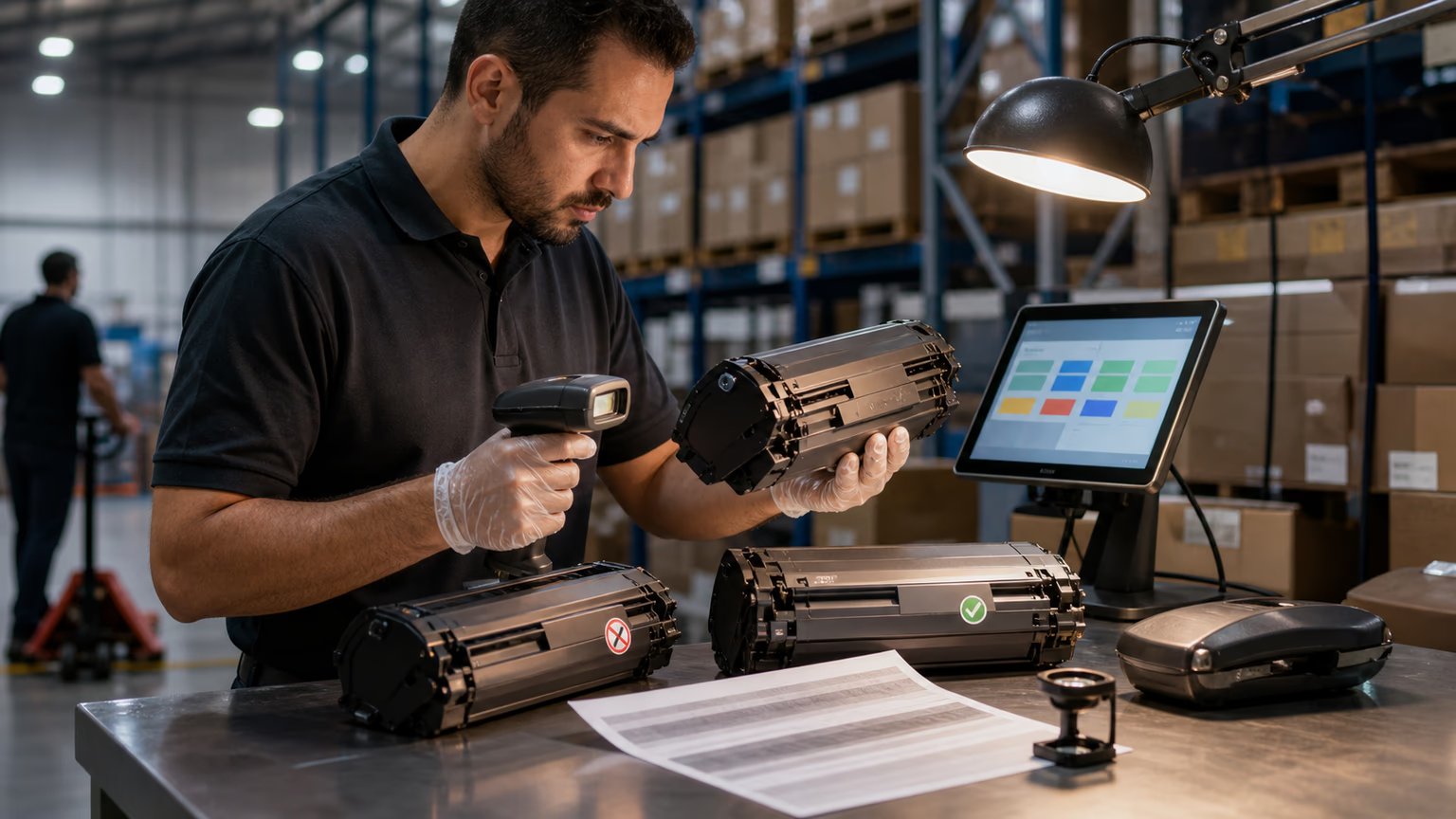
Toner quality cannot be judged from a datasheet. Distributors should demand batch quality reports for the last several production runs to evaluate variance in toner formulation and print performance. A supplier that cannot provide these reports is signaling a lack of quality control.
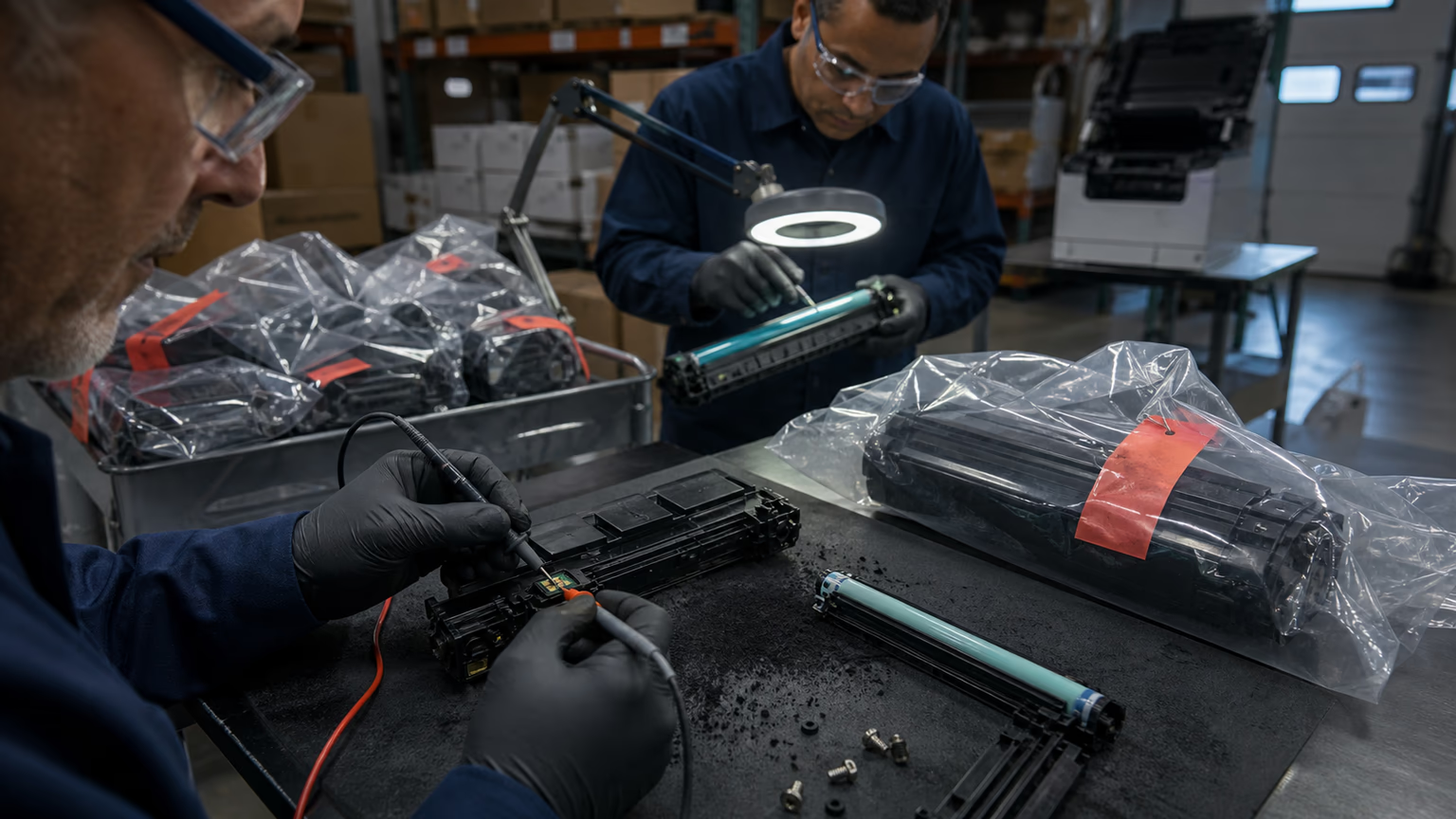
Before signing any volume agreement, request sample cartridges for at least three high-volume printer models in your fleet. Run controlled tests at different page coverage levels and inspect for streaks, ghosting, leakage, and fusing defects. These practical checks reveal more than any specification sheet.
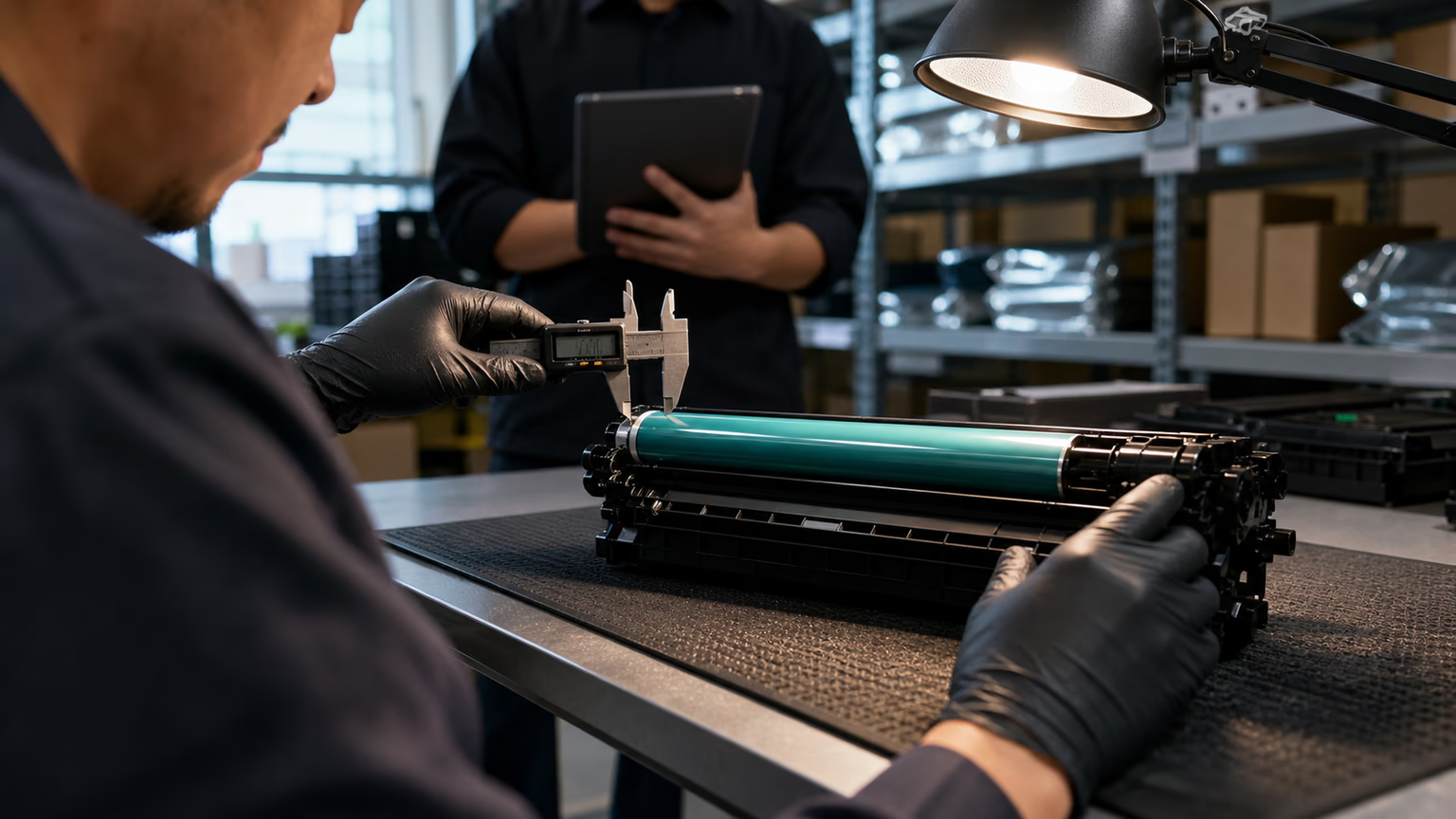
Pay special attention to premature wear on drums or developer rollers in compatible cartridges. These components directly affect page yield and print quality, and failures are often not covered by basic replacement warranties, leaving the distributor to absorb the cost.
Compatibility and Firmware Risks: Testing for Real-World Printer Fleets
The single biggest operational risk with compatible toner is firmware recognition failure. Printer manufacturers regularly release firmware updates that can block aftermarket chips without warning. A cartridge that worked yesterday may stop working tomorrow if the supplier has not tested against recent updates.
A reliable supplier must test its chips against current and recent firmware versions for the specific printer models you service. Physical fit is not the same as functional compatibility, and a supplier that cannot demonstrate this testing poses an unacceptable risk.
Color toner adds another layer of complexity: color matching inconsistencies can ruin a customer's branded documents and trigger complaints. Regional printer model variations also require explicit validation, not assumptions based on a similar model name.
Supply Chain Reliability and Order-to-Delivery Performance
Lead time consistency is more important than a single fast delivery. Distributors need to know that the supplier can meet ongoing demand without forcing emergency orders at premium prices. A supplier that delivers on time once but fails regularly will disrupt your service commitments.
Evaluate the supplier's production capacity and inventory buffers. Ask direct questions about component sourcing for chips and raw toner, because a secondary supply disruption can become your stockout. A supplier with multiple production lines or buffer stock is far less likely to leave you stranded.
A pilot order with a limited SKU range and moderate volume is the safest way to test order-to-delivery time, packaging condition, and accuracy of labeling. This real-world test reveals problems that a supplier's brochure will never mention.
Service, Warranty, and Returns: The Support Behind the Box
The support behind the box determines how quickly a distributor can resolve defects and protect customer relationships. A clear return and credit process reduces financial exposure on defective batches, while an ambiguous policy pushes risk onto the distributor.
Technical support availability is critical for complex printer fleets. Before signing, submit a complex compatibility question and measure how fast and how thoroughly the supplier responds. A supplier that cannot provide competent technical support is a liability, not a partner.
Warranty terms must be explicit and enforceable across borders. Look for clear timelines for credit or replacement, and avoid suppliers whose warranty exclusions are so broad that they effectively shift all defect risk to the distributor.
Building a Weighted Supplier Scorecard: From Checklist to Decision
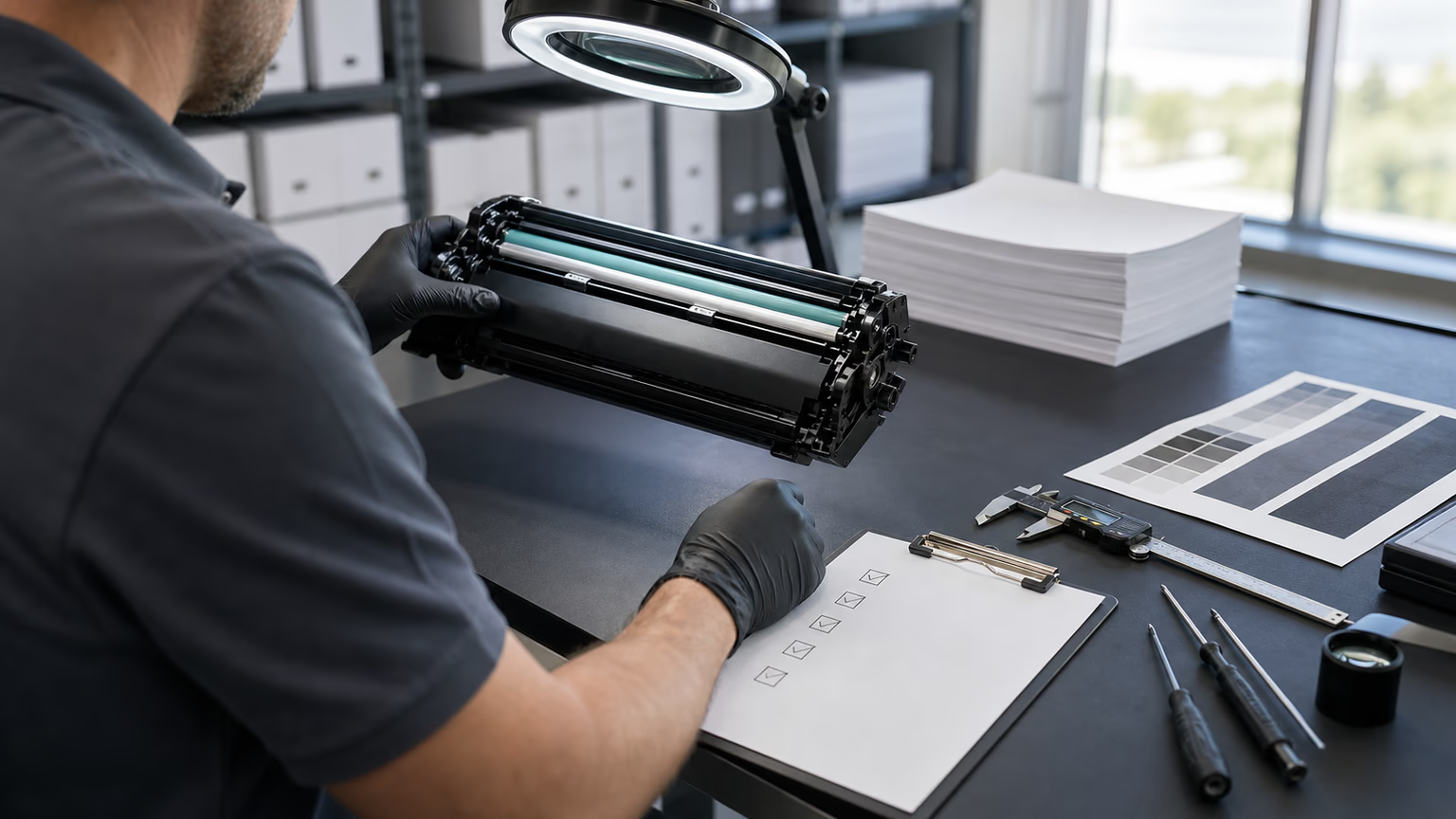
A supplier scorecard turns subjective impressions into comparable data. Assign weights to criteria based on your business priorities, whether quality, cost, or lead time. For example, if you manage high-value service contracts, quality consistency and firmware compatibility should carry more weight than per-cartridge price.
Use a numeric scale for yield consistency, technical support response, defect rate, and order accuracy. This makes it easier to compare suppliers on total value rather than price alone, and it removes emotional bias from the decision.
Re-evaluate suppliers periodically with the same scorecard. A supplier that performed well initially may slip in quality or responsiveness as volume grows, and a scorecard provides an objective basis for renegotiation or replacement.
Implementation: Running a Pilot Order and Escalation Plan
Onboarding a new toner supplier should be a phased process, never a sudden switch for your entire fleet. Start with a limited SKU range and moderate volume to validate performance without risking your biggest customers.
Define success metrics before the pilot: maximum defect rate, minimum average page yield, on-time delivery percentage, and support response time. Measure these on every order and compare against the supplier's stated claims.
Establish an escalation path for supply or quality issues before scaling up. Agree on who to contact, what documentation is needed, and how quickly a credit or replacement will be issued. This clarity prevents disputes and keeps your service operations running smoothly.
FAQ
What is the most important factor when choosing a toner supplier?
The most important factor is consistency across quality, yield, and supply, not just unit price. A supplier that reliably delivers cartridges that perform as specified protects your service contracts and reduces hidden costs.
How can distributors verify compatible toner quality without a lab?
Distributors can verify quality through controlled print tests at various page coverage levels, inspection for common defects like streaking or leakage, and review of batch quality reports from the supplier. These methods catch most performance issues without laboratory equipment.
What should be included in a toner supplier audit checklist?
A comprehensive checklist should cover quality assurance processes, yield consistency data, chip firmware compatibility testing, transparent cost structure, warranty and return policy, lead time reliability, technical support capability, and packaging quality.
How do printer firmware updates affect compatible toner cartridges?
Printer manufacturers release firmware updates that can block aftermarket chips without notice. A compatible toner cartridge must have a chip that has been tested against current and recent firmware versions to continue working after updates.
What red flags indicate a toner supplier may not be reliable for long-term distribution?
Red flags include unwillingness to share batch quality reports, lack of transparent yield data, no clear return or credit policy, slow technical support response, and inconsistent lead times. Any supplier that avoids these questions or offers vague answers is likely to create operational problems later.
Conclusion
A toner supplier checklist is not a bureaucratic step; it is a strategic tool for protecting distributor margins and service reputation. By shifting the focus from per-cartridge price to total cost per page, quality consistency, firmware compatibility, and supply reliability, distributors can avoid the most common downstream failures.
The practical checks and supplier scorecard outlined here provide a framework that any B2B toner distributor can implement, regardless of fleet size. Start with a pilot order, demand transparent data, and build escalation paths before scaling up. This disciplined approach turns supplier selection into a competitive advantage rather than a recurring risk.