The Hidden Cost of Price-Only Procurement
For many B2B distributors, the initial appeal of the cheapest wholesale toner cartridges is obvious: lower unit cost improves the bid on paper. However, the true cost of a toner cartridge is not the purchase price; it is the total cost of ownership once that cartridge enters your warehouse, ships to a customer, and either works reliably or generates a return, a service call, or a lost account.
When procurement teams are measured purely on purchase price variance, they are incentivized to ignore batch-level quality differences.
A batch that is slightly cheaper to produce often uses less stable raw materials or skips compatibility testing.
Those hidden compromises do not appear on the invoice.
They appear months later as intermittent print defects, cartridge rejections, and margin erosion from credit memos and reverse logistics.
The pattern is consistent across the industry: a supplier wins on price, then quietly changes a component or toner formulation without notice. Because the distributor lacks batch traceability, the resulting failures cannot be isolated, and the entire supplier relationship becomes a liability. Price-only procurement is not a savings strategy; it is a deferred cost strategy.
What Batch Traceability Actually Means in Toner Supply
In the context of compatible printer toner, batch traceability is more than a sticker with a production date. It is a documented chain of information that connects a specific batch of cartridges to its raw materials, manufacturing process, quality control tests, and compatibility verification records.
For every batch of wholesale toner cartridges, a traceable supplier should be able to provide: the batch ID and production date, raw material lot numbers, toner formulation and chip firmware versions, quality control test results for yield, density, background, and fusing, and compatibility test evidence for the exact printer models in your catalog.
This documentation serves two purposes. First, it allows a distributor to verify that the shipment matches the sample that was originally approved. Second, when a problem occurs, it enables root-cause analysis and targeted quarantine instead of a costly recall of the entire inventory.
Without this level of documentation, a batch is effectively a black box. You cannot prove due diligence, you cannot enforce supplier contracts, and you cannot protect your customers from a known defect.
How Untraceable Batches Create Operational Nightmares
Imagine receiving a container of laser printer toner cartridges that all share the same generic SKU but have no batch ID. Two weeks later, your service team starts receiving calls about streaking and background shading on the same printer model. Because you cannot segment inventory by production date or raw material lot, you have no way to know which customers received the defective units.
The operational consequences are immediate. Without batch-level recall capability, a single bad batch can affect dozens of customers simultaneously. Your warehouse team cannot quarantine the problem stock because they cannot identify it. Every returned cartridge becomes a diagnostic puzzle, and your support staff waste hours exchanging units that may or may not be from the same production run.
Root-cause analysis becomes impossible. The supplier may claim the issue is usage-related or due to the printer environment. Without batch records, you have no data to push back. The inventory in your warehouse remains a liability, and you are forced to decide between writing off the entire shipment or continuing to ship potentially defective product and hoping for the best.
Quality and Compatibility Risks Across Major Printer Brands
Compatibility is not a universal guarantee; it is batch-specific. A toner cartridge that works flawlessly in one production run may fail in the next because the chip firmware was updated, the toner formulation drifted, or a mechanical tolerance changed. This is especially true for office printer toner used across fleets that include multiple printer brands and models.
Chip firmware mismatches are one of the most common batch-specific failures. Printer manufacturers frequently push firmware updates that can render a previously compatible chip obsolete. If a supplier does not record the chip version per batch, the distributor has no way to know which cartridges will be rejected by an updated printer.
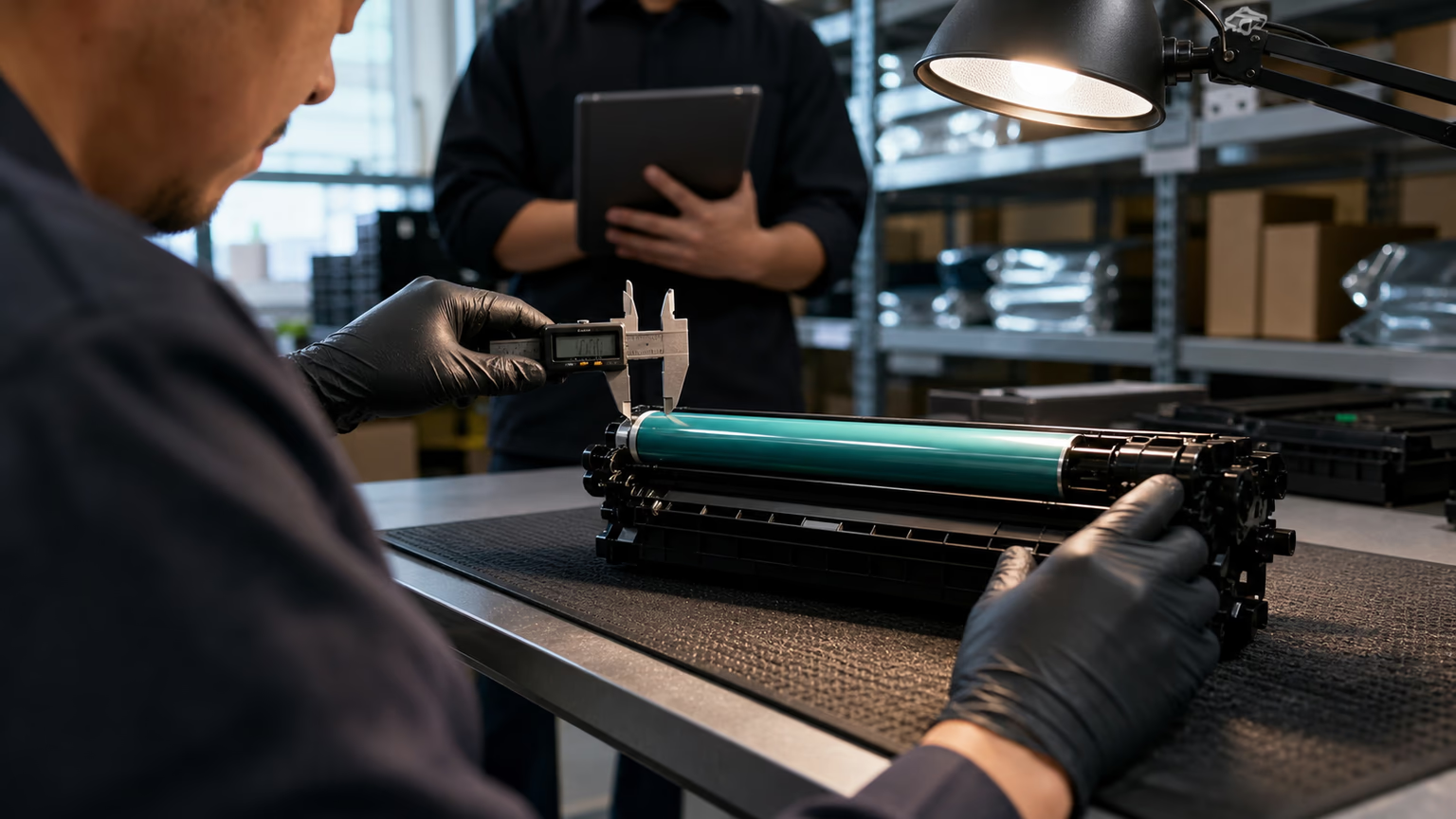
Mechanical variations also matter. A small change in the drum wiper blade, the seal, or the gear tolerances can cause leaks, jams, or premature drum wear. Toner formulation drift can alter density, background, and fusing performance, leading to print quality complaints that are difficult to diagnose.
For a distributor selling into offices with mixed fleets, the risk multiplies. One batch may pass testing on a popular entry-level printer but fail on a mid-range model from another brand. Without per-batch compatibility testing records, you are gambling with your customers' uptime.
The Service and Reputation Fallout for Distributors and MPS Providers
When a toner-related failure reaches an end user, the distributor is the one who gets blamed. The end customer rarely knows or cares which factory produced the cartridge. They see your name on the invoice, and they hold you accountable for the downtime.
For managed print services providers, the cost is even more direct. Every toner-related service call consumes technician time that must be absorbed or billed. If the downtime violates a service level agreement, the MPS operator pays a penalty. Over time, repeated print quality complaints erode customer confidence and make contract renewal difficult.
Traceability changes this dynamic.
When a service engineer can scan a batch ID and pull the quality records, they can quickly determine whether the failure is supplier-related or usage-related.
This reduces no-fault-found returns, speeds up resolution, and protects the service contract.
Without it, the distributor becomes the default quality department for the supplier, and that is a losing position.
Procurement Logic: Building a Traceability-First Supplier Evaluation
Shifting from price-first to traceability-first procurement does not mean ignoring cost. It means ranking suppliers by total cost of quality, not just the quoted price. A traceability-first evaluation should include documentation requirements that weed out suppliers who cannot prove batch-level control.
Before signing a contract, a distributor should require the following evidence from any compatible toner supplier:
- Batch-level production records for the last three shipments, including batch IDs, production dates, and raw material lot numbers.
- Documented quality control test results per batch for yield, density, background, fusing, and drum wear.
- Compatibility testing evidence for the exact printer models in your catalog, with chip firmware versions noted.
- A clear recall and quarantine process with a maximum notification time for batch defects.
- A certificate of analysis (COA) available for each batch, not just a one-time gold sample.
- Transparent failure rate data and a change notification policy for components or processes.
Suppliers who cannot provide this documentation are not necessarily fraudulent, but they are not ready for a serious distribution partnership. The absence of traceability is a risk factor that must be priced into the decision.
Implementing a Batch Verification Workflow in Your Warehouse
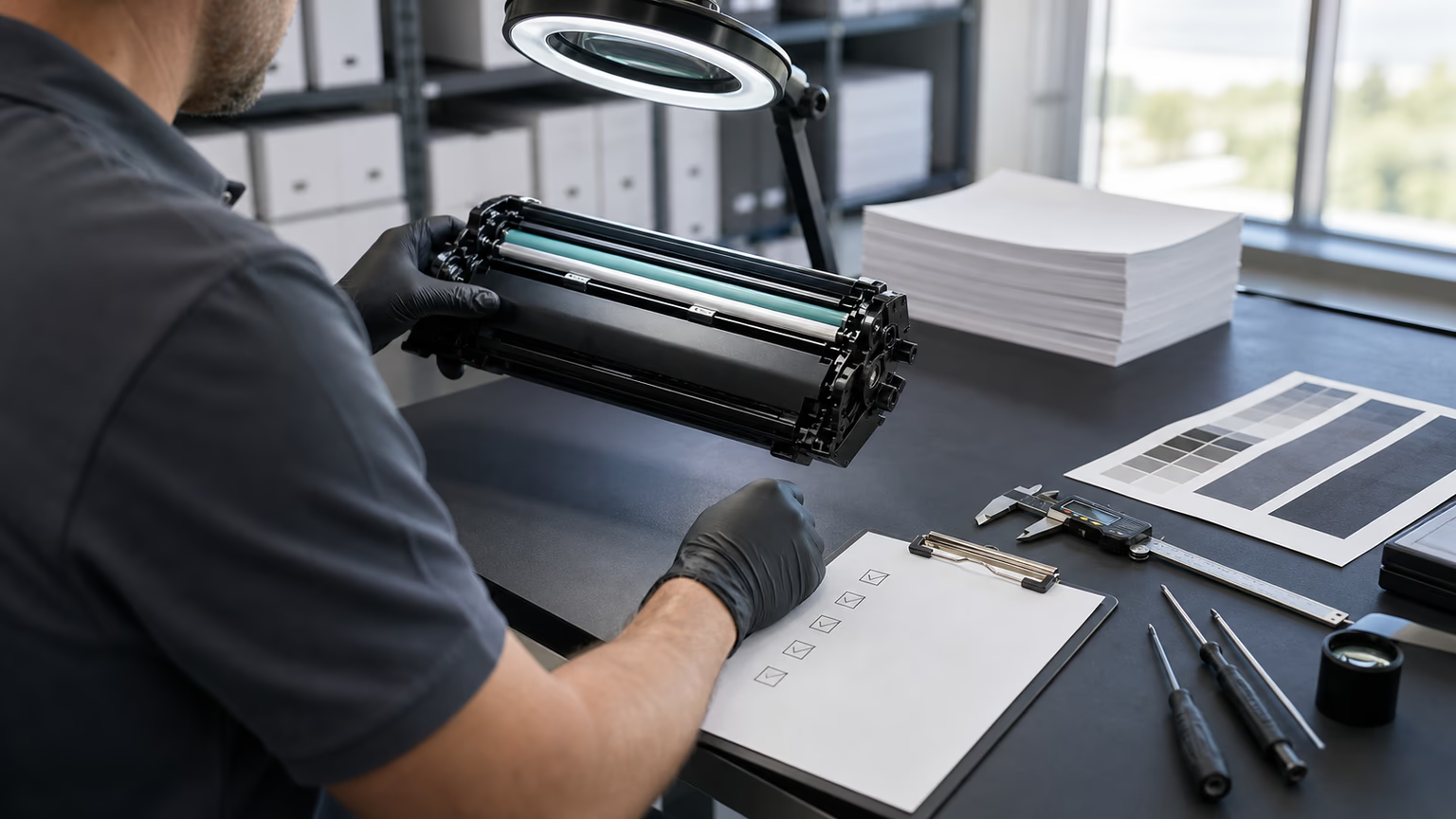
You do not need to build a laboratory to implement basic batch verification. A simple incoming inspection workflow can catch many problems before they reach your customers. When a new shipment arrives, the receiving team should verify that the batch ID on the cartons matches the documentation from the supplier.
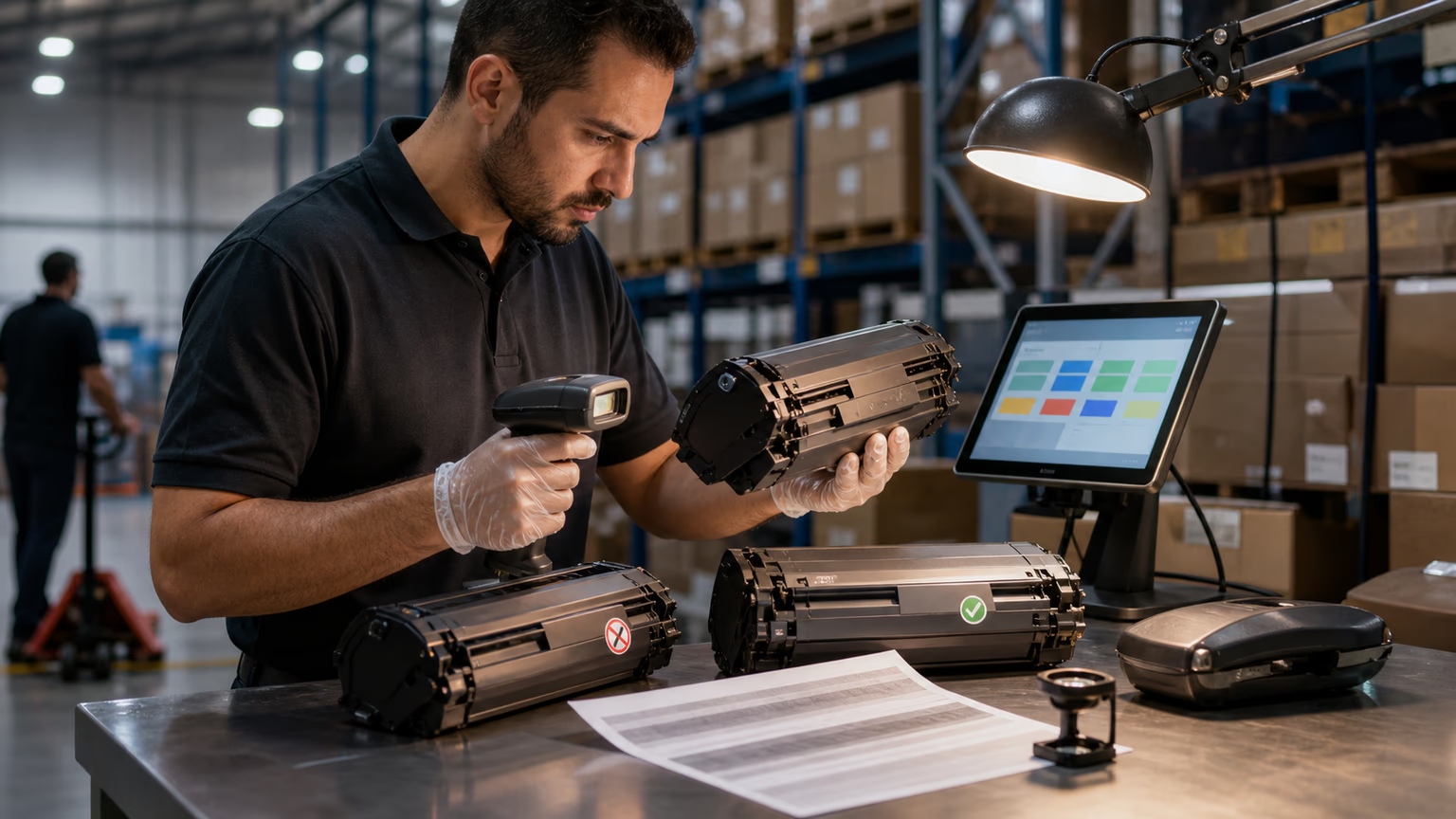
Designate a quarantine zone for any shipment that lacks batch labels or whose documentation is incomplete. Do not release that inventory until the supplier provides the missing records. At the same time, record the batch ID in your inventory system so that every cartridge can be traced back to its production lot.
For high-risk printer models or new suppliers, pull a random sample from the incoming batch and test it against the top printer models in your catalog. Log the results along with the batch ID. This creates an audit trail that protects you in disputes and helps you identify patterns over time.
A practical workflow includes: a documented incoming inspection checklist, a labeled quarantine area, a barcode or batch ID field in your ERP or WMS, and a file system for storing certificates of analysis and test reports. These steps add a few minutes per shipment but eliminate hours of troubleshooting later.
Turning Traceability into a Competitive Advantage
Most distributors still sell on price alone. When you can show a prospective customer that every batch of printer toner you ship is traceable, tested, and documented, you differentiate yourself from the resellers who cannot answer a simple question about where a cartridge came from.
Traceability becomes a sales asset. It allows you to say, with confidence, that you know exactly which raw materials and chip versions went into the cartridges your customer is receiving. It also signals to larger accounts that you take quality seriously, not just as a marketing slogan but as an operational practice.
Beyond winning new business, traceability reduces your own risk profile. If a quality dispute arises, you have the documentation to defend your position and move quickly to protect your customers. This builds long-term supplier relationships based on accountability rather than transactional pricing.
The result is a distribution model that competes on reliability and total cost, not on a race to the bottom. That is a position that supports gross margin, reduces churn, and allows you to build a brand that customers trust.
Checklist: Questions to Ask Your Toner Supplier Before Signing
Before you commit to a new compatible toner supplier, run through a practical verification checklist. The answers will reveal whether you are dealing with a transparent manufacturer or a price-driven middleman.
Key questions include:
- Can you provide batch-level production records for the last three shipments?
- What is your recall process and maximum notification time for a batch defect?
- Do you perform compatibility testing per batch on the exact printer models I sell?
- Can I have a certificate of analysis (COA) with each batch?
- What is your change notification policy for components, chips, or toner formulation?
- Can I test a random sample from the actual batch before I accept the shipment?
If a supplier hesitates on any of these questions, treat that as a warning sign. The cheapest cartridge is not a bargain if you cannot verify what is inside the box.
FAQ
What does batch traceability mean for printer toner cartridges?
Batch traceability means that every production batch of compatible toner cartridges is assigned a unique identifier and linked to records such as raw material lot numbers, production dates, quality control test results, and compatibility verification. This allows a distributor to trace a specific cartridge back to its exact manufacturing inputs and test outcomes.
How can I verify if my toner supplier has batch traceability?
Ask the supplier to provide batch-level production records for the last three shipments, including the batch ID, raw material lots, and quality test reports. Request a certificate of analysis for each batch and confirm whether they perform compatibility testing per batch on your printer models. A supplier that cannot or will not provide this documentation likely lacks a real traceability system.
Why do some compatible toner batches fail on certain printer models?
Compatibility is batch-specific. Chip firmware versions, toner formulation, and mechanical tolerances can vary from one production run to the next. A printer firmware update or a supplier changing a component without notice can cause a previously working batch to fail. Without traceability, the distributor cannot identify which batches are affected.
What are the most common quality issues caused by untraceable toner batches?
Common problems include print density variation, background shading, fusing defects, toner leakage, cartridge rejection due to chip errors, and premature drum wear. These issues often appear intermittently and are difficult to diagnose because there is no batch-level record to isolate the source.
How does batch traceability reduce return rates and service costs?
Traceability enables targeted quarantine and recall of defective batches before they reach many customers. It also speeds up root-cause analysis, so service teams can resolve complaints faster and avoid replacing healthy cartridges. Over time, this reduces no-fault-found returns, credit memos, and service call volume.
Conclusion
The next time you evaluate a compatible toner supplier, ask one question before you ask about price: can you show me the batch records for my last shipment? If the answer is vague, no discount is deep enough to offset the hidden costs that will follow.
Batch traceability is not a luxury or a bureaucratic burden. It is the operational foundation that protects your margins, your service contracts, and your reputation. Distributors who make traceability a non-negotiable requirement stop competing on price alone and start building a supply chain that their customers can rely on.
The market still rewards low prices, but it punishes inconsistency more. By adopting a traceability-first approach, you can avoid the race to the bottom and position your distribution business as a quality-driven partner in a crowded market.