The Hidden Cost of a Failed Cartridge to a Dealer’s Reputation
In B2B distribution, a single failed compatible cartridge can trigger a chain reaction that goes far beyond the cost of a replacement unit.
When a cartridge leaks, streaks, or triggers a chip error at a customer site, the immediate cost is a service call and a technician’s time.
But the longer-term damage is to the dealer’s reputation—the trust that took years to build and can erode in days.
A customer who experiences repeated print quality issues is less likely to renew a managed print services contract or recommend the supplier to another business.
This section explains why cartridge quality control is not a back-office cost but a frontline defense for your brand.
Consider the true cost of a field failure.
It includes the part replacement, the labor for the service visit, any emergency shipping, and the customer’s lost productivity.
More importantly, it includes the risk that the customer will question your reliability and start looking for a new supplier.
For a B2B distributor, reputation is the hidden asset that makes every future sale easier or harder.
When you protect dealer reputation with better cartridge QC, you are not just avoiding defects; you are safeguarding the entire customer relationship.
The shift from price-only sourcing to QC-based sourcing starts with understanding that not all compatible cartridges are equal.
Some suppliers invest in rigorous testing and batch traceability, while others cut corners to hit a lower unit price.
The difference shows up weeks or months later in the field.
A distributor who makes QC a priority can differentiate on reliability, reduce service callbacks, and build a loyal customer base that values uptime over a small upfront saving.
Why Price-Only Sourcing Is a Reputation Risk
Procurement teams are often measured on cost savings, which pushes them toward the cheapest wholesale toner cartridges.
However, price-only sourcing ignores the total cost of ownership, which includes returns, rework, and customer churn.
A cartridge that fails prematurely may cost several times its purchase price in service overhead.
When low-price suppliers achieve their low cost by reducing QC checks, skipping drum testing, or using inferior toner formulations, the end result is unpredictable batch-to-batch quality.
That unpredictability directly hits your service margins and your reputation.
The problem with price-only decisions is that they create a race to the bottom.
Suppliers who compete solely on price have every incentive to cut corners, and those corners often involve quality.
They may ship cartridges that pass a quick visual check but fail later due to chip incompatibility or toner leakage.
By the time you discover the problem, the cartridges are already in your customers’ printers.
A better approach is to evaluate the total risk: what will a failed batch cost you in service calls, SLA penalties, and lost accounts?
That risk-based view makes QC a key procurement criterion.
What to Actually Inspect Before Stocking Compatible Cartridges
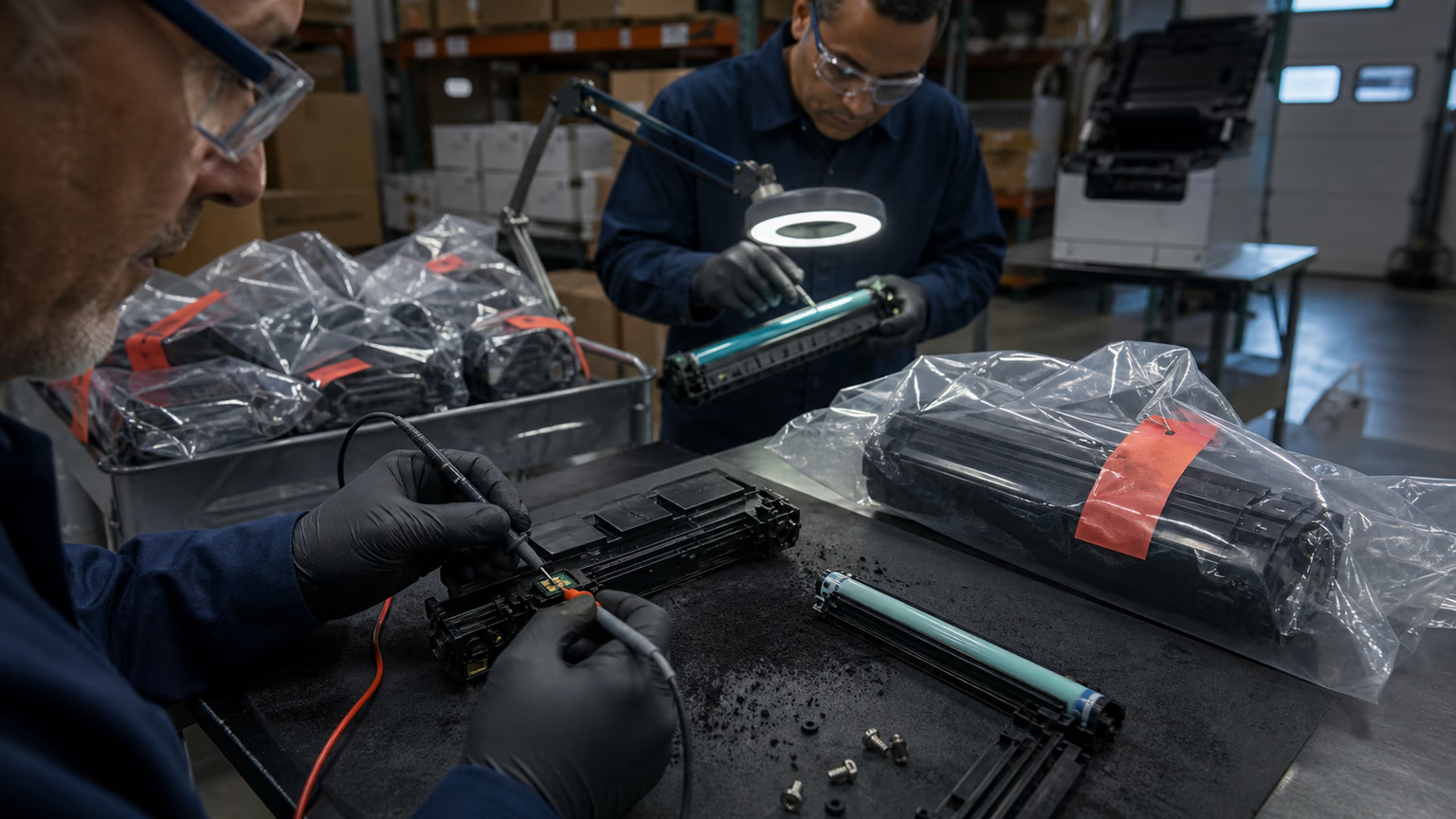
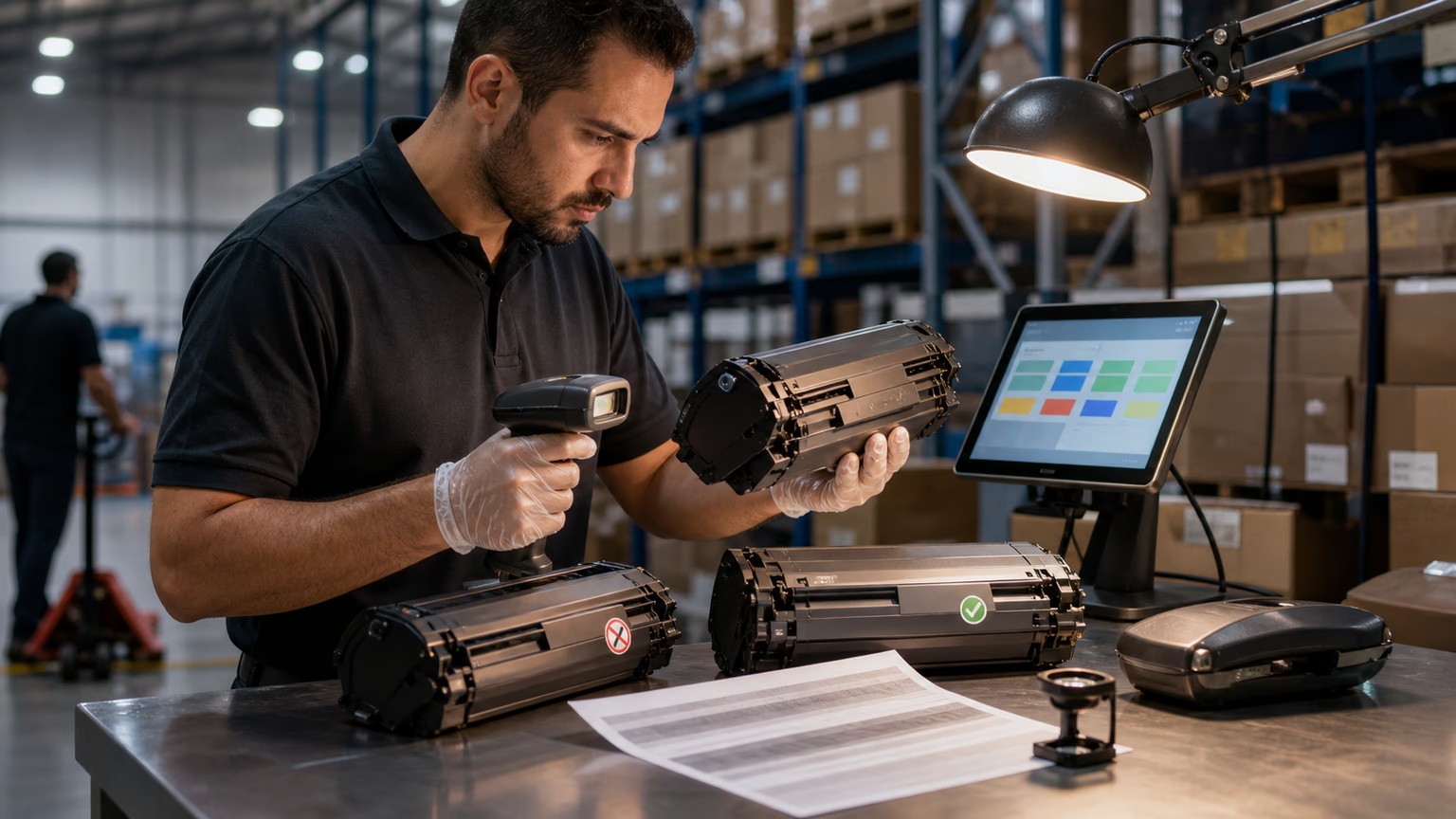
You do not need a laboratory to catch many quality issues before they reach your customers. A simple incoming inspection program can filter out obvious defects and spot-check the batch for deeper problems. The following checks are practical for a distributor warehouse and can be performed by trained staff with basic tools.
- Visual inspection of packaging, cartridge body, and OPC drum for damage, scratches, or toner leaks.
- Chip read test on a reference printer model to confirm the cartridge communicates correctly.
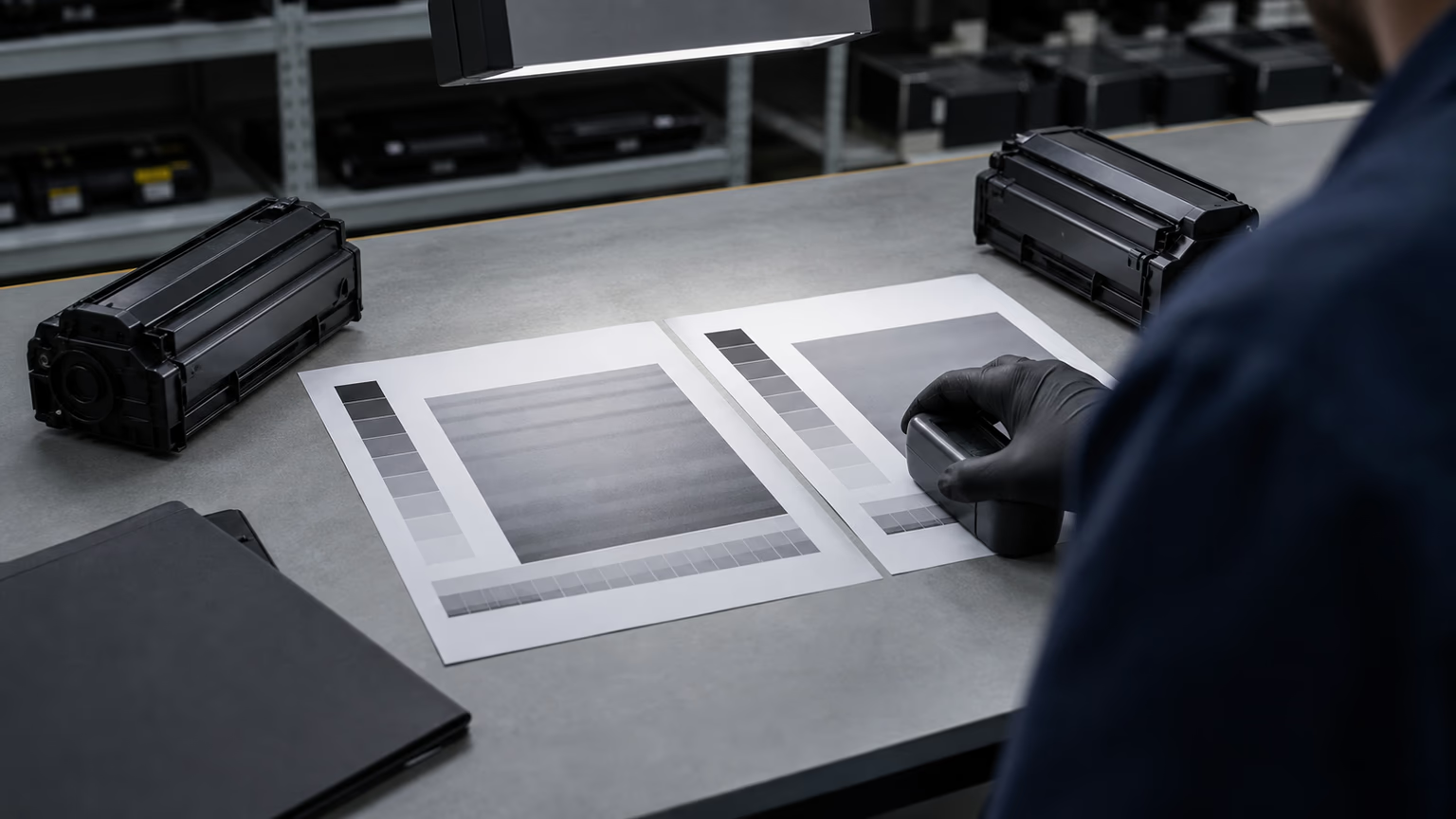
- Print quality test using a standardized test page to check for streaks, density, and color accuracy.
- Batch record review for lot number, production date, and supplier QC sign-off.
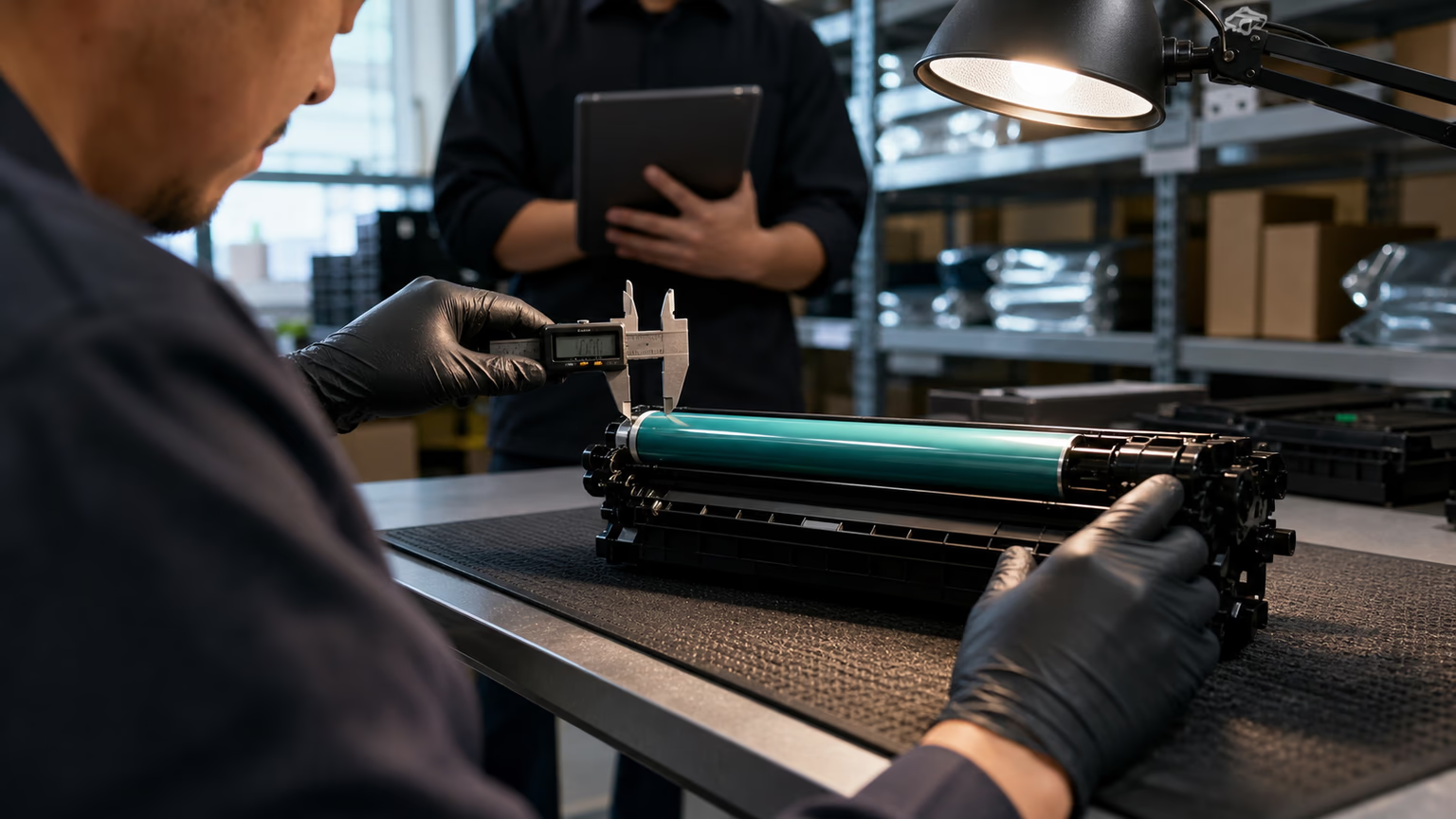
- Measurement of key cartridge dimensions with calipers or gauges to ensure proper seating.
These checks do not guarantee a perfect batch, but they dramatically reduce the risk of shipping obviously defective units.
The chip read test is especially important because firmware updates from printer manufacturers can render a non-OEM chip useless without warning.
By testing each incoming batch against a current reference printer, you can catch compatibility issues before the cartridges enter your sales inventory.
Chip and Firmware Compatibility: The Silent Deal-Breaker
Chip failures are among the most frustrating problems for a distributor because they often happen days or weeks after installation.
A customer updates their printer firmware, and suddenly the compatible cartridge is no longer recognized.
The printer displays an error, and the customer calls you to fix it.
This silent deal-breaker can turn a profitable cartridge sale into a service nightmare.
To protect dealer reputation, you must verify that your supplier actively tests their chips against current OEM firmware versions.
Ask your B2B toner cartridge supplier how they handle firmware updates.
A responsible supplier will have a process for monitoring firmware releases and updating their chip programming accordingly.
They should be able to provide compatibility documentation and a timeline for re-qualification.
If a supplier cannot answer these questions clearly, that is a red flag.
Chip quality varies widely among manufacturers, and the cheapest option is often the least robust.
Investing in a supplier that uses high-quality chips may cost a little more upfront, but it saves you from service callbacks and customer frustration.
Batch-to-Batch Consistency: How to Evaluate Supplier QC Systems
One good sample does not guarantee future batches.
Many distributors have been burned by a supplier who sends excellent pre-shipment samples but then ships lower quality in bulk.
The real test of a supplier is their ability to deliver consistent quality over time.
This requires looking beyond the product to the supplier’s QC system.
Ask for defect rate data and corrective action reports.
A supplier that tracks defects and implements corrective actions is more likely to maintain consistency.
Evaluate how the supplier controls incoming raw materials.
Toner formulation, OPC drum quality, and chip components all affect performance.
A supplier with strong raw material controls can reduce batch-to-batch variation.
Request pre-shipment samples from each batch for your own incoming inspection.
Some distributors even hold back a small percentage of each shipment for later testing if field issues arise.
This kind of batch traceability and lot-level QC reporting is essential for protecting your reputation and your customers.
Building a Distributor-Level Incoming QC Program (Without a Lab)
You do not need an expensive laboratory to implement meaningful QC.
A dedicated QC station in your warehouse with basic tools can catch many defects.
The key is to make the process standardized and repeatable.
Designate a small area with a clean work surface, a magnifying loupe or digital microscope, a set of calipers, and at least one reference printer that is commonly used by your customers.
Train warehouse staff to follow a checklist and log results.
The checklist should include the visual and dimensional checks mentioned earlier, plus a print test.
For the print test, use a test page that includes solid blocks, gradients, and text.
Look for streaks, spots, or uneven density.
The test printer should have its firmware updated to the latest version from the printer manufacturer.
This will help catch chip compatibility issues.
Log every inspection result, including the lot number and any deviations.
Over time, this data forms a trend analysis that helps you identify suppliers with recurring problems.
Turning QC into a Customer Retention and Sales Tool
A documented QC program is not just an internal safeguard; it is a powerful sales differentiator. When you can show a prospective customer that every batch of cartridges you supply has passed a specific set of tests, you build trust. You can offer QC reports as part of a service contract or managed print agreement. This positions your distribution business as a quality gate, not just a box mover.
Customers are tired of unpredictable print quality.
By proactively preventing field failures, you reduce churn and strengthen long-term contracts.
In renewal conversations, you can point to your low defect rate and your systematic approach to compatibility.
This is a concrete way to protect dealer reputation and justify a slight price premium over competitors who do not invest in QC.
Over time, your reputation for reliability becomes a moat that price-cutting competitors cannot easily cross.
Supplier Scorecard: Questions to Ask Before Your Next PO
Before placing your next purchase order, evaluate your cartridge supplier with a structured scorecard. Assign weights to different criteria such as documented QC testing, chip compatibility, batch traceability, and warranty responsiveness. Price should be only one factor among several. A supplier that scores well on quality and consistency may ultimately cost you less in total operations.
Critical questions to ask include: How do you test chips against current firmware?
What is your batch-level defect rate?
How do you trace lot numbers from raw material to finished product?
Can you provide pre-shipment samples from each batch?
What is your corrective action process when a defect is found?
A supplier that hesitates to answer these questions or provides vague responses is likely cutting corners.
Use the scorecard to compare suppliers and drive improvement. If your current supplier fails to meet your QC expectations, communicate the gaps and set a deadline for improvement. In a competitive wholesale toner cartridge market, you have leverage. Swapping a poor-quality supplier for a reliable one can immediately reduce service callbacks and protect your dealer reputation.
FAQ
What is the most common cartridge QC failure that damages dealer reputation?
Chip and firmware compatibility failures are among the most damaging because they cause immediate printer errors and require a service call. Leaks and streaks also generate complaints, but chip failures can happen without warning and are often blamed on the cartridge supplier.
How can a distributor test compatible cartridges before selling them?
A distributor can perform incoming inspections using a reference printer, a standardized test page, and basic tools like a magnifying loupe and calipers. Key checks include visual inspection for damage, chip read test, print quality test, and batch record review.
Does using compatible cartridges void the printer manufacturer's warranty?
In most regions, using a compatible cartridge does not automatically void the printer warranty, but the printer manufacturer may not cover damage caused by the cartridge. It is important to clarify this with your legal advisor and to use high-quality compatible cartridges to reduce the risk of damage.
What should I look for in a cartridge supplier’s QC process?
Look for documented batch-level testing, chip compatibility testing against current firmware, page yield verification, lot number traceability, and a corrective action process for defects. A supplier that provides pre-shipment samples and is transparent about defect rates is a strong candidate.
How can I verify chip and firmware compatibility for my customers' printers?
Maintain a set of reference printers with the latest firmware updates from the printer manufacturer. Test incoming cartridges on these printers to ensure the chip communicates correctly. Ask your supplier for compatibility documentation and their process for handling firmware updates.
Conclusion
Protecting dealer reputation with better cartridge QC is not a one-time project but an ongoing discipline.
It requires shifting procurement focus from unit price to total cost of ownership, building a simple but rigorous incoming inspection program, and choosing suppliers who are transparent about their quality systems.
By catching defects before they reach the field, you reduce service callbacks, protect customer trust, and differentiate your distribution business in a crowded market.
The payoff is not just fewer complaints. It is stronger customer retention, the ability to command a premium for reliability, and a reputation that compounds over time. Start with the practical checks outlined here, build a supplier scorecard, and make QC a visible part of your service promise. The distributors who treat quality as a strategic asset will be the ones who survive and thrive.