Why Cheap Toner Fails the Distributor Business Model
Distributors and MPS providers often treat wholesale toner cartridges as a commodity purchase, focusing on the lowest unit price per cartridge.
But printer toner is a precision consumable: small variations in its chemical and physical properties directly affect print quality, machine wear, and service call frequency.
When a production batch drifts from the approved sample, the apparent savings evaporate in returns, technician labor, and customer dissatisfaction.
The real competition is not between cartridges at different prices but between supply chain predictability and volatility.
Office printer toner and laser printer toner are not interchangeable from batch to batch unless the supplier controls raw materials and production parameters tightly.
A distributor that buys on price alone inherits the supplier's production variability.
The true cost of a toner cartridge includes the support burden when things go wrong: diagnostics, replacement shipping, and the risk of losing a customer to a competitor who delivers consistent prints.
Stable batches protect distributor margins and customer retention far better than a few cents saved per unit.
- Unbudgeted service calls triggered by print quality complaints
- Return shipping and replacement cartridge logistics
- Inventory write-offs for defective batches that cannot be resold
- End-customer churn when repeated toner issues erode trust
Ignoring batch stability is a hidden tax on your service organization. Every defective cartridge that reaches a customer is not just a product failure; it is a mini crisis that consumes procurement time, technician hours, and account management goodwill.
What Stable Batches Actually Means in Toner Production
Batch stability means that every production run matches the approved reference in melt point, charge control, particle size distribution, and raw material sourcing.
A stable toner supplier locks the formulation and does not substitute cheaper resins or pigments without requalification.
For wholesale toner cartridges, this extends to the plastic shells, drums, seals, and especially the chip firmware version.
Many distributors only discover instability after several orders.
The first sample may be perfect, but later batches may use a different toner particle size, causing higher fuser wear or backgrounding.
Similarly, a chip version that worked yesterday may fail after an OEM firmware update if the supplier does not maintain chip firmware version control.
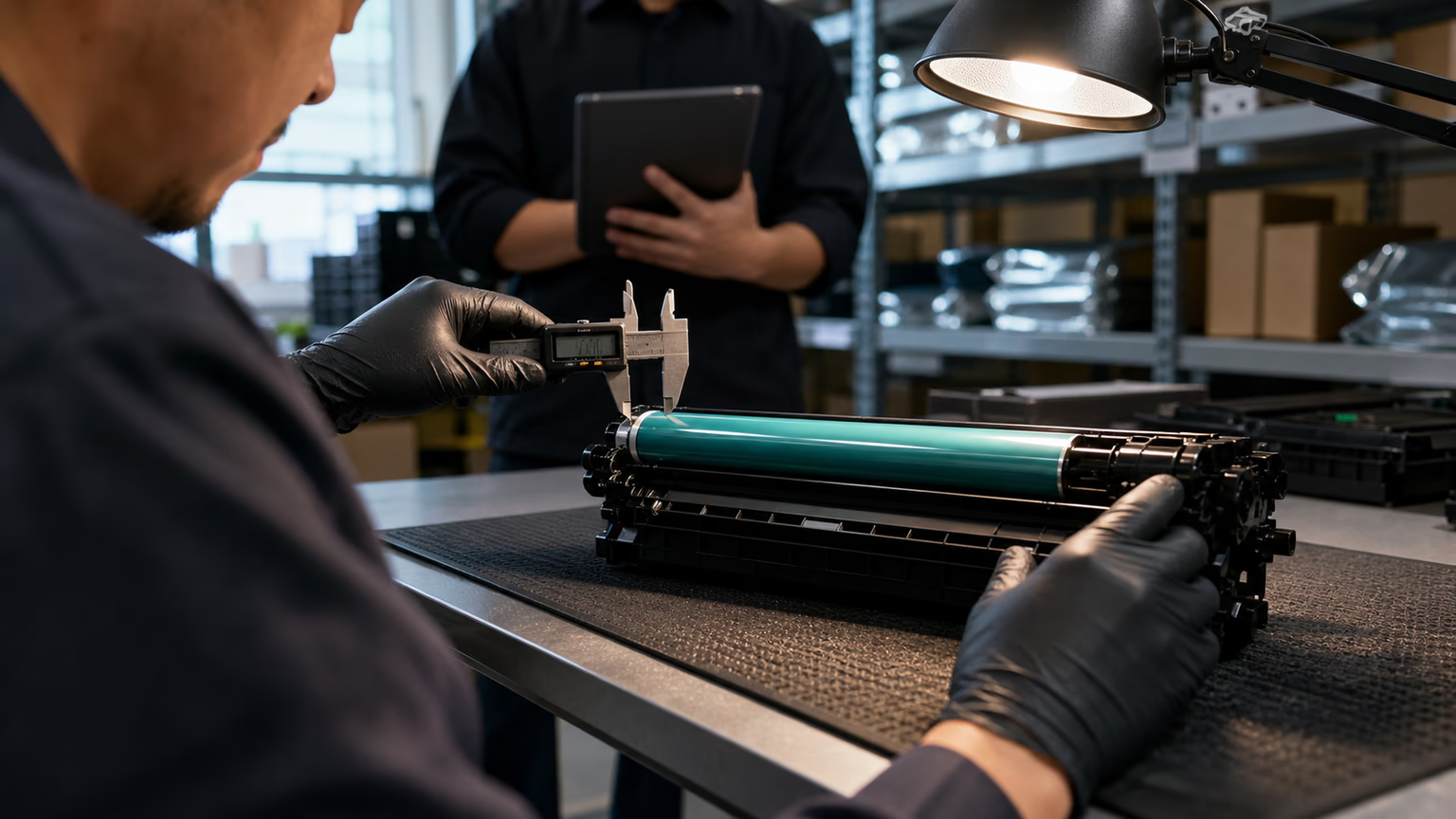
Drum and OPC component consistency across production runs is equally important because a change in the drum coating can alter charge acceptance and reduce yield.
Raw material sourcing is a key differentiator. A supplier that buys toner powder from multiple low-cost vendors without auditing each lot cannot guarantee melt point and charge stability. You should expect documentation that shows how the supplier validates incoming materials and controls the blending process. Without that, batch stability is a marketing claim rather than an operational fact.
The Real Operational Risks of Batch Drift
Batch drift rarely announces itself with a complete cartridge failure.
Instead, it appears as inconsistent print density, light or dark patches, ghosting, banding, or backgrounding.
These defects increase service calls because end users perceive them as printer problems rather than toner problems.
Your technicians replace drums, fusers, and transfer rollers before realizing the toner itself is the variable.
Another common failure is premature low toner warnings.
If the yield estimate is inaccurate because the toner powder has different flow characteristics, the machine may signal empty while usable toner remains.
This frustrates users and creates unnecessary replacement costs.
Chip recognition failures after an OEM firmware update are equally disruptive: entire fleets can go down until a corrected chip version arrives.
Operational damages extend beyond print quality.
Cartridge leakage can contaminate the inside of the printer, leading to expensive repairs and downtime.
Drum scoring from inconsistent toner particle size shortens the life of the image unit.
Each of these failures generates a service ticket, erodes confidence in your supply, and complicates inventory management when you must segregate defective batches.
- Print density variation causing light or dark prints
- Backgrounding, ghosting, or banding artifacts
- Premature low toner warnings and inaccurate page yield estimates
- Chip recognition failures and non-genuine toner errors
- Cartridge leakage and drum scoring from inconsistent toner particle size
A Procurement Framework: How to Qualify a Wholesale Toner Supplier for Stable Batches
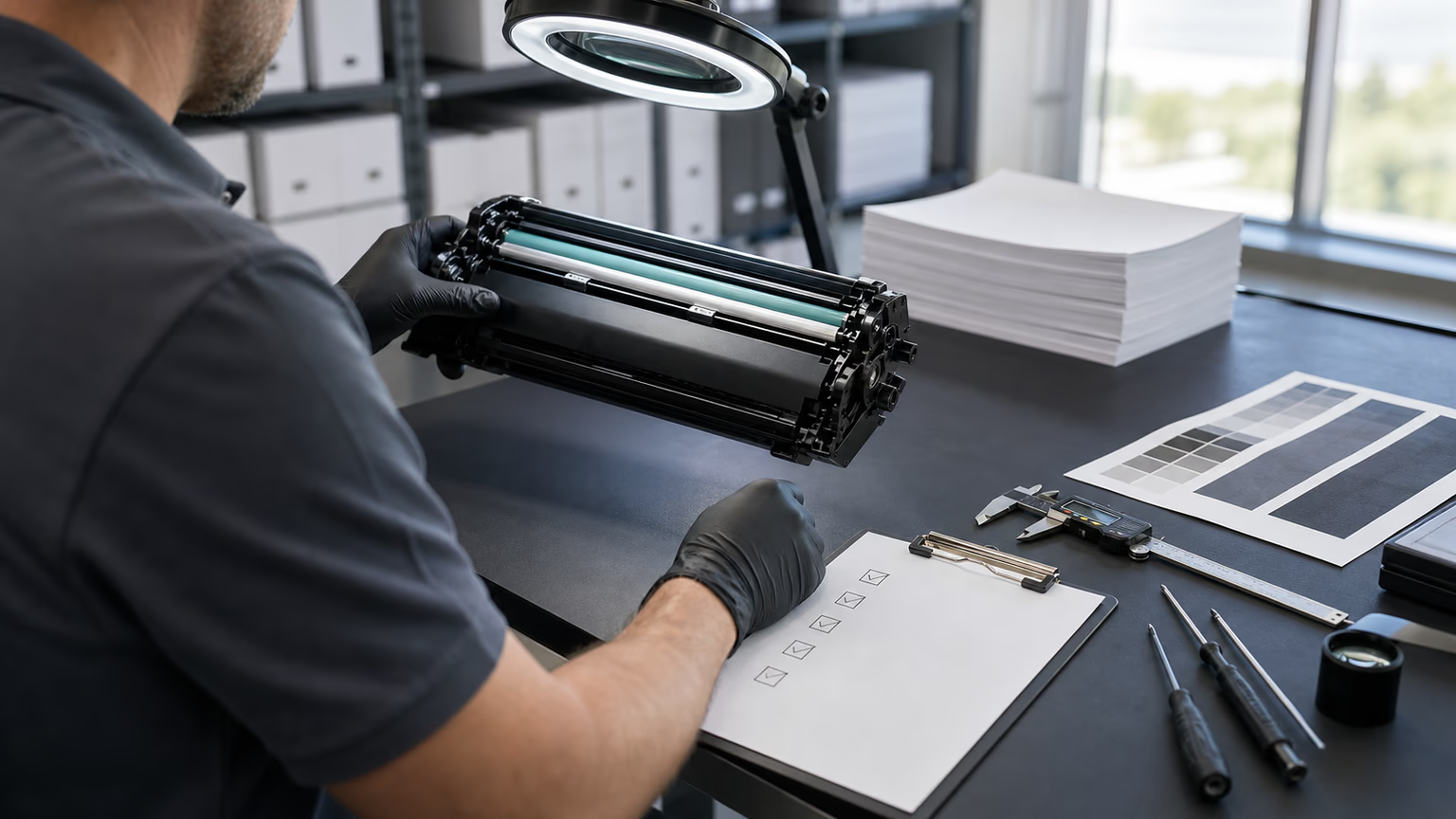
Qualifying a supplier for stable batches requires a structured process, not a single lucky sample.
Start by requesting batch samples from at least three different production runs.
These should not be hand-picked by the supplier; they should come from regular inventory.
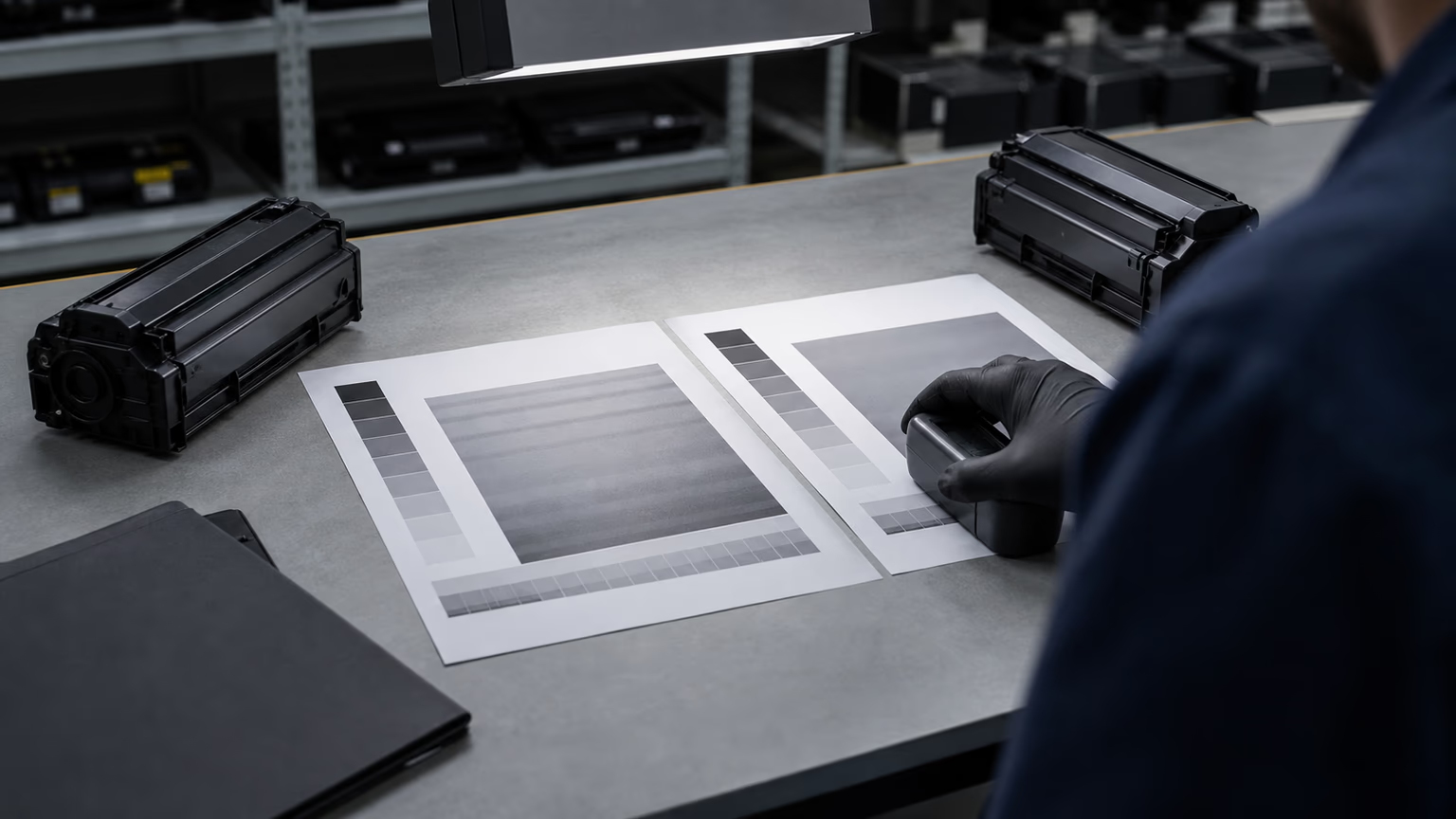
Run controlled print tests on the same machine model with identical settings, and measure density and yield against a known reference.
This reveals whether the supplier can reproduce the same output repeatedly.
Demand documented QC data.
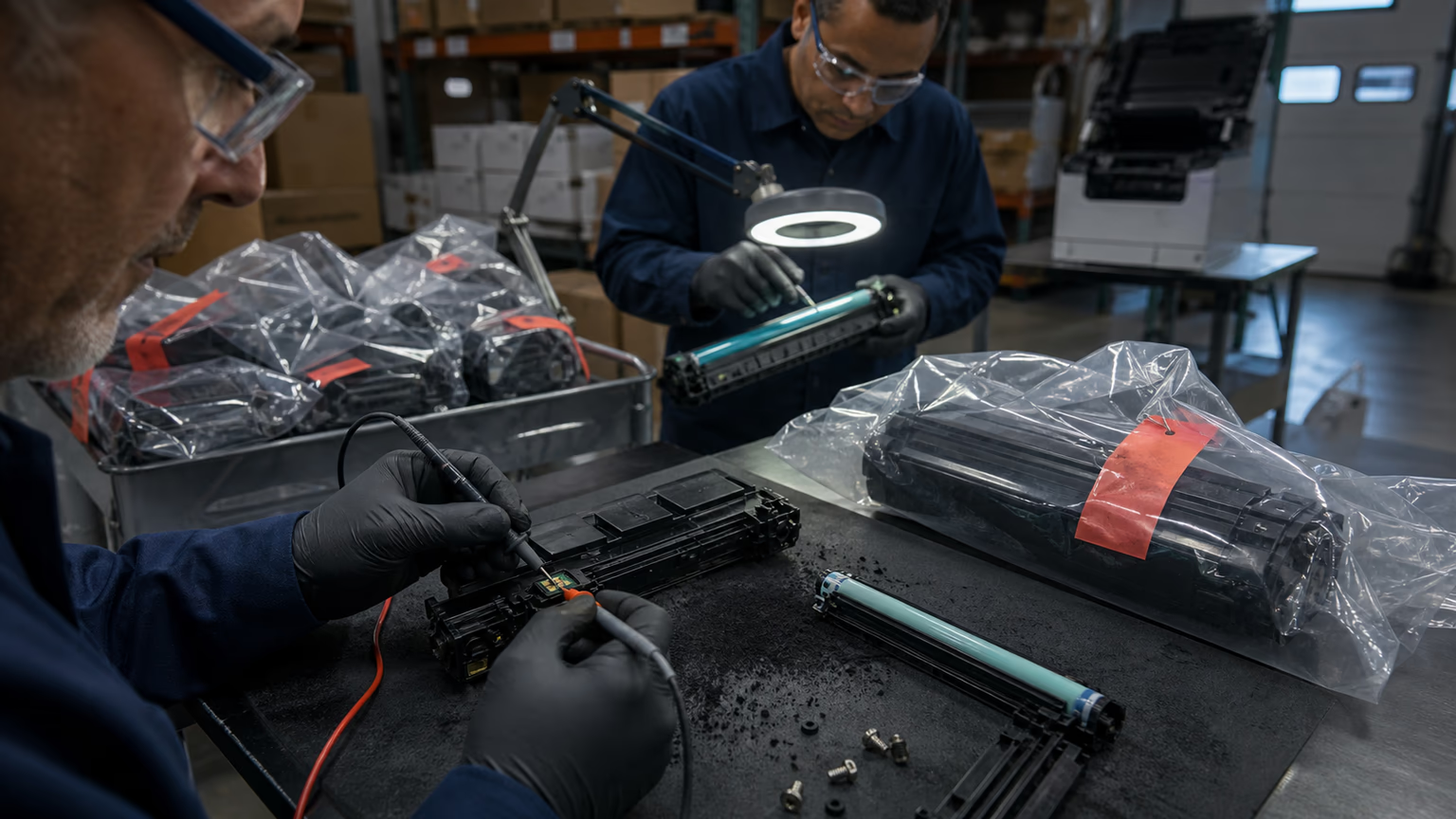
A serious supplier will share failure rate thresholds, lot traceability codes, and raw material sourcing information.
If they cannot show how they control toner particle size or chip firmware versions, treat that as a risk signal.
Also test after simulating an OEM firmware update: the latest chip version may behave differently.
Ask for a written statement of the supplier's batch-to-batch consistency metrics, including allowable tolerance ranges.
The evaluation should also include a review of the supplier's packaging and handling procedures.
Moisture exposure during storage or transport can ruin toner flow properties.
Consistent packaging reduces the chance of batch variation introduced after production.
Finally, negotiate a return policy that is based on documented defects, not on subjective complaints, so that both parties have clear expectations.
- Request three batch samples from different production dates
- Run controlled density and yield tests on reference machines
- Verify chip version control and firmware update roadmap
- Ask for documented failure rate data and QC tolerances
- Inspect lot codes and traceability on cartridges and packaging
- Test after simulating an OEM firmware update
Compatibility in Mixed Printer Fleets: Managing Device Brand Differences
Most distributors support a mix of printer brands, each with different engine speeds, fuser temperatures, and chip authentication protocols.
Compatible toner for mixed printer fleets must be engineered to handle these variations without compromising performance.
A single supplier that understands the differences across major office printer manufacturers can reduce the number of SKUs you stock and the complexity of your service operation.
OEM firmware updates remain the biggest compatibility risk.
A chip that works on the current firmware may be blocked by the next update.
Your supplier must maintain a chip version roadmap and be able to provide updated chips quickly.
Mechanical fit is equally important: cartridge molds must match the original design to avoid seating issues or leaks.
Regional variants and voltage requirements add another layer of complexity, especially if you distribute in multiple countries.
Test cartridges in high-volume devices across each brand in your fleet before committing. A sample that works in a low-duty desktop printer may fail in a high-speed workgroup device with different toner feed rates and fuser temperatures. The supplier's quality control should include compatibility testing on multiple engine platforms, not just a single reference model.
Service Impact: How Stable Toner Reduces Service Calls and SLA Penalties
Every toner-related service call costs money and time, but the larger damage is to your SLA metrics and customer trust. Stable toner batches produce predictable print quality and yield, which means fewer repeat visits for the same issue. Your technicians can focus on preventive maintenance instead of swapping cartridges and diagnosing phantom problems.
When a batch is inconsistent, you may see a spike in calls shortly after delivery. Customers report faded prints, smudges, or error messages. The cost of dispatching a technician, replacing the cartridge, and possibly damaging the printer outweighs any savings from a cheaper toner purchase. A stable supply chain directly protects your service margins and your reputation.
Predictable yield also supports maintenance scheduling.
If you know a cartridge reliably delivers a certain number of pages, you can plan replacements and avoid emergency stockouts.
Conversely, yield shortfall forces more frequent replacements and increases the chance that a customer runs out of toner at the worst time.
Batch stability turns toner from a wildcard into a manageable component of your service delivery.
- Fewer callbacks and replacements from print quality defects
- Predictable yield supports maintenance scheduling and part planning
- Reduced technician time spent on toner-related diagnostics
- Lower risk of SLA penalties from repeated failures
From Trial Order to Long-Term Supply: Building a Stable Batch Agreement
After you qualify a supplier, lock in the consistency contractually.
The agreement should specify a locked formulation and raw material sourcing, so the supplier cannot substitute lower-cost materials without your written approval.
Include a clause for retained batch samples: the supplier must keep a sealed reference cartridge from each production run for dispute resolution.
This creates a physical evidence trail if a batch fails.
Ongoing transparency matters.
Request batch-level QC reports with each shipment, including density curves, yield test results, and firmware version documentation.
Agree on failure rate thresholds and a clear return process for out-of-spec batches.
Schedule quarterly performance reviews with clear exit criteria if the supplier drifts from the agreed standards.
The goal is not to catch the supplier doing wrong, but to maintain alignment on what stable means.
Remember that batch stability is not a one-time event. Suppliers may change raw material suppliers, upgrade production equipment, or alter chip suppliers. Your contract should require advance notification of any such change and allow you to requalify samples before accepting new production. This protects your investment in testing and ensures ongoing consistency.
Checklist: 10 Practical Checks for Distributors Before Committing
Before placing a large wholesale toner order, run through this checklist. Each item is a practical verification step that separates stable suppliers from those who only talk about quality. Document every result so you can compare suppliers objectively and hold them accountable later.
- Request three batch samples from different production runs
- Run controlled density and yield tests on the same machine
- Verify chip version control and ask about firmware update handling
- Ask for raw material sourcing documentation
- Inspect lot codes and traceability labels on cartridges and packaging
- Test after simulating an OEM firmware update
- Review the supplier's documented failure rate data and QC tolerances
- Check packaging consistency for damage or moisture protection
- Test across high-volume devices in your fleet
- Document every result for supplier comparison and negotiation
FAQ
How can I tell if a toner supplier can deliver stable batches?
A supplier with stable batch capability will provide documented QC data, lot traceability, and a locked formulation. Request samples from three different production runs and run controlled print tests. If the print density and yield remain consistent across those samples, the supplier likely has good batch control.
What is the difference between batch-to-batch consistency and overall cartridge quality?
Overall cartridge quality refers to a single unit meeting specifications. Batch-to-batch consistency means every production run matches the approved reference. A cartridge can be high quality in isolation but still cause problems if later batches drift in toner particle size, melt point, or chip firmware.
Can compatible toner cartridges really be as stable as OEM?
Yes, but only when the supplier controls raw materials and production parameters tightly. A compatible toner supplier that locks its formulation, performs in-house QC, and maintains chip firmware version control can achieve stability comparable to OEM. The key is verifying the supplier's processes, not relying on marketing claims.
How do OEM firmware updates affect compatible toner chips?
OEM firmware updates can change the authentication handshake between the printer and the chip. If the compatible chip does not have the latest firmware version, the printer may display a non-genuine toner error. A reliable supplier monitors OEM updates and provides chip upgrades before the old version is blocked.
What should be included in a supplier agreement to ensure batch stability?
A robust agreement should lock the toner formulation and raw material sourcing, require retained batch samples for each production run, mandate batch-level QC reports with density and yield data, and define failure rate thresholds with a clear return process. Include quarterly performance reviews and exit criteria.
Conclusion
Stable toner batches are not a luxury for distributors; they are a condition for predictable service delivery and margin protection.
By moving from unit price to total cost of ownership, you can qualify suppliers who demonstrate control over toner formulation, chip firmware, and component consistency.
The framework in this article gives you a practical way to test, evaluate, and lock in a stable supply before volatility reaches your customers.
Use the checklist, demand documentation, and treat batch stability as an ongoing procurement discipline.