The Premium Paradox: Why Compatible Toner Still Gets a Bad Rap
Many B2B buyers carry a mental scar from past experiments with low-cost compatible toner.
They remember print defects, leaking cartridges, premature failure, and frustrated customers.
As a result, the category gets painted with a broad brush: compatible toner is seen as risky, unreliable, and inherently inferior to OEM.
This perception persists even though premium compatible toner exists and can perform at parity with OEM in many office environments.
The paradox is that price-driven sourcing creates the very problems that reinforce the stigma.
When buyers focus solely on unit cost, they often end up with cartridges that use substandard components, poorly matched toner powder, and cheap chips.
Those failures then become the benchmark for all compatible toner.
The solution is not to avoid compatible toner altogether, but to change how you evaluate and source it.
For distributors, managed print service providers, and resellers, the stakes are high.
Your brand reputation is tied to the products you put in the field.
A single batch of defective cartridges can generate dozens of service calls and erode customer trust.
The goal of this article is to show that premium compatible toner is achievable and to give you a practical framework for finding it consistently.
What Actually Makes Toner Look and Perform Premium
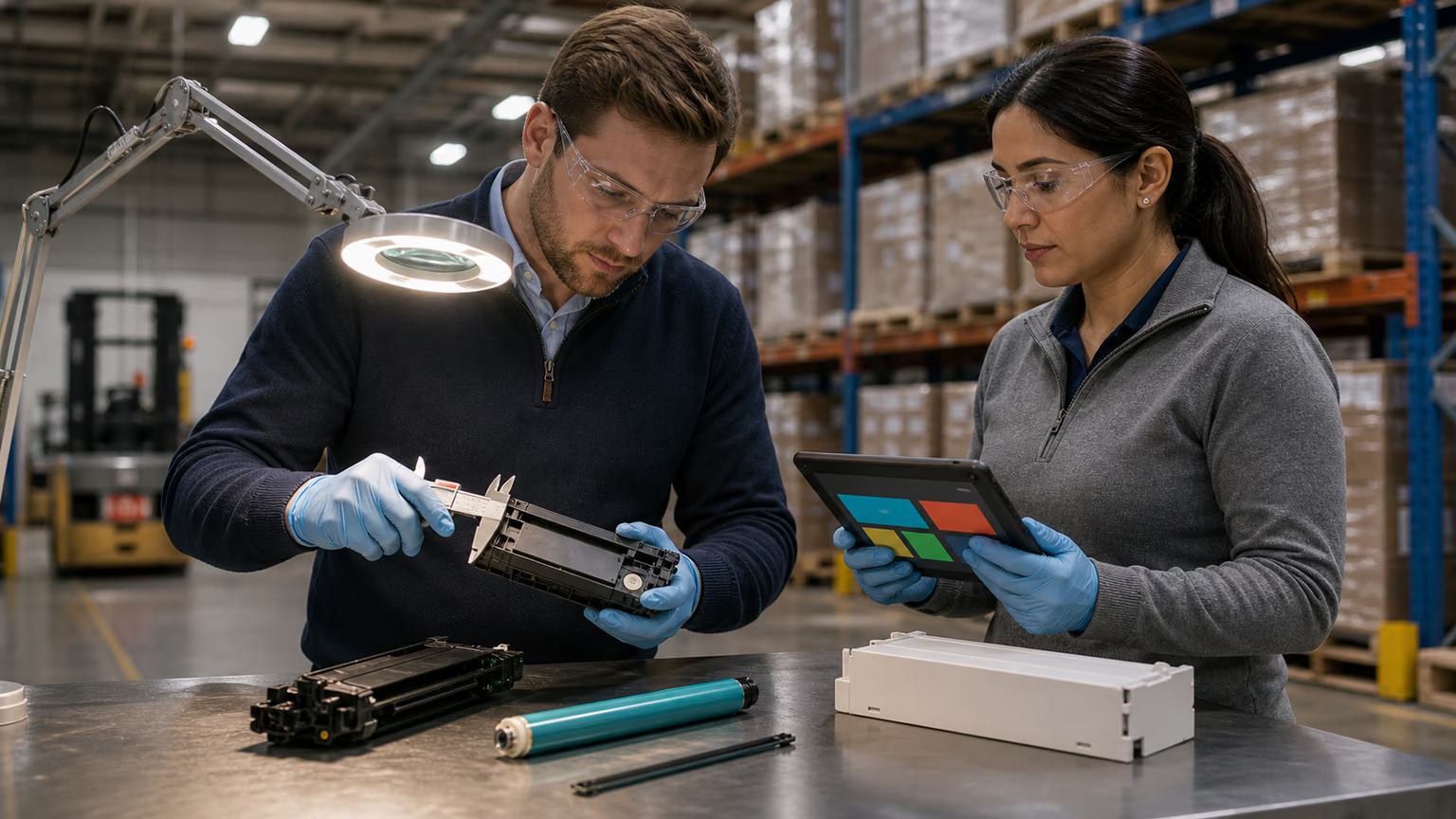
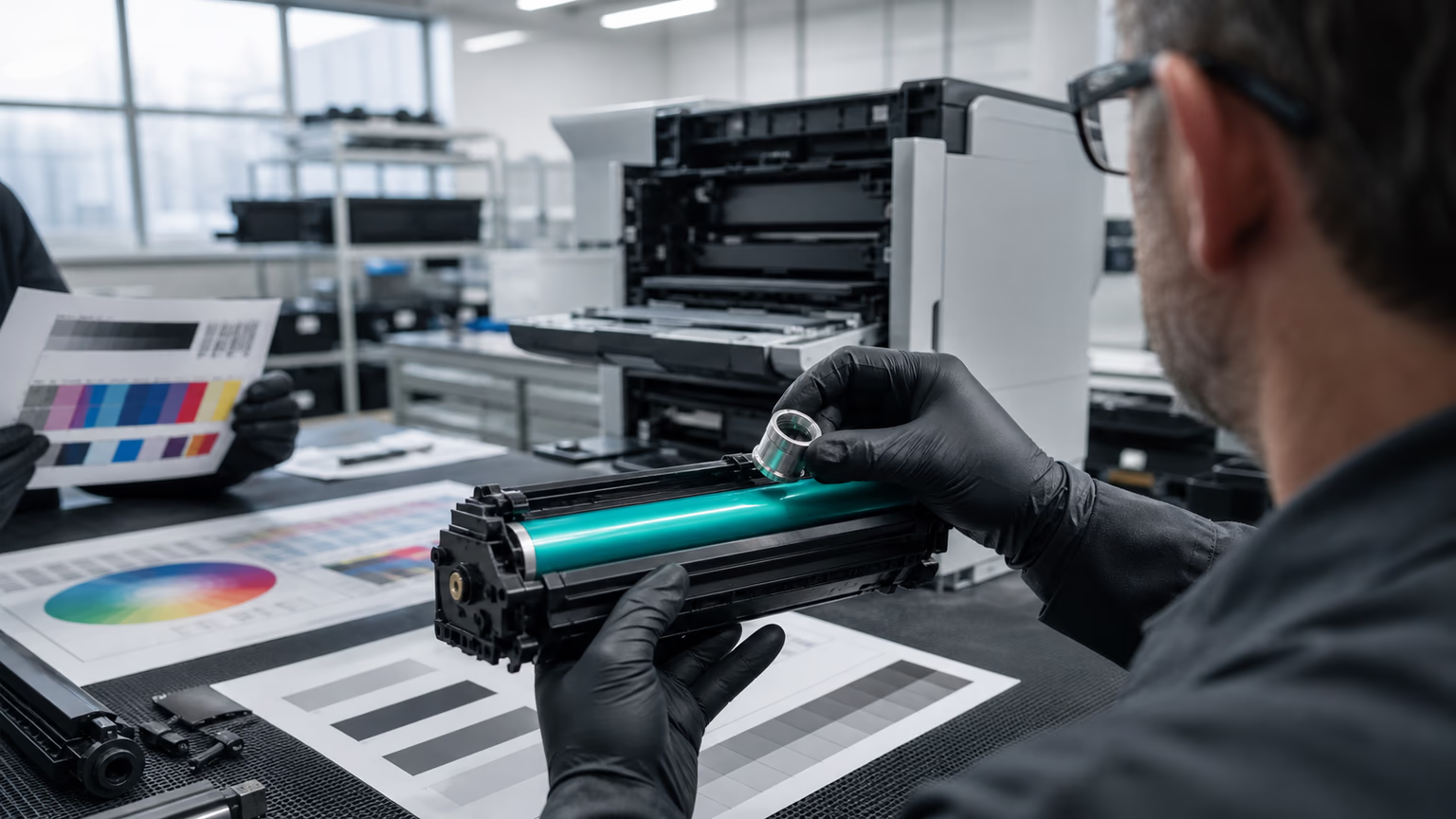
The difference between a premium compatible toner cartridge and a cheap import comes down to two things: the toner powder itself and the precision of the cartridge components. Toner is not just black dust. Its particle size, shape, and melting point determine how well it transfers to paper, how densely it covers, and whether it fuses permanently without smearing or flaking.
High-quality toner uses fine, uniform particles with a controlled size distribution.
This ensures consistent image density and sharp edges.
A low melting point that is too low can cause background fog or poor fusing, while a melting point that is too high can lead to cold fusing and toner that rubs off.
Premium suppliers invest in chemical toner production and rigorous testing to maintain these properties batch after batch.
The cartridge shell is equally important. Key components include:
- OPC drum: A high-grade organic photoconductor with consistent charge retention ensures clean, even prints throughout the cartridge life.
- Doctor blade: A precisely machined blade that meters the toner layer on the magnetic roller, preventing uneven density and streaks.
- Magnetic roller: Coated with the right surface roughness to carry a uniform toner layer and achieve correct image development.
- Chip: A smart chip that communicates correctly with the printer, reporting toner levels and enabling error-free operation. Premium chips are tested across firmware versions to avoid rejections.
When all these components are sourced from reliable sub-suppliers and assembled under clean-room conditions with strict process controls, the result is a cartridge that prints like OEM and lasts as long.
How to Evaluate a Compatible Toner Supplier: A Due Diligence Framework
Selecting the right supplier is the single most important decision you will make. Do not rely on glossy brochures or a single perfect sample. Instead, apply a structured evaluation that covers manufacturing quality, component integrity, compatibility testing, and business reliability. The following checklist will help you shortlist and vet potential partners.
- Check for internationally recognized quality management and environmental certifications, and ask to see the actual certificates, not just logos.
- Verify that the supplier performs standardized test methods for toner yield, density, and fusing, and can provide batch-specific test reports.
- Ask about the source and grade of the toner resin, OPC drums, and chips. A supplier that is transparent about its supply chain is more likely to deliver consistent quality.
- Confirm that the supplier tests chip compatibility across a wide range of printer models and stays current with firmware updates to avoid rejections after an update.
- Request a copy of the warranty and return policy, and understand the process for handling defective cartridges. A fair warranty indicates confidence in the product.
- Evaluate supply chain reliability: ask about lead times, production capacity, and how they handle unexpected demand spikes or component shortages.
- If possible, conduct a factory audit or review a recent third-party inspection report to confirm that manufacturing conditions match the claims.
Beyond the checklist, look for a supplier that treats you as a partner rather than a one-time buyer. A good supplier will offer technical support, provide documentation, and work with you to resolve quality issues before they reach your customers.
Building a Private Label Premium Line: Differentiation Strategies
Offering compatible toner under your own brand does not mean competing on price alone. You can command better margins by positioning your product as a premium alternative that delivers OEM-level performance with a more attractive total cost of ownership. The key is to signal quality through every touchpoint.
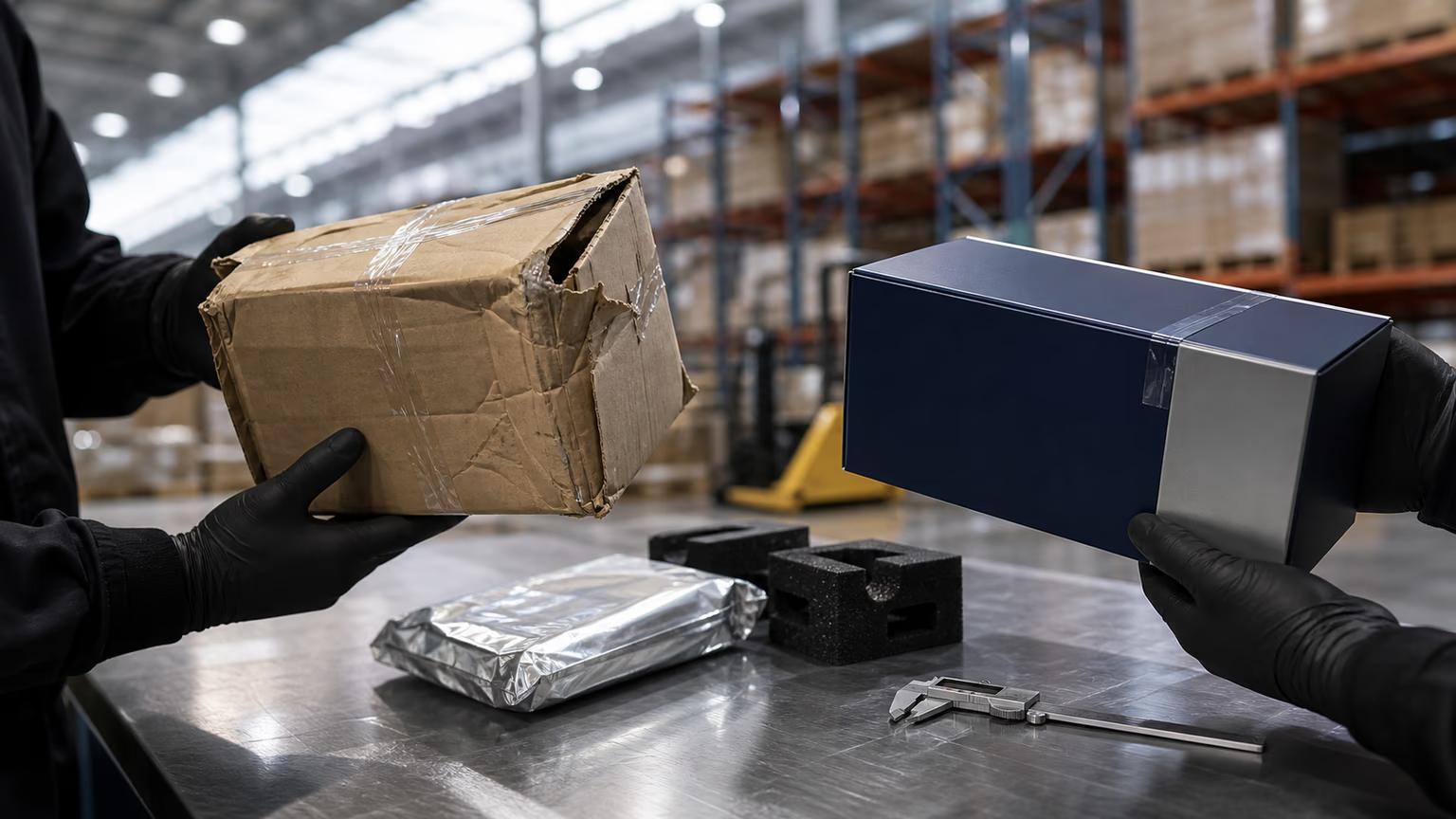
Start with packaging.
Use high-quality, unbranded design that conveys professionalism.
Avoid generic white boxes with a simple logo.
Include clear labeling with the cartridge model, page yield, and a quality guarantee.
Consider using a tiered approach: a standard line for cost-sensitive customers and a premium line with additional features such as higher yield, double-sealed packaging, or extended warranty.
Documentation matters. Provide a product specification sheet and a quality certificate with each batch. Train your sales team to explain the technical advantages of your toner, such as the precise particle size or the chip compatibility testing. When customers understand why your cartridge is different, they are less likely to view it as a cheap substitute.
Educate your customers on proper storage and handling, and offer a simple return process for any rare defects. This builds trust and encourages repeat orders. Over time, your private label becomes associated with reliability, not bargain hunting.
Managing Operational and Service Risks with Premium Compatible Toner
For managed print service providers and fleet managers, the true cost of toner goes far beyond the price per cartridge. Every defective cartridge triggers a service call, consumes technician time, and can breach service level agreements. Premium compatible toner reduces these operational risks by delivering consistent performance and lower failure rates.
When you switch to a vetted premium compatible toner supplier, you can expect fewer instances of print quality complaints, fewer cartridge replacements due to leaks or chip errors, and more stable page yields.
This translates directly into lower labor costs and higher contract profitability.
You can also implement proactive monitoring: track cartridge failure rates by model and supplier, and set alerts if a particular batch shows an unusual defect pattern.
Handling the rare customer complaint professionally is also part of risk management. Have a clear process: apologize for the inconvenience, replace the cartridge immediately, and investigate the root cause with your supplier. A fast, no-hassle response can actually strengthen customer loyalty, while a slow or defensive reaction damages your brand.
Procurement Checklist: Ensuring Premium Quality in Every Batch
Getting a great sample is only the beginning. The real test is whether the supplier can replicate that quality at scale over months and years. Many buyers get burned when the first order is excellent but subsequent batches decline. To prevent that, implement a continuous quality assurance program.
Use the following checklist as a basis for your ongoing due diligence:
- Request and review batch-specific QC reports for every order, including toner yield, density, and fusing test results.
- Conduct random incoming inspections: open a few cartridges per pallet, inspect packaging, check for physical defects, and test print on a representative printer model.
- Run independent page yield tests periodically, ideally on your own high-volume printers, to confirm that the cartridges meet their stated capacity.
- Monitor field failure rates: track returns, complaints, and service calls by cartridge model and supplier. Set a maximum acceptable defect rate and trigger a supplier review if it is exceeded.
- Stay in regular communication with your supplier, and request corrective action reports for any quality issues. A responsive supplier is a sign of a committed partner.
- Re-audit the supplier at least annually, either through a remote questionnaire, third-party audit, or a site visit if feasible.
Consistency does not happen by accident. It is the result of a disciplined procurement process that treats quality as a non-negotiable requirement.
From Pilot Order to Full Rollout: Scaling Without Quality Drift
Before committing to a large volume, start with a pilot order. Select a limited range of cartridge models that cover your most common printer fleet, and test them across multiple devices, including different firmware versions. Pay attention to installation fit, print quality on different paper types, and chip recognition. Run the pilot for at least one full cartridge cycle to assess yield.
During the pilot, document everything: cartridge model, printer model, page count, print quality notes, and any errors.
Share this data with your supplier and ask them to address any inconsistencies.
If the pilot is successful, scale up gradually, monitoring the same metrics as you increase volume.
Define your specifications for toner formulation, component grades, and packaging in a supply agreement, and establish a communication protocol for quality issues.
Scaling without quality drift requires a formalized oversight process.
Set clear responsibilities for both parties, and schedule regular performance reviews.
Keep an eye on firmware updates from printer manufacturers, as they can occasionally cause chip incompatibility.
A proactive supplier will test new firmware promptly and provide updated chips if necessary, ensuring that your fleet remains operational without interruption.
FAQ
What is the difference between compatible and OEM toner cartridges?
OEM cartridges are produced by the printer manufacturer and are designed specifically for their machines.
How can I tell if a compatible toner cartridge is high quality before buying in bulk?
Request samples and test them on your own printer fleet.
What should I look for in a compatible toner supplier to ensure consistent quality?
Look for a supplier with a documented quality management system, transparent manufacturing processes, and a track record of serving B2B customers.
Can using compatible toner void my printer warranty?
In most regions, using compatible toner does not automatically void a printer warranty.
What are the most common causes of print defects with compatible toner?
The most common causes include improper toner particle size leading to poor density or background fog, low melting point causing smearing or poor fusing, poor OPC drum quality causing streaks or ghosting, and chip communication errors.
Conclusion
Compatible toner can look and perform at a premium level, but only if you change the way you source it. The difference between a cheap cartridge that damages your reputation and a premium product that builds customer loyalty comes down to supplier diligence, technical understanding, and ongoing quality control.
Start by evaluating your current supplier against the framework in this article. Request documentation, test samples on your own fleet, and do not be afraid to walk away from a supplier that cannot demonstrate consistency. If you are launching a private label line, invest in packaging, documentation, and customer education to position your brand as a quality choice.
The long-term payoff is clear: fewer service calls, lower total cost of ownership, stronger margins, and a brand that customers trust. The first step is to take a quality-first mindset and apply the practical checks outlined here. Your compatible toner can indeed look premium. Now you know how to make it happen.