
The Hidden Cost of Generic Toner in B2B Contracts
Generic toner often looks like an easy margin win until the first service call.
In B2B printing environments, cartridge failure is not a minor annoyance; it disrupts document workflows, inflates operational costs, and erodes the trust that service contracts are built on.
Distributors who sell unbranded cartridges quickly discover that a low unit price cannot compensate for field returns, technician time, and customer dissatisfaction.
The real cost of generic toner appears in hidden places: print quality variability across batches, premature leakage that contaminates printer internals, and chip errors that force a printer to reject a cartridge mid-job. Each of these failures triggers a service dispatch or an urgent replacement shipment, both of which eat into the margin that the low purchase price was supposed to protect.
For distributors aiming to turn generic toner into a trusted B2B brand, the first step is to recognize that the product itself is only one part of the offer. The perception of risk comes from a history of inconsistent quality, and that perception must be actively managed with visible proof, not just reassurances.
- Service calls rise when cartridges fail unpredictably.
- End-user confidence drops after repeated print defects.
- SLA compliance is threatened by avoidable downtime.
- Price-only sales lose ground to competitors who offer verified reliability.
What a Trusted Brand Means in the Private Label Toner Market
In private label toner, a trusted brand is not a logo or a clever name.
It is a promise that every cartridge from a given SKU will perform the same way in the same printer model, batch after batch.
B2B buyers, especially procurement teams and managed print service providers, evaluate that promise before they ever compare prices.
Their primary question is not how cheap the toner is, but how predictable the supply will be.
Trust is earned through consistency in three areas: product performance, documentation, and support.
Product performance includes page yield, print density, fusing reliability, and absence of leaks.
Documentation covers test reports, compatibility lists, and batch traceability.
Support means having a clear path to resolve field failures quickly, whether through replacement, troubleshooting guidance, or supplier escalation.
A branded private label toner line changes the conversation from transactional selling to risk management. When a distributor can show a history of low defect rates and proactive compatibility monitoring, the buyer starts to view the cartridge as a component of uptime, not as a consumable commodity.
- B2B buyers prioritize risk reduction over unit cost.
- Brand trust reduces customer churn in service contracts.
- Your brand is the sum of product reliability, packaging, and after-sales support.
- Predictable quality allows you to sell value instead of defending price.
The Procurement Mindset: How B2B Buyers Really Evaluate Toner Suppliers
Procurement teams do not buy toner; they buy uptime and cost predictability.
When a request for quotation lands on a procurement manager's desk, the first screen is not price per cartridge but total cost of ownership.
That includes failure rates, service call impact, inventory carrying costs, and the administrative burden of returns.
A toner supplier that cannot demonstrate reliability is quickly excluded from the shortlist.
Compatibility is often a gatekeeper criterion. If the cartridges do not work across the customer's installed base of printers, the bid fails regardless of price. Buyers expect distributors to have tested the cartridges on the specific models and firmware versions in their environment, and they will ask for documentation.
Supply chain stability matters as much as product quality. A supplier that misses shipments or delivers inconsistent batches creates operational risk for the buyer's own service commitments. Procurement teams value transparent communication, buffer stock, and a clear escalation path when something goes wrong.
- First screen: reliability evidence and quality documentation.
- Second: compatibility coverage for the actual printer fleet.
- Third: supply continuity and warranty terms.
- Price is evaluated last, after risk is managed.
Quality Control as the Foundation of Brand Building
If you want to build a trusted brand on private label toner, you must start with the components inside the cartridge.
The three critical elements are the toner formulation, the OPC drum, and the chip.
Low-grade toner powder produces faded prints, excess dust, and poor fusing.
Inferior drums cause backgrounding and ghosting.
A poorly programmed chip reports incorrect toner levels or fails to communicate with the printer.
Quality control is not a one-time inspection; it is a continuous process embedded in the manufacturer's production line.
A reliable supplier will use statistical process control to monitor key parameters and will provide evidence of batch-level testing.
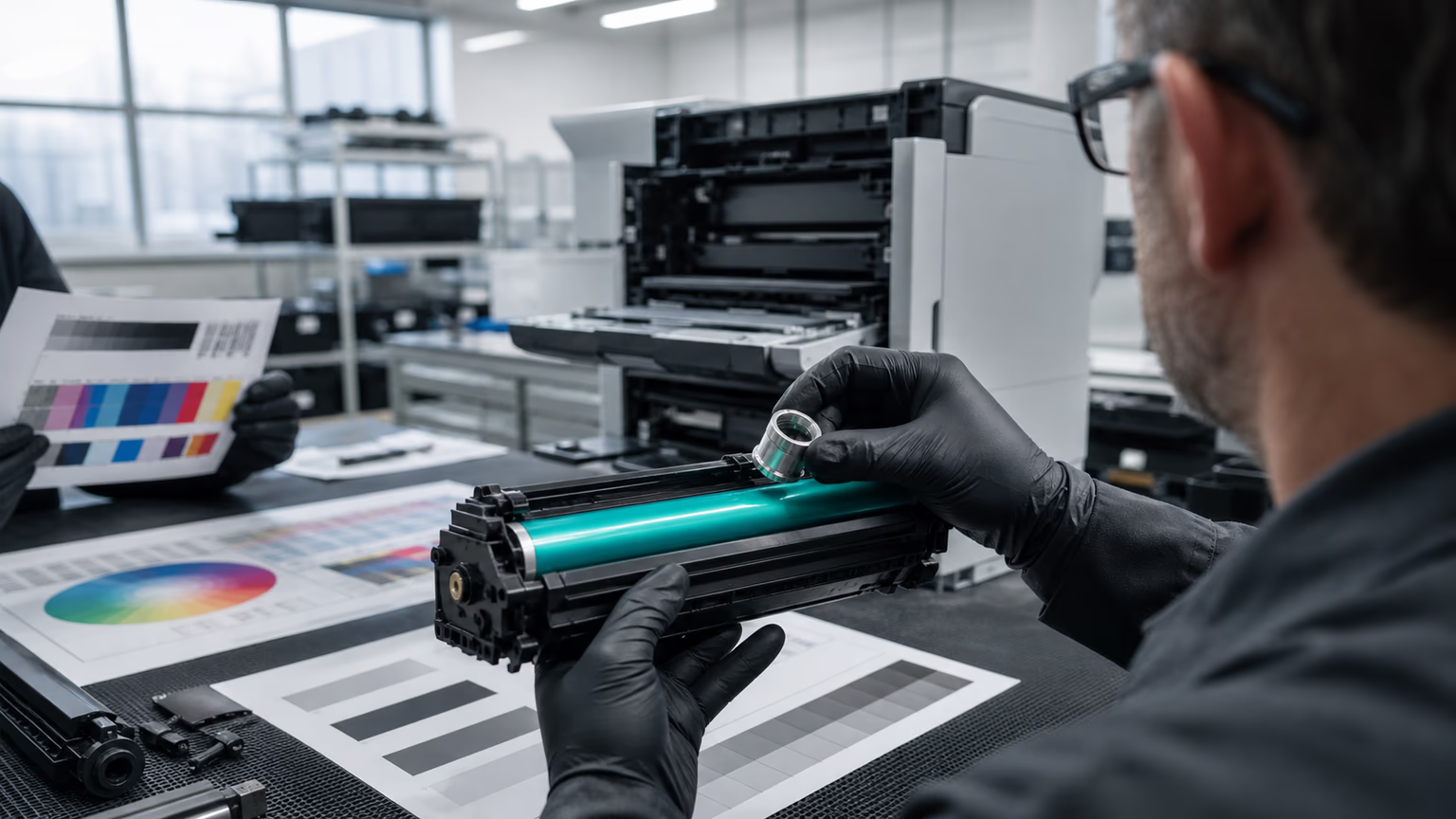
That evidence might include print density measurements, page yield tests under controlled conditions, and visual inspections for leaks or physical defects.
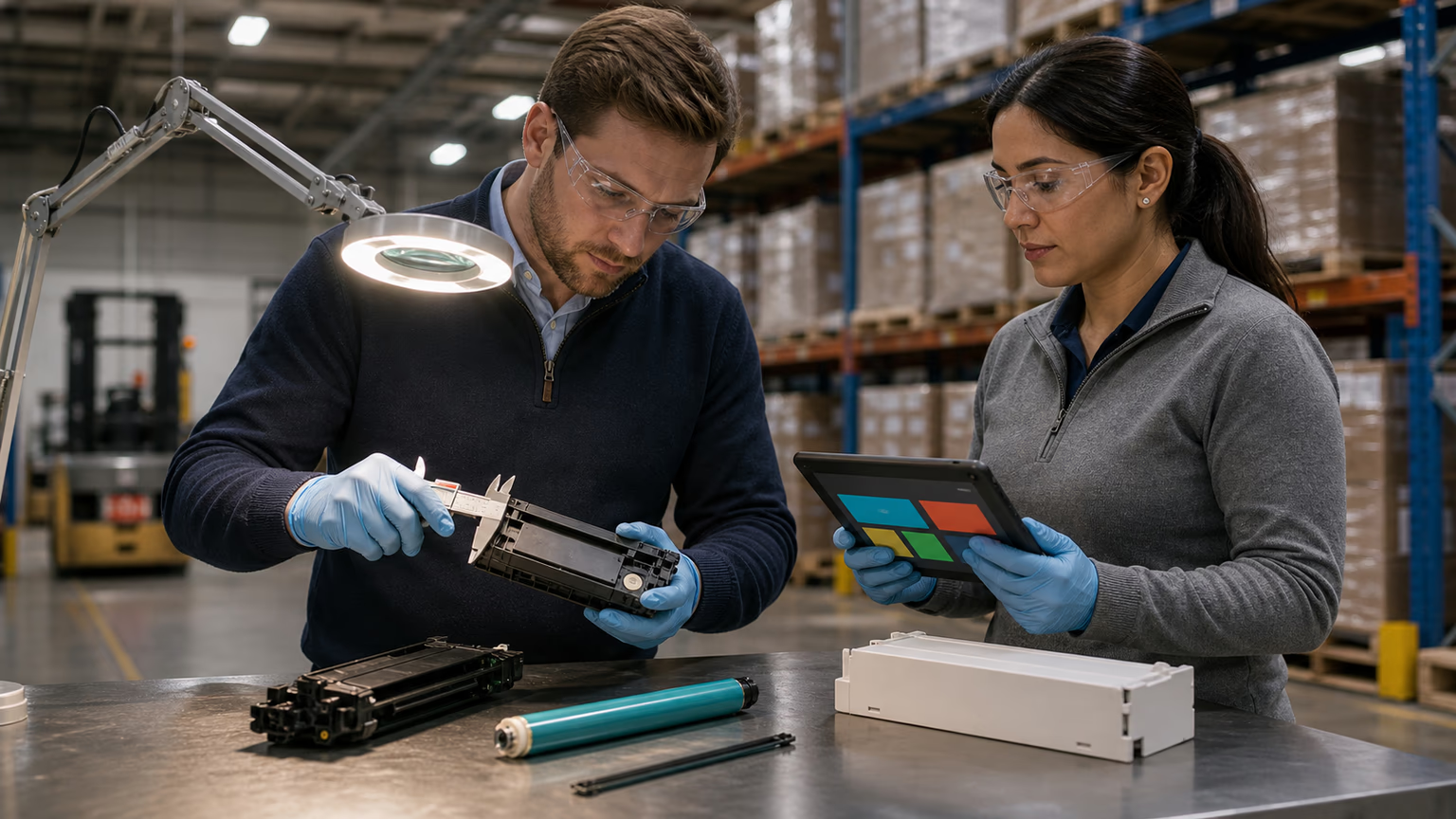
As a distributor, you have two responsibilities: first, audit the supplier's quality management system before you sign a contract; second, implement your own incoming inspection on every batch. Even the best supplier can have a bad batch, and a simple incoming functional test on a sample of cartridges can catch many issues before they reach your customers.
- Toner formulation must match the fusing temperature of the intended printer class.
- OPC drum quality directly affects image uniformity and lifespan.
- Chip programming must track firmware changes from printer OEMs.
- Batch testing protocols should include yield, density, and leakage checks.
Compatibility Management: Keeping Pace with Printer Firmware and Fleet Diversity
Printer manufacturers regularly release firmware updates that can affect how a device communicates with a toner cartridge chip. A cartridge that works perfectly today may be rejected after an automatic firmware update next month. This is one of the most difficult problems in the compatible toner industry, and it requires active monitoring.
Fleet diversity compounds the challenge. Your customer may operate dozens of printer models from multiple brands, each with different firmware versions. A private label toner line must be tested across the full range of models you intend to support, and you must keep a compatibility matrix that is regularly updated.
Distributors who succeed in compatibility management treat it as a service, not a one-time certification. They subscribe to firmware release notes from printer OEMs, test new cartridges against newly updated devices, and communicate clearly with customers about supported configurations. If a compatibility issue arises, they have a process to swap cartridges or update chips quickly.
- Monitor OEM firmware release notes proactively.
- Maintain a compatibility matrix by printer model and firmware version.
- Test cartridges on multiple firmware states, not just the latest.
- Have a clear field replacement process when compatibility fails.
Supply Chain Transparency and Supplier Partnership
Your brand is only as strong as the weakest link in your supply chain. A toner manufacturer that hides component sources, has no documented QC process, or cannot provide traceability is a liability. Transparent suppliers will share information about their OPC drum grade, toner formulation origin, chip programming capabilities, and production batch records.
When evaluating a toner manufacturer, ask for a documented quality management system and recent audit reports. Check whether they perform statistical process control and whether they can provide batch-level traceability from raw material to finished cartridge. A supplier with multiple production lines and buffer stock reduces your risk of stockouts during demand spikes.
Beyond documentation, the relationship matters. A true supplier partnership includes regular communication, joint review of field failure data, and a willingness to invest in continuous improvement. You should have a clear warranty and defect replacement process, and the supplier should escalate chronic quality issues with root cause analysis, not just ship replacements.
- Request component specifications and source documentation.
- Verify batch traceability and QC records.
- Negotiate a clear defect replacement policy.
- Schedule regular quality review meetings with the supplier.
Turning Quality into a Brand Story for Your B2B Customers
Quality that cannot be communicated is invisible quality, and invisible quality cannot build a brand. Your private label toner needs a compelling narrative that reassures B2B buyers in their own language: risk reduction, total cost of ownership, and predictable service delivery.
Packaging and documentation are the first tangible touchpoints. Your brand should appear consistently on the box, the cartridge label, and the included compatibility sheet. But more important than the logo is the information you provide: batch number, date of manufacture, supported printer models, and a statement of your testing protocol. This turns a generic product into a specified component.
Sales conversations should shift from price per cartridge to cost per printed page and uptime. Equip your sales team with test reports, compatibility matrices, and case-based arguments about how a reliable cartridge reduces service calls and protects contract margins. Educate buyers on how to evaluate toner beyond the initial purchase price.
- Use packaging and labels to communicate quality commitments.
- Include a compatibility list and testing summary with each shipment.
- Train sales teams to discuss total cost of ownership.
- Position your brand as a risk-reducing partner, not just a vendor.
Operationalizing Brand Trust: Incoming Inspection, Field Monitoring, and Continuous Improvement
Building a trusted brand is not a launch-day project; it is an operational discipline.
After you begin selling your private label toner, you need systems to maintain the quality promise.
The first system is incoming inspection: every batch should undergo a documented check before it enters your warehouse.
That check should include a visual examination, a functional print test on a representative printer, and a chip communication test.
The second system is field monitoring. Track defect rates by SKU, printer model, and batch. When a customer reports a problem, capture the cartridge serial or lot number, the printer firmware version, and the symptoms. This data is gold for identifying patterns and pushing corrective actions back to the manufacturer.
The third system is continuous improvement. Review field data with your supplier on a regular basis, agree on corrective actions for recurring issues, and update your compatibility matrix as new printer models and firmware versions appear. Over time, this closed loop reduces defects, strengthens your brand promise, and makes your private label toner line a defensible asset.
- Incoming inspection checklist: visual, functional, chip test.
- Track field failure rate by SKU and batch.
- Hold regular supplier review meetings with field data.
- Update compatibility lists proactively.
FAQ
How can I verify the quality of private label toner cartridges before putting my brand on them?
Verify quality by requesting supplier quality certifications, component specifications, and recent third-party audit reports. Before branding, run your own side-by-side print tests against OEM cartridges on multiple printer models, measure page yield under controlled conditions, and inspect for leaks or physical defects. An incoming inspection protocol for every batch is essential.
What are the most common compatibility issues with generic toner cartridges, and how can I avoid them?
The most common issues are chip communication failures, poor toner formulation causing print density problems, and physical fit or sealing defects. Avoid them by demanding compatibility testing across your customer's fleet, monitoring firmware versions, and working with suppliers who provide batch-level traceability and field failure tracking.
How do OEM firmware updates affect private label toner compatibility?
Firmware updates can change how the printer communicates with the cartridge chip, sometimes causing a previously working cartridge to be rejected. To manage this, subscribe to printer OEM release notes, test new firmware against your cartridge chips, and maintain a compatibility matrix that is updated regularly. Have a rapid replacement process for affected cartridges.
What should I look for in a toner manufacturer's quality control process?
Look for a documented quality management system with regular audits, statistical process control data, and batch-level traceability. The manufacturer should specify component grades for the OPC drum, toner powder, and chip. Ask for test reports on print density, page yield, and leakage. A transparent supplier will share this information without hesitation.
How can I differentiate my private label toner brand beyond just a lower price?
Beyond price, differentiate through verifiable reliability, documented compatibility, and responsive support. Provide test reports, compatibility lists, and clear warranty terms. Educate customers on total cost of ownership and position your brand as a partner that protects uptime and reduces service risk. Consistent packaging and a professional brand story also help.
Conclusion
Turning generic toner into a trusted B2B brand is not about clever marketing; it is about building an operational system that reduces risk at every step.
By focusing on quality control, compatibility management, supply chain transparency, and field monitoring, distributors can transform a commodity product into a strategic asset that commands customer loyalty and protects margins.
The path is demanding, but the reward is a brand that procurement teams and service managers learn to rely on.