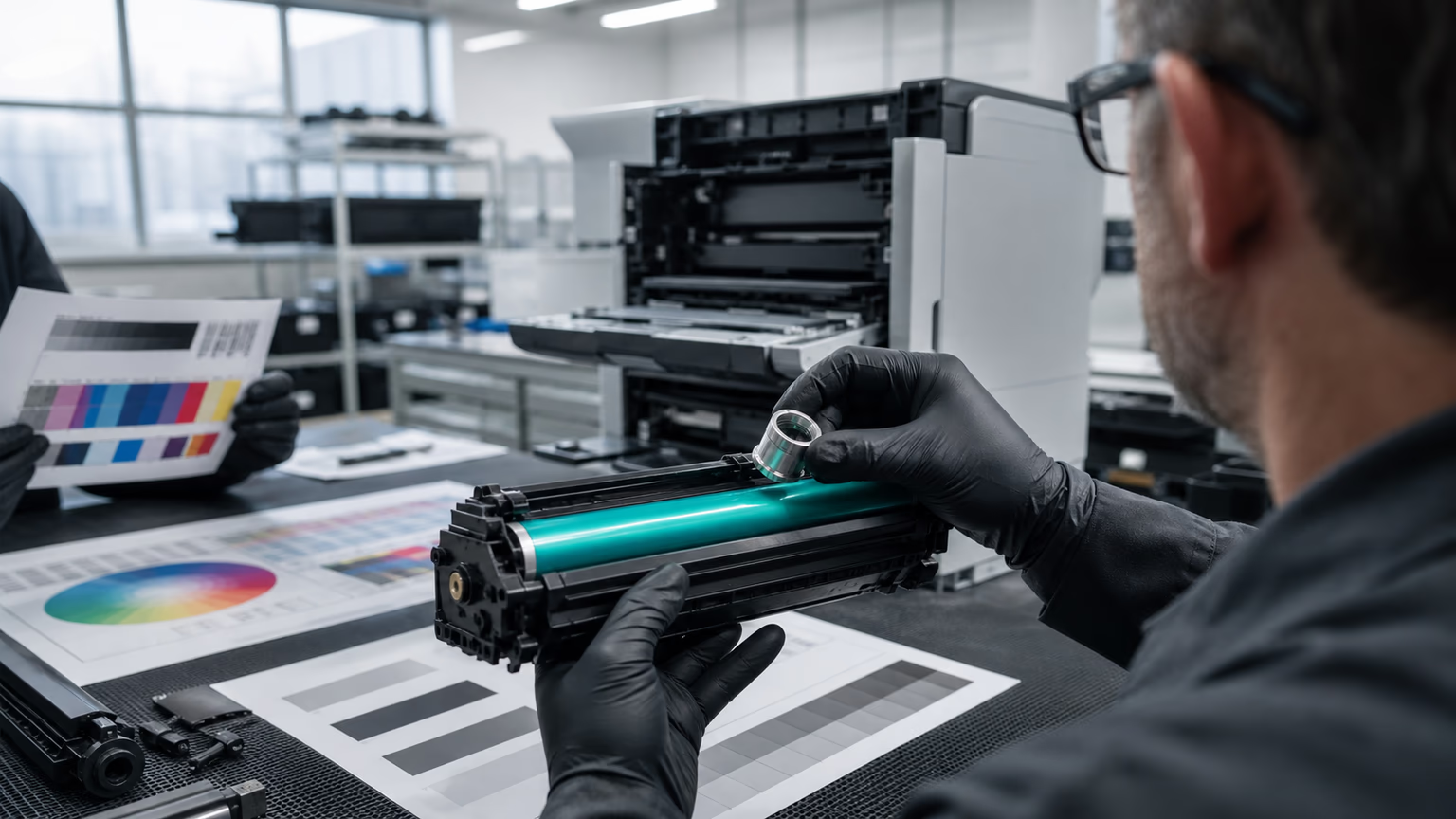
Introduction: The Trust Gap in Private Label Toner
Distributors and service providers who sell private label toner cartridges know the challenge well.
Even when the toner powder and cartridge components match OEM performance, buyers often hesitate.
They have been burned by cheap printer toner cartridges that leaked, failed early, or caused print defects.
The result is a trust gap that private label brands must close before they can win long-term contracts.
Packaging is often the missing piece in this equation.
Before a cartridge is ever installed, its box, bag, and protective inserts have already made a promise.
Better packaging increases toner brand confidence by signaling quality, consistency, and professionalism from the first touchpoint.
This guide is for B2B distributors, importers, MPS operators, and printer service companies.
It explains why packaging is not a cosmetic afterthought but a strategic tool for reducing damage, returns, and buyer skepticism.
You will learn what packaging features matter most, how to evaluate a supplier's packaging quality, and how to turn packaging into a competitive advantage for your private label toner line.
Why Packaging Is More Than a Box: The Psychology of First Impressions
In B2B procurement, buyers rarely test a product before purchase.
They rely on visual and physical cues to assess reliability.
A sturdy, well-designed toner box communicates that the manufacturer cares about details.
It suggests that if the company invests in protective packaging, it likely invests in cartridge quality too.
On the other hand, a flimsy or generic plain white box triggers caution.
Buyers may assume the cartridge inside is equally unrefined.
This psychological effect is powerful in the private label toner market, where brand recognition is low and trust must be earned quickly.
Professional packaging also helps a distributor build their own brand.
When a private label toner cartridge arrives in a custom-printed box with clear labeling, the distributor looks like a serious supplier rather than a middleman selling no-name products.
This perception shift is critical because it moves the conversation away from price-only negotiation.
Instead of asking how cheap the cartridge is, the buyer starts evaluating the total value proposition, including reliability and support.
Better packaging increases toner brand confidence by transforming a commodity into a branded solution.
The Real Cost of Poor Packaging: Damage, Returns, and Lost Confidence
Poor packaging is not a minor inconvenience.
It is a direct source of financial loss and operational disruption.
When laser printer toner cartridges arrive with crushed boxes, broken seals, or visible damage, distributors face immediate replacement costs.
But the hidden costs are often larger: processing returns, issuing credit memos, handling customer complaints, and losing future orders.
Each damaged shipment erodes the buyer's confidence in the distributor's quality control.
- Transit damage leads to direct replacement costs and administrative burden.
- Leaking toner powder can contaminate other cartridges in the same shipment, causing wider inventory losses.
- Micro-fractures from poor cushioning may not be visible but cause premature failures and service calls.
- Repeated packaging failures damage the distributor's reputation and reduce repeat business.
For a printer service company, packaging-related failures translate into truck rolls, labor hours, and frustrated end customers.
A single avoidable service call can wipe out the margin on several cartridges.
Procurement teams that select a private label toner supplier based only on unit price often discover that poor packaging turns a low-cost purchase into a high-total-cost mistake.
The lesson is clear: better packaging is a risk mitigation strategy, not an expense.
Key Packaging Elements That Protect Toner Quality
Effective toner packaging is an engineered system, not just a cardboard box.
The first layer is the outer carton.
It must be made from high-strength corrugated board that can withstand stacking, palletizing, and rough handling.
The box dimensions should match the cartridge size closely to prevent movement during transit.
Excess void space increases the risk of impact damage.
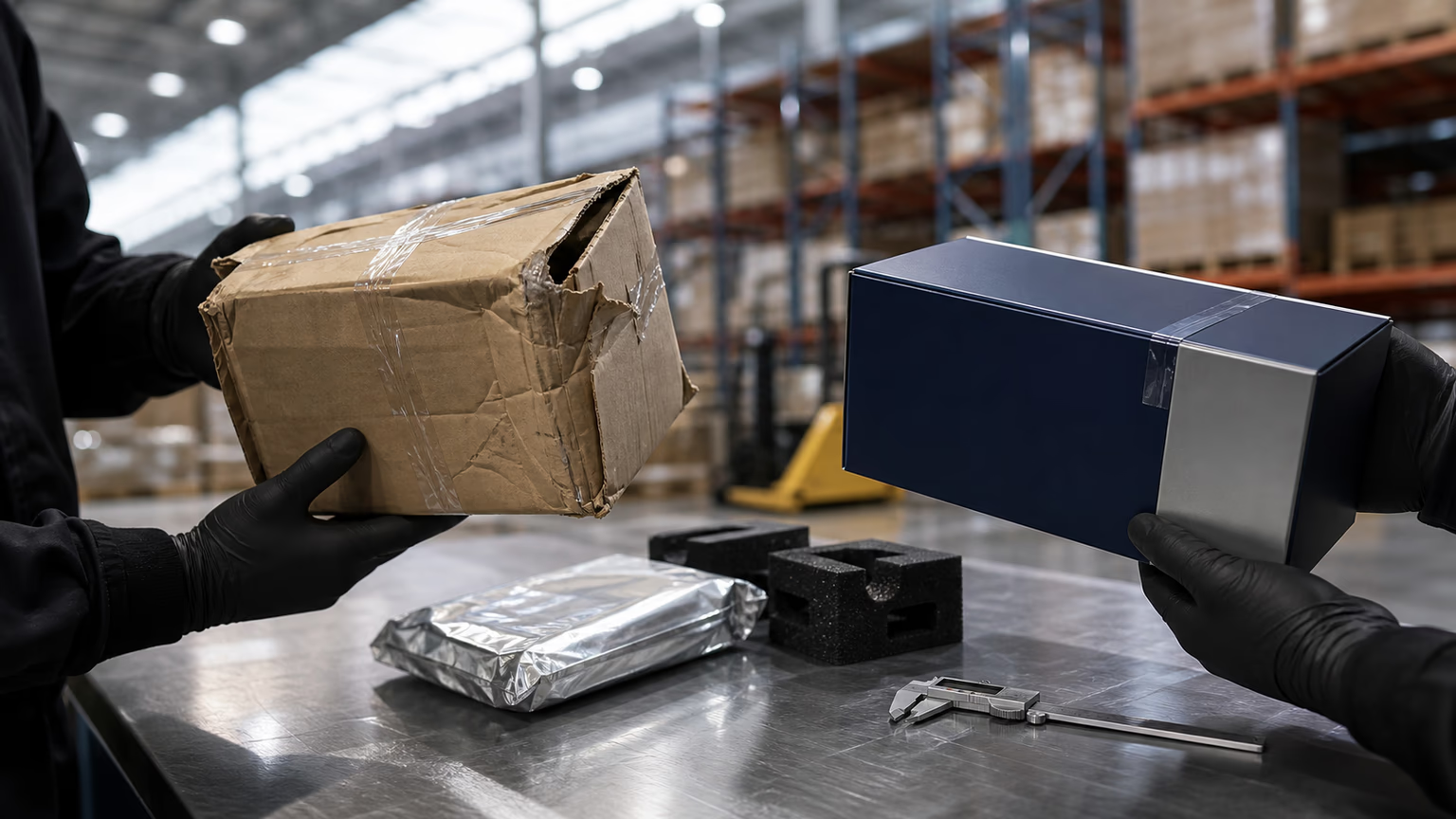
Internal cushioning, such as molded pulp inserts, foam end caps, or air pillows, immobilizes the cartridge and absorbs shock.
The second layer is the moisture barrier.
Toner powder is sensitive to humidity and temperature extremes.
Even brief exposure to moisture can cause clumping, poor flow, and print quality issues.
A sealed anti-static bag protects the cartridge from humidity and prevents static buildup that attracts loose toner particles.
For office printer toner cartridges that may be stored for months before use, this barrier layer is critical.
Custom inserts that hold the cartridge firmly also reduce micro-fractures in plastic components that can occur from vibration during long-haul shipping.
Finally, the sealing method matters.
Tape seals, shrink wrap, and tamper-evident labels must be applied consistently.
A poorly sealed bag allows toner dust to escape and creates a messy first impression.
Batch-to-batch consistency in these elements demonstrates that the supplier has robust process controls.
When evaluating private label toner cartridges, buyers should examine the entire packaging system, not just the outer box.
Branding and Labeling: Turning Packaging into a Trust Signal
A plain white box with a generic label does nothing to build brand confidence.
In contrast, custom-printed packaging with the distributor's logo, brand colors, and professional layout signals that this is a legitimate product from a serious company.
It also makes the product easier to identify in a warehouse or service van, reducing picking errors.
For private label toner cartridges, the packaging is often the only marketing medium available at the point of use.
Accurate labeling is equally important.
The outer box should clearly state which printer models the cartridge is compatible with.
Vague or missing compatibility information leads to ordering errors, returns, and support calls.
A detailed compatibility list on the box or a QR code that links to a verified database reduces buyer confusion.
Regulatory markings, such as safety symbols and recycling instructions, demonstrate compliance and professionalism.
Clear labeling does more than inform; it reassures the buyer that the product has been designed with care and that the supplier understands the complexities of the printer toner market.
Tamper-Evidence and Anti-Counterfeiting: Protecting Your Brand and Buyers
Counterfeit and reused toner cartridges are a real concern in the B2B supply chain.
A distributor who buys from a less reputable source may unknowingly receive cartridges that have been refilled and repackaged.
Tamper-evident seals on the box, bag, and cartridge itself provide assurance that the product is new and authentic.
A broken seal is an immediate red flag.
For buyers, this feature reduces the risk of receiving used or inferior cartridges.
Anti-counterfeit measures such as holographic labels, security tape, or scannable QR codes add another layer of protection.
These features are not just about brand protection; they also protect the end customer from potential printer damage caused by counterfeit toner.
For a premium private label toner line, tamper-evident packaging is a signal that the supplier controls the supply chain and takes quality seriously.
It is a small investment that pays off in reduced disputes and stronger buyer confidence.
How to Evaluate a Private Label Toner Supplier's Packaging Quality
Procurement teams should not rely on photos or claims.
Packaging quality must be verified through direct inspection and testing.
Start by requesting physical samples of the exact packaging that will be used for production.
Perform a drop test from a typical shipping height, such as waist height, onto a hard surface.
Inspect the outer carton for dents, crushed corners, or seam separation.
Open the box and check whether the cartridge is still firmly in its protective insert.
- Request packaging samples and perform drop tests from at least one meter onto concrete.
- Inspect seals, seams, and closure integrity under simulated transit vibrations.
- Review material specifications for strength, moisture resistance, and static control.
- Check batch-to-batch consistency in dimensions, print quality, and sealing reliability.
- Confirm that packaging includes all required legal markings, compatibility lists, and safety symbols.
- Evaluate ease of opening and whether packaging supports efficient warehouse handling.
Also assess the supplier's willingness to customize packaging.
A good private label partner should offer options for distributor branding, compatibility labeling, and sustainable materials.
Ask for documentation of packaging compliance with international shipping standards, even if specific certifications are not required.
A supplier that cannot provide consistent, well-engineered packaging is likely to have quality control problems elsewhere in the production process.
Sustainability in Toner Packaging: Meeting Buyer Expectations
Corporate sustainability goals are increasingly influencing procurement decisions.
Distributors and service companies are looking for ways to reduce waste and carbon footprint.
Packaging is a visible and measurable part of that effort.
Private label toner suppliers can support these goals by using recyclable corrugated board, minimizing plastic components, and right-sizing boxes to eliminate excess void fill.
Right-sizing also reduces shipping costs per unit, which benefits the bottom line.
However, sustainability should not compromise protection.
A package that is too minimalist may lead to higher damage rates, negating any environmental benefit.
The best approach is to specify packaging that balances recycled content with structural strength.
For example, molded pulp inserts made from recycled paper can provide excellent cushioning without foam.
When evaluating suppliers, ask about their use of recycled materials and whether the packaging can be easily recycled after use.
This is not just a feel-good feature; it is a practical way to align with the values of modern B2B buyers.
FAQ
What is the most common packaging failure that damages toner cartridges?
The most common failure is inadequate internal cushioning. When a cartridge is loose inside its box, impact during transit can cause micro-fractures in plastic components or dislodge internal parts. Even if the cartridge looks fine, these hidden damages can lead to print defects or premature failure. Proper inserts and tight fitment are essential.
How can I tell if a private label toner supplier uses high-quality packaging?
Request samples and inspect them physically. A high-quality package will have a sturdy outer carton with consistent seams, a sealed anti-static bag with no punctures, and custom inserts that hold the cartridge firmly. Perform a drop test and check for any movement or damage. Also look for clear labeling, tamper-evident seals, and evidence of batch-to-batch consistency.
Does better packaging really reduce toner cartridge return rates?
Yes. Damage during shipping is one of the leading causes of toner cartridge returns. Packaging that protects against impact, vibration, and humidity directly reduces the number of cartridges that arrive damaged or fail shortly after installation. While no packaging can prevent every issue, a well-engineered system significantly lowers return rates and the associated costs.
What labeling information is essential on private label toner packaging to avoid compatibility complaints?
Each box should clearly state the compatible printer models, either as a printed list or via a scannable QR code that links to a compatibility database. The label should also include the cartridge yield, color, and any relevant regulatory markings. Vague or missing compatibility information is a leading cause of ordering errors and customer frustration.
Are tamper-evident seals necessary for private label toner cartridges?
Yes, especially for distributors who want to assure buyers that the cartridges are new and authentic. Tamper-evident seals on the box, bag, or cartridge provide a visible indicator of product integrity. They deter counterfeit or reused cartridges from entering the supply chain and reduce disputes over warranty claims. For premium private label lines, tamper-evidence is a must-have.
Conclusion
Packaging is not an afterthought in the private label toner business.
It is the first physical promise a brand makes to a skeptical buyer.
By investing in protective design, clear branding, tamper-evidence, and sustainable materials, distributors can transform cheap printer toner cartridges into trusted, branded solutions.
Better packaging increases toner brand confidence by reducing damage, returns, and service calls while signaling that the supplier cares about quality at every level.
For procurement teams and distributor owners, the practical takeaway is simple: evaluate packaging with the same rigor as cartridge performance. Request samples, test them, and specify your requirements in supplier contracts. The companies that treat packaging as a strategic investment will build longer-lasting relationships and stronger margins in the competitive printer toner market.