
The wholesale toner market is one of the largest B2B segments in the printing industry. Distributors, importers, and service companies constantly work with high-volume orders across major printer brands such as HP, Canon, Xerox, Ricoh, Kyocera, Brother, Samsung, Lexmark, and Konica Minolta.
At this level, the business is no longer about single cartridges. It becomes about supply stability, batch consistency, compatibility control, pricing structure, and long-term margin protection.
A wholesale toner strategy is not just procurement. It is a system for building scalable distribution.
Why Wholesale Toner Is Different From Retail Supply
Wholesale toner is fundamentally different from small-order purchasing.
In retail or small B2B orders, buyers focus on:
- unit price;
- single model availability;
- quick delivery;
- small MOQ.
In wholesale supply, the focus shifts to:
- stable batch production;
- multi-brand compatibility;
- predictable pricing over time;
- inventory planning;
- failure rate control;
- logistics optimization;
- repeat orders at scale.
This is especially important when dealing with major printer ecosystems like HP and Canon, where model variations are large and firmware or chip updates can affect compatibility.
Major Printer Brands in Wholesale Toner Markets
A serious wholesale toner supplier must support a wide range of printer brands. The most important ecosystems include:
HP (Hewlett-Packard)
HP remains the largest global segment for laser printers. Wholesale toner for HP requires strong chip compatibility control, especially for newer cartridge series.
Canon
Canon toner systems often overlap with HP in some engine families, but require precise cartridge matching and stable drum performance.
Xerox
Xerox environments are common in corporate and government fleets. Stability and yield consistency are critical.
Ricoh
Ricoh copiers are widely used in high-volume office environments. Developer balance and long-run consistency matter significantly.
Kyocera
Kyocera systems rely heavily on long-life components, so toner formulation must match ceramic drum durability expectations.
Brother
Brother printers are common in SMB environments. Compatibility and affordability are key drivers.
Samsung
Samsung laser systems (now partly under HP ecosystem) still exist in many markets and require stable compatible toner options.
Lexmark
Lexmark enterprise printers demand strong consistency and controlled batch quality.
Konica Minolta
Common in managed print service fleets, where service stability and predictable yield are critical.
Each ecosystem behaves differently, which makes wholesale toner sourcing more complex than simple product ordering.
How Distributors Protect Margin in Bulk Orders
Margin protection in wholesale toner depends on more than purchase price.
Distributors must control:
- failure rate per batch;
- return rate;
- shipping cost per unit;
- storage efficiency;
- SKU rotation speed;
- customer complaint cost;
- compatibility errors;
- hidden maintenance costs.
Even a small defect rate in bulk orders can significantly reduce profit when scaled across HP, Canon, Xerox, Ricoh, and Kyocera fleets.
This is why many buyers move closer to a toner cartridge manufacturer instead of relying only on trading vendors.
Compatible vs OEM vs Remanufactured in Wholesale Market
Wholesale buyers usually compare three categories:
Compatible toner cartridges
Newly manufactured cartridges built to match OEM performance. Best for scalable B2B supply.
Remanufactured cartridges
Recycled OEM shells refilled with toner. Quality depends heavily on core condition.
OEM cartridges
Original manufacturer products. Highest reliability but lowest margin.
In most wholesale markets, compatible toner dominates due to balance between cost and performance.
A detailed comparison is available in:compatible toner cartridges vs remanufactured toner cartridges
Key Risks in Wholesale Toner Supply
Large-scale toner distribution has specific risks:
- inconsistent batch quality;
- chip compatibility changes;
- OEM firmware updates;
- unstable yield performance;
- packaging inconsistency;
- mixed factory sourcing;
- delayed production cycles.
These risks multiply when working across multiple brands like HP, Canon, Xerox, Ricoh, Kyocera, Brother, Samsung, Lexmark.
Why Factory Control Matters
In wholesale toner, factory-level control is critical because:
- production must be repeatable;
- chip versions must be stable;
- toner formulation must be consistent;
- packaging must be identical across batches;
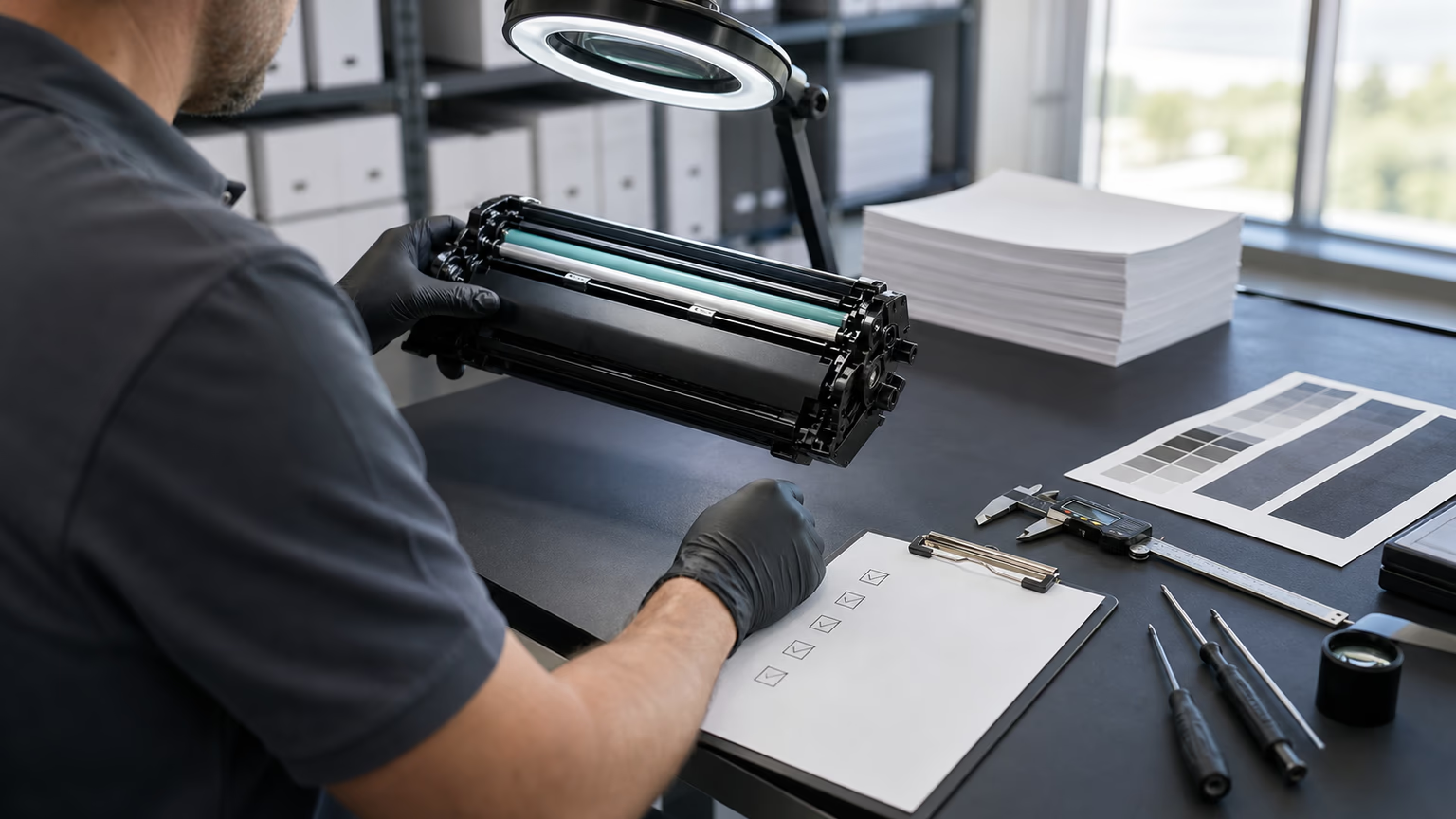
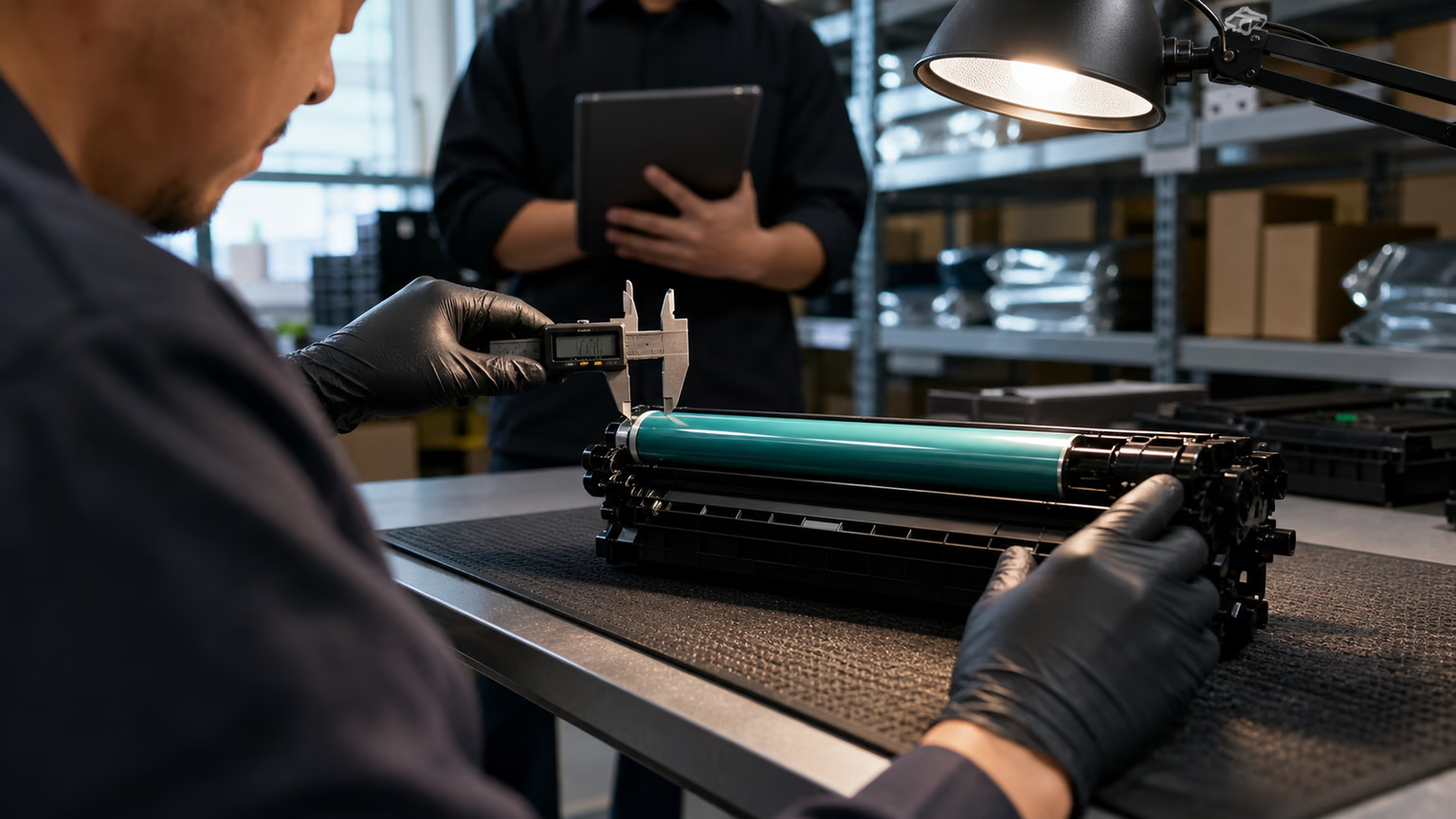
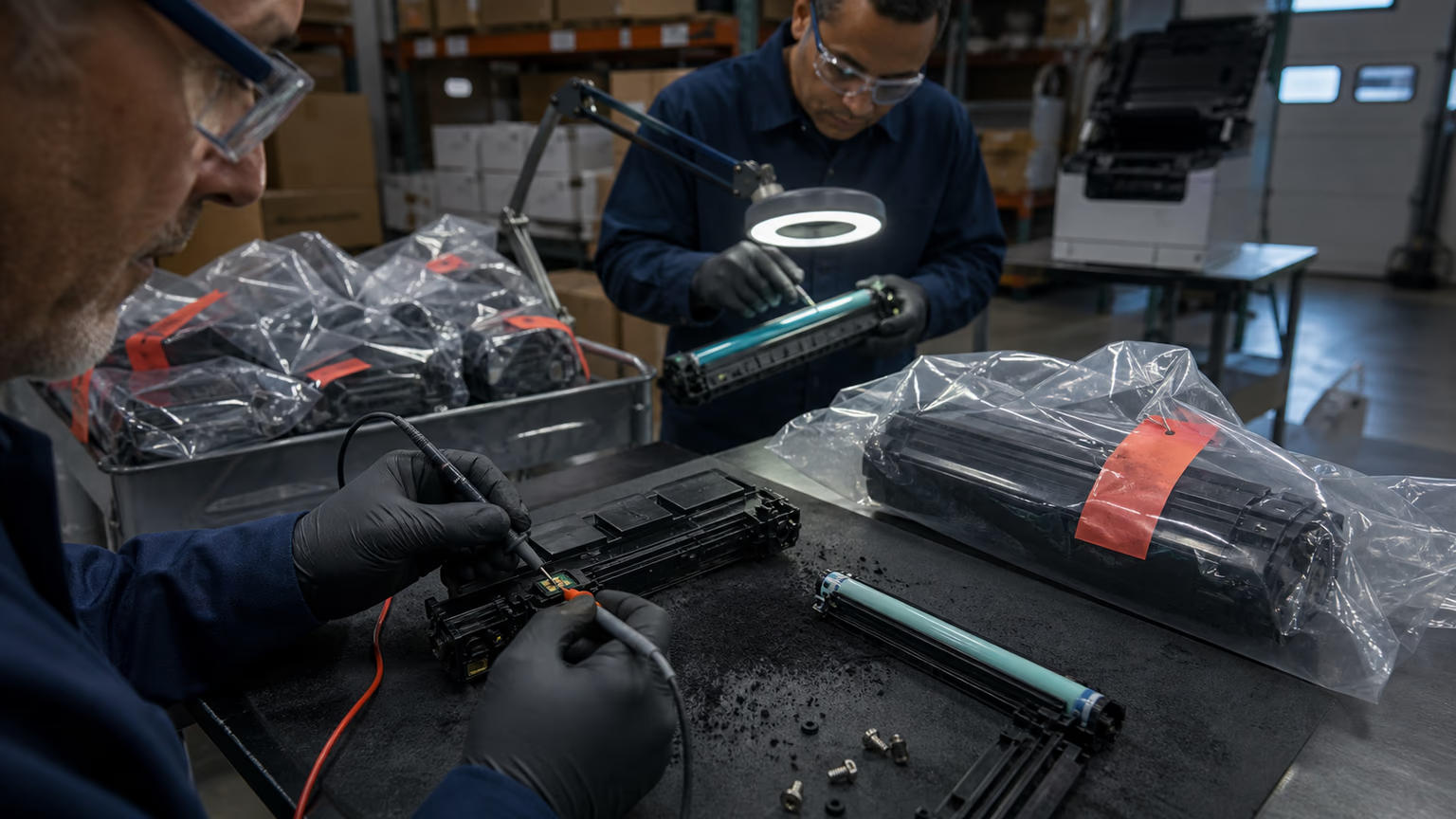
- QA must be strict for fleet usage.
Without this, distributors face unpredictable field performance.
This is why many importers prefer structured suppliers like:toner cartridge suppliers
Inventory Strategy for Bulk Orders
Wholesale toner requires careful inventory balancing.
Distributors must manage:
- fast-moving SKUs (HP, Brother);
- enterprise SKUs (Xerox, Ricoh, Lexmark);
- high-yield models (Kyocera, Canon);
- regional demand differences;
- seasonal fluctuations.
Overstocking slow SKUs reduces cash flow. Understocking fast SKUs damages customer trust.
How UNICO Supports Wholesale Toner Buyers
UNICO supports wholesale toner supply for major printer ecosystems including HP, Canon, Xerox, Ricoh, Kyocera, Brother, Samsung, Lexmark, and Konica Minolta.
Support includes:
- bulk toner cartridge manufacturing;
- compatible model selection;
- batch consistency control;
- private label packaging;
- export coordination;
- QA testing for fleet use;
- reorder planning support.
The goal is stable B2B supply, not one-time transactions.
FAQ
What is wholesale toner?
Wholesale toner refers to bulk purchasing of toner cartridges for distribution, resale, or fleet supply, typically across major printer brands like HP, Canon, Xerox, Ricoh, and Brother.
Which printer brands dominate wholesale toner markets?
HP, Canon, Xerox, Ricoh, Kyocera, Brother, Samsung, Lexmark, and Konica Minolta are the main brands in global B2B toner supply.
Is compatible toner better for wholesale?
In most cases, yes. Compatible toner provides better cost efficiency while maintaining acceptable performance for B2B distribution.
What is the biggest risk in wholesale toner?
The biggest risk is inconsistent quality across batches, which leads to returns, complaints, and loss of distributor trust.
Final Thoughts
Wholesale toner is a high-volume, high-responsibility business.
Success depends on stable supply chains, predictable quality, and strong compatibility control across major printer brands. HP, Canon, Xerox, Ricoh, Kyocera, Brother, Samsung, Lexmark, and Konica Minolta all require different technical and commercial approaches.
The distributors who succeed are those who treat toner not as a commodity, but as a structured supply system.
Related reading: compatible toner cartridges, premium toner cartridges, toner cartridge manufacturer, toner cartridge suppliers, high waste toner in copier fleets, private label toner manufacturing.