
In the global B2B printing industry, buyers working with HP, Canon, Xerox, Ricoh, Kyocera, Brother, Samsung, Lexmark, and Konica Minolta fleets often face a key decision: should they choose premium toner cartridges or affordable printer toner cartridges?
At first glance, the difference seems simple — price. Premium cartridges cost more, while affordable cartridges reduce upfront expenses. But in real B2B environments, especially in managed print services and large copier fleets, the decision is far more complex.
Cost per unit is only one part of the equation. The real factors include consistency, failure rate, maintenance load, printer lifespan, and customer satisfaction.
What Are Premium Toner Cartridges?
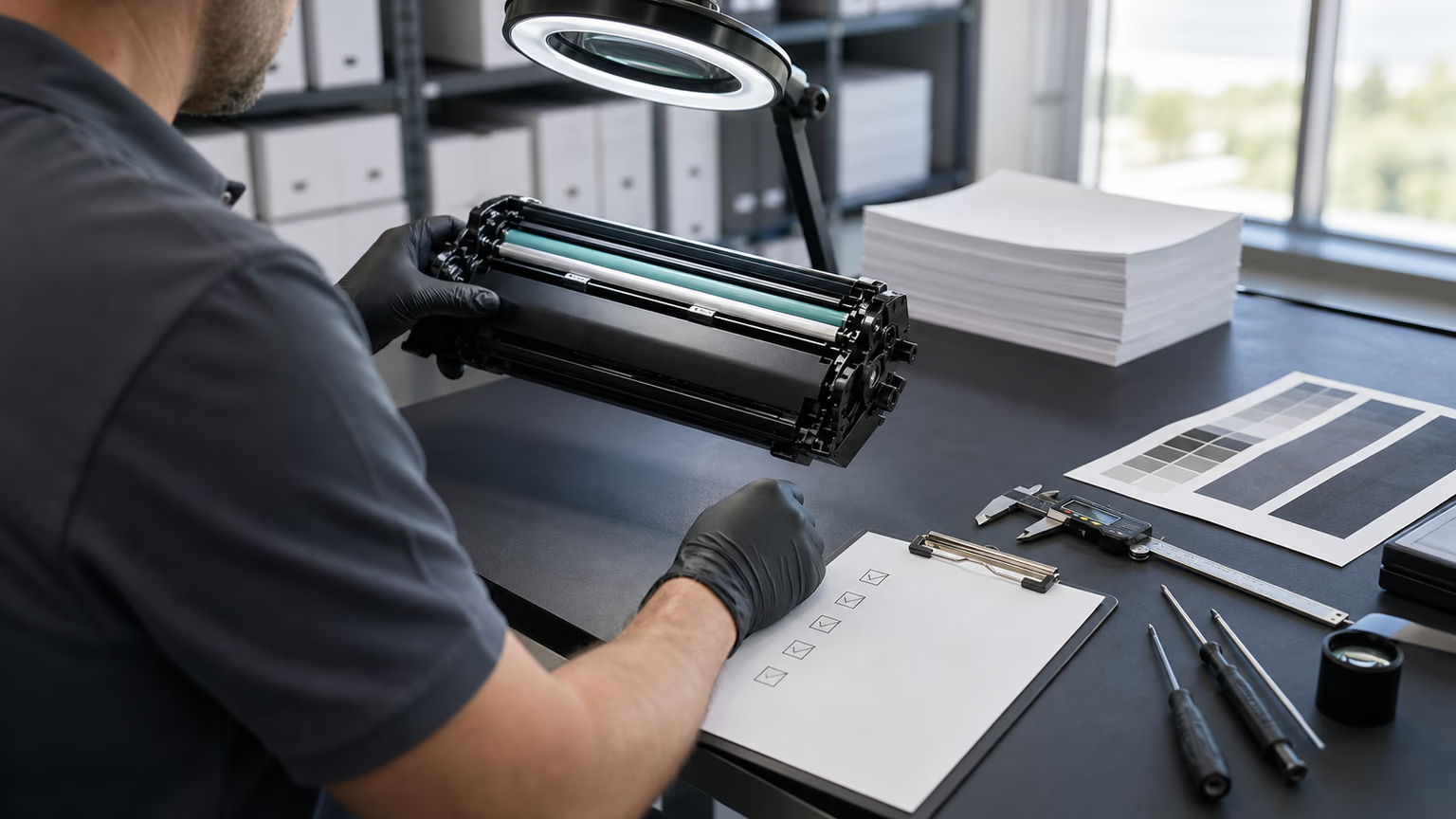
Premium toner cartridges are designed for higher stability, consistency, and performance control. They typically include:
- high-grade toner formulation;
- controlled drum and blade quality;
- stable chip compatibility;
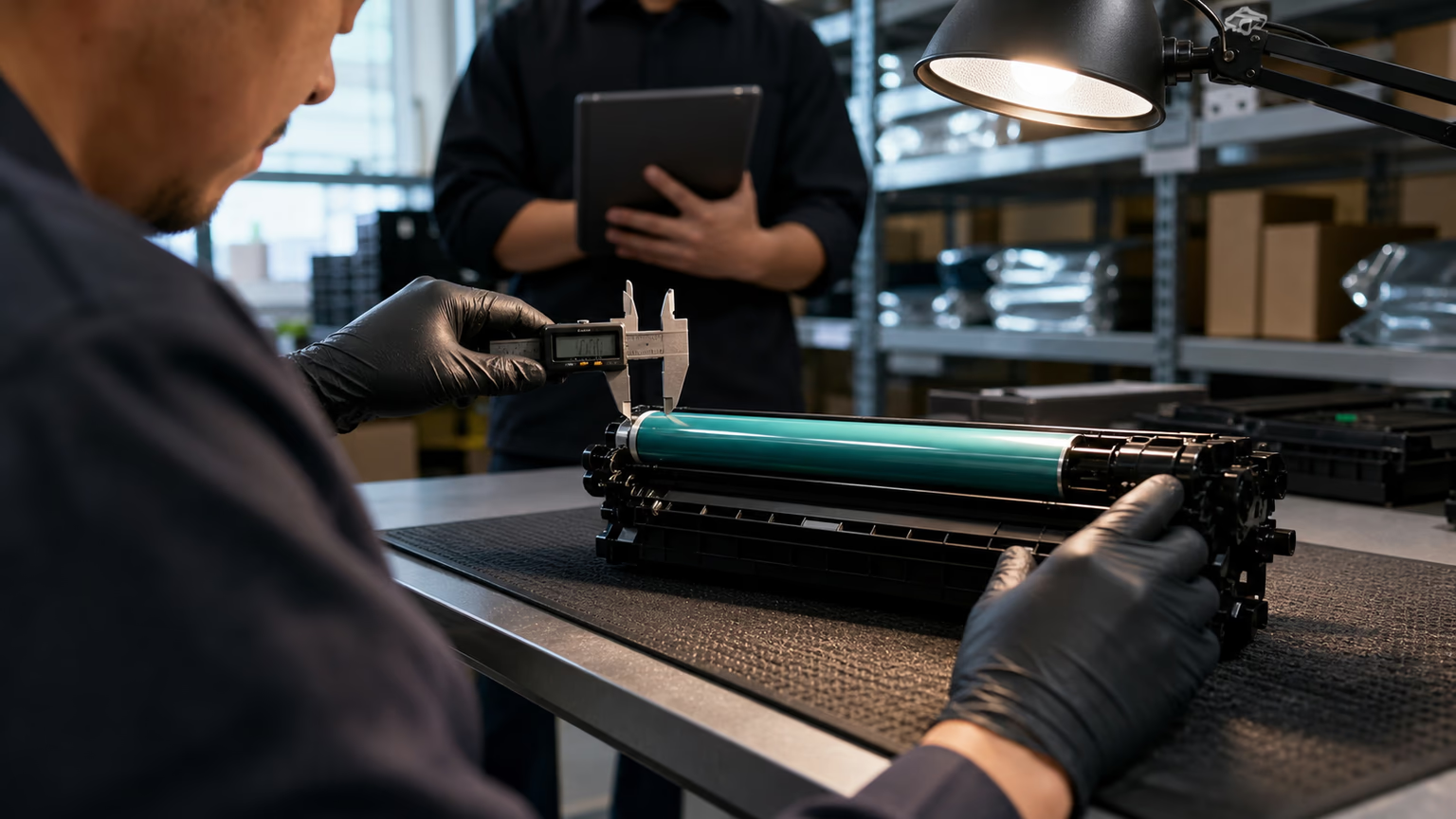
- strict batch testing;
- better packaging standards;
- reduced defect rate.
Premium cartridges are commonly used in:
- enterprise HP and Canon environments;
- Xerox and Ricoh copier fleets;
- Kyocera long-life systems;
- managed print service contracts.
Their goal is not only to print documents, but to ensure predictable behavior across thousands of pages and multiple machines.
What Are Affordable Printer Toner Cartridges?
Affordable toner cartridges focus on cost reduction. They are widely used in SMB environments, general office printing, and price-sensitive markets.
They typically prioritize:
- lower unit cost;
- simplified production;
- basic compatibility coverage;
- standard packaging;
- simplified testing procedures.
Affordable cartridges can be effective in controlled environments, but their performance consistency may vary depending on supplier quality.
Key Differences in Fleet Environments
In B2B fleet operations, especially across HP, Canon, Xerox, Ricoh, and Kyocera systems, differences between premium and affordable cartridges become more visible over time.
Stability
Premium cartridges offer:
- consistent batch performance;
- stable print density;
- lower variation between units.
Affordable cartridges may show:
- variation between batches;
- inconsistent yield;
- higher sensitivity to environment.
Failure Rate
Premium cartridges are designed to minimize:
- leakage;
- print defects;
- chip errors;
- compatibility issues.
Affordable cartridges may have higher tolerance for minor defects due to cost structure.
Maintenance Impact
In copier fleets, maintenance cost is critical.
Premium cartridges help reduce:
- service calls;
- printer cleaning cycles;
- downtime;
- technician interventions.
Affordable cartridges may increase maintenance frequency in high-volume environments.
Brand Ecosystem Considerations
Different printer ecosystems respond differently to cartridge quality.
HP and Canon
High-volume office printing requires stable chip communication and predictable toner behavior. Premium cartridges are often preferred in enterprise environments.
Xerox and Ricoh
These systems are sensitive to long-run consistency and developer balance. Stability is more important than initial cost savings.
Kyocera
Long-life components require precise toner compatibility. Premium formulations help maintain system longevity.
Brother and Samsung
Common in SMB environments where affordable cartridges are widely used, but stability still affects user experience.
Lexmark and Konica Minolta
Enterprise environments where managed print services rely heavily on predictable performance.
Total Cost of Ownership (TCO)
In B2B fleets, price per cartridge is not the real cost driver.
Total cost includes:
- cartridge replacement frequency;
- maintenance visits;
- downtime;
- printer wear;
- complaint handling;
- wasted inventory;
- service labor.
Premium toner cartridges often reduce hidden operational costs, even if initial price is higher.
Affordable cartridges may reduce upfront spending but increase downstream operational expenses.
This is why many distributors evaluate cartridge strategy together with:wholesale toner
Quality Risks in Affordable Cartridges
Affordable cartridges can introduce risks such as:
- inconsistent toner formulation;
- weaker component quality;
- higher defect probability;
- shorter drum life;
- unstable chip compatibility;
- increased leakage risk.
These issues may not appear immediately but can accumulate in fleet environments.
When Premium Cartridges Are Necessary
Premium toner cartridges are recommended when:
- operating managed print services;
- supplying enterprise customers;
- running high-volume copier fleets;
- providing service contracts;
- maintaining strict SLA requirements.
In these cases, stability is more valuable than cost reduction.
When Affordable Cartridges Work Well
Affordable cartridges are suitable when:
- printing volume is low or moderate;
- environments are not mission-critical;
- users prioritize cost savings over consistency;
- devices are not heavily used;
- short-term projects are involved.
Risk Balance in B2B Procurement
B2B buyers must balance:
- price sensitivity;
- failure tolerance;
- customer expectations;
- operational cost structure;
- service capacity.
A wrong balance can lead to:
- increased returns;
- customer dissatisfaction;
- higher maintenance workload;
- reduced profitability.
Role of Suppliers in Quality Control
Whether choosing premium or affordable cartridges, supplier reliability is critical.
A strong supplier should provide:
- stable batch production;
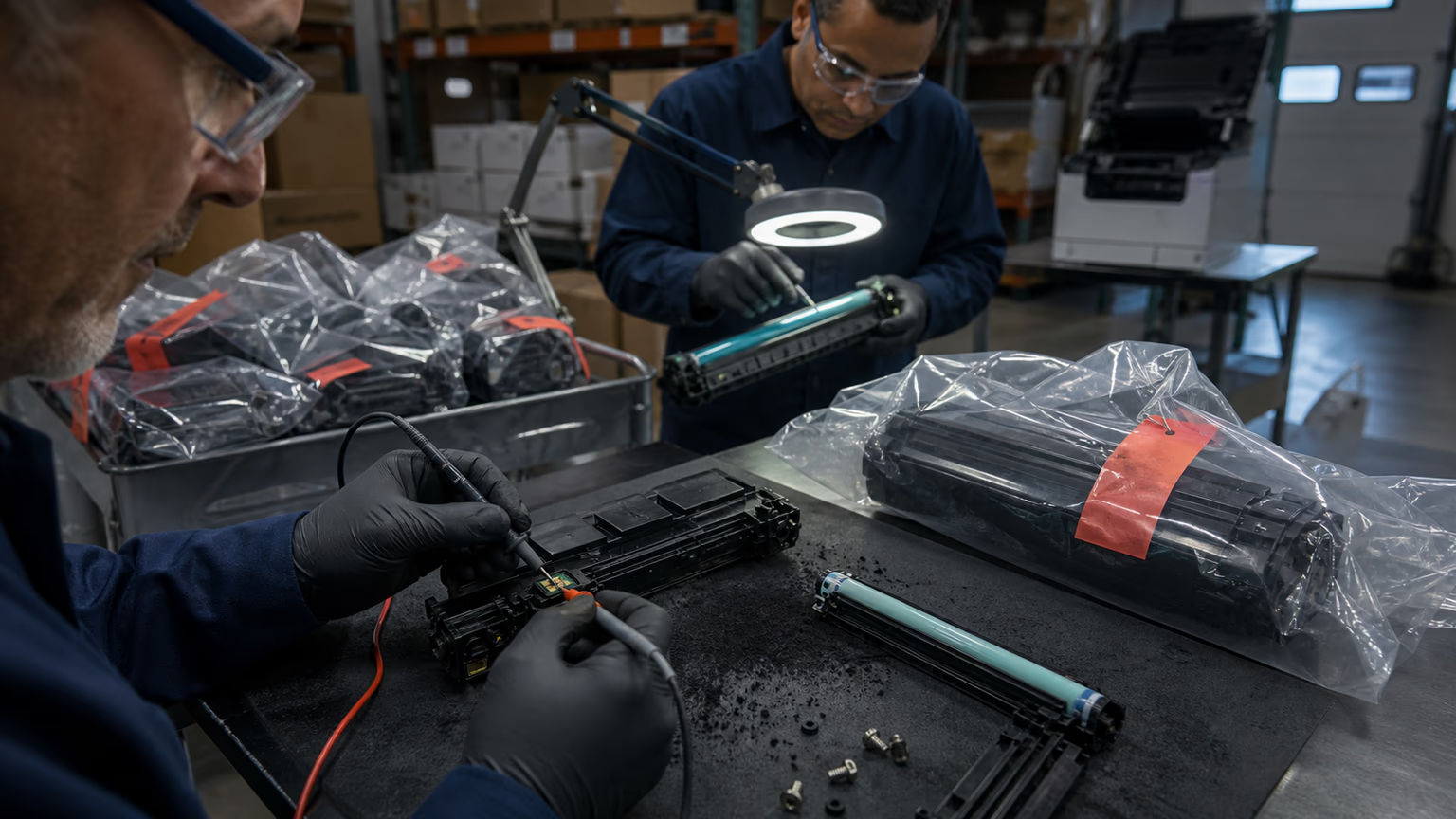
- compatibility testing;
- clear model coverage;
- export documentation;
- technical support;
- consistent packaging.
This is why supplier selection is often more important than product category itself:toner cartridge suppliers
Manufacturer vs Vendor Impact
Production control also influences cartridge quality.
Manufacturers can ensure:
- consistent formulation;
- controlled assembly;
- stable QC processes.
Vendors may offer flexibility but can introduce variability in supply chains.
This relationship is further explained in:toner cartridge manufacturer
Compatible vs Remanufactured Context
Premium vs affordable decisions are also influenced by cartridge type.
Compatible cartridges often dominate premium segments due to stability.
Remanufactured cartridges often appear in affordable segments due to cost efficiency.
This comparison is covered in:compatible toner cartridges
How UNICO Positions This Market
UNICO supports both premium and cost-efficient toner cartridge programs for HP, Canon, Xerox, Ricoh, Kyocera, Brother, Samsung, Lexmark, and Konica Minolta systems.
Focus areas include:
- stable compatible toner production;
- B2B fleet support;
- private label programs;
- batch consistency control;
- export-ready supply chains.
The goal is to help buyers choose the right balance between cost and performance based on their market needs.
FAQ
What is the difference between premium and affordable toner cartridges?
Premium cartridges focus on stability, consistency, and lower failure rates. Affordable cartridges focus on lower cost and basic functionality.
Are premium toner cartridges worth it?
Yes, especially in enterprise and fleet environments where downtime, maintenance, and failure rates have higher costs than the cartridge itself.
Do affordable toner cartridges work for HP and Canon printers?
Yes, but performance consistency may vary depending on supplier quality and usage conditions.
Which is better for copier fleets?
Premium toner cartridges are usually preferred due to higher stability and lower maintenance requirements.
Final Thoughts
The choice between premium toner cartridges and affordable printer toner cartridges is not just about price.
It is about risk management, fleet stability, maintenance cost, and long-term performance across HP, Canon, Xerox, Ricoh, Kyocera, Brother, Samsung, Lexmark, and Konica Minolta environments.
For B2B buyers, the best decision depends on balancing cost savings with operational reliability.
Related reading: compatible toner cartridges, wholesale toner, toner cartridge manufacturer, high waste toner in copier fleets, toner cartridge suppliers, low page yield in B2B fleets.