
The Attraction of Low Prices and the Hidden Trap
Every procurement team faces relentless pressure to cut costs.
Toner cartridges, as a recurring consumable expense, often become a prime target for quick savings.
The logic seems sound: lower the per-cartridge cost and the bottom line improves.
But this thinking collapses the moment a single end-user complaint lands on the service desk.
What looked like a smart financial move instantly reveals a cascade of hidden expenses that swallow any initial savings.
The core deception is that cheap toner is never cheap. Its true cost shows up later, in service tickets, printer downtime, damaged hardware, and eroded client trust. A procurement win on paper becomes a service nightmare in the field. For B2B distributors, importers, and managed print service providers, the lowest upfront price is often the fastest route to margin erosion.
This article dismantles the myth of low-cost toner by tracing the lifecycle of a complaint. We will examine how a single quality failure multiples into operational chaos, and why the smartest financial decision is to pay attention to the total cost of ownership, not just the price tag on the box.
Anatomy of a Complaint: What One Return Really Costs
When a client reports streaky prints or a toner smudge, a distributor’s reflex is to ship a replacement and move on.
But that ‘free replacement’ is anything but free.
The immediate costs are obvious: shipping fees, the replacement cartridge itself, and the technician’s time to visit the site.
For a wholesale operator supporting hundreds of devices, even a small failure rate can generate a flood of support requests.
Then come the less visible operational costs. Printer downtime halts business workflows. Office productivity suffers while the device is out of commission. In a managed print environment, service level agreements often impose penalties for excessive downtime. Those penalties directly chip away at the service contract’s profitability.
But the most dangerous cost is reputational.
A client who experiences repeated print quality issues begins to question the reliability of their entire fleet.
They start exploring alternative suppliers.
They may freeze expansion plans or cancel contracts altogether.
In B2B relationships, trust is the real currency.
A single toner failure can erode years of goodwill built through reliable service.
Suddenly, the few dollars saved per cartridge seem laughable against the loss of a long-term account.
Quality Isn’t Just Color Accuracy — It’s Liability
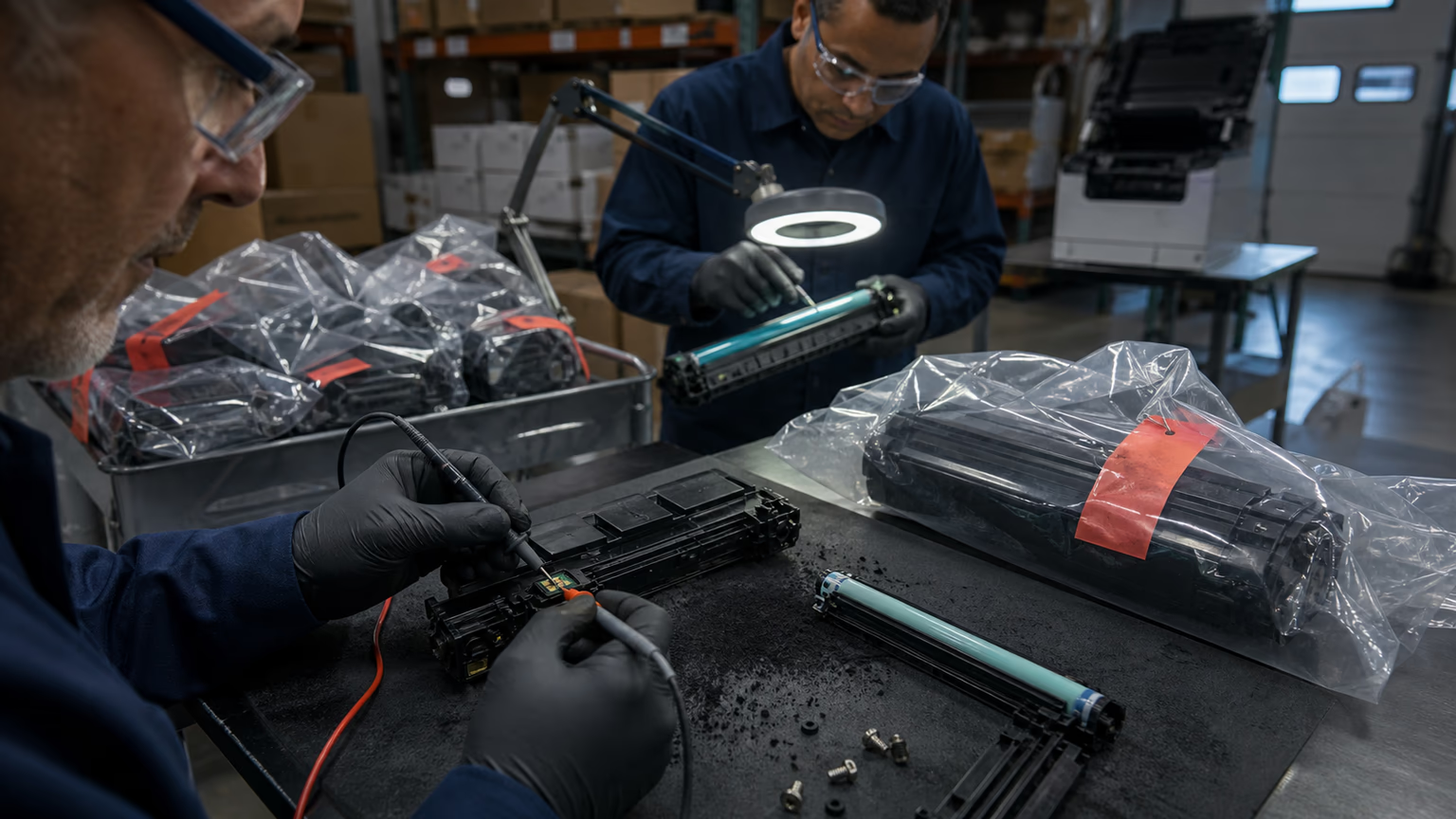
Beyond customer satisfaction, poor toner quality is a direct threat to printer hardware. Substandard toner particles are often irregular in shape and size. They abrade sensitive components like drum units, developer rollers, and transfer belts. Over time, this abrasive action leads to premature wear and expensive component replacements.
Chemical mismatches cause even more damage. Toner must fuse to paper at a specific temperature. Inexpensive formulations often use waxes or resins that melt inconsistently, leading to buildup on the fuser assembly. This buildup can cause paper jams, ghosting, and eventually permanent fuser failure. The cost of a fuser replacement far exceeds any savings from cheap toner.
Worse, printer manufacturers may deny warranty service if they determine that aftermarket toner caused the damage.
This leaves the distributor responsible for repair costs that were never budgeted.
The vicious cycle is clear: use cheap toner, damage the printer, and then need more cheap toner to keep a failing device running.
Each low-cost cartridge pushes the machine closer to a catastrophic failure and a service truck roll.
The Compatibility Illusion: When ‘Works with Your Printer’ Doesn’t Mean ‘Works Tomorrow’
Many distributors source compatible cartridges that claim to match OEM specifications.
The cartridge fits the slot, the printer recognizes the chip, and the first prints look fine.
But compatibility is not a static condition.
Printer manufacturers regularly push firmware updates that can block aftermarket chips.
These updates may arrive silently, and a fleet that worked flawlessly on Friday can be riddled with ‘non-genuine’ error messages by Monday morning.
The real risk lies in the supplier’s ability to anticipate and respond to these updates.
A cartridge that lacks an updatable chip or one sourced from a vendor who does not monitor OEM firmware changes becomes a ticking liability.
In managed print environments, where dozens or hundreds of devices report status remotely, a single firmware update can trigger an alert storm.
Helpdesks get overwhelmed, technicians scramble, and client confidence plummets.
Regional chip variants add another layer of complexity. A cartridge designed for one geographic market may fail when deployed in another due to different chip protocols. Without a supplier who thoroughly tests and continuously updates chip technology, distributors inadvertently introduce systemic incompatibility into their client fleets.
Procurement’s Blind Spot: Price-per-Unit vs. Total Cost of Ownership
Procurement metrics often reward the lowest purchase price, creating a dangerous incentive. A 50-cent savings per cartridge can seem like a victory, but the total cost of ownership (TCO) tells a very different story. A proper TCO model includes cartridge cost, actual page yield, defect rate, waste from reprints, service time, and client churn.
Cheap toner frequently under-delivers on promised page yields.
A cartridge rated for 5,000 pages might yield only 3,500 in real-world conditions because of poor toner transfer and high waste.
This lower yield secretly raises the effective cost per page, sometimes above that of a premium compatible cartridge.
Worse, inconsistent batches force service companies to carry buffer stock, tying up capital that could be used elsewhere.
When you map these factors over a three-year managed print contract, the difference is stark. Low-cost toner might appear to save a few thousand dollars upfront, but the accumulated service expenses, SLA penalties, and lost renewals turn that into a significant net loss. Smart procurement shifts the conversation from price-per-box to long-term account economics.
Supplier Vetting: The Audit That Prevents Emergencies
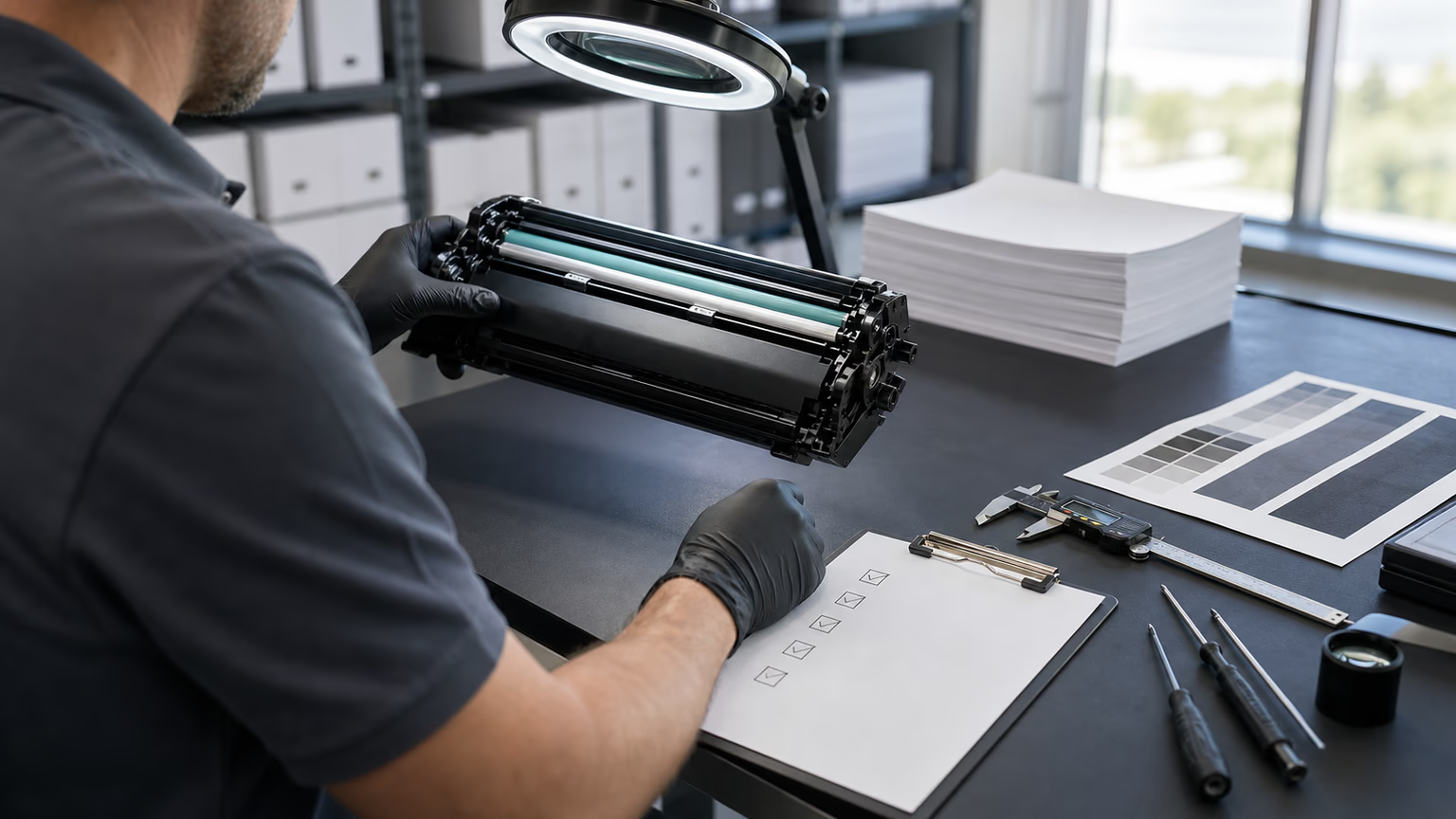
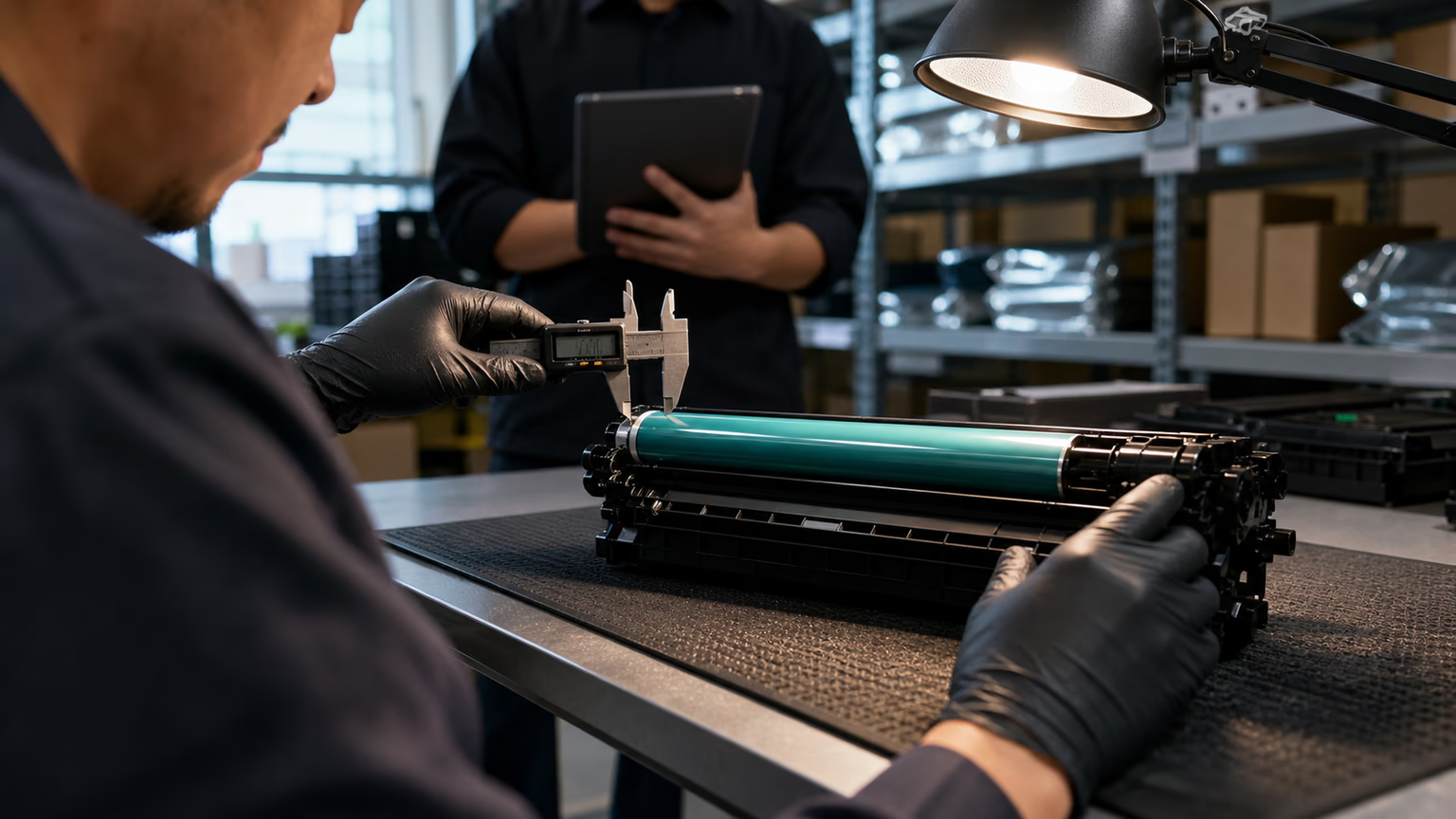
A reliable supply chain is the backbone of a complaint-resistant toner strategy. Many distributors vet suppliers based on a single batch sample or a certificate, but deeper due diligence is essential. Request three sequential production batches and test them across your highest-volume printer models. This reveals batch-to-batch consistency that one sample cannot.
Inspect print outputs under magnification.
Look for even toner distribution, solid black fill, and clean fusing without rub-off.
These micro-level evaluations predict field performance far better than a visual glance.
Ask the supplier about their chip technology: how often do they update firmware?
Do they maintain a library of regional chip variants?
A strong technical partner will have a dedicated engineering team monitoring OEM releases.
Financial stability matters just as much. A supplier who cannot weather a quality crisis or a supply chain disruption will leave you exposed. Review their return merchandise authorization (RMA) rate and, more importantly, their root-cause analysis process for failures. A transparent supplier who shares this data openly is a partner worth trusting.
Building a Complaint-Resistant Toner Strategy
Distributors and service providers need a systematic approach to toner sourcing that protects margins and client relationships. Start by segmenting your toner portfolio. High-volume, mission-critical environments deserve the most rigorously tested premium compatible toner. Less critical applications, like low-coverage home office printers, can tolerate a wider quality band.
Implement pilot programs before a full fleet rollout.
Test new suppliers on a small, controlled set of devices for at least three months.
Measure actual yield, defect rates, and any increase in service calls.
Only scale up after the pilot proves consistent results.
Create a tight feedback loop between your service team and procurement.
Field technicians should report every toner-related failure with details that inform future purchasing decisions.
Lastly, design your service contracts with toner reliability in mind. Account for the risk differential between cheap and premium toner in your pricing. When a client demands the lowest possible supply cost, present them with a TCO analysis that quantifies the downtime risk. Many will choose reliability over marginal savings once they understand the stakes.
The Expensive Lesson: Why Premium Compatible Toner Is Often the Cheapest Option
The moment a customer complaint hits, the price advantage of cheap toner vanishes. All future savings are consumed by the cost of fixing the mess—reprints, repairs, and relationship repair. The cheapest cartridge on the market frequently becomes the most expensive liability in your supply chain.
In a service-oriented business, predictable performance is worth a premium. Premium compatible toner from a well-vetted supplier delivers consistent yields, stable color, and firmware resilience. It may cost a little more per unit, but it buys peace of mind and protects the service margins that keep a business healthy.
Rethink your sourcing philosophy: a reliable toner supply chain is not a cost center to be minimized but a reliability generator that safeguards client retention. The cheapest supply chain ultimately starves the service chain. Choose partners and products that add value over the entire lifecycle, and the math will finally work in your favor.
FAQ
How much does a single service call cost compared to the savings from cheaper toner?
Even a simple service dispatch—technician travel, time on site, and a replacement cartridge—can outweigh the savings from dozens of cheap cartridges. When you factor in lost productivity for the client and potential SLA penalties, one complaint often costs more than the entire margin on a year’s supply of toner for that device.
What are the early warning signs of poor toner quality before customers complain?
Frequent low-toner alerts despite recent replacements, inconsistent print density across pages, and more toner dust inside the printer are red flags. Technicians may notice increased cleaning cycles or faint backgrounding on prints. These subtle signs often appear weeks before a client reports visible streaks or smudges.
Is there really a difference between cheap compatible toner and premium compatible toner?
Yes, and the gap is significant. Premium compatible toner uses higher-grade raw materials, tighter particle size distribution, and more robust chip technology. This results in better fusing, fewer drum abrasions, and more reliable page yields. Cheap compatible toner often cuts corners on all three, leading to the failures described in this article.
How can I test toner reliability in a way that mimics real-world usage?
Run full life-cycle tests on your highest-volume printer models. Print tens of thousands of pages across multiple cartridges from different production batches. Monitor the wear on drum units and fusers, and track the actual number of usable pages before print quality declines. Field testing in a live environment with user feedback provides the most honest data.
What certifications or test standards should I require from a toner supplier?
While certifications like ISO 9001 indicate a quality management system, look beyond certificates. Demand evidence of STMC compliance or independent lab test reports for yield, density, and color accuracy. A forward-thinking supplier will also share their firmware compatibility testing process and their RMA rate analysis.
Conclusion
Cheap toner is a seductive short-term fix that creates long-term fragility.
When service calls, printer repairs, and client defections are added to the equation, the math becomes undeniable: the low-cost option is often the most expensive choice a distributor can make.
By shifting focus from price-per-cartridge to total cost of ownership, B2B buyers can protect their margins, their equipment, and their client relationships.
The key is not to eliminate cost sensitivity but to refine it.
Invest in premium compatible toner that has been batch-tested and backed by a supplier who understands firmware dynamics.
Build procurement processes that reward reliability over temporary discounts.
In a service-driven business, your reputation rides on every page that comes out of a printer.
Make sure it’s a page your clients can count on.