In the global B2B printing market, especially across HP, Canon, Xerox, Ricoh, Kyocera, Brother, Samsung, Lexmark, and Konica Minolta fleets, one of the most common procurement decisions is choosing between compatible toner cartridges and remanufactured toner cartridges.
At first glance, both options appear similar. Both are alternatives to OEM cartridges. Both aim to reduce printing costs. Both are widely used in office environments, service contracts, and distribution channels.
However, the production process, quality stability, risk profile, and long-term performance of these two categories are very different.
For importers and distributors, understanding this difference is critical for building a stable B2B toner supply strategy.
What Are Compatible Toner Cartridges?
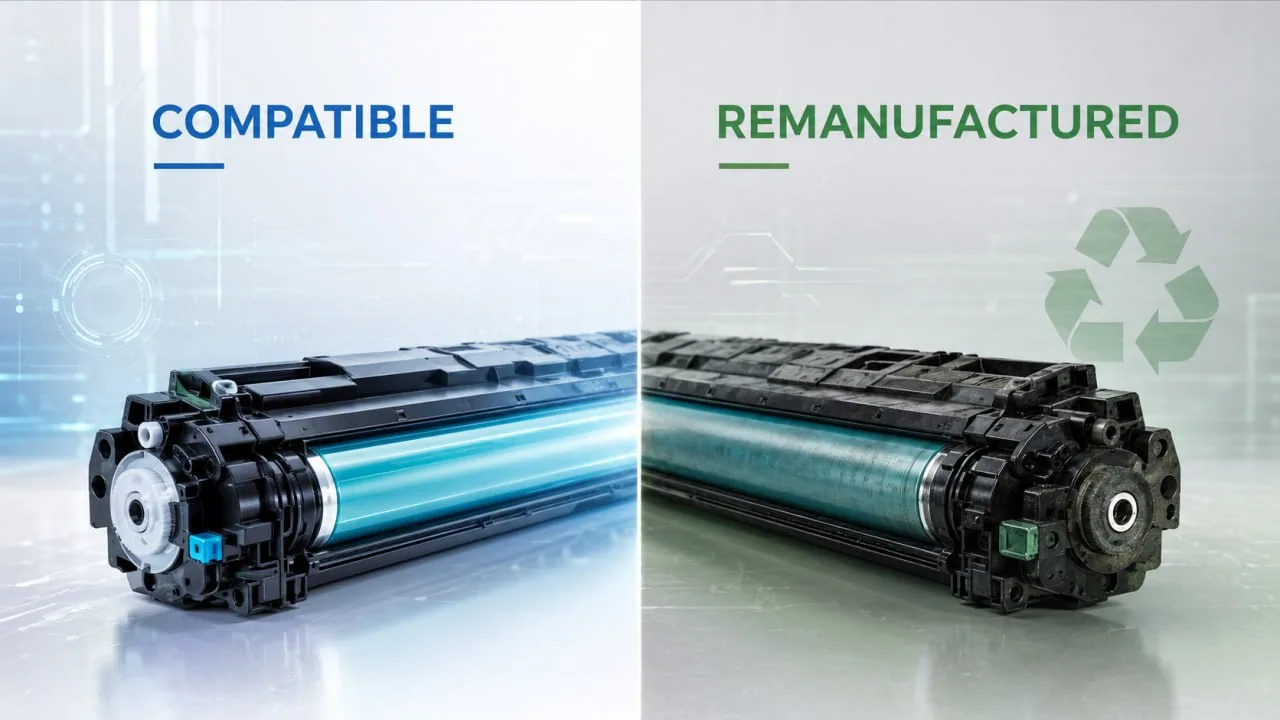
Compatible toner cartridges are newly manufactured cartridges designed to match OEM specifications. They are built from new components, including:
- cartridge housing;
- OPC drum;
- developer components;
- wiper blade;
- seals and rollers;
- toner powder;
- chip module.
The goal is to replicate OEM performance while reducing cost.
Compatible cartridges are widely used in HP and Canon ecosystems, where high-volume printing requires stable supply and predictable cost control.
Because they are newly manufactured, compatible cartridges offer better consistency control compared to reused components.
What Are Remanufactured Toner Cartridges?
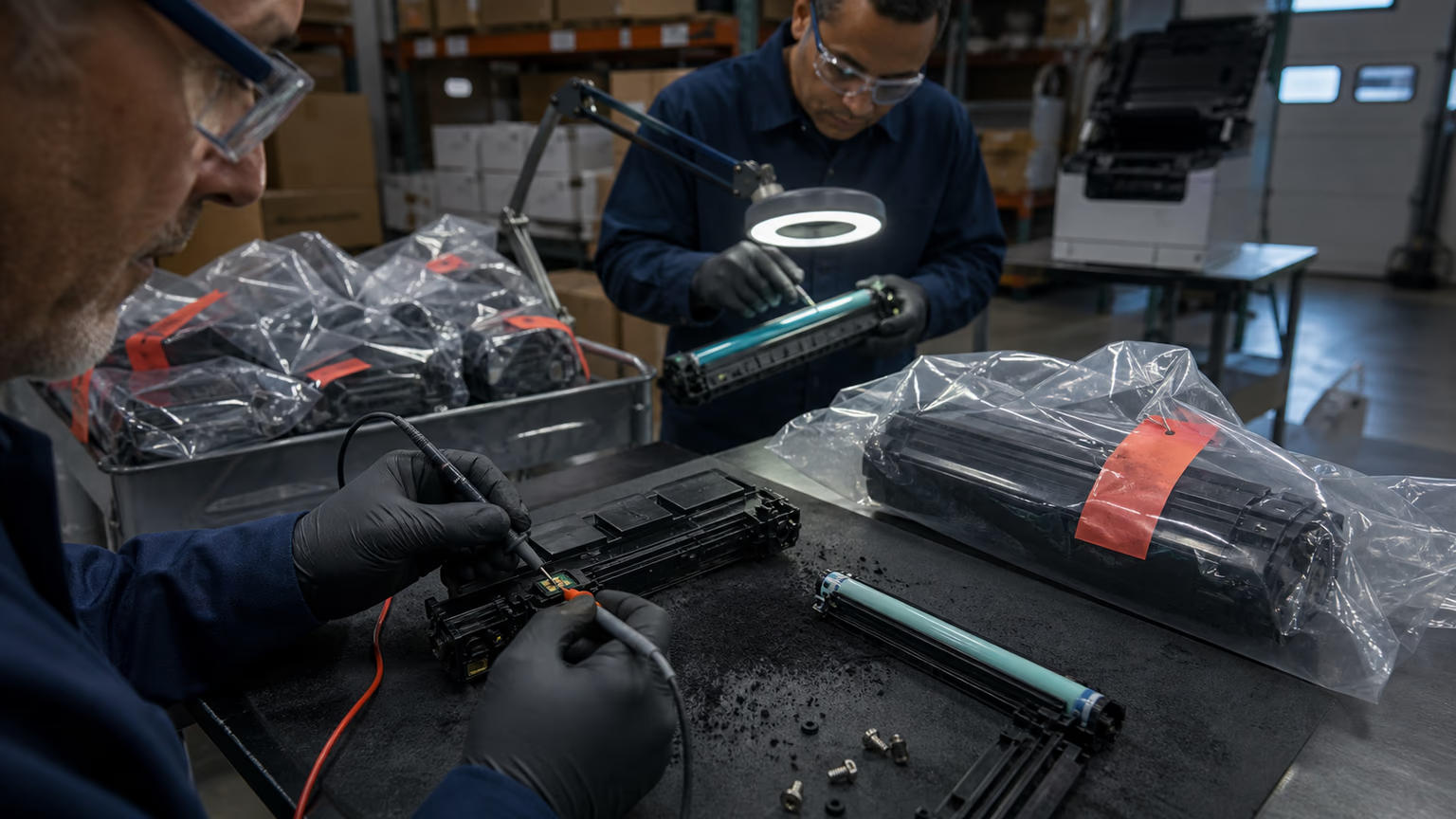
Remanufactured toner cartridges are based on used OEM cartridges that are collected, cleaned, repaired, refilled, and tested.
The process typically includes:
- collecting empty OEM cartridges;
- disassembly and cleaning;
- replacing worn components (if needed);
- refilling toner powder;
- reassembly and testing.
Remanufactured cartridges are often positioned as environmentally friendly because they reuse original housings.
They are common in markets with strong recycling programs or cost-sensitive customers.
Key Differences in B2B Fleets
In fleets using HP, Canon, Xerox, Ricoh, and Kyocera systems, the differences between these two categories become more visible over time.
Consistency
Compatible cartridges:
- higher consistency due to controlled production;
- standardized components;
- repeatable batch performance.
Remanufactured cartridges:
- depend on condition of recycled cores;
- variability between units;
- inconsistent component wear levels.
Component Control
Compatible cartridges allow full control over:
- drum quality;
- blade condition;
- toner formulation;
- chip version.
Remanufactured cartridges inherit variability from previous usage, which can affect long-term stability.
Performance Stability
In B2B fleets, stable performance is critical.
Compatible toner cartridges generally provide:
- predictable page yield;
- stable density;
- lower defect variation.
Remanufactured cartridges may show:
- inconsistent print quality;
- variation between batches;
- higher sensitivity to wear and contamination.
Brand Compatibility in Real Fleets
Different printer ecosystems react differently to cartridge types.
HP and Canon
High-volume environments require stable chip communication and consistent toner formulation. Compatible cartridges are often preferred for predictability.
Xerox and Ricoh
These fleets are sensitive to developer balance and long-run stability. Component consistency becomes critical.
Kyocera
Long-life components mean toner formulation and drum compatibility must be precisely matched.
Brother and Samsung
Common in SMB environments where cost efficiency and simplicity are key factors.
Risk Factors in Remanufactured Cartridges
While remanufactured cartridges are widely used, they introduce certain risks:
- unknown wear level of core components;
- residual contamination from previous use;
- inconsistent drum life;
- unpredictable blade condition;
- variable cleaning quality;
- batch inconsistency.
These risks increase when used in large-scale copier fleets.
Why Compatible Cartridges Are More Predictable
Compatible toner cartridges are built from new parts, which allows manufacturers to control:
- raw material sourcing;
- assembly standards;
- toner formulation;
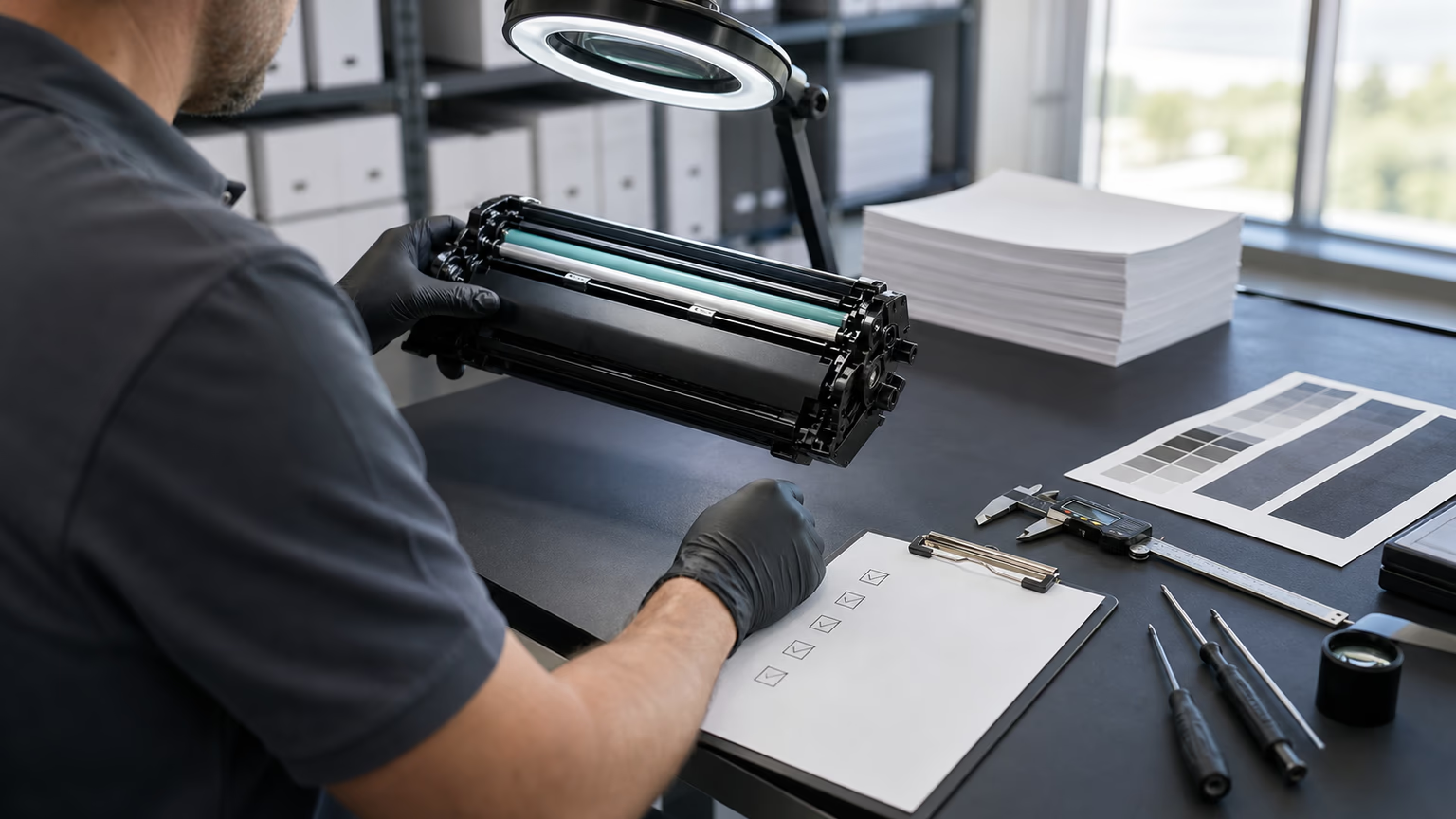
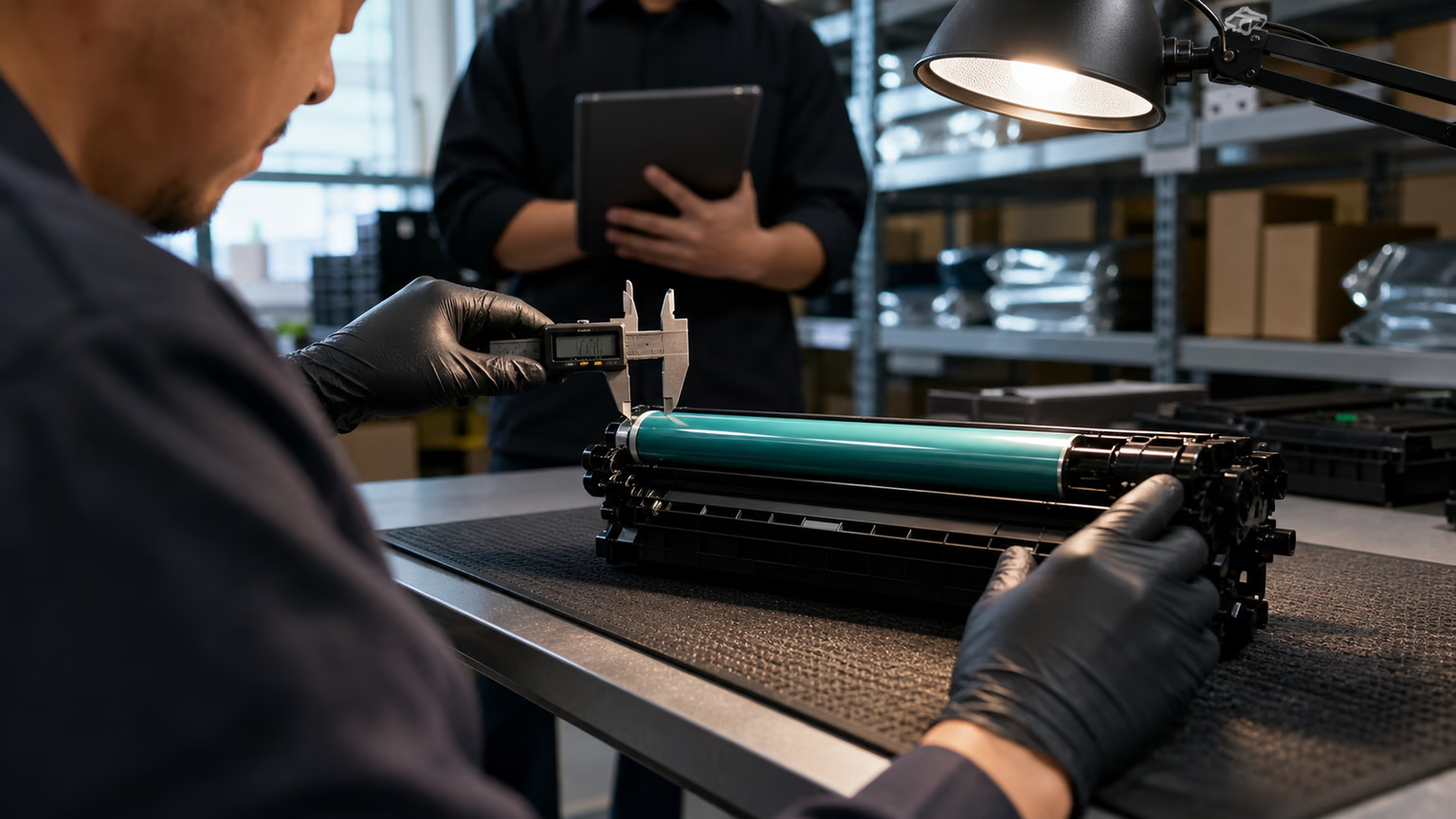
- quality testing procedures;
- batch traceability.
This is especially important in B2B environments where customers expect stable performance across hundreds or thousands of machines.
This is also why many distributors prefer sourcing from structured suppliers like:toner cartridge suppliers
Cost vs Stability Trade-off
Remanufactured cartridges are often cheaper in some markets, but cost alone does not determine profitability.
B2B buyers must consider:
- return rate;
- service costs;
- printer maintenance;
- customer complaints;
- replacement frequency;
- downtime costs.
Compatible cartridges often provide better long-term stability, which reduces hidden operational costs.
This is especially relevant when combined with bulk procurement strategies like:wholesale toner
When Remanufactured Cartridges Make Sense
Remanufactured cartridges can still be suitable in certain cases:
- low-cost printing environments;
- non-critical document printing;
- environmentally focused programs;
- short-term usage cycles;
- price-sensitive markets.
However, they require stronger quality control from the supplier side.
When Compatible Cartridges Are Better
Compatible cartridges are generally preferred when:
- consistency is critical;
- fleets are large-scale;
- service contracts are involved;
- private label branding is used;
- long-term supply stability is required.
They are often the backbone of structured B2B toner programs, especially when combined with manufacturing control like:toner cartridge manufacturer
Impact on Fleet Management
For fleet operators, cartridge type affects:
- maintenance frequency;
- printer lifespan;
- service workload;
- supply planning;
- cost predictability.
A stable cartridge strategy reduces operational uncertainty and improves service efficiency.
How UNICO Supports B2B Cartridge Supply
UNICO focuses on compatible toner cartridge manufacturing for B2B fleets, supporting:
- HP, Canon, Xerox, Ricoh, Kyocera, Brother, Samsung systems;
- stable batch production;
- private label programs;
- bulk supply chains;
- compatibility testing;
- export-ready packaging.
The goal is to provide predictable performance across large-scale deployments.
FAQ
What is the main difference between compatible and remanufactured toner cartridges?
Compatible cartridges are newly manufactured, while remanufactured cartridges are rebuilt from used OEM cores.
Which is better for HP and Canon fleets?
Compatible cartridges are generally preferred due to higher consistency and controlled manufacturing.
Are remanufactured cartridges cheaper?
Often yes, but total cost may increase due to variability, maintenance, and replacement frequency.
Are compatible cartridges more reliable?
Yes, because they are built with controlled new components and standardized production processes.
Final Thoughts
In B2B printer fleets, the choice between compatible and remanufactured toner cartridges is not just about price.
It is about consistency, risk control, maintenance cost, and long-term operational stability.
Compatible toner cartridges generally offer better predictability for large-scale HP, Canon, Xerox, Ricoh, and Kyocera environments, making them a preferred option for structured distribution and professional fleet management.
Related reading: wholesale toner, premium toner cartridges, toner cartridge suppliers, high waste toner in copier fleets, toner cartridge manufacturer, create your own toner cartridge brand.