
Why the cheapest toner can become the most expensive service decision
For distributors, printer service companies, and MPS operators, toner is never just a consumable line item. It is part of the service experience, the support workload, and the customer’s view of whether the fleet is under control. A cartridge that looks attractive on purchase price can still create more labor, more returns, and more complaints than it saves.
That is why the toner cartridge your service team will not hate is not necessarily the lowest-cost option.
It is the one that behaves predictably in the warehouse, during installation, and under real office use.
When procurement and service teams evaluate wholesale toner cartridges together, they reduce the hidden cost of rework and protect uptime for the accounts that depend on printer toner every day.
In B2B environments, the real question is not whether a cartridge can print a test page. The question is whether it can move through the full workflow without creating friction: picking, labeling, shipping, storage, installation, recognition, and ongoing use. A cartridge that passes only the first step can still fail the business if it creates support calls later.
What service teams actually hate about toner cartridges
Service teams do not usually complain about toner in the abstract. They complain about the same failure modes over and over because those failures turn into repeat work. Leakage, streaking, backgrounding, chip errors, wrong-model installs, and inconsistent print density are not just quality issues; they are operational disruptions.
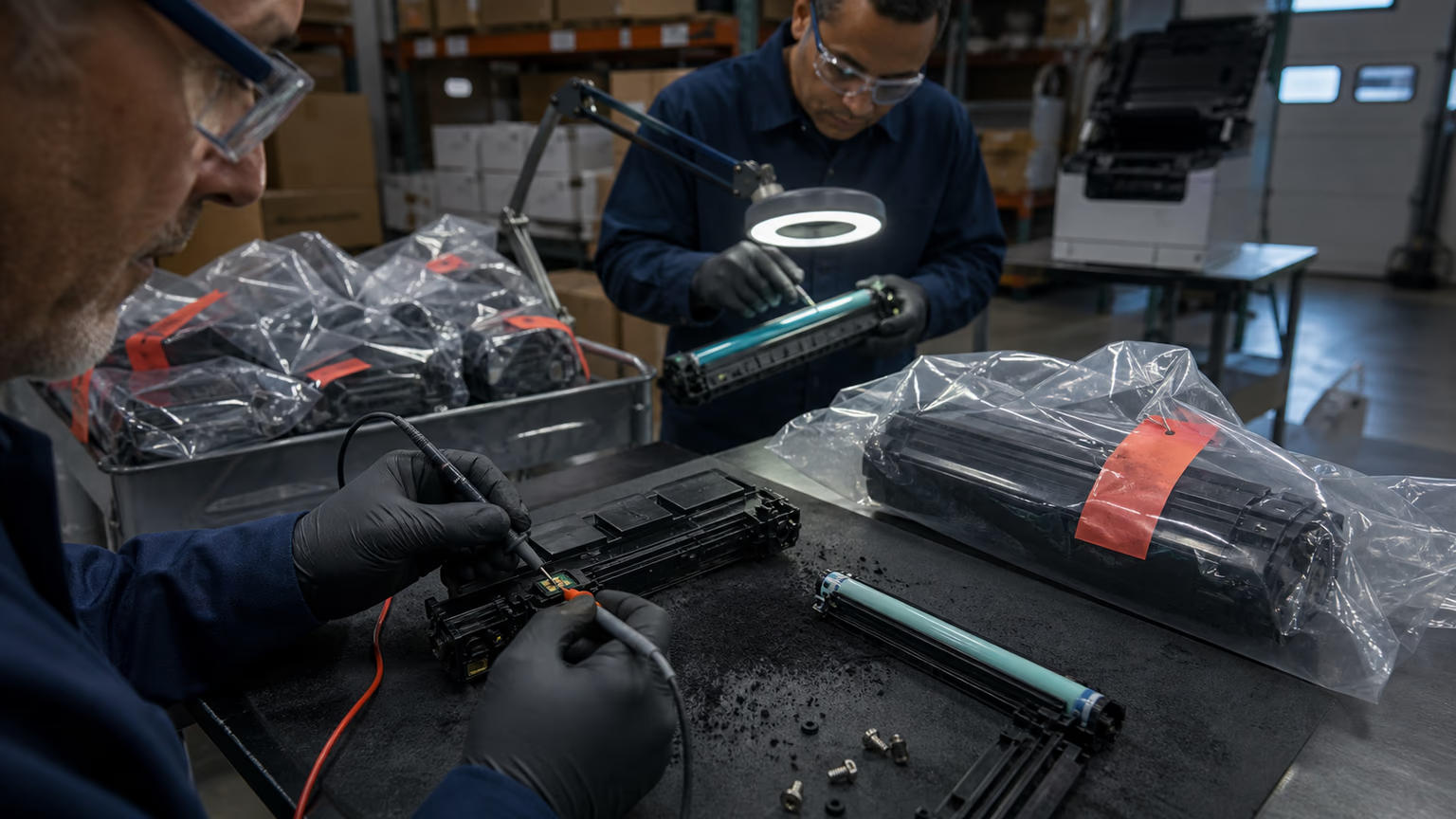
When a cartridge leaks in transit or inside the device, the technician may need to clean the printer, replace parts, and explain why the machine is suddenly producing poor output.
When a chip is not recognized, the helpdesk has to decide whether the issue is the cartridge, the firmware, or the device itself.
When the wrong SKU is installed in a mixed fleet, the service team inherits the confusion even if the warehouse made the original mistake.
These problems are especially painful because they are hard to isolate. A customer sees a print defect and blames the printer. The service team suspects the toner. Procurement sees a low-cost purchase that should have worked. The result is a support loop that consumes time and weakens trust across the account.
How B2B buyers really decide on toner supply
Most buyers do not choose between OEM and compatible supply on price alone, even if price starts the conversation. They are balancing total cost to serve, customer expectations, fleet complexity, and the support capability of their own organization. A cheap cartridge that creates extra truck rolls is not cheap in a service model.
For toner cartridges for distributors, the decision also includes warehouse efficiency and channel clarity. The catalog has to be easy to explain, the SKU has to be easy to identify, and the product has to be easy to support when a customer calls with a complaint. That is why toner and cartridge suppliers are judged not only by breadth of range, but by how well they reduce ambiguity.
Procurement teams should treat toner as a service-linked purchase.
If the account is sensitive, the fleet is mixed, or the service contract is tight, the acceptable cartridge is the one that minimizes exceptions.
If the account is low-risk and the support model is simple, a lower-cost option may be reasonable.
The point is to match the cartridge to the operational reality, not to a generic margin target.
Compatibility is not a model name
Compatibility is one of the most misunderstood parts of toner sourcing. A cartridge may fit physically and still fail in practice because of firmware behavior, chip recognition, region-specific device differences, or subtle platform changes. That is why compatible toner cartridges for office printers must be validated against the actual installed base, not just the marketing model name.
This matters across HP printer toner, Canon printer toner, Xerox printer toner, and Ricoh printer toner because each platform can behave differently even when the model family looks similar.
A cartridge that works in one generation may not behave the same way in another.
A firmware update can change recognition behavior after the purchase has already been made.
In mixed fleets, those differences become support incidents.
For service organizations, compatibility should be treated as a fleet-specific question. The right answer depends on the exact device list, the region, the firmware context, and how end users actually handle replacements. If users swap cartridges between devices or if the warehouse uses generic descriptions, the risk of wrong-SKU installation rises quickly.
Quality control signals that matter in the real world
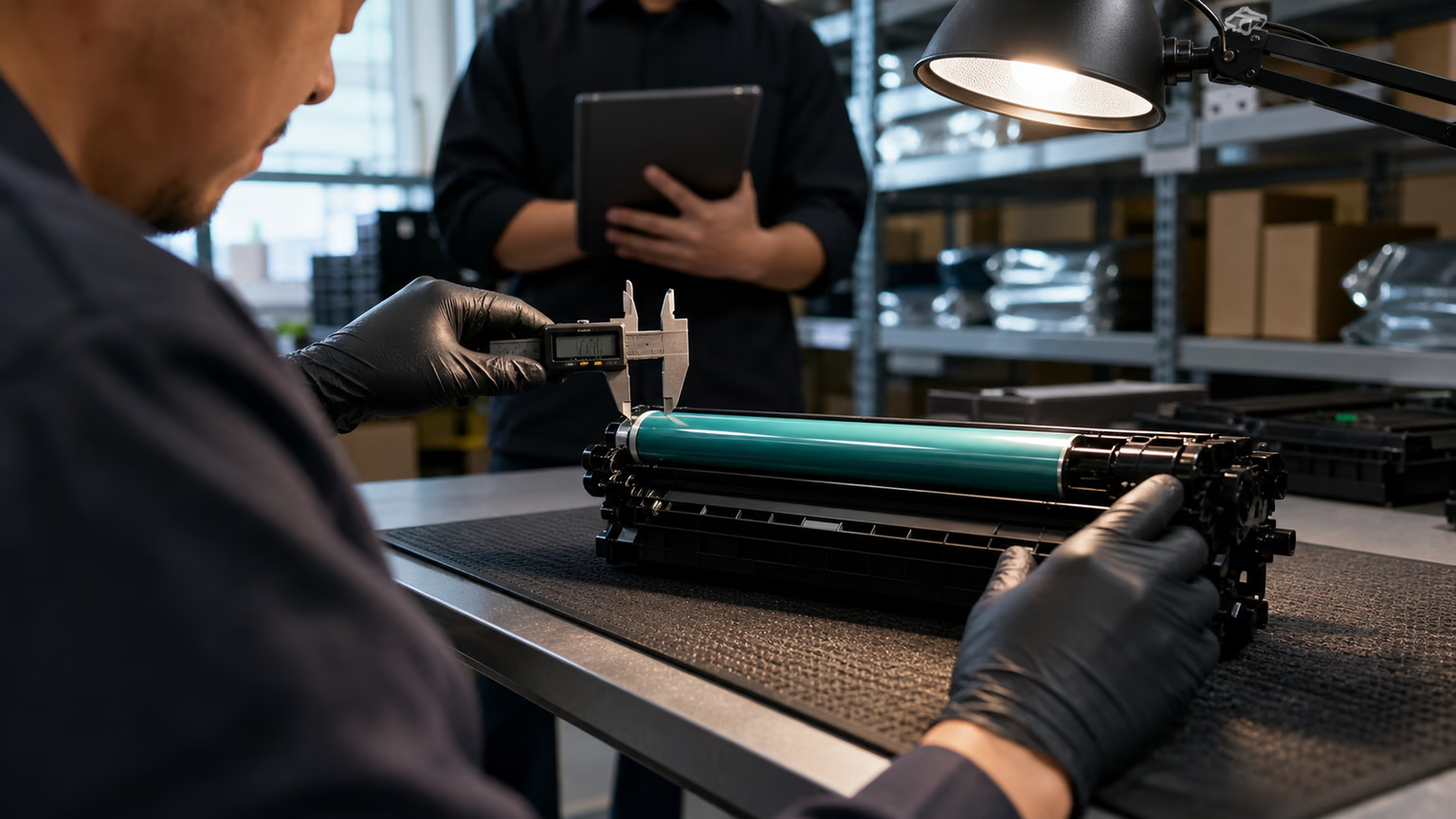
When buyers evaluate a toner cartridge factory or a B2B toner cartridge supplier, sample output is only the starting point. A single good sample does not prove batch consistency, packaging integrity, or storage stability. The product has to behave the same way across repeat orders and under normal warehouse and office conditions.
Look for signals that the supplier understands operational quality, not just product appearance.
Lot traceability matters because it makes root-cause analysis possible when complaints arise.
Packaging integrity matters because crushed boxes, weak seals, or poor transport protection can damage the cartridge before it is ever installed.
Storage guidance matters because toner that sits too long or is stored badly can clump, leak, or print inconsistently.
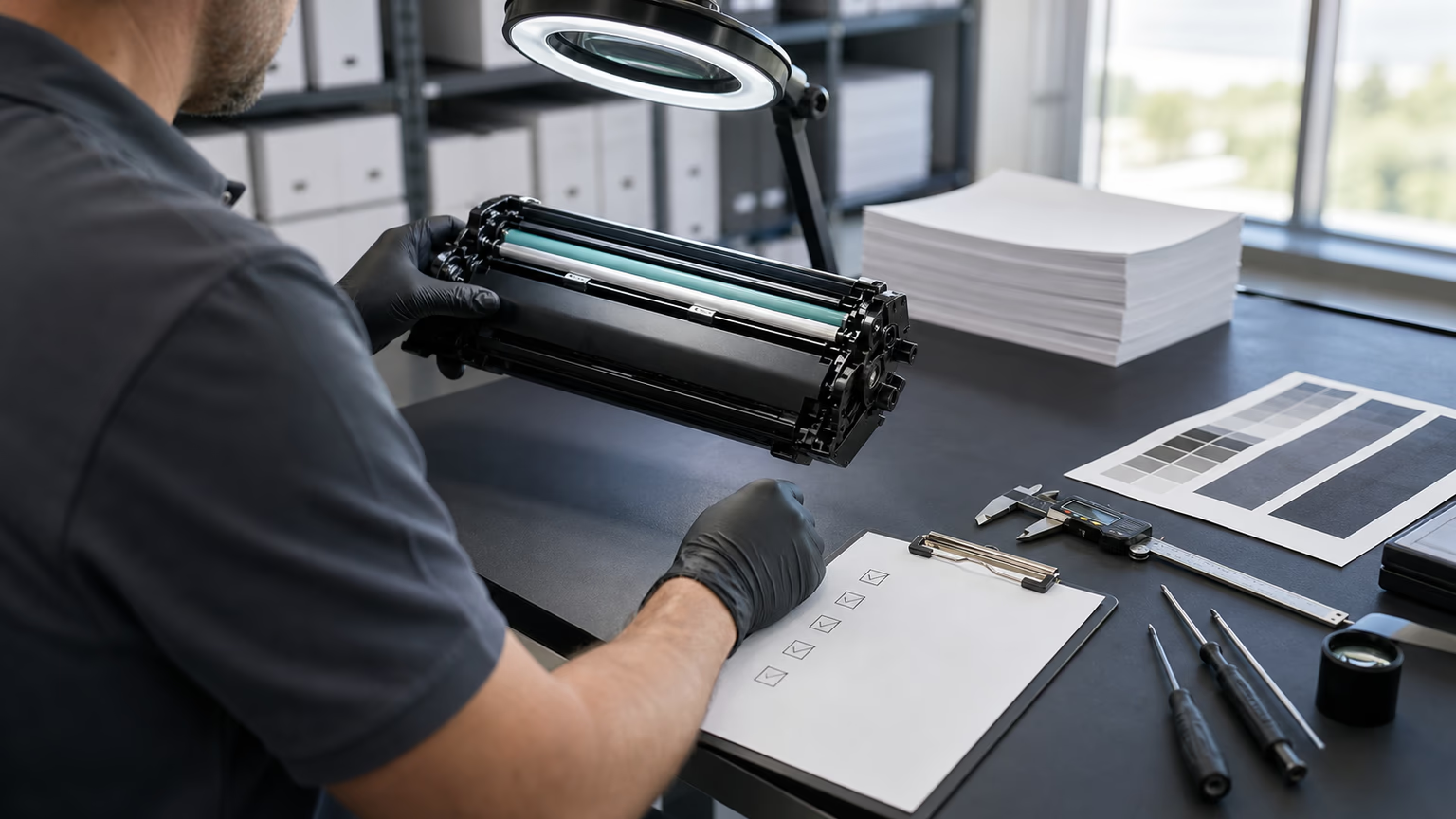
Print quality also needs to be judged beyond the first page. A cartridge may look acceptable on a quick test sheet but still produce streaks, faded areas, or uneven coverage during longer office runs. That is why distributors and service companies should test across text, graphics, and repeated pages before approving wholesale toner cartridges for broader rollout.
The supplier evaluation checklist for wholesale toner cartridges
Good sourcing decisions are easier when the supplier review is built around service reality. Start with model-level compatibility evidence for the actual fleet, not a broad claim that the cartridge works with a family of devices. Then ask how the supplier handles batch variation, defect reporting, and escalation when a cartridge causes trouble.
For toner cartridges for distributors, catalog clarity is just as important as product quality. The warehouse team needs SKUs that are easy to distinguish. The sales team needs language that is simple enough to explain without overpromising. The service team needs to know what to expect when a customer reports a print issue. If the product description is vague, the support burden grows.
A practical supplier review should include these checks:
- Exact model and firmware compatibility for the installed fleet
- Lot traceability and production-run visibility
- Packaging protection for transport and storage
- Clear handling of chip recognition and status reporting
- Defined acceptance criteria for print quality and defects
- Support response process for returns and escalations
- Storage and shelf-life guidance for warehouse conditions
- Ease of installation for technicians and end users
These criteria help buyers compare OEM, compatible, and private-label options using operational evidence instead of marketing language. They also make it easier to separate a reliable B2B toner cartridge supplier from one that only looks good on paper.
How to reduce service complaints after rollout
Even a well-chosen cartridge can create problems if rollout is careless. The safest approach is a controlled pilot in the actual fleet mix, not a single reference printer in a lab-like setting. Service teams need to see how the cartridge behaves across the devices, users, and storage conditions that exist in the field.
During the pilot, capture more than first-page output. Track installation ease, chip recognition, toner status reporting, print consistency, and the kinds of questions users ask after replacement. If the cartridge creates confusion during setup, that confusion will usually become a helpdesk issue later.
It also helps to define a simple escalation path before broad deployment. If a cartridge causes streaking, leakage, or recognition failure, who reviews the evidence, who replaces the unit, and how is the batch identified? When the process is clear, service teams spend less time arguing about whether the cartridge or the device caused the issue.
When discount toner cartridges make sense and when they do not
There is a place for cheap printer toner cartridges and discount printer toner cartridges in B2B supply, but only when the account can absorb the risk. Low-complexity environments, stable fleets, and low-touch service models may tolerate a more aggressive cost strategy if the supplier has already proven consistency.
That is not the same as buying cheap printer toner cartridges blindly. If the fleet is mixed, the customer is sensitive to downtime, or the service contract depends on predictable output, the hidden cost of returns and truck rolls can erase the savings. In those cases, affordable printer toner cartridges are only affordable if they remain supportable.
For distributors, the same logic applies to inventory strategy. It may be tempting to buy discount printer toner cartridges or buy affordable printer toner cartridges in volume, but dead stock and support issues can quickly outweigh the margin benefit. The better question is whether the cartridge can be stocked, explained, installed, and supported without creating friction.
Conclusion
The toner cartridge your service team will not hate is the one that reduces uncertainty. It fits the installed fleet, prints consistently, stores well, and creates fewer reasons for customers to call. That makes it more valuable than a cartridge that only looks good on unit price.
For wholesale buyers, the practical standard is simple: evaluate toner as part of the service workflow, not as a standalone consumable. When procurement, warehouse operations, and field support use the same criteria, the result is fewer complaints, fewer returns, and a toner program that is easier to defend.
In the end, the best cartridge is the one your team can support confidently. That is the real commercial advantage in wholesale toner cartridges, especially when the goal is to protect uptime and keep service work under control.
FAQ
What makes a toner cartridge easier for service teams to support?
A supportable cartridge is easy to identify, installs cleanly, reports status correctly, and produces stable output across normal office use. It also comes from a supplier that can trace lots and handle escalations without delay.
How do I compare OEM and compatible toner cartridges for office printers without relying only on price?
Compare them by fleet fit, print consistency, chip behavior, packaging quality, and the amount of service work they create. Price matters, but total cost to serve is the better decision framework.
What compatibility checks should distributors run before buying wholesale toner cartridges?
Verify the exact printer model, region, and firmware context. Then test the cartridge in the actual fleet mix and confirm that recognition, print quality, and replacement behavior are stable.
Why do some cheap printer toner cartridges create more customer complaints than savings?
Because the purchase price does not include the cost of returns, troubleshooting, replacements, and customer frustration. A low-cost cartridge that causes service calls can become the most expensive option in practice.
What should procurement teams ask a B2B toner cartridge supplier before approving a rollout?
Ask for compatibility evidence, lot traceability, packaging protection, support response steps, and clear handling of defects. Those answers reveal whether the supplier can support a real B2B deployment.
Conclusion
For distributors and printer service companies, toner sourcing is a service decision as much as a purchasing decision. The right cartridge protects uptime, reduces confusion, and keeps support teams focused on real problems instead of avoidable toner issues.
If you want a toner program that performs well in the field, start with the installed fleet, define acceptance criteria, and choose supply that behaves predictably across batches. That approach is more durable than chasing the lowest headline price.