In the global toner cartridge market, buyers often face a basic but critical question: should they work directly with a toner cartridge manufacturer or with a vendor?
At first glance, both may offer similar products. Both can provide compatible toner cartridges, packaging options, and export services. But in practice, the structure behind these two types of suppliers is very different, and this difference directly affects pricing, quality control, flexibility, and long-term stability.
For importers, distributors, and B2B procurement teams, understanding this difference is essential before placing large orders or building a private label product line.
What Is a Toner Cartridge Manufacturer?
A toner cartridge manufacturer is a company that directly produces toner cartridges in a factory environment. This includes:
- injection molding of cartridge shells;
- assembly of components;
- toner filling and sealing;
- chip installation;
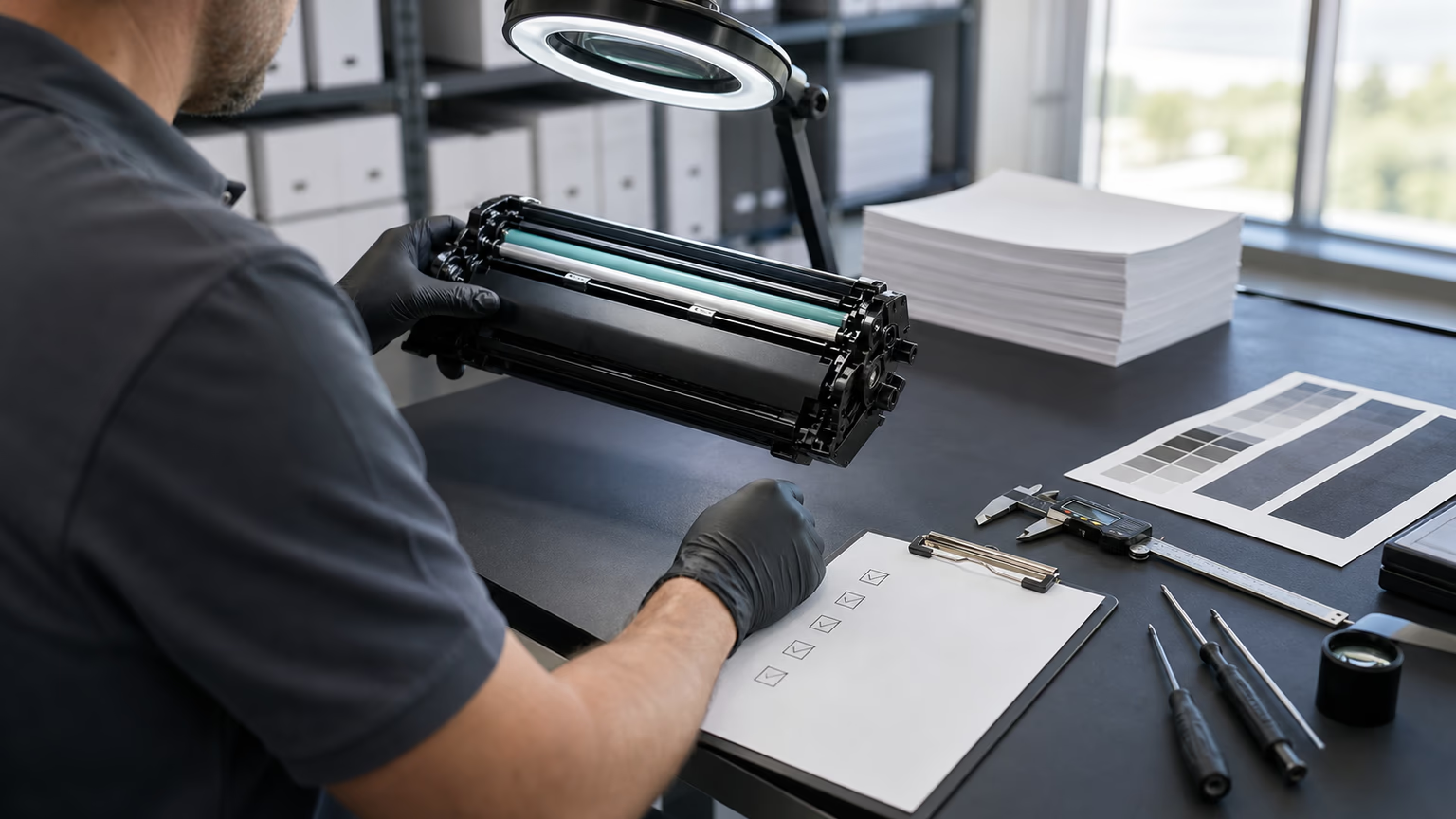
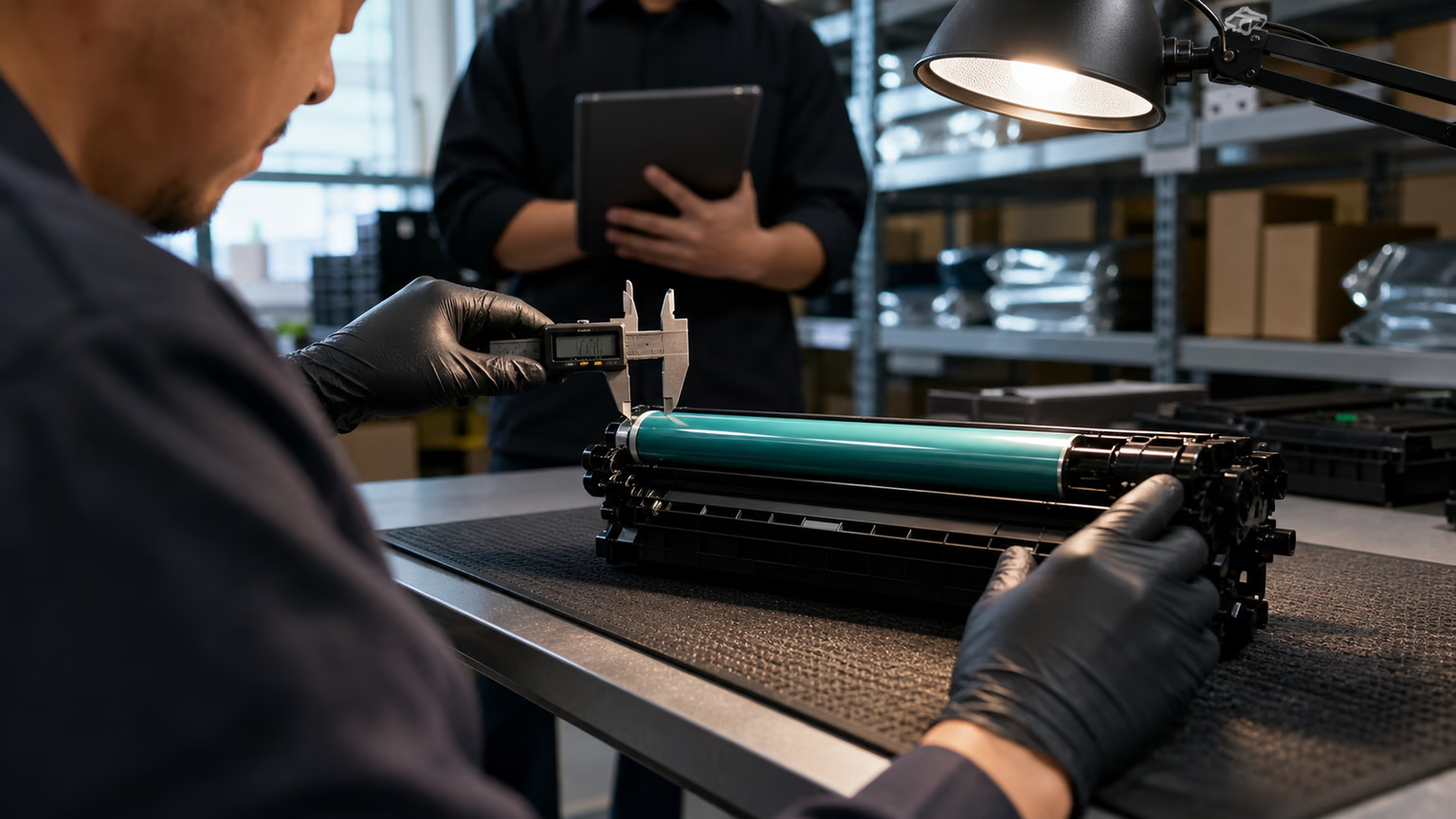
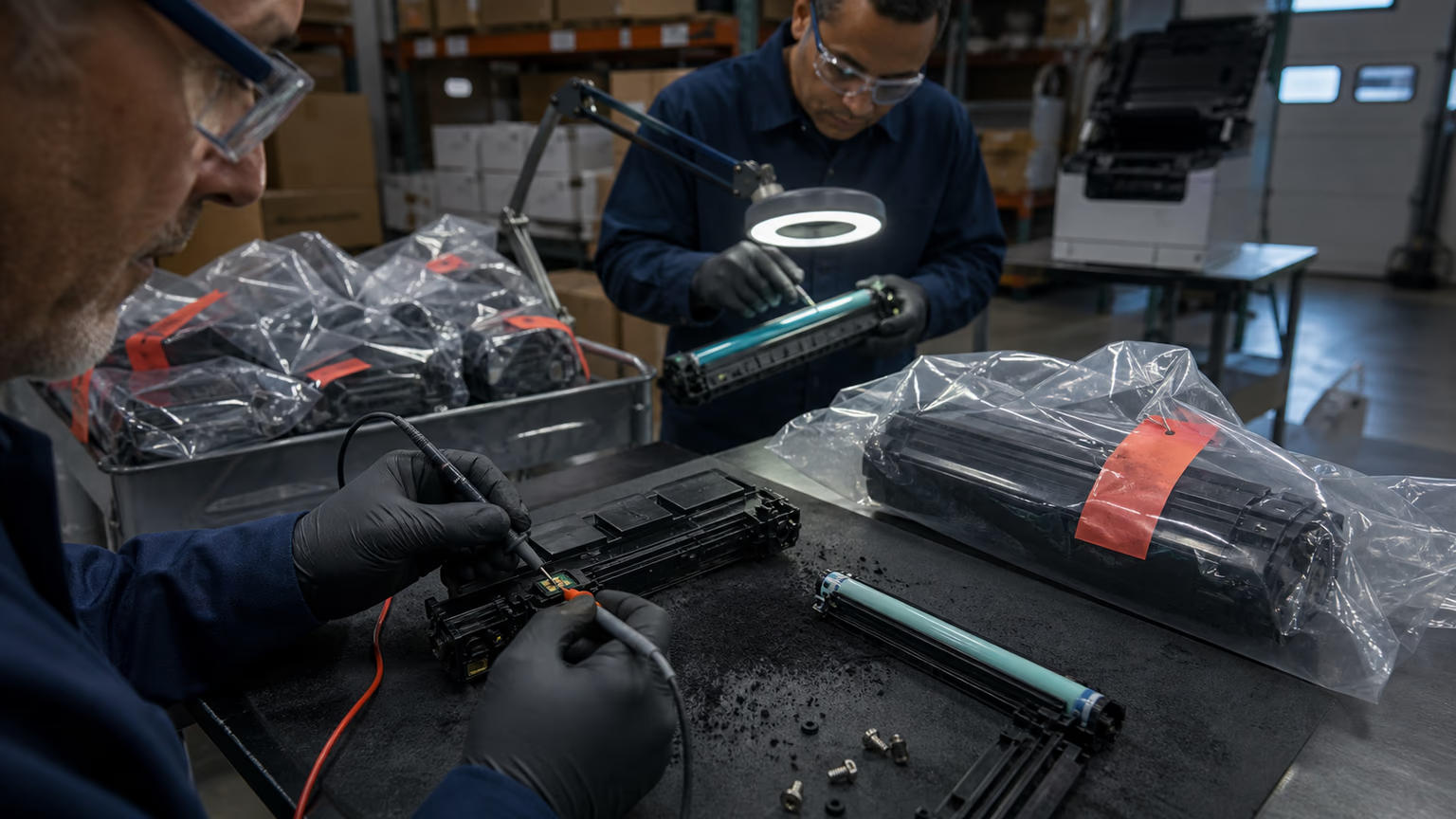
- quality control testing;
- packaging and labeling;
- batch production management.
Manufacturers control the physical production process. This gives them more control over:
- product consistency;
- formulation of compatible toner powder;
- drum and roller selection;
- assembly standards;
- production lead time;
- quality inspection procedures.
Because of this, manufacturers are usually better suited for:
- private label toner programs;
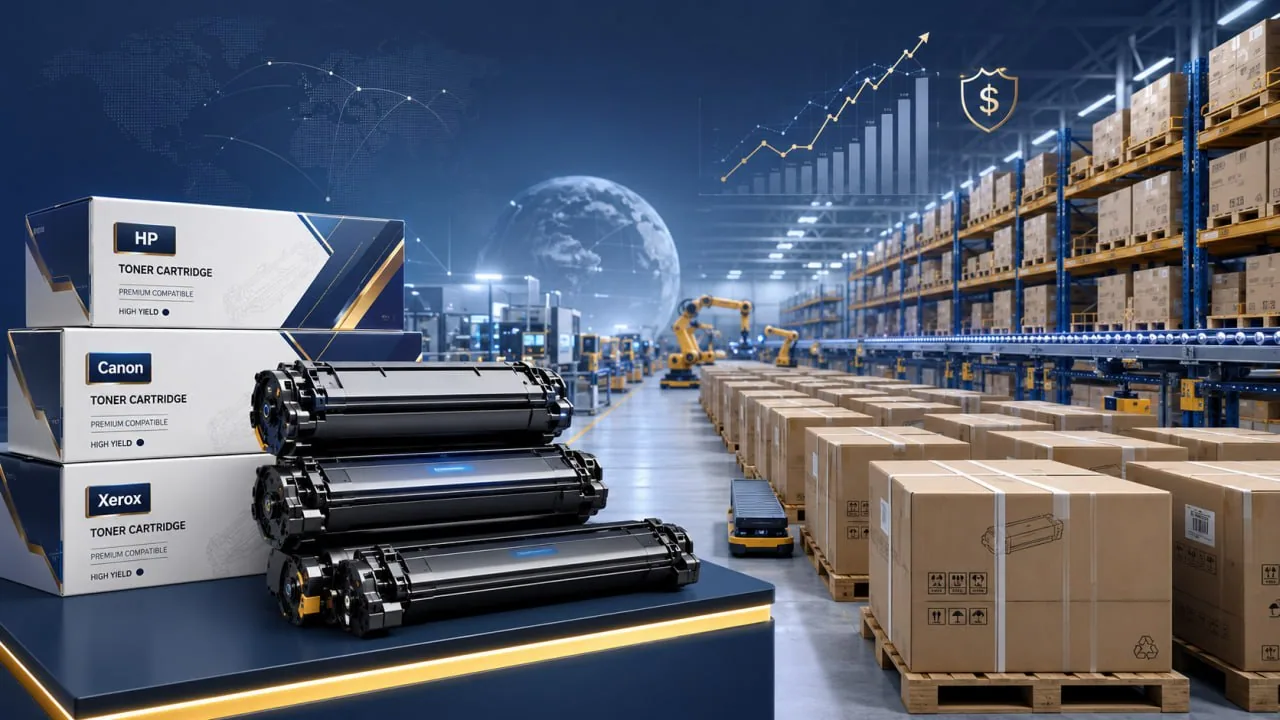
- large-volume B2B supply;
- customized cartridge development;
- long-term stable production contracts.
However, manufacturers may have higher MOQ requirements and less flexibility for small mixed orders.
What Is a Toner Cartridge Vendor?
A toner cartridge vendor is typically a trading company or distributor that does not directly manufacture products. Instead, vendors source cartridges from one or multiple factories and resell them to buyers.
Vendors usually provide:
- mixed product catalogs;
- flexible order quantities;
- faster quoting and sourcing;
- multi-brand selection;
- simplified purchasing process;
- consolidated shipping options.
They may work with several factories to cover different product categories or price levels.
For some buyers, vendors are convenient because they reduce the complexity of dealing with multiple factories directly.
However, vendor-based sourcing also has limitations:
- less control over production quality;
- less transparency in manufacturing process;
- potential variation between batches;
- dependency on upstream factories;
- limited technical insight into formulation.
Manufacturer vs Vendor: Key Differences
For B2B buyers, the decision is not only about price. It is about control, stability, and scalability.
Price Structure
Manufacturers usually offer lower base pricing because there is no intermediary.
Vendors may add margin, but can sometimes offer better flexibility for smaller orders.
Quality Control
Manufacturers control production directly. This allows tighter consistency.
Vendors rely on factory standards, which may vary depending on sourcing.
MOQ and Flexibility
Manufacturers often require higher minimum order quantities.
Vendors are more flexible with mixed SKUs and smaller batches.
Customization
Manufacturers can support OEM-level customization, including:
- private label packaging;
- chip selection;
- toner formulation adjustments;
- cartridge design improvements.
Vendors usually offer limited customization.
Supply Stability
Manufacturers can ensure stable production schedules.
Vendors depend on multiple suppliers, which may affect consistency over time.
When Buyers Should Choose Manufacturers
Working directly with a toner cartridge manufacturer is usually better when:
- building a private label toner brand;
- ordering in bulk for distribution;
- requiring stable long-term supply;
- needing customized packaging or product design;
- managing large B2B contracts;
- focusing on margin optimization.
Manufacturers are especially important for companies planning to compatible toner cartridges under their own brand or entering OEM-level presentation markets.
When Vendors Make More Sense
Vendors are useful when:
- testing new markets;
- starting with small order quantities;
- needing multiple brands in one shipment;
- requiring fast procurement;
- avoiding complex factory communication;
- sourcing mixed product portfolios.
For early-stage importers, vendors can reduce operational complexity. However, as volume increases, many buyers eventually transition toward direct manufacturing relationships.
Risk Factors in Vendor-Based Sourcing
While vendors provide flexibility, there are risks:
- inconsistent product batches;
- unclear factory origin;
- limited technical accountability;
- variable packaging quality;
- dependency on third-party supply chains.
In B2B toner business, these risks can lead to:
- customer complaints;
- returns;
- reduced trust in brand;
- unstable reorder cycles.
This is why many serious importers eventually shift toward direct factory sourcing or hybrid models combining manufacturers and selected vendors.
Importance of Technical Transparency
A key factor in choosing between manufacturer and vendor is transparency.
A reliable partner should be able to provide:
- production origin details;
- cartridge compatibility lists;
- OEM reference mapping;
- batch consistency data;
- test reports;
- quality control procedures.
Without this transparency, buyers may face unexpected variation in product performance.
Link to Wholesale Strategy
Understanding manufacturer vs vendor structure is also important when planning wholesale toner strategies.
Manufacturers are usually better for scaling margin-focused distribution. Vendors are often better for flexible sourcing and market testing.
How UNICO Fits Into This Structure
UNICO operates as a manufacturing-driven B2B partner, supporting toner cartridge production, private label development, and bulk supply programs.
This includes:
- OEM-compatible toner cartridge production;
- private label packaging support;
- stable batch manufacturing;
- export coordination;
- technical communication for B2B buyers.
The goal is to provide manufacturer-level control with export-friendly support for international buyers.
FAQ
What is the difference between a toner cartridge manufacturer and a vendor?
A manufacturer produces toner cartridges directly in a factory. A vendor sources products from factories and resells them to buyers.
Which is better for B2B buyers?
Manufacturers are better for long-term supply, private label, and bulk orders. Vendors are better for flexibility and small mixed orders.
Are vendors cheaper than manufacturers?
Not always. Manufacturers usually offer lower base pricing, but vendors may provide flexibility for smaller or mixed orders.
Can vendors offer private label toner?
Some vendors can offer private label, but production is still done by factories. Direct manufacturers usually provide more control and consistency.
Final Thoughts
Choosing between a toner cartridge manufacturer and a vendor is a strategic decision.
Manufacturers offer control, consistency, and scalability. Vendors offer flexibility and convenience. The right choice depends on business stage, order volume, and long-term goals.
For serious B2B buyers, understanding this difference is key to building a stable and profitable toner supply chain.
Related reading: toner cartridge suppliers, profitable compatible toner line, wholesale toner, create your own toner cartridge brand, private label toner manufacturing, compatible toner manufacturer.