A compatible toner line can look profitable on paper. The factory price is lower than OEM, demand exists in almost every market, and customers are always looking for ways to reduce printing costs. For distributors, resellers, service companies, and office supply businesses, the category seems attractive.
But profit in compatible toner does not come from buying the cheapest cartridge and adding a margin.
That is usually how problems start.
A profitable compatible toner line is built around the right models, stable quality, reliable packaging, controlled complaints, clear positioning, and a factory that understands B2B supply. The goal is not only to sell the first order. The goal is to create repeat orders with acceptable margins and low after-sales risk.
If a cartridge is cheap but creates complaints, returns, service visits, leakage, poor density, or customer distrust, the profit disappears quickly.
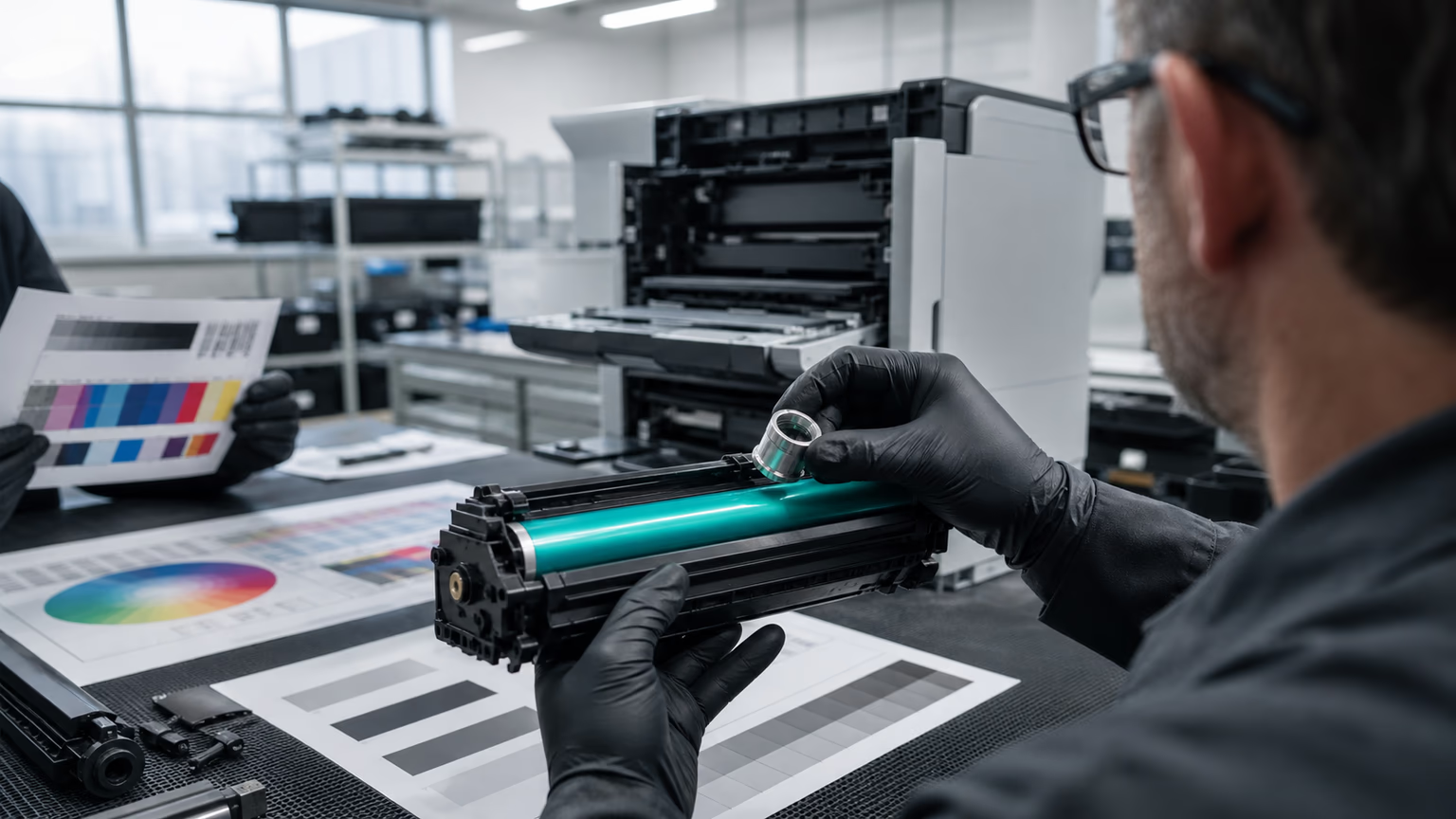
Factory support is what helps buyers avoid that trap. A good manufacturer does more than produce cartridges. It helps the buyer choose the right product range, test samples, manage packaging, control batch quality, handle complaints, and expand the line carefully.
That is how a compatible toner line becomes a business asset instead of a constant problem.
Profit Starts With Product Selection
The first question is not “What is your cheapest price?”
The first question should be: “Which models can we sell repeatedly with stable quality and healthy margin?”
A profitable compatible toner line usually begins with a focused SKU strategy. Not every cartridge model deserves to be included. Some models have strong demand, stable production, easy compatibility, and good repeat order potential. Others may have low demand, chip risk, high complaint rates, or poor margin after logistics.
A strong first product range should consider:
- demand in the buyer’s market;
- existing customer needs;
- printer model population;
- OEM price gap;
- cartridge stability;
- chip and firmware risks;
- page yield expectations;
- packaging complexity;
- MOQ;
- logistics cost;
- expected complaint rate;
- reorder potential.
Many buyers make the mistake of launching a wide catalog too early. They want to show customers that they cover every brand and every model. But a large SKU list can create slow-moving inventory, complicated purchasing, more packaging work, and quality-control pressure.
A smaller but better-selected range can be more profitable.
If your company is just starting, it may be better to launch a toner brand in 90 days with a focused list of proven models, then expand based on real sales data.
Cheap Products Can Destroy Margin
A low factory price does not automatically create profit.
The real margin must include all downstream costs:
- international freight;
- import duty;
- local warehousing;
- sales commission;
- damaged goods;
- returns;
- replacement stock;
- service support;
- credit notes;
- customer complaints;
- slow inventory;
- marketing cost;
- warranty reserve.
A cartridge that costs less at the factory but creates more complaints may be less profitable than a slightly more expensive cartridge with stable performance.
For example, if a distributor saves 8% on purchase price but receives a 5% return rate, additional service calls, and customer dissatisfaction, the saving may become meaningless. In B2B supply, the hidden cost of defects often matters more than the visible product price.
This is especially true for private label toner. If the product carries your brand, every complaint damages your relationship with the customer. The customer does not care which factory produced it. They bought it from you.
A profitable compatible toner line must therefore balance price and reliability. The lowest cost is useful only when quality remains stable.
Factory Support Helps Reduce Wrong SKU Decisions
A serious factory can help buyers avoid weak models.
This support is valuable because not all compatible toner SKUs are equal. Some models are mature and stable. Some have chip issues. Some are sensitive to firmware updates. Some have higher risk of leakage or density complaints. Some require careful packaging. Some have poor demand despite appearing attractive in a catalog.
An experienced factory should be able to tell the buyer:
- which models are stable;
- which models sell well in different regions;
- which models have compatibility warnings;
- which models require chip attention;
- which models have good page yield performance;
- which models are suitable for private label launch;
- which models should be avoided in the first order.
This information saves money. It prevents the buyer from building a line around products that look good on paper but perform poorly in the market.
This is one of the biggest advantages of private label toner manufacturing. The buyer does not need to learn every technical risk alone. A good factory partner can help convert production knowledge into a better commercial plan.
Build Around Customer Segments, Not Only Printer Models
A compatible toner line should be built around customer needs.
Different customers buy differently.
Office supply distributors
They need broad model coverage, clean packaging, stable availability, and reasonable margin.
Copier and printer service companies
They care about fewer complaints, predictable performance, and technical support.
Corporate procurement suppliers
They want stable quality, documentation, reliable delivery, and clear cost savings versus OEM.
Schools and institutions
They need dependable supply, acceptable print quality, and low disruption.
Ecommerce sellers
They need strong packaging, clear model compatibility, good photos, reviews, and low return rates.
Private label buyers
They need brand consistency, packaging control, and long-term repeatability.
A profitable line should match the buyer’s main customer segment. A product range for ecommerce may not be the same as a range for service companies. A line for private label distributors may require stronger packaging and documentation than a generic wholesale line.
This is why a factory should understand the buyer’s business model before recommending products.
Quality Consistency Creates Repeat Orders
The first order is important, but repeat orders decide profitability.
A buyer can sometimes sell a low-quality product once. They cannot build a strong toner business if customers do not reorder.
Repeat orders depend on consistency:
- same print quality;
- same cartridge fit;
- same packaging;
- same chip behavior;
- same page yield expectation;
- same support process;
- same batch reliability.
If every shipment performs differently, the sales team loses confidence. Customers become cautious. Service teams complain. Reorders slow down.
A strong factory should have controls for:
- incoming materials;
- toner formulation;
- component matching;
- drum and blade quality;
- chip sourcing;
- seal strength;
- print testing;
- batch traceability;
- retained samples;
- final packaging inspection.
This is not only technical quality. It is commercial protection.
The buyer’s margin depends on stable supply. If the factory changes materials without informing the buyer, the toner line becomes unstable. If the packaging changes unexpectedly, customers may question authenticity. If chip versions change without clear communication, returns can increase.
A profitable compatible toner line needs production discipline behind it.
Packaging Influences Price and Trust
Packaging is often treated as a design issue, but it also affects profit.
If the packaging looks weak, customers push for a lower price. If it looks professional, clear, and consistent, the product is easier to position as a reliable OEM alternative.
Good packaging can support:
- stronger shelf presence;
- easier model identification;
- fewer compatibility mistakes;
- better distributor confidence;
- better ecommerce presentation;
- stronger brand memory;
- lower perception risk.
Poor packaging creates the opposite effect. It can make a good cartridge look cheap. It can confuse warehouse staff. It can cause customers to doubt quality before using the product.
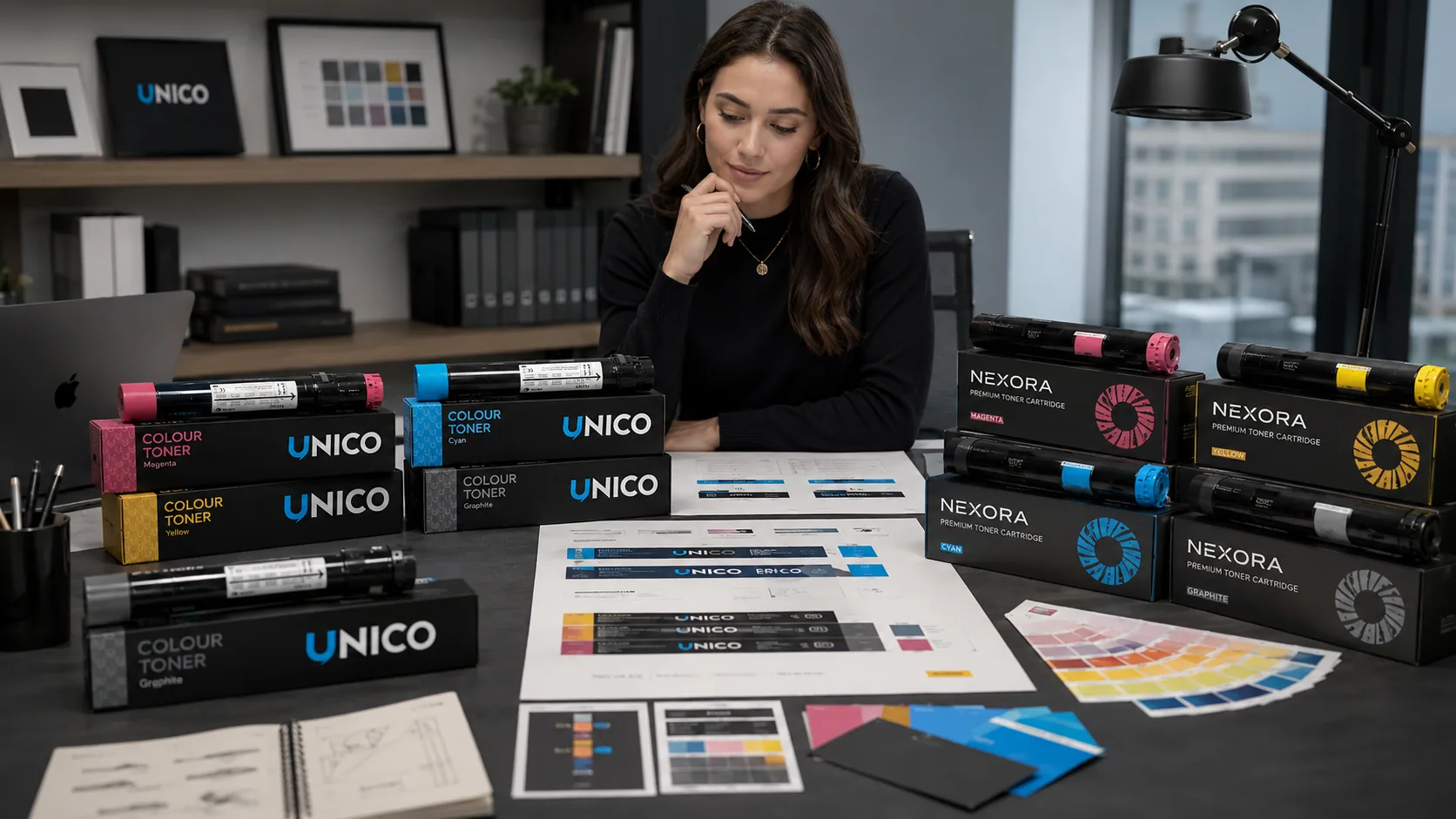
This is why packaging matters when trying to private label toner that looks premium. A premium-looking toner line does not need luxury packaging, but it should look organized, credible, and professionally made.
For distributors, this can directly affect sell-through. A customer may not understand cartridge engineering, but they can immediately judge whether the product looks serious.
Margin Planning Must Include Reorder Strategy
A profitable toner line is not only about the first shipment. It is about reorder rhythm.
Buyers should understand:
- which SKUs sell fastest;
- which SKUs move slowly;
- how much safety stock is needed;
- how long production takes;
- how long shipping takes;
- when to reorder;
- which models should be discontinued;
- which models should be expanded;
- which customers buy repeatedly.
Without reorder planning, even a good product line can create cash-flow problems. Too much stock ties up money. Too little stock causes missed sales and customer frustration.
The factory can support reorder planning by sharing production lead times, MOQ constraints, packaging timelines, and model availability.
The buyer should also track complaint rate per SKU. A model with good sales but high complaints may not be profitable. A model with moderate sales and low complaints may be a better long-term product.
Profitability is not only sales volume. It is net value after operational risk.
Do Not Ignore Chip and Firmware Risk
In many toner cartridge categories, chip compatibility can make or break profitability.
A cartridge may print well, but if the printer rejects it after a firmware update, the buyer faces returns and customer complaints.
Chip risks include:
- regional chip mismatch;
- firmware updates;
- wrong chip version;
- poor chip supplier stability;
- stock becoming outdated;
- unclear compatibility information;
- customers mixing printer regions.
A good factory should communicate chip risks clearly. It should not simply say “compatible” without details.
For profitable B2B supply, the buyer should know:
- which models require chips;
- which markets have regional differences;
- whether firmware updates are common;
- how replacement support works;
- how stock should be managed;
- whether chip versions are stable.
Chip problems can damage margin quickly because they often create immediate customer rejection. Unlike a print-quality defect that may appear later, a chip error can stop the cartridge before the first page.
After-Sales Support Protects the Line
A compatible toner line will eventually receive complaints. No manufacturer can promise zero issues forever. The question is how the system handles them.
A strong after-sales process should include:
- complaint evidence collection;
- batch number tracking;
- sample comparison;
- root cause analysis;
- replacement policy;
- technical communication;
- corrective action;
- feedback to production.
This protects both buyer and factory.
If complaints are handled casually, every issue becomes emotional. Customers become angry. Sales teams become defensive. The factory blames the user. The buyer loses trust.
A professional complaint process turns problems into data. It identifies whether a failure is isolated, machine-related, transport-related, batch-related, or design-related.
For a profitable compatible toner line, this is essential. Margin is protected not only before shipment, but after sale.
Pricing Strategy: Do Not Race to the Bottom
Compatible toner often attracts price competition. Many buyers enter the market thinking they must be the cheapest to win.
That is not always true.
Some customers want the lowest possible price, but many B2B buyers want a balance:
- lower cost than OEM;
- stable print quality;
- predictable page yield;
- fewer complaints;
- good packaging;
- technical support;
- reliable supply.
If your product line is positioned only as cheap, you will attract customers who switch suppliers for small price differences. That makes the business fragile.
A stronger strategy is to position the line as cost-effective and reliable. The product saves money versus OEM, but the brand also offers stability, support, and professional presentation.
This is especially important if you want to create your own toner cartridge brand. OEM-level presentation does not mean OEM pricing. It means the product gives customers enough confidence to buy without feeling they are taking a blind risk.
Product Data and Sales Materials Matter
A profitable toner line needs clear sales materials.
Buyers should prepare:
- compatibility charts;
- SKU list;
- product photos;
- packaging images;
- page yield information;
- comparison with OEM;
- FAQ;
- warranty policy;
- sales presentation;
- distributor sheet;
- ecommerce descriptions;
- technical support guide;
- reorder list.
Without this, sales teams struggle. Customers ask basic questions, and the team has no consistent answer.
A factory can support this by providing product data, compatibility information, images, and technical descriptions. The buyer can then adapt these materials for the local market.
For private label, this is especially important. A brand does not become real only because a logo is printed on the box. It becomes real when the buyer can present, sell, support, and reorder the product consistently.
How to Measure Profitability by SKU
A compatible toner line should be reviewed SKU by SKU.
Important metrics include:
- gross margin;
- net margin after logistics;
- sales volume;
- stock turnover;
- complaint rate;
- return rate;
- replacement cost;
- average reorder time;
- customer type;
- support time required;
- slow-moving inventory risk.
Some SKUs may look profitable because the gross margin is high, but they may move slowly or create many complaints. Others may have moderate margin but strong repeat sales and low support cost.
The goal is to build a line where each SKU has a reason to exist.
A factory can help by advising which products are stable and mature, but the buyer must use local market data to refine the line over time.
How UNICO Supports Profitable Compatible Toner Lines
UNICO supports buyers not only with production, but with product-line development. This includes model selection, sample preparation, packaging support, compatibility review, quality control, and after-sales communication.
For distributors and B2B buyers, this factory support helps reduce risk when building or expanding a compatible toner line.
The aim is to create a line that can sell repeatedly, protect the buyer’s brand, and deliver stable value to customers.
A profitable line does not need to be the largest in the market. It needs the right products, the right packaging, the right margin structure, and the right factory behind it.
FAQ
What makes a compatible toner line profitable?
A compatible toner line becomes profitable when it combines stable demand, healthy margins, low complaint rates, reliable supply, good packaging, and repeat orders. The cheapest products are not always the most profitable.
Should I choose the lowest-priced factory?
Not necessarily. A low factory price can become expensive if the product creates returns, complaints, service costs, or customer loss. Buyers should compare total profitability, not only unit price.
How many SKUs should a new toner line include?
A new line should usually start with a focused range of high-demand, stable models. The exact number depends on the market, but starting with a controlled range is safer than launching too many SKUs at once.
Why is factory support important?
Factory support helps buyers choose stable models, test samples, manage packaging, understand chip risks, control quality, investigate complaints, and expand the line intelligently.
Can packaging affect profit?
Yes. Professional packaging can improve trust, reduce customer hesitation, support better pricing, and make the product easier to sell. Weak packaging can force the product into low-price competition.
How do I know if a SKU should stay in the line?
Track sales volume, margin, complaint rate, return rate, stock turnover, support cost, and reorder behavior. A SKU should remain only if it contributes positively to the overall business.
Final Thoughts
Building a profitable compatible toner line is not about filling a catalog with cheap cartridges. It is about selecting the right models, controlling quality, presenting the product professionally, managing margin, and protecting customer trust.
Factory support makes this process easier and safer. A good manufacturer helps the buyer avoid weak products, launch with better structure, and respond to problems with real technical support.
For B2B suppliers, the most profitable toner line is the one customers reorder without hesitation. That requires more than price. It requires consistency, packaging, support, and a factory that understands the business behind the cartridge.
Related reading: launch a toner brand, create your own toner cartridge brand, private label toner manufacturing, private label toner, private label toner manufacturing, ghosting after installing a new toner cartridge.