The Hidden Cost of Buying Toner on Price Alone
When a procurement team compares compatible toner cartridges strictly by price per unit, they overlook a cascade of hidden expenses that dwarf the initial savings.
A cartridge that costs less on the invoice can end up costing far more through reprints, service calls, and damaged client relationships.
The direct purchase price is just one line item in a much larger total cost of ownership (TCO) equation.
Consider the indirect costs: a cartridge that produces inconsistent print density forces your end-users to reprint documents, wasting paper and labor.
If a poorly manufactured cartridge leaks inside a printer, the resulting service call can wipe out the margin on several dozen cartridges.
Even worse, frequent failures erode trust with your customers, who then reconsider their managed print services (MPS) contracts.
The fallacy of buying on price alone is that it ignores the cost per page, which is where the real financial impact lies.
A smarter procurement strategy shifts focus from unit price to quality outcomes. By evaluating bulk toner cartridges based on yield consistency, failure rates, and technical support, you build a supply chain that protects both your margins and your reputation.
Why 'Compatible' Is Not a Commodity Label
Treating all compatible toner as interchangeable is a dangerous assumption. The aftermarket toner industry spans a wide spectrum, from professional-grade products that rival OEM output to low-cost alternatives that fail prematurely. The difference lies in formulation, manufacturing precision, and the research behind reverse-engineering each device brand's cartridge.
Professional-grade compatible toner starts with a careful analysis of the OEM cartridge's chemical and mechanical properties.
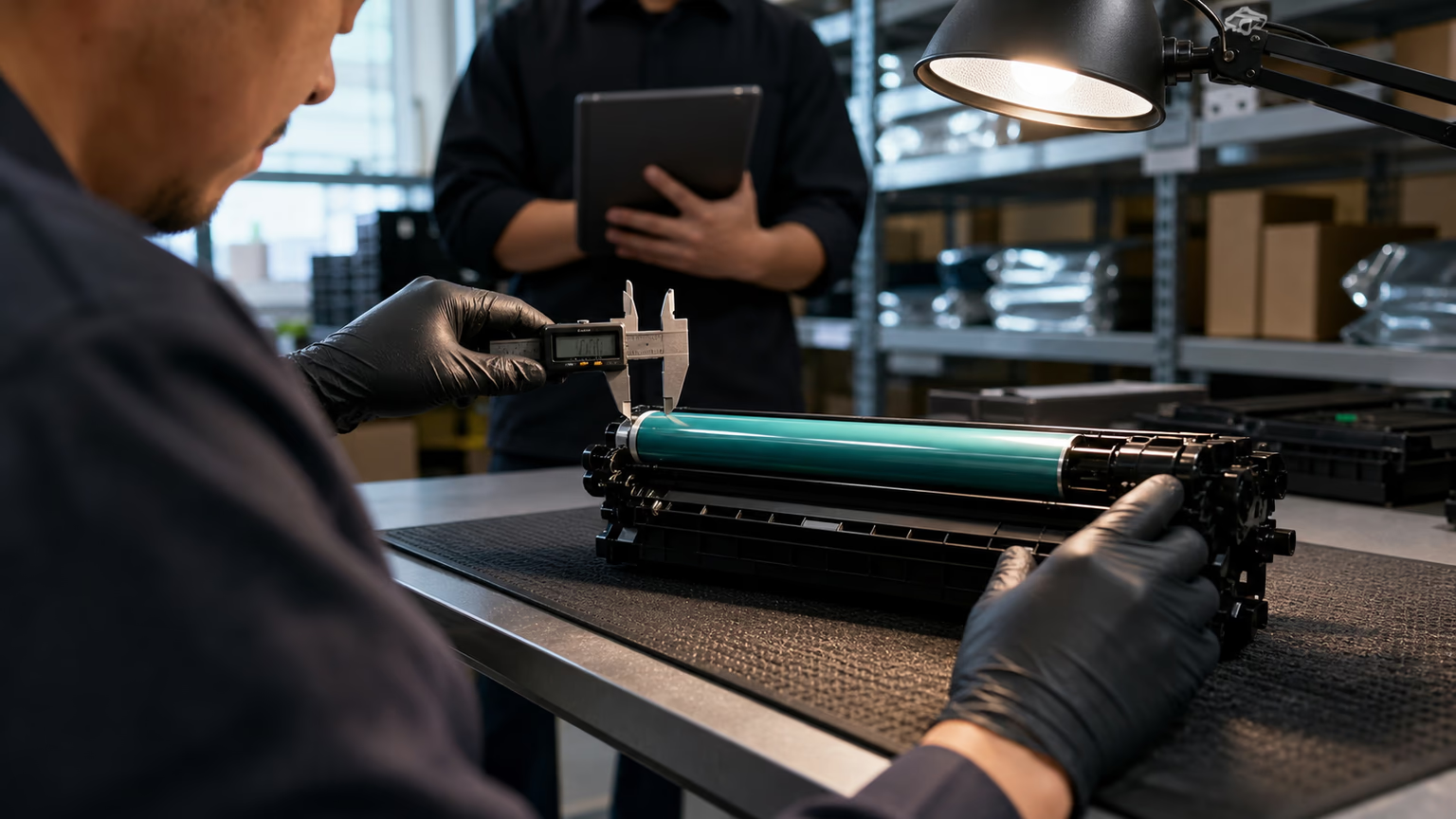
Particle size and charge distribution are critical: toner that is too coarse produces grainy prints, while inconsistent charging leads to background scatter and poor fusing.
The best bulk printer toner suppliers invest in R&D to match these physical characteristics, ensuring that their product performs reliably across a range of office printer toner environments.
Packaging also separates serious suppliers from commodity sellers. A toner cartridge that arrives damaged due to inadequate packaging creates immediate waste and return costs. Look for suppliers who use injected foam, sealed bags, and robust outer boxes that protect against transit shocks.
How to Qualify a Bulk Toner Supplier Like a Pro
Moving beyond marketing claims requires a structured evaluation process. Before signing a supply agreement for wholesale toner cartridges, demand documentation that proves performance. Start with batch testing reports that show print density, yield, and defect rates across multiple production runs. A supplier who cannot provide this data is likely not manufacturing to consistent standards.
Chip technology is another critical pillar.
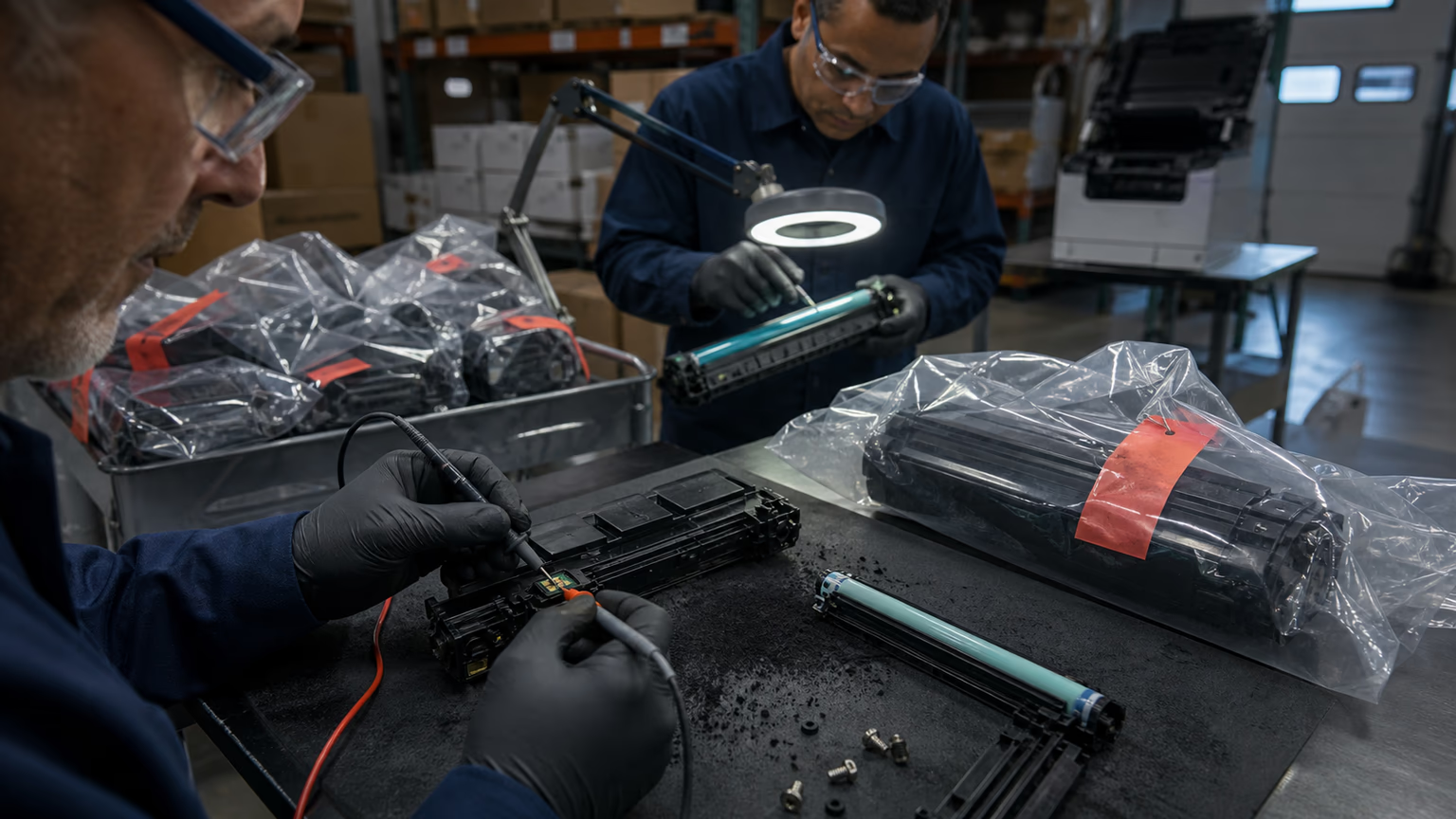
Most modern laser printer toner cartridges contain chips that communicate with the printer.
OEM firmware updates can disrupt aftermarket chip function, so your supplier must have a clear policy for monitoring updates and rolling out revised chips.
Ask about their firmware compatibility roadmap and how quickly they respond to new device firmware releases.
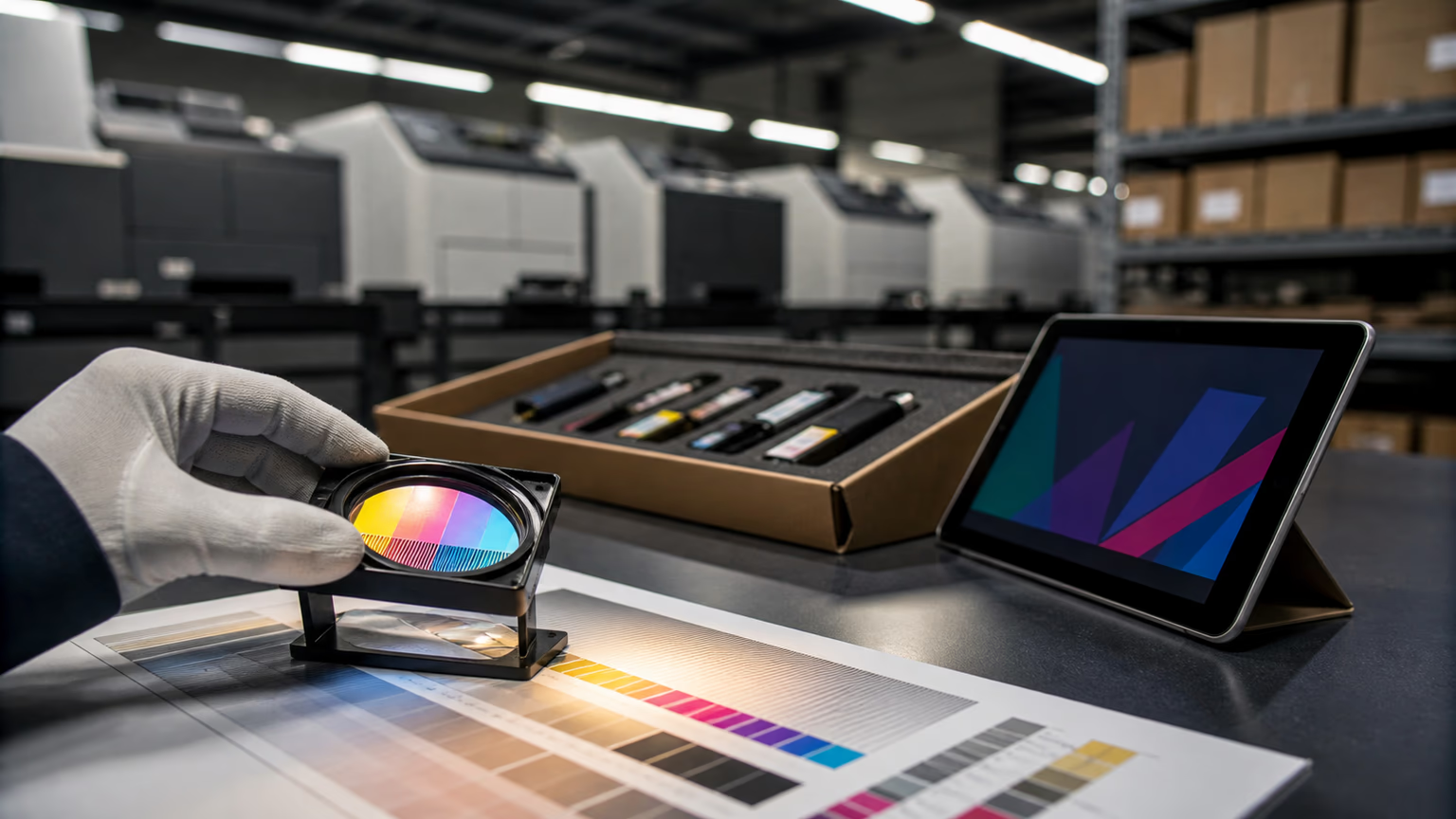
Finally, request physical samples and run a multi-printer trial across a representative mix of your fleet. Evaluate print quality using standard test pages, and compare the output against OEM cartridges for density, halftones, and solid areas. This real-world test reveals more than any spec sheet.
Navigating Printer Fleet Fragmentation
Service companies and distributors often manage fleets containing dozens of different printer models from multiple manufacturers. Managing a separate supplier for each brand creates logistics headaches, inflates freight costs, and complicates inventory management. A single wholesale compatible toner supplier with a deep multi-brand catalogue can eliminate this complexity.
Consolidating your toner supply under one capable vendor reduces the number of purchase orders, deliveries, and supplier relationships to manage.
It also simplifies quality control because you have a single point of accountability.
However, depth matters: a supplier that merely boxes generic toner into different cartridges without optimizing for each device brand will underperform.
Seek out a partner with proven compatible toner for mixed printer fleets that treats each device platform as a unique engineering challenge.
Supply Chain Resilience: Beyond the Initial Shipment
A low per-unit cost means nothing if your toner stock runs out during a critical month. Supply chain disruptions—whether from raw material shortages, port delays, or production backlogs—can halt your operations and breach service level agreements. Smart bulk buying therefore includes a careful assessment of the supplier's logistics infrastructure.
Evaluate lead times and minimum order quantities that align with your cash flow.
A supplier with regional warehousing or stock reserves near your market can offer emergency fulfillment and reduce expensive air-freight scenarios.
Also, discuss contingency plans: what happens if a key raw ingredient becomes scarce?
The most reliable bulk printer toner suppliers have diversified sourcing and can maintain output even during industry-wide disruptions.
The MPS Advantage: Toner as a Managed Service Enabler
For managed print service providers, toner performance directly impacts contract profitability. Every service call triggered by a faulty cartridge eats into margins and damages the uptime statistics that clients track. Consistent print quality and reliable page yields are not extras—they are foundational to MPS success.
When you standardize on high-quality compatible toner cartridges for office printers, you gain predictable cost-per-page metrics that simplify billing and forecasting.
Conversely, a toner failure that requires a technician visit not only increases your mean time to repair but also undermines client confidence.
Choose a toner supply that reinforces your MPS value proposition, not one that erodes it.
Future-Proofing: Firmware, Chips, and OEM Countermeasures
Printer OEMs periodically update firmware to authenticate cartridges, a practice that can render aftermarket chips unreadable. A sophisticated bulk toner supplier anticipates these updates and designs their chips with upgradeability in mind. Before purchasing, ask how the supplier tracks OEM firmware release schedules and how they push updated chips to customers.
The best partners maintain a version-controlled chip database and proactively notify you when a firmware change is imminent. They also offer a replacement program for cartridges affected by unexpected update conflicts. This chip agility is a non-negotiable requirement for any procurement team serious about avoiding sudden fleet downtime.
Your No-Nonsense Checklist for a Smarter Bulk Toner Buy
Use this practical checklist to guide your next procurement decision:
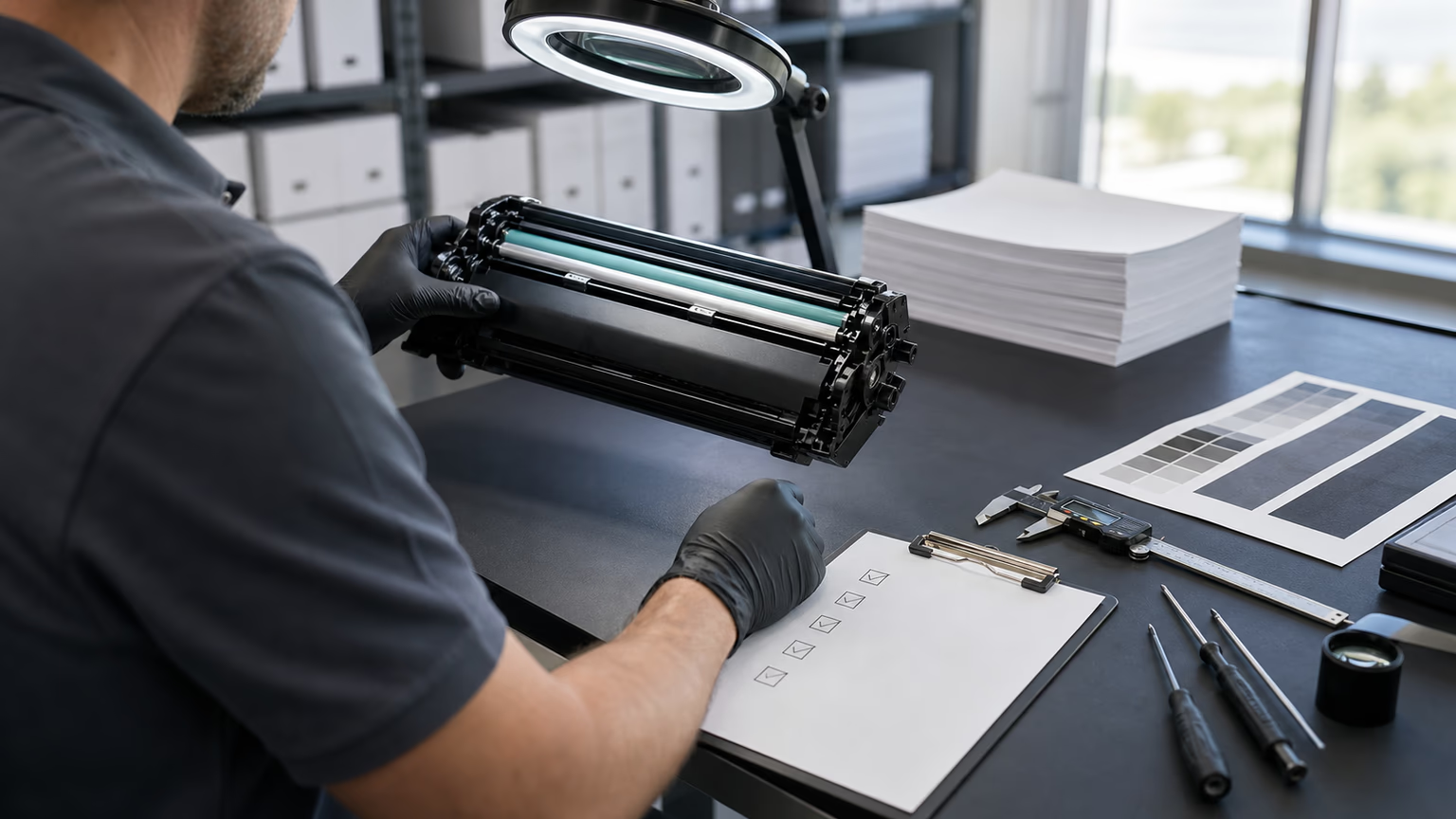
- Request batch testing reports for each SKU, verifying yield and defect rates.
- Examine packaging for protective foam, seal integrity, and consistent labeling.
- Test samples on your actual fleet mix under real-world office conditions.
- Review the supplier's chip update communication process and response SLA.
- Confirm regional inventory levels and emergency restocking procedures.
- Verify the defect reporting workflow and expected turnaround time for credits or replacements.
- Check that the supplier covers all major device brands in your fleet with dedicated engineering support.
Integrate these checks into your regular procurement cycle, and treat them as non-negotiable before committing to large volumes of bulk toner cartridges.
FAQ
How do I ensure compatible toner doesn't void my end-customer's printer warranty?
In many regions, using a compatible cartridge does not automatically void a printer's warranty, but the key is to document the use of products that meet quality standards.
What should a supplier's return policy for defective cartridges include?
A professional return policy should specify a clear defect rate threshold, a straightforward reporting process, and a timeline for credit issuance or replacement.
How do firmware updates from printer OEMs affect compatible chip performance?
OEM firmware updates can alter the communication protocols between the printer and the cartridge chip, sometimes preventing the printer from recognizing the toner.
Is there a real risk of printer damage from using compatible toner?
Damage from a compatible cartridge is rare when the product is manufactured to professional standards.
How can I test toner quality before committing to a bulk order?
Begin with a controlled pilot: select several printers from your fleet that represent high-volume usage and test a batch of cartridges over a period of weeks.
Conclusion
Buying compatible toner in bulk is not just about securing the lowest unit price; it requires a strategic, quality-first mindset that factors in total cost of ownership, supply chain resilience, and the technical demands of mixed printer fleets.
By qualifying suppliers with the rigor outlined here—testing documentation, chip update policies, and real-world fleet performance—you convert a procurement chore into a competitive advantage.
The smarter way to buy compatible toner in bulk transforms your supply chain from a potential liability into a foundation for managed print services success, customer retention, and predictable margins. Apply these principles, and move beyond commodity thinking to a partnership model that supports your business goals.