For B2B distributors and managed print service providers, uneven color density across a printed page is much more than an aesthetic flaw.
It is a direct signal of underlying instability in toner flow and developer roller performance, and it carries a heavy financial toll.
When end users see light or dark bands, faded areas, or inconsistent color saturation, their trust in the supply chain erodes immediately.
These complaints translate into higher cartridge return rates, increased field service dispatches, and the kind of reputational damage that costs distributors repeat business and long-term service contracts.
Every cartridge return triggered by density defects represents multiple hidden costs.
There are the obvious logistics and resupply expenses, but more damaging are the hours of helpdesk time spent troubleshooting, the technician visits that fail to resolve the issue, and the SLA penalties that accrue when print uptime agreements are breached.
In competitive B2B markets, where fleet managers compare supplier performance on reliability and output consistency, unresolved density problems can shift entire accounts to competitors who demonstrate greater technical control over their toner supply.
This turns what seems like a minor print artifact into a strategic procurement risk.
Distributors who treat density defects as a routine nuisance rather than a quality metric to be eliminated are leaving margin on the table.
By understanding the mechanical and chemical roots of uneven density, procurement and service teams can reduce total cost to serve, differentiate their offering, and build the kind of technical credibility that justifies premium pricing.
The following guide provides the diagnostic framework and supplier evaluation criteria needed to turn density-related returns into a competitive advantage.
Understanding the Developer Roller's Role in Toner Flow and Print Uniformity
To diagnose uneven density, it is essential to understand how the developer roller operates.
In a laser printer, the developer roller is the component that picks up toner from the reservoir, electrically charges the particles through triboelectric friction, and delivers a uniform layer to the photoconductor drum.
The metering blade, positioned with a precise gap, controls the thickness of the toner coating on the roller surface.
Any deviation in this process—whether from roller wear, contamination, or incorrect blade gap—directly manifests as density variation across the printed page.
The surface texture and electrical properties of the developer roller are engineered to match the specific toner formulation and the printer engine's requirements.
Over time, repeated contact with toner and the metering blade can smooth the roller surface, reducing its ability to carry sufficient charge or maintain a consistent coating.
This leads to areas of low density where toner transfer is insufficient.
Conversely, scoring or scratches on the roller can trap excess toner, creating dark streaks or bands.
Even minor inconsistencies in the roller's resistance can cause uneven charge distribution, so that toner particles are attracted to the latent image with variable force, producing a gradient of density from edge to edge.
For distributors and service providers, recognizing the signs of developer roller degradation is a critical skill.
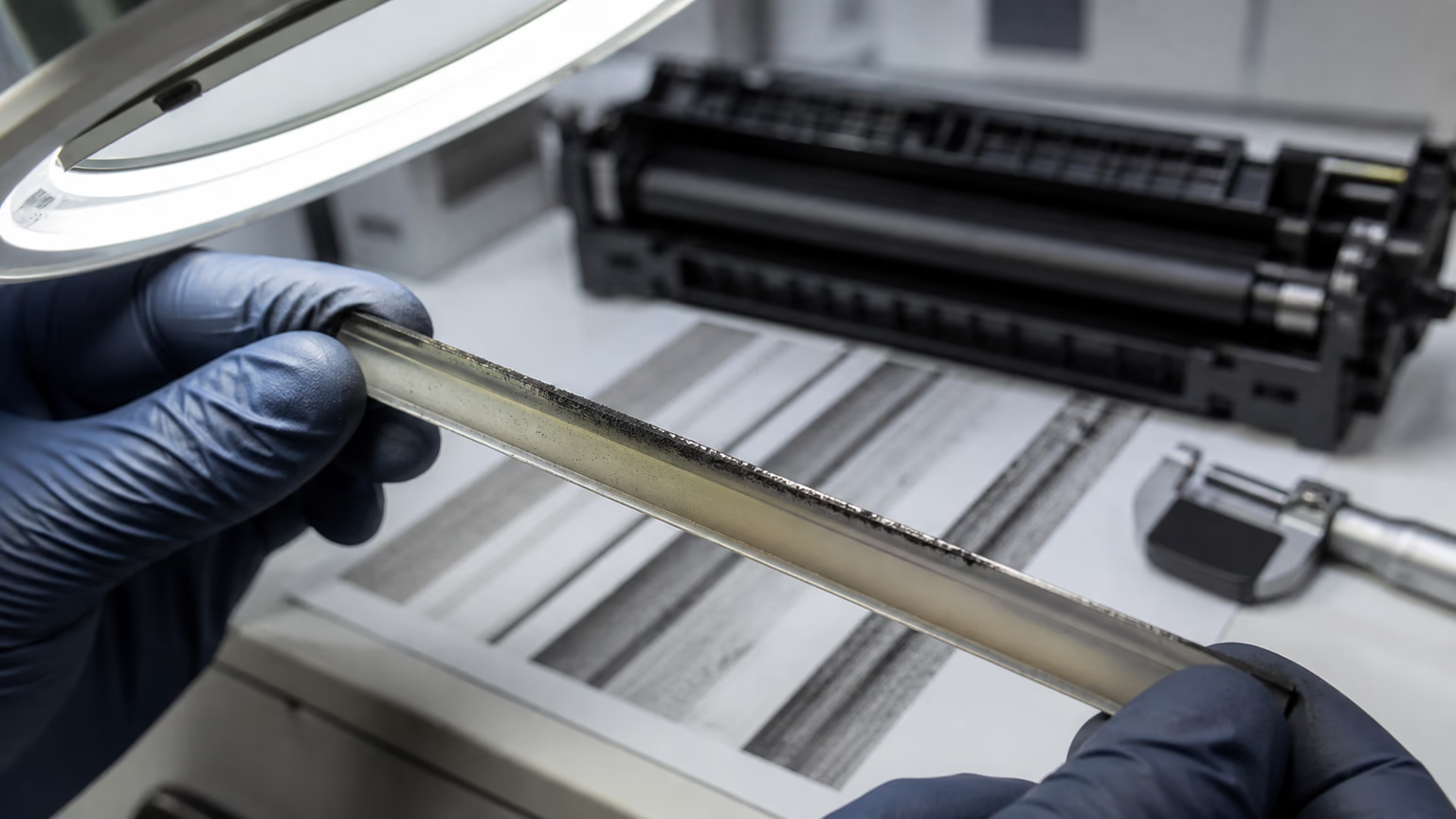
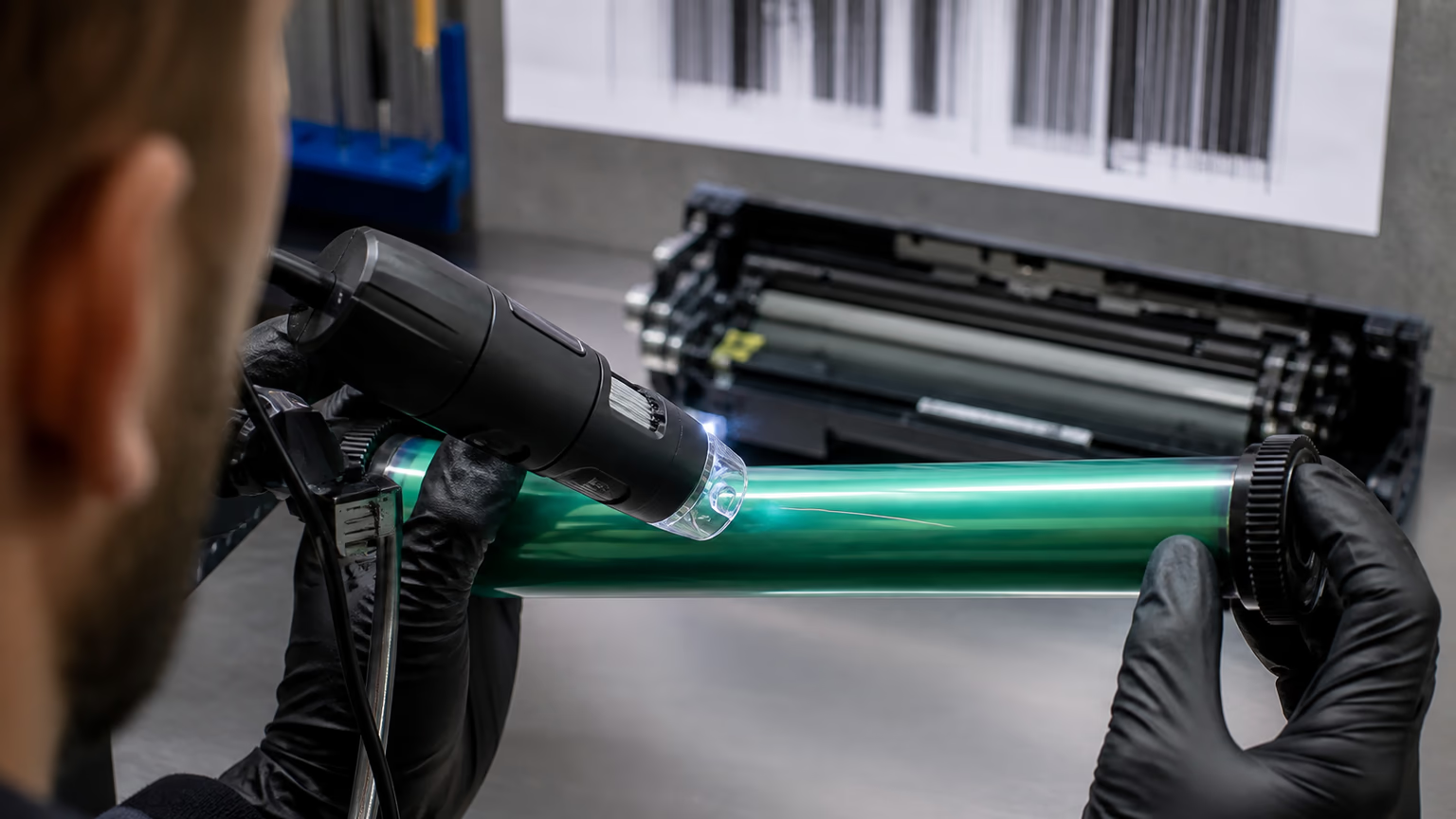
Under magnification, a worn roller may show a polished appearance, while contamination appears as a film or residue.
A quick diagnostic is to swap toner cartridges between identical printer models: if the density defect moves with a specific cartridge, the issue is toner-related; if it stays with the machine, the developer roller or other hardware is likely at fault.
This isolation step alone can prevent costly misdiagnoses and unnecessary part replacements.
Toner Formulation Factors That Disrupt Flow and Density
Even a perfectly functioning developer roller cannot compensate for toner that lacks the required flow characteristics.
Toner is not a simple powder; it is a precision-engineered composite of polymer particles, pigments, charge control agents, and surface additives.
The size distribution of these particles plays a fundamental role: too many fine particles can lead to packing and agglomeration, causing flow blockages in the hopper and uneven metering.
Too many coarse particles may not charge uniformly or transfer effectively, producing speckled or low-density output.
A narrow, well-controlled particle size distribution is non-negotiable for consistent density across the page.
External additives such as silica or titania are applied to the toner surface to improve flowability and prevent clumping.
These nanoscale agents act as spacers between particles, reducing van der Waals forces.
However, if the additive coating is insufficient, poorly dispersed, or degrades over time—especially in high-humidity environments—the toner can become cohesive and fail to release evenly from the developer roller.
This directly results in density variations, particularly in high-coverage areas of the print.
Charge control agents are equally important: they govern how quickly and uniformly particles accept a triboelectric charge.
Inconsistent charging leads to selective development, where some areas of the latent image receive more toner than others, creating visible bands or gradients.
The polymer base resin also matters, though its influence is indirect.
The melting and fusing characteristics can interact with the printer's fuser temperature profile, and in some cases, incomplete melting can cause a halo effect or density shift near the edges of solid fills.
While not a primary cause of developer-roller-induced density issues, resin properties should be considered when qualifying a new toner source, especially for high-speed office printers where thermal dynamics vary.
Systematic Diagnosis: Isolate the Root Cause in 4 Steps
When density complaints arise, a structured approach prevents guesswork and builds trust with end customers. Distributors and service teams can follow this four-step protocol to pinpoint the source of the problem efficiently.
Step 1: Analyze the print sample.
Request the customer to print a full-page halftone or solid color test pattern.
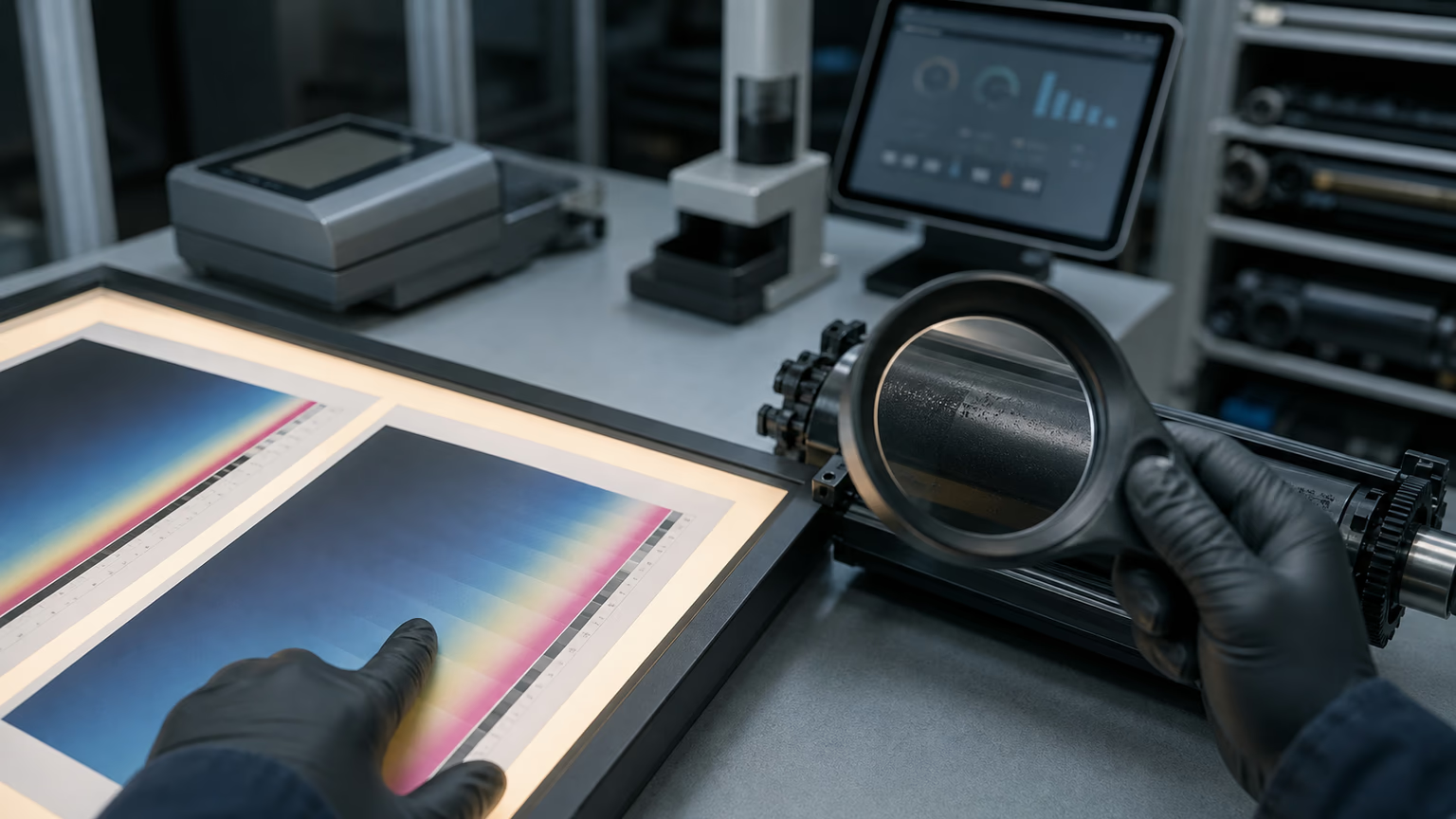
Measure density at multiple points across the sheet using a handheld densitometer.
Look for patterns: a gradual fade from one side to the other often indicates developer roller issues, while repetitive bands correspond to roller circumference defects.
Edge-to-edge variation may suggest toner metering problems.
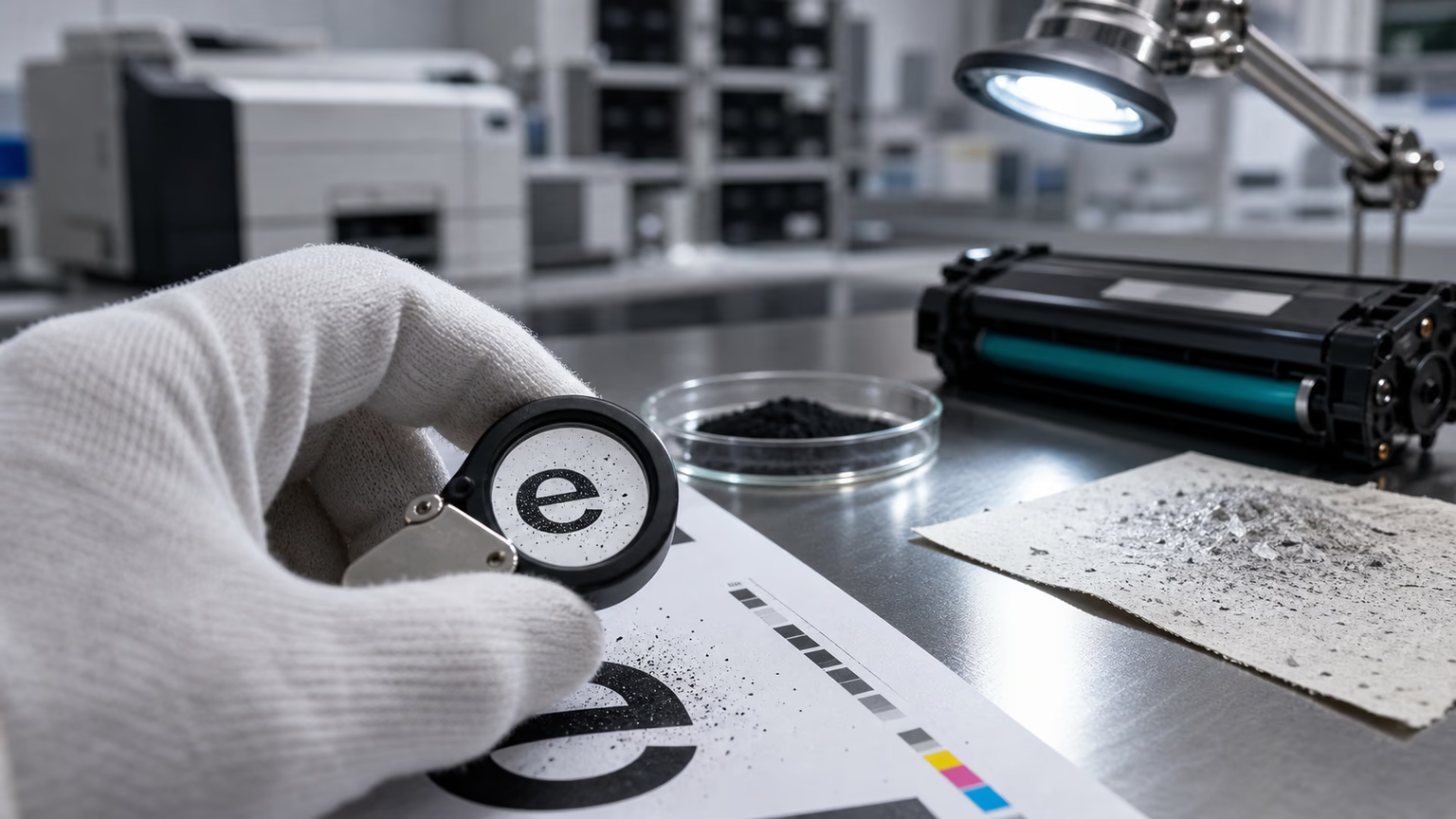
Step 2: Inspect the developer roller and metering blade. Remove the cartridge and carefully examine the roller surface under a magnifying loupe. Check for scratches, uneven toner coating, glazing, or contamination. A healthy roller should have a matte, uniform appearance with consistent toner coverage. Any anomalies here correlate strongly with the observed density pattern.
Step 3: Swap toner cartridges. Install the suspect cartridge into another printer of the same model that is known to produce good prints. If the defect follows the cartridge, the problem is within the toner or cartridge assembly. If the defect remains with the original printer, suspect the developer roller, drum, or other hardware.
Step 4: If the toner is implicated, escalate to supplier quality. Request batch-specific data on particle size distribution, flowability test results (such as Hausner ratio or Carr index), and any lot-specific inspection records. This data provides objective evidence of whether the toner is within specification or has drifted.
Environmental Factors: The Often-Overlooked Density Trigger
Print quality is not immune to the operating environment.
Temperature and humidity exert a powerful influence on toner behavior, and many intermittent density problems can be traced to seasonal changes or poor climate control in customer offices.
High humidity accelerates charge decay in toner particles, reducing the triboelectric charge that the developer roller can impart.
This leads to weak image development and lighter prints, particularly in large solid areas.
In extreme cases, moisture absorption can cause toner to cake inside the cartridge, disrupting flow entirely.
Conversely, low humidity environments can increase static buildup, leading to over-developed edges and a darker, uneven density profile.
Temperature also affects toner viscosity during the metering step: in hot conditions, the toner may become too soft and adhere aggressively to the developer roller, causing thick, non-uniform coating.
In cold conditions, poor flowability may prevent the toner from reaching the metering blade uniformly.
Distributors can add value by educating fleet managers about environmental monitoring.
Simply logging the temperature and humidity level near printers when complaints occur can reveal correlations.
If density defects appear only in specific seasons or locations, the solution may involve relocating the printer, upgrading climate control, or selecting a toner formulation with a wider environmental operating window—information that a technically sophisticated supplier should be able to provide.
Procurement Playbook: How to Source Toner That Minimizes Density Defects
For procurement teams, the challenge is to qualify toner suppliers not just on unit price but on their ability to deliver consistent, density-stable output across the printer fleet's life. The following criteria and questions turn the sourcing conversation from a price negotiation into a quality partnership.
First, mandate flowability documentation. Reputable suppliers should provide Hausner ratio or Carr index measurements for each batch, along with particle size distribution curves. A Carr index below 15 generally indicates good flow, but acceptable ranges depend on the printer engine. Ask for these tests as part of the certificate of analysis, not as a marketing brochure.
Second, request developer roller compatibility test results.
The supplier should have engineered their toner against the specific surface roughness and electrical properties of the OEM developer rollers used in your most common fleet devices.
Generic toner formulations that are not optimized for roller type often exhibit density drift, especially after extended printing.
Third, build quality agreements that tie defect rates to replenishment terms.
For example, if certain density-related return thresholds are exceeded, the supplier should cover the cost of replacement cartridges and, where possible, provide root-cause analysis to prevent recurrence.
Finally, evaluate the supplier's commitment to ongoing formulation stability. Toner is a delicate formulation, and even small changes in raw material sources can alter flow characteristics. A supplier with robust statistical process control and an active R&D program for compatible toner is more likely to deliver batch-to-batch uniformity.
Quality Control Metrics Every Distributor Should Track
Managing toner quality requires more than subjective visual checks. By implementing a few key performance indicators, distributors can monitor supplier performance and predict field issues before they escalate into returns.
The most direct metric is print density uniformity. Using a standard test target and densitometer, measure the maximum and minimum density across a single output page and calculate the range. A smaller range indicates better uniformity. Benchmarked against an agreed standard, this metric can be checked on incoming lots, allowing pre-emptive rejection or quarantine.
Another critical KPI is the return rate segmented by defect type.
Categorize returns into density issues, backgrounding, streaking, and others.
If density-related returns consistently exceed a target threshold for a given supplier or batch, it signals a systemic problem that requires supplier intervention.
Additionally, track the average time to resolve density complaints, from initial customer report to confirmed fix.
This operational metric reflects both the technical difficulty of the issue and the effectiveness of your support team's diagnostic training.
Finally, maintain a supplier batch reject ratio based on incoming inspections, which holds suppliers accountable and provides objective data for periodic business reviews.
Turning Density Diagnostics Into a Competitive Service Advantage
Distributors who invest in density diagnostics gain a powerful differentiator in markets where many competitors simply swap cartridges and hope for the best. By positioning themselves as print quality experts, they can move beyond transactional sales and win long-term managed print service contracts.
One approach is to offer free print quality audits to prospective fleet clients.
Using the diagnostic protocol described earlier, a trained technician can assess the uniformity of existing output, identify root causes of any issues, and present a customized plan to improve reliability.
This consultative selling builds immediate credibility and often reveals other inefficiencies that the distributor can address.
Another tactic is to include density uniformity guarantees in MPS agreements, backed by statistical evidence from your supplier's quality data.
When competitors cannot match such guarantees, your proposal stands out even at a higher price point.
Internally, tracking density stability data across different toner lots and printer models allows you to compile comparative performance reports.
These can be used in negotiations with suppliers to demand higher quality or to justify a premium price for your own service contracts.
The net effect transforms uneven color density from a dreaded support call into a tangible asset that reduces operational costs and increases customer retention.
FAQ
What causes uneven color density across a printed page?
Uneven color density typically arises from a combination of toner flow problems and developer roller irregularities. If toner particles do not charge uniformly or fail to meter correctly, the result is inconsistent deposition across the page. Worn or contaminated developer rollers, incorrect blade gaps, and environmental factors like humidity can all contribute.
How does the developer roller affect toner distribution and density?
The developer roller transports and charges toner, then delivers a thin layer to the photoconductor. Its surface roughness and electrical properties determine how much toner is picked up and how evenly it is released. Any wear, scratches, or contamination disrupt this balance, causing visible density shifts.
Can low-quality toner cause density fluctuations?
Yes. Toner with poorly controlled particle size distribution, insufficient flow additives, or inconsistent charge control agents will not behave predictably on the developer roller. Even a new, healthy roller can produce uneven prints if the toner fails to flow freely or charge uniformly.
What are the signs of developer roller wear leading to uneven prints?
Under magnification, a worn roller often appears smooth or glazed rather than matte. You may see score lines, areas of caked toner, or a patchy coating. In prints, symptoms include gradual fade from edge to center, dark bands repeating at the roller circumference, or overall low density that worsens over time.
How can I test toner flow consistency before buying in bulk?
Request a certificate of analysis that includes flowability metrics like the Hausner ratio or Carr index. A reputable supplier can also provide particle size distribution data. For in-house pre-qualification, a simple tap test or shear cell analysis can indicate whether the toner will feed smoothly through the cartridge mechanism.
Conclusion
Uneven color density across the page is a multi-faceted challenge that sits at the intersection of toner science, mechanical wear, and environmental conditions.
For B2B distributors and service providers, ignoring these defects means accepting unnecessary returns, higher support costs, and lost customer confidence.
By adopting a systematic diagnostic approach, demanding rigorous quality data from suppliers, and educating both internal teams and end clients, density problems become manageable and even preventable.
The companies that embed this technical discipline into their procurement and delivery processes will not only reduce operational friction but also strengthen their market position.
In a commodity-driven industry, turning a common print defect into a quality-control advantage is one of the surest paths to sustainable growth.