Introduction: The Hidden Link Between Doctor Blade Wear and Field Failures
B2B buyers often focus on page yield and cost per page when selecting toner cartridges, but a hidden component inside every laser cartridge can determine whether that cartridge becomes a source of profit or a source of complaints.
The doctor blade—a thin strip of polyurethane or metal that controls the flow of toner—is rarely seen at the point of purchase.
Yet its wear over time leads directly to toner leakage, streaking, and premature failure.
For distributors, printer service companies, and managed print services providers, unexpected leakage means returns, service calls, and damaged customer relationships.
This guide explains why doctor blade wear should be treated as a leading indicator of cartridge reliability. Instead of reacting to field failures, procurement teams and B2B buyers can evaluate cartridge design and supplier quality before placing an order. By understanding the technical factors that drive blade wear, you can reduce long-term total cost of ownership and protect service margins.
How a Doctor Blade Works in a Laser Toner Cartridge
Inside every laser printer toner cartridge, the doctor blade performs two critical functions.
First, it meters a precise, even layer of toner onto the developer roller.
Second, it acts as a seal to keep toner from escaping the cartridge housing.
The blade is typically made from polyurethane with a metal substrate, and it is positioned at a specific contact angle and pressure against the roller.
These parameters must be tightly controlled during manufacturing.
The material specification matters because the blade edge is in constant contact with moving toner particles.
Polyurethane is widely used for its flexibility and abrasion resistance, but not all polyurethane formulations are equal.
Some blades have additional coatings to reduce friction.
A high-quality doctor blade in a compatible toner cartridge for office printers will maintain its edge over thousands of pages, while a substandard blade may begin to wear after only a fraction of its rated life.
Failure Modes: How Doctor Blade Wear Leads to Toner Leakage
Doctor blade wear is rarely sudden; it is a progressive process that eventually crosses a threshold where print quality degrades.
The most common failure mode is abrasive wear from toner particles scraping against the blade edge.
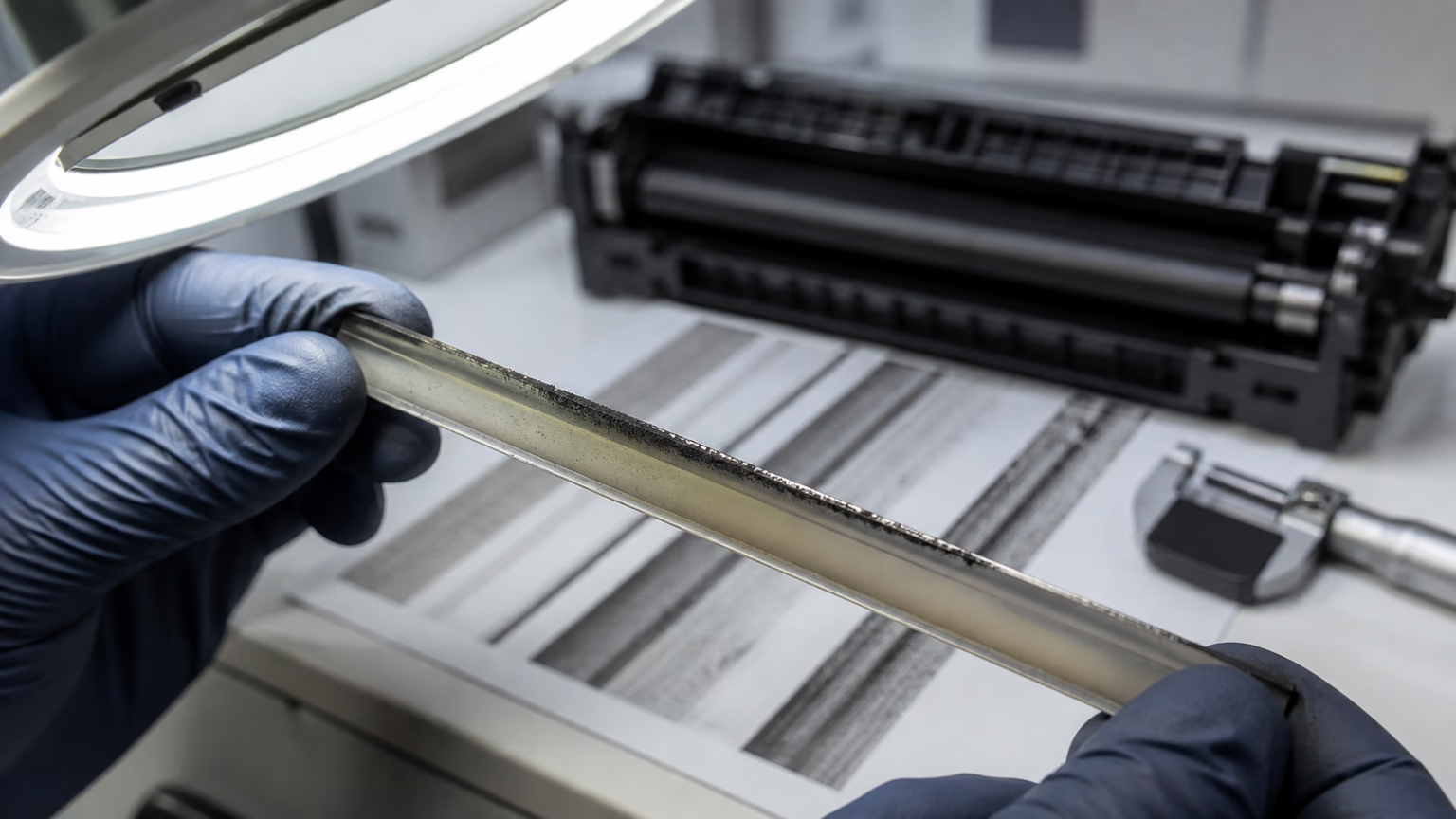
As the edge roughens, it can no longer meter toner evenly, causing streaks or backgrounding.
Simultaneously, the worn edge loses its sealing ability, allowing toner dust to escape from the cartridge.
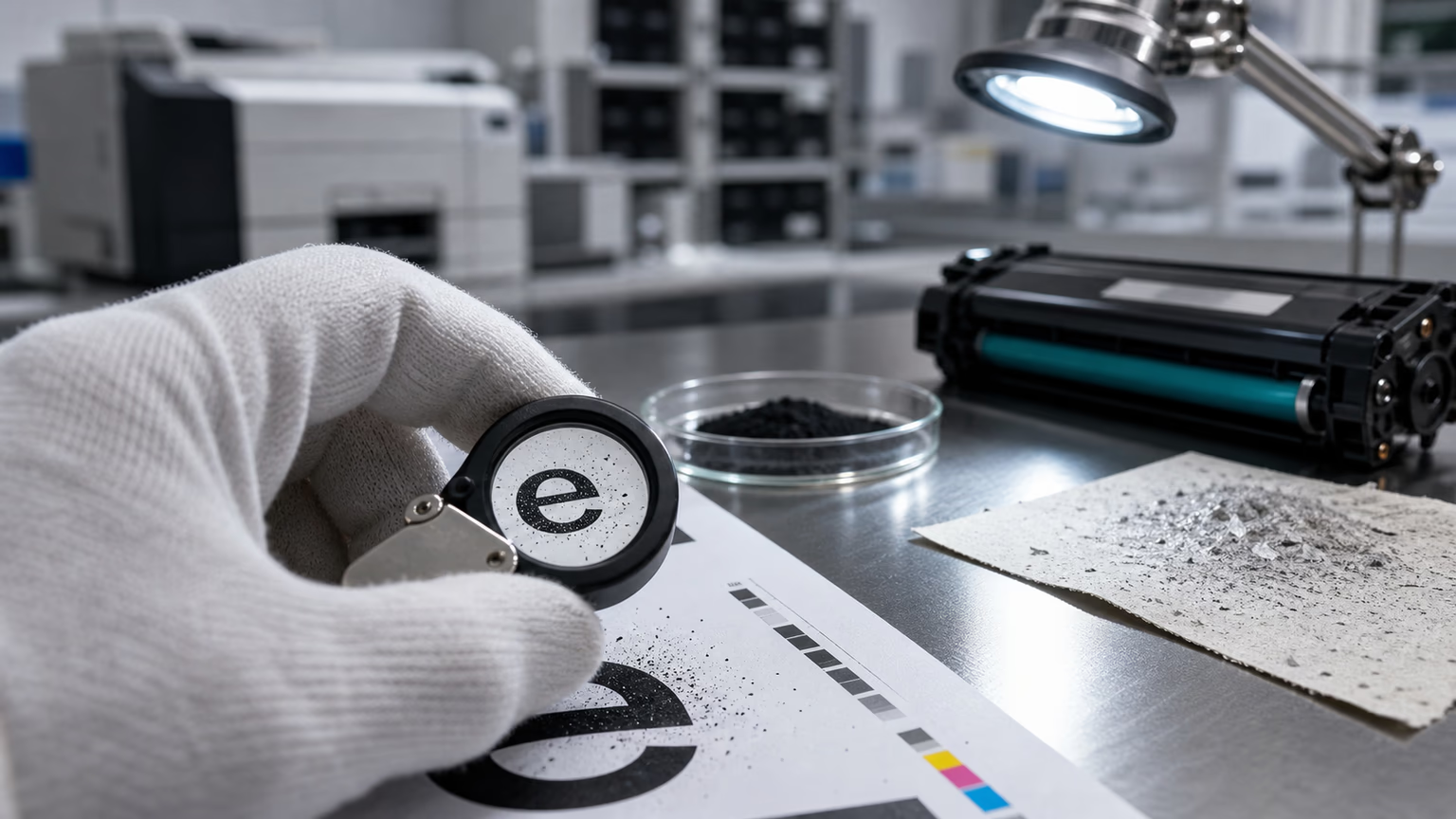
This toner leakage often appears as a fine powder inside the printer or on printed pages.
Another failure mode is edge chipping.
If the polyurethane is too brittle or the blade is seated incorrectly, small chips can break off along the contact line.
These chips create uneven pressure points, leading to localized leakage even if the rest of the blade appears intact.
Chemical degradation from toner components can also soften the blade over time, especially if the toner formulation is incompatible with the blade material.
And incorrect blade pressure—too high or too low—can accelerate wear or cause incomplete sealing.
Design Factors That Accelerate or Prevent Wear
Not all cartridges are designed for the same lifespan.
The most critical design variables are blade material hardness, elasticity, geometry, and edge finish.
A blade that is too hard may resist abrasive wear but can scratch the developer roller or cause toner buildup.
A blade that is too soft wears quickly under friction.
The optimal hardness depends on the specific toner formulation and roller surface, which is why cartridge manufacturers must test compatibility for each printer model.
Blade geometry also plays a role.
The contact angle and straightness of the blade edge determine how evenly pressure is distributed.
A blade with poor straightness will have high and low pressure points, leading to uneven wear and leakage.
Edge finish is equally important: microscopic nicks or burrs from manufacturing can become initiation sites for wear.
Additionally, toner particle size and shape influence abrasion.
Toner that is too coarse or irregular will act like sandpaper on the blade, while extremely fine toner may pack and cause poor metering.
Why Cheap Cartridges Often Leak: The Procurement Trap
In the market for toner cartridges for distributors, low unit price is often achieved by compromising hidden components like the doctor blade.
A cartridge factory may substitute a cheaper polyurethane, reduce blade thickness, or skip precision grinding of the edge.
Incoming quality control may be minimal, allowing out-of-spec blades into production.
These savings are invisible to the buyer, but they show up later as field failures.
A cheap cartridge that leaks after 20% of its expected yield is far more expensive than a slightly higher-priced cartridge that performs reliably.
The procurement trap is that buyers focus on upfront cost rather than total cost of ownership.
Each returned cartridge, service call, or contaminated printer erodes profit.
For B2B toner cartridge suppliers and their clients, the cost of a single toner leakage incident can exceed the margin on many cartridges.
Therefore, the question is not whether a cartridge is cheap, but whether its design and materials will hold up over repeated print cycles.
A reliable compatible toner cartridge from a supplier that documents its blade specifications is often the better financial choice.
How to Evaluate Cartridge Reliability Before You Buy
Evaluating doctor blade quality does not require a materials laboratory, but it does require asking the right questions and demanding documentation.
A credible toner cartridge factory will be able to provide a blade material datasheet that specifies polyurethane hardness, substrate thickness, and any surface treatment.
Ask for batch-level incoming QC records that verify blade straightness and edge condition.
If a supplier cannot or will not share this information, that is a risk signal.
In addition to documentation, you can perform practical checks on sample cartridges. Use this checklist during evaluation:
- Request the doctor blade material datasheet with hardness and substrate details.
- Ask for incoming QC records showing blade straightness and edge inspection results.
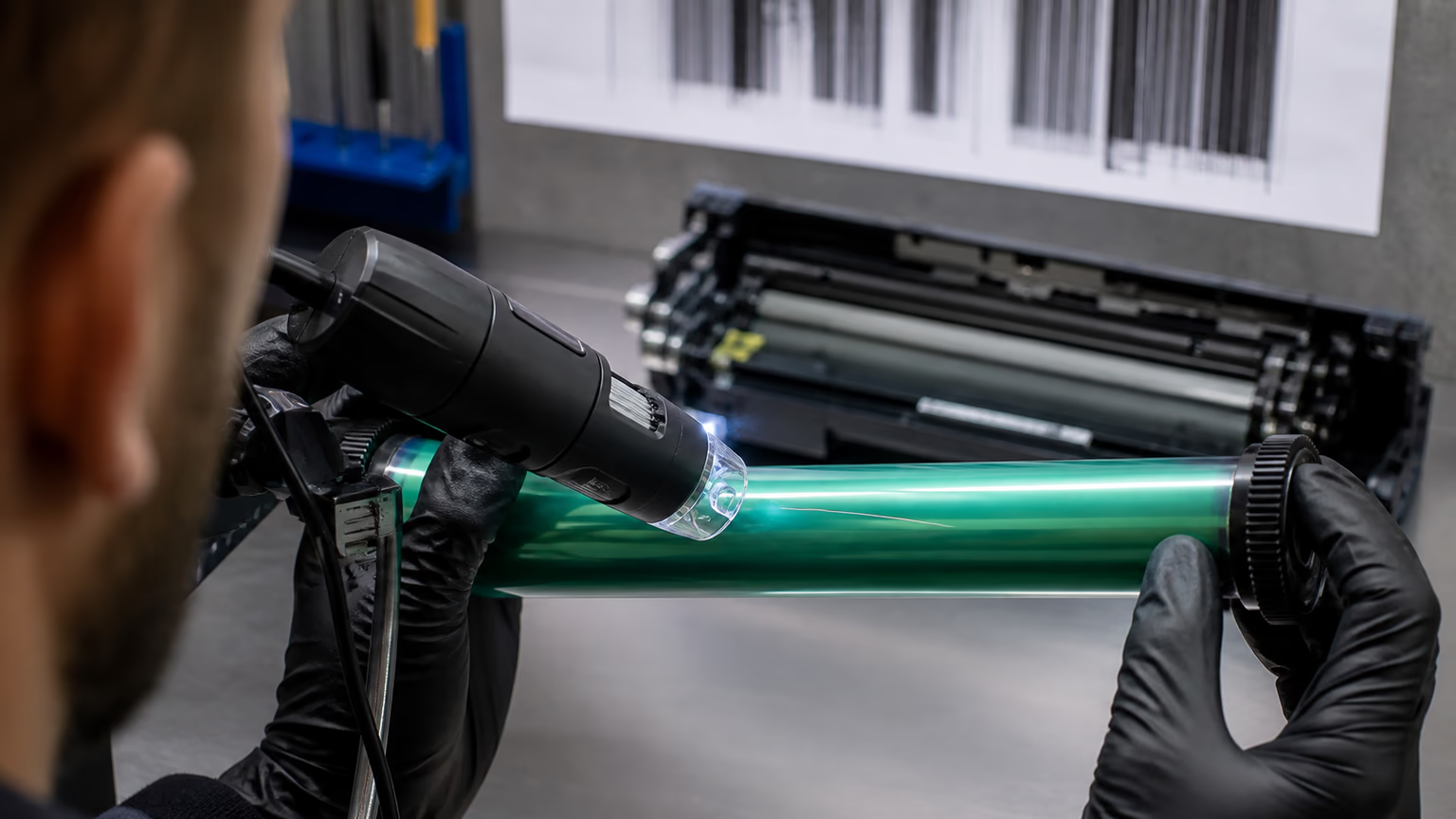
- Visually inspect the blade edge under magnification for nicks, burrs, or unevenness.
- Run a high-coverage print test to accelerate wear and observe any leakage or streaking.
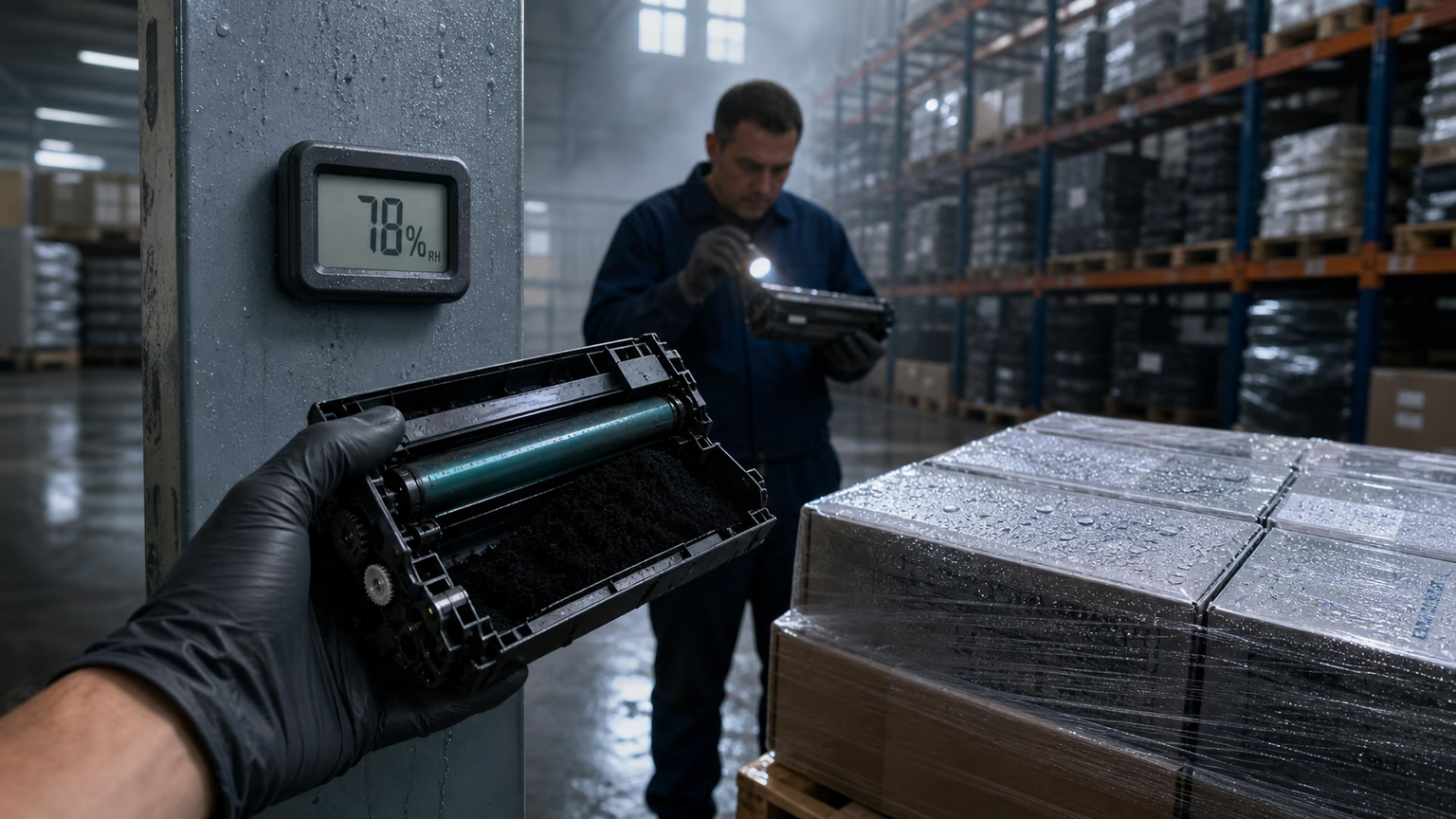
- Check for toner accumulation near the blade edge after simulated storage or transport.
- Verify that the supplier has tested blade-toner compatibility for the specific printer model you plan to service.
For larger orders, consider requesting accelerated wear test reports.
These tests cycle the blade against toner under controlled conditions to estimate useful life.
A supplier that invests in this level of testing is more likely to deliver consistent quality.
Also compare warranty and return terms: a supplier confident in its blades will often offer more favorable terms for leakage-related failures.
Integrating Doctor Blade Quality into Supplier Audits and Contracts
To make doctor blade quality a formal part of procurement, include specific criteria in supplier audits.
During an audit, focus on the blade incoming inspection area.
Ask to see the specification sheet used by QC staff, and observe how they measure blade straightness and edge finish.
A well-run toner cartridge factory will have defined acceptance limits and will reject nonconforming blades before assembly.
Document the blade supplier's traceability from raw material lot to finished cartridge batch.
In your contracts, include clauses that tie ongoing supply to consistent blade specifications.
For example, require that any change in blade material or supplier be disclosed and approved in advance.
Specify batch traceability requirements so that a field failure can be traced back to a specific production run.
Also consider implementing periodic sample testing of production cartridges, not just pre-production samples.
This ongoing monitoring catches batch-to-batch variation that might otherwise go unnoticed until customers complain.
FAQ
What is the doctor blade in a laser toner cartridge?
The doctor blade is a thin strip, usually made of polyurethane on a metal substrate, that regulates the thickness of the toner layer on the developer roller. It also acts as a seal to keep toner from escaping the cartridge. The blade's edge condition and pressure are critical for both print quality and leak prevention.
How does doctor blade wear cause toner leakage?
As the blade edge wears from constant contact with toner particles, it loses its ability to form a tight seal against the developer roller. Microscopic nicks and pitting allow toner dust to bypass the blade, leading to leakage inside the printer and on printed pages. Worn blades also meter toner unevenly, causing streaks and backgrounding.
Can I detect doctor blade wear before it causes print defects?
Early detection is difficult without disassembling the cartridge, but there are indirect signs. Gradual increase in backgrounding or faint streaks, even after cleaning, may indicate blade wear. For evaluation purposes, a high-coverage print test on sample cartridges can accelerate wear and reveal potential leakage before large-scale deployment.
Do compatible toner cartridges have higher doctor blade wear than OEM?
Not necessarily. Some compatible toner cartridges use blades that match or exceed OEM specifications, while others use cheaper materials to cut costs. The key difference is transparency: high-quality compatible cartridge suppliers document their blade material and testing, while low-cost suppliers often do not. Always ask for specification sheets and test reports.
How can I reduce field failures related to toner leakage in my fleet?
Start by evaluating cartridge suppliers on doctor blade quality, not just price. Request blade material datasheets, incoming QC records, and accelerated wear test reports. Implement sample testing before committing to large orders, and include blade specification clauses in supplier contracts. Proactive evaluation reduces leakage-related service calls and protects customer trust.
Conclusion
Doctor blade wear is a predictable cause of toner leakage, not a random quality lottery. By understanding the design and material factors that influence blade life, B2B buyers can make informed decisions that reduce returns, service burden, and customer churn. The blade is small, but its impact on cartridge reliability is oversized.
Treat doctor blade quality as a non-negotiable criterion in supplier evaluation.
Demand documentation, inspect samples, and formalize blade specifications in contracts.
This proactive approach shifts the focus from unit price to total cost of ownership, protecting your margins and your reputation with end users.
For distributors and service providers, the best cartridge is one that does not come back from the field.