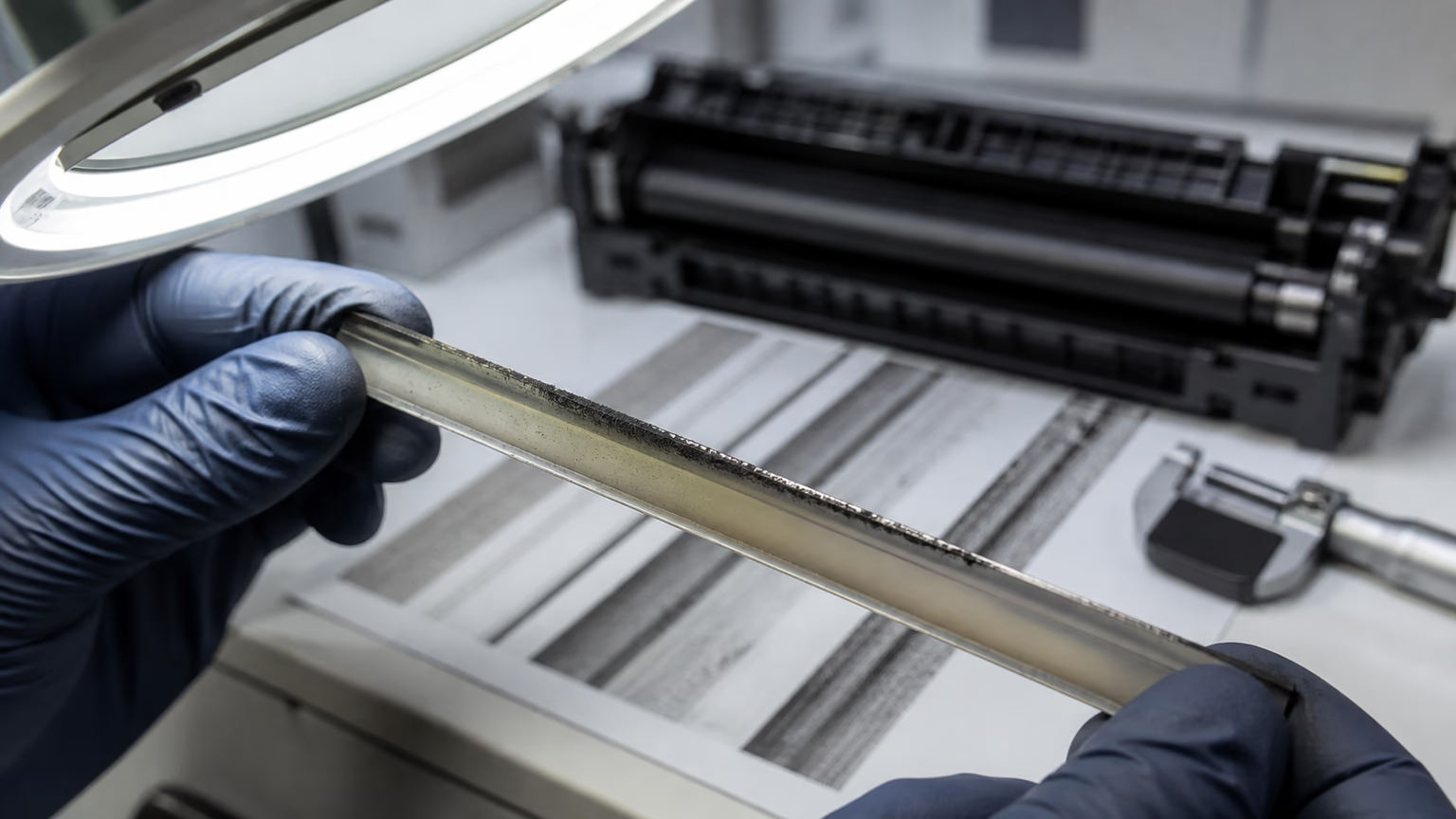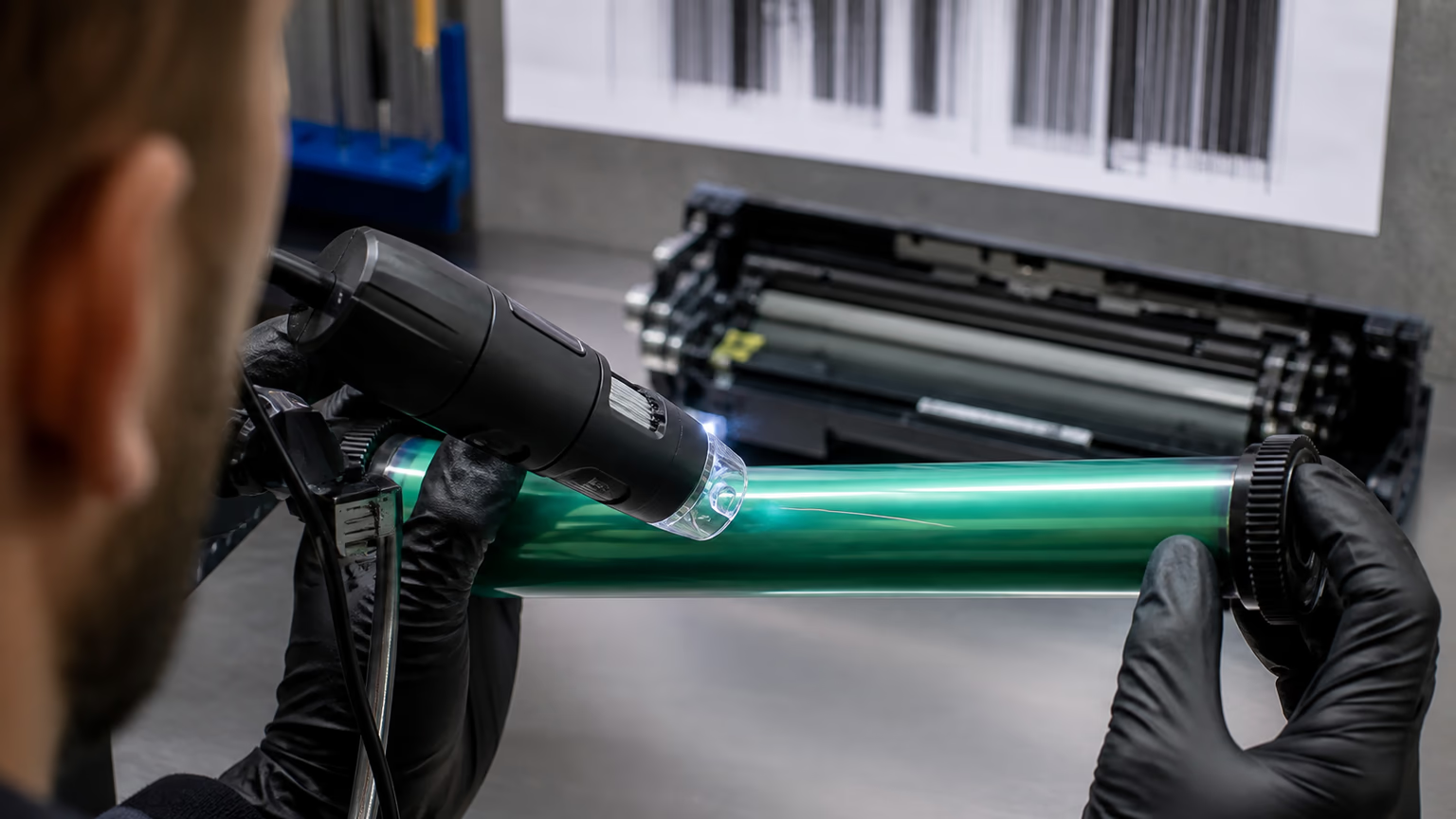
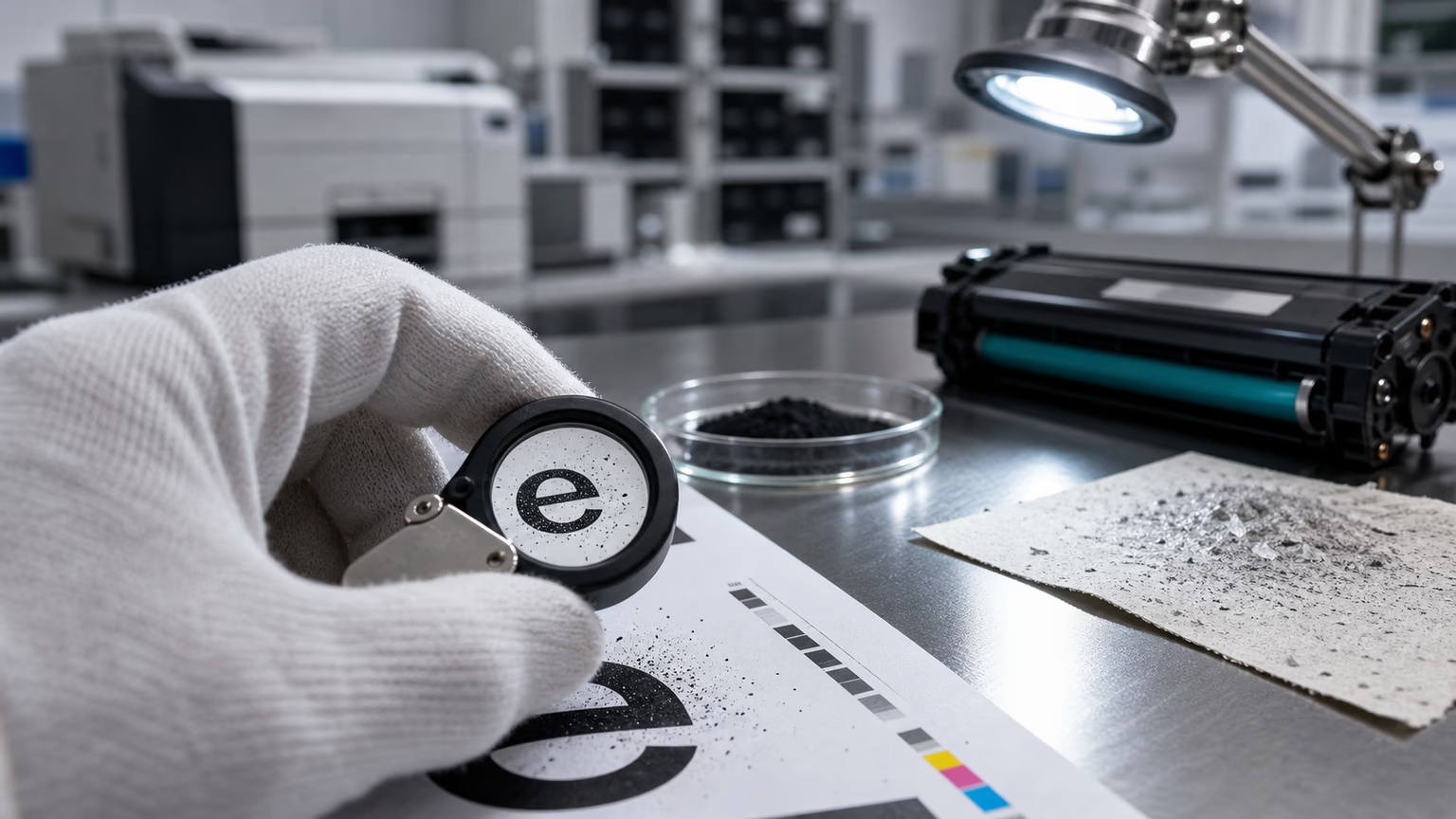
Toner scatter around text is a visible print quality defect in which tiny toner particles appear outside the intended character edges, creating fuzzy borders, halo effects, or satellite specks on the page.
Unlike uniform background fog, which produces an even gray haze across the entire sheet, scatter appears as isolated particles clustered around letters, thin lines, and solid artwork.
This defect becomes most noticeable on small font sizes, barcodes, and detailed graphics where edge sharpness is critical.
For B2B buyers and service providers, scatter is more than an aesthetic problem.
End users often describe the output as dirty, blurred, or unprofessional.
In office environments with text-heavy documents, scatter drives complaints, reprints, and eventual return of the cartridge.
Because the defect is batch-dependent, one batch of compatible toner cartridges may print cleanly while the next batch from the same supplier shows consistent scatter.
That inconsistency makes scatter a trust issue between distributors and their customers.
- Fuzzy or soft edges around printed characters
- Small stray toner dots near text, especially at the outer perimeter of each letter
- Light dusting on the page background when viewed under magnification
- Worsening scatter on low-quality or recycled paper
- Gradual appearance of scatter after several hundred pages as the developer unit becomes contaminated
Distinguishing scatter from ghosting or background is essential for root cause analysis. Ghosting repeats a faint image at a fixed interval, while background fog is a uniform toner film across non-image areas. Scatter is localized around printed features and is directly tied to toner transfer characteristics, making particle size distribution and charge control the primary suspects.
The Physics of Toner Scatter: Particle Size and Charge Control
In a laser printer, toner particles receive an electrostatic charge through triboelectric contact with the carrier or developer roller.
This charge determines how the particles move in the transfer step: the right charge-to-mass ratio pulls toner precisely onto the photoconductor image and then onto the paper.
When the charge is too low or too high, or when the particle mass is outside the optimal range, toner does not land only where intended.
Instead, particles can scatter into non-image areas around the printed text.
Particle size distribution is the first physical driver.
A well-formulated laser printer toner keeps the median particle size, or D50, in a narrow band, typically around 6 to 8 microns.
However, the entire distribution matters.
Fines are particles below roughly 5 microns.
Because they have a high surface area relative to their mass, fines are difficult to charge uniformly and can be repelled or blown during transfer, ending up as scatter.
Coarse particles above 12 microns are too heavy for the electrostatic forces to control precisely, and they may not transfer fully, leaving loose toner that can scatter during fusing or later handling.
Charge control agents, or CCAs, are additives that stabilize the triboelectric charge across the toner batch.
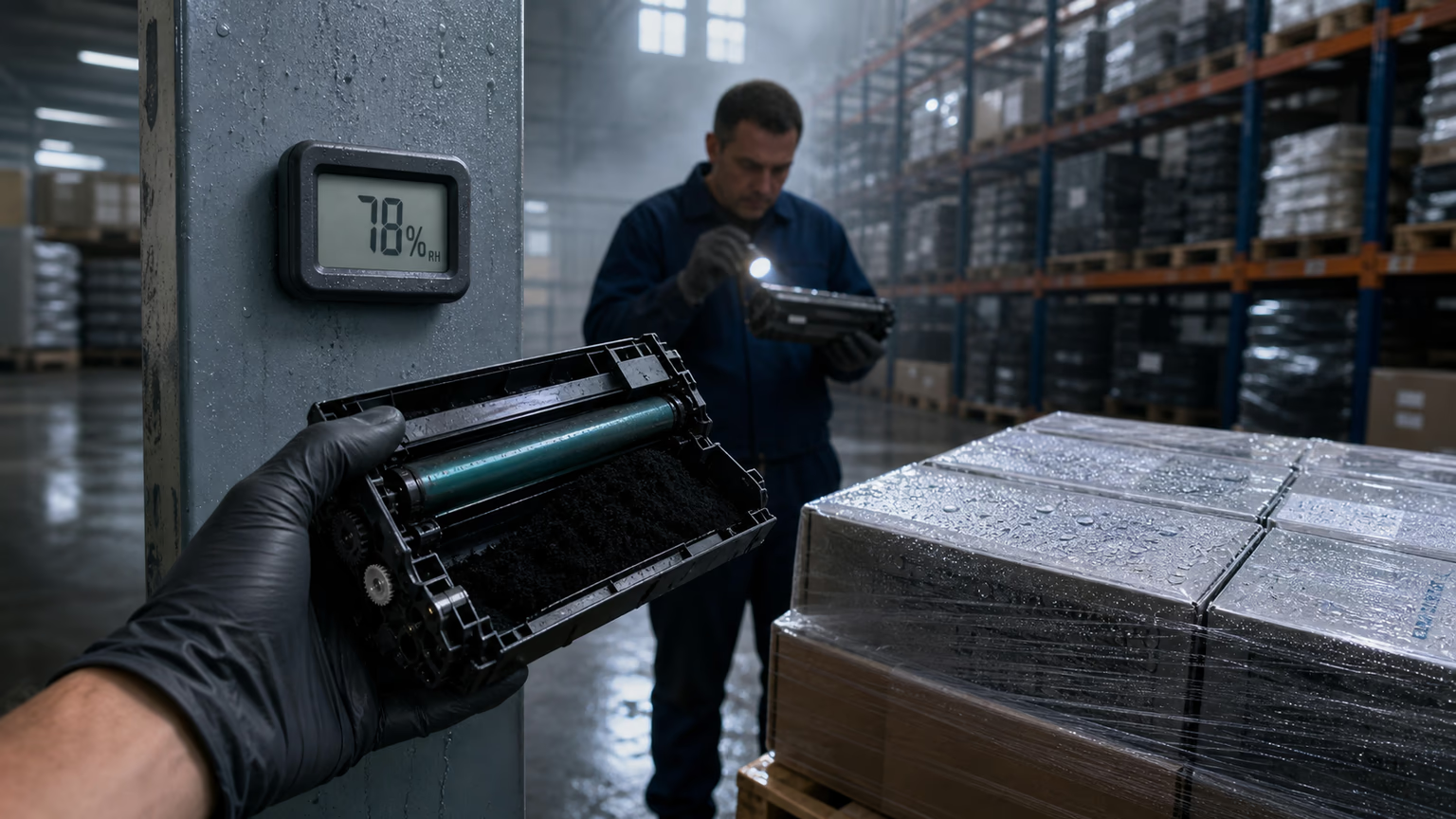
A toner without sufficient CCA will suffer from charge drift, especially when humidity changes.
In dry conditions, toner may overcharge and dust off; in humid conditions, it may lose charge and produce background scatter.
The interplay between particle size and charge is what B2B buyers should evaluate, because a supplier can pass a visual test on one page yet still have a batch that scatters under real office conditions.
For procurement purposes, asking for a particle size distribution curve and charge stability data is more reliable than looking at printed samples alone. The data reveals whether the toner batch is engineered for repeatability or simply mixed to meet a price point.
Paper Dust: The Hidden Amplifier of Toner Scatter
Paper dust is an often overlooked variable that can turn a borderline toner formulation into a scatter problem.
Every sheet of paper sheds microscopic fibers and filler particles during printing.
Recycled paper and low-quality office paper produce significantly more dust than premium bond paper.
This dust accumulates in the developer unit, mixes with toner, and alters the triboelectric charging environment.
As dust coats carrier particles and the developer roller, toner particles may not charge consistently, leading to increased scatter around printed characters.
Paper dust also acts as a physical carrier for toner fines.
Fines that would otherwise remain in the developer can attach to paper dust and be pulled onto the page, creating a light halo around text.
Over time, in high-volume printing environments, the developer unit becomes increasingly contaminated, and scatter may worsen even if the first few hundred pages look acceptable.
This progression means that a short test print may not reveal the full risk; B2B buyers should evaluate toner on both plain and recycled paper and under continuous run conditions.
A robust toner formulation includes additives that reduce dust sensitivity, but paper dust resistance is rarely specified in low-cost compatible cartridges. Service providers who manage fleets with mixed paper sources should treat paper dust as a controllable environmental factor and ask suppliers for test data that includes recycled media.
OEM vs Compatible Toner: Why Formulation Differences Matter
Original equipment manufacturer toner is formulated for a specific printer engine family.
The particle size distribution, CCA blend, and fusing characteristics are tightly controlled to match the charge and transfer requirements of that engine.
When a compatible toner manufacturer reverse-engineers a cartridge, it must approximate these parameters without access to the OEM formula.
High-quality compatible suppliers invest in matching the formulation; low-cost suppliers often simplify the chemistry to save cost, omitting CCAs or using cheaper binders that produce more fines.
The result is a toner that may work acceptably in one printer model but scatter in another.
Cross-brand compatibility claims mean little unless the supplier can show print quality data for each engine family.
A toner designed for one OEM device may charge too aggressively or too weakly in another, causing scatter, background, or ghosting.
That is why B2B buyers should not treat compatible toner as a generic commodity.
Instead, particle size and charge control should be part of the qualification criteria for every printer model in the fleet.
Low-cost compatible toner cartridges often come from production runs with minimal QC.
Batch-to-batch variation in raw pigment, polymer, or CCA concentration leads to inconsistent scatter performance.
One batch may pass a visual check; the next may fail after a few thousand pages.
For distributors, this variability translates into higher return rates and customer dissatisfaction.
Requesting batch consistency data is the first step to separating suppliers who control the process from those who only control the price.
Supplier Quality Signals: What B2B Buyers Should Demand
Instead of relying on marketing claims, procurement teams should require technical documentation that directly addresses scatter risk. The following quality signals separate serious compatible toner manufacturers from low-cost packagers.
- Particle size distribution report with D10, D50, and D90 values. A narrow distribution with D50 near 7 microns and a low fines percentage is preferred.
- Charge stability test results at multiple humidity levels, for example 20 percent, 40 percent, and 70 percent relative humidity. The charge-to-mass ratio should remain within a defined tolerance.
- Batch consistency certificates that include scatter-related parameters such as background level and edge sharpness, measured on a standardized test page.
- Third-party laboratory verification of toner raw materials, especially polymer and CCA quality, to ensure no unauthorized substitutions.
- Sample batch testing program that allows the buyer to run the toner on their own printer models and paper types before approving a bulk order.
Suppliers that cannot provide particle size data or charge stability reports are likely not controlling the production process. In a competitive market for office printer toner, the difference between a consistent product and a scatter-prone batch is often invisible on a price sheet but obvious in the field.
Practical Test Protocol for Evaluating Toner Batch Consistency
A systematic test protocol helps B2B buyers verify scatter resistance before committing to bulk purchases.
The goal is to reproduce real-world conditions under controlled circumstances.
Start with a standardized test page that includes small font sizes down to 4 point, barcode elements, and solid black areas.
Print the page on at least two different printer models, preferably one from each major engine family in the fleet.
Use both plain and recycled paper, because recycled paper produces more dust and will amplify scatter tendencies.
After the initial print, inspect the output with a loupe or high-resolution scanner.
Look for satellite particles around letters and any dusting in non-image areas.
Record the results and compare against a reference toner known to perform well.
Then run a humidity test: store the cartridge at 40 percent and 70 percent relative humidity for 24 hours and reprint the test page in the same conditions.
Charge instability will often show up as increased scatter in humid environments.
Finally, perform a long-run test of at least 500 pages, printing text-heavy documents continuously.
Scatter may worsen as the developer unit accumulates paper dust.
If scatter increases significantly during the run, the toner formulation is not robust enough for high-volume service environments.
This protocol takes time but prevents expensive mistakes; the cost of a single field service call often exceeds the cost of a sample batch test.
Service and Support Implications: Reducing Scatter-Related Calls
For printer service companies and MPS operators, toner scatter is a direct driver of service workload.
A customer complaint about blurry or dirty text typically triggers a service visit, even if the root cause is a toner batch issue.
Technicians must distinguish scatter from other defects, clean the developer unit, and sometimes replace the cartridge.
Each intervention adds labor cost and erodes contract profitability.
Proactive quality control at the sourcing stage reduces these unplanned visits.
When service providers demand scatter-resistant toner from their suppliers, they see fewer repeat complaints and fewer emergency dispatches.
Training service teams to recognize scatter as a toner-material issue, rather than a machine failure, also speeds up resolution.
Instead of replacing fusers or transfer rollers, the technician can identify the batch and initiate a supplier discussion.
In MPS contracts, scatter-related defects often lead to customer dissatisfaction and churn. A single bad batch can undo months of reliable service. Including scatter prevention criteria in the supplier evaluation process is an operational decision that protects service margins and customer retention.
Procurement Checklist: Integrating Scatter Prevention into Supplier Contracts
Turning scatter prevention from a wish into a contractual obligation requires clear, measurable terms.
Procurement teams should work with quality engineers to define acceptable scatter thresholds based on a standard test pattern.
For example, the number of scattered particles per square centimeter around a 6-point letter can be specified, or the edge roughness can be measured with an image analysis tool.
Include the following clauses in supplier agreements:
- Require particle size distribution data with each shipment, including D10, D50, D90, and fines percentage. Reject batches that fall outside the agreed range.
- Define an acceptable charge-to-mass ratio range and require charge stability test data at two humidity points for each batch.
- Set a maximum allowable scatter defect rate on a standardized test page, with defined penalties for batches that exceed the limit.
- Include a clause for third-party audits of the supplier production process, with a focus on raw material quality and batch mixing.
- Establish a sample testing program before each bulk order, where the buyer tests a defined number of cartridges on their own printer fleet.
By making scatter resistance a contractual metric, B2B buyers shift the risk back to the supplier.
Low-cost compatible toner becomes less attractive if it fails the scatter threshold, and suppliers that invest in particle size and charge control gain a competitive advantage.
For distributors and service providers, this approach lowers return rates, reduces service costs, and builds a reputation for reliable print quality.
FAQ
What causes toner scatter around text?
Toner scatter around text is primarily caused by an improper particle size distribution or unstable charge control in the toner. Too many fine particles or coarse particles disrupt the transfer process, and insufficient charge control agents lead to wrong triboelectric charge. Paper dust can amplify the problem by contaminating the developer unit.
How does toner particle size affect print sharpness?
Particle size determines how precisely toner transfers to the paper. Fines below 5 microns tend to scatter and create background, while coarse particles above 12 microns do not transfer cleanly and may leave loose toner. A narrow distribution centered around 6 to 8 microns produces sharp text with minimal scatter.
Can paper quality or paper dust cause toner scatter?
Yes, paper dust is a common amplifier. Dust from recycled or low-quality paper mixes with toner in the developer unit, changes the triboelectric charging, and carries fines onto the page. This can make scatter appear or worsen over time, especially in high-volume printing environments.
Why do some compatible toners scatter more than OEM toners?
Compatible toner manufacturers must reverse-engineer the OEM formulation without full data. Low-cost compatible toners often reduce or omit charge control agents and use less precise particle size control, leading to inconsistent charge and scatter. Cross-brand compatibility claims also ignore engine-specific charge requirements.
How can I test toner for scatter before bulk purchase?
Use a controlled test protocol: print a standardized test page with small text and solid areas on multiple printer models and paper types. Evaluate under magnification for satellite particles. Run a humidity test at 40 and 70 percent relative humidity, and conduct a 500-page continuous run to detect scatter that increases over time.
Conclusion
Toner scatter around text is not a random defect; it is a measurable outcome of particle size distribution, charge control stability, and environmental factors like paper dust.
For B2B buyers, the difference between a reliable compatible toner and a scatter-prone batch lies in the supplier's control over these parameters.
Demanding particle size data, charge stability reports, and batch consistency certificates turns a subjective print quality complaint into an objective procurement criterion.
The practical checks and contract clauses outlined in this guide give distributors and service providers a framework to evaluate toner before it reaches the customer.
By integrating scatter prevention into supplier selection, businesses reduce service calls, lower return rates, and protect long-term profitability.
In a market where cheap printer toner cartridges are easy to find, the ability to verify quality at the particle level is what separates professional supply partners from commodity sellers.