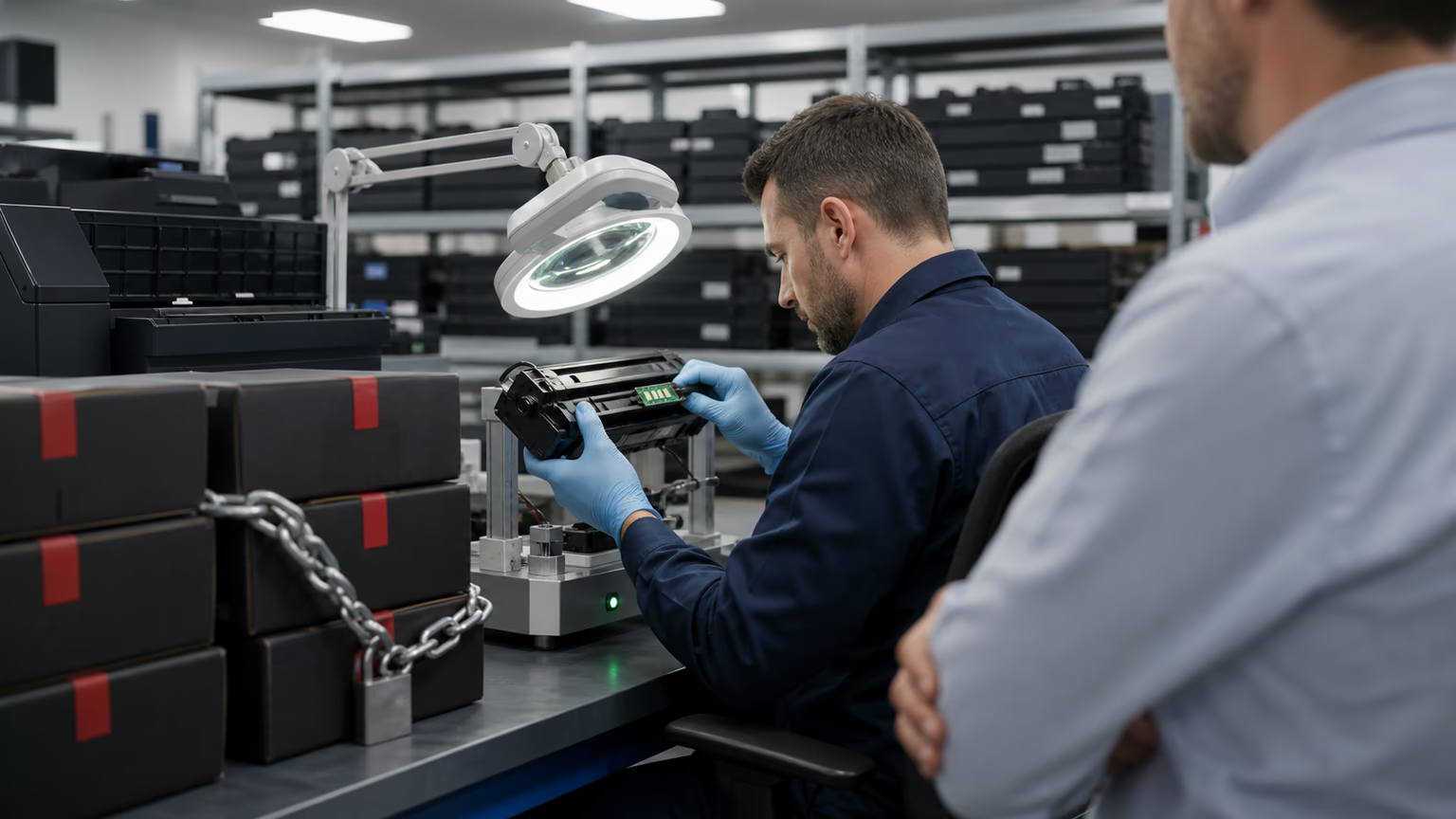
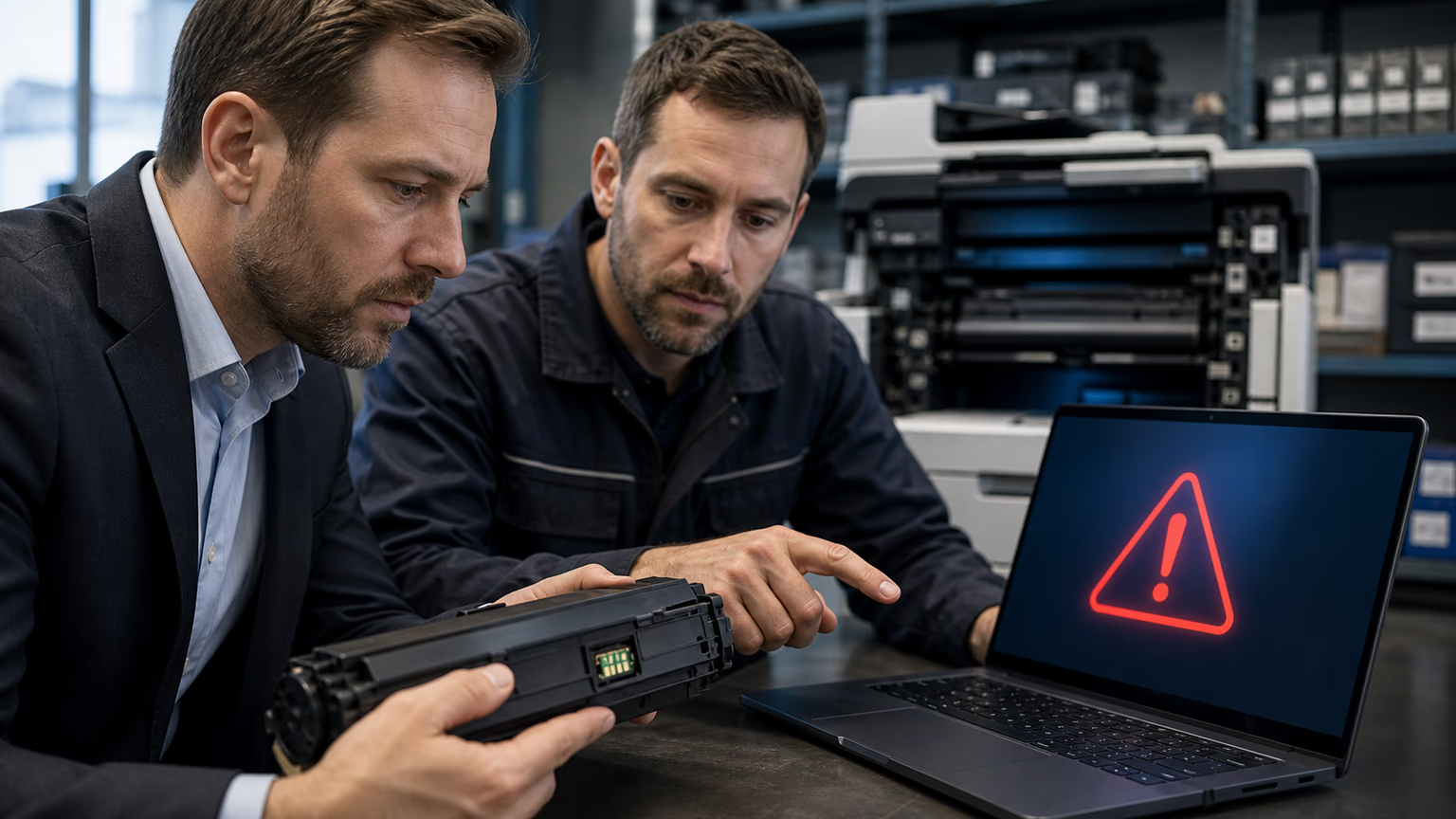
Introduction: The Hidden Layer That Changes Toner Buying
For years, B2B buyers treated toner cartridges as a straightforward consumable: compare price per unit, check page yield, and place an order.
That model is no longer safe.
Modern laser printer toner and office printer toner cartridges now include embedded chips that communicate with printer firmware, and those firmware rules can change at any time.
A cartridge that worked last month may suddenly be rejected after a routine firmware update, turning a low-cost supply decision into a fleet-wide availability problem.
At the same time, supply chain disruptions have exposed how fragile single-source procurement can be.
Component shortages, shipping delays, and counterfeit infiltration have made printer toner availability unpredictable.
Procurement teams that still treat toner as a commodity face hidden downtime, rising service costs, and eroding trust from the customers they support.
This guide reframes toner sourcing as a total-cost-of-uptime decision and provides a practical due-diligence framework for B2B distributors, service companies, and fleet operators.
Why Firmware and Chips Turned Toner into a Compatibility Product
Toner cartridges are no longer just plastic shells filled with powder.
Most laser printer toner cartridges contain a chip that stores authentication data, region codes, page counts, and other operational information.
That chip must complete a handshake with the printer firmware before printing can begin.
If the firmware does not recognize the chip or the chip fails to respond correctly, the printer displays an error and refuses to print.
Printer manufacturers periodically release firmware updates for security, performance, and anti-counterfeit reasons.
These updates can change the authentication rules that compatible chips must satisfy.
A compatible cartridge that worked before an update may stop working after the next release if its chip was not designed or tested against the new firmware version.
This turns every toner purchase into a compatibility decision, not just a price decision.
For procurement teams, this means the relevant questions are no longer only about page yield and price per cartridge.
You must also ask: What chip version is inside this cartridge?
Has the supplier tested against the latest firmware releases for the specific printer models in my fleet?
How quickly can the supplier provide updated chips if a firmware change causes failures?
Without clear answers, you are buying a future service ticket.
How Supply Chain Disruptions Reshape Procurement Planning
Toner cartridges depend on a complex mix of semiconductors, plastics, chemical compounds, and precision mechanical parts.
When any of these component categories experiences a shortage, production slows, lead times stretch, and prices become volatile.
The same applies to logistics: port congestion, freight capacity issues, and regional restrictions can delay shipments of both OEM and compatible cartridges.
During shortages, gray-market and counterfeit cartridges often enter the supply chain through unofficial channels.
These products may look genuine but use low-quality toner, non-certified chips, or recycled components without proper quality control.
For B2B buyers, counterfeit cartridges create direct operational risk: print quality defects, leakage, chip failures, and potential printer damage.
A low purchase price on a questionable cartridge can quickly become a high-cost service incident.
Resilient toner procurement therefore requires more than a single supplier with the lowest quote. Buyers need to verify supplier traceability, understand where components come from, and maintain enough buffer stock to ride out short-term disruptions. Diversifying across suppliers with different component sources reduces the risk of a single point of failure taking down your entire print fleet.
The Real Cost of Toner Failure: Downtime and Service Impact
In B2B environments, a toner cartridge failure is rarely a minor inconvenience.
Every failed cartridge triggers a helpdesk ticket, a technician visit, or an escalation under a service level agreement.
If the failure is caused by a firmware update that blocks a batch of compatible chips, the impact can be simultaneous across multiple printers or an entire fleet.
What looked like a saving of a few dollars per cartridge becomes an unplanned maintenance window with real labor costs.
Service companies and managed print providers feel this pain directly.
Each toner-related incident consumes technician time, spare parts, and diagnostic effort.
If print quality suffers or downtime repeats, customer satisfaction declines and contract renewals become uncertain.
The true cost of a toner cartridge is therefore measured in pages printed without incidents, not in the invoice price.
A cartridge that causes even one service call can erase the margin from dozens of good cartridges.
Procurement teams that optimize only for unit cost often push these downstream costs onto service operations. A better approach is to evaluate toner sourcing based on total cost of ownership, including estimated downtime, labor, and the probability of firmware-induced failures. This requires supplier data on defect rates, compatibility testing, and replacement performance.
Evaluating Compatible Toner Suppliers Without Risking Your Fleet
Compatible toner can be a legitimate way to reduce procurement costs, but only if the supplier proves technical competence.
Before committing to any compatible toner cartridges, request documented evidence of firmware compatibility testing.
This should cover the specific printer models and firmware versions in your fleet, not just a general claim of compatibility.
Ask for the chip version and origin, and verify whether the supplier actively monitors OEM firmware releases and updates their chips accordingly.
Supply chain transparency is another non-negotiable criterion.
A reliable supplier should be able to trace each batch from component source to finished cartridge.
This traceability helps you identify and isolate any defective or counterfeit batches before they reach your customers.
You should also evaluate the supplier's inventory buffer and lead time commitments, because a low price means nothing if stock runs out during a critical period.
Finally, define a clear replacement process for firmware-related failures. What happens if the next OEM firmware update blocks the compatible chip? Will the supplier provide revised chips or replacement cartridges quickly? Will they cover the labor cost of swapping cartridges across your fleet? These answers reveal whether the supplier is a true partner or just a transactional vendor.
A Practical Due Diligence Checklist for Toner Procurement
Use this checklist when comparing OEM and compatible toner offers. It moves the conversation away from price alone and forces suppliers to demonstrate technical and operational readiness.
- Request a firmware compatibility list for every printer model and current firmware version in your fleet.
- Ask for the specific chip version and origin, and require evidence of testing against the latest OEM firmware releases.
- Verify batch traceability: can the supplier identify which batches are currently in your inventory and where their components came from?
- Confirm the supplier's inventory buffer and lead time commitments for ongoing supply.
- Define response times for compatibility failures, including replacement cartridges and updated chips.
- Run a pilot test with sample cartridges across a representative subset of your printer fleet before scaling the order.
- Check the supplier's supply chain redundancy: do they have multiple component sources or warehousing locations to reduce disruption risk?
This checklist does not guarantee zero failures, but it dramatically reduces the probability of hidden compatibility surprises. Every point that a supplier cannot answer clearly is a risk you are absorbing into your own operation.
Building a Resilient Toner Supply Strategy
A resilient strategy combines OEM and compatible sourcing, multi-supplier agreements, and proactive firmware monitoring. For critical printers where downtime is unacceptable, maintain a small buffer of known-good OEM cartridges. For lower-risk devices, compatible cartridges from a vetted supplier can deliver savings without compromising uptime.
Set up firmware update alerts for your printer fleet and share that information with your compatible toner supplier. If an OEM releases an update that changes chip authentication, you need to know before your printers start failing. Your supplier should be able to confirm whether existing cartridges remain compatible or provide updated chips quickly.
Include compatibility warranty clauses in your supply contracts that specifically cover firmware-induced failures.
These clauses should define how quickly replacements will arrive, who covers the labor for swapping cartridges, and what happens to remaining inventory if a chip revision makes current stock unusable.
Such clauses turn a vague promise of compatibility into an enforceable operational commitment.
FAQ
How do printer firmware updates affect compatible toner cartridges?
Printer firmware updates can change the authentication rules that a toner chip must satisfy.
What is a toner chip and why does it matter for procurement?
A toner chip is a small electronic component inside a laser printer toner cartridge.
Can compatible toner cartridges cause printer damage or void my warranty?
Compatible cartridges that use low-quality toner or poorly designed chips can cause print quality defects, leakage, and in some cases damage to printer components such as drums or developer units.
How can I verify that a compatible toner supplier is reliable?
Request documented firmware compatibility test results for the specific printer models in your fleet.
What supply chain risks should toner distributors and service companies consider?
Key risks include component shortages, shipping delays, counterfeit cartridges entering through gray-market channels, and over-reliance on a single supplier or geographic source.
Conclusion
Toner procurement is no longer a transactional purchase of a commodity.
It is a risk-management function where firmware compatibility, chip reliability, and supply chain continuity determine the real cost of keeping a print fleet operational.
B2B distributors, service companies, and fleet managers who ignore these layers will continue to face sudden downtime, rising service costs, and frustrated customers.
The shift from price-per-cartridge to total cost of uptime is not about spending more. It is about spending smarter. By demanding firmware testing evidence, chip version transparency, and supply chain traceability, buyers can secure lower costs without accepting hidden operational risk. The goal is continuous print availability, not the cheapest cartridge on the shelf.