Why this comparison matters for B2B buyers
For distributors, printer service companies, and MPS operators, recycled vs new-build toner cartridges is not a branding debate. It is a procurement decision that affects uptime, complaint volume, return handling, and the amount of technical support your team must absorb after the sale.
The wrong choice can look inexpensive at purchase time and still become costly once you factor in reprints, technician visits, customer escalations, and stock that cannot be confidently deployed across a mixed fleet. The right choice is the one that fits your service model, printer mix, and tolerance for variation.
Sustainability matters, but only when it does not undermine field performance. A cartridge that reduces material use but creates more failures may weaken the very circularity story it is meant to support. In B2B supply, environmental value and operational reliability have to be evaluated together.
That is why buyers should think in terms of total risk, not just unit price or environmental messaging. A cartridge line that is acceptable for a low-touch wholesale channel may be a poor fit for a managed print contract where every defect becomes a service event.
What recycled and new-build toner cartridges actually mean
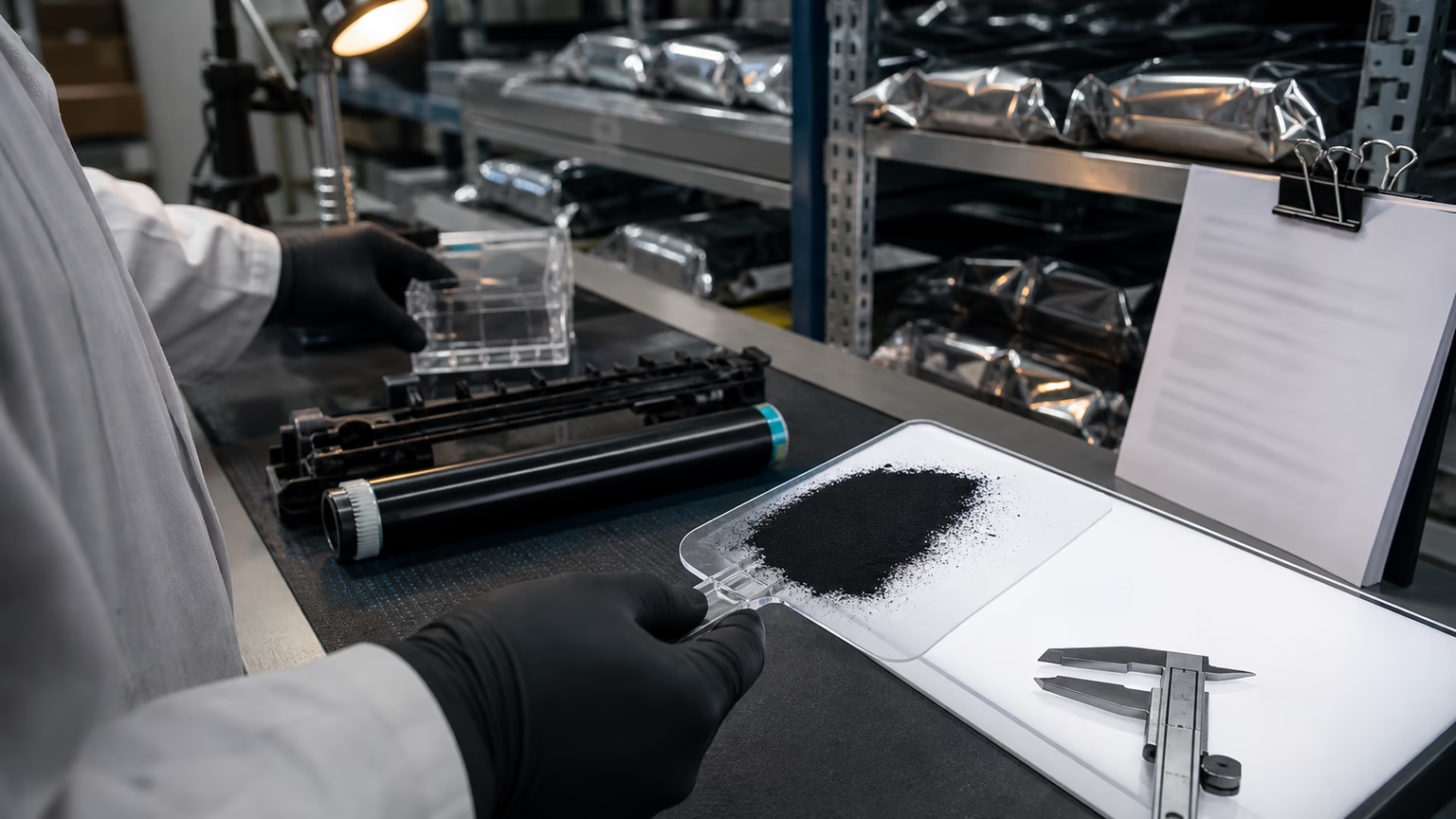
These terms are often used loosely, and that creates confusion during sourcing. In practice, recycled cartridges usually involve a used core or housing that is cleaned, inspected, replaced where needed, refilled, and reassembled. New-build cartridges are manufactured as new compatible units, with no reused cartridge shell from a prior OEM cycle.
Remanufactured cartridges sit close to recycled cartridges in many supply chains, but the exact process can vary by supplier. One vendor may replace only the obvious wear parts, while another may rebuild more of the internal structure and test more aggressively before release. The label alone does not tell you how disciplined the process is.
For buyers of toner cartridges for distributors, terminology matters because it shapes expectations. If a supplier says a product is recycled, you still need to know what was reused, what was replaced, and how the final unit was validated. If a supplier says new-build, you still need to know whether the assembly process is controlled tightly enough to deliver repeatable output.
The practical point is simple: the same model number can hide very different production standards. Two cartridges may look interchangeable on paper and behave very differently in the field.
Environmental trade-offs that matter in procurement
Recycled cartridges can support circularity by extending the life of existing materials and reducing the need for entirely new housings. For buyers under sustainability pressure, that is a meaningful advantage, especially when the product is used in high-volume office printer toner programs where cartridge turnover is frequent.
But environmental value is not only about material reuse. It also depends on how long the cartridge performs, how often it is returned, and whether it creates extra waste through failed prints, premature replacement, or avoidable shipping cycles. A cartridge that fails early can erase part of the environmental benefit it was supposed to create.
New-build cartridges may use more newly manufactured material, but they can also reduce uncertainty if the production process is standardized and the quality window is tighter. For some fleets, that consistency lowers the hidden waste associated with complaints, rework, and technician intervention.
So the sustainability question is not “recycled or new-build?” in isolation. It is “which option creates the lower overall footprint once field performance, support burden, and replacement behavior are included?” That is the more useful question for procurement teams and toner and cartridge suppliers alike.
Quality trade-offs: consistency, print output, and field performance
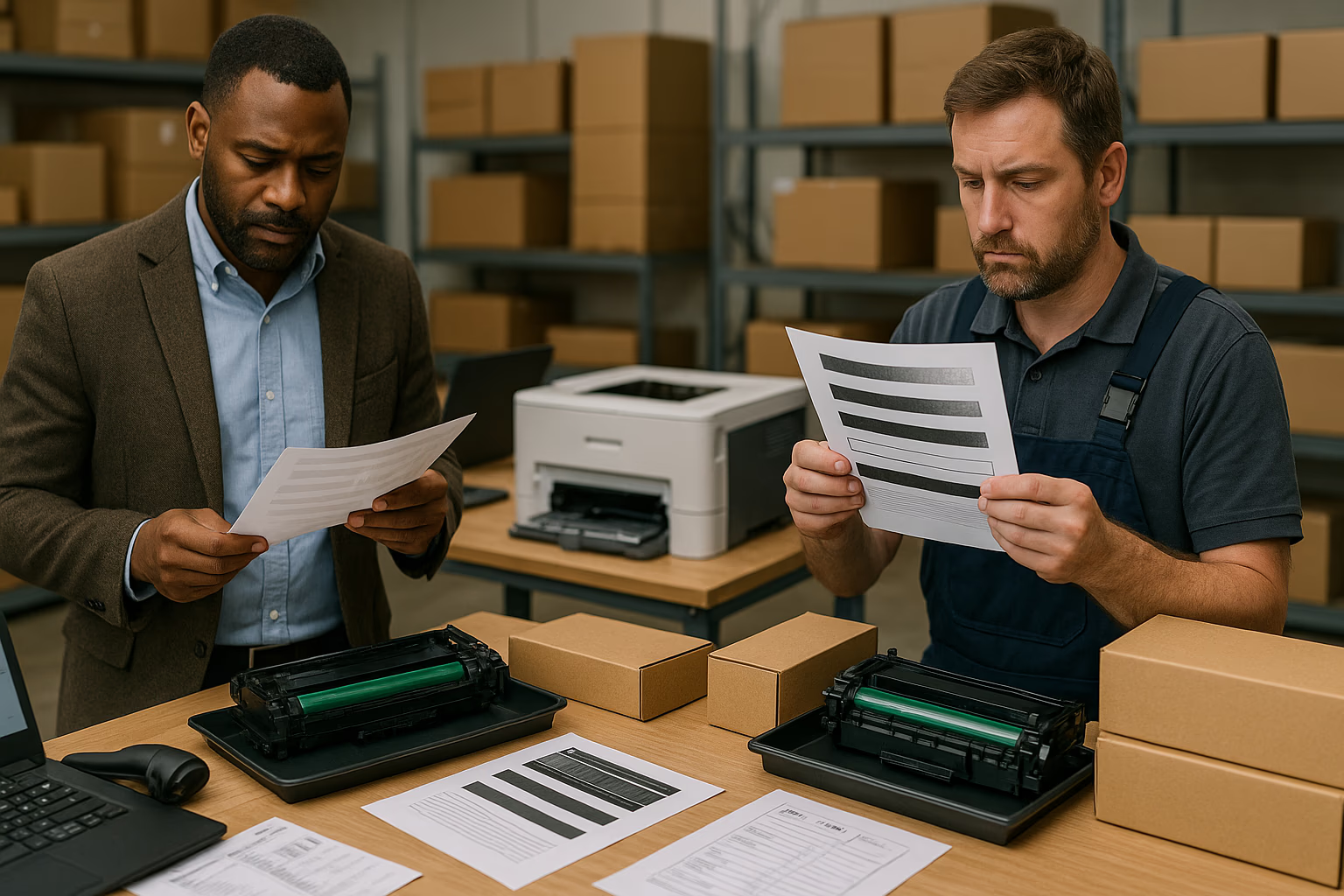
In the field, quality issues usually show up as streaking, smudging, backgrounding, ghosting, faded output, or uneven darkness across pages. These are not cosmetic problems for a distributor or service company; they are the triggers for complaints, returns, and time-consuming troubleshooting.
Recycled cartridges can perform very well when the rebuild process is disciplined, but they are more exposed to variation in core condition, component wear, and assembly quality. That variation can appear as inconsistent yield, leakage, or a unit that works in one printer but not another of the same family.
New-build cartridges often have an advantage in repeatability because the manufacturing process is designed from the start around a single specification. That does not make them automatically superior, but it can make them easier to support when your customer base expects predictable output and low complaint rates.
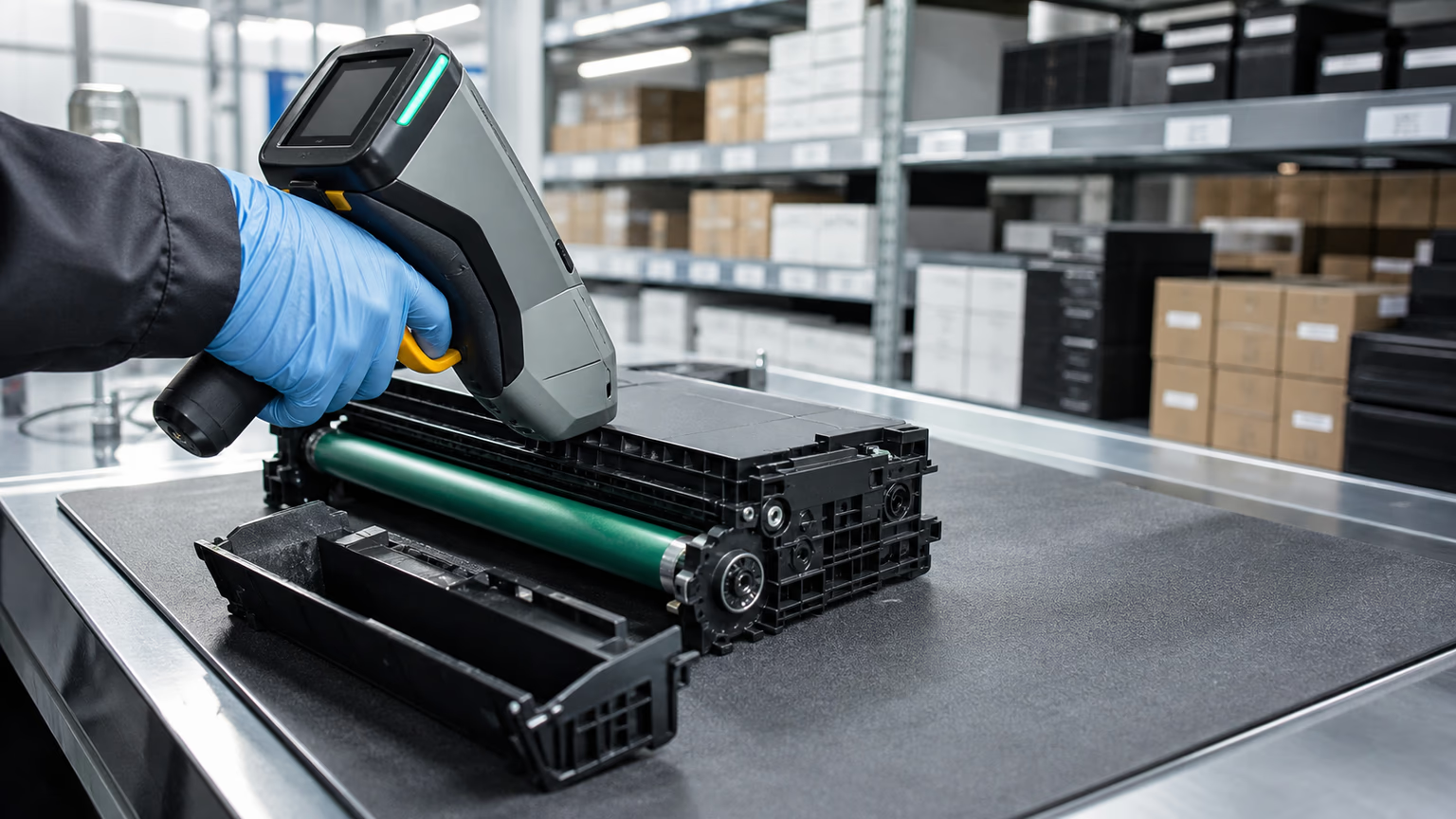
For B2B toner cartridge supplier evaluation, batch consistency matters more than a single sample. One good sample cartridge proves very little if the next lot behaves differently. Distributors should test multiple units from more than one batch and compare output, fit, and defect patterns before approving a product for scale.
That is especially important for cheap printer toner cartridges and discount printer toner cartridges, where the price signal can distract buyers from the real cost of inconsistency. A low-cost unit that generates reprints or service calls is not low cost in operational terms.
Compatibility and firmware risk across printer fleets
Compatibility is often treated as a simple model-match issue, but in practice it is more complex. A cartridge may fit physically and still trigger chip recognition errors, sensor alerts, or printer messages that interrupt installation. That is a serious issue for service companies that need predictable deployment across multiple sites.
Mixed fleets make the problem harder. HP printer toner, Canon printer toner, and Xerox printer toner platforms can each behave differently across generations, regions, and firmware revisions. A cartridge that performs well in one office printer toner environment may be less stable in another, even when the model number appears correct.
This is why compatible toner cartridges for office printers should be validated model by model, not assumed to work because the packaging says they should. Mechanical fit, chip behavior, and printer response all need to be checked under realistic conditions.
For distributors, the risk is not only technical failure but also inventory confusion. If the same SKU is expected to serve multiple printer families without clear labeling or compatibility notes, the chance of mis-shipment and customer frustration rises quickly. Clear product segmentation is part of quality control, not just merchandising.
How B2B buyers should decide between the two
The best choice depends on the business model behind the purchase. If you are supplying a price-sensitive wholesale channel where the customer accepts some variation and your support burden is limited, recycled cartridges may offer a strong balance of sustainability and value, provided the supplier controls quality tightly.
If you are supporting managed print contracts, service-heavy accounts, or fleets where uptime is critical, new-build cartridges may reduce operational uncertainty. In those environments, the cost of a single failure can outweigh the benefit of a lower purchase price or a stronger circularity message.
Procurement teams should also consider the customer’s complaint tolerance. Some buyers can absorb occasional replacements; others cannot. A product that is acceptable for one account may be a poor fit for another, even if the printer models are the same.
The most useful decision framework is total cost of ownership. That includes purchase price, returns, technician time, reprints, customer disruption, and the risk of stock inconsistency. When those factors are visible, the choice between recycled and new-build becomes much clearer.
Supplier evaluation checklist for distributors and service companies
Before placing a bulk order, buyers should ask a supplier to explain exactly how the cartridge is built, tested, and packed. If the answer is vague, the product is probably not ready for a serious B2B environment.
- What is reused, replaced, or newly manufactured in the cartridge?
- How is batch quality control documented for export and domestic supply?
- What compatibility testing has been done across relevant printer families and firmware conditions?
- How many units from how many lots were tested before approval?
- How are defects, replacements, and traceability handled after shipment?
- What packaging and storage controls protect toner cartridges in transit?
- Can the supplier support distributor-level labeling, mixed-SKU fulfillment, and recurring orders?
These questions matter because sample approval is not enough. A cartridge that looks good in a one-off test can still create problems when it is shipped in volume, stored for longer periods, or deployed across a mixed fleet. Batch-level consistency is what protects your service reputation.
For importers and wholesale buyers, toner cartridge batch quality control for export is especially important. Export programs amplify the cost of inconsistency because returns, replacements, and support issues are harder to manage once product has moved across borders and into multiple downstream channels.
Common objections and how procurement teams should respond
One common objection is that recycled cartridges are always less reliable. That is too broad to be useful. Reliability depends on rebuild discipline, component selection, testing scope, and how tightly the supplier controls variation from one batch to the next.
Another objection is that new-build cartridges are automatically safer. They may be more predictable, but only if the manufacturing process is stable and the supplier can prove repeatability. A new shell does not eliminate the need for QA, especially when the product is sold as compatible toner cartridges for office printers.
Buyers also hear that cheap printer toner cartridges are acceptable because the unit price is lower. Procurement teams should push that conversation back to service cost. If a lower-cost cartridge increases complaint handling, reprints, or technician dispatches, the apparent saving disappears quickly.
The most credible response to environmental claims is not skepticism for its own sake. It is asking for evidence that the product performs consistently enough to justify its sustainability story. In B2B supply, a green claim that creates more operational waste is not a strong claim.
Practical takeaway: choosing the right cartridge strategy by use case
Recycled cartridges are often the better fit when your priority is circularity, your support model can absorb some variation, and your supplier can demonstrate disciplined batch control. They can work well for distributors who need affordable printer toner cartridges without sacrificing basic field reliability.
New-build cartridges are often the better fit when consistency, compatibility confidence, and lower service uncertainty matter more than material reuse. That makes them attractive for managed print environments, service contracts, and mixed fleets where printer behavior must be predictable.
In both cases, the real decision is not ideological. It is operational. Buyers should define acceptable defect thresholds, test multiple batches, verify packaging and traceability, and align the cartridge type with the service model that will support it.
For B2B buyers, the smartest procurement strategy is the one that reduces total risk while meeting sustainability goals in a measurable way. That usually means choosing the cartridge type that your team can support consistently, not the one that sounds best in isolation.
FAQ
What is the difference between recycled, remanufactured, and new-build toner cartridges?
Recycled and remanufactured cartridges usually reuse a cartridge core or housing and replace worn parts before refilling and testing. New-build cartridges are manufactured as new compatible units without a reused shell. The exact process still depends on the supplier.
Are recycled toner cartridges always less reliable than new-build cartridges?
No. Recycled cartridges can be reliable when rebuild quality, component replacement, and batch control are disciplined. New-build cartridges may be more consistent in some programs, but reliability still depends on manufacturing and QA.
How should distributors evaluate print quality before buying toner cartridges in bulk?
Test multiple units from more than one batch, not just a single sample. Check darkness, streaking, smudging, chip recognition, fit, and yield consistency across the printer models you actually support.
What compatibility risks matter most for HP, Canon, and Xerox toner cartridges?
The main risks are chip recognition failures, sensor alerts, mechanical fit issues, and differences between printer generations or firmware versions. Model number matching alone is not enough for B2B approval.
When does a lower-cost cartridge create higher total cost for a B2B buyer?
When the cartridge increases returns, reprints, technician visits, complaint handling, or stock inconsistency. In those cases, the purchase price is only part of the real cost.
Conclusion
The choice between recycled and new-build toner cartridges should be made as a procurement and service decision, not as a slogan. Recycled cartridges can support circularity and cost control, while new-build cartridges can reduce uncertainty and simplify support. The right answer depends on the fleet, the service model, and the buyer’s tolerance for variation.
For distributors and printer service companies, the most important discipline is not picking a label. It is verifying batch consistency, compatibility, packaging integrity, and defect handling before committing to volume. When those controls are in place, the cartridge strategy becomes much easier to defend in the field.