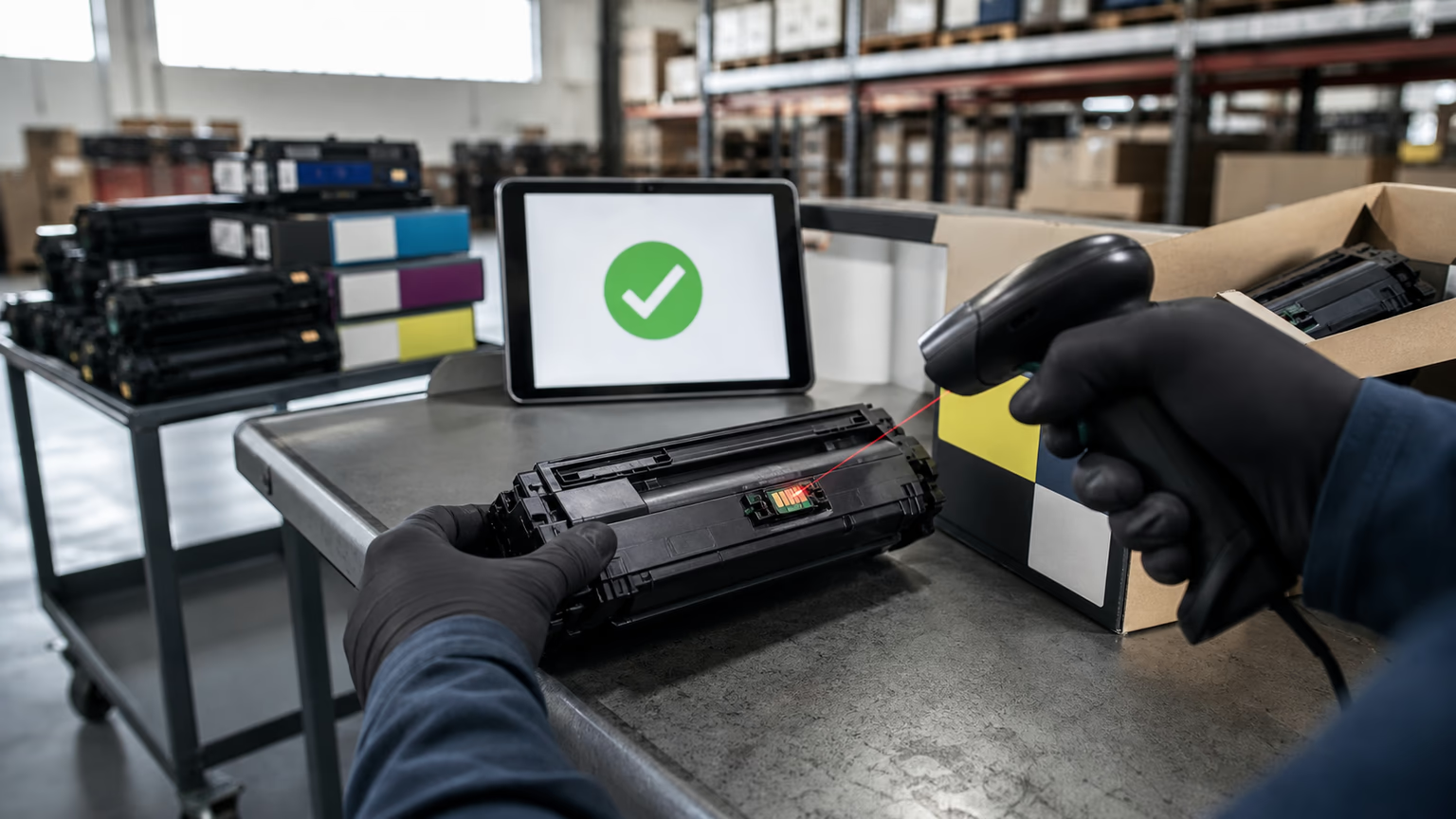

The Hidden Procurement Factor: Why Memory Chips Matter More Than Buyers Think
When sourcing compatible printer cartridges, B2B distributors and fleet managers naturally prioritize toner quality, page yields, and unit pricing.
Yet a component smaller than a fingernail—the cartridge memory chip—often determines whether a shipment becomes a profit center or a service nightmare.
A single batch of faulty chips can render thousands of otherwise perfect cartridges unusable, triggering a wave of printer errors, customer complaints, and costly returns.
For businesses that rely on toner and cartridge suppliers to keep their operations running, ignoring chip quality is a gamble that rarely pays off.
The chip acts as the communication bridge between the cartridge and the printer.
It authenticates the cartridge, reports toner levels, and enables the printer to manage consumable usage.
When it works, it is invisible.
When it fails, the printer may refuse to recognize the cartridge—even if the printer toner inside is of excellent quality.
This disconnect means that procurement teams who treat chips as an afterthought expose their companies to hidden costs that can far exceed the modest price of the chip itself: expedited shipping for replacements, on-site technician dispatches, and the erosion of hard-won customer trust.
In the competitive world of B2B toner cartridge supplier relationships, understanding chip technology is not a technical nicety; it is a financial imperative.
What Cartridge Memory Chips Actually Track: Functional Data vs. Fiction
Despite rumors that circulate in some procurement circles, cartridge memory chips are not surveillance devices.
They do not snoop on users, record the content of printed documents, or transmit personal information back to a device brand.
Their function is strictly operational, designed to help the printer manage its consumables efficiently and maintain print quality.
The data stored in these chips falls into a few mundane but essential categories.
- Page count and toner level estimation: The chip keeps a running tally of printed pages and uses algorithms to estimate remaining printer toner. This is an approximation, which is why low-toner alerts sometimes trigger with usable toner still in the cartridge.
- Cartridge identification: A unique serial number, the model code, and a regional lock are stored. This allows the printer to verify that a compatible printer cartridge is of the correct type and intended for the specific region, preventing mismatches that could damage the device.
- Manufacturing and firmware data: The chip often contains its own firmware version, the date of production, and sometimes a digital signature. This data is used during the cartridge’s initialization and when the printer checks for updates.
- Error logs: Some advanced chips record fault codes, such as a paper misfeed or connectivity issue, to assist service technicians in diagnosing problems. Once again, this relates to mechanical performance, not the content of the pages.
None of this information includes text, images, or network logs.
A typical chip’s memory capacity is measured in kilobytes—ample for counters and identifiers but wholly inadequate for storing any meaningful document data.
For a B2B buyer fielding questions from concerned clients, being able to explain this clearly can turn a skeptical customer into a confident partner in the use of compatible printer cartridges.
The Myth Machine: 5 Misconceptions That Drive Bad Buying Decisions
Misinformation about memory chips has woven itself into the fabric of the aftermarket supplies industry, creating a set of stubborn myths that push B2B buyers toward suboptimal choices. Some flee to expensive OEM cartridges out of fear, while others embrace the cheapest options without discerning chip quality. Here are the five most pervasive myths, debunked.
Myth: Chips spy on users or leak sensitive data.
As detailed earlier, the chip lacks network connectivity and stores only operational data. The spying concern is a myth without technical basis.
Myth: All compatible chips are low quality and will damage printers.
Quality varies by supplier. Properly engineered chips with flash memory and protective circuits are as safe as OEM versions. The risk comes from unvetted, cheapest-cost sources.
Myth: OEM chips are permanently locked against aftermarket solutions.
OEMs employ security, but the aftermarket dynamically adapts. Firmware updates may temporarily block chips, but agile suppliers quickly issue revisions. It is an ongoing contest, not a permanent defeat.
Myth: Chip information cannot be reset legally.
Reset is often legal when it does not copy copyrighted code or infringe trademarks. Many remanufacturers use resetters lawfully. The legal nuance is in the method, not the practice.
Myth: If a chip causes an error, the toner must be defective.
Error messages often stem from chip communication failures, not bad toner. Misdiagnosis leads to wasted cartridges and unresolved problems. Always check chip compatibility first.
Firmware Updates: The Real Battlefield for Compatibility
Among all the factors that affect compatible cartridge performance, none is as disruptive as the firmware update.
Printer manufacturers routinely issue new firmware versions that tighten security checks, modify toner-level algorithms, or introduce new handshake protocols.
This means that a chip that functioned flawlessly yesterday can become unrecognizable to the same printer tomorrow.
For distributors and service providers, it creates a moving target that demands constant vigilance.
The consequence of a firmware update can be swift and severe: a sudden spike in customer complaints, a wave of returned cartridges, and an urgent need for replacement stock.
The only defense is a chip supplier with a proven ability to monitor OEM firmware releases, rapidly engineer a counter-update, and deliver revised chips to customers before the disruption becomes a crisis.
When evaluating toner and cartridge suppliers, their firmware update response capability should be a top-tier selection criterion—right up there with toner quality and price.
Ultimately, firmware compatibility is not a one-time checkbox. It requires an ongoing partnership with a supplier that views chip development as a continuous service, not a one-off product. Include firmware update provisions in your contracts, and establish clear expectations for response times and communication protocols.
Quality Anatomy of a Reliable Memory Chip
Understanding what separates a durable memory chip from a fragile one equips procurement teams to ask the right questions and spot meaningful differences among suppliers. The following technical attributes directly influence field performance and should be part of any serious evaluation.
- Memory technology: Older EPROM chips can degrade after a limited number of read/write cycles, leading to mid-life failures. Modern flash-based chips offer far greater endurance and faster data handling. When assessing a chip, inquire about the underlying memory type.
- Connector integrity: The tiny metal tabs that mate with the printer’s contacts are subjected to friction and environmental exposure. Gold plating of adequate thickness resists oxidation and ensures consistent electrical connection. Thin or poorly applied plating can cause intermittent 'cartridge not detected' errors that plague service teams.
- Protection circuitry: Electrostatic discharge (ESD) from handling and transient voltage spikes inside the printer are real threats. A quality chip incorporates protection components that shield the sensitive microcontroller from damage. Without them, a single static zap can kill the chip—and in extreme cases, send a voltage surge back to the printer’s main board.
- Toner level algorithm accuracy: The chip’s software must be calibrated to the specific cartridge’s toner capacity and delivery characteristics. An algorithm that signals ‘empty’ prematurely wastes residual toner and generates unnecessary reorders, while one that underestimates usage can lead to print defects and user frustration.
These details may seem minute, but in a large fleet, even a 1% difference in chip failure rate can translate into hundreds of extra service calls annually. For B2B procurement, the true cost of a chip includes not only its purchase price but the operational burden it imposes over its lifetime.
How to Vet a Supplier’s Chip Quality Before You Commit
Turning chip analysis into a structured supplier evaluation process protects your business from avoidable risks. Here is a practical framework to apply when comparing potential partners.
Request technical documentation: A trustworthy supplier will provide a chip datasheet specifying the memory type, contact plating thickness, ESD rating, and operating temperature range. Additionally, ask for a firmware revision log that tracks how their chips have evolved in response to OEM updates. A refusal to share these documents is a warning sign.
Test samples under real-world conditions: Order a pilot batch and install the cartridges in a representative sample of your fleet, ensuring some printers have the latest firmware. Monitor performance over several weeks, noting any error messages, print quality issues, or premature end-of-life signals. This real-world data is far more valuable than laboratory specifications.
Assess firmware update response history: Ask the supplier for concrete examples from the past 12 to 18 months: which OEM firmware releases affected their chips, and how quickly did they deliver a working revision? A supplier that cannot provide a clear timeline or that experienced prolonged outages may not be reliable in the future.
Agree on a transparent returns policy: While warranty terms should not be your primary decision driver, a supplier’s willingness to promptly replace chip-related failures and cover associated logistics costs indicates confidence in their product. Clarify the process for reporting and resolving chip defects before signing a contract.
Procurement Playbook: Integrating Chip Evaluation into Your Sourcing Process
Making chip quality a formal part of your procurement workflow shifts it from a reactive headache to a proactive advantage. The following steps embed chip considerations into the DNA of your sourcing operations.
Revise your RFQ criteria: When you issue a request for quotation, include a section dedicated to chip specifications. Require bidders to state the chip firmware version they will supply, the acceptable defect rate they guarantee, and the documentation they will provide. This forces suppliers to compete on reliability, not just price.
Negotiate firmware update SLAs: A service-level agreement that defines the maximum allowable time for a supplier to deliver a firmware-compatible chip after an OEM update creates accountability. For example, an SLA might require a working revision within a specified number of weeks, with penalties for delays. Such terms align the supplier’s incentives with your operational stability.
Segment your fleet strategically: Recognize that not all printers face the same compatibility risk. Newer, internet-connected devices are more likely to receive automatic firmware updates, while older offline models may never change. Allocate your most robust, frequently updated chips to the high-risk fleet segment, and use more cost-effective options where the risk is low.
Empower your service team with diagnostic skills: Train your staff to differentiate chip errors from other cartridge failures. A simple rule: if the same cartridge fails in multiple printers, the chip is suspect; if multiple cartridges fail in the same printer, check the printer’s firmware and hardware. Reducing misdiagnosed returns improves customer satisfaction and cuts operational waste.
Future-Proofing Against Chip-Related Disruptions
The evolution of cartridge chip technology shows no sign of slowing.
Printer manufacturers are increasingly deploying secure authentication chips with encrypted keys, making aftermarket emulation more complex.
Additionally, OEMs are introducing subscription-based supply models that rely on chip-reported toner levels to trigger automatic reorders, tightening the integration between chip data and the manufacturer’s service ecosystem.
To build resilience, distribute your chip sourcing across multiple qualified suppliers.
Relying on a single source magnifies the impact of a firmware lockout or a production defect.
Cultivate at least two approved chip vendors, and maintain a running qualification process so that you can switch volumes quickly if needed.
Furthermore, consider investing in portable diagnostic tools that can read chip data—such as firmware version, remaining toner estimate, and error logs—on-site.
This capability reduces diagnostic time and prevents unnecessary cartridge swaps.
Stay informed about legislative trends, too.
In several regions, right-to-repair movements are pushing for regulations that could force OEMs to provide access to chip protocols and diagnostic information, potentially leveling the playing field.
By building a procurement culture that prioritizes chip quality and adaptability now, your business will be well positioned to thrive regardless of how the technology or the legal environment shifts.
FAQ
Do cartridge memory chips actually record what I print?
No. Cartridge memory chips store only operational data such as page counts, toner levels, and cartridge identifiers. They do not have the capacity or capability to record document content, images, or any personal information. The memory is typically only a few kilobytes, sufficient for keeping track of usage statistics, not for storing any form of user data.
Can a faulty memory chip damage my printer?
In rare cases, yes.
How do I know if a chip error is caused by the cartridge or the printer firmware?
Diagnosing chip errors requires a methodical approach.
What is the typical lifespan of a compatible memory chip?
There is no universal lifespan; it depends on the chip’s memory technology and build quality.
Is it illegal to use aftermarket chips that mimic OEM data?
No, using aftermarket chips is generally legal.
Conclusion
Cartridge memory chips are far more than an accessory; they are a critical determinant of compatible cartridge reliability and, by extension, the health of your B2B supply business.
For distributors and service providers, confusing chip myths with reality leads to fear-driven overpayments or risk-exposed bargain hunting.
By understanding what chips genuinely track, debunking the common misconceptions, and embedding rigorous chip evaluation into procurement, buyers can transform a hidden liability into a pillar of operational confidence.
The path forward is clear: treat chip quality as a measurable specification, demand transparency from your toner and cartridge suppliers, and prepare your organization for the inevitable firmware battles ahead.
In the fast-moving world of aftermarket supplies, those who master the chip conversation will earn stronger margins, fewer headaches, and deeper trust from their customers.
The chip may be small, but its impact on your business is anything but.