
The Real Cost of Cheap Toner: Why Procurement Logic Must Evolve
Many procurement teams are under extreme pressure to rein in consumable spending.
The immediate reflex is to find the lowest priced cartridge on the market and switch over without a second thought.
On a spreadsheet, this looks like a clear win: the unit cost drops, and the monthly toner bill shrinks.
But what the spreadsheet never shows are the operational ripple effects that soon start undermining those very savings.
Print quality complaints climb.
Service trucks roll more often.
Helpdesk tickets spike.
And before long, the cost of dealing with all this chaos eclipses any procurement victory.
The true measure of toner cost is not the price tag on the box—it is the total cost per printed page, factoring in failures, waste, and the labor required to resolve them.
When a cartridge leaks or fails prematurely, the distributor or service provider absorbs the downstream costs: a technician visit, a replacement unit, and often a damaged customer relationship.
These hidden costs are rarely calculated when chasing the cheapest option, but they are the very factors that determine long-term profitability in B2B distribution.
The myth that all compatible toners are essentially the same is both persistent and dangerous.
In reality, toner formulation, chip quality, mechanical construction, and fill accuracy vary enormously across suppliers.
Without a structured procurement approach, you are essentially betting your service reputation on a commodity you barely understand.
This guide provides a framework for cutting toner cost without creating chaos—by shifting the conversation from price per cartridge to value per page and total cost of ownership.
Mapping Your Toner Supply Chain: From Factory to Printer
To control toner quality and cost, procurement professionals must first understand what actually makes up a toner cartridge and how it reaches the end user.
A typical laser printer toner cartridge consists of several critical components: the toner powder itself, the developer roller, the blade system, the primary charge roller, and the chip that communicates with the printer.
The supply chain stretches from raw material vendors through powder manufacturing, component assembly, filling, packaging, and multiple logistics steps before reaching a distributor's shelf.
Each of these steps introduces risk.
Inconsistent powder quality can lead to backgrounding or poor density.
Inaccurate fill levels—either underfilling or overfilling—directly impact page yields and can cause leakage.
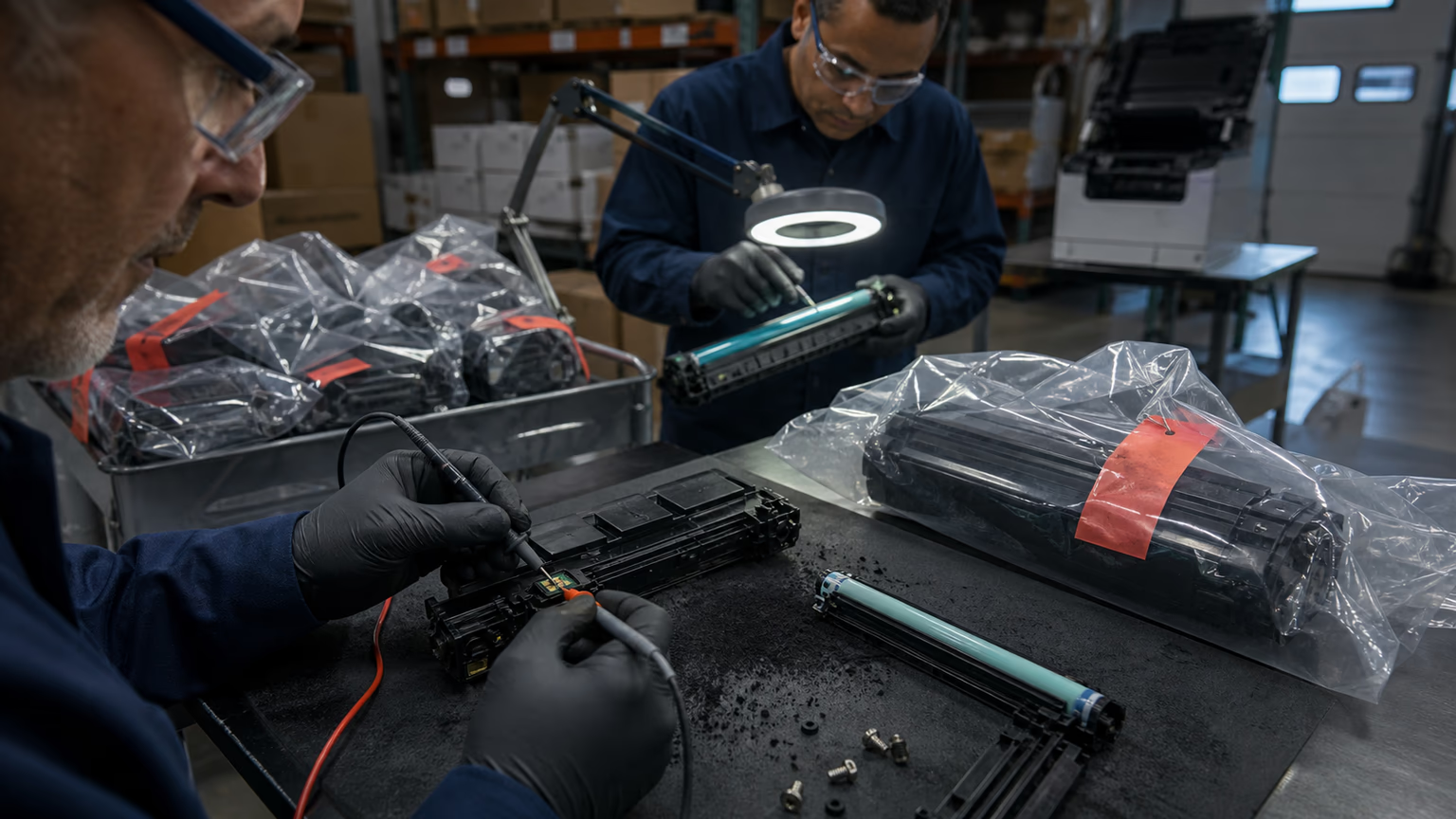
Incorrectly programmed or low-quality chips may trigger error messages or fail to report toner levels correctly.
And without batch-level traceability, when a quality issue does arise, you are left guessing which shipment is affected, leading to broad recall actions or, worse, silent suffering in the field.
A transparent supply chain means your supplier can show you where the cartridges are made, what quality control gates exist, and how each batch is documented.
This traceability is not a nice-to-have; it is essential for managing risk and ensuring consistent performance across large fleets.
When evaluating suppliers, ask for their batch tracking procedures and how they manage component sourcing.
A supplier that cannot answer these questions may be hiding significant variability that will eventually land on your service desk.
Building a Supplier Scorecard Beyond Price
Choosing a toner supplier should never be a single-variable decision. A robust supplier evaluation uses a scorecard that balances cost competitiveness with quality, reliability, and support. The following criteria form the core of such a scorecard:
- Quality consistency: Request documentation of batch-to-batch density measurements, waste toner percentages, and yield deviation statistics. A supplier that regularly audits its production lines will have this data readily available.
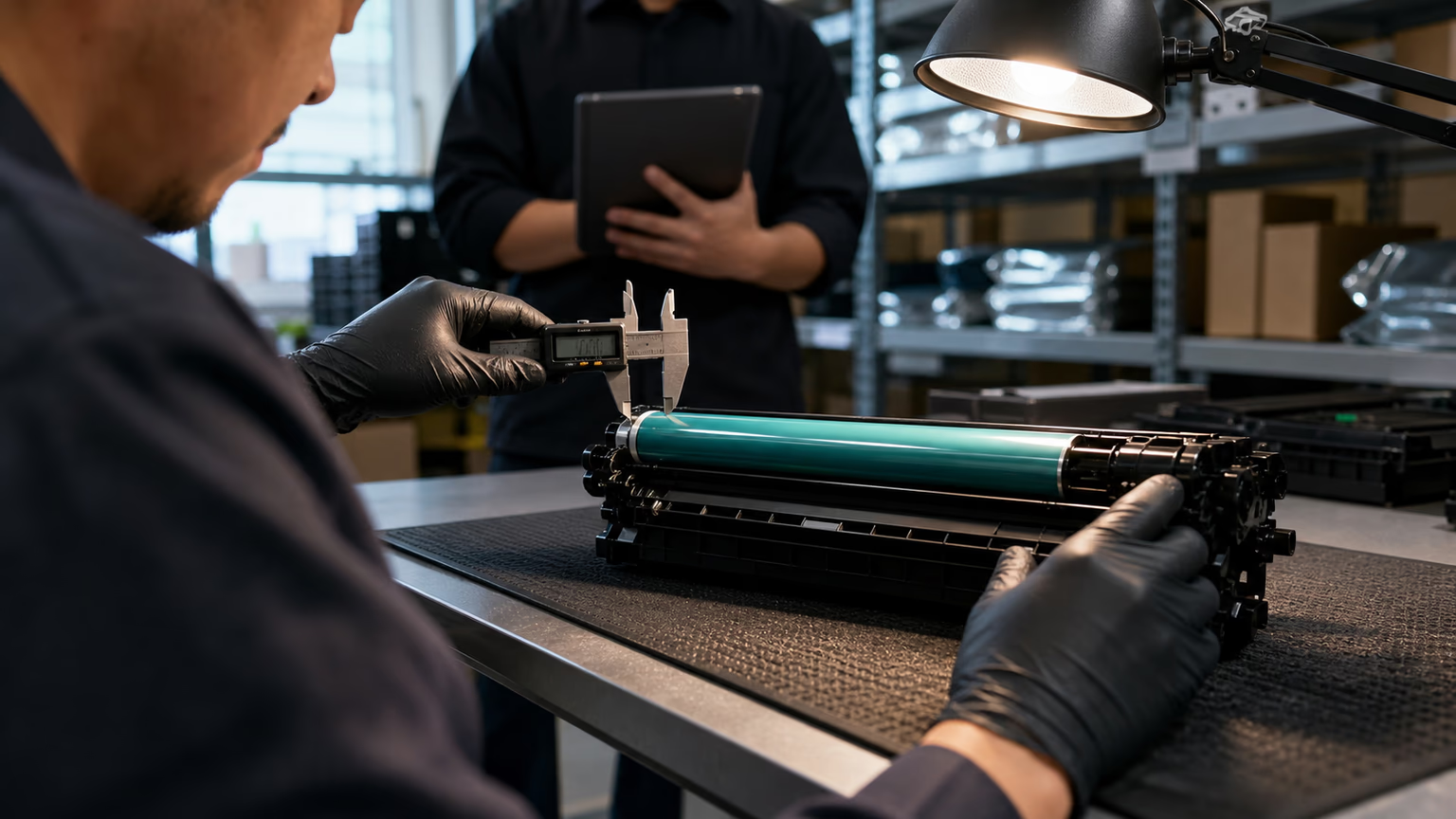
- Compatibility testing: Verify that the supplier tests cartridges on multiple printer models, firmware versions, and operational conditions before releasing products. Compatibility is rarely a binary state; it must be validated continuously as printer manufacturers issue updates.
- Logistics reliability: Assess fill rates, lead times, and emergency order responsiveness. A cheap cartridge that arrives a week late can cost you a customer far more than a slightly higher unit price.
- Technical support: Determine whether the supplier offers pre-sales compatibility guidance and a clear post-sales issue resolution path. When a printer stops working because of a cartridge error, you need answers within hours, not days.
- Financial and operational stability: A supplier that is here today and gone tomorrow poses a major risk. Look for a track record of serving B2B customers similar to yours, with financial stability that ensures continuity of supply.
By weighting each of these factors according to your business priorities, you can objectively compare suppliers rather than defaulting to the lowest sticker price. The goal is to find a partner whose product keeps your total cost per page predictable and low, not one that just makes the initial invoice look attractive.
The Compatibility Risk Landscape: Firmware, Chips, and Regional Models
One of the trickiest aspects of toner procurement is managing compatibility in a world where printer manufacturers actively update firmware.
These updates can instantly render a previously functional aftermarket cartridge unusable.
The issue often lies in the chip's ability to pass authentication handshakes with the printer.
A chip that worked perfectly yesterday may be rejected after a firmware upgrade, leading to printer lockouts and service calls.
Regional printer variants add another layer of complexity.
A printer model sold in one market may use a different cartridge SKU than the same model in another region, even if they appear physically identical.
This is especially common when dealing with gray-market imports.
Unless your supplier explicitly cross-references regional part numbers and validates compatibility with the exact hardware and firmware deployed in your customers' offices, you risk stocking cartridges that will never work.
A rigorous supplier will provide a detailed compatibility matrix and, better yet, proactively test new firmware releases on their cartridges to identify issues before they reach your fleet.
Testing Protocols That Predict Real-World Performance
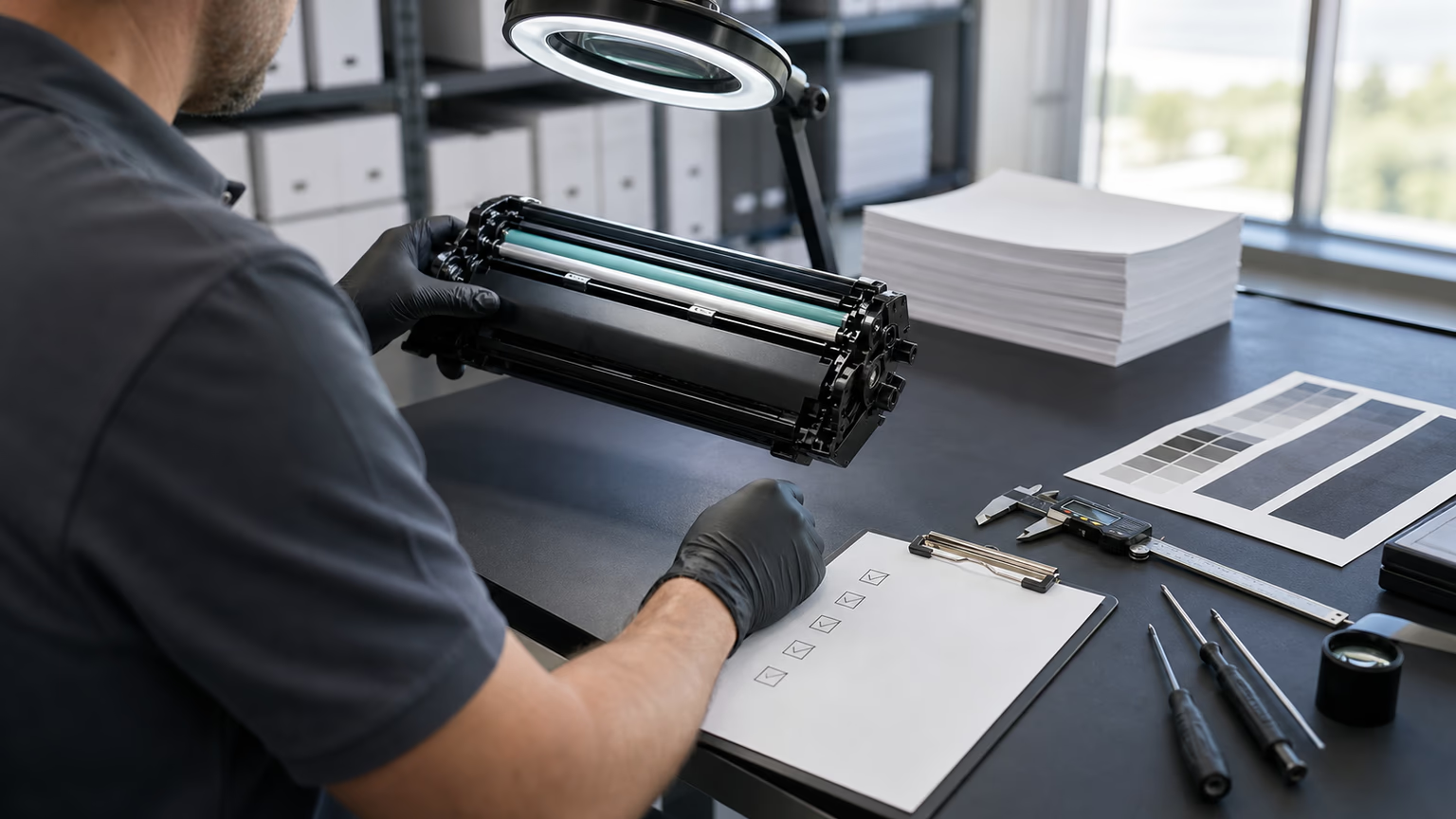
Spec sheets and ISO/IEC yield declarations offer a starting point, but they rarely reflect actual usage. To truly evaluate a toner's performance, procurement teams must implement testing protocols that simulate real-world conditions. This does not require a dedicated laboratory—a well-designed pilot with a representative sample of printers can reveal a great deal.
First, assemble a test fleet that mirrors the variety in your customer base: different brands, models, monthly volumes, and environments.
Print a range of documents, from text-heavy memos to graphics-intensive reports, and monitor key parameters: optical density, backgrounding, ghosting, and toner scatter.
Measure actual page yield by printing continuous runs at 5% coverage until the cartridge signals empty, then compare against the supplier's claims.
Finally, subject the cartridges to accelerated lifecycle testing: multiple stop-start cycles, long idle periods, and varied humidity conditions to check for drying, clumping, or leakage.
The data gathered from these tests is not just for initial validation; it becomes a benchmark against which future shipments can be compared, enabling early detection of supplier drift.
In parallel, ensure you test on the exact firmware version your customers use. Request batch certificates and QA documentation from the supplier for each shipment. A supplier that cannot or will not provide detailed test data is unlikely to stand behind its product when problems arise.
Navigating the Transition: How to Switch Suppliers Without Disruption
Even when you have found a better toner supplier, the switch itself can be the source of chaos if not managed carefully. Abruptly swapping out all cartridges across hundreds of printers is a recipe for disaster. Instead, adopt a phased rollout approach that limits exposure and allows for data collection.
Start with a controlled pilot involving a small subset of customers or a limited printer group.
Run the new cartridges for at least one full consumption cycle while tracking every relevant metric: service call rates, print quality complaints, yield performance, and any cartridge-related interventions.
Maintain parallel running of the old and new cartridges so you can directly compare performance under the same conditions.
Communicate the plan clearly to your service team and, if appropriate, to the end customers, setting expectations that this is a monitored improvement initiative, not an emergency measure.
Only expand the rollout after confirming that the new cartridges meet or exceed key performance indicators, and after your support teams are fully briefed on the new cartridge handling procedures.
A phased transition map, with clear go/no-go gates at each stage, transforms what could be a chaotic fire drill into a calm, data-driven process.
This disciplined approach prevents widespread service interruptions and builds confidence in the new supply chain, allowing you to cut toner cost without creating chaos.
Future-Proofing Your Toner Procurement Against Cost Fluctuations and Obsolescence
Toner procurement does not end once you have secured a good supplier at a fair price. The consumable market is subject to raw material cost swings, supply chain disruptions, and printer model discontinuations. A forward-looking strategy includes contractual mechanisms that share risk and build resilience.
Consider supply agreements that tie pricing to a published index, preventing sudden price jumps that could destroy your margins.
Negotiate for buffer stock or safety stock commitments so that your supplier carries inventory on your behalf, smoothing out delivery hiccups.
As printer fleets evolve, monitor end-of-life announcements for the models you support and plan last-time buys for cartridges that will eventually become obsolete.
Building a dual-source or managed second-source strategy for critical toner lines can also insulate your business from a supplier crisis.
A resilient procurement strategy is one that anticipates rather than reacts, ensuring that toner supply remains a reliable backbone of your service offering.
FAQ
How do I ensure compatible toner doesn't void my customers' printer warranties?
In most jurisdictions, using a compatible toner does not automatically void a printer's warranty; manufacturers cannot legally tie warranty coverage to the use of a specific consumable unless they provide it free of charge.
What are the most effective tests for toner quality before committing to a supplier?
A combination of controlled print quality tests and lifecycle testing yields the most reliable data.
How can I calculate the true total cost per page for a given toner?
Start with the cartridge cost divided by the stated yield, but then adjust for actual yield measured in your environment, factoring in premature failures and waste.
What are the red flags of an unreliable toner supplier?
Red flags include a lack of batch traceability, inability or unwillingness to provide QA documentation, inconsistent pricing that suggests cost-cutting on components, poor communication during pre-sales inquiries, and a history of frequent chip version changes without notice.
How do I manage the transition to a new toner brand without disrupting my service operations?
Adopt a phased transition.
Conclusion
Cutting toner costs does not have to mean cutting corners.
The price-centric procurement model that simply hunts for the cheapest per-cartridge cost is a trap—one that leads to hidden operational expenses, customer dissatisfaction, and a chaotic service environment.
By adopting a procurement framework that centers on total cost of ownership, rigorous supplier evaluation, and continuous compatibility validation, you can achieve genuine savings while protecting—or even enhancing—your service reputation.
The key is to treat toner procurement not as a transactional purchasing activity but as a strategic function that directly impacts the quality and reliability you deliver to your customers every day.