The Real Environmental Cost of Printer Cartridges
The typical printer cartridge has an often-overlooked environmental footprint that extends far beyond its final disposal.
OEM cartridges are manufactured using virgin plastics, metals, and complex electronic components, requiring energy-intensive extraction and processing.
The supply chain of a new cartridge includes raw material mining, chemical toner production, component assembly, global distribution, and then a single-use lifecycle that ends in a landfill or incinerator for many units.
Millions of cartridges are discarded annually, contributing to plastic waste and toxic material leaching.
Compatible toner cartridges, particularly remanufactured ones, have been promoted as a greener alternative because they extend the lifecycle of existing components, reduce demand for new raw materials, and divert waste from landfills.
However, the environmental friendliness of compatibles is not automatic—it depends heavily on the remanufacturing process, quality control, and the supplier's commitment to circular economy principles.
For B2B buyers managing printer fleets, understanding the full lifecycle impact is the first step in making an informed, sustainable procurement decision.
Not All Compatible Cartridges Are Created Equal
The term 'compatible toner cartridge' can refer to several distinct product types, each with a different environmental profile.
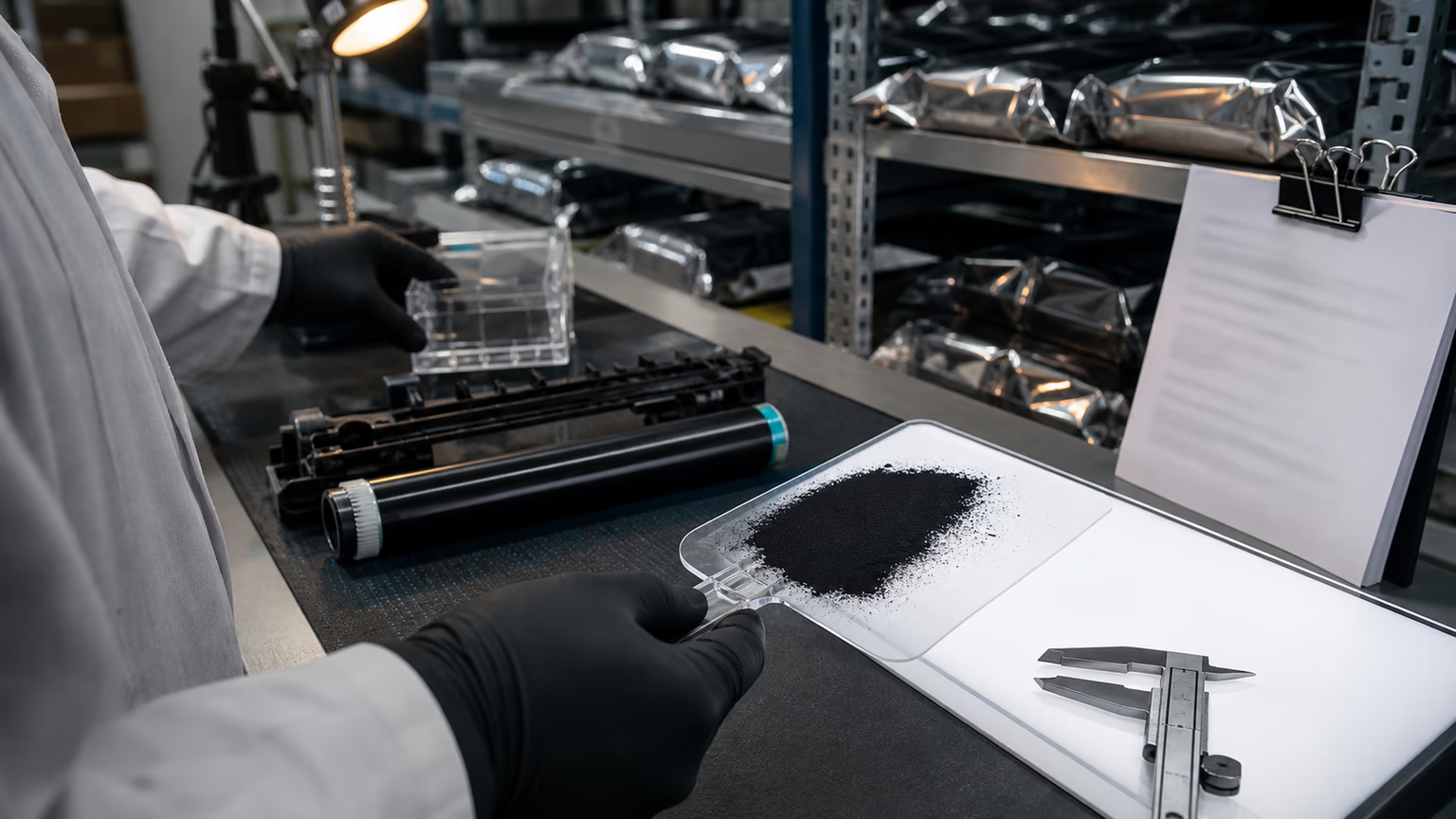
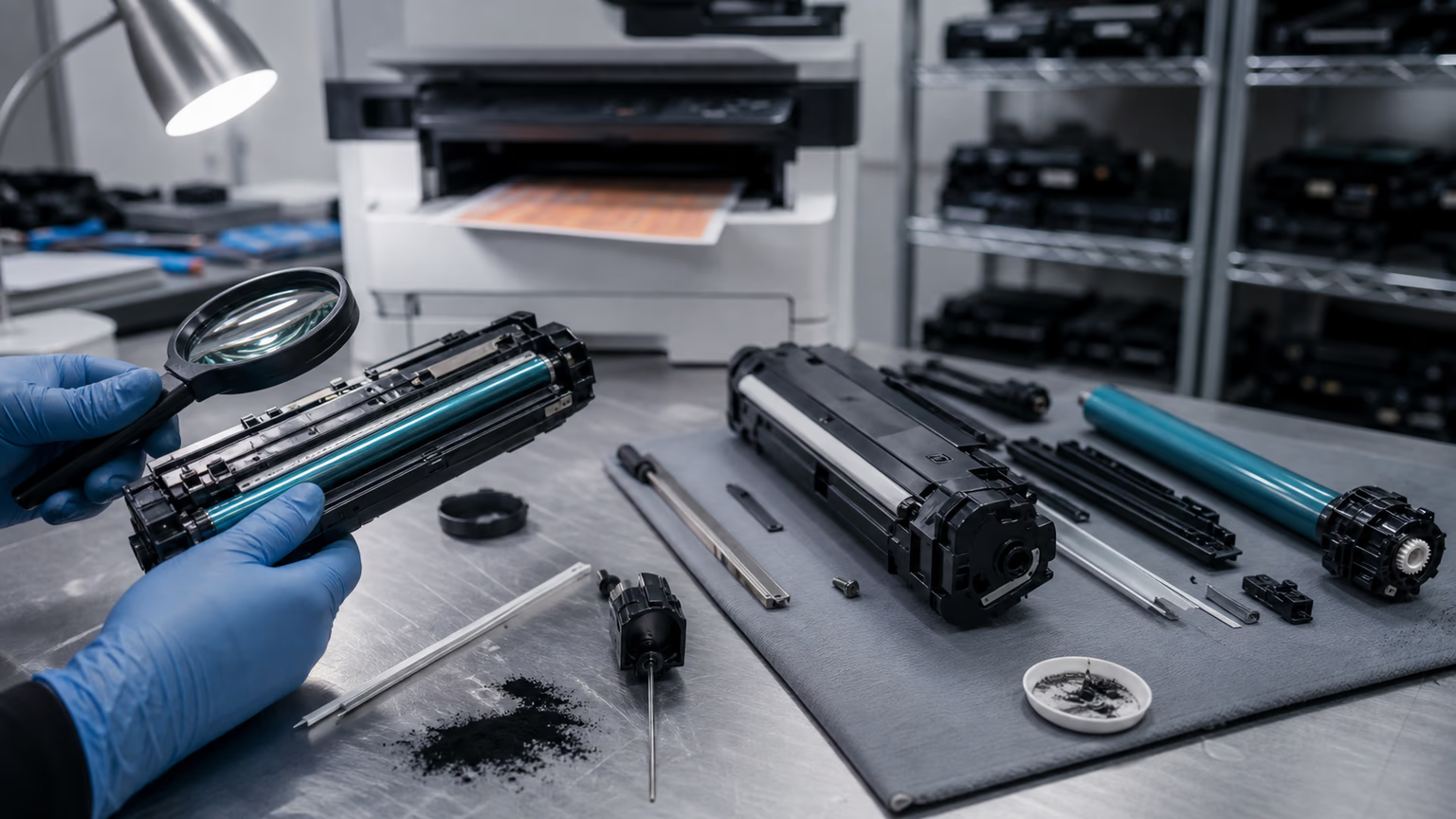
Remanufactured cartridges are recycled OEM units that have been professionally cleaned, inspected, worn parts replaced, and refilled with toner.
Premium remanufacturing operations recover up to 90% of the original cartridge components, significantly reducing material and energy consumption compared to new production.
Refilled cartridges, often produced by smaller operators, may simply be drilled and refilled without component replacement or thorough cleaning, leading to lower reliability and potential leaks.
New compatible cartridges are built from scratch using non-OEM components and virgin materials, which can negate many of the recycling benefits.
Within the B2B sector, premium compatible toner cartridges from certified remanufacturers often achieve the best eco-profile, balancing lower carbon footprint with performance that meets or exceeds OEM standards.
However, many low-cost compatibles use subpar materials and shortcuts that undermine both environmental goals and print quality.
Understanding these differences is critical for procurement managers evaluating toner cartridges for distributors.
The Hidden Risks of Low-Quality Compatibles
The allure of cheap printer toner cartridges can be strong for cost-conscious procurement teams, but the hidden environmental and operational costs can quickly erase any savings.
Low-quality compatible cartridges frequently suffer from higher failure rates, leading to toner leaks that contaminate printers, cause paper jams, and necessitate service calls.
Each premature cartridge failure creates additional waste—the failed cartridge itself, the reprints of smudged documents, and the extra packaging and shipping for replacement units.
Inconsistent print quality from poorly formulated toner forces reprints, increasing paper waste and energy use.
In a worst-case scenario, a leaking or poorly fitted cartridge can damage sensitive printer components, leading to costly repairs or even early retirement of the device—a massive environmental setback.
Cheap compatibles therefore create a paradox: they are marketed as a green choice but can result in a larger total environmental footprint.
For distributors supplying business clients, the reputational damage of frequent cartridge-related failures can be severe.
The lesson for B2B buyers is that the price per cartridge is a poor indicator of true environmental or total cost of ownership.
How to Verify Environmental Claims: A B2B Buyer’s Checklist
Greenwashing is prevalent in the imaging supplies market, making it essential for procurement professionals to adopt a structured approach when evaluating supplier sustainability claims. A reliable supplier of environmentally conscious compatible toner cartridges should provide transparent documentation and third-party verification. Below is a practical checklist for B2B buyers:
- Certifications: Look for recognized environmental management certifications such as ISO 14001, and product-specific eco-labels like Blue Angel or EPEAT where applicable. Verify that the certification covers the actual manufacturing or remanufacturing facility.
- Lifecycle Assessment Data: Request a lifecycle assessment or carbon footprint analysis for the cartridge model in question. A trustworthy supplier will have this data and can explain the key assumptions.
- Remanufacturing Process Transparency: Ask how cartridges are collected, sorted, cleaned, tested, and refilled. Suppliers should detail component reuse rates and quality testing protocols.
- Take-Back and Recycling Programs: Confirm that the supplier offers a closed-loop system where used cartridges are returned and recycled rather than ending up in general waste. This reduces your organization's waste disposal burden.
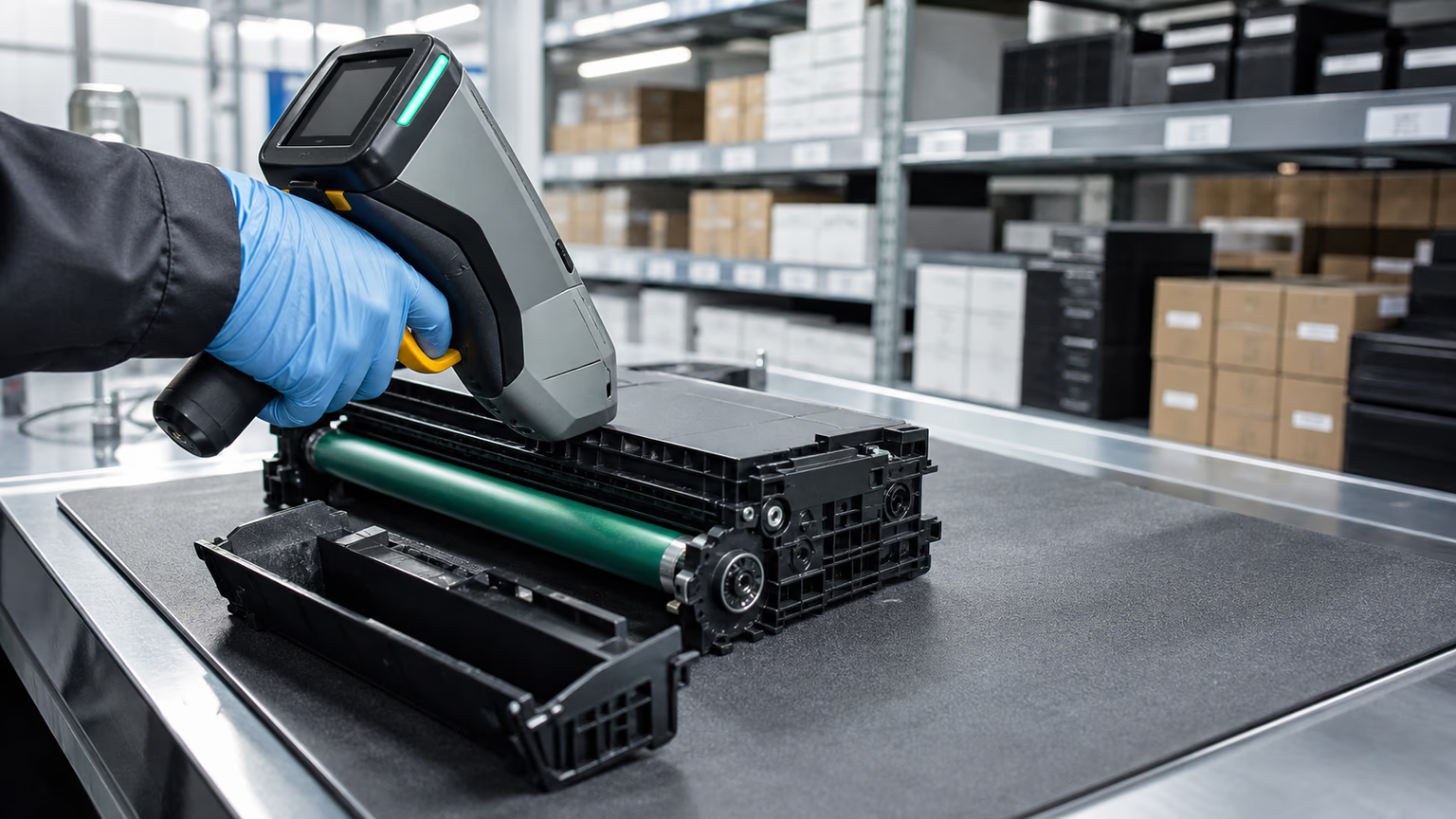
- Batch Traceability and Testing: Ensure the supplier conducts batch testing of toner formulation and print quality against ISO/IEC yield standards. This consistency data helps predict real-world performance across your fleet.
- Red Flags: Be wary of vague marketing language without evidence, missing compliance documents, or reluctance to share process details. A claim that is difficult to verify is often unsubstantiated.
Balancing Sustainability with Print Performance
Achieving both environmental goals and reliable print output is the central challenge when switching to compatible cartridges.
Premium compatible toner cartridges for office printers are engineered to match OEM performance specifications, but not all products on the market can deliver.
To avoid increased service tickets, conduct a controlled trial within your own printer fleet before committing to a large order.
Compare the page yield, print quality, and failure rate of sample compatible cartridges against your current OEM baseline over a period that reflects your typical print volume.
Pay attention to toner adhesion on different media types, as some low-cost toners can produce fading or smearing, leading to reprints.
A reliable supplier will support you with performance data and guaranteed yields that align with ISO/IEC standards.
Monitoring cost per page holistically—including cartridge cost, reprints, service interventions, and downtime—reveals the true environmental and financial impact.
Premium compatibles can often match or even exceed OEM performance, proving that sustainability and reliability are not mutually exclusive when you choose a qualified supplier.
The Supply Chain Factor: Why Stability Matters for Green Goals
Even a high-quality compatible cartridge loses its environmental advantage if the supply chain is unreliable.
Relying on multiple, unverified sources to cover your printer fleet introduces unnecessary carbon emissions from multiple small shipments, last-mile deliveries, and emergency orders when stockouts occur.
Conversely, a consolidated supply from a single, transparent supplier allows for bulk shipping with lower per-unit transport emissions and more predictable inventory management.
When a procurement team turns to low-cost toner cartridges for distributors from fragmented suppliers, the hidden environmental toll includes increased packaging waste, expedited shipping, and the carbon cost of managing returns.
A stable supply chain also reduces the need for contingency stocks and minimizes the waste from overordering.
For B2B buyers aiming to reduce their carbon footprint, supplier consolidation and long-term partnership with a certified remanufacturer are strategic moves that amplify the environmental benefits of compatible cartridges.
Making the Business Case: Procurement Logic for Sustainable Compatibles
Transitioning to environmentally friendly compatible cartridges requires internal buy-in, especially when the upfront price may not be the lowest.
Procurement managers must build a total cost of ownership model that factors in reduced failure rates, lower service costs, extended printer life, and the avoided cost of waste disposal.
Quantifying the environmental impact in terms of carbon savings and waste diversion can strengthen the business case, particularly for organizations with corporate ESG commitments.
Premium compatible toner cartridges from certified suppliers also mitigate risks such as printer downtime, brand damage from poor print quality, and supply disruptions.
Internally, communicate that this is not about choosing the cheapest option but about investing in operational resilience and sustainability alignment.
Negotiating volume agreements with a transparent supplier further stabilizes costs and ensures consistent quality across your fleet, simplifying procurement and reducing administrative burden.
The Future of Sustainable Printing Consumables
The market for compatible printer cartridges is evolving under increasing regulatory and customer pressure for circular economy solutions.
Right-to-repair legislation in several regions is making it easier for third-party remanufacturers to access printer firmware and component data, which should improve compatibility and reduce chip-related failures.
Emerging smart cartridge technologies promise better lifecycle tracking, enabling precise monitoring of reuse counts and toner levels to optimize replacement schedules.
Meanwhile, industry movements toward standardized recycling programs and higher eco-labeling standards are pushing the entire supply chain toward greater transparency.
For B2B distributors and printer service companies, staying ahead of these trends is essential to offering clients credible, future-proof solutions.
Building relationships with suppliers that invest in circular design—cartridges designed from the start for multiple lifecycles—will become a competitive differentiator.
The direction is clear: the most successful procurement strategies will be those that treat environmental performance as a core operational metric rather than a marketing checkbox.
FAQ
Are remanufactured toner cartridges truly better for the environment than new OEM cartridges?
In principle, remanufactured cartridges have a significantly smaller environmental footprint because they reuse the majority of the cartridge body and components, avoiding the energy and raw materials needed for new production.
How can I tell if a compatible cartridge is high-quality and sustainably produced?
Look for suppliers that openly share their remanufacturing processes and provide third-party certifications.
What certifications should I look for when buying environmentally friendly toners?
Key certifications include ISO 14001 for environmental management systems, which indicates a supplier has a structured approach to reducing environmental impact.
Do compatible cartridges void my printer warranty?
In most regions, using third-party consumables does not automatically void the printer warranty; however, printer manufacturers may deny coverage for specific damage caused by a non-OEM cartridge.
What are the most common failure rates for compatible toner cartridges?
Failure rates vary widely depending on the quality of the cartridge and the remanufacturing process.
Conclusion
The question of whether compatible toner cartridges are environmentally friendly does not have a universal answer—it depends entirely on the choices made by the buyer and the integrity of the supplier.
When procured as premium remanufactured cartridges from transparent, certified sources, they can dramatically reduce resource consumption, waste, and carbon emissions while maintaining print performance and equipment uptime.
However, cheap compatibles often carry hidden environmental and operational costs that undermine sustainability objectives.
B2B procurement professionals must move beyond marketing claims and adopt a rigorous, evidence-based evaluation process that includes lifecycle data, supplier transparency, and in-fleet testing.
By integrating environmental criteria into total cost of ownership calculations and building long-term partnerships with reliable remanufacturers, organizations can achieve both their green goals and their operational demands.
The path to sustainable printing is not about a simple product switch; it is about creating a resilient, circular, and quality-driven supply chain.