
Introduction: The Humidity Blind Spot Costing Distributors Millions
Last July, a mid-sized toner distributor noticed a spike in returns.
Print quality complaints surged: ghosting, faint patches, uneven density.
The batch had passed QC before shipping, but something changed during warehousing.
After weeks of testing, the root cause wasn’t a manufacturing defect — it was humidity.
A temporary spike in warehouse moisture had silently degraded the toner, causing electrostatic failures that only appeared after installation.
The distributor lost two major service contracts before identifying the problem.
This scenario is more common than most B2B buyers realize.
While logistics teams obsess over temperature control, humidity often gets treated as a secondary metric.
Yet toner — especially laser printer toner — is aggressively hygroscopic.
It absorbs moisture from the air, and even brief exposure to high relative humidity can trigger irreversible chemical and physical changes.
The result?
Clumped particles, altered charging properties, and print defects that erode trust and inflate return rates.
This guide cuts through generic warehouse advice.
It translates humidity science into actionable, enforceable rules specifically for toner storage.
Whether you manage a distribution center, serve mixed printer fleets with compatible toner, or negotiate supplier agreements, you will learn how to stop the invisible profit drain of moisture-damaged inventory.
No theory, just the real rules that matter.
How Humidity Attacks Toner: The Chemistry You Need to Know
To control humidity, you first need to understand why toner is so vulnerable.
Toner particles are tiny — typically 5 to 15 microns — and have a large surface area relative to their mass.
This makes them highly reactive to environmental moisture.
Most printer toner formulations, whether styrene-acrylic or polyester-based, are hygroscopic by nature.
When relative humidity exceeds safe thresholds, toner particles absorb water vapor, which triggers a cascade of problems.
Absorbed moisture acts as a plasticizer, softening the toner and causing particles to stick together.
This clumping impedes the smooth flow of toner from the cartridge to the developer unit, leading to inconsistent print density and patches of light or missing image.
In dual-component systems that use carrier beads, moisture disrupts the triboelectric charge exchange between toner and carrier, resulting in backgrounding (unwanted toner dust on the page) or ghosting where previous images reappear.
Simply put, the toner either doesn’t charge correctly or doesn’t transfer reliably.
The damage extends beyond print defects.
Moisture can corrode metallic doctor blades, charge rollers, and electrical contacts within toner cartridges.
Corrosion introduces resistance and arcing, causing intermittent failures that are often misdiagnosed as printer hardware issues.
Furthermore, repeated humidity cycling — where temperature swings cause condensation — accelerates oxidation of critical components, shortening the cartridge’s usable shelf life.
Even if the toner looks dry, its performance can be permanently compromised.
This is why temperature alone is insufficient. Psychrometrics — the study of air-vapor mixtures — matters. A warehouse at 25°C with 60% RH holds far more damaging moisture than one at 30°C with 30% RH. Without monitoring dew point and absolute humidity, you are flying blind.
Real-World Thresholds: Beyond the ‘Standard’ 35–55% RH
Most storage guidelines recommend keeping toner cartridges at 35–55% relative humidity and 20–25°C.
While this range is a good starting point, real-world operations demand tighter control based on toner chemistry and regional climate.
For instance, styrene-acrylic toners commonly used in many compatible toner products are more hygroscopic than some OEM polyester toners.
Distributors handling compatible toner for mixed printer fleets should aim for 35–45% RH to build in a safety margin.
The real danger is not gradual humidity drift but rapid cycling.
When a loading bay door opens on a humid summer day, warm, moisture-laden air rushes into a cooled warehouse.
Condensation can form almost instantly on pallet wrap, packaging, and even inside cartridge boxes.
This is why warehouses in coastal or tropical climates need desiccant-based humidity control, not just air conditioning.
Keep monitoring sensors at multiple heights and locations, including inside sealed packaging, because the microclimate inside a shrink-wrapped pallet can differ significantly from the ambient room reading.
Seasonal adjustments are also critical. During monsoon or rainy seasons, reduce RH setpoints by 5–10% in storage zones. In winter, when outdoor air is dry, watch for static electricity buildup caused by excessively low humidity. The goal is stability: avoid excursions beyond 55% RH at all times and aim for a steady state within a narrow band.
Warehouse Design and Operational Protocols That Actually Work
A properly humidity-controlled warehouse for toner isn’t just a building with dehumidifiers.
It requires purposeful design and disciplined workflows.
Start with zoning: isolate toner storage areas from docks and exterior doors using strip curtains, air curtains, or rapid-close doors.
Install positive-pressure HVAC systems that pump in dehumidified air, so that leakage paths push dry air out rather than pulling moist air in.
Desiccant rotor dehumidifiers are superior to compressor-based units for low dew points and are more energy-efficient when targeting 35–45% RH.
Floor and wall construction matters.
Use epoxy-sealed concrete with vapor barriers underneath to block ground moisture.
Insulate external walls and avoid placing racking directly against them, as temperature differences can create condensation points.
Maintain at least 30 cm of clearance from walls to allow airflow.
Ceiling-mounted fans can help equalize temperature and humidity, but avoid direct airflow onto cartridge packaging to prevent drying out seals.
Operational protocols must enforce that toner cartridges remain in their original sealed packaging until immediately before shipment or use.
The packaging usually includes a moisture-barrier bag and a desiccant sachet — these are not optional extras.
When receiving bulk shipments, inspect for signs of condensation on the outer packaging; if present, quarantine the batch and perform sample testing.
Implement a FIFO (first in, first out) system that tracks not just date but also cumulative exposure to humidity using data loggers.
Assign a quality hold for any inventory that has experienced an environmental excursion, and release it only after testing.
When picking orders for high-value MPS customers, consider staging in a conditioned airlock before loading onto temperature-controlled delivery vehicles. This prevents condensation shock during transport.
Monitoring, Logging, and Audit Ready: Building Trust with Data
The only way to guarantee correct storage conditions is continuous monitoring with retrievable records.
Place calibrated humidity and temperature sensors at multiple points: near ceiling, floor, inside racking, and within sample cartons.
Use dew point meters in addition to relative humidity sensors, because dew point remains constant regardless of temperature changes and gives a true measure of absolute moisture.
Cloud-based data logging systems are now affordable and essential.
They provide real-time alerts if any zone exceeds your preset thresholds, and they generate audit trails for every batch stored.
When a customer questions a print quality issue, you can pull up the exact environmental history that lot experienced.
This transparency transforms quality assurance from a cost center into a competitive advantage.
In RFPs, include your monitoring protocols and offer to share anonymized environmental logs with key accounts as a trust-building measure.
Calibrate sensors every six months against a certified reference, and establish alarm thresholds with graduated responses: a minor excursion might trigger an email to the warehouse manager, while a severe deviation could halt shipments automatically. Record corrective actions, such as adjusting dehumidifier setpoints or rotating stock, so you can demonstrate proactive management during audits.
Troubleshooting Moisture-Related Failures Before the Customer Notices
Even with robust controls, failures can slip through.
Train your service teams and distribution staff to spot early signs of moisture damage.
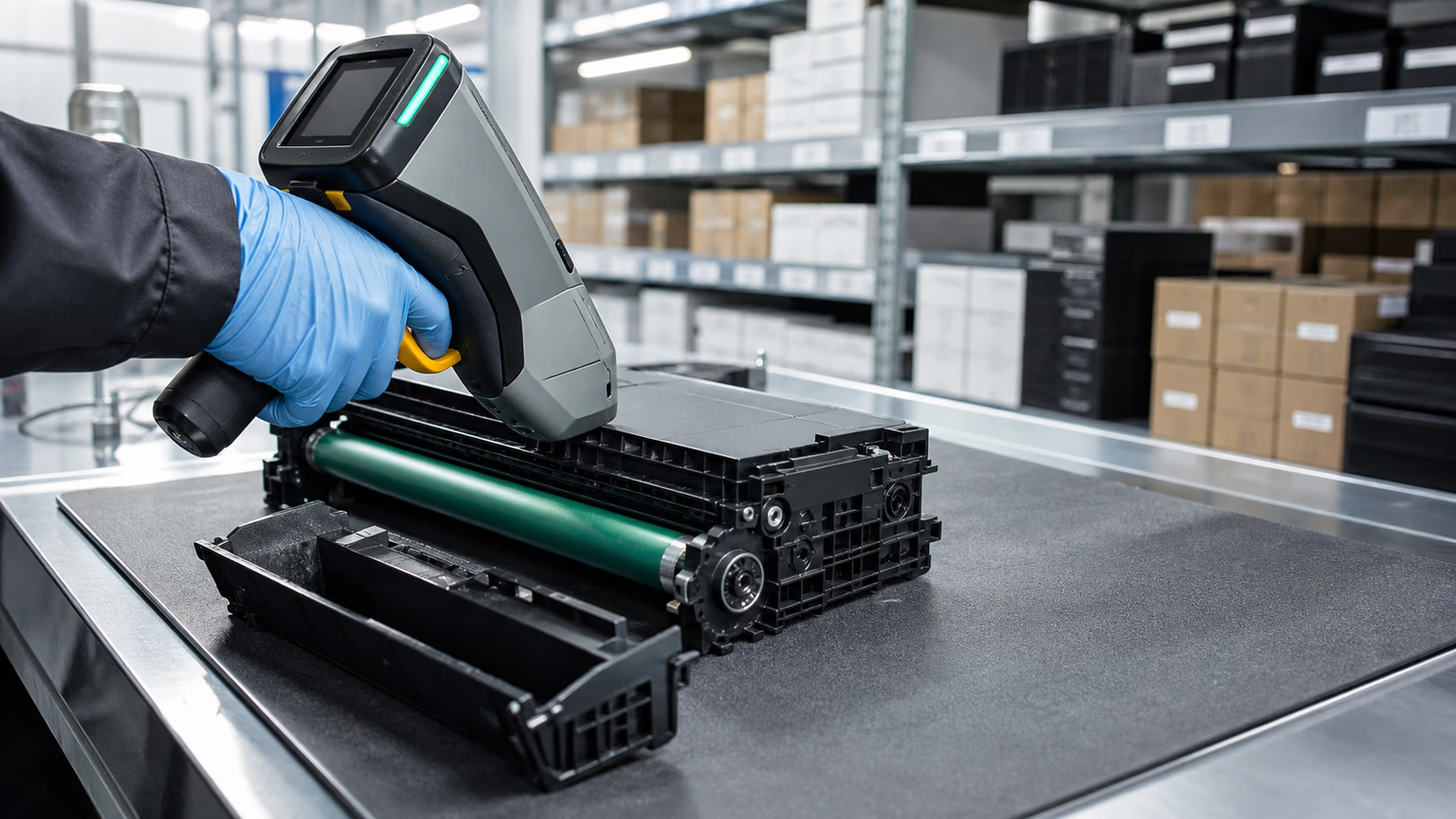
Visual inspection is the first line of defense: look for toner clumping inside the cartridge, discoloration around seals, and corrosion on the developer roller or chip contacts.
If a cartridge feels unusually ‘sloshy’ or the powder doesn’t flow when tilted, suspect moisture intrusion.
When a print complaint arises, follow a diagnostic checklist that separates environmental causes from mechanical faults.
Ask the customer about the printer’s location — is it near a window, in an unconditioned room, or in a coastal area?
Check the seasonality: recurring summer defects often point to humidity, not the cartridge.
Perform a cross-test by installing the suspect cartridge in a known-good printer in a controlled environment.
If the issue disappears, the problem is likely environmental, not the toner.
For at-scale troubleshooting, pull retention samples from the same batch and inspect them under controlled conditions.
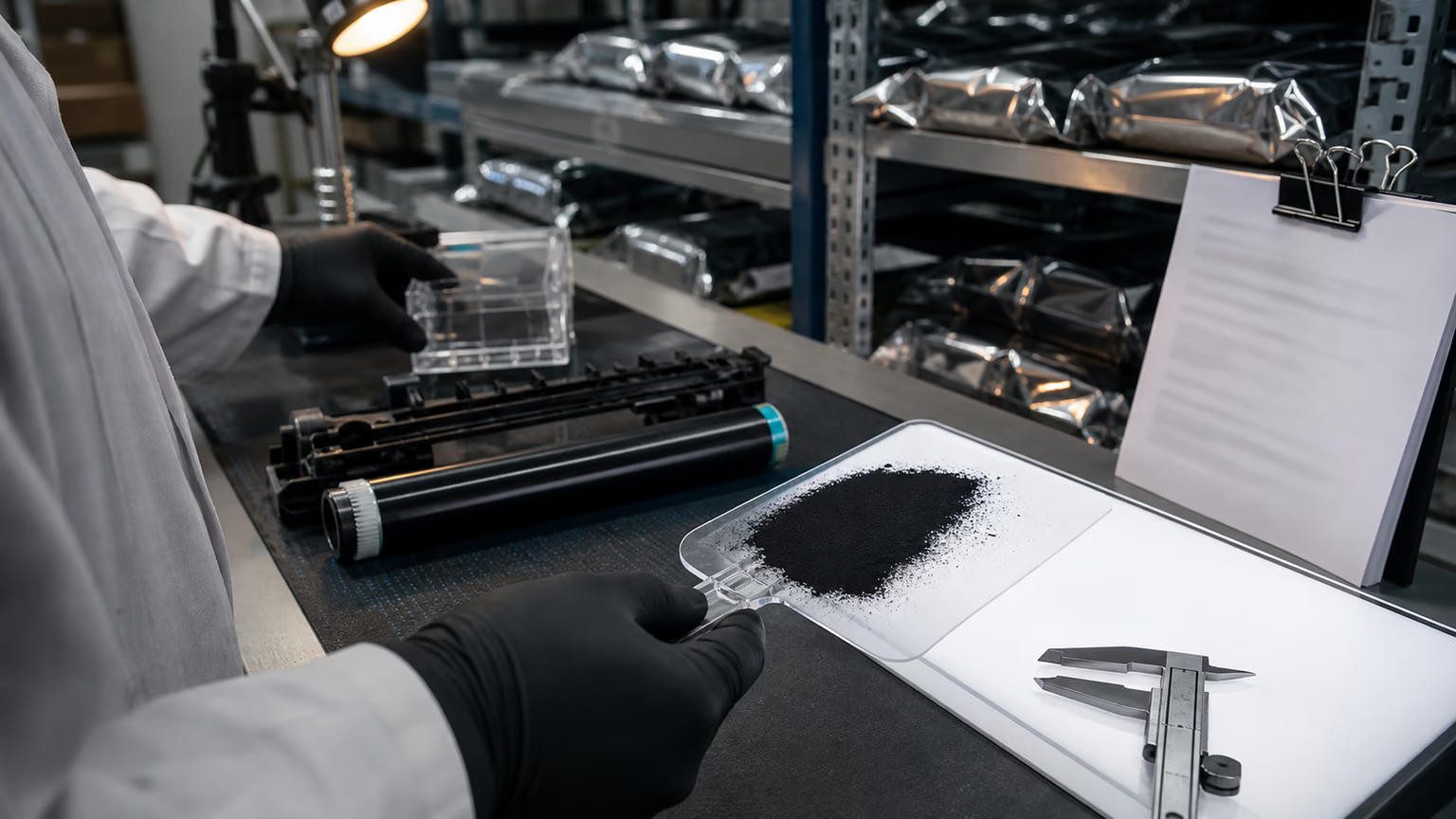
Measure the moisture content of the toner powder using a Karl Fischer titrator or a portable moisture analyzer.
If the moisture exceeds typical specifications (usually below 1.5% for most toners), you have proof of storage failure.
In such cases, quarantine the entire batch and investigate root cause — was it a temporary sensor failure, a loading dock procedure lapse, or a supplier quality issue?
The Bottom Line for Distributors and MPS Providers
Investing in humidity-controlled warehousing isn’t overhead — it’s a risk management strategy that pays for itself through fewer returns, reduced service dispatches, and stronger customer retention.
Consider the costs: a single technician call-out for a ghosting complaint can cost hundreds of dollars, not to mention the hidden cost of lost trust.
When you multiply that across a fleet of printers under SLA, the financial exposure is enormous.
Proper storage eliminates the root cause of a significant fraction of these calls.
Moreover, as the compatible toner market grows, distributors who can demonstrate rigorous environmental control gain a clear edge.
Procurement teams and MPS providers are increasingly auditing upstream supply chain conditions.
Include your humidity monitoring data in sales presentations; show that you treat toner cartridges as sensitive components, not generic commodities.
This positions you as a quality-first partner, not just a reseller.
When evaluating new suppliers, use a checklist that goes beyond product specs.
Demand evidence of climate-controlled storage areas, request batch-specific humidity logs, and verify that their packaging includes active desiccant.
A supplier unwilling to share environmental data is a red flag.
The question isn’t whether you can afford humidity control — it’s whether you can afford the reputation damage of not having it.
Actionable Checklist: Start Controlling Humidity Tomorrow
Improving your toner storage environment doesn’t require a complete warehouse overhaul. Here’s a practical, phased approach:
- Quick wins: Seal gaps around doors and dock levellers. Install portable desiccant dehumidifiers in toner storage zones. Add humidity indicator cards inside sealed cartons.
- Pilot program: Choose a single aisle or high-value inventory batch. Install a data logger with cloud connectivity, set alarm thresholds at 45% and 55% RH, and monitor continuously for one month. Document any excursions and refine your procedures.
- Staff training: Teach warehouse teams to recognize moisture-damaged packaging, use hygrometers, and understand the importance of keeping doors closed. Simple behaviors like closing strip curtains immediately after forklift passage dramatically reduce humidity ingress.
- Supplier inquiry template: Develop a short questionnaire for your toner cartridge suppliers. Include questions such as: Do you store finished goods in climate-controlled conditions? Can you provide humidity logs for the last three batches? What is your protocol if an environmental excursion occurs during storage? Evaluate responses critically.
- Escalation plan: Create a documented procedure for handling suspected moisture events. Who decides to quarantine? How is testing performed? When do you notify customers? A pre-agreed plan prevents delays and confusion.
FAQ
What is the ideal humidity range for storing toner cartridges?
The recommended range is 35–55% relative humidity with a temperature of 20–25°C. For compatible toners or in humid climates, aim for the lower end, around 35–45% RH, to maintain a safety margin. Consistency is key; avoid rapid fluctuations that cause condensation.
How does high humidity affect print quality in laser printers?
High humidity causes toner particles to absorb moisture, which leads to clumping, poor flow, and altered electrostatic charging. The visible results include mottled prints, background haze, ghosting of previous images, and uneven density. In severe cases, moisture can corrode cartridge contacts, causing intermittent failures.
Can I revive toner cartridges that have been exposed to moisture?
Generally, no. Once toner powder absorbs moisture, its flow and charging properties are permanently altered. Drying the cartridge may restore its appearance, but the electrostatic damage is usually irreversible. It is safer to quarantine and replace affected units to avoid printer damage and service calls.
Do compatible toner cartridges need stricter humidity control than OEM?
Often, yes. Many compatible toner formulations are more hygroscopic than OEM counterparts. Additionally, compatible manufacturing may not include the same level of hydrophobic additives. Therefore, tighter humidity control (ideally 35–45% RH) is advisable to ensure consistent performance and shelf life.
How often should I calibrate warehouse humidity sensors?
Sensors should be calibrated every six months against a certified reference standard. In high-precision environments, quarterly checks are preferable. Document all calibrations and set automated reminders; a drifting sensor can give a false sense of security and mask dangerous conditions.
Conclusion
Humidity isn’t just a weather metric — it’s a direct threat to toner performance and your business reputation.
By implementing the real rules covered in this guide — from zoned storage and desiccant dehumidification to continuous monitoring and staff training — you turn a hidden risk into a marketable strength.
Start with the quick wins today: place indicator cards, seal loading docks, and question your suppliers.
The distributors who treat environmental control as a core quality process, not an afterthought, are the ones who will keep customer trust — and contracts — intact through every season.