The Hidden Trade-Off B2B Buyers Miss
When procurement managers evaluate toner cartridges, the first instinct is often to compare price per unit.
A remanufactured cartridge might appear to offer immediate savings over a new-build alternative, but this surface-level cost analysis conceals a much deeper set of operational and service-related expenses.
For B2B distributors, managed print service providers, and fleet managers, the decision between remanufactured and new-build cartridges is not a simple question of cheap versus expensive.
It is a strategic sourcing choice that directly affects uptime, customer satisfaction, and long-term profitability.
The real metric that matters is risk-adjusted total cost.
This means looking beyond the purchase price and factoring in failure rates, service intervention frequency, reprint waste, and the downstream impact of cartridge-related issues on service level agreements.
When a cartridge fails prematurely in a high-visibility client environment, the cost of a service call and reputational damage can quickly erode any initial savings.
The challenge is compounded by the fact that not all remanufactured cartridges are created equal.
Some undergo a full rebuild with premium components, while others are simply refilled and repackaged.
The variation in process rigor directly impacts failure rates and, consequently, the true cost of ownership.
What Actually Makes a Cartridge Remanufactured vs. New-Build?
Before assessing benefits and risks, it is essential to understand the fundamental manufacturing differences.
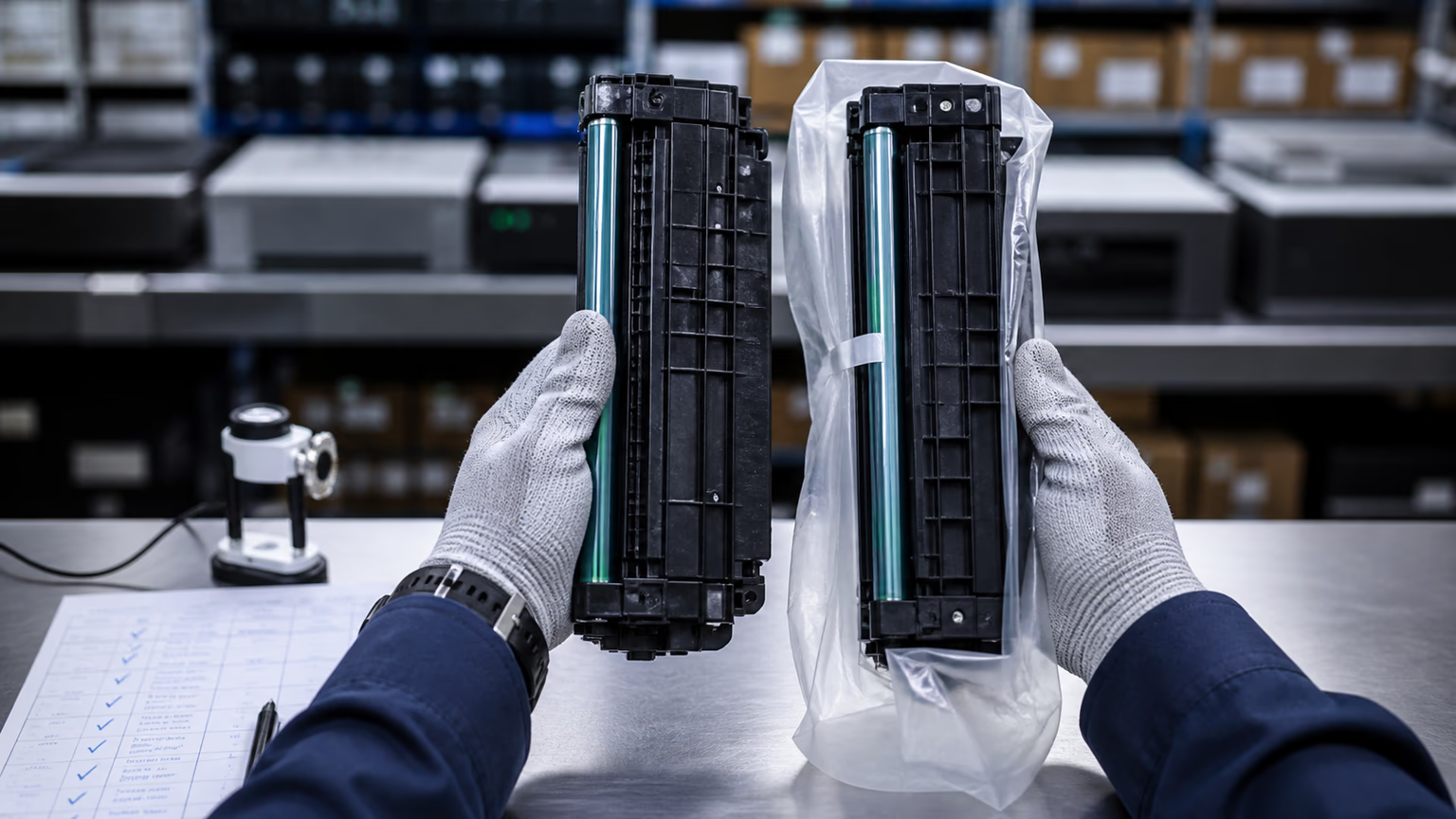
A new-build cartridge is produced entirely from new components on dedicated production lines.
Every part—from the toner powder and OPC drum to the wiper blade and chip—is manufactured to meet original equipment specifications.
There is no prior usage history, which provides inherent consistency in materials and performance.
These cartridges are designed to work seamlessly with specific printer models, offering predictable yields and reliable chip communication.
In contrast, a remanufactured cartridge begins its life as a used core.
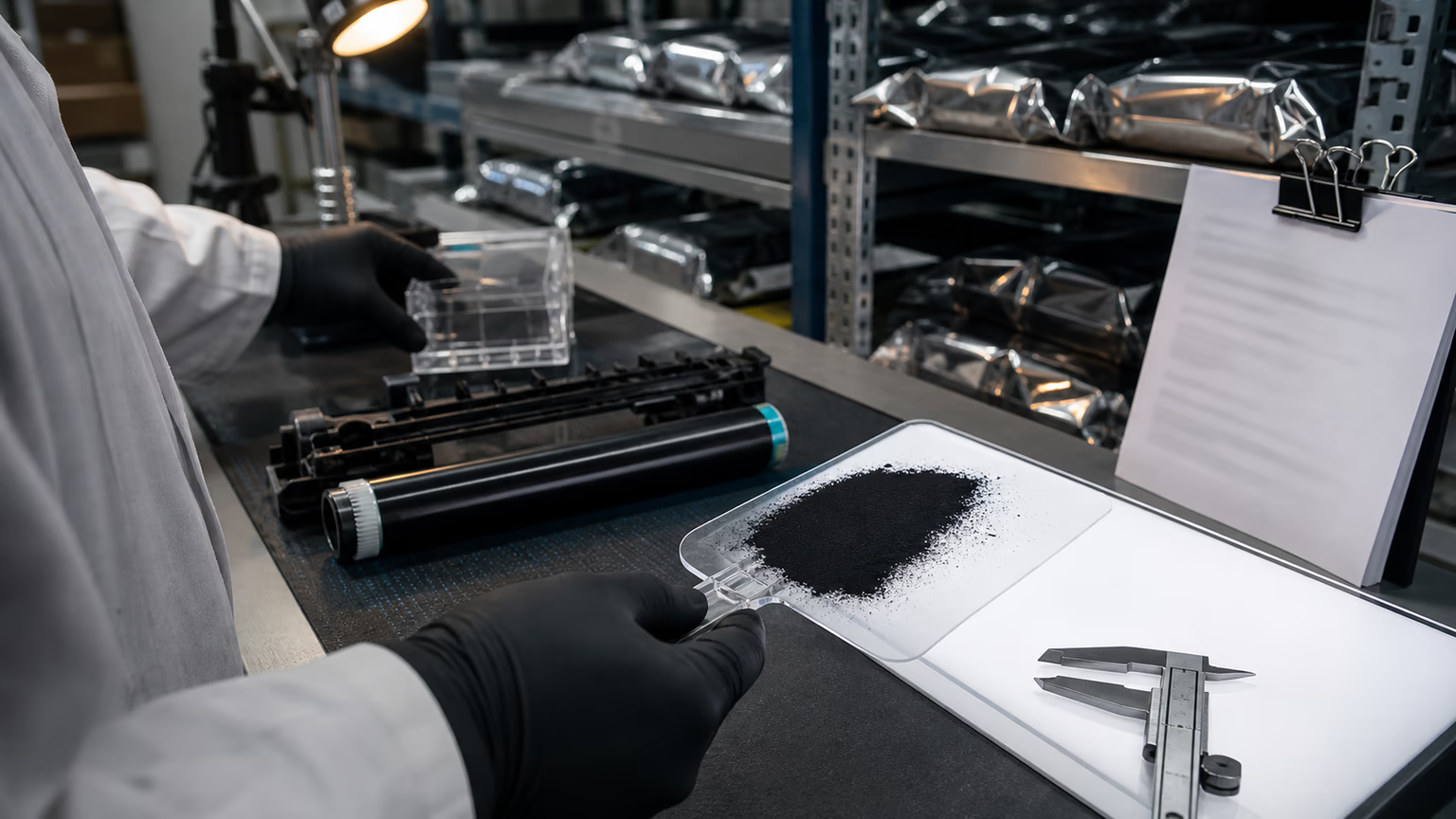
The remanufacturing process involves collecting, disassembling, cleaning, inspecting, and rebuilding each cartridge, replacing worn or critical parts as needed.
However, the depth of this process varies significantly among suppliers.
Some operators perform a thorough disassembly, replace the drum, wiper blade, and other key components, and fill with precisely matched toner.
Others use a less rigorous approach—often referred to as 'drill-and-fill'—where only the toner is refilled without replacing wear items.
This variability is why the term 'remanufactured' alone is insufficient for making a sourcing decision; buyers must demand process documentation and evidence of quality controls.
Certifications like ISO yield testing, when available, can serve as a starting point, but they do not replace a deep audit of a supplier's actual production line.
The B2B Benefit Map: When Each Option Wins
Neither cartridge type is universally superior; each fits specific operational profiles.
Remanufactured cartridges can deliver a lower cost per page, which is attractive for high-volume monochrome printing where output is for internal use and slight variations in print density are tolerable.
They also support sustainability goals by reducing waste and conserving resources, an increasingly important factor in ESG reporting for large enterprises and public-sector contracts.
For organizations with aggressive green procurement targets, remanufactured cartridges offer a tangible way to demonstrate circular economy principles.
New-build cartridges offer performance predictability that is critical in color-intensive environments, such as marketing agencies, graphic design firms, or any setting where brand colors must be reproduced accurately.
They also tend to show lower initial failure rates and more reliable chip communication with the printer, minimizing service interruptions.
In fleets where uptime is paramount and SLA penalties are steep, the premium for new-build cartridges may be justified by the reduced risk of unscheduled maintenance.
Additionally, new-build cartridges often come with faster technical support from the supplier, as the production lineage is fully traceable.
Supply flexibility is another dimension.
Remanufactured cartridges often provide coverage for older printer models that are no longer supported by the device manufacturer’s original supplies, extending the service life of legacy equipment.
New-build cartridges, on the other hand, are designed for current models and are less likely to cause firmware compatibility issues.
This legacy support can be a decisive factor for service providers managing diverse fleets with mixed-generation hardware.
Risk Reality Check: Quality, Compatibility, and Service Impact
The hidden costs of remanufactured cartridges emerge when quality control is lacking.
Common failure modes include toner leakage due to inadequate seal replacement, which can contaminate the printer interior and damage the fuser assembly.
Image defects such as streaking, backgrounding, or repetitive marks often stem from worn drums or substandard wiper blades that were not replaced during remanufacturing.
Inconsistent page yields—caused by inaccurate chip resetting or toner fill levels—lead to unexpected stockouts or an excess of cartridges that underperform.
These issues not only frustrate end users but also increase the administrative burden of returns and warranty claims.
Compatibility poses another significant risk.
Printer manufacturers routinely release firmware updates that can block cartridges with non-original chips, rendering a batch unusable overnight.
If a supplier does not have a robust chip update and re-qualification program, distributors and service providers can face sudden, widespread cartridge rejection in their installed fleet.
This not only causes immediate logistical chaos but also undermines customer trust in the service provider’s ability to maintain uptime.
A single firmware-triggered incompatibility event can force emergency purchases at premium prices and strain distributor relationships.
To quantify the service impact, consider a scenario where a $2 cheaper cartridge causes a single extra service call.
The direct cost of the technician visit, plus the administrative overhead, parts, and potential SLA penalty, can far exceed the initial per-cartridge savings.
A thorough risk assessment should therefore include a pilot program that tracks every error code and service intervention linked to cartridge changes.
By prototyping risk in a controlled subset of your own fleet, you can establish realistic failure-rate thresholds and make an informed sourcing decision based on local data rather than supplier promises.
The B2B Procurement Decision Framework
A systematic approach to cartridge selection begins with classifying your printer fleet into categories based on usage and criticality.
Transactional monochrome printers in back offices or warehouses may tolerate a higher failure rate than a color multifunction device in a corporate lobby.
Workgroup color printers used for client-facing presentations require consistent color fidelity, while legacy devices may have no new-build option available.
For each segment, estimate the cost of a print-quality failure in terms of client perception and SLA penalties.
Once the fleet is segmented, weight the decision factors: price sensitivity, acceptable failure rate, service response capability, and customer SLA severity.
For example, a law firm’s central MFP that prints confidential documents cannot afford any quality deviations, so new-build cartridges might be mandatory.
In contrast, a shipping label printer in a logistics center—where readability trumps aesthetics—could be an ideal candidate for a qualified remanufactured supply.
Developing an internal matrix with these criteria turns guesswork into a repeatable, defensible sourcing policy.
The matrix should be reviewed semiannually, as printer firmware updates and supplier performance can shift the risk profile.
Supplier Qualification: Separating Signal from Noise
Given the wide range of remanufacturing quality, supplier evaluation cannot rely on marketing claims alone.
Request a statistical process control report that shows yield and defect data across multiple production batches.
A credible supplier will have documented ISO yield testing, transparent defect rate trending, and component-level traceability—including the source and grade of the toner, OPC drum, and wiper blade.
They should also provide a clear chip firmware update guarantee and a track record of re-qualifying cartridges promptly after OEM firmware releases.
Red flags include vague yield claims without test methodology, no policy for handling firmware updates, and an unwillingness to share batch defect data.
During an on-site or remote audit, observe whether the supplier fully disassembles cartridges or merely drills and fills.
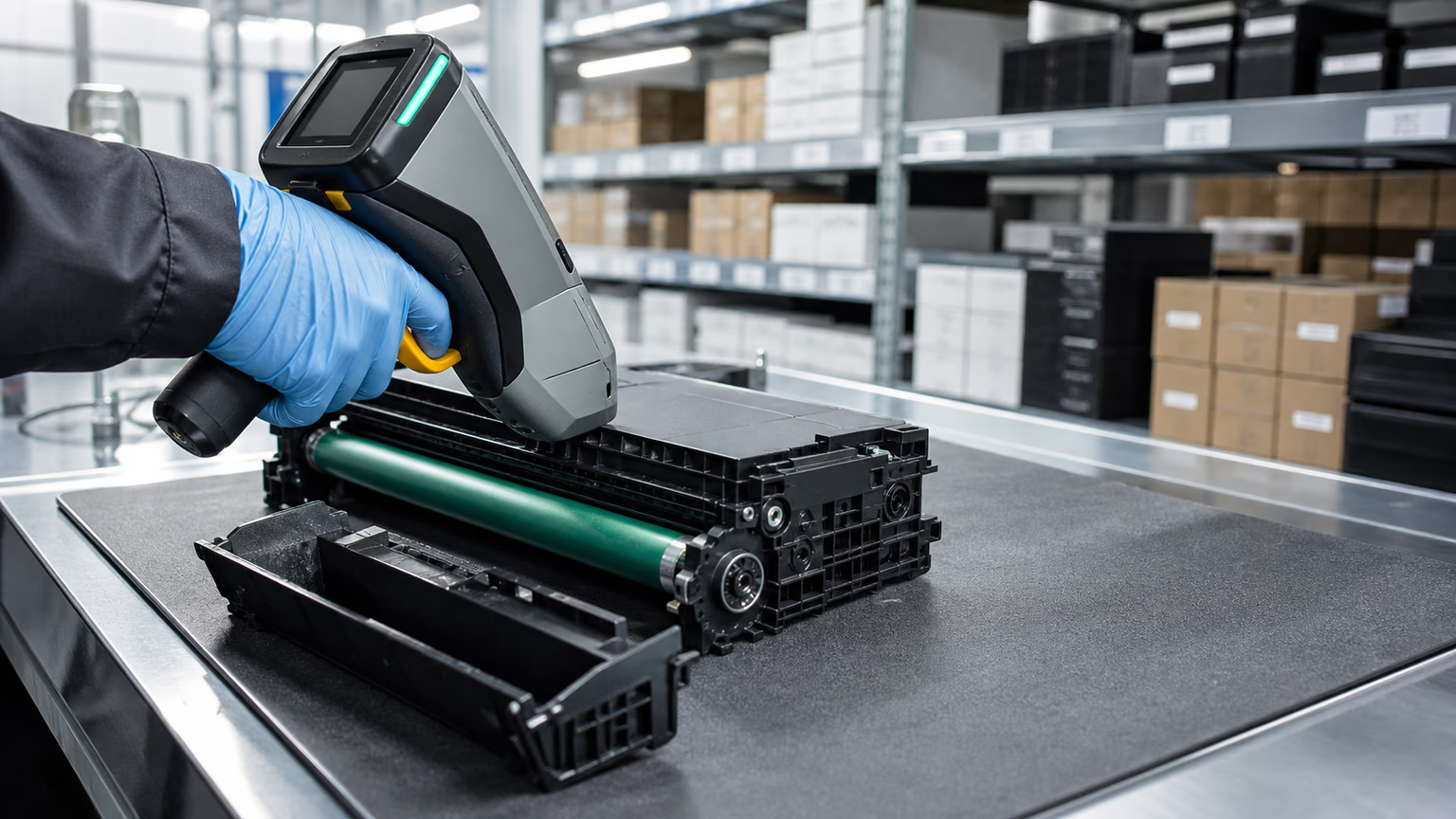
Look for evidence of thorough cleaning, automated testing of electrical contacts, and systematic chip verification.
A balanced supplier scorecard should include quality consistency, supply assurance (lead-time predictability and safety stock), total cost, and sustainability metrics.
Third-party audit capability can further validate process controls, providing confidence that the remanufacturing operation is stable and scalable.
Operational Playbook: Pilot Testing and Rollout
Introducing a new cartridge type should never be a fleet-wide switch without validation.
Design a controlled pilot with a statistically meaningful sample—typically 30 to 50 cartridges—split between test and control groups on identical printer models.
Define clear pass/fail criteria: maximum allowable yield deviation, number of error codes per thousand pages, and acceptable visual print quality scores from blind comparisons.
The pilot duration should span at least one full cartridge lifecycle to capture end-of-life behavior.
During the pilot, track every relevant metric: pages printed, low-toner warnings, service calls, and any image quality complaints.
After the trial period, compare the total cost of operation including cartridge cost, failure-related interventions, and reprint waste.
Only after the pilot confirms acceptable performance should you proceed to a phased rollout, starting with the least critical printers and expanding as confidence builds.
Establish a quarterly business review with the supplier to monitor ongoing performance against the agreed benchmarks, and include a clause for rapid exit if quality deviates beyond tolerance.
Future-Proofing the Cartridge Supply Chain
The remanufactured vs. new-build equation is not static.
Printer manufacturers are increasingly using firmware and chip security measures to limit the use of non-original cartridges.
This trend demands that suppliers maintain agile chip solutions and provide rapid re-qualification after firmware updates.
Additionally, sustainability regulations may tilt the balance in favor of remanufactured cartridges for public-sector and green procurement contracts, potentially creating new demand that requires equally reliable supply.
Buyers should monitor evolving ‘right to repair’ legislation, which could influence OEM lockout practices.
As the industry shifts toward managed print services and subscription models, where revenue is tied to uptime and predictable costs, the impact of cartridge reliability on service margins becomes even more pronounced.
A flexible dual-supply strategy—leveraging remanufactured cartridges where the risk is low and new-build cartridges where stability is non-negotiable—positions B2B buyers to adapt to evolving market conditions while protecting their service reputation.
Building relationships with both types of suppliers, each managed against a clear quality scorecard, creates a resilient supply chain that can respond to firmware changes, regulatory shifts, and changing customer expectations.
FAQ
What is the difference between a remanufactured and a new-build toner cartridge?
A new-build cartridge is manufactured entirely from new components and materials, while a remanufactured cartridge is a used core that has been cleaned, inspected, and had worn parts replaced. The quality of a remanufactured cartridge depends heavily on the supplier's process rigor and component selection.
Will using remanufactured cartridges void my printer warranty?
In many regions, using a remanufactured cartridge does not automatically void the printer warranty; however, damage caused by the cartridge may not be covered. It is important to review the printer manufacturer’s warranty terms and to work with a supplier that provides strong liability coverage for cartridge-induced printer damage.
How can I be sure a remanufactured cartridge won’t damage my clients’ printers?
Mitigate this risk by qualifying suppliers through documented quality controls, batch yield data, and a pilot test in your own environment. A reliable supplier will have a low defect rate, use matched toner formulations, and replace critical wear components like the drum and wiper blade.
What should I look for in a B2B remanufactured toner cartridge supplier?
Look for transparency in defect rate reporting, ISO-based yield testing, a clear chip update policy, and component traceability. Assess their supply chain resilience, including lead-time predictability and safety stock commitments. An on-site or remote process audit is often the best way to verify their operations.
How do I calculate the true total cost difference between the two options?
Total cost of ownership goes beyond per-unit price. It includes failure-related service calls, reprint costs, inventory holding expenses, and any SLA penalties incurred due to downtime. A controlled pilot that captures all these variables provides the most accurate comparison for your specific fleet.
Conclusion
The choice between remanufactured and new-build toner cartridges is not a one-size-fits-all decision.
It requires a clear-headed assessment of your printer fleet’s operational profile, your clients’ service expectations, and your own risk tolerance.
By applying a disciplined evaluation framework—segmenting the fleet, qualifying suppliers rigorously, and validating performance through a structured pilot—you can build a cartridge supply chain that balances cost, quality, and reliability.
In an industry where print uptime directly correlates with customer trust, that balance is the foundation of long-term success.