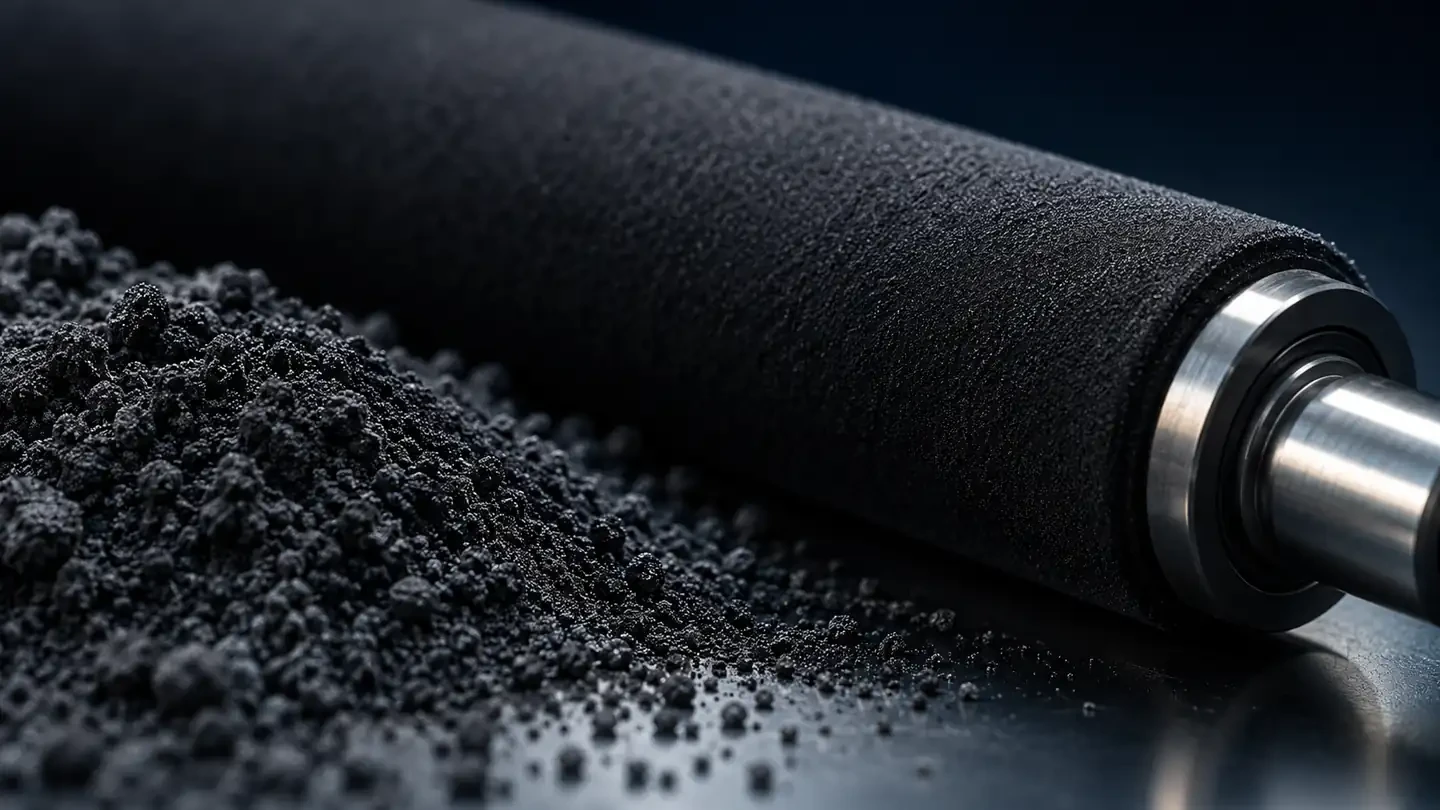
Toner in one sentence: toner is a very fine, dry plastic powder that laser printers and copiers place on paper with static electricity and then melt into it with heat to form text and images.
What is toner?
Inkjet printers spray liquid ink. Laser printers and most office copiers do something different: they build the page from tiny particles of colored plastic. Each particle is only a few micrometers across, finer than flour, so a single page uses millions of them. The printer controls exactly where those particles land using electrical charges, then fixes them permanently with a heated roller called the fuser.
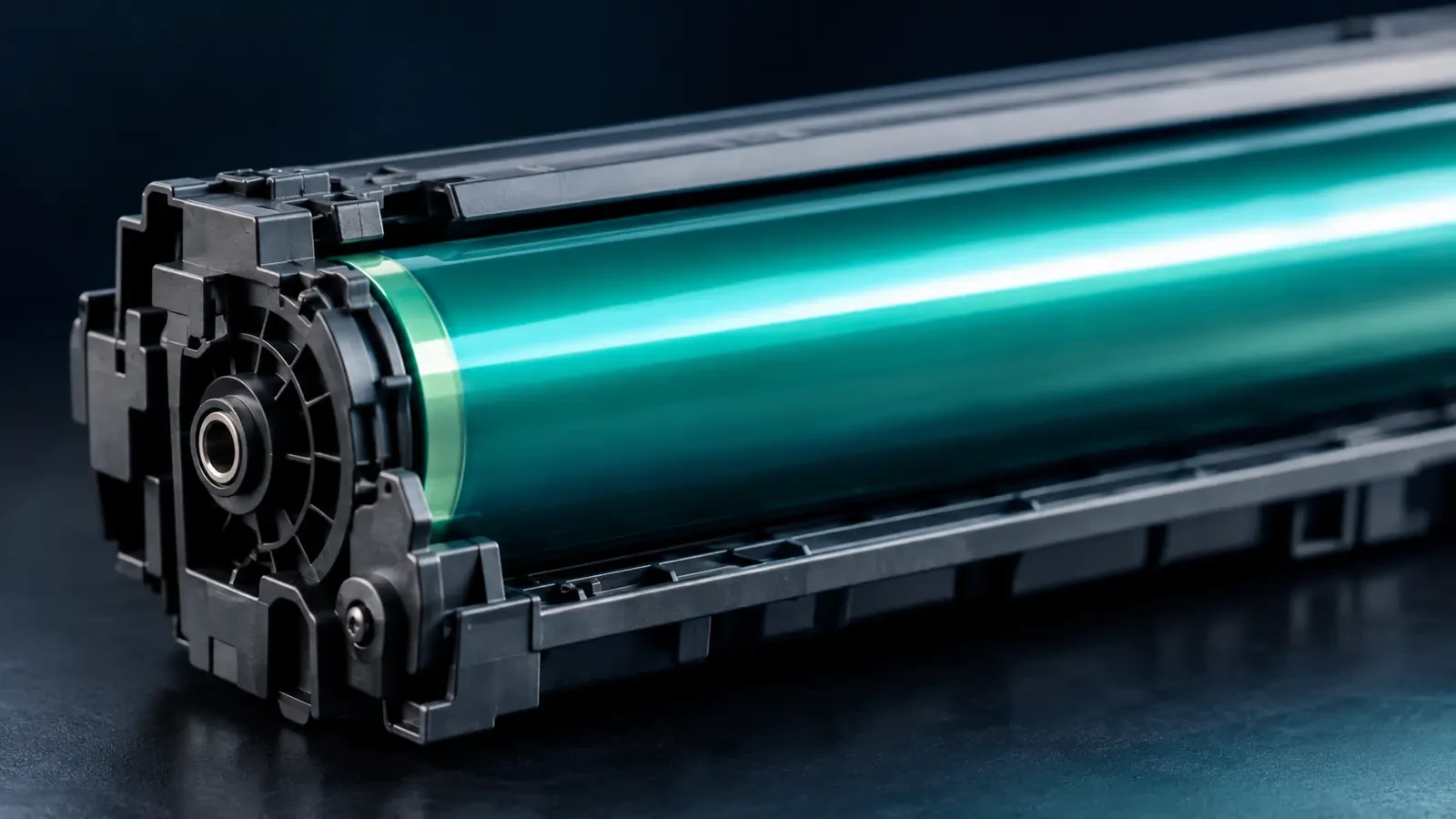
Toner is sold in a toner cartridge, the container you install in the printer, or in a toner bottle that feeds a copier. When people say “the toner is empty”, they usually mean the cartridge.
What is toner made of?
Toner looks like simple black or colored dust, but each particle is engineered. A typical toner contains:
What toner is made of
| Ingredient | What it does |
|---|---|
| Resin (polymer) | The main body of each particle. It melts in the fuser and binds the color to the paper. Common types are styrene-acrylic and polyester. |
| Colorant | Carbon black for black toner; cyan, magenta and yellow pigments for color toner. |
| Charge control agent | Helps each particle take on the right electrical charge so it lands only where the image should be. |
| Wax | Helps the toner release cleanly from the fuser instead of sticking to it. |
| Surface additives | Very fine particles such as silica on the outside that keep toner flowing freely and stabilize its charge. |
| Magnetic material (some toners) | Iron oxide in magnetic toner lets a magnetic roller carry the toner in single-component systems. |
The balance of these ingredients is what makes a toner suitable for a particular printer. Resin type and wax content set the melting range, which must match the fuser. The charge control agent and surface additives set how strongly each particle is charged, which decides whether toner lands cleanly on the image or drifts onto the background.
Particle size and shape
Conventional toner is made by melting the ingredients together and grinding the result into irregular particles. Chemical toner is grown particle by particle, which gives smaller, more uniform and rounder particles. Smaller, more uniform particles give sharper text and finer gradients, and can reduce the amount of toner used per page. Both types are widely used; what matters is that the toner matches the printer.
How laser printing turns toner into text: 6 steps
Every page goes through the same short cycle inside the printer:
- Charge: the drum, a light-sensitive cylinder, receives an even electrical charge.
- Expose: a laser or row of LEDs “draws” the page by discharging the areas that should print.
- Develop: charged toner is brought close to the drum and sticks only to the drawn areas.
- Transfer: the paper, given the opposite charge, pulls the toner image off the drum.
- Fuse: the fuser's heat and pressure melt the resin so the toner bonds to the paper fibers.
- Clean: a blade wipes leftover toner from the drum before the next turn.
That is why a freshly printed page is warm, and why toner printing does not smudge when wet the way some inks do. If toner does smear after printing, the fusing step is usually the problem; see toner smearing after fusing.
Toner vs toner cartridge vs drum
These three words are often mixed up, which leads to buying the wrong part.
Toner vs toner cartridge vs drum
| Term | What it is | How often you replace it |
|---|---|---|
| Toner | The dry powder itself | When the cartridge runs empty |
| Toner cartridge | The container that holds and meters the toner; may also hold the drum and a chip | Every time it runs out (or it is refilled) |
| Drum (imaging unit) | The light-sensitive cylinder that forms the image in toner | With each all-in-one cartridge, or after several toner cartridges if separate |
| Toner bottle | A container that feeds toner into a copier's developer unit | When empty; common in office copiers |
On many desktop printers the toner and drum are combined in one cartridge. On others, including many Brother, Xerox and Konica Minolta models, the drum is a separate unit that lasts through several toner cartridges. Kyocera printers typically use a long-life drum, so users mainly replace toner.
Monochrome, color, magnetic and non-magnetic toner
- Monochrome (black) toner uses carbon black. Most office printing is black only.
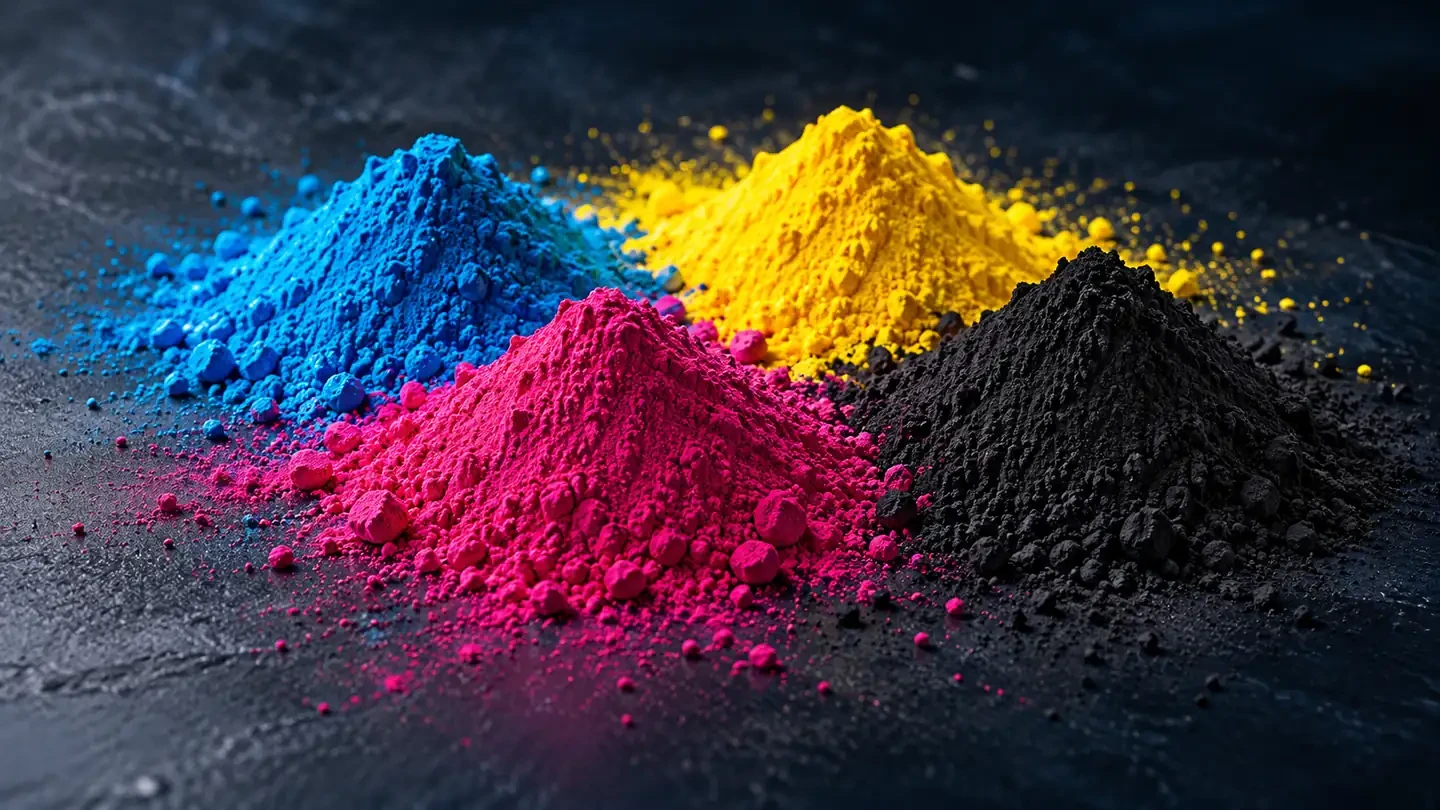
- Color toner comes in four colors, cyan, magenta, yellow and black (CMYK), which the printer layers to create other colors. Color toner must also be transparent enough for the layers to mix.
- Magnetic toner contains iron oxide and is carried by a magnetic roller. It is common in black desktop printers with single-component developer systems.
- Non-magnetic toner is moved by electrical charge alone or together with a separate developer (carrier) in two-component systems used by many copiers.
Because the developer system differs between printers, a magnetic toner cannot simply be poured into a cartridge designed for non-magnetic toner, and the other way round.
Is toner safe?
Inside a sealed cartridge and under normal printing, toner is considered low risk. The sensible precautions are the same as for any fine powder:
- Do not open cartridges or shake them hard enough to release dust.
- Clean spills with a damp cloth or a vacuum designed for toner. A household vacuum can let fine toner through its filter and is a fire risk with fine dust.
- Wash toner off skin and clothes with cold water. Warm water can make it stick.
- Read the safety data sheet (SDS) for the specific toner if you handle large quantities.
Used cartridges should be recycled rather than thrown away; most can be returned through manufacturer programs or recycling services.
Does toner go bad?
Toner is stable, but it is sensitive to moisture and heat. Damp toner clumps and charges poorly, giving gray background and patchy print. Heat can make particles stick together. Store cartridges sealed, flat, away from windows and heaters, and let them reach room temperature before installing. Our article on humidity-controlled storage for toner explains the conditions that matter.
How to choose toner for your printer
- Find the cartridge code, not just the printer name. It is printed on the old cartridge and in the printer's supplies menu. Some cartridges have different codes in different regions.
- Decide between OEM and compatible. OEM cartridges come from the printer brand. Compatible cartridges are made by other manufacturers to fit the same printers, usually at a lower cost per page.
- Compare cost per page, not price per cartridge. Divide the price by the rated page yield.
- Check the drum design. If your printer uses a separate drum unit, budget for it separately.
- Buy from a source that tests its toner. Consistent particle size and charge are what keep pages clean from the first sheet to the last.
You can find compatible toner cartridges for Canon, Xerox, Ricoh, Kyocera, Konica Minolta, Sharp and Toshiba printers in the UNICO catalog, or start from a brand page such as Xerox or Ricoh. Resellers and service companies can request samples through our wholesale toner supply page.
FAQ
Is toner the same as ink?
No. Ink is a liquid used by inkjet printers and dries by soaking into the paper. Toner is a dry powder used by laser printers and copiers; it is placed on the paper by static electricity and melted into it by heat. The two are not interchangeable.
What is laser printer toner made of?
Mostly plastic resin, with a colorant (carbon black or color pigments), a charge control agent, wax and very fine surface additives such as silica. Some black toners also contain iron oxide so they can be carried by a magnetic roller. Each toner is formulated for a particular printer engine.
Does toner expire?
Toner does not spoil like food, but it can degrade. Moisture and heat can make it clump or lose its ability to hold a charge, which shows up as gray background or uneven print. Many manufacturers suggest using cartridges within about two years of manufacture. Unopened cartridges stored cool and dry last longest.
Is printer toner toxic?
Under normal use, toner sealed in a cartridge is considered low risk. As with any fine dust, you should avoid breathing it in or spreading it: clean spills with a damp cloth or a toner vacuum, not a household vacuum, and wash it off skin with cold water. The safety data sheet for each toner lists its specific handling advice.
Why are toner cartridges different for each printer?
Each printer engine has its own cartridge shape, chip and electrical contacts, and its own fuser temperature and developer design. Toner is formulated to match those conditions. That is why you need a cartridge made for your exact printer model or cartridge code.