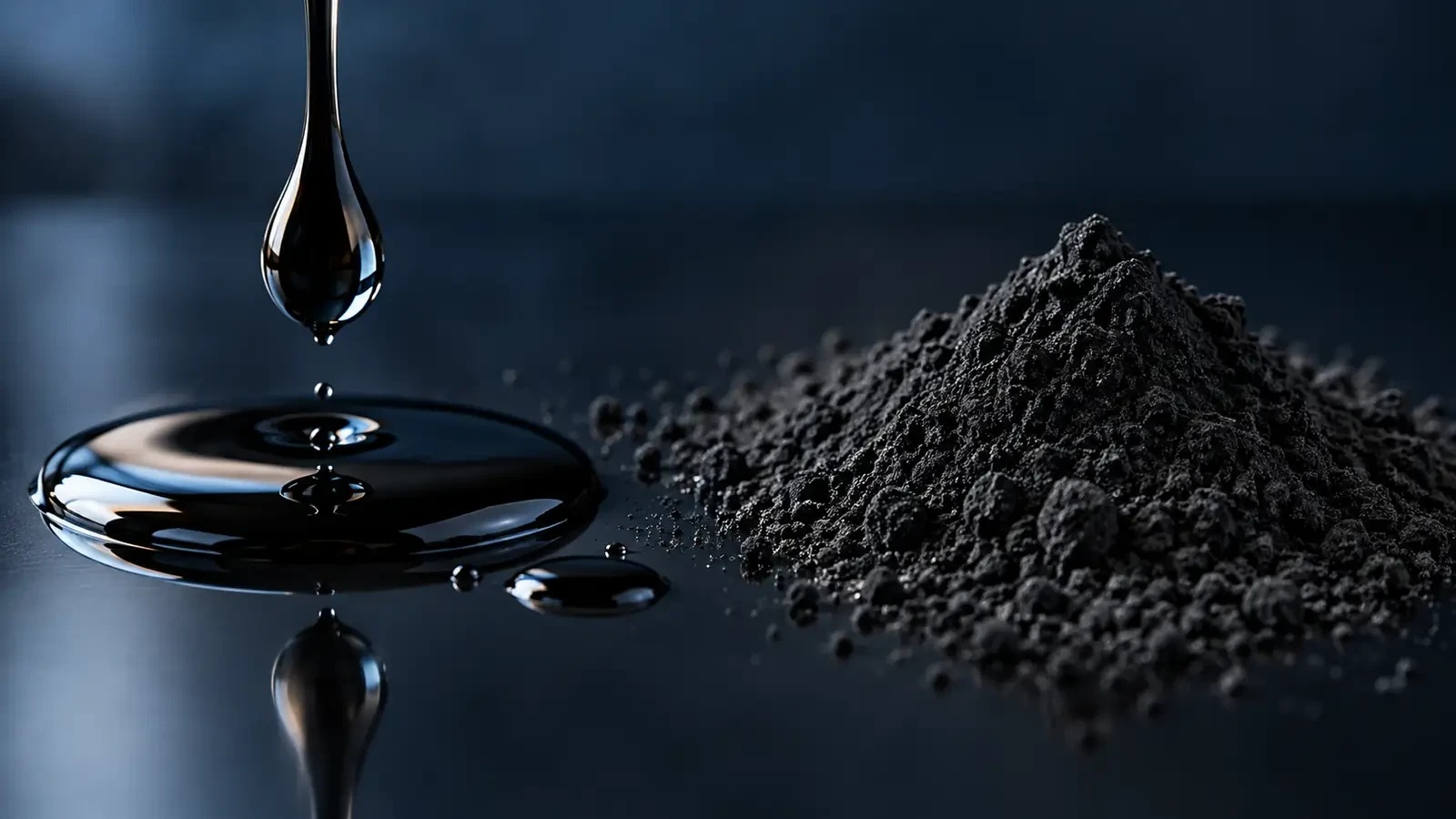
Short answer: ink is a liquid used by inkjet printers; toner is a dry powder used by laser printers and copiers. Ink is sprayed onto the paper in tiny droplets and soaks in. Toner is placed on the paper by static electricity and then melted onto it with heat. Ink is better for photos and low-volume home printing; toner is faster, cheaper per page for documents, and does not dry out.
Ink vs toner in one table
| Ink | Toner | |
|---|---|---|
| What it is | Liquid dyes or pigments in water-based fluid | Dry powder of resin, pigment and additives |
| Printer type | Inkjet | Laser printers and office copiers |
| How it reaches paper | Tiny droplets sprayed by a print head | Placed by static electricity, then melted on with heat |
| Strengths | Photos, smooth color gradients, glossy photo paper | Sharp text, speed, low cost per page, water resistance |
| Typical cost per page | Higher, especially for text-heavy volume | Lower, especially for black text |
| Idle time | Can dry in nozzles if unused for weeks | Stable for months; no nozzles to clog |
| Best for | Home photos, low volume, mixed media | Offices, documents, medium and high volume |
How inkjet and laser printing work
Inkjet: droplets
An inkjet print head has hundreds or thousands of microscopic nozzles. As the head moves across the page, it fires droplets of ink, either by heating a tiny volume of ink until a bubble pushes a drop out, or by flexing a piezoelectric element. The ink soaks into the paper and dries. Because colors are mixed as fine droplets, inkjets are very good at smooth photographic gradients.
Laser: static electricity and heat
A laser printer works more like a photocopier. A light-sensitive drum is charged, a laser or LED writes the page onto it as an electrical image, and charged toner sticks to that image. The toner is transferred to the paper and passed through a hot fuser that melts it into the fibers. The whole page is built in one pass, which is why laser printers are fast. Our guide to how the OPC drum interacts with toner goes deeper into this process.
Ink cartridge vs toner cartridge: what is the difference?
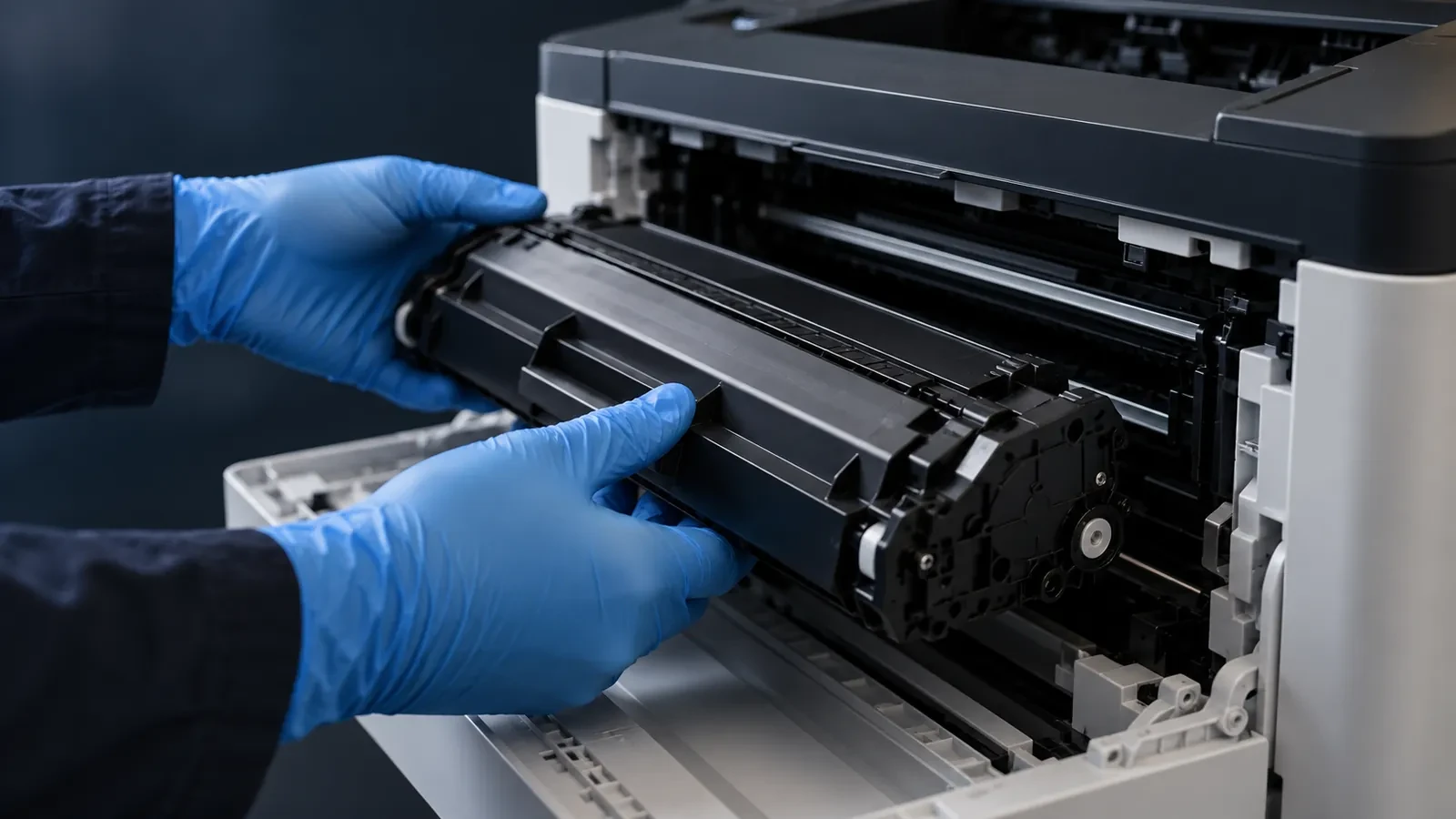
Both are called “cartridges”, which causes confusion. An ink cartridge is a small reservoir of liquid ink, sometimes with the print head built in. A toner cartridge is a larger unit holding dry toner, often together with the developer roller, the drum and a waste chamber. Toner cartridges are bigger and more expensive to buy, but they print many more pages. They are not interchangeable: an ink cartridge cannot go in a laser printer, and a toner cartridge cannot go in an inkjet.
When people search for “toner vs cartridge”, they usually mean one of two things: toner (the powder) versus the toner cartridge (the container), or a toner cartridge versus an ink cartridge. In daily use, “toner” and “toner cartridge” mean the same thing: the part you replace in a laser printer.
Cost per page compared (example)
The fair way to compare is cost per page: the price of the supply divided by the number of pages it prints under the standard test.
Cost per page compared (example)
| Supply | Price (example) | Rated yield (example) | Cost per page |
|---|---|---|---|
| Inkjet black cartridge | $25 | 400 pages | 6.3 ¢ |
| Inkjet with refillable ink tanks | $15 bottle | 4,000 pages | 0.4 ¢ |
| Laser OEM toner, high yield | $110 | 6,000 pages | 1.8 ¢ |
| Laser compatible toner, high yield | $40 | 6,000 pages | 0.7 ¢ |
Divide price by the rated yield measured with ISO/IEC standard pages. Your own cost depends on coverage and how often you print.
Three patterns hold in most markets: standard inkjet cartridges are the most expensive per page; refillable ink tank printers are cheap per page but slower; and laser toner, especially compatible high-yield toner, gives a low cost per page together with speed and reliability for documents. For a complete method that includes drums and service, see how to calculate the true cost of toner.
Print quality: text, photos, durability
- Text: laser printing produces crisp, solid black text with sharp edges, even on plain paper. Ink can spread slightly into the fibers, especially on cheaper paper.
- Photos: inkjets win for photos on photo paper, with smoother gradients and a wider range of colors.
- Durability: toner is fused onto the paper and does not run when wet. Many inks, especially dye-based ones, can smudge with water or highlighters.
- Special media: inkjets handle glossy photo paper and some craft media well; lasers handle labels and heavier office stock well, as long as the media is rated for laser heat.
Speed and volume
Laser printers are built for volume. They print a full page per pass, reach high speeds even on entry models, and tolerate long runs. Inkjets print line by line and slow down considerably in high-quality modes. For an office that prints hundreds or thousands of pages a month, a laser printer is almost always the practical choice.
Shelf life and drying
Ink is a liquid, so it can evaporate and dry in the nozzles. An inkjet that sits unused for a few weeks may need cleaning cycles, which consume ink, or may print with missing lines. Toner has no nozzles and does not dry out. A toner cartridge can sit in a printer for months and still print normally, as long as it is kept away from heat and humidity. Unopened supplies of both types last longest when stored sealed, flat and cool.
Color printing in the office: laser or inkjet?
For business color, such as charts, presentations, logos on invoices and simple flyers, a color laser printer is usually the better tool. Color toner prints quickly, stays sharp on plain paper and does not smudge under a highlighter.
Inkjets still lead for photographic work and specialty media, but for everyday office color the gap in quality is small and the gap in running cost and speed favors toner. If you mainly print black text with occasional color, a mono laser plus a small color device is often cheaper than one large color machine.
Environmental impact
Both ink and toner cartridges should be returned for recycling rather than thrown away. Toner cartridges are larger, but because they print many more pages, the amount of plastic per printed page is usually lower. Laser printers use more power while printing because the fuser has to heat up, while inkjets use less energy per page but can waste ink in cleaning cycles. For low environmental impact in an office, the most effective steps are printing less, using high-yield cartridges and returning every empty cartridge; our guide to sustainable toner procurement covers this in more detail.
Which is better for home, office and high volume?
- Home, photos and occasional printing: an inkjet, ideally with refillable tanks if you print regularly.
- Home office with mostly documents: a mono laser printer. It costs little per page and does not dry out between uses.
- Small and medium offices: a mono or color laser printer or multifunction device, with high-yield toner.
- High volume and fleets: laser printers and copiers with high-yield or copier toner, managed through a consistent supply program.
Buying toner for laser printers
If you already use laser printers, the biggest savings come from choosing the right cartridge yield and a reliable compatible supplier. You can find compatible toner cartridges for Canon, Xerox, Ricoh, Kyocera, Konica Minolta, Sharp and Toshiba printers in the UNICO catalog. Resellers and service companies can request samples through our wholesale toner supply page.
FAQ
Does a laser printer use ink or toner?
A laser printer uses toner, a dry powder, not ink. The toner is held in a toner cartridge or bottle. Inkjet printers use liquid ink in ink cartridges or tanks.
Is toner cheaper than ink per page?
For black text, usually yes. Laser toner cartridges print thousands of pages, so the cost per page is typically lower than for standard inkjet cartridges. Inkjet printers with refillable ink tanks can be very cheap per page too, but are generally slower and less suited to heavy office use.
Can you use ink in a laser printer?
No. Laser printers are designed to move dry, electrically charged powder and fuse it with heat. Liquid ink would damage the drum, developer and fuser. Likewise, toner cannot be used in an inkjet printer.
What lasts longer, ink or toner?
Toner. A toner cartridge stored or left in a printer for months usually still prints well, because there is nothing to dry out. Ink can dry in the print head nozzles if a printer is not used for a few weeks, which wastes ink in cleaning cycles.