
Toner cartridges play an essential role in the printing process, influencing both quality and efficiency. Users frequently encounter compatibility issues, leading to subpar print results. Additionally, symptoms such as smudged or streaked prints indicate potential toner application problems. Understanding these common issues is vital for effective troubleshooting and maintenance. The subsequent sections will explore specific problems, key component failures, and practical maintenance tips to enhance overall print quality and longevity.
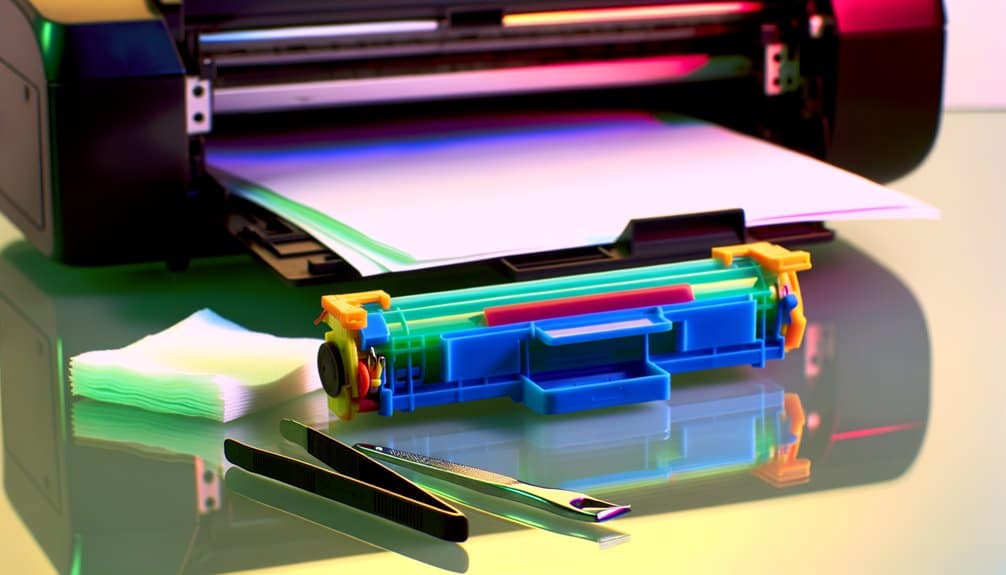
The toner cartridge serves a vital function in the printing process by supplying the powdered toner that forms text and images on paper. Various toner cartridge types exist, including OEM, remanufactured, and compatible cartridges, each offering distinct advantages.
Printing technology advancements have improved print quality and efficiency, necessitating awareness of cartridge lifespan factors such as usage frequency and storage conditions.
Environmental impact awareness is essential, as millions of cartridges contribute to landfill waste annually. Cost-effective alternatives, like remanufactured cartridges, provide eco-friendly options without sacrificing quality.
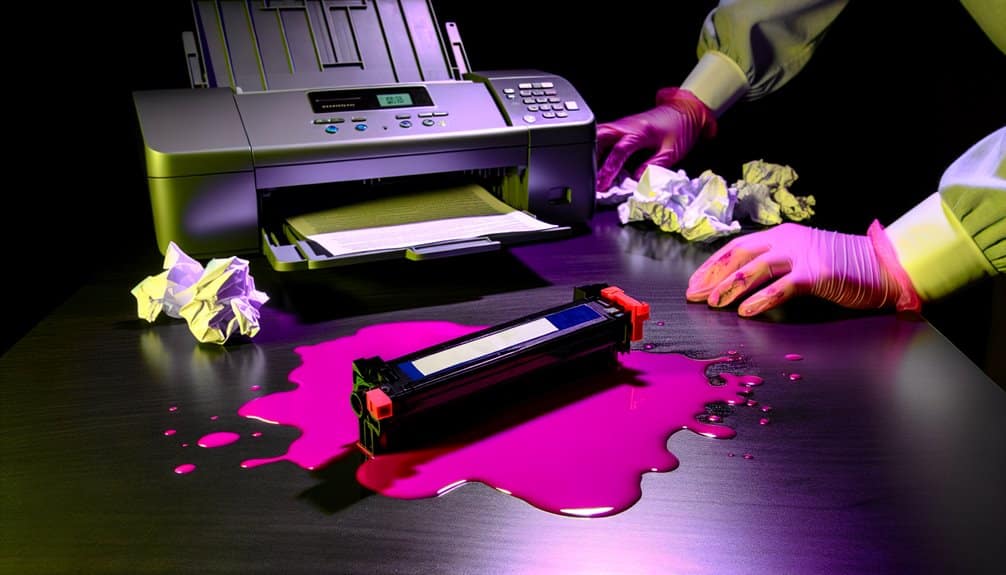
While printing quality can often be compromised by various factors, identifying common issues and their symptoms is essential for effective troubleshooting.
Users frequently encounter:
These symptoms not only hinder productivity but also raise concerns about environmental impact awareness.
Engaging in print quality troubleshooting can help mitigate waste and encourage participation in recycling programs, which provide cost-effective alternatives to new cartridges.
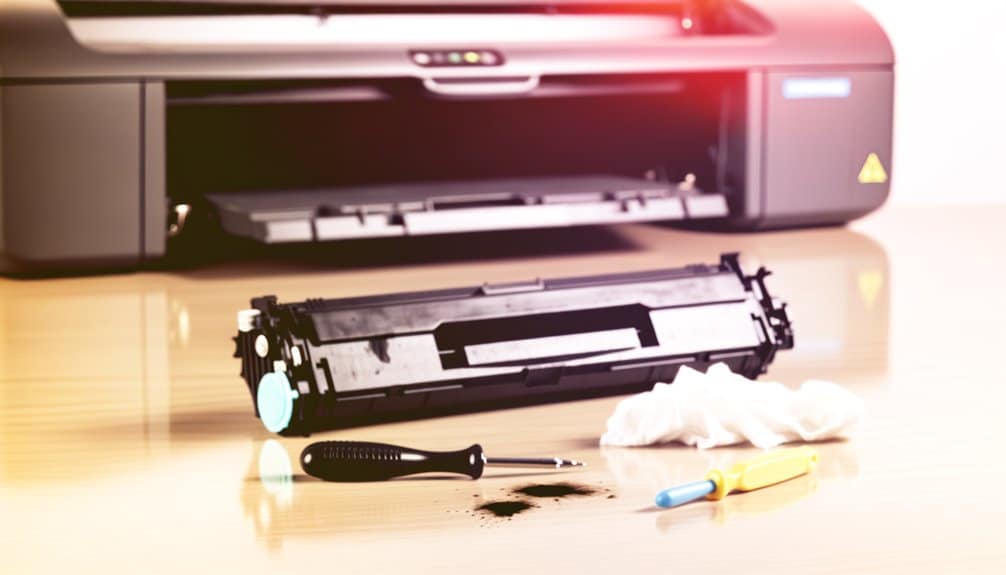
Addressing common printing issues requires a thorough understanding of key component failures and their corresponding fixes.
The toner cartridge lifespan can be considerably impacted by inadequate drum unit maintenance, leading to poor print quality. Regular wiper blade replacement is vital, as a damaged blade can produce streaks and inconsistent toner application.
Magnetic roller wear can result in light or inconsistent prints; therefore, monitoring its condition is essential. Developer roller cleaning is equally important to guarantee ideal toner transfer and avoid issues like ghosting or dark bands.
Proper usage and maintenance of toner cartridges are essential for ideal printer performance.
Utilizing certified or original toner cartridges, storing them in a cool and dry environment, and regularly cleaning key printer components can greatly reduce issues.
Additionally, printing test pages periodically helps in identifying potential problems before they escalate.
Utilizing certified or original toner cartridges considerably enhances print quality and reduces the risk of printer malfunctions. By choosing these high-quality options, users can guarantee peak printing performance and maintain the integrity of their devices.
Investing in certified cartridges guarantees that users experience the full potential of their printers, avoiding the pitfalls associated with generic alternatives.
Original toner not only assures superior results but also contributes to the overall longevity and reliability of the printing system. Consequently, opting for these cartridges is a wise choice for any conscientious user.
When toner cartridges are stored in a cool, dry place, their performance and longevity can be greatly enhanced.
Effective cartridge storage techniques mitigate humidity effects, which can lead to clumping and poor print quality. Maintaining temperature stability prevents toner from becoming too viscous or too dry, both of which negatively impact functionality.
Additionally, minimizing light exposure is essential, as UV rays can degrade toner quality over time. By adhering to these practices, users can markedly extend the shelf life of their cartridges, ensuring ideal performance when needed.
Proper storage not only preserves the integrity of the toner but also reduces waste and promotes efficient printing, fostering a more sustainable approach to printing needs.
Maintaining ideal printer performance requires regular cleaning of key components. Implementing effective cleaning techniques not only guarantees optimal functionality but also prolongs the lifespan of the printer.
Regularly scheduled maintenance can prevent common issues and enhance component compatibility.
Incorporating these preventive measures into a maintenance schedule can greatly impact printer performance. By prioritizing cleanliness, users can enjoy consistent, high-quality prints while minimizing potential disruptions.
Regular attention to these components cultivates a more intimate relationship with the printer, ultimately enhancing satisfaction with its performance.
Regularly printing test pages serves as an effective method for identifying early issues with a printer’s performance. This practice aids in evaluating print quality and assists in implementing troubleshooting techniques. By using these diagnostic tools, users can assess whether maintenance routines are necessary to guarantee peak performance evaluation.
| Test Page Type | Purpose | Common Issues Detected |
| Color Test | Evaluate color accuracy | Fading or incorrect colors |
| Text Test | Assess clarity and sharpness | Blurriness or smudging |
| Pattern Test | Identify alignment issues | Misalignment or ghosting |
Incorporating test pages into regular maintenance schedules can ultimately lead to more reliable printing results and prolong the lifespan of printer components.
The use of generic toner cartridges can yield cost savings, but varying generic cartridge quality may lead to compatibility issues and potential warranty concerns. Printing performance might also decline, necessitating careful consideration before purchase.
Like seeds nurtured into trees, proper toner recycling cultivates eco-friendly practices. Engaging in cartridge collection programs at local recycling centers enhances printer waste management, yielding significant toner recycling benefits that contribute to a healthier environment.
The lifespan of a toner cartridge depends on factors like toner yield comparison, storage conditions impact, and usage frequency effects. Replacement indicators, such as print quality degradation, signal when a cartridge should be replaced.
The reliability of remanufactured cartridges varies, with some offering comparable performance consistency to OEM products. Cost savings are significant, but warranty implications may arise, necessitating careful consideration of remanufactured quality during OEM comparison.
Upon discovering a toner leak, one must prioritize immediate action. Printer maintenance tips include identifying toner leak causes, cleaning printer components, fixing toner spills, and implementing strategies for preventing toner leaks to guarantee ideal printing performance.
In conclusion, understanding the common problems associated with toner cartridge use can greatly enhance printing efficiency. By recognizing symptoms such as smudged prints and addressing component failures, users can avoid the pitfalls of poor print quality. Regular maintenance, akin to routine check-ups for a vehicle, guarantees peak performance and longevity of printing equipment. Emphasizing the importance of certified cartridges and proactive care will not only improve results but also minimize waste, fostering a sustainable printing environment.