
Using remanufactured toner cartridges can be safe if sourced from reputable suppliers. These cartridges undergo extensive testing and maintenance to meet performance standards. However, risks exist, including inconsistent print quality and potential printer compatibility issues. Inferior products or those from unreliable suppliers may negatively impact printer performance. It is essential to research supplier reliability and consider specific printer models before purchasing. Understanding the nuances of remanufactured cartridges can aid in making an informed decision.
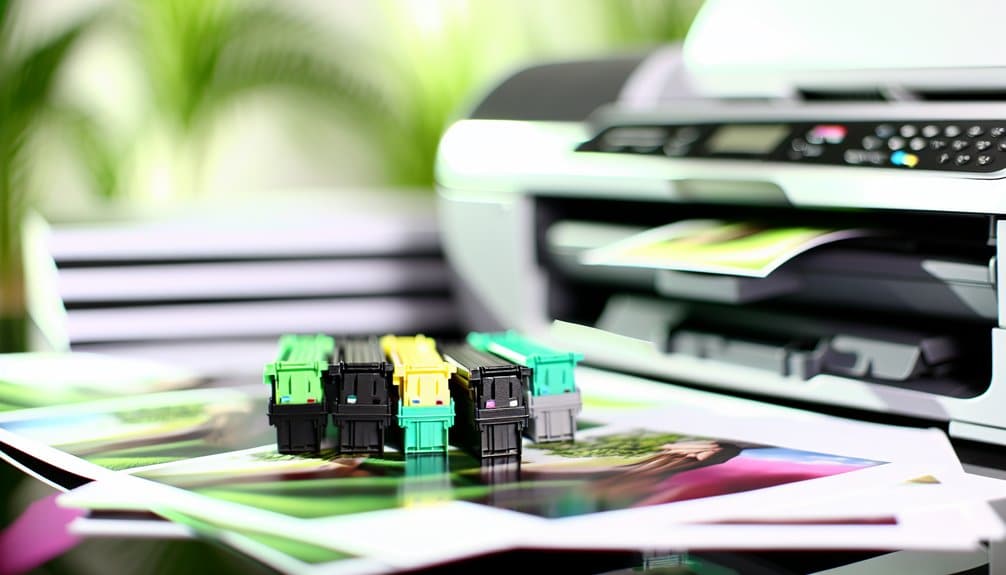
Why are more consumers gravitating towards remanufactured cartridges? This shift in consumer preferences is driven by a combination of cost savings and heightened environmental awareness.
Remanufactured cartridges typically offer considerable financial advantages, often priced notably lower than original equipment manufacturer (OEM) options. In addition, their use contributes positively to environmental impact by reducing waste associated with discarded cartridges.
Quality assurance remains a paramount concern; however, reputable suppliers leverage rigorous testing protocols to guarantee performance standards align with consumer expectations.
Supplier reputation plays a critical role in consumer decision-making, as buyers seek assurance of reliability and quality. As a result, the appeal of remanufactured cartridges continues to grow among those prioritizing sustainability and economic efficiency in their printing solutions.
Remanufactured toner cartridges are used OEM cartridges that undergo a process of cleaning, refilling, and rigorous testing to guarantee they are suitable for reuse.
Unlike compatible cartridges, which are entirely new and not manufactured by the original brand, remanufactured cartridges retain their OEM identity while offering a recycled option.
The quality and procedures involved in remanufacturing can vary greatly among suppliers, impacting overall performance and reliability.
Used OEM cartridges undergo a meticulous process of cleaning, refilling, and testing to prepare them for reuse as remanufactured toner cartridges. This process guarantees that remanufactured cartridges provide cost-effective solutions without compromising quality assurance.
Key factors contributing to their reliability include:
While both remanufactured and compatible cartridges serve as alternatives to original equipment manufacturer (OEM) products, they differ markedly in their composition and production methods.
Compatible cartridges are entirely new products manufactured from non-OEM materials, whereas remanufactured cartridges are recycled OEM cartridges that undergo cleaning, refilling, and quality testing.
The Compatible Cartridges Comparison highlights that compatible options may offer cost savings strategies but often lack the quality assurance found in remanufactured products.
A Remanufactured Benefits Overview emphasizes the environmental impact analysis, showing reduced waste through recycling.
Supplier quality assessment is essential, as the reliability of remanufactured cartridges hinges on the supplier's standards, affecting overall print performance and user satisfaction.
The remanufacturing process for toner cartridges can considerably differ among suppliers, impacting overall quality and performance. Variations in remanufacturing standards can lead to significant discrepancies in product reliability.
The following factors typically influence the quality of remanufactured cartridges:
Consumer experiences vary widely, emphasizing the importance of selecting suppliers known for consistent quality and robust performance in remanufactured toner cartridges.
Consumers often opt for remanufactured cartridges due to their substantial cost savings, which can range from 30% to 80% compared to original equipment manufacturer (OEM) cartridges.
Additionally, these cartridges contribute to environmental sustainability by reducing landfill waste, appealing to eco-conscious users.
Many remanufactured options also come with warranties and satisfaction guarantees, further enhancing their attractiveness as a viable alternative.
Opting for remanufactured cartridges allows users to achieve substantial savings of 30% to 80% compared to original equipment manufacturer (OEM) cartridges, making this option particularly appealing for budget-conscious individuals and organizations.
The cost comparison highlights the financial advantages while also considering factors such as environmental impact and supplier reputation.
Key reasons for choosing remanufactured cartridges include:
These considerations underscore why remanufactured cartridges remain a viable option within the printing landscape.
Choosing remanufactured cartridges markedly contributes to environmental sustainability by reducing landfill waste. The environmental impact of remanufacturing involves recycling used cartridges, thereby preventing them from occupying landfills and decreasing the overall carbon footprint associated with new cartridge production.
A cost comparison reveals that remanufactured options provide significant savings, reinforcing their appeal among budget-conscious consumers. However, this choice should be coupled with quality assurance measures; reputable suppliers guarantee that their products meet rigorous standards.
User experiences often highlight the necessity of selecting cartridges from suppliers with strong reputations, as this can mitigate potential quality issues. Ultimately, choosing remanufactured cartridges aligns financial savings with ecological responsibility, making them an advantageous alternative for environmentally aware consumers.
While the allure of cost savings often drives the decision to purchase remanufactured cartridges, the presence of warranties and satisfaction guarantees further enhances their appeal.
These assurances serve as a proof of supplier reliability and commitment to quality assurance, addressing consumer concerns regarding performance and longevity.
Key factors influencing consumer choices include:
Such incentives make remanufactured cartridges an attractive alternative for cost-conscious and environmentally aware consumers.
The use of remanufactured toner cartridges presents several risks that users should consider.
These include inconsistent print quality, shorter lifespan and page yield, and potential issues with printer recognition due to chip compatibility.
Additionally, there are concerns regarding possible printer damage and implications for warranty coverage, which can affect overall user satisfaction and operational efficiency.
Inconsistent print quality poses a significant risk when utilizing remanufactured toner cartridges, as it can compromise the overall effectiveness of printing operations.
Users may experience various issues stemming from this inconsistency, impacting their workflow and output quality. Key concerns include:
Ultimately, understanding these factors is essential for informed decision-making in cartridge selection.
Shorter lifespan and reduced page yield are considerable risks associated with remanufactured toner cartridges, impacting overall printing efficiency. Users often face shorter lifespan concerns compared to original equipment manufacturer (OEM) products, leading to frequent replacements and heightened long-term costs. A page yield comparison reveals that remanufactured cartridges may not deliver the expected volume, which can diminish productivity.
| Cartridge Type | Average Lifespan | Average Page Yield |
| OEM Cartridges | 2 years | 3,000 pages |
| Remanufactured Cartridges | 1 year | 2,000 pages |
| Compatible Cartridges | 1.5 years | 2,500 pages |
The remanufactured quality varies greatly, emphasizing the importance of supplier reliability in ensuring peak performance.
Numerous users encounter printer recognition issues when utilizing remanufactured toner cartridges, primarily due to the electronic chips embedded within these components.
These chips can lead to significant printer compatibility issues, affecting user experience and satisfaction. To navigate these challenges, users should consider the following:
Understanding these factors is critical for making informed decisions about remanufactured toner cartridges, minimizing risks associated with printer recognition failures.
While remanufactured toner cartridges offer cost advantages and environmental benefits, they also carry potential risks that may lead to printer damage. Users may encounter issues such as residue buildup from inferior ink quality or improper cartridge sealing, which can hinder printer longevity.
Additionally, low-quality cartridges might lead to print defects, necessitating frequent replacements and negating cost efficiency. The environmental impact of using unreliable remanufactured products can also be significant, as they may generate waste through premature failures.
It is essential to assess supplier reputation and rely on user testimonials to select reputable brands. Informed choices can mitigate risks, ensuring a balance between savings and printer health while maintaining ideal performance standards.
Although remanufactured toner cartridges present an appealing cost-saving option, they may pose significant risks concerning printer warranties. Users must consider several warranty implications that may arise from their use:
Conducting a thorough cost analysis and evaluating supplier reliability before opting for remanufactured toner is essential to mitigate risks associated with warranties and printer performance.
What health and safety risks should users be aware of when utilizing remanufactured toner cartridges? Users must consider potential health risks associated with inhalation of toner dust, which may contain harmful chemicals. Additionally, the lack of adherence to safety standards in some remanufactured products raises concerns regarding quality assurance.
| Risk Category | Description |
| Health Risks | Inhalation of toxic toner dust |
| Safety Standards | Non-compliance with industry safety regulations |
| Environmental Impact | Increased waste if cartridges fail prematurely |
| Consumer Awareness | Importance of selecting reputable suppliers |
Understanding these factors is critical for informed decisions, emphasizing the need for consumer awareness regarding the environmental impact and potential risks of remanufactured toner cartridges.
The quality of remanufactured cartridges is not uniform and is largely influenced by the supplier's practices.
Reputable suppliers invest in replacing worn components and rigorously test each unit, ensuring reliability and performance.
In contrast, unbranded or excessively inexpensive options often lack warranties and quality assurance, posing risks to both print quality and printer functionality.
While many consumers may assume that all remanufactured cartridges adhere to the same quality standards, the reality is that quality varies considerably based on the supplier.
This variance can greatly impact print performance and longevity, making supplier reputation an essential consideration for consumers.
To guarantee ideal results, users should evaluate suppliers based on:
Consumer education on these factors is critical for making informed choices that protect both the printer and the environment.
Quality in remanufactured cartridges can considerably vary based on the practices of individual suppliers. Good suppliers demonstrate supplier reliability by meticulously replacing worn components and subjecting each unit to rigorous testing. This guarantees peak print quality, aligning with original equipment manufacturer (OEM) standards.
The cost comparison often favors remanufactured cartridges; however, this should not compromise performance. Users benefit from a positive user experience when cartridges are consistently high-quality, reducing the risk of defects such as streaks or smudges.
Additionally, responsible remanufacturing contributes to a reduced environmental impact, as it minimizes waste and promotes recycling. Therefore, selecting suppliers with proven quality assurance processes is paramount for maintaining both performance and sustainability in printing solutions.
How can users assure they are selecting reliable remanufactured cartridges? To guarantee remanufactured quality, it is essential to avoid unbranded, ultra-cheap products that lack a warranty. Such products often compromise performance and can adversely affect printers.
Users should consider:
Focusing on these aspects enhances user confidence in their remanufactured cartridge choices.
✅ Recommended for:
❌ Avoid if:
| Feature | OEM | Compatible | Remanufactured |
|---|---|---|---|
| Cost | 💰💰💰 | 💰 | 💰💰 |
| Print Quality | ✅ Highest | ❗ Varies | ⚠ Depends on supplier |
| Page Yield | ✅ Optimized | ❌ Often lower | ⚠ Lower if low-quality |
| Printer Warranty | ✅ Always valid | ❌ Potentially voided | ❌ Void if proven cause |
| Environmental | ❌ More waste | ❌ New materials | ✅ Sustainable |
| Risk of Damage | ✅ Minimal | ⚠ Moderate to high | ⚠ If poorly made |
| Best For | High quality printing | Budget personal use | Eco-conscious users, low-risk tasks |
The use of remanufactured toner cartridges may raise warranty implications, depending on printer branding and legal considerations. Consumers should understand their rights regarding remanufactured quality to avoid potential warranty voidance while ensuring peak performance.
To identify a reputable remanufacturer, consider a case where extensive customer reviews highlighted quality assurance and certification standards. Evaluate return policies and conduct price comparisons, ensuring the provider meets rigorous performance benchmarks for superior reliability.
Compatibility varies greatly among printers, impacting cartridge performance. Brand recommendations should consider user reviews, focusing on models known for accepting remanufactured cartridges, while a thorough cost comparison can enhance decision-making for budget-conscious users.
Page yield comparison reveals that remanufactured toner cartridges may not consistently match originals in quality. However, user testimonials highlight their cost efficiency, suggesting acceptable print consistency for budget-conscious consumers seeking alternatives to OEM products.
In the event of a leak, users should follow leak prevention tips, initiate the cartridge replacement process, employ printer cleaning methods, and review warranty claim steps, ensuring effective troubleshooting for future leaks to safeguard printing equipment.
In the quest for sustainability and cost-effectiveness, the decision to use remanufactured toner cartridges mirrors the larger battle between innovation and tradition. While these alternatives offer financial relief and environmental benefits, users must tread carefully, as not all remanufactured cartridges are created equal. By weighing the potential risks against the advantages, one can navigate this printing landscape with informed confidence, ensuring that their printer remains a steadfast ally rather than a casualty in the pursuit of savings.