
When choosing between inkjet and laser printers, consider their unique strengths. Inkjet printers excel in producing vibrant colors and high-resolution images, making them ideal for graphics and photos. In contrast, laser printers offer faster, efficient text document printing, best for high-volume use. While inkjets have a lower initial cost, laser options provide better long-term savings. Understanding specific needs and application suitability will guide the best choice for personal or professional use. Further insights await.
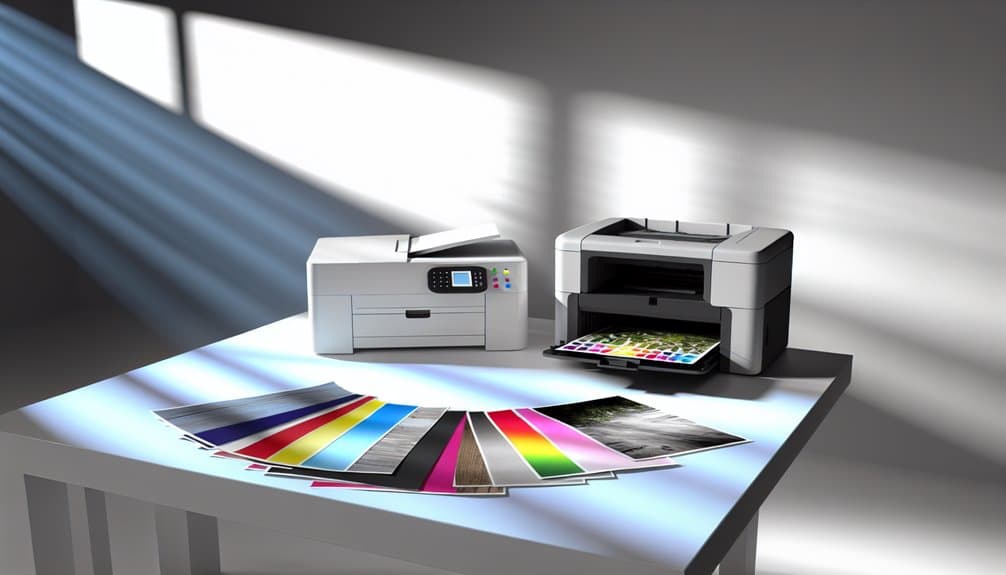
Printers play a vital role in various settings, from homes to offices and ecommerce packaging. The market is primarily dominated by two technologies: inkjet and laser printers, each offering distinct advantages and applications.
Understanding the differences between these two types can help users make informed choices based on their specific printing needs.
How essential are printing devices in today's digital world? Despite advancements in digital technology, printers are indispensable in homes, offices, and ecommerce packaging. They facilitate the production of tangible documents, labels, and promotional materials, where print resolution and quality matter.
Inkjet printers utilize sophisticated print head technology to deliver vibrant colors and intricate details, making them ideal for photos and graphics. Conversely, laser printers employ a toner melting process to produce sharp text quickly, proving advantageous in high-volume environments.
The cartridge lifespan of both types varies considerably, influencing long-term costs. Additionally, considerations like ink drying time can affect productivity, underscoring the need for careful evaluation when selecting the right printer for specific applications.
What distinguishes inkjet printers from their laser counterparts in today’s printing landscape? Primarily, the choice between toner and ink defines their functionality. Inkjet printers utilize liquid ink, excelling in print resolution and color accuracy, making them ideal for high-quality images and photos.
In contrast, laser printers depend on toner, delivering crisp text and substantial speed for high-volume printing. While ink cartridges typically have a shorter lifespan and may require frequent replacements, laser toner cartridges last considerably longer, enhancing cost efficiency over time.
Users must consider their specific needs: inkjets for vibrant visuals and lower initial costs, while lasers cater to those requiring rapid, economical document production without sacrificing quality. Each technology offers distinct advantages based on usage scenarios.
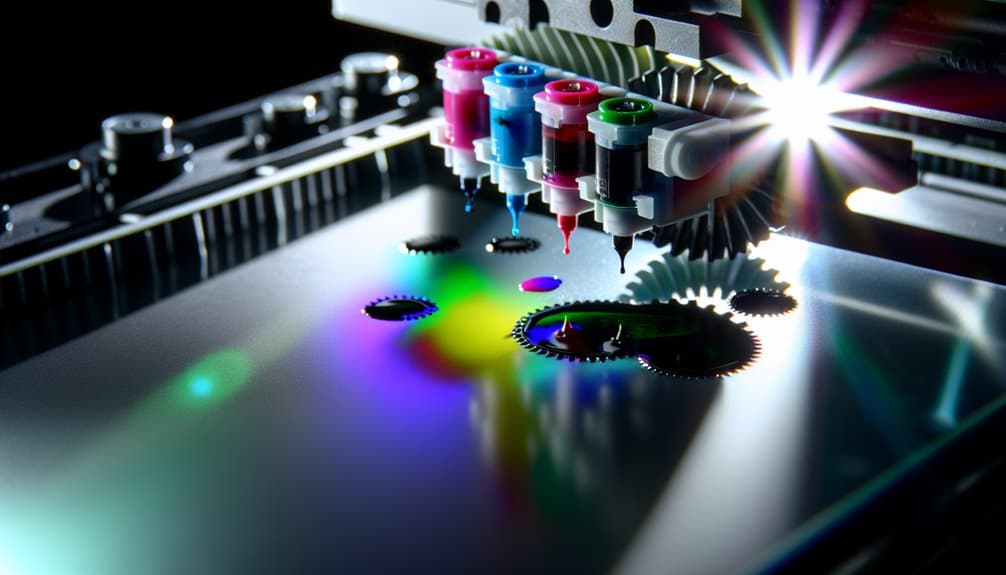
Ever wondered about the inner workings of inkjet and laser printers? Inkjet technology relies on ink deposition, where a print head emits tiny droplets of liquid ink directly onto paper, creating vibrant images. Conversely, laser printers utilize a process involving an electrostatic charge; they transfer toner powder to a photoconductive drum, which is then fixed to the paper through toner melting and heat bonding. This results in sharp, crisp text.
| Feature | Inkjet Printers | Laser Printers |
|---|---|---|
| Printing Mechanism | Ink deposition via print head | Toner transfer with electrostatic charge |
| Quality | Best for photos and color | Best for text and documents |
| Speed | Generally slower | Faster for high volumes |
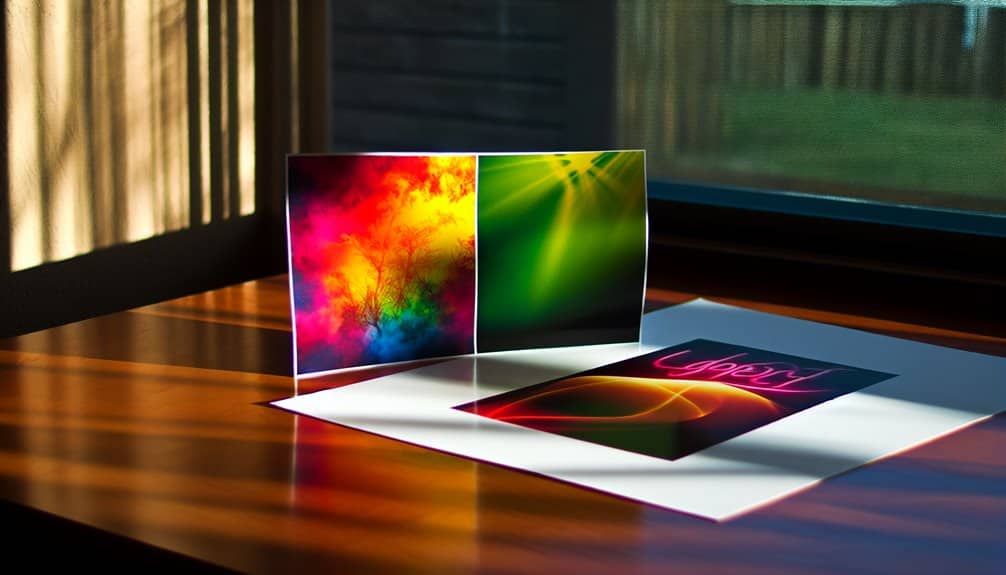
When considering print quality, a crucial distinction arises between inkjet and laser printers. Inkjet printers excel in print resolution and color accuracy, making them the preferred choice for producing vibrant photo quality images. Their ability to create subtle gradients and rich colors is unmatched, catering especially to photographers and graphic designers.
However, ink smudging can occur if prints are not handled carefully after production. In contrast, laser printers deliver exceptional print sharpness and crisp text, ideal for documents requiring clarity. While laser technology may not achieve the same depth of color as inkjets, it provides consistent quality, particularly for monochrome printing.
Ultimately, the choice hinges on whether one prioritizes detailed images or sharp text documents.
Although both inkjet and laser printers have their strengths, speed and volume distinguish them markedly. Laser printers excel in print speed, delivering documents rapidly, making them ideal for high-volume environments. Their volume capacity is substantial, accommodating large print jobs with efficiency, while the toner lifespan contributes to reduced downtime.
In contrast, inkjet printers typically struggle with slower print speeds, especially when handling extensive tasks, as they may face issues like ink drying between jobs. This can hinder printing efficiency, particularly in busy settings.
Consequently, for users prioritizing rapid output and significant printing demands, laser printers present a more suitable option, whereas inkjet printers may suffice for lighter, image-focused tasks.
The cost dynamics and consumables associated with inkjet and laser printers considerably influence user decisions. Inkjet printers often feature lower upfront costs but incur higher ink refill expenses due to frequent cartridge replacements.
Conversely, laser printers have substantial toner cartridge costs, yet they tend to offer long-term savings due to lower replacement frequency and extended lifespan of toner.
Ultimately, understanding these financial implications is vital for making an informed choice, as the initial investment must be balanced against ongoing operational costs.
Durability and maintenance are critical aspects to contemplate when choosing between inkjet and laser printers. Inkjet printers are susceptible to printhead clogging, especially when infrequently used, necessitating regular maintenance routines to ensure peak performance. This can involve cleaning procedures that may require user intervention, impacting overall usability.
In contrast, laser printers experience toner degradation but generally possess a longer component lifespan, reducing the frequency of maintenance tasks. Their robust design means less intervention is typically required, making them ideal for high-volume environments.
Understanding these differences can guide users in selecting a printer that aligns with their durability needs and maintenance preferences, ultimately enhancing productivity and minimizing downtime.
What are the key advantages and disadvantages of inkjet and laser printers? Understanding the advantages overview and disadvantages overview is essential for making an informed decision.
Evaluating these factors can guide users in selecting the appropriate printer type for their specific needs.
How do different printing environments influence the choice between inkjet and laser printers?
In settings prioritizing color accuracy and photo printing, inkjet printers are often preferred for their ability to produce vibrant, high-resolution images, making them ideal for photographers and graphic designers.
Conversely, laser printers excel in environments with high document volume, where the need for fast, professional output is paramount. Their superior speed and efficiency cater to businesses requiring large batches of printed materials.
While inkjet technology shines in graphic performance, laser printers provide consistent quality for text-heavy documents.
Ultimately, the choice hinges on specific applications: whether one values stunning visuals or the need for rapid, reliable document production dictates the appropriate technology.
The environmental impact of printers plays a significant role in the decision-making process for consumers and businesses alike. Both inkjet and laser printers present unique challenges regarding energy consumption and waste management.
Consider the following factors:
Ultimately, the choice between inkjet and laser printers hinges on balancing print quality needs with sustainable practices, driving informed decisions toward environmentally conscious printing solutions.
When considering a printer for home or office use, size and space requirements are crucial factors. The printer footprint varies considerably between inkjet and laser models.
Inkjet printers often boast compact models that cater to limited spaces, making them ideal for home offices or small work environments. Their portability options allow users to easily relocate them as needed.
In contrast, laser printers generally have larger size variations due to their additional components, such as print drums and thermal elements, which may restrict placement. For high-volume needs, understanding these space requirements is essential; large laser printers may dominate workspaces, whereas smaller inkjet printers offer versatility without sacrificing essential printing capabilities.
Choosing the right printer involves careful consideration of various factors beyond just size and space. Potential buyers must weigh the importance of print quality, speed, and long-term costs. Understanding these aspects is vital for making an informed decision.
Ultimately, the choice should align with specific printing needs and operational requirements.
Inkjet printers offer specialty paper compatibility, excelling in ink absorption on textured surfaces, glossy paper printing, photo paper capabilities, and cardstock printing options, making them versatile for various creative and professional printing needs.
Cleaning a printer's print heads can feel like a quest for the Holy Grail. Regular maintenance is essential; every few weeks is ideal to avoid ink cartridge issues, ensuring peak print quality and troubleshooting clogs effectively.
Both inkjet and laser printers offer wireless connectivity options, including mobile printing, Bluetooth options, and Wi-Fi Direct. These features enable remote printing, allowing users to print conveniently from various devices without physical connections.
Label printing with inkjet and laser printers includes options like adhesive labels for general use, clear labels for transparent applications, waterproof labels for durability, and die cut labels for custom shapes, catering to diverse labeling needs.
Do printers possess energy-saving features? Indeed, many models offer eco modes and standby features, enhancing energy efficiency through power saving and consumption reduction, allowing users to print responsibly without sacrificing performance or productivity.
In the world of printing, inkjet and laser printers symbolize two distinct paths: one vibrant and artistic, akin to a painter's palette, while the other embodies efficiency and precision, reminiscent of an industrious factory. Choosing between them reflects not only practical needs but also personal values and priorities. Ultimately, understanding their unique strengths allows users to select the right tool for their canvas, ensuring that every printed page resonates with purpose and clarity, much like a well-crafted story.