
Recycling toner cartridges is essential for reducing environmental harm and conserving resources. Discarded cartridges take hundreds of years to decompose, risking chemical leakage that contaminates ecosystems. By recycling, valuable materials are recovered, minimizing resource depletion and lowering production costs. Many brands offer recycling programs that promote sustainability and provide incentives for participation. Engaging in these initiatives not only contributes to a healthier environment but also supports responsible consumer practices. There is more to explore about effective recycling methods and initiatives.
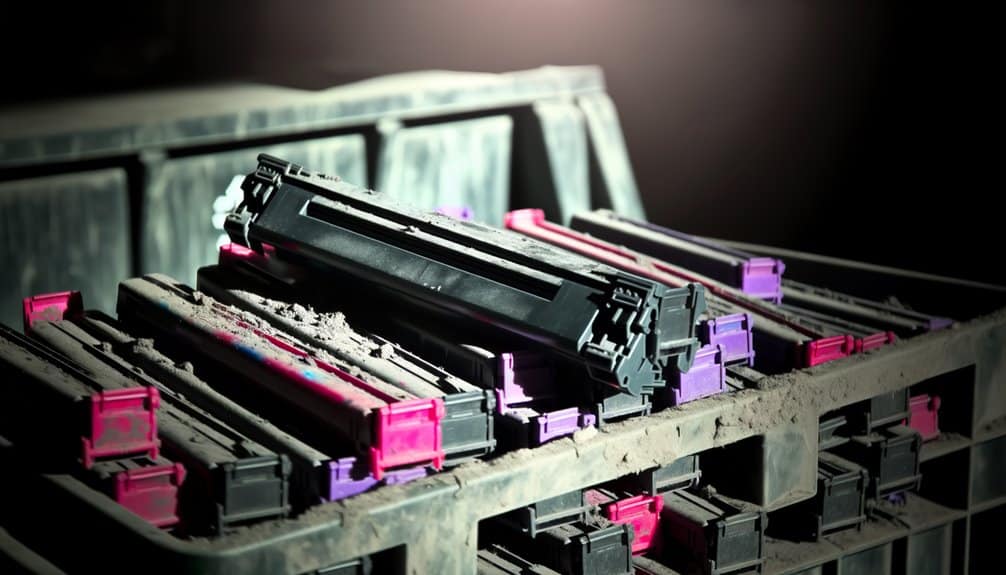
When toner cartridges are not recycled, they often end up in landfills, where they can take hundreds of years to decompose. This slow decomposition process releases harmful chemicals into the environment.
This improper disposal not only contributes to escalating electronic waste but also exacerbates soil and water contamination issues.
The failure to recycle toner cartridges represents a significant oversight in sustainable waste management practices that can easily be mitigated through effective recycling initiatives.
What consequences arise from the improper disposal of toner cartridges? When toner cartridges are not recycled, their degradation leads to significant environmental issues. These cartridges can take hundreds of years to decompose, risking chemical leakage that contaminates landfills and surrounding ecosystems. The resultant landfill contamination poses severe threats to soil and water resources, contributing to toxic pollution. Moreover, the failure to recycle contributes to resource wastage, as valuable materials are lost instead of being repurposed.
| Consequence | Description |
|---|---|
| Toner Cartridge Degradation | Extended decomposition period in landfills |
| Chemical Leakage Risks | Hazardous substances infiltrating the environment |
| Resource Wastage | Loss of materials that could be recycled |

How does the disposal of toner cartridges impact the environment? The improper disposal of toner cartridges poses significant environmental threats, including chemical hazards and resource depletion.
When discarded in landfills, these cartridges contribute to landfill pollution, as they can take hundreds of years to decompose. Additionally, leaking toxic chemicals can result in water contamination, affecting ecosystems and human health.
The materials used in toner cartridges, primarily petroleum-based plastics and metals, exacerbate resource depletion when not recycled. Thus, the environmental implications of toner cartridge disposal are profound, necessitating immediate attention and action.
Recycling toner cartridges presents significant benefits that extend beyond individual convenience. Environmentally, it conserves natural resources and minimizes waste.
Economically, it often reduces costs for consumers and businesses alike.
Additionally, engaging in recycling practices aligns with social responsibility initiatives, enhancing corporate reputations and fostering trust among consumers.
The environmental benefits of recycling toner cartridges extend far beyond mere waste reduction; they play a crucial role in resource conservation and pollution mitigation. By employing advanced recycling technology, the ink chemical composition can be reclaimed, markedly improving material recovery rates.
This process not only minimises the volume of cartridges ending up in landfills—where they can take centuries to decompose—but also reduces the extraction of non-renewable resources, thereby adhering to stringent environmental regulations. Conducting a lifecycle analysis reveals that recycling decreases energy consumption and greenhouse gas emissions compared to producing new cartridges.
Ultimately, recycling toner cartridges fosters a sustainable approach, supporting the circular economy while protecting essential ecosystems from harmful pollutants.
Emphasizing sustainability not only benefits the environment but also yields significant economic advantages for both consumers and businesses. Recycling toner cartridges presents various financial incentives and cost savings that contribute to a broader economic impact:
These factors collectively underscore the economic rationale for recycling toner cartridges, making it a judicious choice for all stakeholders.
Adopting sustainable practices, such as recycling toner cartridges, reflects a company's commitment to social responsibility and environmental stewardship. This initiative aligns with corporate responsibility, enhancing brand reputation while fostering community engagement and employee awareness about environmental issues. Companies demonstrating ethical sourcing through recycling cultivate trust and loyalty among consumers, setting themselves apart in competitive markets.
| Aspect | Importance |
|---|---|
| Corporate Responsibility | Drives sustainable business practices |
| Community Engagement | Strengthens local ties and support |
| Ethical Sourcing | Ensures responsible material usage |
| Employee Awareness | Promotes a culture of sustainability |
Through these efforts, organizations not only contribute to ecological preservation but also position themselves as leaders in social responsibility.
How does the toner cartridge recycling process transform waste into valuable resources? This intricate recycling process not only mitigates environmental impact but also guarantees high ink quality and ideal print performance.
The following steps are essential:
What options are available for effectively recycling toner cartridges? Several recycling programs facilitate the cartridge collection process, allowing individuals and businesses to participate in sustainable practices.
Many manufacturers offer dedicated recycling initiatives, providing pre-paid shipping labels or designated drop-off locations.
Local recycling centers often accept toner cartridges as part of broader recycling efforts.
Additionally, retailers like Office Depot and Staples provide incentives, such as discounts or rewards, for returning used cartridges.
Engaging with these recycling programs guarantees adherence to the recycling process, which includes inspection and refurbishment.
Why do misconceptions about toner recycling persist despite growing awareness of its benefits? Toner cartridge myths can obscure the vital role recycling plays in waste reduction and eco-friendly practices. Addressing these myths is essential for fostering a culture of sustainability.
Dispelling these recycling misconceptions encourages responsible consumer behavior and supports environmental conservation efforts.
Toner cartridges from various printer brands can often be recycled, provided they match compatible cartridge types. Recycling locations may offer environmental benefits and cost savings, promoting sustainable practices while reducing electronic waste and conserving resources.
Over 375 million cartridges are discarded annually in the U.S. Specific recycling programs for high-yield toner cartridges adhere to industry standards, offering environmental benefits and cost savings through efficient collection processes and community programs that promote sustainability.
After collection, recycled toner cartridges undergo a meticulous recycling process, focusing on material recovery. This promotes waste reduction and enhances sustainability efforts, considerably minimizing environmental impact while conserving valuable resources through responsible management and repurposing.
In an age where sustainability reigns, home reuse of toner cartridges through DIY refilling and cartridge cleaning emerges as an alternative disposal method. Such eco-friendly practices can extend cartridge life while promoting environmental stewardship.
Label removal is generally not required before recycling toner cartridges. However, ensuring cleanliness aids in the refurbishment process, enhancing the cartridge's quality. Proper disposal methods include recycling labels alongside cartridges to promote thorough environmental responsibility.
Recycling toner cartridges is not merely a responsible choice; it is a crucial action for environmental preservation. Each year, approximately 375 million toner cartridges are discarded, contributing to over 100 million pounds of plastic waste. By participating in recycling programs, individuals and businesses can greatly reduce landfill contributions, conserve resources, and mitigate harmful environmental effects. Embracing toner cartridge recycling is a powerful step towards sustainability, demonstrating a commitment to both ecological health and economic efficiency.